Please read our important disclaimers before using this content
Masculine socialization can disguise Complex Post-Traumatic Stress Disorder so thoroughly that the man himself cannot name what is happening. Trauma does not announce itself — it shows up as a short fuse, a punishing work schedule, a flat affect that reads as "handling it." Standard tools frequently miss it, and the same norms that hide symptoms also block treatment.
If you are a man reading this and parts feel uncomfortably familiar, that recognition is not a verdict on your character. It is information.
A note on scope: this piece describes population-level tendencies, not universal rules. "Masculine socialization" refers to the norms a person is raised under — not an essentialist claim about biology — and these patterns can show up in trans men, nonbinary people, and anyone socialized under similar norms. Statistics and crisis resources are US-specific.
Key Takeaways
- C-PTSD is a recognized condition involving the core symptoms of PTSD plus persistent disturbances in self-organization — emotion dysregulation, negative self-concept, and relationship difficulties.1
- Men more often express trauma through externalizing responses — anger, irritability, substance use, risk-taking — rather than the sadness, fear, and tearfulness most trauma checklists were built to detect.23
- This is partly learned: traditional masculine norms teach emotional restriction and self-reliance, which are associated with higher alexithymia (difficulty naming feelings) and worse mental-health outcomes.45
- The same norms that disguise the symptoms also block treatment: conformity to masculine norms is consistently associated with negative help-seeking attitudes.46
- The stakes are not abstract. In 2022, men died by suicide at nearly four times the rate of women in the United States.7
- None of this means men are "doing trauma wrong." It means standard tools and standard language frequently miss male-typical presentations.3
What "C-PTSD" actually describes
Complex PTSD is formally recognized in the World Health Organization's ICD-11 as a distinct diagnosis. It includes the three core PTSD clusters — re-experiencing, avoidance, and a persistent sense of current threat — plus three additional "disturbances in self-organization": problems with emotion regulation, a persistently negative and defeated self-concept, and difficulty sustaining relationships and feeling close to others.1 It is typically associated with prolonged or repeated trauma from which escape was difficult or impossible.
In many men, those internal states are translated — almost automatically — into a more socially permitted vocabulary: irritation, drive, withdrawal, control.
The masculine trap: how disguise happens
The trap is not that men feel less. It is that men are trained to route what they feel into a narrow set of acceptable outputs, and then the trauma field's own instruments fail to read those outputs as trauma.
Anger as the permitted emotion
Reviews of the literature describe a broad pattern in which women more often internalize distress (anxiety, depression, fear) while men more often externalize it (anger, aggression, substance use, risk-taking).23 This is a difference in expression, not in depth of injury.
For many boys, anger was the one strong feeling that was never punished — sometimes it was even rewarded. Over years, grief, fear, shame, and helplessness can get converted into the only channel that stayed open.
The result is that a man may experience "I am furious" when underneath sits "I am frightened" or "I am grieving." That conversion is largely invisible until someone goes looking for it.
Work and stoicism as avoidance
In men, avoidance is often more ambient — and more socially applauded: relentless work, constant problem-solving, the stoic refusal to dwell. A man who buries himself in a job after a loss is praised for resilience, not screened for traumatic avoidance.1 The numbing is the same; only the optics differ.
Alexithymia: when the words are not there
There is a name for the difficulty many men experience identifying and describing their own emotions: alexithymia. Research on normative male alexithymia finds that boys steered away from vulnerable emotions tend, as men, to score higher on it.5 One recent study suggests masculine norms may relate to internalizing symptoms in part through alexithymia and emotion-regulation difficulties, though this mediational pathway is still preliminary.8
This is the cruelest part of the trap. It is not always that a man will not talk about his feelings. It is sometimes that he cannot locate them. "How are you?" returns "fine" not as a lie but as the most precise answer available.
Why standard tools miss it
When researchers added male-typical items — anger attacks, aggression, substance use, risk-taking — to depression measures using nationally representative U.S. data, the usual sex difference in measured depression was no longer statistically significant — men 30.6% versus women 33.3%.3 Standard instruments calibrated to sadness and tearfulness undercount male presentations.
A man can complete an intake form, score low, and conclude that treatment has nothing for him. The conclusion is wrong, but it is a rational response to a tool that was not built to find him. A low score is information to discuss with a qualified clinician, not a verdict in either direction.
The second trap: norms that block treatment
The same conditioning that disguised the symptoms now obstructs the fix. A large meta-analysis covering 78 samples and more than 19,000 participants found that conformity to masculine norms was unfavorably associated with mental health and, more strongly, with psychological help-seeking.4 Structural barriers compound this: cost, lack of insurance, rural distance, and a shortage of trauma-informed clinicians experienced with male presentations.
The loop closes: emotional restriction hides the injury, self-reliance discourages the remedy, and stoicism reframes the whole thing as strength. A man in this position is not refusing help out of arrogance. He is following the rules he was given.
Reframing strength
C-PTSD is a wound — a nervous system shaped by what it survived — not a verdict on a man's character.1 Reframed that way, the masculine objections start to dissolve. Asking for help with an injury is not failure — it is how injuries heal, and there is no shame in getting help for one. Evidence-based treatments exist, and many people improve with appropriate care. Noticing these patterns — a short fuse, ambient avoidance, persistent numbness — and bringing them to a qualified professional is harder work than pretending everything is fine. By any honest measure, that is what strength looks like.
FAQ
Is C-PTSD different from PTSD? Yes. In the ICD-11, C-PTSD includes all the core features of PTSD plus persistent disturbances in self-organization: emotion dysregulation, a negative self-concept, and relationship difficulties. It is typically linked to prolonged or repeated trauma.1
Why does trauma show up as anger instead of sadness? Reviews of the trauma literature describe a broad tendency for men to externalize distress as anger, irritability, and risk-taking, while women more often internalize it as anxiety or depression. The injury is the same; the expression differs — and for many men, anger was the one emotion that was socially permitted.23
If I score low on a depression or trauma test, does that mean I'm fine? Not necessarily. Standard measures emphasize sadness, fear, and tearfulness. When male-typical items are added, men endorse them at high rates and measured gender gaps shrink.3 A low screen is information to bring to a qualified clinician, not a verdict in either direction.
Is stoicism a problem? Stoicism itself is not pathology. But emotional restriction and self-reliance are consistently associated with higher alexithymia, worse mental health, and lower help-seeking.456
Why don't men ask for help? The conditioning works against it from two directions: it makes symptoms hard to recognize and name (alexithymia), and it attaches stigma and self-reliance pressure to seeking care.456 Structural barriers — cost, insurance, distance, and a shortage of trauma-informed providers — compound this. This is a learned and often circumstantial barrier, not a character flaw.
Related reading
- Complex PTSD: a plain-language guide to C-PTSD vs. PTSD — /blog/complex-ptsd-complete-guide-cptsd-vs-ptsd
- Hypervigilance in C-PTSD: when your nervous system won't rest — /blog/hypervigilance-in-c-ptsd-when-your-nervous-system-won-t-rest
- Avoidance in C-PTSD: when safety strategies shrink your world — /blog/avoidance-in-c-ptsd-when-safety-strategies-shrink-your-world
- Finding the right trauma therapist: red flags and green flags — /blog/finding-the-right-trauma-therapist-red-flags-and-green-flags
Important disclaimers
This article is for general educational and informational purposes only. It is not legal advice, not medical advice, and not a substitute for professional counsel of any kind. It does not create a therapist–client or any professional relationship. It is not a substitute for professional mental health treatment, nor for diagnosis or treatment by a qualified, licensed professional. C-PTSD and related conditions can only be diagnosed through individual clinical evaluation; the patterns described here are general and may not apply to your situation. The statistics and crisis resources cited are US-specific, and prevalence figures, laws, and available resources vary by jurisdiction.
If you are in crisis or thinking about harming yourself, please reach out now. In the United States, call or text 988 (Suicide & Crisis Lifeline) or text HOME to 741741 (Crisis Text Line). If you are outside the U.S., contact your local emergency number or a regional crisis line. If you or someone else is in immediate danger, call your local emergency services.
References to research are provided for transparency and do not imply endorsement by the cited authors or institutions of this article or of Clarity House Press.
References
- World Health Organization. International Classification of Diseases, 11th Revision (ICD-11), 6B41 Complex post-traumatic stress disorder. https://icd.who.int/browse11/l-m/en — See also Brewin, C. R., Cloitre, M., Hyland, P., et al. (2017). A review of current evidence regarding the ICD-11 proposals for diagnosing PTSD and complex PTSD. Clinical Psychology Review, 58, 1–15. https://doi.org/10.1016/j.cpr.2017.09.001 ↩
- Tolin, D. F., & Foa, E. B. (2006). Sex differences in trauma and posttraumatic stress disorder: A quantitative review of 25 years of research. Psychological Bulletin, 132(6), 959–992. https://doi.org/10.1037/0033-2909.132.6.959 ↩
- Martin, L. A., Neighbors, H. W., & Griffith, D. M. (2013). The experience of symptoms of depression in men vs women: Analysis of the National Comorbidity Survey Replication. JAMA Psychiatry, 70(10), 1100–1106. https://doi.org/10.1001/jamapsychiatry.2013.1985 ↩
- Wong, Y. J., Ho, M. R., Wang, S. Y., & Miller, I. S. K. (2017). Meta-analyses of the relationship between conformity to masculine norms and mental health-related outcomes. Journal of Counseling Psychology, 64(1), 80–93. https://doi.org/10.1037/cou0000176 ↩
- Levant, R. F., Hall, R. J., Williams, C. M., & Hasan, N. T. (2009). Gender differences in alexithymia. Psychology of Men & Masculinity, 10(3), 190–203. https://doi.org/10.1037/a0015652 ↩
- Garnett, M. F., & Curtin, S. C. (2024). Suicide mortality in the United States, 2002–2022 (NCHS Data Brief No. 509). National Center for Health Statistics, Centers for Disease Control and Prevention. https://www.cdc.gov/nchs/products/databriefs/db509.htm ↩
- Staiger, T., Stiawa, M., Mueller-Stierlin, A. S., et al. (2020). Masculinity and help-seeking among men with depression: A qualitative study. Frontiers in Psychiatry, 11, 599039. https://doi.org/10.3389/fpsyt.2020.599039 ↩
- Internalizing Symptoms in Men: The Role of Masculine Norms, Alexithymia, and Emotion Regulation. (2025). Sex Roles, 91. https://doi.org/10.1007/s11199-025-01615-0 ↩
Recommended Reading
From Clarity House Press — plus trusted books for deeper understanding

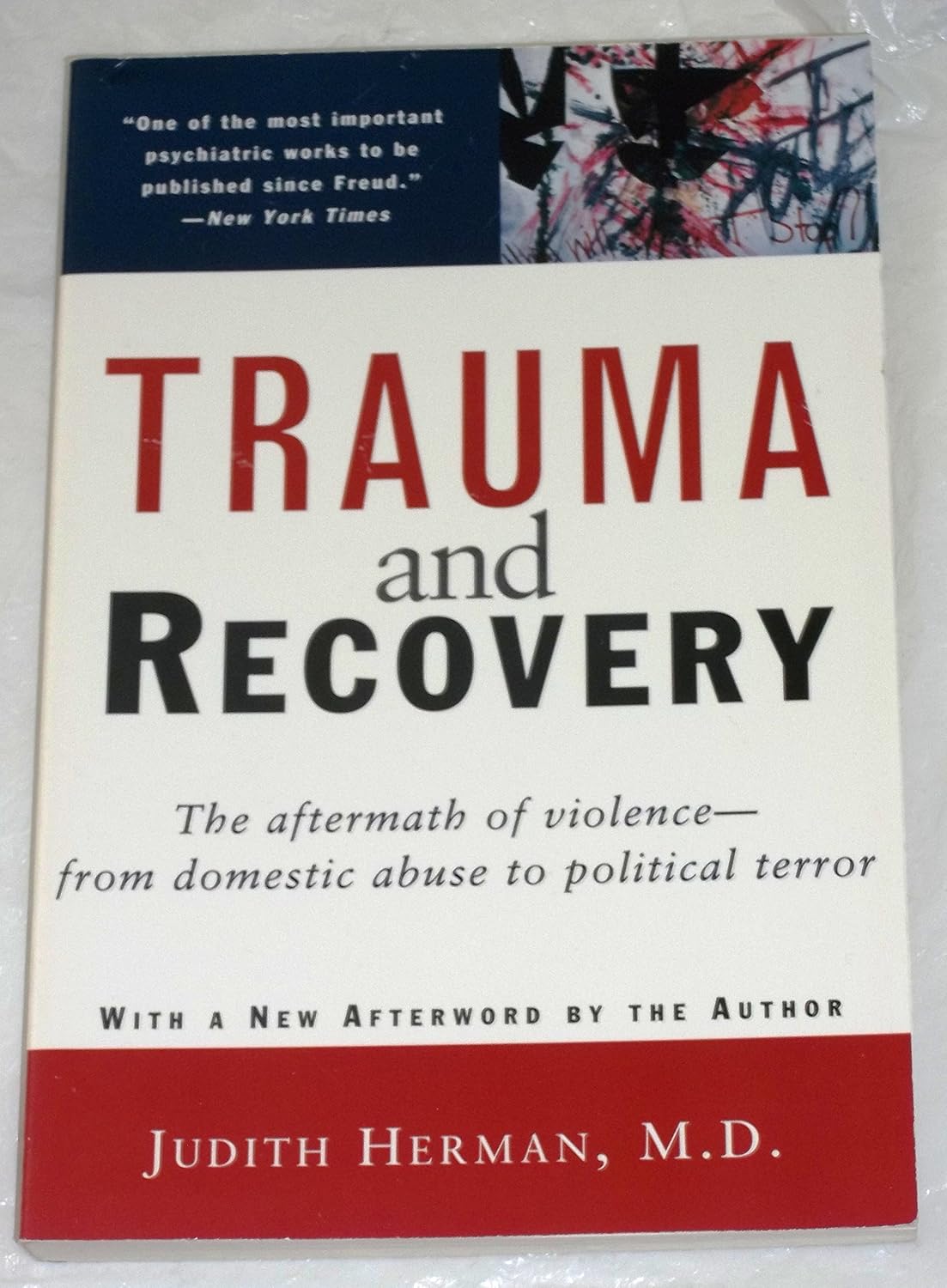
Trauma and Recovery
Judith Lewis Herman, M.D.
The seminal framework for understanding trauma and the stages of recovery — safety, remembrance, and reconnection.
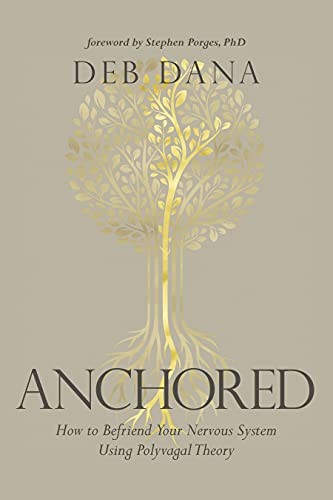
Anchored
Deb Dana, LCSW
Practical everyday ways to transform your relationship with your nervous system using Polyvagal Theory.
As an Amazon Associate, Clarity House Press earns from qualifying purchases. Your price is never affected.
Found this helpful?
Share it with someone who might need it.
About the Author

Bandy Jacob Strawn
Founder
Founder of Clarity House Press and author of evidence-based trauma recovery resources. His work combines intensive clinical research with lived experience in family court systems. After recognizing a critical gap in accessible, research-backed resources for parents facing high-conflict custody, Bandy created the materials he wished had existed.
View all posts by Bandy Jacob Strawn →Published by Clarity House Press Editorial Team