Please read our important disclaimers before using this content
You stopped going to the grocery store where you ran into him. Then you avoided that whole part of town. Now you order everything online and rarely leave the house. What started as a reasonable safety measure has become a prison. Avoidance is one of the defining features of C-PTSD—but understanding what C-PTSD actually is and how it differs from PTSD can help you frame your experience more accurately and access more targeted treatment.
Or maybe your avoidance looks different: you can't talk about what happened. You skip therapy sessions when you know the topic will come up. You stay frantically busy so you never have to feel anything. You've become an expert at keeping the trauma at arm's length.
Here's what most people don't understand: avoidance in C-PTSD isn't weakness or laziness—it's your brain's attempt to protect you from overwhelm.1 The problem is that while avoidance reduces anxiety in the short term, it maintains trauma in the long term. Your world gets smaller and smaller, your nervous system gets more and more sensitive, and the things you're avoiding gain more power over your life.
This article will help you understand the difference between protective boundaries and problematic avoidance, recognize your specific avoidance patterns, and begin gradually reclaiming your life at a pace your nervous system can handle.
Understanding Avoidance in Complex Trauma
The DSM-5-TR Perspective
The DSM-5-TR identifies avoidance as one of the core symptom clusters of PTSD.2 The diagnostic criteria include:
Criterion C: Persistent avoidance of stimuli associated with the traumatic event(s), beginning after the traumatic event(s) occurred, as evidenced by one or both of the following:
- Avoidance of or efforts to avoid distressing memories, thoughts, or feelings about or closely associated with the traumatic event(s)
- Avoidance of or efforts to avoid external reminders (people, places, conversations, activities, objects, situations) that arouse distressing memories, thoughts, or feelings about or closely associated with the traumatic event(s)
While the DSM-5-TR doesn't include C-PTSD as a separate diagnosis (it appears in ICD-11), the avoidance patterns in complex trauma are often more pervasive and generalized than in single-incident PTSD.
How C-PTSD Avoidance Differs
Avoidance in C-PTSD is closely intertwined with hypervigilance—your nervous system becomes so attuned to threat detection that it triggers protective responses to neutral stimuli. Understanding hypervigilance and how to recalibrate your sense of safety is a critical companion to working with avoidance patterns.
In complex trauma from prolonged relational abuse or childhood trauma, avoidance often becomes:
More generalized: Instead of avoiding specific trauma reminders, you avoid entire categories of experience—intimacy, conflict, success, joy, vulnerability.
More subtle: You may not recognize it as avoidance. Staying constantly busy, living in your head, emotional numbing, and dissociation are all forms of experiential avoidance.3
More entangled with identity: After years of avoiding certain experiences, you may believe "I'm just not a social person" or "I don't do relationships" when actually, you're avoiding situations that trigger trauma responses.
More protective in origin: Your avoidance likely developed as necessary survival strategy. If expressing needs led to rage or abandonment, avoiding your needs made perfect sense. The strategy that saved you then now limits you.
The Three Types of Avoidance
1. Behavioral Avoidance
This is the most visible form: actively staying away from trauma reminders.
Examples:
- Avoiding places, routes, or neighborhoods associated with your abuser
- Not going to events where you might see mutual friends
- Skipping family gatherings to avoid triggering dynamics
- Staying home instead of engaging in activities you used to enjoy
- Avoiding dating or relationships entirely after abuse
- Not applying for jobs or promotions that might bring visibility
- Refusing to drive on certain roads after an accident
The progression: Behavioral avoidance typically starts specific ("I'll avoid that restaurant") and becomes generalized ("I don't go out anymore"). Your safety zone shrinks incrementally—so gradually you may not notice until you're isolated.
2. Cognitive/Emotional Avoidance
This is internal avoidance: staying away from thoughts, feelings, and memories.
Examples:
- Pushing away memories when they surface
- Staying frantically busy to avoid feeling
- Intellectualizing or analyzing instead of experiencing emotions
- Using substances to numb emotional pain
- Dissociating when reminded of trauma
- Telling yourself "it wasn't that bad" to avoid grief
- Refusing to think or talk about what happened
- Suppressing anger, sadness, or fear
The hidden cost: Cognitive avoidance is exhausting. It takes tremendous energy to push away memories and feelings all day.4 This constant suppression often leads to emotional numbing—you can't selectively numb pain without also numbing joy, connection, and vitality.
3. Experiential Avoidance
This is avoiding entire categories of human experience that might involve vulnerability or activation.
Examples:
- Avoiding intimacy or emotional closeness
- Never asking for help or expressing needs
- Staying in jobs or relationships that don't challenge you
- Avoiding conflict at all costs, even healthy disagreement
- Never setting boundaries (to avoid rejection or rage)
- Preventing yourself from feeling hope or excitement
- Avoiding success or visibility
- Never allowing yourself to relax or rest
Why this matters: Experiential avoidance keeps you from the very experiences needed for healing—connection, vulnerability, mastery, joy. You stay safe but you don't grow.
The Avoidance Paradox: Short-Term Relief, Long-Term Maintenance
Here's the cruelest aspect of avoidance: it works immediately but fails eventually.
The short-term payoff: When you avoid a trauma trigger, your anxiety drops immediately. Your nervous system registers: "Avoidance = safety." This negative reinforcement (relief from discomfort) is powerful and immediate.
The long-term cost:
- Sensitization increases: The things you avoid become MORE threatening, not less. Your nervous system never learns that you can handle these situations.5
- Your world shrinks: As avoidance generalizes, you lose access to people, places, activities, and experiences that could bring meaning and connection.
- Skills atrophy: You lose confidence in your ability to handle difficult emotions or situations.
- Trauma maintains its power: Avoidance prevents the processing and integration needed for healing.
- Secondary problems develop: Isolation, depression, anxiety, shame, and loneliness often result from pervasive avoidance.
The clinical evidence: Research consistently shows that avoidance is one of the strongest predictors of poor outcomes in PTSD.6 The more you avoid, the worse symptoms tend to get over time.
Safety Behaviors vs. Problematic Avoidance
This is the critical distinction: Not all avoidance is problematic. Some boundaries are healthy and necessary.
Healthy Boundaries (Keep These)
- No contact with your abuser when that relationship ended
- Blocking people who harass or triangulate
- Declining invitations to events that would genuinely compromise your safety
- Limiting contact with family members who deny or minimize your abuse
- Avoiding triggering media when you're in a fragile state
- Saying no to commitments that exceed your current capacity
- Creating physical safety in your environment
The test: Healthy boundaries protect you without significantly limiting your life. They're about protecting your wellbeing, not avoiding all discomfort.
Problematic Avoidance (Worth Addressing)
- Avoiding all social contact because one person might be there
- Never dating because you might get hurt again
- Staying in your house because the world feels dangerous
- Avoiding all vulnerability to prevent rejection
- Never talking about the trauma (when you want to heal from it)
- Preventing yourself from feeling any difficult emotions
- Avoiding success because it might bring criticism
- Isolating from everyone, even safe people
The test: Problematic avoidance significantly restricts your life and keeps you from things you value. It's driven by fear of experiencing discomfort, not by genuine threat to your safety.
Real-World Avoidance Patterns
Emma's Social Avoidance
After her narcissistic mother showed up uninvited at her workplace, Emma stopped going to public events. "What if she shows up at the coffee shop? The gym? The grocery store?"
Emma started ordering everything online. She worked from home. She declined invitations from friends. Within six months, her only social contact was online. She was safe from her mother—but she'd also lost her entire support system, her fitness routine, and her sense of normalcy.
The progression: One legitimate boundary (avoiding places her mother knew about) generalized to avoiding public spaces entirely.
The shift: In therapy, Emma learned to distinguish between genuine risk (her mother knew her workplace, favorite restaurant, and gym) and generalized anxiety (she might be anywhere). Emma kept boundaries around specific known locations but gradually reclaimed public spaces her mother had no connection to. She told trusted friends about the situation so they could support her if her mother appeared. She practiced: "I can handle discomfort. I can leave if I need to."
David's Emotional Avoidance
David's childhood taught him that showing fear or sadness led to mockery and punishment. As an adult, he stayed frantically busy. He worked 70-hour weeks, listened to podcasts during every commute, scheduled every weekend with activities. He never had a quiet moment.
When his therapist asked how he felt about his divorce, David immediately started analyzing the legal strategy, the financial implications, the custody schedule. He couldn't identify a single emotion.
The function: Constant activity and intellectualizing protected David from feeling grief, anger, fear, and shame about his childhood and his marriage.
The cost: David was exhausted, disconnected from himself, and unable to process his trauma. His relationships felt superficial because he couldn't access or share his emotional experience.
The shift: David started with just five minutes of sitting quietly each morning, noticing physical sensations without needing to change them. He learned that emotions come in waves—they build, peak, and pass. He didn't need to avoid them; he could ride them out. Gradually, he built tolerance for feeling.
Rachel's Experiential Avoidance
Rachel kept her life small and predictable. She had a job she'd outgrown, a tiny circle of friends, no romantic relationship. She never took risks, never put herself out there, never challenged herself.
"This is just who I am," she told her therapist. "I'm not ambitious. I like my routine."
But when her therapist asked, "If fear weren't a factor, what would you want?" Rachel cried. She wanted to go back to school. She wanted to travel. She wanted to try dating. She'd been telling herself she didn't want these things to avoid the vulnerability and possible failure.
The function: Keeping life small meant never risking rejection, failure, criticism, or disappointment—all of which were devastating to her in childhood.
The cost: Rachel felt numb and lifeless. She wasn't living; she was existing.
The shift: Rachel started taking tiny risks: speaking up in a meeting, attending a social event alone, applying for one job that excited her. Each small risk built evidence that she could handle discomfort and uncertainty. Her world gradually expanded.
Gradual Exposure: Reclaiming Your Life at Your Pace
The antidote to avoidance is exposure—but not the flooding, sink-or-swim approach that can retraumatize. Gradual, controlled exposure respects your nervous system's capacity while building tolerance for discomfort.
The Window of Tolerance Framework
Imagine your "window of tolerance" as the zone where you can process experience without being overwhelmed or shutting down.
- Inside the window: You feel challenged but capable, uncomfortable but not overwhelmed
- Above the window (hyperarousal): Panic, rage, hypervigilance, fight/flight
- Below the window (hypoarousal): Numb, dissociated, frozen, shut down
Effective exposure keeps you inside your window—uncomfortable enough to build capacity, but not so overwhelming that you flood or dissociate. The window of tolerance model helps trauma therapists calibrate appropriate levels of activation during exposure work.7
Creating Your Exposure Hierarchy
Step 1: Identify what you're avoiding
Make a list. Include behavioral, emotional, and experiential avoidance. Be specific.
Step 2: Rate the difficulty (0-100)
- 0 = No anxiety/distress
- 50 = Moderate distress, manageable
- 100 = Extreme distress, feels impossible
Step 3: Start with items rated 20-40
Don't start with the hardest thing. Start with something that creates mild discomfort but feels doable with support.
Step 4: Practice repeatedly until anxiety decreases
Exposure works through habituation—your nervous system learns you can handle this. That requires repeated practice, not one-time challenges.
Step 5: Gradually increase difficulty
As items become manageable (anxiety drops to 20-30), move to the next level.
Emma's Exposure Hierarchy Example
Key principles:
- Start small and build gradually
- Repeat each level multiple times before advancing
- Use support (friends, therapist, grounding techniques)
- Expect anxiety—that's the point. The goal is learning you can tolerate it.
- If you flood (go above your window), that level was too hard. Drop down.
Therapeutic Approaches for Avoidance
1. Prolonged Exposure (PE) Therapy
How it works: Systematic, gradual exposure to trauma memories (imaginal exposure) and avoided situations (in vivo exposure) in a safe, controlled setting.
Best for: Single-incident or discrete traumas with clear avoidance patterns.
Caution for C-PTSD: May need to be modified for complex trauma. Building stabilization and affect regulation skills first is essential. Some C-PTSD survivors find standard PE too intense without this foundation.
2. Cognitive Processing Therapy (CPT)
How it works: Identifies and challenges "stuck points"—problematic beliefs that maintain avoidance (e.g., "If I think about it, I'll fall apart" or "The world is completely dangerous").
Includes: Written trauma accounts and gradual engagement with avoided situations.
Best for: Survivors whose avoidance is maintained by cognitive distortions about safety, trust, control, and self-worth.
3. Dialectical Behavior Therapy (DBT)
How it works: Builds distress tolerance and emotion regulation skills, then applies them to gradually decrease avoidance.
Best for: C-PTSD survivors with emotion dysregulation and self-destructive avoidance patterns (substance use, self-harm, dissociation).
Key principle: Balances acceptance (validating that avoidance made sense) with change (building capacity to approach what you avoid).
4. Acceptance and Commitment Therapy (ACT)
How it works: Addresses experiential avoidance directly. Instead of trying to control or eliminate distress, you learn to experience discomfort while taking actions aligned with your values. ACT for complex PTSD offers a values-based framework that many survivors find more sustainable than exposure-focused approaches alone.
Key concept: "Willingness"—actively choosing to feel discomfort in service of what matters to you.
Best for: Pervasive experiential avoidance, values-based motivation, philosophical/spiritual approach to healing.
5. Eye Movement Desensitization and Reprocessing (EMDR)
How it works: Reprocesses traumatic memories through bilateral stimulation, reducing their emotional charge and the need to avoid them.
Best for: Survivors avoiding specific traumatic memories. Can address multiple traumas systematically.
For C-PTSD: Often requires extended preparation phase to build stabilization before memory reprocessing.
Practical Strategies for Working with Avoidance
Track Your Avoidance Patterns
Keep a log for one week:
- What situations/emotions/thoughts did I avoid today?
- What did I do instead (substitute behavior)?
- What was I afraid would happen if I didn't avoid?
- How did I feel after avoiding (relief? shame? frustration?)
Look for patterns: What themes emerge? Social situations? Conflict? Vulnerability? Certain emotions? Success and visibility?
Distinguish Between "Can't" and "Won't"
When you say "I can't do that," pause and check:
- Can't: Genuinely outside your current capacity, would cause flooding/retraumatization
- Won't: Feels uncomfortable/scary but you're capable with support
The nuance: Many things feel like "can't" but are actually "won't"—and that's okay. "Won't" is honest. "I'm capable but I'm choosing not to right now" respects your agency and leaves the door open for future growth.
Use Urge Surfing for Avoidance
When the urge to avoid hits:
- Notice the urge: "I'm having the urge to cancel this coffee date/avoid this conversation/push away this feeling"
- Pause: Don't automatically act on it
- Get curious: "What is this urge trying to protect me from? What am I afraid will happen?"
- Check the evidence: "What's the actual risk here vs. perceived threat?"
- Ride the wave: Urges build, peak, and pass. You don't have to act on them.
- Choose consciously: Sometimes avoiding is the right choice. Sometimes approaching is. Make it a choice, not an automatic reaction.
Build Distress Tolerance Skills First
Before doing exposure, ensure you have:
- Grounding techniques that work for you
- Self-soothing strategies
- Ways to down-regulate when activated
- Support people you can reach out to
- Understanding of your window of tolerance
The principle: You need skills to manage the discomfort that exposure brings. Building your toolkit first makes exposure more effective and less retraumatizing.
Practice Opposite Action
DBT skill: When avoidance is the urge, do the opposite (assuming it's safe and within your window).
Examples:
- Urge: Cancel social plans. Opposite action: Go, stay for 30 minutes
- Urge: Push away sadness. Opposite action: Let yourself cry
- Urge: Avoid talking about trauma. Opposite action: Share one small piece with therapist
- Urge: Stay home where it's safe. Opposite action: Take a short walk in your neighborhood
The caveat: This works for problematic avoidance, not healthy boundaries. Don't use opposite action to override genuine self-protection.
Celebrate Approach Behaviors
Notice and acknowledge every time you approach instead of avoid:
- You went to the event even though you were anxious
- You had the difficult conversation
- You let yourself feel sadness instead of staying busy
- You applied for the job
These are WINS. Your nervous system is learning: "I can handle discomfort. I'm not as fragile as my trauma told me I was."
When Avoidance Feels Necessary: Working with Ambivalence
Sometimes you're avoiding something because you're genuinely not ready. Forcing yourself prematurely can be retraumatizing.
Questions to Ask:
-
"Do I have the supports in place?" (Therapist, skills, safe people, stable housing/income)
-
"Is this the right time?" (Some situations genuinely aren't the right time—approaching trauma memories while in crisis, for example)
-
"What do I need to feel one degree safer?" (Not perfectly safe—one degree)
-
"Am I avoiding the thing or avoiding the feeling?" (Sometimes you need to avoid the situation but can work with the feeling)
-
"What's the cost of continuing to avoid?" (Is it worth it? Is it sustainable?)
The Permission You Need
You don't have to tackle everything at once. You can:
- Keep some avoidance in place while addressing other areas
- Take breaks from exposure work when life is hard
- Move slower than your therapist or books suggest
- Decide some things aren't worth approaching right now
- Protect yourself when protection is needed
The balance: Honor your pace while also being honest about the difference between self-protection and self-limitation.
Common Obstacles and How to Navigate Them
"I tried to stop avoiding and I got completely overwhelmed"
What happened: You likely went too far outside your window of tolerance. The exposure was too intense for your current capacity.
What to do: Drop down to an easier level. Build more stabilization skills first. Work with a trauma therapist who can help calibrate the right level of challenge.
Remember: Overwhelming yourself is counterproductive. It reinforces the belief that you can't handle things. Successful exposure happens at the edge of your comfort zone, not miles beyond it.
"I can approach some things but not others"
This is normal: Avoidance isn't all-or-nothing. You might be able to handle social situations but not emotional vulnerability. Or vice versa.
What to do: Work with what's approachable right now. Build confidence and skills there. That foundation will eventually support approaching the harder areas.
"People in my life don't understand why I avoid things"
The challenge: To people without trauma histories, your avoidance may seem excessive, irrational, or controlling.
What to do:
- You don't owe everyone an explanation of your trauma
- For people who matter, brief education may help: "My nervous system reacts to certain situations because of past experiences. I'm working on it with a therapist, but I need to move at my own pace."
- Set boundaries around pressure to "just get over it" or "push through"
- Connect with people who understand trauma (support groups, online communities)
"I feel ashamed that I'm avoiding things"
The truth: Shame is common but unhelpful. Avoidance isn't a character flaw—it's a trauma symptom.
What helps:
- Normalize it: Avoidance is an expected response to overwhelming experiences
- Have compassion: The part of you that avoids is trying to protect you
- Focus on agency: You're working on changing patterns now. That's what matters.
- Challenge all-or-nothing thinking: You're not "broken" or "weak"—you're a person with trauma responses that made sense, working toward healing
Key Takeaways
-
Avoidance in C-PTSD is a trauma symptom, not a character flaw. It served a protective purpose and made sense in the context where it developed.
-
Three types of avoidance—behavioral (avoiding situations), cognitive/emotional (avoiding internal experiences), and experiential (avoiding entire categories of human experience)—often interact and reinforce each other.
-
The avoidance paradox: What brings immediate relief (avoiding triggers) maintains trauma long-term by preventing your nervous system from learning that you can handle discomfort.
-
Distinguish between healthy boundaries and problematic avoidance: Healthy boundaries protect your wellbeing without significantly limiting your life. Problematic avoidance shrinks your world and keeps you from things you value.
-
Gradual exposure works by building tolerance: Start with manageable challenges (20-40 on a 0-100 scale), practice repeatedly until anxiety decreases, then gradually increase difficulty.
-
Build your foundation first: Distress tolerance skills, grounding techniques, support system, and understanding of your window of tolerance make exposure more effective and less retraumatizing.
-
Recovery isn't linear: You'll have setbacks, periods of increased avoidance, and times when protection is needed. This doesn't mean you're failing—it's the normal rhythm of healing. Why healing isn't linear explores this reality directly—what looks like regression is often the nervous system integrating deeper layers of trauma.
-
Professional support significantly improves outcomes: Trauma-specialized therapists trained in PE, CPT, EMDR, DBT, or ACT can help you navigate avoidance systematically and safely.
Your Next Steps
This week: Track your avoidance patterns for 7 days. Notice what you avoid (situations, emotions, experiences), what you're afraid will happen, and how you feel after avoiding. Look for patterns.
This month: Identify one area of avoidance that's significantly limiting your life. Create an exposure hierarchy with 5-10 steps ranging from mild (20-30 difficulty) to challenging (70-80 difficulty). Don't start yet—just map it out.
Within 3 months: Work with a trauma-specialized therapist to begin systematic exposure work. Look for therapists trained in evidence-based approaches for PTSD/C-PTSD (PE, CPT, EMDR, DBT, ACT).
Within 6 months: Practice one level of your exposure hierarchy repeatedly until it becomes manageable. Celebrate this as evidence that you're building capacity and reclaiming your life.
Resources
Trauma Therapy and Professional Support:
- EMDR International Association (EMDRIA) - Find certified EMDR therapists specializing in trauma and avoidance
- Psychology Today - PTSD Therapists - Search by specialty (PTSD, C-PTSD, trauma, exposure therapy)
- Anxiety and Depression Association of America (ADAA) - Therapist directory for anxiety, PTSD, and trauma disorders
- National Center for PTSD - Treatment - VA therapist locator and evidence-based treatment information
Crisis Support and Hotlines:
- 988 Suicide & Crisis Lifeline - Call or text 988 (24/7 free confidential crisis support)
- Crisis Text Line - Text HOME to 741741 (24/7 free crisis counseling)
- RAINN National Sexual Assault Hotline - 1-800-656-4673 (24/7 support for sexual assault survivors)
- National Alliance on Mental Illness (NAMI) Helpline - 1-800-950-6264 (mental health support and resources)
Books and Self-Help Resources:
- Complex PTSD: From Surviving to Thriving by Pete Walker - Comprehensive guide on C-PTSD including avoidance and isolation
- The Body Keeps the Score by Bessel van der Kolk - Neuroscience of trauma and evidence-based treatments
- Overcoming Trauma through Yoga by David Emerson - Body-based approaches to trauma recovery
- r/CPTSD Community - Peer support, shared experiences, and recovery discussions
References
- American Psychiatric Association. (2022). Diagnostic and statistical manual of mental disorders (5th ed., text rev.). https://doi.org/10.1176/appi.books.9780890425787 ↩
- American Psychiatric Association. (2022). Posttraumatic stress disorder. In DSM-5-TR. https://www.psychiatry.org/file%20library/psychiatrists/practice/dsm/apa_dsm-5-ptsd.pdf ↩
- Jenzer, Meisel, Blayney, Colder, & Read (2020). Reciprocal processes in trauma and coping: Bidirectional effects over a four-year period.. Psychological trauma : theory, research, practice and policy. https://pmc.ncbi.nlm.nih.gov/articles/PMC6986998/ ↩
- Foa, E. B., Hembree, E. A., & Rothbaum, B. O. (2007). Prolonged exposure therapy for PTSD: Emotional processing of traumatic experiences therapist guide. Oxford University Press. ↩
- Kearney, D. J., McDermott, K., Malte, C., Martinez, M., & Simpson, T. L. (2012). Association of participation in a mindfulness program with measures of PTSD, depression and quality of life in a veteran sample. Journal of Clinical Psychology, 68(1), 101-116. https://pmc.ncbi.nlm.nih.gov/articles/PMC3336155/ ↩
- Marx, B. P., & Sloan, D. M. (2005). Peritraumatic dissociation and experiential avoidance as predictors of posttraumatic stress symptomatology. Behaviour Research and Therapy, 43(5), 569-583. https://pubmed.ncbi.nlm.nih.gov/15872137/ ↩
- Sheynin, J., Duval, E. R., Engel, K. R., & Bhatt, R. R. (2017). Greater avoidance behavior in individuals with posttraumatic stress disorder symptoms. Stress, 20(5), 477-483. https://pmc.ncbi.nlm.nih.gov/articles/PMC5490437/ ↩
- Simons, J. S., & Gaher, R. M. (2005). The distress tolerance scale: Development and validation of a self-report measure. Motivation and Emotion, 29(2), 83-102. https://doi.org/10.1007/s11031-005-7955-3 ↩
- van der Kolk, B. A. (2006). Clinical implications of neuroscience research in PTSD. Annals of the New York Academy of Sciences, 1071(1), 277-293. https://pubmed.ncbi.nlm.nih.gov/16891578/ ↩
- Yohanna, D. (2013). Complex PTSD as a sequela of prolonged trauma. PTSD Research Quarterly, 24(4), 1-8. National Center for PTSD, U.S. Department of Veterans Affairs. https://www.ptsd.va.gov/publications/rq_docs/rq_research_quarterly_v24_n4.pdf ↩
Recommended Reading
From Clarity House Press — plus trusted books for deeper understanding

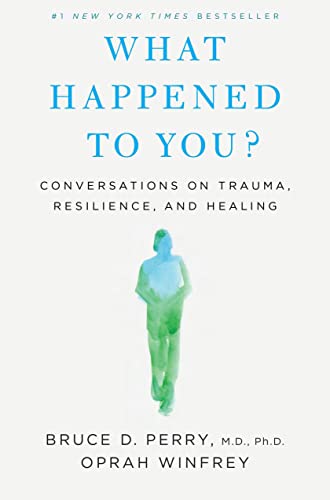
What Happened to You?
Bruce D. Perry, M.D., PhD & Oprah Winfrey
A conversational introduction to how early experience shapes us — reframing 'what's wrong with you' into 'what happened to you.'
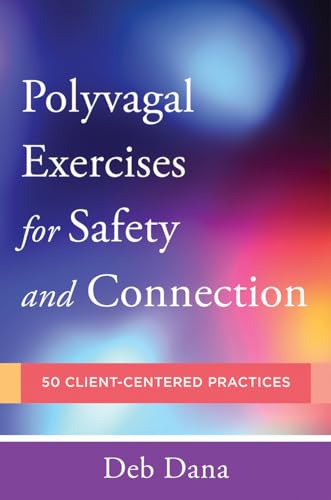
Polyvagal Exercises for Safety and Connection
Deb Dana, LCSW
50 client-centered practices for regulating the autonomic nervous system.
As an Amazon Associate, Clarity House Press earns from qualifying purchases. Your price is never affected.
Found this helpful?
Share it with someone who might need it.
About the Author

Clarity House Press
Editorial Team
The editorial team at Clarity House Press curates and publishes evidence-based content on narcissistic abuse recovery, high-conflict divorce, and healing. Our content is informed by research, survivor experiences, and established trauma-informed approaches.
View all posts by Clarity House Press →Published by Clarity House Press Editorial Team