Please read our important disclaimers before using this content
If you're reading this, you're likely facing challenges that few people truly understand. Many courts mandate mediation even in abuse cases. Learn your rights, when to object, and how to stay safe if mediation is ordered.
This isn't abstract theory—it's practical guidance drawn from clinical expertise, legal strategy, and the lived experiences of survivors who've walked this path before you.
Understanding the Challenge
High-conflict custody cases differ fundamentally from standard divorce proceedings. The same rules apply, but the dynamics—ongoing abuse, manipulation, and parental alienation—create unique challenges that require specialized strategies. For a detailed breakdown of what makes a custody case "high-conflict" and how courts define it, see our foundational guide. Research demonstrates that domestic violence is present in at least half of all cases served at court-based divorce mediation programs, with some studies reporting that up to 90% of couples attending divorce mediation report some form of partner violence (Beck et al., 2010).1
Understanding the legal framework, court procedures, and evidence requirements helps you navigate this process more effectively while protecting yourself and your children.
Key Concepts
Is Mediation Mandatory?
The answer depends entirely on your jurisdiction. Mediation requirements vary dramatically by state and even by county:
States with mandatory mediation (in most or all custody cases):
- California: Mandatory in all contested custody cases under California Family Code § 3170. Parents must attend mediation before obtaining a hearing date.
- Florida: Required before trial under Florida Statute § 44.102, with limited domestic violence exceptions.
- Texas: Many counties require mediation, though not statewide under statute. Local rules vary significantly.
- North Carolina: Mandatory mediation in all custody cases under N.C. Gen. Stat. § 50-13.1(c).
- Arizona: Required in contested custody matters under Arizona Revised Statutes § 25-381.21.
States with conditional or discretionary mediation:
- New York: Courts may order mediation but it's not automatically required.
- Illinois: Mediation encouraged but not mandated statewide; varies by county.
- Pennsylvania: Discretionary based on county and judicial preference.
- Massachusetts: Required in some counties, discretionary in others.
Important limitation: Even in mandatory mediation states, domestic violence exceptions exist. Courts cannot force you into mediation if doing so would endanger you or your children.2 However, you typically must raise this issue proactively—courts won't automatically excuse you from mediation without documented safety concerns.
Timeline Expectations
Custody cases typically unfold over 12-18 months from filing to final orders, with multiple hearings:
- Temporary orders hearing (1-2 months)
- Discovery period (3-6 months)
- Mediation attempts (required in many jurisdictions)
- Trial or settlement (final phase)
Mediation timing: Most courts order mediation after the initial temporary orders hearing but before trial. In California, mediation occurs very early—often within 30-60 days of filing. In other states, mediation may happen 6-9 months into the case.
When Mediation Is Inappropriate: Domestic Violence Exceptions
Most states recognize that mediation is fundamentally unsafe and inappropriate when domestic violence, abuse, or severe power imbalances exist. Legal frameworks include:
California Family Code § 3181: Courts must screen for domestic violence before ordering mediation.3 If abuse is present, parties may be:
- Excused from mediation entirely
- Allowed to attend separate sessions (shuttle mediation)
- Provided safety accommodations (separate arrival times, security presence)
Uniform Mediation Act § 8(c): Adopted by multiple states, recognizes that mediation should not proceed when "there has been or there is a risk of domestic abuse" between the parties.
Model Code on Domestic and Family Violence (NCJFCJ): Recommends against mediation in cases involving domestic violence, coercive control, or significant power imbalances.4
What constitutes disqualifying domestic violence?
- Physical abuse documented through police reports, medical records, or protective orders
- Restraining orders or orders of protection (active or recently expired)
- Substantiated allegations of child abuse
- Evidence of coercive control (financial abuse, isolation, stalking, technological harassment)
- Severe intimidation or fear preventing meaningful negotiation
CRITICAL: You must explicitly request the domestic violence exception. Courts will not automatically apply it. File a declaration or motion explaining why mediation is unsafe, supported by documentation (police reports, protective orders, medical records, witness statements). Research shows that mediators failed to recognize and report domestic violence in 56.9% of DV cases, and court screening forms failed to indicate DV in at least 14.7% of violent cases (Ver Steegh, 2003).5
Evidence Rules
Not everything you know can be presented in court. Evidence must be:
- Relevant: Directly related to parenting or child safety
- Admissible: Follows rules of evidence
- Authenticated: Can be verified as genuine
- Not hearsay: Generally must be firsthand knowledge
Mediation-specific evidence rules: Statements made during mediation are generally confidential and inadmissible in court under mediation privilege laws. You cannot later use what your ex said in mediation as evidence against them at trial. However, agreements reached in mediation become enforceable court orders once approved by a judge.
Practical Strategies
Safety Protocols: If Mediation Is Ordered
If the court orders mediation despite your safety concerns, or if you cannot successfully argue for the domestic violence exception, implement these safety protocols:
1. Request shuttle mediation (caucus-based mediation)
In shuttle mediation, you and your ex never meet face-to-face. The mediator shuttles between separate rooms, conveying offers and counteroffers.6 A landmark randomized controlled trial found that parents reported feeling safer in shuttle mediation than in traditional litigation, and both shuttle and videoconferencing mediation were perceived as safe by trained mediators (Holtzworth-Munroe et al., 2020).7 This format:
- Eliminates direct confrontation and intimidation
- Prevents your ex from reading your body language or emotional responses
- Reduces the risk of triggering or retraumatization
- Allows you to consult privately with your attorney between sessions
How to request it: File a written request with the court or mediator stating, "Due to safety concerns and a history of domestic abuse, I request caucus-based shuttle mediation rather than joint sessions." Provide supporting documentation (protective orders, police reports).
2. Bring an attorney or support person
You are entitled to have your attorney present during mediation. If you cannot afford an attorney, ask if you can bring a domestic violence advocate or trusted support person. Their presence:
- Provides emotional grounding
- Helps you recognize manipulation tactics in real-time
- Ensures you don't agree to unsafe or unreasonable terms under pressure
- Documents what occurs during mediation (though formal statements remain privileged)
3. Prepare safety logistics
- Separate arrival/departure times: Request staggered scheduling so you don't encounter your ex in the parking lot or waiting room
- Security presence: Ask if courthouse security or a bailiff can be present during mediation
- Private waiting areas: Request separate waiting rooms to avoid contact before and after sessions
- Transportation safety: Arrange for someone to accompany you to and from mediation; do not drive alone if possible
- Emergency contacts: Have your safety plan in place, including people to call if you feel unsafe
4. Set firm boundaries in advance
Before mediation begins, decide your non-negotiables:
- Child safety: Supervised visitation if abuse occurred
- Communication methods: Co-parenting app only, no direct contact
- Decision-making authority: Legal custody arrangements that protect your children
- Financial protections: Child support calculations based on accurate income information
Write these down. Share them with your attorney. Do not negotiate these points no matter how much pressure the mediator applies.
5. Recognize pressure tactics and resist coercion
Mediators are trained to reach settlements. Some apply significant pressure, especially if they don't understand abuse dynamics. Be prepared for:
- "You need to compromise" (when compromise is unsafe)
- "Think about what's best for the children" (used to guilt you into unsafe agreements)
- "The judge will be unhappy if you don't settle" (fear-based pressure)
- "You're being unreasonable" (when your boundaries are appropriate)
Your response: "I understand you want to reach an agreement. I cannot agree to terms that compromise my children's safety or my ability to parent effectively. I'm willing to negotiate on [specific safe issues], but not on [your non-negotiables]."
6. Do not sign anything during mediation
Even if you reach a tentative agreement, request time to review it with your attorney before signing. Mediators often push for immediate signatures. Resist this pressure:
"I need 48 hours to review this agreement with my attorney and ensure I understand all implications before signing."
Once you sign a mediation agreement, it becomes binding. Courts rarely set aside agreements reached in mediation, even if you later realize they were coerced or unsafe.
Immediate Action Steps
-
Research your state's mediation requirements: Look up your state's family code or statutes regarding mandatory mediation. Determine if domestic violence exceptions exist and what documentation is required.
-
Gather documentation of abuse: Collect all evidence of domestic violence, abuse, coercive control, or safety concerns:
- Police reports and incident numbers
- Protective orders or restraining orders
- Medical records documenting injuries
- Photographs of injuries or property damage
- Text messages, emails, or voicemails containing threats or abuse
- Witness statements from people who observed abuse
-
Consult with a domestic violence advocate: Contact your local domestic violence organization before mediation is ordered. Advocates can help you:
- Understand your rights to refuse mediation or request accommodations
- Draft a declaration explaining why mediation is unsafe
- Connect with attorneys experienced in high-conflict abuse cases
- Develop a safety plan for mediation if it's ordered
Medium-Term Strategies
File a motion to be excused from mediation (if applicable)
If your jurisdiction allows domestic violence exceptions, file a written motion or declaration explaining:
- Specific incidents of abuse (dates, descriptions, witnesses)
- Why mediation would be unsafe (fear, intimidation, power imbalance)
- What accommodations would make mediation safer (shuttle format, attorney presence)
- Supporting documentation (attached as exhibits)
Work with your attorney to draft this motion. Courts take these requests more seriously when supported by documentation and presented professionally.
Identify trauma-informed mediators
Not all mediators understand abuse dynamics or trauma. If mediation is ordered, request a mediator with:
- Training in domestic violence and coercive control
- Experience with high-conflict custody cases involving abuse
- Willingness to use shuttle mediation format
- Understanding of power imbalances and manipulation tactics
Ask your attorney for recommendations or check with your local domestic violence organization for lists of trauma-informed mediators.
Prepare psychologically for the experience
Mediation can be deeply triggering, even with safety protocols in place. Work with a trauma-informed therapist to:
- Develop grounding techniques you can use during mediation (for a practical toolkit, see our guide to grounding techniques for CPTSD)
- Practice recognizing and resisting manipulation tactics
- Process trauma responses that may arise
- Build nervous system regulation capacity
- Create a post-mediation self-care plan
Long-Term Approach
Understand that mediation is not therapy or resolution
Mediation in high-conflict abuse cases rarely produces genuine agreement or resolution. At best, it creates a temporary framework for co-parenting. At worst, it's a formal process your ex exploits for further control.
Manage your expectations:
- Mediation will not make your ex reasonable, cooperative, or safe
- Agreements reached under coercion often require later modification
- You may need to return to court repeatedly to enforce mediation agreements
- True resolution comes from strong court orders, not mediated compromises
Document everything related to mediation
While mediation conversations are privileged, you can document:
- Date and time of mediation sessions
- Who attended (mediator, attorneys, parties)
- General topics discussed (without quoting specific statements)
- Agreements reached or areas of disagreement
- Any violations of safety protocols
- Your emotional and physical state before and after sessions
This documentation may be relevant later if you need to request court orders instead of continued mediation attempts.
Know when to walk away from mediation
If mediation is truly unsafe or unproductive, communicate this clearly:
- "I've attempted mediation in good faith, but cannot reach a safe agreement through this process."
- "I respectfully request the court proceed to a hearing so a judge can make custody determinations based on evidence."
Refusing to continue mediation may frustrate the court, but protecting yourself and your children is more important than judicial convenience.
Common Obstacles
Why This Is Hard
Power imbalances are invisible to mediators: Mediation assumes both parties have equal bargaining power and can negotiate freely. In abuse cases, this assumption is false.8 Your ex may:
- Use mediation to continue intimidation and control
- Present a charming, reasonable facade to the mediator while subtly threatening you
- Exploit your fear responses to extract unsafe concessions
- Weaponize the mediation process itself ("See, she won't cooperate even in mediation")
Most mediators are not trained to recognize these dynamics. They interpret your fear-based responses (agreeing to unreasonable terms, appearing anxious or agitated, having difficulty articulating your position) as "unwillingness to compromise" rather than trauma responses to ongoing abuse.9 Research demonstrates that family court mediators frequently fail to identify domestic violence even when it is present, and that most women experience secondary victimization during the mediation process itself.10
The knowledge-action gap: Understanding what you "should" do doesn't translate to doing it when your nervous system is activated. In mediation, this means:
- You may agree to things you know are unsafe because your freeze response is activated
- You may struggle to advocate for yourself clearly when facing your abuser
- You may minimize the abuse when the mediator questions its severity
- You may feel intense pressure to comply with authority figures (the mediator, the court)
Studies show that survivors of domestic violence tend to acquiesce to their abuser's demands and be overly conciliatory during mediation, even when it is against their own and their children's interests.11
Inconsistent progress: You'll have good days and terrible days. This doesn't mean you're failing—it's the normal rhythm of healing. Mediation often occurs on days when you're barely functioning, yet you're expected to make critical decisions about your children's future.
Limited support: Many people, including some professionals, don't understand complex trauma or high-conflict custody dynamics. You may face:
- Mediators who dismiss your safety concerns as "conflict" or "communication problems"
- Judges who view your refusal to mediate as uncooperative
- Attorneys who pressure you to "just settle" to avoid trial costs
- Friends and family who don't understand why you can't "just work it out"
Research examining mothers who experienced domestic violence while navigating family court found four consistent themes: perpetrators using the system as coercive control, secondary victimization from the system itself, being required to relive abuse, and long-term psychological consequences.12 Legal professionals often lack awareness of coercive control dynamics and how manipulative behaviors are employed to further control survivors through the court process.13
The Myth of "Cooperative Co-Parenting" Through Mediation
Courts and mediators often operate under the assumption that parents who can't cooperate simply need facilitated communication. This is fundamentally false when one parent is abusive.
Reality check:
- Abusive individuals don't become reasonable in mediation—they become more strategic
- Mediation cannot address personality disorders, narcissistic traits, or antisocial behavior
- "Communication skills training" doesn't work when one party uses communication as a weapon
- Shuttle mediation may reduce immediate danger but doesn't create genuine cooperation14
- Research on child custody mediation in domestic violence cases shows empirical evidence of a failure to protect children and non-abusive parents, with mediators often unable to recognize power imbalances even when abuse is documented.15
What actually works:
- Detailed, specific court orders that remove discretion and ambiguity
- High-structure, low-communication parenting plans
- Parallel parenting (not co-parenting)
- Legal consequences for violations (contempt proceedings, modified custody)
Research confirms that measuring physical violence alone is insufficient for mediation screening; coercive controlling behavior must also be assessed, as it accounts for victim fear, safety concerns, and ultimately the fairness of the mediation process (Rossi et al., 2022).16
Common Pitfalls to Avoid
- Agreeing to mediation without requesting safety accommodations: Don't assume the mediator will provide them automatically
- Attending mediation without an attorney: The power imbalance is too great to navigate alone
- Signing agreements during mediation: Always request 48 hours to review with your attorney
- Focusing on "fairness" or "winning": Focus only on safety and workability
- Believing mediation will change your ex: It won't. Plan accordingly.
- Trusting the mediator to protect you: Mediators serve the process, not your safety
- Minimizing abuse to appear reasonable: Accurately describe safety concerns regardless of how the mediator reacts
- Isolating before and after mediation: Reach out to your support network; process the experience with your therapist
- Representing yourself in complex legal matters: The risks are too high in abuse cases
Real-World Examples
Jennifer's mediation experience: When Jennifer filed for divorce citing domestic violence, the court automatically ordered mediation under her state's mandatory mediation statute. Her ex-husband presented as calm and reasonable in the joint mediation session, while Jennifer struggled to articulate her safety concerns. The mediator interpreted her difficulty as "conflict" and pressured her to agree to unsupervised visitation.
After the first session, Jennifer consulted with a domestic violence advocate who helped her file a motion to be excused from mediation based on documented abuse (police reports from three incidents, photos of injuries, threatening text messages). The court granted the motion and proceeded directly to a hearing, where Jennifer's attorney presented clear evidence that resulted in supervised visitation for her ex.
Lesson: Don't assume the court will recognize abuse without explicit documentation and a formal request for domestic violence exceptions.
Marcus's shuttle mediation success: Marcus's ex-wife had a documented history of emotional abuse and controlling behavior. When the court ordered mediation, Marcus's attorney immediately requested shuttle mediation format. The mediator agreed and conducted separate sessions in different rooms.
This format prevented Marcus's ex from using intimidation tactics, reading his body language, or pressuring him directly. With his attorney present, Marcus was able to negotiate a detailed parenting plan with specific provisions:
- Communication only through OurFamilyWizard app
- Specific pickup/dropoff protocols at a neutral location
- Clear decision-making authority for medical and educational matters
- Consequences for violations built into the agreement
Lesson: Shuttle mediation can work when combined with strong attorney advocacy and specific, detailed agreements. For a more detailed breakdown of mediation-specific strategies when dealing with a narcissist, including how to counter the narcissist's mediation playbook, see our companion guide.
Stephanie's failed mediation—then court success: Stephanie attended three mediation sessions over six months. Each time, she and her ex reached tentative agreements that he immediately violated once the mediation ended. The mediator blamed Stephanie for "not communicating effectively" about the violations.
Finally, Stephanie's attorney advised her to stop participating in mediation and request a court hearing. Stephanie filed a declaration stating, "I have attempted mediation in good faith on three occasions. My ex has violated every agreement reached. Continued mediation is unproductive and exposes my children to ongoing instability. I respectfully request the court issue orders based on evidence rather than continued mediation attempts."
The judge agreed, set a hearing date, and ultimately issued detailed court orders with enforcement mechanisms (contempt sanctions for violations). The orders worked far better than any mediated agreement because they carried legal consequences.
Lesson: Mediation is not required to continue indefinitely. When it's clearly unproductive or unsafe, you can request court intervention.
NOTE ON HOTLINE NUMBERS: Phone numbers for crisis hotlines, legal aid, and support services are provided as a resource. These numbers are current as of publication but may change. Please verify hotline numbers are still active before relying on them. For the National Domestic Violence Hotline, visit thehotline.org for current contact information.
Key Takeaways
- Mediation requirements vary dramatically by state—know your jurisdiction's rules and domestic violence exceptions before assuming mediation is mandatory
- Domestic violence exceptions exist but must be requested proactively—courts will not automatically excuse you from mediation without documentation and explicit requests
- Shuttle mediation (caucus-based) is safer than joint mediation—request this format in writing with supporting documentation of abuse
- Power imbalances make mediation fundamentally unfair in abuse cases—mediators often cannot recognize or address manipulation tactics and trauma responses
- Never sign mediation agreements without attorney review—request 48 hours minimum to ensure agreements are safe and enforceable
- You can refuse to continue mediation when it's unsafe or unproductive—request court intervention when mediation clearly isn't working
- Mediation will not change your ex's behavior—focus on detailed court orders with enforcement mechanisms, not cooperative co-parenting fantasies
- Professional support is critical: Trauma-informed attorneys and domestic violence advocates understand these dynamics and can protect you during mediation
- Safety protocols matter: Separate arrival times, security presence, attorney accompaniment, and pre-planned boundaries can reduce danger during mandatory mediation
Your Next Steps
-
Immediately: Research your state's mediation requirements and domestic violence exceptions. Search "[Your State] mandatory mediation family law" and "[Your State] domestic violence mediation exception." Identify what documentation is required to request an exception.
-
This week:
- Gather all documentation of abuse: police reports, protective orders, medical records, photos, threatening communications, witness statements
- Contact a local domestic violence advocacy organization for guidance on mediation safety and your legal rights
- Schedule consultations with 2-3 family law attorneys experienced in high-conflict domestic violence cases. Ask specifically about their approach to mediation in abuse cases.
-
This month:
- If mediation is ordered, immediately file a written request for shuttle mediation format, citing safety concerns and providing supporting documentation
- Work with your attorney to draft a motion to be excused from mediation under your state's domestic violence exception (if applicable)
- Prepare your list of non-negotiable safety requirements (supervised visitation, communication only through app, etc.)
- Schedule sessions with a trauma-informed therapist to develop grounding techniques and process trauma responses before mediation occurs
-
Before any mediation session:
- Confirm your attorney will attend with you
- Arrange separate arrival/departure times and transportation safety
- Review your non-negotiables and practice responding to pressure tactics
- Plan post-mediation self-care and support (who to call, where to go, how to decompress)
-
Ongoing:
- Document all mediation-related events (dates, attendees, topics, agreements, violations) without quoting privileged mediation conversations
- If mediation agreements are violated, document violations and request court intervention
- If mediation is clearly unsafe or unproductive after good-faith attempts, file a request for the court to proceed to hearing rather than continued mediation
- Communicate with your co-parent only through documented channels (email, co-parenting app). Keep communication brief, informative, friendly, and firm (BIFF method).
Resources
Mediation and Domestic Violence Legal Information:
- WomensLaw.org - State-specific mediation laws and domestic violence exemptions
- National Center on Domestic Violence, Trauma & Mental Health - Mediation safety resources for survivors
- National Council of Juvenile and Family Court Judges - Model Code on Domestic and Family Violence
- Association of Family and Conciliation Courts - Mediation guidelines for high-conflict cases
Legal Support and Family Law:
- American Academy of Matrimonial Lawyers - Find family law attorneys for mediation representation
- Family Violence Appellate Project - Legal support for mediation exemption motions
- National Domestic Violence Hotline Legal Advocacy - Understanding mediation rights
- Legal Services Corporation - Find free/low-cost legal aid for mediation issues
Safety Planning and Crisis Support:
- National Domestic Violence Hotline - 1-800-799-7233 (SAFE) for safety planning before mediation
- 988 Suicide & Crisis Lifeline - Call or text 988 for crisis support (24/7)
- Crisis Text Line - Text HOME to 741741 for crisis counseling
- OurFamilyWizard - Documented communication to avoid unsafe direct contact
Additional Resources
Legal Resources:
- Legal aid: LawHelp.org for free/low-cost legal assistance by state
- State-specific mediation statutes: Research "[Your State] Family Code mediation" or "[Your State] custody mediation requirements"
- Domestic violence legal advocacy: Many domestic violence organizations provide free legal consultations and can help you file motions for mediation exceptions
Safety and Support:
- National Domestic Violence Hotline: 1-800-799-7233 (call or text) or thehotline.org for 24/7 crisis support, safety planning, and local resource referrals
- National Center on Domestic and Sexual Violence: Resources on mediation safety and domestic violence exceptions at ncdsv.org
Documentation and Communication Tools:
- OurFamilyWizard, AppClose, TalkingParents: Court-admissible co-parenting communication apps that document all interactions
- Evidence organization: Create separate folders for police reports, medical records, communications, photos, and witness statements
Books and Guides:
- Splitting: Protecting Yourself While Divorcing Someone with Borderline or Narcissistic Personality Disorder by Bill Eddy
- High-Conflict Custody Cases: Protecting Yourself and Your Children from a Toxic Ex (Clarity House Press, 2025)
- BIFF: Quick Responses to High-Conflict People by Bill Eddy
Legal Citations Referenced:
- California Family Code § 3170: Mandatory mediation in custody cases
- California Family Code § 3181: Domestic violence screening before mediation
- Florida Statute § 44.102: Alternative dispute resolution in family cases
- North Carolina General Statute § 50-13.1(c): Mandatory custody mediation
- Arizona Revised Statutes § 25-381.21: Mediation requirements
- Uniform Mediation Act § 8(c): Domestic violence exceptions to mediation
- Model Code on Domestic and Family Violence (National Council of Juvenile and Family Court Judges): Recommendations against mediation in domestic violence cases
Important Note: Laws change. Verify current statutes in your jurisdiction before relying on these citations. Consult with a licensed family law attorney for jurisdiction-specific guidance.
References
- National Institute of Justice, "Mandatory Divorce Custody Mediation and Intimate Partner Violence," U.S. Department of Justice, https://nij.ojp.gov/topics/articles/mandatory-divorce-custody-mediation-and-intimate-partner-violence (accessed January 7, 2026). Research demonstrates that mandatory custody mediation can disadvantage domestic violence victims and place children in continued peril, with recommendations including opt-out provisions for domestic violence cases. ↩
- California Courts Self Help Guide, "Custody mediation in cases with domestic violence," California Courts, https://selfhelp.courts.ca.gov/DV-restraining-order/family-court-mediation (accessed January 7, 2026). California Family Code § 3181 requires courts to screen for domestic violence before ordering mediation and mandates separate sessions when abuse is alleged or protective orders are in effect. ↩
- Office of Justice Programs, "Model Code on Domestic and Family Violence," National Council of Juvenile and Family Court Judges, U.S. Department of Justice, https://www.ojp.gov/ncjrs/virtual-library/abstracts/model-code-domestic-and-family-violence (accessed January 7, 2026). The NCJFCJ Model Code recognizes that mediation requires equal balance of power and situations involving coercion are generally not suited for mediation. ↩
- Rossi, F. S., Holtzworth-Munroe, A., & Applegate, A. G., "Shuttle and Online Mediation: A Review of Available Research and Implications for Separating Couples Reporting Intimate Partner Violence or Abuse," Family Court Review, Vol. 55, No. 3 (2017), https://onlinelibrary.wiley.com/doi/abs/10.1111/fcre.12293 (accessed January 7, 2026). Research shows shuttle mediation allows parties to maintain physical separation, promotes safety, and disrupts destructive communication patterns in IPV cases. ↩
- Office of Justice Programs, "Dealing With Power Imbalances in the Mediation of Interpersonal Disputes," U.S. Department of Justice, https://www.ojp.gov/ncjrs/virtual-library/abstracts/dealing-power-imbalances-mediation-interpersonal-disputes (accessed January 7, 2026). Research identifies that informal justice appears ill-suited for handling disputes among parties of unequal strength and may actually foster and preserve such imbalances. ↩
- Office of Justice Programs, "Mandatory Custody Mediation: Empirical Evidence of Increased Risk for Domestic Violence Victims and Their Children," U.S. Department of Justice, https://www.ojp.gov/library/publications/mandatory-custody-mediation-empirical-evidence-increased-risk-domestic (accessed January 7, 2026). Studies reveal that when domestic violence is brought up during mediation, victims and their children often received no more protections, and sometimes even fewer, than cases where domestic violence was neither noted nor discussed. ↩
- University of Michigan ICPSR, "Intimate Partner Violence and Custody Decisions: A Randomized Controlled Trial of Outcomes from Family Court, Shuttle Mediation, or Videoconferencing Mediation," Inter-university Consortium for Political and Social Research, https://www.icpsr.umich.edu/web/NACJD/studies/37162 (accessed January 7, 2026). Randomized control trial comparing litigation, shuttle mediation, and videoconferencing mediation in IPV cases, concluding that mediation with strong safety protocols may be appropriate when both parents are independently willing to mediate. ↩
- Rivera, E. A., Sullivan, C. M., & Zeoli, A. M., "Secondary Victimization of Abused Mothers by Family Court Mediators," Feminist Criminology, Vol. 7, No. 3 (2012), pp. 234-252, DOI: 10.1177/1557085111430827, https://pubmed.ncbi.nlm.nih.gov/25580100/ (accessed January 7, 2026). Study finding that most abused mothers experienced secondary victimization during family court mediation, with policy recommendations including improved screening for intimate partner abuse, separate mediation sessions, and enhanced mediator training. ↩
- Harvard Negotiation Law Review, "Addressing Domestic Violence in Mediation: The Need for More Uniformity and Research," Harvard Law School, https://journals.law.harvard.edu/hnlr/2021/05/addressing-domestic-violence-in-mediation-the-need-for-more-uniformity-and-research/ (accessed January 7, 2026). Legal scholarship documenting that victims of domestic violence tend to acquiesce to abuser demands and be overly conciliatory during mediation, even when against their interests, due to power imbalances and trauma responses. ↩
- Wilde, J. L., et al., "The psychological impact on mothers who have experienced domestic violence when navigating the family court system: a scoping review," Psychiatry, Psychology and Law, Vol. 31, No. 1 (2023), pp. 39-65, DOI: 10.1080/13218719.2023.2214927, https://www.tandfonline.com/doi/full/10.1080/13218719.2023.2214927 (accessed January 7, 2026). Scoping review identifying four major themes: perpetrators using the system as coercive control, secondary victimization from system interactions, being required to relive abuse, and long-term psychological consequences. ↩
- Lapierre, S., Côté, I., Lambert, A., Busch, N. B., Drouin, C., Dubois, M. F., & Couturier, S., "Difficult but close relationships: Children's perspectives on relationships with their fathers in a context of intimate partner violence," Journal of Interpersonal Violence, Vol. 36, No. 17-18 (2021), pp. NP9569-NP9593, https://pmc.ncbi.nlm.nih.gov/articles/PMC4287987/ (accessed January 7, 2026). Research documenting that legal professionals often lack awareness of coercive control complexities and how these manipulative behaviors are employed by perpetrators to further control mothers and children through the court system. ↩
- Ver Steegh, N., "Yes, No, and Maybe: Informed Decision Making About Divorce Mediation in the Presence of Domestic Violence," William & Mary Journal of Women and Law, Vol. 9, No. 2 (2003), pp. 145-206, https://pubmed.ncbi.nlm.nih.gov/16043584/ (accessed January 7, 2026). Empirical evidence demonstrating that child custody mediation in domestic violence cases frequently fails to protect children and non-abusive parents, with systemic failures in recognizing and responding to power imbalances and safety concerns. ↩
- Beck, C. J. A., Walsh, M. E., Ballard, R. H., Holtzworth-Munroe, A., Applegate, A. G., & Putz, J. W., "Analysis of Mediation Agreements of Families Reporting Specific Types of Intimate Partner Abuse," Family Court Review, Vol. 47, No. 3 (2010), pp. 401-415, https://onlinelibrary.wiley.com/doi/10.1111/j.1744-1617.2009.01264.x (accessed January 9, 2026). Large-scale study finding that approximately 90% of couples attending divorce mediation reported partner violence, yet only about 7% of cases were screened out, demonstrating significant gaps in mediation screening protocols. ↩
- Johnson, N. E., Saccuzzo, D. P., & Koen, W. J., "Child Custody Mediation in Cases of Domestic Violence: Empirical Evidence of a Failure to Protect," Violence and Victims, Vol. 20, No. 3 (2005), pp. 349-360, https://pubmed.ncbi.nlm.nih.gov/16043584/ (accessed January 9, 2026). Peer-reviewed study finding that mediators failed to recognize and report domestic violence in 56.9% of DV cases, with court screening forms failing to indicate DV in at least 14.7% of violent cases. ↩
- Holtzworth-Munroe, A., Beck, C. J. A., Applegate, A. G., Adams, J. M., Rossi, F. S., Jiang, L. J., Tomlinson, C. S., & Hale, D. F., "Intimate Partner Violence (IPV) and Family Dispute Resolution: A Randomized Controlled Trial Comparing Shuttle Mediation, Videoconferencing Mediation, and Litigation," Psychology, Public Policy, and Law, Vol. 27, No. 1 (2020), pp. 45-64, https://nij.ojp.gov/library/publications/intimate-partner-violence-ipv-and-family-dispute-resolution-randomized (accessed January 9, 2026). Landmark randomized controlled trial finding that parents reported feeling safer in shuttle and videoconferencing mediation than in traditional litigation when strong safety protocols were in place. ↩
- Rossi, F. S., Applegate, A. G., Beck, C. J., Timko, C., & Holtzworth-Munroe, A., "Screening for Intimate Partner Violence in Family Mediation: An Examination of Multiple Methodological Approaches Using Item Response Theory," Assessment, Vol. 29, No. 5 (2022), pp. 981-994, https://journals.sagepub.com/doi/10.1177/10731911211022843 (accessed January 9, 2026). Peer-reviewed study demonstrating that measuring physical violence alone is insufficient for mediation screening; coercive controlling behavior must be assessed as it accounts for victim fear, safety concerns, and the fairness of the mediation process. ↩
Recommended Reading
From Clarity House Press — plus trusted books for deeper understanding



5 Types of People Who Can Ruin Your Life
Bill Eddy
Identifies five high-conflict personality types and teaches how to spot warning signs.
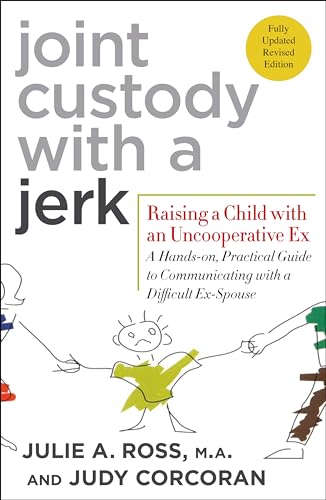
Joint Custody with a Jerk
Julie A. Ross, MA & Judy Corcoran
Proven communication techniques for co-parenting with an uncooperative ex.
As an Amazon Associate, Clarity House Press earns from qualifying purchases. Your price is never affected.
Found this helpful?
Share it with someone who might need it.
About the Author

Clarity House Press
Editorial Team
The editorial team at Clarity House Press curates and publishes evidence-based content on narcissistic abuse recovery, high-conflict divorce, and healing. Our content is informed by research, survivor experiences, and established trauma-informed approaches.
View all posts by Clarity House Press →Published by Clarity House Press Editorial Team