Please read our important disclaimers before using this content
Composite account: this narrative is drawn from common survivor experiences. Names, occupations, and identifying details are illustrative and do not depict a single real person.
I can identify a SQL injection attack in seconds. I've prevented three ransomware incidents in my career. I run vulnerability assessments and penetration tests on complex systems for a living.
But I married a woman who systematically exploited every emotional vulnerability I had, and I didn't see it coming until I was financially entangled, legally bound, and father to two daughters I'd do anything to protect.
Looking back with the clarity that only comes from divorce court and therapy bills, I can see exactly how it happened: My greatest professional strength became my biggest personal weakness.
Here's what I mean.
The Love-Bombing Phase (Or: "This Install Seemed Too Easy")
We met at a tech industry mixer in Atlanta. I was 32, decent-looking, stable career, owned my condo. Not a player, not desperate, just... available.
She approached me. That should have been flag #1, but I was flattered. Later I learned it was strategic—narcissists often target, they don't wait to be chosen.
What I told myself: "Wow, she's confident and direct. I like that."
What I missed: Predators study their prey before approaching.
The Red Flags in Retrospect:
Week 1: Intensity
- She texted constantly. Good morning, good night, "thinking of you" messages throughout the day
- Wanted to see me 4-5 times in the first week
- Called me her "soulmate" after date three
- Mirrored everything I said I valued: family, loyalty, eventually wanting kids
My analytical brain said: "She knows what she wants and goes after it. Efficient. I respect that."
What I should have seen: Intensity isn't intimacy. Real connection takes time. This was love-bombing—a manipulation tactic identified in research on narcissistic abuse patterns where idealization creates rapid emotional attachment1 designed to hook me before I could think critically.
Week 3: Future-Faking
- Talked about "our future" constantly
- Showed me Pinterest boards of wedding ideas
- Discussed baby names
- Mentioned she could see us "growing old together"
My analytical brain said: "She's a planner like me. We're aligned on life goals. This is good data."
What I should have seen: You can't plan a future with someone you've known for 21 days. She was creating a shared fantasy to accelerate attachment.
Week 6: Isolation Begins (Disguised as Care)
- "Your friends seem like they party a lot—you're more mature than that"
- "I get worried when you work late and don't text me back"
- "Your mom is so critical of you—I'd never treat you like that"
My analytical brain said: "She pays attention to my relationships and wants to protect me. She's invested."
What I should have seen: She was identifying and beginning to sever my support system. Research consistently shows that isolation from friends and family is one of the earliest and most common tactics used by intimate partner abusers2. Abusers isolate targets. It's page one of the playbook.
Why My IT Brain Failed Me:
In tech, speed to deployment is valued. If a solution works quickly and efficiently, that's good engineering.
In relationships, rapid escalation is a massive red flag.
But I treated our relationship like a successful project:
- ✅ Clear requirements gathering (she asked great questions about what I wanted)
- ✅ Aligned goals (or so it seemed)
- ✅ Fast implementation (moved in together after 4 months)
- ✅ Stakeholder buy-in (she charmed my family, friends, colleagues)
I thought I'd found an optimal solution. Really, I'd installed malware that would take years to fully corrupt the system.
The Mask Starts Slipping (Or: "Performance Degradation in Production")
The shift was so gradual I didn't notice it. That's the genius of covert narcissism—by the time you realize something's wrong, you're so invested you explain it away. The cognitive dissonance this creates is precisely why intelligent people stay in abusive relationships long past the point where outsiders think they should have left.
Month 8: First "Incident"
We were at my company holiday party. I was talking to a female colleague about a project. My girlfriend appeared, smiled sweetly, and said: "Honey, I need you for a second."
In the hallway: "Who is that woman? You were flirting with her."
I was baffled. "That's Jennifer, she's on my team. We were discussing the database migration."
"The way she was looking at you wasn't professional."
I spent the rest of the night reassuring her. Apologizing for something I didn't do. We left early.
My analytical brain said: "She's insecure. I need to be more aware of how my interactions look. I can fix this with clearer communication."
What I should have seen: This was a test. Would I defend reality or accept her reality? I failed by apologizing. She learned she could rewrite events and I'd comply.
Month 10: The Proposal (Engineered Timing)
Looking back, the proposal timing was perfect—for her.
We'd just had a big fight (I'd gone to my brother's bachelor party weekend, she sulked for 72 hours). I was exhausted from the conflict. She'd started the "maybe we're not compatible" talk.
Then suddenly, she shifted: "I'm sorry I've been difficult. I just love you so much and I'm scared of losing you. I know you're the one."
I proposed two weeks later. Not because I woke up desperate to marry her—but because I was exhausted from the conflict cycle and she'd positioned marriage as the solution.
My analytical brain said: "Conflict is normal. Marriage shows commitment to working through issues. This will stabilize things."
What I should have seen: Proposing to end conflict is like installing a permanent patch on a fundamentally flawed system. You're not fixing it—you're cementing the bug into production.
Month 14: Pregnancy (Unplanned, Suspiciously Timed)
We'd agreed to wait two years after marriage before kids. We were using protection.
She got pregnant 4 months after the wedding, right when I'd started suggesting couples therapy for our "communication issues."
My analytical brain said: "Birth control fails. It happens. We wanted kids eventually anyway. Time to adapt to new requirements."
What I should have seen: Pregnancy is the ultimate binding mechanism. Now there's a child involved. Leaving becomes exponentially harder. Coincidence? I'll never know. But the timing was awfully convenient for ending the "should we go to therapy" conversation.
The Full System Compromise (Marriage With a Covert Narcissist)
By the time Emma was born, I was fully compromised:
Financially: Joint accounts she controlled, mortgage in both names, her name on my condo, car loans Socially: Hadn't seen my college friends in a year, limited contact with my brother, strained relationship with my parents Psychologically: Believed I was the problem—I worked too much, I didn't understand her needs, I was "emotionally unavailable" Legally: Married with a child—leaving would mean custody battles and child support
My analytical brain said: "Marriage is hard work. I need to try harder. Debug the communication issues. Optimize our interactions."
What I should have seen: I wasn't in a marriage that needed improvement. I was in an abusive system designed to extract supply while preventing escape.
The Patterns I Couldn't Debug:
The Cycle I Lived On Repeat:
- Tension Building: Walking on eggshells, her irritation at everything I did
- Incident: Fight over something minor (I loaded the dishwasher wrong, I came home 10 minutes late, I "looked at her wrong")
- Reconciliation: Apologies (from me), promises to do better (from me), temporary peace
- Calm: Brief period where I thought "we're good now"
- Repeat: Cycle starts again, usually within 2-3 weeks
My analytical brain said: "I need to identify the triggers and avoid them. Root cause analysis. Implement preventive measures."
What I should have seen: There were no fixable triggers. The cycle of abuse—tension building, incident, reconciliation, calm—is recognized as a core pattern of intimate partner violence3. Abusers need the cycle to maintain control. You can't debug intentional malicious code. Understanding intermittent reinforcement explained why this cycle is neurologically more addictive than consistent treatment would have been.
The Red Flags I Rationalized With Logic:
Let me give you the side-by-side of what I experienced vs. what I told myself:
Every single red flag, I had a logical explanation. Because that's what analytical minds do—we find patterns and create frameworks to explain data.
I didn't realize I was creating frameworks to explain abuse.
When The System Finally Crashed:
Sophie was 3, Emma was 6. I walked in on my wife in bed with someone else.
Even then—EVEN THEN—my brain tried to troubleshoot: "What did I do wrong? Did I neglect her? Work too much? Fail to meet her needs?"
But here's what broke through: She didn't apologize. She didn't cry or beg forgiveness.
She said: "This is your fault. If you'd been a better husband, I wouldn't have needed someone else."
This is classic gaslighting—a form of psychological abuse where a person manipulates another to make them doubt their own judgment and reality4. I was being told that her infidelity was somehow my fault, a distortion of reality designed to maintain control.
And something in me finally ran the vulnerability scan on the relationship itself.
Every fight where I apologized for her behavior. Every boundary she'd crossed while calling me controlling. Every time I questioned my reality and accepted hers instead. Every friend I'd lost, every family relationship damaged, every piece of myself I'd compressed to fit her requirements.
System status: CRITICAL FAILURE
What I'd Tell My Younger Self:
If I could go back to that tech industry mixer in 2015, here's what I'd say:
1. Slow down the "deployment"
Real love doesn't need to be rushed. If someone is pushing for commitment, cohabitation, or marriage within months—that's a red flag, not romance.
Healthy pace:** 1-2 years of dating before marriage discussions My pace: Engaged at 8 months, married at 14 months, pregnant at 18 months Red flag: Relationship escalation that prevents you from seeing clearly
2. Watch for mirroring
Does she love everything you love? Share all your values? Want exactly the life you described?
That's not soulmate synchronicity. That's a chameleon.
Healthy compatibility:** Shared core values, different interests/hobbies, respectful disagreement My experience: She "loved" hiking, craft beer, sci-fi—then never mentioned them again after marriage Red flag: Person has no solid identity separate from yours
3. Intensity is not intimacy
100 texts a day isn't love. It's surveillance. Constant contact isn't connection. It's control. "I can't live without you" isn't romantic. It's a warning.
Healthy attachment:** Secure enough to have separate lives, trust without constant contact My experience: Anxiety if I didn't respond within 20 minutes, tracking my location, "just worried about you" Red flag: Your absence creates her "crisis"
4. Isolation is never love
If she's threatened by your friends, critical of your family, wants you "all to herself"—RUN.
Healthy relationships:** Integrate into each other's lives, encourage outside friendships My experience: Slowly stopped seeing friends ("they don't really get you like I do"), limited family contact ("your mom is so judgmental") Red flag: You're "us against the world"—because she's made it that way
5. Trust your gut over your logic
This is the hardest one for analytical minds: Sometimes the data doesn't add up because you're being fed false data.
If you feel anxious, confused, like you're going crazy—that's data too.
Healthy relationship:** Generally calm, secure, energized My experience: Constant low-level anxiety, second-guessing myself, walking on eggshells Red flag: You feel worse about yourself in the relationship than you did single
The Pattern Recognition I Wish I'd Had:
Now, two years post-separation and 18 months into therapy, I can finally see the patterns clearly:
Love-bombing → Idealization to hook you Isolation → Remove your support system Devaluation → Criticize, undermine, erode self-worth Control → Financial, social, emotional, sexual Gaslighting → Deny your reality, rewrite history Triangulation → Use others (kids, affair partners, her family) to destabilize you Discard/Hoover cycle → Threaten to leave, then love-bomb when you pull away
It's a system. A malicious program designed to exploit vulnerabilities5. Research shows that vulnerable narcissism (covert narcissism) is significantly more associated with psychological and cyber abuse in intimate relationships than grandiose narcissism6.
And I installed it willingly, because I thought I was debugging communication issues instead of recognizing an intentional attack.
For the Analytical Minds Reading This:
If you're like me—engineer, programmer, data analyst, scientist, anyone who lives in logic—hear this:
Your analytical skills are an asset. They're also a vulnerability.
It's important to recognize that men are also victims of intimate partner violence, with research documenting psychological abuse prevalence rates ranging from 7.3% to 37%7. Narcissistic abuse doesn't discriminate by gender, but male victims often underreport their experiences due to shame or lack of recognition that they're being abused.
Narcissists are EXCELLENT at providing logical-sounding explanations for illogical behavior. They exploit your need for patterns and frameworks.
So before you marry someone, run these diagnostic tests:
✅ Do I feel better or worse about myself in this relationship? ✅ Am I more isolated or more connected to my support system? ✅ Do conflicts end with mutual understanding or with me apologizing? ✅ Is the pace of this relationship driven by both of us or by one person? ✅ Would my friends/family be concerned if they knew everything? ✅ Do I feel safe expressing disagreement? ✅ Is she the same person in public and private?
If you're failing those tests, the relationship is the bug—not you.
Where I Am Now:
I'm debugging myself these days. Therapy twice a month. Custody battle ongoing. Two daughters who barely speak to me because their mother has spent two years poisoning the well.
But I'm out. And I'm building awareness.
This blog post? It's my patch for other guys with analytical minds who might miss the warning signs I missed.
You can spot every cybersecurity threat in your company's infrastructure.
Don't let narcissistic abuse be the one exploit you miss in your personal life.
Document. Get therapy. Trust people who care about you. And for the love of God, slow down the relationship deployment.
Some bugs aren't fixable.
Sometimes you need to kill the process and start over.
Composite account: this narrative is drawn from common survivor experiences. Names, occupations, and identifying details are illustrative and do not depict a single real person.
Resources
Understanding Narcissistic Abuse Patterns:
- Why Does He Do That? by Lundy Bancroft - Systematic breakdown of abusive behavioral patterns
- The Body Keeps the Score by Bessel van der Kolk - Understanding trauma responses to covert abuse
- Psychopath Free by Jackson MacKenzie - Recognizing narcissistic manipulation patterns
- National Domestic Violence Hotline - 1-800-799-7233 (SAFE) for abuse support and safety planning
Therapy and Recovery Support:
- Psychology Today - Therapists - Filter for "narcissistic abuse" and "covert abuse"
- Out of the FOG - Resources for partners/children of personality-disordered individuals
- r/NarcissisticAbuse - Reddit peer support community
- EMDR International Association - Find EMDR therapists for trauma processing
Crisis Support and Community:
- 988 Suicide & Crisis Lifeline - Call or text 988 for immediate crisis support (24/7)
- Crisis Text Line - Text HOME to 741741 for crisis counseling
- SAMHSA National Helpline - 1-800-662-4357 (mental health treatment referrals)
- r/LifeAfterNarcissism - Reddit recovery community
References
- Narcissism and Intimate Partner Violence: A Systematic Review and Meta-Analysis. (2023-2024). Published in peer-reviewed journals examining narcissistic traits and intimate partner violence. Available at: https://pubmed.ncbi.nlm.nih.gov/37702183/ and https://pmc.ncbi.nlm.nih.gov/articles/PMC11155208/ ↩
- Coercive Control in Intimate Partner Violence: Relationship with Women's Experience of Violence, Use of Violence, and Danger. (2017-2019). PMC National Center for Biotechnology Information. Documents isolation as a key control tactic in intimate partner abuse. Available at: https://pmc.ncbi.nlm.nih.gov/articles/PMC6291212/ ↩
- Domestic Violence - StatPearls. (2024). NCBI Bookshelf. Comprehensive review of the cycle of abuse pattern recognized in intimate partner violence research. Available at: https://www.ncbi.nlm.nih.gov/books/NBK499891/ ↩
- Gaslighting Exposure During Emerging Adulthood: Personality Traits and Vulnerability Paths. (2024). Published in PMC with peer review. Examines gaslighting as psychological manipulation in intimate relationships. Available at: https://pmc.ncbi.nlm.nih.gov/articles/PMC11456334/ and https://pubmed.ncbi.nlm.nih.gov/39376937/ ↩
- Understanding Intimate Partner Violence: Why Coercive Control Requires a Social and Systemic Entrapment Framework. (2023). PMC National Center for Biotechnology Information. Analyzes intimate partner violence as a systematic control system. Available at:. ↩
- Coercive Control and Intimate Partner Violence: Relationship With Personality Disorder Severity and Pathological Narcissism. (2025). Recent peer-reviewed research examining the relationship between covert/vulnerable narcissism and abuse. Available at: https://pmc.ncbi.nlm.nih.gov/articles/PMC12411753/ ↩
- Pathological narcissism: An analysis of interpersonal dysfunction within intimate relationships. (2023-2024). PMC/PubMed research examining male victimization rates and psychological abuse in narcissistic relationships. Available at: https://pmc.ncbi.nlm.nih.gov/articles/PMC9541508/ and https://pubmed.ncbi.nlm.nih.gov/34783453/ ↩
Recommended Reading
From Clarity House Press — plus trusted books for deeper understanding
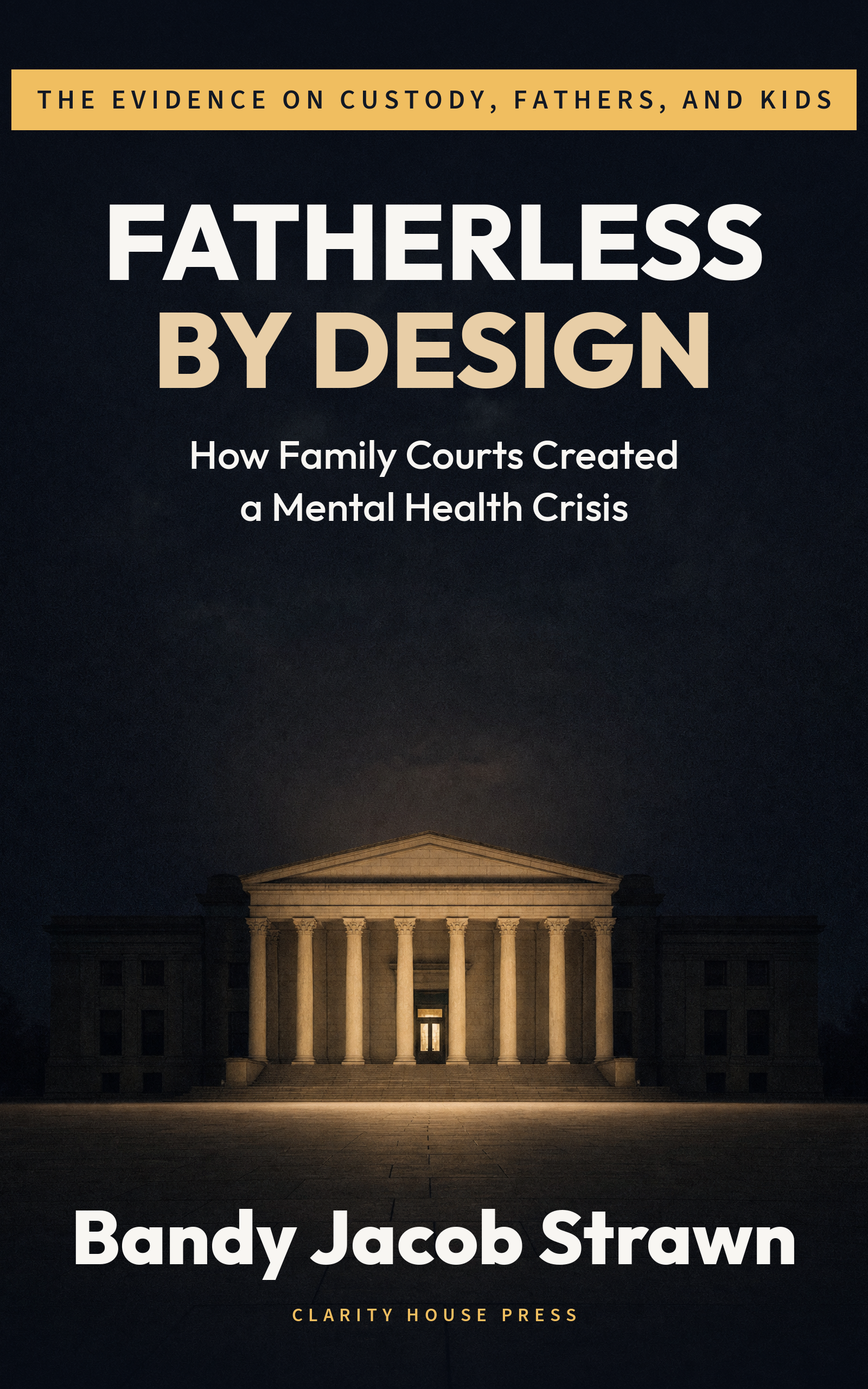

Surviving the Storm: When the Court Takes Your Children
Clarity House Press
For fathers in active high-conflict custody battles. Understand your CPTSD symptoms, begin stabilization, and build foundation for healing. 17 chapters covering recognition, symptoms, and the healing path.
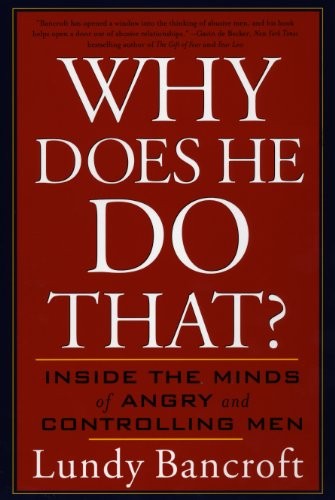
Why Does He Do That?
Lundy Bancroft
Largest-selling book on domestic violence. Explains the mindset of angry and controlling men.
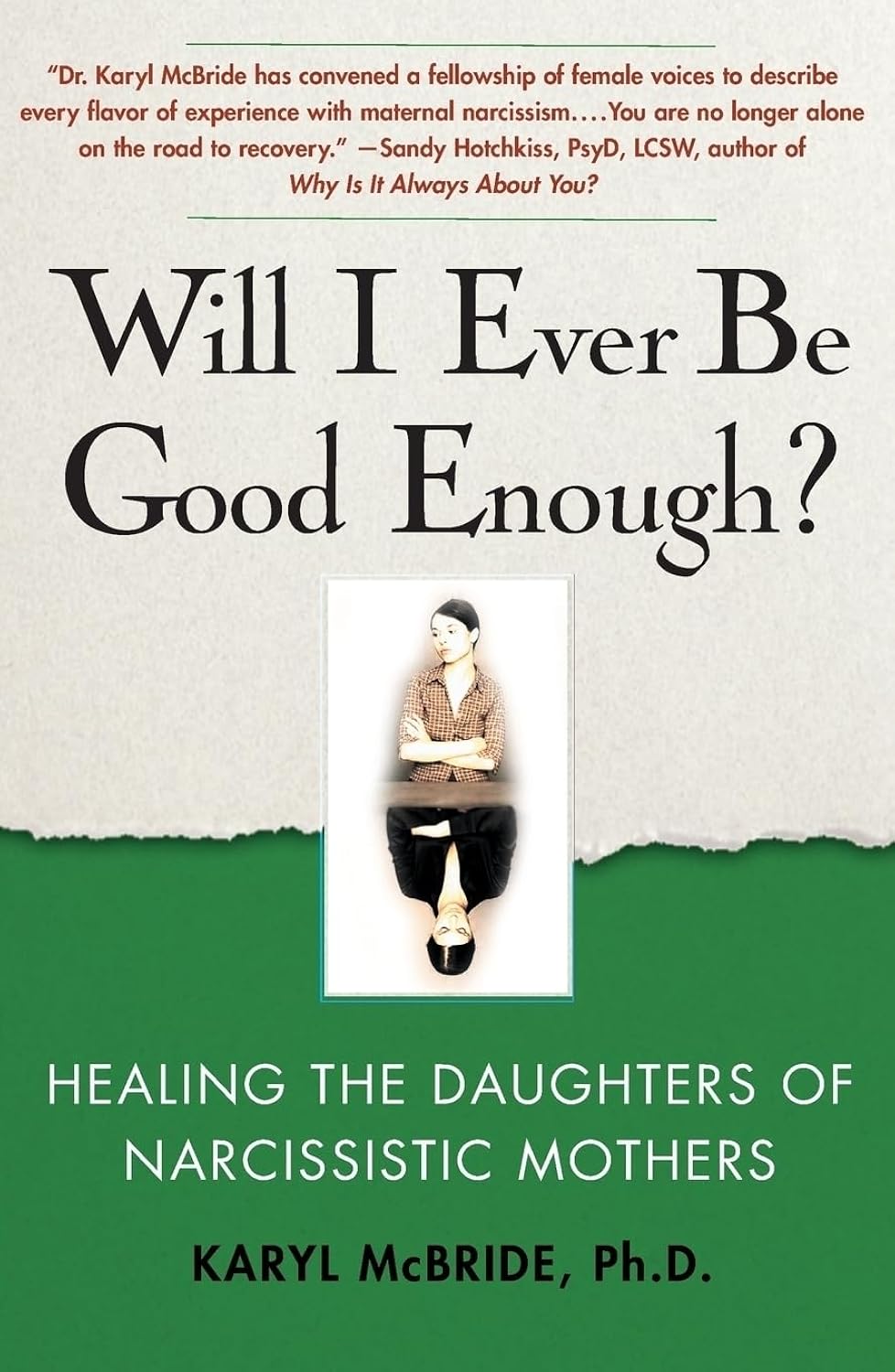
Will I Ever Be Good Enough?
Karyl McBride, PhD
Healing the daughters of narcissistic mothers through understanding, validation, and recovery.
As an Amazon Associate, Clarity House Press earns from qualifying purchases. Your price is never affected.
Found this helpful?
Share it with someone who might need it.
About the Author

Clarity House Press
Editorial Team
The editorial team at Clarity House Press curates and publishes evidence-based content on narcissistic abuse recovery, high-conflict divorce, and healing. Our content is informed by research, survivor experiences, and established trauma-informed approaches.
View all posts by Clarity House Press →Published by Clarity House Press Editorial Team