Please read our important disclaimers before using this content
"They say they love me, but they just screamed at me for twenty minutes over nothing."
"They promised to change, but this is the fourth time they've done the exact same thing."
"They're so kind in public, but behind closed doors they're cruel."
"They bought me flowers yesterday, but today they told me I'm worthless."
These contradictions aren't just confusing—they create a specific psychological phenomenon called cognitive dissonance, and it's one of the most powerful mechanisms that keeps survivors trapped in narcissistic abuse.
You're not weak for staying. You're not stupid for believing them. You're experiencing a well-documented psychological state that occurs when your brain holds two conflicting beliefs simultaneously and cannot reconcile them.
Understanding cognitive dissonance is essential for both recognizing why you stayed and navigating the recovery process. This article explores the clinical foundation of cognitive dissonance, how narcissists weaponize it, and how to break through the mental trap it creates. This psychological trap works hand-in-hand with trauma bonding—the neurochemical attachment that makes leaving feel biologically impossible even when you intellectually understand the need to go.
Content Warning: This article discusses emotional abuse, manipulation tactics, and the psychological impact of narcissistic relationships. If you're in active crisis, please reach out to support services before continuing.
The Clinical Foundation: Festinger's Theory of Cognitive Dissonance
In 1957, psychologist Leon Festinger published groundbreaking research on cognitive dissonance—the mental discomfort that occurs when a person holds contradictory beliefs, values, or attitudes simultaneously.1 Festinger's theory established that humans have a fundamental need for internal consistency, and when we encounter information that conflicts with our existing beliefs, we experience psychological tension that demands resolution. Research demonstrates that cognitive dissonance creates measurable psychological and physiological stress responses, motivating individuals to reduce the discomfort through belief change or justification.
The Core Components of Cognitive Dissonance
Conflicting Cognitions: Two or more beliefs, attitudes, or pieces of knowledge that contradict each other. In narcissistic abuse, this often manifests as:
- "They love me" vs. "They hurt me"
- "They're a good person" vs. "They do terrible things"
- "I should leave" vs. "I can't abandon them"
- "This is abuse" vs. "But they had a difficult childhood"
Mental Discomfort: The psychological distress caused by holding these conflicting cognitions. This isn't just intellectual confusion—it creates genuine anxiety, agitation, and emotional pain. Your brain experiences this as a threat that needs resolution.
Resolution Strategies: To reduce the discomfort, people employ various strategies to reconcile the contradiction. Festinger identified several methods:
- Changing one of the conflicting beliefs ("Maybe it's not really abuse")
- Adding new cognitions to justify the conflict ("They only act this way because they're stressed")
- Reducing the importance of the conflicting belief ("It's not that bad compared to what others go through")
- Avoiding information that increases dissonance (Not talking to friends who point out red flags)
In healthy situations, cognitive dissonance drives personal growth and attitude change. When you learn new information that conflicts with outdated beliefs, the dissonance motivates you to update your worldview.
But in narcissistic abuse, cognitive dissonance becomes a trap. The narcissist deliberately creates contradictions, making it impossible for your brain to settle on a coherent reality.
Cognitive Dissonance in Narcissistic Abuse: The Core Conflicts
Narcissistic relationships create a specific pattern of cognitive dissonance that differs from other relationship conflicts. The contradictions aren't occasional inconsistencies—they're systematic, deliberate, and designed to keep you confused. Victims must reconcile the dissonance associated with being in what should be a loving and supportive relationship while being in the same relationship that is personally harmful.2
"They Love Me" vs. "They Hurt Me"
This is the foundational dissonance in narcissistic abuse. The person who claims to love you more than anyone else is also the person who causes you the most pain.
Evidence for "They love me":
- Love bombing in the early relationship (excessive attention, gifts, promises)
- Intermittent moments of affection and kindness
- Verbal declarations of love ("You're my soulmate," "I've never loved anyone like this")
- Occasional gestures that seem genuinely caring
Evidence for "They hurt me":
- Verbal abuse, criticism, contempt
- Gaslighting and reality distortion
- Silent treatment and emotional withdrawal
- Threats, intimidation, or physical aggression
- Systematic erosion of your self-worth
Your brain cannot reconcile these contradictions. Love shouldn't hurt this much. Love shouldn't require you to sacrifice your identity, boundaries, or sanity. But they keep saying it's love, and sometimes they even act loving.
Investment vs. Reality
Another core dissonance: "I've invested years/children/finances/identity in this relationship" vs. "This relationship is destroying me."
The investment narrative:
- "We've been together for ten years—I can't just throw that away"
- "We have children—I can't deprive them of an intact family"
- "I've sacrificed my career/friendships/goals for this relationship"
- "I've already endured so much—leaving now would mean it was all for nothing"
The reality:
- Staying means continuing to be abused
- The relationship is actively harming your mental and physical health
- Your children are witnessing or experiencing dysfunction
- More time invested doesn't make the relationship healthier
The sunk cost fallacy amplifies this dissonance. Your brain tells you that leaving means "wasting" the years you've already invested, when actually staying means investing more years into something that will never provide the return you hope for.
Promises vs. Actions
"They promised to change" vs. "They keep doing the exact same thing."
The promise cycle:
- Tearful apologies after incidents
- Promises to get therapy, anger management, or treatment
- Temporary behavior improvement (just long enough to reduce your resolve to leave)
- Explanations and justifications ("I'm working on it," "Change takes time," "You're not being supportive")
The action pattern:
- Identical behavior repeated in identical patterns
- No genuine accountability or self-reflection
- Therapy attended but no actual change in behavior
- Promises abandoned once the immediate crisis passes
This dissonance is particularly cruel because it exploits your hope. Each promise creates renewed belief that change is possible. Each broken promise should provide evidence that it's not. But the cognitive dissonance keeps you locked in the cycle.
How Narcissists Deliberately Create Cognitive Dissonance
Narcissists don't accidentally create these contradictions. The dissonance is a feature, not a bug—it's one of the primary control mechanisms in the relationship.
Intermittent Reinforcement: The Most Addictive Schedule
Narcissists alternate between reward and punishment in unpredictable patterns. This behavioral conditioning creates powerful cognitive dissonance and intermittent reinforcement addiction. Learning theory describes intermittent reinforcement as one of the most powerful psychological reinforcers, and dopamine flows more readily in the brain when there is an unpredictable schedule of affection and attention rather than a consistent one.3
How it works:
- Sometimes your efforts are met with praise and affection
- Sometimes the exact same effort is met with rage or contempt
- You never know which response you'll get
- This unpredictability keeps you hypervigilant and constantly trying to "earn" the good response
Case Example - Sarah's Story: Sarah's husband would occasionally come home in a wonderful mood, bringing flowers, complimenting her cooking, and being affectionate with the kids. Other times, the same dinner, same greeting, same behavior from Sarah would trigger a two-hour rage about how ungrateful she was and how the house was a disaster.
Sarah's brain tried to identify the pattern. Was it something at work? Time of month? Something she did? She kept trying different approaches, hoping to increase the frequency of "good days." This is exactly what intermittent reinforcement does—it keeps you engaged in an unwinnable game.
The dissonance created: "He can be so wonderful" vs. "He's unpredictably cruel"
Love Bombing Then Devaluing
The narcissistic relationship cycle creates systematic cognitive dissonance through dramatic shifts in treatment.
Love bombing phase:
- Excessive attention and affection
- Future faking (promises of marriage, children, dream life together)
- Mirroring (appearing to share all your values, interests, dreams)
- Isolation disguised as intimacy ("I just want to spend all my time with you")
Devaluation phase:
- Sudden criticism and contempt
- Withdrawal of affection and attention
- Comparison to others ("My ex would never...")
- Unpredictable rage or silent treatment
The dissonance created: "The person who love bombed me" vs. "The person currently devaluing me"
Your brain keeps trying to reconcile these two versions of the same person. Surely the love bombing version was the "real" them and something is just temporarily wrong? Surely if you can just fix whatever you did wrong, the loving person will come back?
But both versions are real. Both are tactics. The love bombing secured your attachment; the devaluation maintains control.
Words vs. Actions: The Empathy Paradox
Narcissists often speak the language of empathy, growth, and emotional intelligence while behaving in ways that directly contradict those values. This form of psychological manipulation creates cognitive dissonance as victims experience persistent contradictions between the abuser's words and actions, causing them to question their judgment and emotional responses.4
What they say:
- "I'm in therapy working on myself"
- "I understand I hurt you and I'm truly sorry"
- "I value honesty and communication in relationships"
- "Your feelings matter to me"
What they do:
- Use therapy language to gaslight ("You're projecting")
- Repeat the exact behavior they apologized for
- Lie constantly and punish you for honest communication
- Rage at you for expressing emotions
Case Example - Marcus's Story: Marcus's wife attended couples counseling and spoke eloquently about communication patterns and emotional validation. She could articulate exactly what she'd done wrong and why it was harmful. Then they'd get in the car after the session and she'd berate him for "making her look bad" by bringing up specific examples. She'd repeat the exact behaviors she'd just acknowledged were harmful.
Marcus experienced profound dissonance. She clearly understood the concepts. She could analyze the dynamics. Surely someone with that much insight would actually change?
But intellectual understanding of abuse dynamics doesn't prevent someone from being abusive. In fact, it often just makes them better at it.
Public vs. Private Personas: The Image Management Dissonance
One of the most crazymaking forms of cognitive dissonance occurs when the narcissist maintains a charming public persona while being cruel in private.
The public persona:
- Charming, funny, generous
- Community involvement, volunteer work
- Attentive partner in social situations
- Well-liked by friends, family, colleagues
The private reality:
- Contemptuous, cold, rageful
- Selfish with time and resources
- Emotionally or physically abusive when alone
- Complete personality shift the moment you're private
The dissonance created: "Everyone thinks they're wonderful" vs. "I experience them as abusive"
This dissonance is particularly damaging because it makes you doubt your own reality. If everyone else sees them as a great person, maybe you're the problem? Maybe you're too sensitive, too demanding, or imagining things?
The public persona also makes it nearly impossible to get support. When you try to explain the private abuse, it sounds unbelievable precisely because the public persona is so convincing.
Cognitive Dissonance Reduction: How Survivors Cope (and Why It Keeps You Trapped)
When faced with the unbearable psychological tension of cognitive dissonance, your brain will employ strategies to reduce the discomfort. Unfortunately, in the context of narcissistic abuse, most of these strategies keep you trapped rather than freeing you. Research shows that to manage these clashing cognitions, victims consciously and unconsciously adopt perceptions to reframe their partner's aggression, minimizing and reinterpreting the occurrence or impact of aggressive acts.5
Denial: "They Didn't Mean It"
The strategy: Minimize or deny the abuse altogether. If it's not really abuse, there's no contradiction between "they love me" and "they hurt me."
What it sounds like:
- "It wasn't that bad"
- "They didn't mean it like that"
- "I'm probably remembering it worse than it was"
- "Other people have it so much worse"
Research on cognitive distortions in IPV victims identifies minimization of violence or damage and denial of injury as common coping mechanisms used to maintain the relationship despite ongoing harm.6
Why it feels like the solution: Denial eliminates one of the conflicting cognitions, immediately reducing psychological tension. If it's not abuse, you don't have to face the terrifying implications of being in an abusive relationship.
Why it keeps you trapped: Denial prevents you from taking protective action. You can't address a problem you're denying exists. Meanwhile, the abuse continues and often escalates.
Rationalization: "They Had a Bad Childhood"
The strategy: Add justifications and explanations that make the contradictory behavior understandable, even acceptable.
What it sounds like:
- "They're like this because of their childhood trauma"
- "They don't know how to love because no one loved them properly"
- "Their stress at work is making them act this way"
- "They struggle with mental health—they can't help it"
Why it feels like the solution: Rationalization allows you to maintain both cognitions simultaneously by adding a bridge between them. Yes, they hurt you, but there are reasons. Yes, they claim to love you, and maybe they do—they just can't show it properly due to circumstances.
Why it keeps you trapped: Understanding why someone is abusive doesn't make the abuse acceptable or survivable. Their trauma may explain their behavior, but it doesn't obligate you to endure it. Compassion for their wounds shouldn't come at the cost of your own wellbeing.
Minimization: "It's Not That Bad"
The strategy: Reduce the importance or severity of the contradictory evidence.
What it sounds like:
- "Every relationship has problems"
- "Marriage is hard work"
- "At least they don't [hit me/cheat/drink]"
- "I'm probably being too sensitive"
Why it feels like the solution: If the "bad" parts aren't really that bad, the contradiction becomes less significant. You can focus on the "good" moments without the cognitive tension.
Why it keeps you trapped: Minimization prevents you from acknowledging the cumulative impact of the abuse. Each individual incident might seem survivable when viewed in isolation, but the chronic pattern is causing complex trauma.
Self-Blame: "I'm Too Sensitive"
The strategy: Make yourself wrong instead of acknowledging their behavior is wrong. This resolves the dissonance by placing the problem squarely on you.
What it sounds like:
- "I'm too sensitive/emotional/reactive"
- "I provoke them without meaning to"
- "If I could just learn to communicate better..."
- "I keep failing at meeting their needs"
Why it feels like the solution: Self-blame gives you a sense of control. If you're the problem, you can fix it by changing yourself. The alternative—that the other person is choosing to be abusive and you can't control that—feels helpless.
Why it keeps you trapped: You cannot change enough to stop someone else's abusive behavior. Their abuse is about their pathology and their choices, not your inadequacies. Self-blame keeps you in a cycle of trying harder, walking on eggshells, and sacrificing more of yourself—which never leads to less abuse.
The Impact of Chronic Cognitive Dissonance
Living with sustained cognitive dissonance doesn't just feel uncomfortable—it causes measurable psychological harm that extends far beyond the relationship itself.
Reality Distortion
Chronic dissonance erodes your ability to trust your own perceptions and experiences. When you're constantly told that your reality isn't real, and your brain is constantly trying to reconcile contradictions, you lose the ability to confidently assess situations.
Manifestations:
- Constantly second-guessing your memories ("Did that really happen? Did they really say that?")
- Inability to trust your emotional responses ("Am I overreacting? Am I too sensitive?")
- Checking with others to validate basic experiences
- Feeling confused about simple interactions
This reality distortion doesn't immediately heal when the relationship ends. Survivors often struggle for years to trust their own judgment again.
Entrenched Self-Blame
The dissonance reduction strategy of self-blame becomes internalized. Even when consciously aware of the abuse, part of your brain still believes you caused it, deserved it, or should have prevented it.
Long-term impact:
- Difficulty setting boundaries in future relationships
- Automatic assumption that conflict is your fault
- Hyperresponsibility in all relationships
- Persistent shame that resists logical evidence
Staying in Abuse: The Dissonance Trap
Perhaps the most dangerous impact: cognitive dissonance is one of the primary mechanisms that keeps survivors in abusive relationships far longer than seems logical from the outside.
Case Example - Jennifer's Story: Jennifer's therapist, friends, and family all identified her husband's behavior as abusive. Jennifer could even intellectually acknowledge it. But she stayed for three more years because she couldn't reconcile "he's abusive and I should leave" with "he's the father of my children and he loves them" and "he promised he's changing" and "I made vows" and "his mother is dying and he needs support right now."
Each conflicting cognition created dissonance that paralyzed decision-making. The mental energy required to hold all these contradictions left her depleted and unable to take action.
Defending the Abuser
Cognitive dissonance can lead survivors to defend their abuser to others, even while privately acknowledging the abuse. This isn't dishonesty—it's the brain's attempt to reduce dissonance when confronted with external perspectives.
Why it happens: When friends point out abusive behavior, it creates fresh dissonance: "My trusted friends think this is wrong" vs. "I'm choosing to stay in this relationship." To reduce that tension, survivors often minimize the abuse or defend the abuser to maintain consistency with their choice to stay.
Impact: This defense mechanism isolates survivors from support and makes it harder for loved ones to help. It also increases shame when survivors finally do leave—they remember defending the person and feel complicit in their own abuse.
Dissociation and Compartmentalization
When the dissonance becomes unbearable and cannot be resolved through mental strategies, the brain may simply disconnect from the contradiction entirely.
Forms this takes:
- Emotional numbing (feeling nothing)
- Depersonalization (feeling disconnected from self)
- Derealization (feeling like life isn't real)
- Memory gaps (inability to recall entire periods of the relationship)
- Compartmentalization (maintaining completely separate mental narratives)
Dissociation is a protective mechanism when overwhelm becomes too severe, but chronic dissociation prevents you from processing trauma and making informed decisions about your safety.
Breaking Through the Dissonance: The Path to Clarity
Resolving cognitive dissonance in narcissistic abuse isn't about choosing which contradictory belief to keep—it's about developing a more complex, accurate understanding that holds space for multiple truths simultaneously.
Recognizing Patterns Over Isolated Incidents
One of the most powerful ways to break through dissonance is to shift focus from individual incidents to overall patterns.
The dissonance thinking: "They apologized and bought me flowers, so maybe it's getting better" vs. "But they just screamed at me last night"
The pattern recognition: "This is the fourth cycle of abuse → apology → temporary improvement → abuse in six months. The pattern is the reality, not the individual moments within it."
Practical application: Keep a dated log (digital, voice notes, calendar entries) of incidents and apologies. When you can see the pattern visually over time, the cognitive dissonance reduces because you're no longer trying to reconcile isolated contradictions—you're seeing the systematic cycle.
Documenting Reality: Creating External Verification
Your brain can't sustain cognitive dissonance when faced with consistent external evidence. Documentation provides that evidence.
What to document:
- Specific incidents with dates, times, what was said, what happened
- Promises made and whether they were kept
- Your emotional and physical state over time
- Objective measures (sleep quality, work performance, health symptoms)
Why it works: When you're in the middle of the love bombing phase or after a convincing apology, your brain desperately wants to believe things have changed. Documentation allows you to check your current perception against historical reality.
Case Example - David's Story: David started keeping a simple log: each day, he noted whether his partner had been "kind," "neutral," "critical," or "cruel." After three months, the pattern was undeniable—70% cruel, 20% critical, 8% neutral, 2% kind. The objective data broke through his brain's tendency to overweight the rare kind moments and minimize the chronic cruelty.
Support from Others Who See It: External Reality Checks
Cognitive dissonance thrives in isolation. When you're the only person holding the contradictory cognitions, your brain will work overtime to reconcile them. External perspectives provide necessary reality checks.
Why it's crucial: People outside the relationship don't experience the intermittent reinforcement, love bombing, or direct manipulation. They can see patterns you can't see when you're in it.
How to use external support:
- Share specific incidents with trusted friends/family, not just general concerns
- Ask directly: "Does this seem normal/healthy/okay to you?"
- Pay attention when multiple people express the same concerns
- Consider that people who care about you probably aren't all wrong
The resistance you'll feel: Sharing the reality creates fresh cognitive dissonance ("I'm telling my friend terrible things about the person I claim to love"). Your brain may resist, minimize, or defend the abuser to reduce this tension. Notice this resistance—it's evidence of how strong the dissonance trap is.
Therapy: Professional Help Processing Contradictions
Trauma-informed therapy provides structured support for processing cognitive dissonance without requiring premature resolution.
What effective therapy offers:
- Validation that the contradictions are real (not evidence you're "crazy")
- Psychoeducation about narcissistic abuse patterns
- Skills for tolerating uncertainty while gathering more information
- Support for decision-making when you're ready
- Treatment for the trauma symptoms dissonance creates
Modalities particularly helpful for dissonance:
- Cognitive Processing Therapy (CPT) - directly addresses trauma-based cognitive distortions
- Dialectical Behavior Therapy (DBT) - teaches holding multiple truths simultaneously
- Internal Family Systems (IFS) - works with the parts of you holding different beliefs
For survivors whose dissonance includes persistent self-critical thoughts, understanding the cognitive distortions narcissistic abuse installs can help identify which specific thought patterns need targeted reframing work.
What therapy is NOT: Couples counseling with an abusive partner. This typically increases danger and gives the narcissist more ammunition for manipulation.
No Contact: Removing the Source of Fresh Contradictions
While you're still in regular contact with the narcissist, they continue generating fresh contradictions and dissonance. No contact allows your brain to heal without constant re-injury.
Why it's so effective:
- Stops new incidents from creating new dissonance
- Prevents hoovering (attempts to pull you back in with promises/apologies)
- Allows time and distance to see patterns more clearly
- Reduces the trauma bonding that dissonance creates
Why it's so difficult: Going no contact creates its own cognitive dissonance: "This person says they love me and I'm abandoning them" vs. "I need to protect myself." The difference is that this dissonance actually can be resolved—you're not abandoning someone who loves you, you're protecting yourself from someone who abuses you.
Cognitive Dissonance in Recovery: The Integration Process
Breaking free from the relationship doesn't immediately resolve all cognitive dissonance. In fact, recovery often brings a new form of dissonance that requires patient integration work.
Healing from Distorted Thinking
The cognitive distortions installed during abuse don't automatically disappear. Your brain learned specific thinking patterns to cope with the dissonance, and those patterns need to be actively unlearned.
Common post-relationship dissonance:
- "They were abusive" vs. "But I still miss them"
- "I should be over this" vs. "I'm still struggling"
- "I know what happened" vs. "My memory feels unreliable"
- "I'm free now" vs. "I still feel controlled by them"
The integration work: Recovery isn't about choosing one side of these contradictions. It's about developing the capacity to hold both truths: Yes, they were abusive AND you miss aspects of the relationship. Yes, you know what happened AND trauma affects memory. Both can be true.
Integrating the Truth: They Did Love Me AND Abuse Me
One of the most difficult cognitive dissonances to resolve in recovery is accepting that the love may have been real—and the abuse was still unacceptable.
The both/and reality:
- They may have loved you to the extent they're capable of love
- AND their version of love was toxic, harmful, and destructive
- They may have genuinely meant their promises in the moment
- AND they were incapable of following through
- You may have had real connection and intimacy
- AND the relationship as a whole was abusive
Why this matters: Survivors often get stuck trying to determine if the love was "real" or if the entire relationship was a lie. This binary thinking perpetuates dissonance. The more complex truth is that someone can have genuine feelings for you AND still be abusive. Their feelings don't make the abuse okay. The abuse doesn't mean every moment was a lie.
Case Example - Rachel's Integration: Rachel spent two years in recovery trying to decide if her ex-husband ever really loved her. Her therapist finally asked: "Does it matter? Whether his feelings were love or obsession or attachment, the relationship was still harmful. You can acknowledge that he probably felt something real AND that the relationship needed to end."
This both/and thinking allowed Rachel to stop trying to retroactively determine the "truth" of his feelings and focus instead on the truth of her experience: some moments felt loving, and the overall pattern was abusive. Both are real.
Accepting Multiple Truths: The Dialectical Approach
Dialectical thinking—the ability to hold multiple, even contradictory truths simultaneously—is essential for recovery from narcissistic abuse.
Dialectical truths in recovery:
- I did the best I could AND I wish I'd left sooner
- The relationship had genuine good moments AND the overall pattern was toxic
- I'm strong for surviving AND I'm still struggling with the impact
- They had reasons for their behavior AND that doesn't excuse it
- I can feel compassion for their pain AND still maintain no contact
- Recovery is happening AND some days I still feel broken
Why dialectical thinking reduces dissonance: Traditional cognitive dissonance assumes you must choose between contradictory beliefs. Dialectical thinking eliminates that false choice. When you can hold both truths, the tension resolves—not because you chose one side, but because you expanded your capacity for complexity.
Obstacles to Resolving Dissonance
Even with understanding and support, resolving cognitive dissonance faces real-world obstacles that go beyond psychological processes.
Trauma Bonding: The Biochemical Reinforcement
Cognitive dissonance doesn't exist in isolation—it's reinforced by trauma bonding, the biochemical attachment that forms through cycles of abuse and intermittent reinforcement.
How trauma bonding amplifies dissonance: The intense neurochemical highs of reconciliation after abuse create addictive patterns. Your brain releases dopamine, oxytocin, and other bonding chemicals during the makeup phase, creating powerful positive associations with the abuser even in the context of abuse. Traumatic bonding theory identifies two unique aspects: a power imbalance within the relationship and an intermittency of abuse, where abuse is counterbalanced by positive behaviors.7 Research demonstrates that relationship variables including intermittency of abuse and power differentials account for significant variance in long-term attachment to a former abusive partner.8
This biochemical reality creates additional dissonance: "I know this relationship is harmful" vs. "My body craves connection with this person."
The integration: Understand that trauma bonding is a physiological response to specific stimuli, not evidence that the relationship is right for you. Your body's craving for the person doesn't mean they're good for you—it means you've been conditioned to associate them with neurochemical rewards.
Children Together: The Co-Parenting Dilemma
When children are involved, cognitive dissonance often intensifies because the stakes feel impossibly high.
The dissonance:
- "My children need their father/mother" vs. "That parent is abusive"
- "An intact family is best for kids" vs. "This environment is traumatizing them"
- "I should co-parent cooperatively" vs. "Every interaction is harmful"
The reality: Children need safe, stable, emotionally healthy parents—not an intact family unit at any cost. Cooperative co-parenting with a narcissist is usually impossible, and attempting it often perpetuates abuse through the children.
Research consistently shows that children in high-conflict households have worse outcomes than children whose parents separate and create stable separate environments.
Financial Dependence: The Economic Trap
Economic abuse creates practical obstacles to resolving cognitive dissonance, even when you've achieved clarity about the relationship.
The dissonance:
- "I need to leave for my safety" vs. "I can't afford to leave"
- "They're financially controlling" vs. "I depend on their income"
- "I should have my own resources" vs. "They've prevented me from working/saving"
The reality: Financial dependence is often deliberately created by the abuser precisely to make leaving difficult. Acknowledging this doesn't solve the practical problem, but it does clarify that your inability to leave immediately is about created circumstances, not about the relationship being acceptable.
Resources exist: Domestic violence organizations, legal aid, emergency housing assistance, and financial abuse recovery programs can provide pathways forward even from positions of economic dependence.
Social Pressure: The Judgment Amplifier
Cultural narratives about relationships, family, and commitment create additional cognitive dissonance when trying to leave narcissistic abuse.
External dissonance creators:
- "Marriage vows are sacred" vs. "This marriage is destroying me"
- "Children need both parents" vs. "This parent is harmful"
- "You should work on relationships" vs. "This relationship can't be fixed"
- "Give them another chance" vs. "They've had 47 chances"
The impact: Well-meaning friends, family, religious communities, or cultural expectations create external voices that echo your internal dissonance, making it harder to achieve clarity.
The boundary: Other people's opinions about your relationship are based on incomplete information and their own values. You're the expert on your own experience. Their judgment is data about them, not truth about your situation.
Moving Forward: From Dissonance to Integration
Resolving cognitive dissonance after narcissistic abuse is not a single moment of clarity—it's a gradual process of integration that continues throughout recovery.
The journey involves:
- Recognizing the dissonance: Naming the contradictory beliefs you're holding
- Understanding its source: Seeing how the narcissist deliberately created contradictions
- Gathering evidence: Documenting patterns rather than fixating on isolated incidents
- Building support: Connecting with people who can reflect reality
- Allowing complexity: Embracing both/and thinking instead of either/or
- Taking protective action: Making decisions based on patterns, not promises
- Grieving what you hoped was true: Processing the loss of the relationship you believed you had
- Building new narratives: Creating coherent stories that honor the complexity
The outcome isn't:
- Determining whether they "really" loved you
- Deciding if you were "right" to stay as long as you did
- Figuring out if the relationship was "all bad" or had "any good"
The outcome is:
- Trusting your experience as valid
- Seeing patterns clearly
- Making decisions based on reality, not hope
- Holding complexity without needing to resolve every contradiction
- Moving forward with clarity about what you will and won't accept
You don't need perfect clarity to take action. You don't need to resolve every contradiction before you protect yourself. You can acknowledge that the situation is complex AND still know that abuse is unacceptable.
Cognitive dissonance kept you trapped when the narcissist controlled the narrative. Integration sets you free when you reclaim the right to trust your own experience.
Your Next Steps
If you're currently in a relationship with cognitive dissonance:
- Start documenting specific incidents, dates, patterns
- Share specific examples (not just general concerns) with a trusted person outside the relationship
- Identify your most significant contradictory beliefs and write them down
- Notice when you're using denial, rationalization, minimization, or self-blame
- Research trauma-informed therapists who specialize in narcissistic abuse
If you're in recovery from narcissistic abuse:
- Practice dialectical thinking: "This AND that can both be true"
- Work with a therapist on integrating complex truths without forcing resolution
- Join support groups with others who understand narcissistic abuse
- Read survivor accounts to normalize your experience
- Be patient with yourself—integration takes time
If you're supporting someone experiencing cognitive dissonance:
- Don't force them to choose between contradictory beliefs
- Reflect patterns you observe: "I've noticed this happens repeatedly"
- Avoid ultimatums or judgment about why they're staying
- Provide consistent reality checks without expecting immediate action
- Maintain the relationship even if they defend the abuser—isolation makes dissonance worse
The path from cognitive dissonance to clarity is neither straight nor quick. But understanding the mechanism of the trap is the first step toward freedom. For support through the grief that often accompanies this clarity, processing the complicated grief of narcissistic abuse can help you mourn the relationship you hoped for while accepting the one that actually existed.
You're not confused because you're weak or stupid. You're confused because someone systematically created contradictions designed to trap you.
And understanding that changes everything.
Resources
Crisis Support and Hotlines:
- National Domestic Violence Hotline - 1-800-799-7233 (24/7 confidential support and safety planning)
- RAINN National Sexual Assault Hotline - 1-800-656-4673 (24/7 sexual assault support)
- Crisis Text Line - Text HOME to 741741 (24/7 free crisis counseling)
- SAMHSA Helpline - 1-800-662-4357 (mental health and substance abuse resources)
Therapy and Professional Support:
- Psychology Today - Narcissistic Abuse Therapists - Find therapists specializing in narcissistic abuse recovery
- GoodTherapy - Trauma Therapists - Locate trauma-informed therapists
- Open Path Collective - Affordable therapy ($30-80/session)
- BetterHelp - Online therapy platform with trauma-specialized therapists
Books and Educational Resources:
- A Theory of Cognitive Dissonance by Leon Festinger - Foundational psychology text on cognitive dissonance
- Why Does He Do That? by Lundy Bancroft - Understanding abusive partner behavior
- Complex PTSD: From Surviving to Thriving by Pete Walker - Recovery from complex trauma
- Psychopath Free by Jackson MacKenzie - Recovery from emotionally abusive relationships
References
About Clarity House Press: We publish evidence-based, survivor-centered resources on narcissistic abuse, complex trauma, and high-conflict family law. Our content balances clinical accuracy with lived experience validation, providing practical guidance for survivors navigating abuse and recovery.
References
- Unknown Authors (1999). Cognitive dissonance: Progress on a pivotal theory in social psychology.. https://doi.org/10.1037/10318-000 ↩
- Dutton, D. G., & Painter, S. L. (1993). Emotional attachments in abusive relationships: A test of traumatic bonding theory. Violence and Victims, 8(2), 105-120. https://pubmed.ncbi.nlm.nih.gov/8193053/ ↩
- Bell, K. M., & Naugle, A. E. (2008). Intimate partner violence theoretical considerations: Moving towards a contextual framework. Clinical Psychology Review, 28(7), 1096-1107. https://pmc.ncbi.nlm.nih.gov/articles/PMC6266900/ ↩
- Dutton, D. G., & Painter, S. L. (1981). Traumatic bonding: The development of emotional attachments in battered women and other relationships of intermittent abuse. Victimology: An International Journal, 6(1-4), 139-155. ↩
- Effiong, J. E., Ibeagha, P. N., & Iorfa, S. K. (2022). Traumatic bonding in victims of intimate partner violence is intensified via empathy. Journal of Social and Personal Relationships, 39(9), 2850-2869. https://doi.org/10.1177/02654075221106237 ↩
- Sylaska, K. M., & Edwards, K. M. (2014). Disclosure of intimate partner violence to informal social support network members: A review of the literature. Trauma, Violence, & Abuse, 15(1), 3-21. https://pmc.ncbi.nlm.nih.gov/articles/PMC11705429/ ↩
- Martín-Fernández, M., Gracia, E., & Lila, M. (2025). Cognitive distortions and decision-making in women victims of intimate partner violence: A scoping review. Psychosocial Intervention, 34(1), 23-36. https://doi.org/10.5093/pi2025a3 ↩
- Sweet, P. L. (2019). The sociology of gaslighting. American Sociological Review, 84(5), 851-875. https://doi.org/10.1177/0003122419874843 ↩
Recommended Reading
From Clarity House Press — plus trusted books for deeper understanding
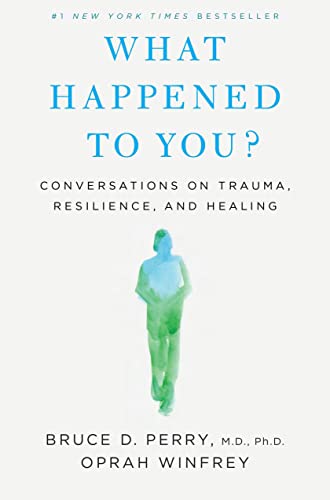
What Happened to You?
Bruce D. Perry, M.D., PhD & Oprah Winfrey
A conversational introduction to how early experience shapes us — reframing 'what's wrong with you' into 'what happened to you.'

What My Bones Know: A Memoir of Healing from Complex Trauma
Stephanie Foo
A journalist's honest, hopeful account of living with and healing from complex PTSD, woven with the science behind it.
As an Amazon Associate, Clarity House Press earns from qualifying purchases. Your price is never affected.
Found this helpful?
Share it with someone who might need it.
About the Author

Clarity House Press
Editorial Team
The editorial team at Clarity House Press curates and publishes evidence-based content on narcissistic abuse recovery, high-conflict divorce, and healing. Our content is informed by research, survivor experiences, and established trauma-informed approaches.
View all posts by Clarity House Press →Published by Clarity House Press Editorial Team