Please read our important disclaimers before using this content
It's Thanksgiving morning. Your custody agreement says you have the kids until 2pm. At 6am, your phone starts: "The kids are crying. They want to see me." At 9am: "My mother is devastated that her grandchildren won't be here." At noon: "I can't believe you're doing this to them on a holiday."
By 1pm, you're questioning whether sticking to the schedule makes you rigid and unreasonable. By 2pm, when you do the exchange, you're portrayed as the villain who "refused to be flexible" while you handed over children who've actually had a lovely morning.
Welcome to high-conflict holiday co-parenting, where special occasions become weaponized and your ex's inability to regulate their emotions becomes your children's problem—unless you hold firm boundaries. The parallel parenting framework provides the structure that makes these boundaries possible.1 Research shows that healing separation requires specific strategies for managing conflict during holidays and special occasions.
This post is about the psychological and emotional dimension of high-conflict holidays — how to hold boundaries when you're being guilt-tripped, how to manage your own grief and expectations, and how to protect your children from being used as emotional leverage. If you need help structuring a holiday schedule or understanding specific scheduling options (alternating years, split-day arrangements, birthday logistics), see Holiday and Birthday Logistics in High-Conflict Co-Parenting. If your ex is violating your court-ordered holiday time and you need enforcement strategy, see Holiday Custody Strategic Planning.
Why Holidays Are High-Conflict Flashpoints
Emotional Intensity
Holidays carry cultural weight about family, tradition, and belonging. High-conflict individuals[^2]:
- Experience rejection more intensely when they don't have the children
- Use holiday emotions to justify boundary violations
- Exploit cultural narratives ("families should be together")
- Create crises that position them as victims
- Use holidays as opportunities for manipulation in co-parenting conflicts
Flexibility Weaponization
Reasonable co-parents occasionally adjust schedules for special circumstances. High-conflict co-parents:
- Demand constant "flexibility" (that only goes one direction)
- Characterize boundary enforcement as rigidity
- Create emergencies that require last-minute changes
- Never reciprocate flexibility when you need it
Audience Factor
Holidays often involve extended family and social media:
- More witnesses for the victim narrative
- Grandparents can become flying monkeys advancing the narrative
- Social media posts highlight their "loss"
- Public pressure to "do the right thing"
Children's Emotional Vulnerability
Kids have heightened expectations and emotions during holidays:
- More susceptible to manipulation about missing the other parent
- Guilt about enjoying time with you
- Pressure to choose or mediate
- Exposure to extended family members' opinions
Core Principles for High-Conflict Holiday Co-Parenting
1. The Court Order Is Your Friend
Your custody agreement is not a suggestion or starting point for negotiation. It is the default.
Mindset shift:
- ❌ "I should be flexible about holidays"
- ✅ "The court order ensures predictability and stability for the children"
Changing plans rewards the harassment that preceded the request. Following the order teaches that boundaries hold.2 Research confirms that structured parenting plans with clear holiday schedules reduce conflict in high-conflict divorced families, and that predictability supports children's adjustment.
2. "Flexible" Doesn't Mean "Whenever They Demand It"
Flexibility in healthy co-parenting:
- Mutual, reciprocal, and rare
- Requested respectfully and well in advance
- Genuinely serves children's interests
- Not accompanied by threats or manipulation
Flexibility demands in high-conflict situations:
- One-directional
- Last-minute or delivered with harassment
- Serves the demanding parent's wants, not children's needs
- Includes implicit or explicit threats
You are allowed to say no.**
3. Stability Over Traditions
Your children need predictable routines more than they need:
- Both parents at the same event
- Extended family access on exact calendar dates
- Traditions from your previous family structure
Create new traditions for your parenting time. Let go of replicating the nuclear family ideal.3 Research on early life predictability demonstrates that stable, consistent schedules are fundamental to healthy child development and emotional regulation.
Specific Strategies for Common Holiday Scenarios
The Last-Minute Schedule Change Request
The request:** "My family dinner moved to Sunday. Can I have the kids then instead of Saturday?"
Template response: "The custody order specifies [details]. That's what we'll follow. The kids can FaceTime your family if they'd like."
Then:
- Do not respond to follow-up arguments
- Do not justify your decision
- Do not suggest alternatives
- Hold the boundary
The Guilt-Trip About Missing Extended Family
The message: "Grandma is 85. This might be her last Christmas. You're really going to keep the kids from her?"
Reality:
- Grandma's mortality is not your responsibility to solve
- Your ex could bring the kids during their custody time
- This is emotional manipulation, not a genuine emergency
Template response: "I understand that's difficult. The kids will be with you [dates per custody order]."
No additional explanation needed.
The "Flexible for the Kids" Pressure
The message: "I'm just trying to do what's best for the kids. Why are you being so rigid?"
Template response: "Following our custody agreement provides stability and predictability for the children."
Do not defend yourself. You are not being rigid. You are being consistent, which high-conflict individuals experience as rigidity because they expect their emotions to override established boundaries.
The Holiday Emergency
At 7am on your custody day: "I'm in the ER. The kids need to come here."
If genuinely uncertain:
- Verify the emergency independently (call the hospital if needed)
- If real and serious, use judgment about children's need to be there
- Document everything
If it's pattern behavior:
- "I hope you're okay. The kids are with me as scheduled. Keep me posted on your condition."
- Do not bring children to the ER based solely on an unverified text
- Past false emergencies mean you're entitled to skepticism
The Public Shaming
Social media post: "So sad I won't see my babies on Christmas. Some people care more about hurting their ex than their children's happiness."
Your response:
- Nothing publicly
- Screenshot for documentation
- Potentially inform your attorney if it's part of a pattern
Do not defend yourself on social media or to mutual friends. People who matter know the truth. People who believe your ex without question aren't in your corner anyway.
The Child-Delivered Message
Your 8-year-old: "Daddy says he's going to be all alone on Thanksgiving and it's your fault."
Your response: "Grown-ups are responsible for their own plans and feelings. Daddy will be okay. What are you most excited about for our Thanksgiving?"
Then:
- Document this coaching
- Discuss with your therapist or attorney if it's a pattern
- Never put your child in the middle by explaining the custody schedule or defending yourself4
Research shows that triangulation and putting children in the middle of parental conflicts significantly increases their risk for anxiety, depression, and posttraumatic stress symptoms.
Creating New Holiday Traditions
Since you can't replicate the nuclear family structure, create something new:
Morning-Focus Traditions
If you have mornings but not traditional dinner times:
- Special breakfast traditions (specific pancakes, opening one gift, holiday movie)
- Morning outings (parade, light displays, nature walk)
- Preparation traditions (baking together, making decorations)
Non-Traditional Timing
If your custody time doesn't align with calendar dates:
- Celebrate holidays on your actual custody days, not calendar dates
- Create "our Thanksgiving" or "our Christmas" without apologizing for the date
- Frame it as having TWO holidays ("you get to celebrate twice!")
Small and Special
With less time, make it count:
- One meaningful tradition is better than replicating an entire day's worth
- Children remember special moments, not quantity of activities
- Presence and calm matter more than elaborate plans
Neutral Third Locations
If your home is still being established:
- Friend's homes (chosen family celebrations)
- Community events (free to low-cost)
- Nature settings (hiking, beach visits)
- Hotels with pools (can feel special and novel to children)
Managing Your Own Emotions
Grief Is Normal
You're grieving:
- The family structure you wanted
- Holidays that match your mental image
- Sharing experiences with your children
- Extended family access
This grief is legitimate. Honor it. And also create new meaning.5 Research on parental coping after divorce shows that parental warmth, consistency, and emotional presence are the most powerful protective factors for children's resilience—not the preservation of pre-divorce family structures.
Manage Expectations
Your first few holidays post-separation will probably feel hollow or strange. That's normal and temporary.
By year two or three, your new traditions will feel established. Your children will anticipate them. The shape of the holiday will feel right because it's what they know.
Protect Your Peace
If your ex typically escalates around holidays:
The week before:
- Limit phone checking
- Use text-only communication
- Prepare scripts for predictable manipulation attempts
- Line up support (friends, therapist, online communities)
- Plan self-care for the actual day
The day of:
- Consider silencing notifications during your parenting time
- Have a support person on standby
- Remind yourself: their emotions are not your responsibility
Your Wellbeing Models Health
When you:
- Hold boundaries calmly
- Create new traditions without apologizing
- Enjoy your children's presence without anxiety
- Demonstrate that holidays can be peaceful and different
You teach your children:
- Boundaries are healthy
- Families come in different forms
- Joy doesn't require perfect circumstances
- They are not responsible for adult emotions6
Research demonstrates that parenting quality—defined by warmth, nurturance, and consistent limit-setting—is one of the most significant protective factors for children's well-being after parental separation, often outweighing other family structure variables.
When to Seek Court Intervention
If your ex consistently:
- Violates the custody order around holidays
- Harasses you throughout holiday periods
- Uses holidays to create parental alienation scenarios
- Files emergency motions to change holiday custody
- Involves extended family in harassment
Document everything and consult your attorney about:
- Contempt motions for violations
- Modification to include more specific holiday provisions
- Communication restrictions
- Supervised exchanges if harassment occurs during pickups
Your Next Steps
Before the next holiday:
- Review your custody agreement's holiday provisions line by line
- Prepare template responses for predictable manipulation tactics
- Identify one new tradition to establish during your custody time
- Talk to your therapist about managing holiday-specific emotional triggers
During holiday contact attempts:
- Refer to the custody order, not your preferences or reasoning
- Do not defend, explain, or justify following the agreement
- Document manipulation attempts, threats, or harassment
- Maintain gray rock communication
After the holiday:
- Debrief with your support system or therapist
- Note what went well to repeat next year
- Document any violations or concerning incidents
- Practice self-compassion for things that felt hard
Key Takeaways
- Your custody order is not a starting point for negotiation—it's the plan, period
- Flexibility in high-conflict co-parenting often means rewarding harassment
- You are not rigid for following court-ordered schedules; you're providing stability
- New traditions can be meaningful even if they're different from what you imagined
- Your children need your calm consistency more than they need both parents at the same event
- Holidays are temporary; boundaries you hold now protect years of future peace
- Your ex's loneliness or extended family's disappointment are not your responsibility
The goal is not perfect holidays. The goal is protected time with your children where you model calm, boundary-holding, and resilience—and demonstrate that joy is still possible in new forms.
Resources
High-Conflict Holiday Co-Parenting:
- TalkingParents - Document holiday exchanges and communication
- OurFamilyWizard - Holiday scheduling and communication documentation
- High Conflict Institute - Bill Eddy's co-parenting strategies and resources
- One Mom's Battle - Holiday survival strategies for high-conflict co-parenting
Books and Guidance:
- Splitting by Bill Eddy - Co-parenting with personality-disordered ex-partners
- The High Conflict Custody Battle by Amy Baker - Protecting children during holidays and special events
- Mom's House, Dad's House by Isolina Ricci - Creating new holiday traditions in two homes
- National Center on Domestic Violence, Trauma & Mental Health - Holiday safety planning resources
Legal and Support Resources:
- National Domestic Violence Hotline - 1-800-799-7233 for holiday safety planning
- WomensLaw.org - State custody laws and holiday parenting time enforcement
- LawHelp.org - Free legal assistance for custody modifications
- Psychology Today - Family Therapists - Find co-parenting counselors
References
- Afifi, T. D., Hutchinson, S., & Krouse, S. (2006). Toward a theoretical model of communication and adjustments during military deployment and reunion. Journal of Family Communication, 6(1), 15-38. https://pmc.ncbi.nlm.nih.gov/articles/PMC9252605/ ↩
- Pires, & Martins (2021). Parenting Styles, Coparenting, and Early Child Adjustment in Separated Families with Child Physical Custody Processes Ongoing in Family Court.. Children (Basel, Switzerland). https://pmc.ncbi.nlm.nih.gov/articles/PMC8394593/ ↩
- Mahrer, O'Hara, Sandler, & Wolchik (2018). Does Shared Parenting Help or Hurt Children in High Conflict Divorced Families?. Journal of divorce & remarriage. https://pmc.ncbi.nlm.nih.gov/articles/PMC7986964/ ↩
- National Institute of Child Health and Human Development. (2021). Leveraging the science of early life predictability to inform policies promoting child health. American Psychologist, 76(5), 668-679. ↩
- Buchanan, C. M., Maccoby, E. E., & Dornbusch, S. M. (2009). Caught between parents: Adolescents' experience in divorced homes. Child Development, 62(5), 1008-1029. https://pmc.ncbi.nlm.nih.gov/articles/PMC9360253/ ↩
- Wallerstein, J. S., Lewis, J. M., & Blakeslee, S. (2000). The unexpected legacy of divorce: A 25-year landmark study. New York: Hyperion. Referenced in: https://pmc.ncbi.nlm.nih.gov/articles/PMC3804638/ ↩
- Afifi, T. D., & Hutchinson, S. (2010). Uncertainty management strategies among co-parents in post-divorce single-parent families. Journal of Social and Personal Relationships, 27(8), 979-994. https://pmc.ncbi.nlm.nih.gov/articles/PMC2787717/ ↩
Recommended Reading
From Clarity House Press — plus trusted books for deeper understanding
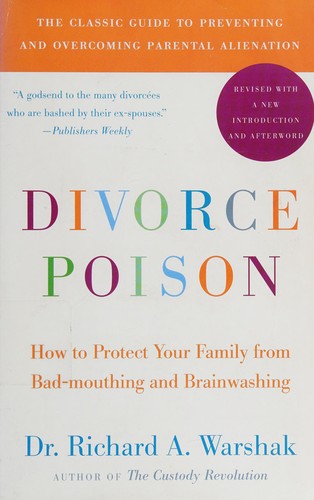
Divorce Poison
Dr. Richard A. Warshak
Classic best-selling parental alienation resource on detecting and countering manipulation tactics.
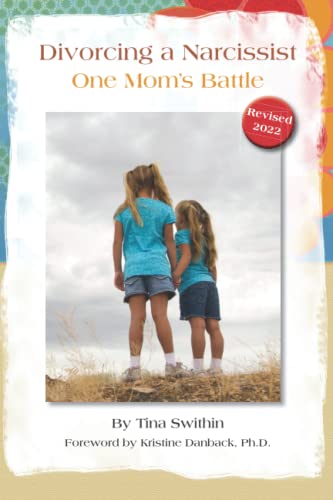
Divorcing a Narcissist: One Mom's Battle
Tina Swithin
Memoir of a mother who prevailed as her own attorney in a 10-year high-conflict custody battle.
Joint Custody with a Jerk
Julie A. Ross, MA & Judy Corcoran
Proven communication techniques for co-parenting with an uncooperative ex.

Divorcing a Narcissist: Advice from the Battlefield
Tina Swithin
Practical follow-up with battlefield-tested advice for navigating custody with a narcissistic ex.
As an Amazon Associate, Clarity House Press earns from qualifying purchases. Your price is never affected.
Found this helpful?
Share it with someone who might need it.
About the Author

Clarity House Press
Editorial Team
The editorial team at Clarity House Press curates and publishes evidence-based content on narcissistic abuse recovery, high-conflict divorce, and healing. Our content is informed by research, survivor experiences, and established trauma-informed approaches.
View all posts by Clarity House Press →Published by Clarity House Press Editorial Team