Please read our important disclaimers before using this content
Nobody warned me about this part.
I expected relief when I finally left. I expected anger, maybe fear. What I didn't expect was the crushing wave of grief that hit me three months out, when I realized I wasn't mourning the loss of my marriage—I was mourning the fact that the marriage I thought I had never existed in the first place. This kind of ambiguous loss is one of the most disorienting aspects of narcissistic abuse recovery.
If you're reading this with tears streaming down your face because someone finally put words to what you're experiencing, you're not alone. Grief after narcissistic abuse is unlike any other loss, and the people around you probably don't understand why you're still struggling to "just move on."
The Grief Nobody Recognizes
Traditional grief counseling tells you to process the loss of what you had. But how do you grieve something that was never real?
You're not crazy for feeling multiple, contradictory losses all at once:
The person you thought they were – The charming, attentive partner who pursued you intensely during the love-bombing phase. That person never existed. They were a carefully constructed performance designed to hook you.
The future you'd planned – The retirement you were saving for together. The children you thought you'd co-parent as a team. The life partnership you believed you were building. All those shared dreams evaporated the moment you realized you were the only one genuinely invested.
The years you invested – Ten years. Fifteen years. Twenty. You can't get that time back. You spent your youth, your fertility, your earning potential, your health on someone who was incapable of the reciprocity you deserved.
The family you thought you belonged to – When you leave, you often lose not just your partner but their entire family system, mutual friends, and sometimes even your own family members who've been manipulated into the narcissist's narrative.
Your former self – The confident, trusting, optimistic person you were before the relationship slowly eroded your sense of reality. You grieve that version of yourself even as you're trying to rebuild.
This is called ambiguous loss1—loss without closure, loss of something that never existed in the form you believed it did. It's one of the most psychologically challenging forms of grief because there's no body, no funeral, no socially recognized ritual to help you process it. Understanding the stages of recovery from narcissistic abuse can help normalize what you're experiencing.
Why Your Grief Feels Different
Traditional grief models don't apply here. Kübler-Ross's five stages assume you're mourning something real that you genuinely lost. But your situation is more complex[^4]:
You're grieving multiple losses simultaneously: Not just one loss, but layers upon layers—reality, trust, time, identity, future, community, financial security.
The loss keeps being invalidated: People say "You should be glad you're out" or "You're better off without them" or "At least you didn't have kids" (or if you did: "At least you have the kids"). These statements, while sometimes true, completely miss that you're not grieving what you lost—you're grieving what you never had.
The person you're grieving is still alive and often thriving: Worse, they're probably on social media looking happy with their new supply, posting about how they've "never been better" and subtly implying you were the problem all along.
You're experiencing disenfranchised grief[^2]: Grief that society doesn't recognize as legitimate. Nobody sends casseroles when you're mourning the person your narcissistic ex pretended to be.
The trauma bond complicates everything[^3]: You might logically know the relationship was toxic, but your nervous system is still physiologically attached. You can simultaneously know you're better off AND feel devastated by the loss. Both are true.
The Stages of Grief After Narcissistic Abuse
These aren't linear stages you move through once. You'll cycle through them multiple times, sometimes experiencing several in a single day:
1. Shock and Disbelief
"Did that really happen? Was it really that bad? Maybe I'm exaggerating."
You might find yourself reviewing old texts, conversations, incidents, trying to piece together what was real. This is your brain trying to reconcile the cognitive dissonance between what you believed and what was actually happening.
What helps: Documentation. If you kept records, journals, or screenshots, reviewing them can help validate your experience when you're tempted to minimize it.
What doesn't help: Going to mutual friends or family members for validation. They likely didn't see what you saw, and their minimization will compound your grief.
2. Bargaining with the Past
"If only I'd been less demanding... If I'd communicated better... If I'd given them one more chance..."
You might fantasize about what could have been different, replaying scenarios where things could have worked out. This is your brain trying to regain a sense of control over an uncontrollable situation.
What helps: Recognizing that you're bargaining with someone who was never capable of meeting you halfway. No version of you would have been enough because the problem was never you.
What doesn't help: Actual contact with your ex trying to "get closure" or "have one more conversation." They will use your vulnerability against you.
3. Anger at the Injustice
"How dare they? How dare they waste my time, manipulate me, lie to me, and then move on like none of it mattered?"
Rage is appropriate here. You were defrauded. They sold you a bill of goods, took your investment, and delivered nothing of value. Your anger is information—it's telling you that what happened was genuinely wrong.
What helps: Channeling anger into productive action—whether that's legal proceedings, setting boundaries, or advocacy work that helps others.
What doesn't help: Revenge fantasies or actual revenge. It keeps you tethered to them and gives them supply (negative attention is still attention to a narcissist).
4. Depression and Profound Sadness
"I've lost so much time. I'm starting over at 40 (or 50, or 60) when I thought I'd be settled. I feel so old and tired and broken."
This stage often hits when the adrenaline of leaving wears off and you're facing the practical reality of rebuilding. It's exhausting. You're allowed to feel exhausted.
What helps: Treating this as a grief response rather than a personal failing. Professional support—therapy with a trauma specialist, potentially medication consultation. This isn't weakness; it's appropriate response to loss.
What doesn't help: Pushing yourself to "be positive" or "practice gratitude" before you've allowed yourself to feel the sadness. Toxic positivity bypasses the necessary grief work.
5. Acceptance and Reconstruction
"This happened. It was real. It wasn't my fault. I can build something new."
Acceptance doesn't mean you're okay with what happened. It means you've stopped fighting reality and started focusing your energy on what you can control now—your healing, your future, your growth.
What helps: Small, concrete steps toward the future you want. Pursuing education, hobbies, friendships, career development. Creating a life so full that the narcissist becomes a footnote rather than the main story.
What doesn't help: Expecting acceptance to be permanent. You'll cycle back through earlier stages periodically, especially around anniversaries, court dates, or when your ex does something particularly egregious.
The Specific Losses to Grieve
Give yourself explicit permission to mourn each of these individually. They're all real losses, even if others don't understand:
The loss of innocence: You'll never trust the same way again. You'll always have one eye watching for red flags. This is both protection and loss.
The loss of time: Those years are gone. You can't reclaim them. You can only decide what you do with the years ahead.
The loss of family structure (if you have children): Your kids will never have the intact family you wanted for them. They'll carry their own scars from this.
The loss of financial security: Legal fees, rebuilding credit, dividing assets, lost earning potential, retirement savings depleted. The financial devastation can take years to recover from.
The loss of your reputation: Narcissists often run smear campaigns. You've likely lost relationships with people who believed their lies. Some will never know the truth.
The loss of milestones: Weddings, holidays, family gatherings that will forever be divided or absent.
The loss of your pre-trauma body: Chronic stress changes your body. Weight gain or loss, autoimmune conditions, chronic pain, premature aging. You're not vain for mourning this.
The loss of belief in justice: You learned the hard way that family court doesn't protect good parents, that judges believe convincing liars, that "he said/she said" often favors the abuser.
The loss of your story: You thought you were building one kind of life story. Now you have to rewrite the narrative entirely.
Each of these losses deserves to be acknowledged. You don't have to do it all at once, but don't skip over any of them just because someone else doesn't think they're significant.
Practical Strategies for Moving Through Grief
Create Grief Rituals
Since society doesn't provide them, create your own:
Write a letter to who you thought they were: Pour out everything you're grieving—the future you planned, the person you believed existed, the years you invested. Don't send it. Burn it, bury it, or tear it up. The ritual matters more than the words.
Mark the transition: Some survivors find it helpful to have a private ceremony marking the end of the old life and the beginning of the new one. Light a candle, plant a tree, donate their belongings—whatever feels symbolically significant.
Honor the timeline: Create a visual representation of your healing journey. A journal, a piece of art, a timeline marking significant realizations and milestones. This externalizes the process and shows you how far you've come.
Give Yourself Permission to Grieve Messily
You don't have to grieve perfectly or on anyone else's timeline:
Cry in the shower: Sometimes the only private space you have. Use it.
Rage in your car: Scream, punch the steering wheel (while parked), blast angry music. Your anger needs somewhere to go.
Write uncensored: Keep a private journal where you can be as bitter, petty, rageful, or pathetic as you feel. No one else will read it. This isn't about being your best self; it's about processing reality.
Allow contradictory feelings: You can miss them AND know they were terrible for you. You can grieve the relationship AND be relieved it's over. You can love who you thought they were AND hate who they actually are. All of these are true simultaneously.
Seek Specialized Support
Standard grief counseling won't address this:
Trauma-specialized therapists: Look for training in C-PTSD, narcissistic abuse, or complex trauma. Modalities like EMDR for C-PTSD, IFS parts work, or somatic experiencing can help process traumatic grief.
Abuse-specific support groups: In-person or online groups specifically for narcissistic abuse survivors. The validation from people who've experienced this type of grief is irreplaceable.
Avoid well-meaning but harmful advice: If someone tells you to "forgive and move on," "take the high road," or "focus on the positive," they don't understand complex trauma. You don't have to take their advice.
Practice Mourning in Small Doses
You can't process years of accumulated grief all at once:
Set a timer: Allow yourself 20 minutes to fully feel the grief, then consciously shift to another activity. You're building capacity to hold difficult emotions without being consumed by them.
Choose your grief days: Pick specific days (anniversary dates, their birthday, holidays) where you know the grief will be intense. Plan ahead—take the day off work, arrange support, have comfort measures ready.
Notice your capacity: Some days you can handle thinking about it; other days you need complete distraction. Both are valid. You're not avoiding grief by taking breaks from it—you're regulating it.
Rebuild Your Reality-Testing
Gaslighting damages your ability to trust your own perceptions[^5]:
Fact-check your memories: If you kept journals, texts, or documentation, review them when you start questioning whether it was "really that bad." It was.
Find truth-tellers: Identify 2-3 people who witnessed the relationship and will tell you the truth, not what they think you want to hear.
Track patterns, not incidents: When you're tempted to minimize ("it was only a few times"), look at the pattern over months and years. The pattern is the truth, not individual incidents.
Why Grief After Abuse Is So Complicated
The Trauma Bond Interferes with Grieving
Your nervous system was chemically bonded to this person through intermittent reinforcement2—the unpredictable mix of reward and punishment that creates stronger bonds than consistent love ever could.
When you try to grieve, your body interprets the separation as a survival threat. You might experience:
- Physical withdrawal symptoms (racing heart, nausea, insomnia, panic attacks)
- Intrusive thoughts about them or compulsive checking of their social media
- An overwhelming urge to contact them, even though you rationally know it's harmful
- Dreams where they've changed or you're back together
This isn't weakness. It's neurobiology. The trauma bond needs to be metabolized, not just intellectually understood. Learning why narcissistic abuse is so addictive at the neurochemical level can help you make sense of what you're feeling.
What helps: Treat the trauma bond like any other addiction withdrawal. You need structured support, accountability, and strategies to ride out the cravings without giving in to them.
Society Expects You to "Move On"
There's an invisible timeline people impose on grief. After a divorce or breakup, people expect you to:
- Be "over it" within 6-12 months
- Start dating again to "prove" you're healed
- Stop talking about what happened
- Be grateful for "the lessons" and "the growth"
But complex trauma doesn't work that way3. The timeline for grieving narcissistic abuse is typically 2-5 years, sometimes longer if you're also dealing with:
- Ongoing legal battles
- Co-parenting with your abuser
- Financial devastation
- Loss of custody or alienated children
- Smear campaigns affecting your career or reputation
You don't owe anyone an explanation for your timeline. Healing at your own pace is not wallowing.
The Narcissist's Thriving Invalidates Your Grief
Nothing compounds grief like watching them appear to thrive while you're struggling to survive.
They're posting happy photos with their new partner. They're living in the house you decorated. They're spending the retirement account you built together. They're playing the victim and getting sympathy while you're painted as the crazy ex.
This is excruciating, and it's deliberately designed to be. Narcissists are experts at impression management. The life they're projecting on social media is as fake as the persona they showed you during love-bombing.
What helps: Remember that their new supply is getting the same treatment you got—they're just in an earlier phase of the cycle. The narcissist's capacity for happiness is as shallow as their capacity for love. Their thriving is performance, not reality.
Children Complicate Grief
If you share children with the narcissist, your grief is layered with additional complexity:
You can't fully separate: Co-parenting means continued contact, continued manipulation, continued trauma.
You're grieving what your children lost: The stable two-parent home they deserved, the cooperative co-parenting relationship that would have served them, the version of their other parent who might have actually put their needs first.
You're managing their grief too: Your children are processing their own losses while you're trying to process yours. You have to hold space for their feelings while managing your own.
You face loyalty binds: Anything negative you say about their other parent (even if true) can damage your relationship with your children. You have to watch them be manipulated and harmed while carefully navigating how much you can say.
This is one of the hardest aspects of grief after narcissistic abuse. The person who harmed you most is permanently woven into your life through your children.
Common Pitfalls That Delay Healing
Seeking closure from the narcissist: They're incapable of the honest accountability that creates closure. You'll have to generate your own.
Waiting for them to acknowledge what they did: They never will. They genuinely believe their own narrative where you're the problem. Let this go.
Trying to maintain friendship "for the kids": Friendship requires mutual respect and good faith. They're incapable of both. Parallel parenting is your best option.
Dating before you've processed the grief: New relationships built on unprocessed trauma rarely succeed. You deserve to heal first.
Comparing your grief timeline to others: Your situation is unique. Someone else's 6-month recovery doesn't invalidate your 3-year process.
Real-World Examples
Maria's Story: Grieving the Timeline
Maria left her marriage at 43 after 18 years. "I kept calculating," she told her therapist. "I spent my entire 30s with him. My entire 30s. The decade where I should have been building my career, having more children if I wanted them, traveling, living. Gone. Spent on someone who was never going to love me back."
Her grief wasn't just about the relationship—it was about the biological clock that couldn't be reset, the career advancement she'd sacrificed, the friendship opportunities she'd passed up because he'd slowly isolated her.
What helped: She created what she called her "reclaimed timeline"—a visual map of her 40s through 60s, filling it with dreams that were still possible. She couldn't get her 30s back, but she could reclaim the decades ahead. At 45, she went back to school. At 47, she traveled to Italy solo—something he'd always said he'd do with her "someday."
James's Story: Grieving the Father He Wanted to Be
James fought for two years in family court and lost primary custody of his daughters, ages 6 and 9. His ex-wife had successfully painted him as unstable, using his emotional responses to her provocations as "evidence" of his anger issues.
"I wasn't crying for the marriage," he explained. "I was grieving the father I wanted to be and now can't be. I imagined nightly dinners, homework help, weekend projects, teaching them to ride bikes and drive cars. Now I get every other weekend and Wednesday dinners. I'm not their primary parent. I'm a visitor in their lives."
What helped: Redefining fatherhood within the constraints he faced. He created traditions for his limited time—Sunday morning pancakes, Wednesday night game nights. He video-called on off-nights for homework help. He documented everything, knowing the custody order could be modified when the girls were older and could express their preferences.
He grieved what he'd lost while building the best version of what he had.
Rachel's Story: Grieving the Wedding That Never Was
Rachel never married her partner, but they were engaged for five years while he kept postponing the wedding. "Just one more year to get finances sorted," he'd say. Or, "Let's wait until work calms down." Or, "I want to lose weight first."
When she finally left, people minimized her grief: "At least you weren't married! No divorce to deal with!" But Rachel was grieving the wedding that never happened, the commitment he'd promised but never delivered, the public claiming of the relationship she'd desperately wanted.
She'd spent five years answering questions about when the wedding would be, making excuses for him, feeling the sting of being perpetually the girlfriend while friends became wives.
What helped: Having a "divorce" ceremony anyway. She invited her closest friends, wore the dress she'd picked out (and hidden in a closet), read vows to herself about the partner she deserved, and cut a cake. Her friends gave speeches honoring what she'd survived. It was her closure ritual since he'd never given her a wedding or an honest ending.
David's Story: Grieving Who He Used to Be
David said the hardest loss to grieve was his former self. "I used to be fun. I used to make people laugh. I was confident, outgoing, the guy people wanted to be around. Twenty years with her, and I don't recognize myself. I'm anxious, hypervigilant, second-guessing every word out of my mouth. I'm boring now. Careful. Always watching for the next criticism."
He wasn't just grieving the relationship—he was grieving the personality that the relationship had slowly dismantled.
What helped: Understanding that he wasn't irretrievably changed. Those traits were suppressed, not destroyed. With a trauma-informed therapist, he worked on reclaiming his authentic self. He started small—telling jokes with safe friends, trying activities he used to love, practicing speaking up without over-explaining. The old David wasn't dead; he'd just been in hiding for two decades.
What Healed Grief Actually Looks Like
Here's what the research and clinical experience tell us about successful grief processing after narcissistic abuse[^7]:
You stop checking their social media – Not because you've forced yourself to quit, but because you genuinely don't care what they're doing anymore.
You can tell your story without falling apart – You've metabolized the trauma enough that you can talk about it factually, even helping others, without being retraumatized.
You trust your reality again – When you say "that happened," you believe yourself. You don't need external validation to know your experience was real.
You make decisions without second-guessing yourself into paralysis – The constant self-doubt they installed starts to fade. You trust your judgment.
You can be alone without feeling unbearably lonely – Solitude becomes peaceful rather than threatening. You've rebuilt your relationship with yourself.
You stop waiting for them to change or acknowledge what they did – You've accepted that closure comes from within, not from them.
You can imagine a future without them in it – The identity you're building isn't defined by opposition to them. You're creating something genuinely new.
You've forgiven yourself – Not them. Yourself. For staying as long as you did, for missing red flags, for giving so many chances. You understand now that you were doing your best with the information and resources you had.
Key Takeaways
- Grief after narcissistic abuse is ambiguous loss – You're mourning something that never existed, which makes it psychologically more complex than traditional grief
- You're grieving multiple losses simultaneously – The person you thought they were, the time invested, your former self, the future you planned, financial security, reputation, and sometimes your children
- Your timeline is your own – 2-5 years is normal. Longer if you're still legally entangled or co-parenting. Anyone who tells you to "be over it" doesn't understand complex trauma
- The trauma bond complicates grieving – Your nervous system experiences separation as withdrawal. This is neurobiology, not weakness
- Standard grief counseling won't work – You need trauma-specialized therapy that understands narcissistic abuse, C-PTSD, and complex trauma
- You don't need their acknowledgment to heal – Closure comes from internal resolution, not external validation
- Contradictory feelings are normal – You can grieve the relationship AND be relieved it's over. You can miss who you thought they were AND hate who they actually are
- Healing isn't linear – You'll cycle through grief stages multiple times. Setbacks don't erase progress
Your Next Steps
Today
Name what you're actually grieving: Write down the specific losses. Not "the relationship" but "the 15 years I invested," "the retirement we were building," "the person I thought would grow old with me," "my reputation in our church community."
Specificity helps your brain process what's actually lost rather than staying stuck in vague, overwhelming sadness.
This Week
Create one grief ritual: Choose something that feels meaningful to you. This could be:
- Writing a letter to who you thought they were (don't send it)
- Creating a playlist of songs that capture different aspects of your grief
- Making a timeline of your relationship marking when you first noticed red flags
- Having a private ceremony marking the end of the old chapter
The ritual doesn't have to be elaborate. It just needs to be intentional.
This Month
Identify your truth-tellers: Find 2-3 people who witnessed your relationship and will be honest with you about what they saw. These are people who will say "Yes, that was as bad as you remember" when you're tempted to minimize it.
Not everyone in your life needs to understand your grief, but you need at least a few people who do.
Within 90 Days
Find trauma-specialized support: Research therapists who explicitly list narcissistic abuse, C-PTSD, or complex trauma in their specialties. Interview them about their approach to grief after abuse.
If therapy isn't accessible, look for narcissistic abuse support groups—online or in-person. The validation from people who've experienced this specific type of grief is irreplaceable.
Within 6 Months
Audit your social media boundaries: Block or mute your ex and their close associates. You can't heal while monitoring their life. If you share children and need to maintain some contact, use communication apps designed for high-conflict co-parenting.
Your grief will process faster when you're not constantly retraumatizing yourself with updates about their seemingly perfect new life.
Ongoing
Track your progress, not your perfection: Keep a simple log of small wins. "Went three days without checking their social media." "Told my story without crying." "Made a decision without second-guessing it for two hours."
Healing is measured in these small reclamations of yourself, not in giant transformative moments.
Resources
Grief and Recovery Books:
- Psychopath Free by Jackson MacKenzie - Understanding grief after abusive relationships
- Ambiguous Loss by Pauline Boss - Grieving unclear losses and what never was
- Should I Stay or Should I Go? by Lundy Bancroft - Decision-making guide for abusive relationships
- Complex PTSD: From Surviving to Thriving by Pete Walker - Recovery from complex trauma and grief
Support and Therapy:
- Psychology Today - Therapists - Filter for "complicated grief" and "narcissistic abuse"
- DivorceCare - Local support groups for divorce recovery
- Al-Anon - Support groups for family dysfunction (applicable beyond addiction)
- National Alliance on Mental Illness (NAMI) - Grief and mental health support
Financial Recovery and Self-Compassion:
- Annual Credit Report - Free credit reports for financial recovery
- National Foundation for Credit Counseling - Credit counseling and financial guidance
- Self-Compassion Resources by Dr. Kristin Neff - Guided meditations and exercises
- SAMHSA Helpline - 1-800-662-4357 (mental health treatment referrals)
References
- Boss, P. (2007). Ambiguous loss theory: Challenges for scholars and practitioners. Family Relations, 56(2), 105-111. https://doi.org/10.1111/j.1741-3729.2007.00444.x ↩
- Doka, K. J. (2002). Disenfranchised grief: New directions, challenges, and strategies for practice. Research Press. ↩
- Dutton, D. G., & Painter, S. (1993). Emotional attachments in abusive relationships: A test of traumatic bonding theory. Violence and Victims, 8(2), 105-120. https://pubmed.ncbi.nlm.nih.gov/8193053/ ↩
- Shear, M. K., Simon, N., Wall, M., Zisook, S., Neimeyer, R., Duan, N., ... & Keshaviah, A. (2011). Complicated grief and related bereavement issues for DSM-5. Depression and Anxiety, 28(2), 103-117. https://doi.org/10.1002/da.20780 ↩
- Klein, W., Wood, S., & Bartz, J. A. (2025). A theoretical framework for studying the phenomenon of gaslighting. Personality and Social Psychology Review, 29(3), 254-279. https://doi.org/10.1177/10888683251342291 ↩
- Herman, J. L. (1992). Trauma and recovery: The aftermath of violence—from domestic abuse to political terror. Basic Books. ↩
- Stroebe, M., & Schut, H. (1999). The dual process model of coping with bereavement: Rationale and description. Death Studies, 23(3), 197-224. https://doi.org/10.1080/074811899201046 ↩
Recommended Reading
From Clarity House Press — plus trusted books for deeper understanding


Surviving the Storm: When the Court Takes Your Children
Clarity House Press
For fathers in active high-conflict custody battles. Understand your CPTSD symptoms, begin stabilization, and build foundation for healing. 17 chapters covering recognition, symptoms, and the healing path.
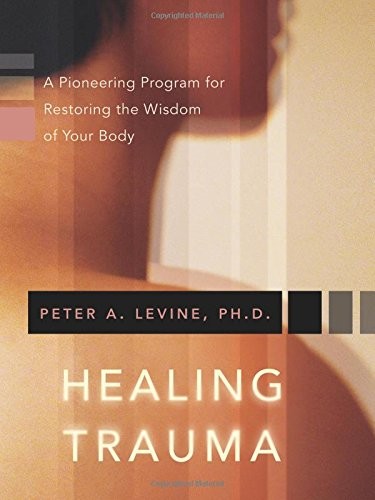
Healing Trauma
Peter A. Levine, PhD
Practical how-to guide for body-based trauma recovery with 12 guided Somatic Experiencing exercises.
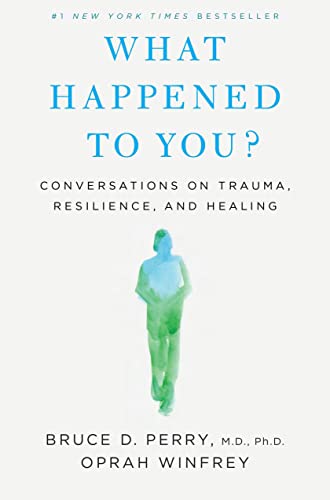
What Happened to You?
Bruce D. Perry, M.D., PhD & Oprah Winfrey
A conversational introduction to how early experience shapes us — reframing 'what's wrong with you' into 'what happened to you.'
As an Amazon Associate, Clarity House Press earns from qualifying purchases. Your price is never affected.
Found this helpful?
Share it with someone who might need it.
About the Author

Clarity House Press
Editorial Team
The editorial team at Clarity House Press curates and publishes evidence-based content on narcissistic abuse recovery, high-conflict divorce, and healing. Our content is informed by research, survivor experiences, and established trauma-informed approaches.
View all posts by Clarity House Press →Published by Clarity House Press Editorial Team