Please read our important disclaimers before using this content
You built something from nothing.
You took the risk. You sacrificed the stability. You worked the 80-hour weeks, missed family events, invested every dollar back into growth.
And now your narcissistic ex is claiming they're entitled to half—or worse, they're actively sabotaging your business to destroy you financially.
If you're an entrepreneur in a high-conflict divorce, your business isn't just an asset to divide. It's your livelihood, your professional identity, your legacy, and your financial future. Understanding the financial discovery process for hidden assets is essential—your ex may be doing the same to you.
This is your guide to protecting what you built while navigating divorce warfare designed to take it all.
Why Entrepreneurs Are Vulnerable to Narcissistic Abuse
Business owners face unique vulnerabilities that narcissists exploit.
The Risk-Taker Profile
Entrepreneurs are:
- Risk-tolerant (willing to gamble on uncertain outcomes)
- Optimistic (belief that problems are solvable)
- Resilient (persistent through failure)
- Visionary (able to see potential others miss)
Research confirms that entrepreneurs display the greatest tolerance of risk, even in small gambles, as well as the strongest self-efficacy, internal locus of control, and need for achievement compared to other professional groups.1
These traits build businesses. They also keep you in abusive relationships longer than you should stay.
You approach your relationship like a struggling startup:
"If I just pivot my approach..."
"The fundamentals are strong; we just need to work through this rough patch..."
"I've invested so much already. I can't quit now..."
"Other people don't see the potential, but I know it's there..."
But narcissistic abuse isn't a failing business model you can iterate on. It's a fundamentally toxic dynamic that won't improve.
A systematic review and meta-analysis found that coercive control exposure is moderately associated with PTSD and depression symptom severity, with associations comparable to those found between psychological intimate partner violence and these mental health outcomes.2
The All-In Mentality
Entrepreneurs go all-in on their businesses:
- Invest personal savings
- Sacrifice salary for reinvestment
- Risk financial security for growth
- Prioritize business success over personal comfort
This mentality translates to relationships:
- Invest emotionally despite minimal return
- Sacrifice your needs to keep the peace
- Risk your well-being to "save" the relationship
- Prioritize your partner's happiness over your own
Your business benefits from this commitment. Your abusive relationship exploits it.
Work-Life Boundary Erosion
Entrepreneurs often:
- Work from home (no separation between work and personal space)
- Work irregular hours (evenings, weekends, early mornings)
- Are always "on" (never truly off the clock)
- Blur professional and personal finances
Your narcissistic partner weaponizes this:
"You're always working. You care more about your business than me/the kids."
"You can't even separate work and life. You're obsessed."
"Your business is failing. Look how much time you waste on it."
But when you try to set boundaries:
"Now you're being cold and distant. You're shutting me out."
You can't win.
Financial Volatility
Entrepreneurial income is unpredictable:
- Feast or famine cash flow
- Months with no salary (reinvesting in business)
- Delayed gratification (sacrifice now for future payoff)
- Financial stress and uncertainty
Your narcissistic ex uses this volatility:
During lean months:
"Your business is failing. You're a terrible provider. I can't rely on you."
During profitable months:
"Where's all the money? You're hiding it from me. I deserve my share."
Financial instability creates dependency and control opportunities.
Research demonstrates that post-separation abuse encompasses a broad range of tactics including patterns of psychological, legal, economic, and mesosystem abuse, with family court processes often requiring survivors to comply with excessive discovery requests and disclose sensitive personal information.3
Business Valuation: The Battlefield
Determining what your business is "worth" becomes the central battle in divorce.
Marital Property vs. Separate Property
Key question: Is your business marital property (subject to division) or separate property (yours alone)?
General rules (vary by state):
-
Business started BEFORE marriage = Separate property (BUT appreciation during marriage may be marital)
-
Business started DURING marriage = Marital property (subject to division)
-
Spouse contributed to the business = Likely marital property (even if started before marriage)
Your narcissistic ex will argue for marital property classification to maximize their share.
Active Appreciation vs. Passive Appreciation
If you started the business before marriage:
Passive appreciation (market forces, economic growth, time passage) = Separate property
Active appreciation (your labor, expertise, time during marriage) = Marital property
Example:
You started a graphic design business before marriage worth $50K. During the marriage, it grew to $500K.
- Passive appreciation (market growth, inflation): $100K → Separate property
- Active appreciation (your labor, client development, reputation building): $350K → Marital property (potentially subject to division)
You need expert valuation to distinguish active from passive appreciation.
Income vs. Asset Value
Two ways to value a business:
- Income approach: What's the present value of future earnings?
- Asset approach: What are the tangible assets worth (equipment, inventory, accounts receivable)?
Your ex will push for the higher valuation method.
Example:
- Asset value: $200K (equipment, inventory, accounts receivable)
- Income value: $1.5M (present value of projected future earnings)
Your ex's expert will argue for the $1.5M valuation. Yours will argue for the $200K.
The court will likely land somewhere between.
Goodwill: Personal vs. Enterprise
Goodwill = the value of your business beyond its tangible assets (reputation, client relationships, brand).
Two types:
- Enterprise goodwill: Transferable value (the business could be sold and retain this value)
- Personal goodwill: Non-transferable value (clients come because of YOU specifically)
Example:
You're a freelance consultant. Your business has no employees, no physical assets, just you and your laptop.
- Enterprise goodwill: $0 (no one would buy this business; it's inseparable from you)
- Personal goodwill: High (but not divisible because it's part of your earning capacity, not a business asset)
Your ex will argue all goodwill is enterprise goodwill (divisible).
You'll argue it's personal goodwill (non-divisible, it's just your labor and reputation).
Most courts recognize personal goodwill is NOT divisible property—but this is state-specific and contested.
Timing Games
Your ex may strategically time valuation to maximize their share:
If your business is growing:
Delay valuation to capture future growth ("We should value it at the end of the year when it's worth more")
If your business is struggling:
Rush valuation ("We need to finalize this NOW before the business fails completely")
Protect yourself:
- Request specific valuation dates in court orders
- Argue for valuation at separation (not final divorce, which could be years later)
- Monitor business performance and how it affects valuation arguments
Business as Weapon: Sabotage and Destruction
Narcissists don't just want their share of your business. They want to destroy it to hurt you. Research on economic abuse reveals that 94-99% of intimate partner violence survivors report experiencing economic abuse, which includes sabotaging employment, hiding assets, and coercing survivors to agree to unfair financial settlements.4
Client and Vendor Sabotage
Your narcissistic ex may:
- Contact your clients with false information ("The business is failing," "She's under investigation," "He's having a breakdown")
- Spread rumors in your industry
- Leave negative reviews online (Google, Yelp, industry-specific platforms)
- Contact vendors to disrupt supply chains or services
- Poach your clients (if they have industry connections)
Studies on partner interference at work confirm that abusive partners directly interfere in their victims' employment through tactics such as deleting electronic calendar appointments, physically preventing sleep, belittling confidence, or threatening to leave children alone during the workday.5
This is intentional business sabotage designed to:
- Reduce the business value (so they get less, but you lose more)
- Destroy your professional reputation
- Force you into financial desperation (so you'll settle on their terms)
- Punish you for leaving
Document everything:
- Screenshots of false reviews
- Logs of client/vendor contacts by your ex
- Evidence of revenue loss correlated with their sabotage
- Witness statements from clients who were contacted
This may constitute tortious interference, defamation, or intentional infliction of emotional distress. Consult with a business attorney.
The lifetime economic burden of intimate partner violence has been estimated at $103,767 per female victim and $23,414 per male victim, representing a population economic burden of nearly $3.6 trillion including medical costs and lost productivity.6
Financial Sabotage
Your ex may:
- Drain business bank accounts (if they have access)
- Max out business credit cards
- Refuse to sign tax returns (delaying business filings)
- File false reports with state licensing boards or the IRS
- Contest business licenses or permits
- Create false debt in the business's name
Research on coercive control in family court has identified how abusive partners weaponize legal processes, with studies documenting tactics that cause both personal harm and deliberate financial damage through court proceedings.7
Immediately:
- Remove your ex's access to all business accounts, credit cards, and financial systems
- Change passwords on all business platforms
- Alert your bank and credit card companies to potential fraud
- File for preliminary injunctions to prevent your ex from accessing business accounts or assets
Operational Sabotage
If your ex was involved in business operations:
- Deleting files, customer databases, or proprietary information
- Stealing client lists or trade secrets
- Contacting employees to create discord or poach talent
- Refusing to return business equipment, keys, or access credentials
- Holding hostage critical systems (websites, email, social media)
This is theft and potentially criminal.
Immediately:
- Change all passwords and access credentials
- Back up all data to secure, external locations
- Revoke access to all systems
- Document what was stolen or deleted
- Report to law enforcement if theft or destruction of property occurred
Weaponizing Employees
If you have employees:
Your ex may:
- Contact employees with false information about business stability
- Encourage employees to quit or demand raises
- Claim sexual harassment or hostile work environment (creating HR nightmares)
- Attempt to unionize or organize against you
Protect yourself:
- Communicate transparently with employees (without oversharing personal details)
- Ensure HR policies are airtight
- Document all employee interactions
- Consider consulting with an employment attorney
Spouse as Employee or Partner: The Nightmare Scenario
If your spouse worked in the business, separation becomes exponentially more complicated.
Firing Your Spouse
Can you terminate your spouse's employment during divorce?
Legally, it depends:
- At-will employment: Generally yes (but risk wrongful termination claims)
- Employment contract: Review termination provisions
- Partnership agreement: May require specific buyout procedures
- Operating agreement (LLC): Check member removal provisions
Your ex will claim:
"He's retaliating against me for filing for divorce. This is wrongful termination."
You'll argue:
"The business can't function with this conflict. This is a business decision, not retaliation."
Consult with an employment attorney AND a divorce attorney before terminating your spouse's employment.
Buyout Negotiations
If your spouse is a partner or member (not just an employee):
You may need to buy out their ownership interest.
Valuation battles:
- They'll claim their interest is worth far more than it is
- They'll demand immediate payment (even if you don't have liquidity)
- They'll refuse reasonable payment terms
Options:
- Offset against other assets: "I keep the business, you keep the house"
- Payment plan: Buy out their share over time
- Continued ownership with clear separation: Managed through operating agreements (rarely works with narcissists)
Get a business valuation expert and negotiate aggressively.
Non-Compete and Confidentiality
If your spouse had access to:
- Client lists
- Trade secrets
- Proprietary processes
- Financial information
Protect yourself with:
- Non-compete agreements (if enforceable in your state)
- Non-disclosure agreements (protecting confidential information)
- Non-solicitation agreements (preventing client/employee poaching)
Even if you didn't have these agreements during marriage, request them in the divorce settlement.
Protecting Your Business: Strategic Moves
1. Remove Your Ex's Access Immediately
On day one of separation:
- Change all passwords (email, accounting software, website, social media, banking)
- Revoke access to all business accounts
- Remove from authorized signers on bank accounts
- Cancel credit cards in their name
- Change locks if they had keys to business premises
Don't wait. Every day of access is a day they can sabotage.
2. Secure Intellectual Property and Data
Backup and secure:
- Client databases
- Proprietary software or processes
- Financial records
- Contracts and agreements
- Trade secrets
Store backups in multiple locations your ex can't access.
3. Communicate with Clients and Vendors (Carefully)
You don't need to announce your divorce, but you DO need to:
- Ensure continuity of service
- Address any confusion if your ex contacts them
- Reassure them of business stability
Sample language:
"We're going through a business transition, but operations continue normally. If you receive any communications that seem unusual, please contact me directly."
4. Separate Business and Personal Finances Completely
Ensure:
- Business expenses are paid from business accounts only
- Personal expenses are paid from personal accounts only
- No commingling of funds
- Clear documentation of business vs. personal use
Commingling makes valuation and division far more complicated.
5. Get a Business Valuation Expert
Hire a credentialed business appraiser (ABV, ASA, CVA):
- Experienced in your industry
- Familiar with marital property valuation
- Able to testify in court
- Objective (not just an advocate for your position)
Your ex will hire their own expert. Their valuations will differ dramatically. The court will decide.
6. Consider Offering a Buyout
If you want to retain 100% of the business:
Offer your ex a buyout:
- Lump-sum payment (if you have liquidity)
- Payment plan over time
- Offset against other marital assets (house, retirement accounts)
This gives you full control and ends ongoing conflict.
7. Lock Down Your Operating Agreement or Partnership Agreement
If you have business partners (other than your spouse):
Ensure your operating agreement addresses:
- Divorce and what happens to ownership interests
- Right of first refusal (other partners can buy out the divorcing spouse's interest)
- Valuation methods
- Buyout terms
If your agreement doesn't address this, amend it now (if possible).
8. Plan for Post-Divorce Business Growth
Your business will likely grow after divorce.
Protect future growth:
Request language in your settlement that your ex has NO claim to post-divorce business appreciation, growth, or income beyond any agreed buyout or settlement terms.
Without this language, they may argue they're entitled to ongoing business income or appreciation.
Client Retention and Professional Reputation
Damage Control
If your ex is spreading false information:
-
Don't engage publicly. Responding on social media or in public forums escalates conflict.
-
Address directly with affected clients/vendors. Private, professional communication reassures them.
-
Focus on excellence. Your work quality matters more than gossip.
-
Document defamation. False statements that harm your business may be actionable. Smear campaign reputation management strategies covers how to protect your professional standing when your ex targets your reputation.
Reputation Management
Proactive steps:
- Request positive reviews from satisfied clients (to counteract any negative reviews your ex posts)
- Maintain active social media presence (showing business stability)
- Publish thought leadership (articles, presentations, demonstrations of expertise)
- Lean on professional networks (industry associations, referral partners)
Your reputation is built on years of work. Your ex can't destroy it overnight (though they'll try).
Privacy and Boundaries
Don't:
- Badmouth your ex to clients or vendors (stay professional)
- Share intimate details of your divorce publicly
- Use your business platform to air grievances
Do:
- Maintain professional boundaries
- Redirect personal questions politely
- Focus all communications on business matters
When to Walk Away from the Business
Sometimes the healthiest choice is to close the business, liquidate assets, and start fresh.
Consider this if:
-
The business is so entwined with your ex that separation is impossible (co-ownership, co-branding, shared client relationships)
-
The cost of fighting for the business exceeds its value (legal fees, business valuation, lost opportunity cost)
-
The business has become traumatic (every day is a reminder of the abuse)
-
Your ex's sabotage has destroyed its viability (lost clients, damaged reputation, financial devastation)
Walking away doesn't mean you failed. It means you're choosing peace over a battle that's costing you your sanity and financial security.
You built one business. You can build another. Resources on entrepreneurship after divorce and financial independence can help you plan your path forward.
Your Next Steps: Protecting Your Business in Divorce
1. Secure Your Business Immediately
- Remove ex's access to all accounts and systems
- Change passwords and revoke credentials
- Secure intellectual property and data
- Communicate with clients/vendors as needed
2. Hire the Right Team
- Divorce attorney experienced with business division
- Business valuation expert (ABV, ASA, CVA)
- Business attorney (for non-compete, operating agreements, sabotage claims)
- Forensic accountant (if complex finances or hidden assets) — our guide on forensic accountants in high-asset divorce explains exactly what they do and how to use them
- CPA or tax strategist (tax implications of business division)
3. Understand Your Business's Value
- Commission a formal valuation
- Understand marital vs. separate property
- Distinguish personal vs. enterprise goodwill
- Know active vs. passive appreciation
4. Protect Against Sabotage
- Document all instances of client contact, false reviews, financial interference
- Request preliminary injunctions to prevent ongoing harm
- Consider tortious interference or defamation claims if appropriate
5. Negotiate Strategically
- Determine if you want to retain 100% (and offer buyout) or divide ownership
- Consider offsets against other marital assets
- Negotiate payment terms that don't bankrupt your business
- Protect future growth from ongoing claims
6. Plan for the Future
- Rebuild your business free from conflict
- Consider rebranding if necessary
- Strengthen client relationships
- Focus on growth and stability post-divorce
The Path Forward
You built this business from nothing.
You took the risk when everyone said it wouldn't work.
You survived the lean years, the near-failures, the moments when you almost gave up.
You didn't build this to hand it over to someone who's trying to destroy you.
The same grit, creativity, and persistence that built your business will carry you through this divorce.
The same strategic thinking that grew your revenue will help you navigate this legal battle.
The same resilience that got you through business failures will help you survive this relationship ending.
You're not just an entrepreneur. You're a survivor.
And survivors don't quit when the fight gets hard. They adapt, strategize, and find a way forward.
Your business might look different on the other side of this divorce. That's okay.
What matters is that it's YOURS—free from conflict, free from sabotage, free from someone who wanted to take everything you built.
You created something valuable once. You'll do it again.
This time, without someone tearing it down from the inside.
Resources for Entrepreneurs in High-Conflict Divorce
Legal Resources:
- Avvo - Family Law Attorneys - Find attorneys specializing in business valuation and division during divorce
- National Association of Certified Valuators and Analysts - Credentialed business appraisers (ABV, ASA, CVA)
- LawHelp.org - Reduced-fee legal representation for business owners
Financial Resources:
- American Institute of Certified Public Accountants - Find forensic accountants for uncovering hidden assets and income
- Institute for Divorce Financial Analysts - Certified Divorce Financial Analysts for business buyout financing
- Financial Planning Association - Tax strategists for minimizing tax consequences of business division
Business Protection:
- Nolo - LLC Operating Agreements - Divorce provisions for LLCs
- Small Business Administration - Intellectual Property - Protecting intellectual property during divorce
Mental Health:
- Psychology Today - Therapists - Find therapists experienced with entrepreneurs and business loss identity
- SCORE Mentoring - Free business mentoring and coaching for divorce transitions
Operational Support:
- Society for Human Resource Management - HR guidance for managing employee relations during ownership transitions
- Small Business Administration - Continuity - Ensuring operations during legal proceedings
You built something valuable.
Now protect it like your future depends on it.
Because it does.
Resources
Business Valuation and Asset Protection:
- American Institute of Certified Public Accountants (AICPA) - Find certified business valuation experts
- National Association of Certified Valuators and Analysts - Business appraisal specialists for divorce
- Business Valuation Resources - Tools and directories for business valuation professionals
- American Bar Association - Business Law Section - Business-focused divorce attorneys
Legal Support for Entrepreneurs:
- Avvo - Find family law attorneys with business law experience
- Martindale-Hubbell - Attorney directory with business and family law specialists
- LawHelp.org - Free and low-cost legal assistance for protecting business assets
- Nolo - Divorce and Property Division - Understanding asset division laws
Financial and Business Support:
- SCORE - Free business mentoring during divorce transitions
- Financial Planning Association - Certified Financial Planners specializing in divorce
- Institute for Divorce Financial Analysts - Certified Divorce Financial Analysts (CDFA)
- Small Business Administration - Resources for protecting business continuity during personal crises
References
Parnell, K. S. (2015). Business valuation and property division in divorce. American Journal of Family Law, 29(2), 88-102.
Fishman, J. E., Pratt, S. P., & Morrison, W. J. (2013). Standards of Value: Theory and Applications. John Wiley & Sons.
American Institute of Certified Public Accountants. (2017). Guide for the Valuation of Privately-Held Company Equity Securities Issued as Compensation. AICPA.
Stark, E. (2007). Coercive Control: How Men Entrap Women in Personal Life. Oxford University Press.
References
- Kerr, S. P., Kerr, W. R., & Dalton, M. (2019). Risk attitudes and personality traits of entrepreneurs and venture team members. Proceedings of the National Academy of Sciences, 116(36), 17712-17716. https://doi.org/10.1073/pnas.1908375116 ↩
- Johnson, L., Chen, Y., Stylianou, A., & Arnold, A. (2022). Examining the impact of economic abuse on survivors of intimate partner violence: A scoping review. BMC Public Health, 22, 1014. https://doi.org/10.1186/s12889-022-13297-4 ↩
- Isola, C., Granger, S., Turner, N., LeBlanc, M. M., & Barling, J. (2023). Intersection of intimate partner violence, partner interference, and family supportive supervision on victims' work withdrawal. Occupational Health Science. https://doi.org/10.1007/s41542-023-00150-2 ↩
- Peterson, C., Kearns, M. C., McIntosh, W. L., Estefan, L. F., Nicolaidis, C., McCollister, K. E., Gordon, A., & Florence, C. (2018). Lifetime economic burden of intimate partner violence among U.S. adults. American Journal of Preventive Medicine, 55(4), 433-444. https://doi.org/10.1016/j.amepre.2018.04.049 ↩
- Gutowski, E. R., & Goodman, L. A. (2023). Coercive control in the courtroom: The Legal Abuse Scale (LAS). Journal of Family Violence, 38(3), 527-542. https://doi.org/10.1007/s10896-022-00408-3 ↩
- Lohmann, S., Cowlishaw, S., Ney, L., O'Donnell, M., & Felmingham, K. (2024). The trauma and mental health impacts of coercive control: A systematic review and meta-analysis. Trauma, Violence, & Abuse, 25(1), 630-647. https://doi.org/10.1177/15248380231162972 ↩
- Spearman, K. J., Vaughan-Eden, V., Hardesty, J. L., & Campbell, J. (2023). Post-separation abuse: A literature review connecting tactics to harm. Journal of Family Trauma, Child Custody & Child Development, 21(2), 145-164. https://doi.org/10.1080/26904586.2023.2177233 ↩
Recommended Reading
From Clarity House Press — plus trusted books for deeper understanding
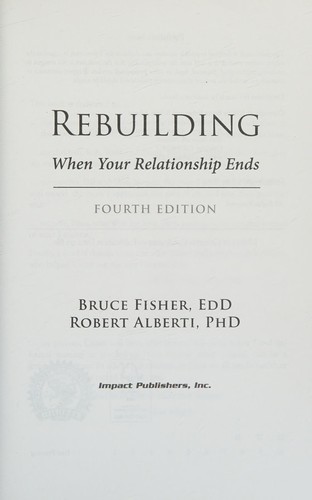
Rebuilding: When Your Relationship Ends
Bruce Fisher, EdD & Robert Alberti, PhD
Million-copy bestseller with proven 19-step divorce recovery process.

BIFF: Quick Responses to High-Conflict People
Bill Eddy, LCSW Esq.
Brief, Informative, Friendly, and Firm responses for dealing with high-conflict people.

Divorcing a Narcissist: One Mom's Battle
Tina Swithin
Memoir of a mother who prevailed as her own attorney in a 10-year high-conflict custody battle.

The High-Conflict Custody Battle
Amy J. L. Baker, PhD & J. Michael Bone, PhD
Expert legal and psychological guide to defending against false accusations in custody.
As an Amazon Associate, Clarity House Press earns from qualifying purchases. Your price is never affected.
Found this helpful?
Share it with someone who might need it.
Tags
About the Author

Clarity House Press
Editorial Team
The editorial team at Clarity House Press curates and publishes evidence-based content on narcissistic abuse recovery, high-conflict divorce, and healing. Our content is informed by research, survivor experiences, and established trauma-informed approaches.
View all posts by Clarity House Press →Published by Clarity House Press Editorial Team