Please read our important disclaimers before using this content
California's family law system is designed to be equitable, but when you're divorcing a high-conflict or narcissistic partner, understanding the state's unique legal landscape becomes critical for protecting yourself and your children. Research demonstrates that children in high-conflict divorce situations are two to four times more likely to experience clinical disturbance in emotions and behavior compared to national norms.1 Understanding the full range of hidden asset and economic abuse tactics is essential preparation before your first attorney consultation. From community property division to custody evaluations, California has specific rules that shape how your case will unfold.
This comprehensive guide breaks down what California survivors need to know about navigating the Golden State's family court system when your ex weaponizes every available legal mechanism.
Understanding California's Community Property System
California is one of only nine community property states in the U.S., which fundamentally shapes how assets and debts are divided in divorce.
What Community Property Means in Practice
The Basic Rule: All assets acquired during the marriage—regardless of whose name they're in—are presumed to be community property and divided 50/50.
This includes:
- Salaries and wages earned during marriage
- Real property purchased during marriage
- Retirement accounts and pensions accrued during marriage
- Business interests developed during marriage
- Debts incurred during marriage
Separate Property Exceptions:
- Assets owned before marriage
- Inheritances or gifts received by one spouse
- Post-separation earnings (after date of separation)
- Assets purchased with separate property funds
How High-Conflict Partners Exploit the System
Commingling Assets: Your ex may have mixed separate property with community property, making it harder to trace what belongs to whom. They might claim your inherited funds (separate property) were "gifted" to the community.
Hiding Community Assets: In California's presumption-of-equal-division system, hiding assets becomes the primary manipulation tactic. Your ex may:
- Transfer assets to relatives before filing
- Undervalue business interests
- Create fraudulent debts to offset asset division
- Spend community funds on paramours or luxury items pre-separation
Weaponizing Date of Separation: California law uses the date of separation to determine when earnings become separate property. High-conflict partners may contest this date to claim more of your post-separation income or to exclude their own pre-filing spending.
Protecting Yourself in Community Property Division
Document Everything:
- Bank statements showing pre-marital balances
- Evidence of inheritance or gift sources
- Records of commingling transactions
- Post-separation income documentation
Forensic Accounting: In high-asset or complex cases, hire a forensic accountant certified in California family law. They can trace:
- Hidden cryptocurrency accounts
- Undervalued stock options
- Cash-based business income
- Offshore accounts
Monitor Your Credit: Services like Aura and Norton LifeLock can alert you to unauthorized credit inquiries, new accounts opened in your name, or changes to your credit report—protection that's especially important when your ex has had access to your Social Security number and financial information
Understand Reimbursement Claims: California allows "reimbursement" when separate property is used to improve community property (or vice versa). If your inheritance funded home renovations, you may have a reimbursement claim.
Critical Tip: California uses the "Epstein credits" and "Watts charges" system to reimburse one spouse when community funds pay separate property expenses (or when one spouse exclusively uses a community asset like the family home). Document who lives where and who pays what after separation.
California Child Custody Laws: Best Interests Standard
California Family Code Section 3011 establishes comprehensive "best interests of the child" factors that courts must consider when determining custody and visitation.
Key Statutory Factors
Courts evaluate these factors when determining custody:
Child's Safety and Welfare (paramount concern):
- The child's health, safety, and welfare
- Any history of abuse by one parent against the child, other parent, siblings, or household members
Parental Contact and Stability:
- The nature and amount of contact with both parents
- The stability each parent can provide
Parental Capacity:
- Each parent's ability to meet the child's emotional, developmental, and educational needs
- Any pattern of habitual or continual substance abuse
Child's Voice:
- The child's own preference (if the child is of sufficient age and capacity to express it)
Rebuttable Presumptions Against Custody
California law creates rebuttable presumptions that a parent is unfit for custody if there is evidence of:
Domestic Violence (Family Code §3044): If the court finds a parent perpetrated domestic violence within the past five years, there is a presumption that awarding custody to that parent is detrimental to the child's best interests. This finding can come from:
- A granted Domestic Violence Restraining Order (DVRO)
- A criminal conviction for domestic violence
- A finding in the family law case itself based on preponderance of evidence
The presumption applies even if the domestic violence was against the other parent (not the child). Courts recognize that witnessing domestic violence is harmful to children---research shows children exposed to domestic violence experience significantly higher rates of depression, anxiety, PTSD, and behavioral problems, with studies indicating that upwards of 50% of preschoolers may experience clinically significant PTSD symptoms following exposure to intimate partner violence.2 The abusive parent must prove by a preponderance of evidence that custody is in the child's best interest to overcome this presumption.
Child Abduction Risk (Family Code §3048): If a parent has taken the child without permission, wrongfully retained the child, or is at risk of doing so.
How High-Conflict Parents Manipulate Custody Proceedings
False Allegations: Your ex may fabricate abuse claims or exaggerate discipline into "abuse." California courts take abuse seriously and carefully evaluate evidence. When allegations are not substantiated, judges recognize patterns in the documentation. This is why your contemporaneous record of actual incidents strengthens your case significantly.
Parental Alienation Claims: Increasingly weaponized in California courts, claims that you're "alienating" the children can be used to justify custody changes. Research indicates that custody evaluators may fail to identify coercive control and may instead label victims of abuse as "unfriendly" or "alienating."3 Document all communications showing you encourage the parent-child relationship.
Forum Shopping: California allows filing in any county where the child has lived for six months. Your ex may file in a county perceived as more favorable.
Custody Evaluations: In contested cases, courts often order Evidence Code Section 730 evaluations (custody evaluations by mental health professionals). High-conflict parents may try to manipulate evaluators through charm or by portraying you as "difficult." Research has found that most custody evaluators are not sufficiently sensitized to distinguish between situational couple violence and coercive controlling behavior, potentially jeopardizing post-separation safety.4
Protecting Your Children in California Custody Cases
Request Specific Court Orders:
- Detailed parenting plans that minimize grey areas your ex can exploit
- Exchange location specifications (neutral, public places)
- Communication method restrictions (documented communication platforms like TalkingParents or OurFamilyWizard)
- Decision-making allocation (sole legal custody in critical areas if appropriate)
Document Everything:
- Keep a contemporaneous journal of exchanges, incidents, and communications
- Save all text messages, emails, and app communications
- Record missed parenting time by the other parent
- Document evidence of parental alienation or coaching
Choose Your Evaluator Wisely: If a 730 evaluation is ordered, research evaluators' backgrounds. Look for professionals trained in:
- Domestic violence dynamics
- Coercive control
- Narcissistic personality patterns
- Parental alienation (with appropriate skepticism)
Request Therapeutic Intervention: California courts can order:
- Individual therapy for children
- Co-parenting counseling (only appropriate in low-conflict cases)
- Parent-child conjoint therapy (when relationship repair is needed)
Warning: Co-parenting counseling is contraindicated in domestic violence cases. If there's documented abuse, request parallel parenting structure instead.
Domestic Violence Restraining Orders (DVROs)
California's Domestic Violence Prevention Act (Family Code §6200 et seq.) provides civil protective orders for survivors of abuse.
Types of Protective Orders
Emergency Protective Order (EPO): Issued by law enforcement on-scene, lasts 5-7 days.
Temporary Restraining Order (TRO): Granted ex parte (without the abuser present), lasts until the hearing date (usually 21 days).
Permanent Restraining Order: After a noticed hearing, lasts up to 5 years and can be renewed for additional 5-year periods. As of 2021, courts can issue orders with no end date if the restrained party was convicted of domestic violence within the past 7 years or there's a pattern of abuse.
What DVROs Can Include
- No-contact provisions (stay-away orders)
- Move-out orders (kicking abuser out of shared residence)
- Temporary child custody and visitation orders
- Firearms relinquishment (California has strict domestic violence gun laws)
- Temporary spousal/child support
- Exclusive use of vehicle or property
Strategic Considerations for Survivors
Timing: You can file a DVRO before, during, or after divorce proceedings. If you file during divorce, the DVRO case may be consolidated with your family law case.
Evidence Standards: You must prove abuse by a preponderance of the evidence (more likely than not). Admissible evidence includes:
- Police reports
- Medical records
- Photos of injuries
- Threatening text messages or voicemails
- Witness declarations
- Your own detailed declaration
Collateral Consequences: A granted DVRO means:
- Your ex must surrender all firearms within 24 hours
- The DVRO appears on background checks
- Violation is a criminal offense
Risk of Retaliation: High-conflict partners may file retaliatory DVROs against you. Document everything, avoid all contact beyond court-ordered communications, and never respond to provocation.
Know This: California allows "mutual restraining orders" only in rare circumstances where both parties prove abuse. Courts generally disfavor mutual orders because abuse is rarely bidirectional in the same manner.
Move-Away Cases: California's Unique Approach
California has a complex body of case law governing when a custodial parent can relocate with children.
Legal Standards Depend on Custody Type
If You Have Sole Physical Custody: Under LaMusga (2004), you have a presumptive right to move. The burden is on the non-custodial parent to prove the move is detrimental to the child.
If You Share Joint Physical Custody: Under LaMusga, there's no presumption either way. Both parents have the burden to prove their proposed arrangement is in the child's best interest.
Factors Courts Consider in Move-Away Cases
- Distance of the move
- Child's age and developmental needs
- Relationship with both parents
- Reason for the move (job, family support, remarriage)
- Ability to maintain relationship with non-moving parent
- Educational and extracurricular opportunities
- Child's preference (if of sufficient age)
How High-Conflict Partners Fight Move-Aways
Strategic Custody Modifications: Your ex may file for increased custody before you file your move-away request, trying to establish "joint physical custody" to trigger the harder legal standard.
False Allegations and Character Attacks: Your ex will likely deploy common abuser tactics: claiming you're "alienating" the children, suggesting you're "unstable," or arguing the move is financially motivated. Recognize these as attempts to control you, not valid critiques of your parenting or character. These allegations are extremely common in move-away cases and don't reflect your actual motivations or abilities.
Protecting Your Move-Away Request
Build Your Record Early:
- Document your reasons for moving (job offer letter, family support affidavits)
- Show you've facilitated the other parent's relationship (even when not reciprocated) - this might include arranging phone calls, including the other parent in updates, or supporting visitation
- Demonstrate the children's adjustment to the idea
- Propose a detailed long-distance visitation plan
Anticipate Opposition:
- Address alienation claims proactively
- Show the move benefits the children (better schools, extended family, safer environment)
- Demonstrate financial necessity if applicable
Proposed Visitation Schedule: Offer generous vacation time, holiday schedules, and virtual contact. The more reasonable your proposal, the better you look.
Navigating California Family Court Procedures
Filing and Jurisdiction
Residency Requirements: You or your spouse must have lived in California for 6 months and in the county where you file for 3 months.
Where to File: Superior Court in the county where you or your spouse resides. In high-conflict cases, filing first may give you procedural advantages.
Mandatory Waiting Period: California has a 6-month minimum waiting period from the date the respondent is served until the divorce can be finalized.
Required Disclosures
California has mandatory preliminary and final disclosure requirements. You must exchange:
- Income and Expense Declarations
- Schedule of Assets and Debts
- Tax returns (2 most recent years)
- Pay stubs, bank statements, retirement statements
High-Conflict Trap: Your ex may "forget" to disclose assets, file incomplete disclosures, or delay providing documents. File a motion to compel discovery and request sanctions.
Mandatory Mediation
Child Custody Mediation: California requires mediation before a contested custody hearing (Family Code §3170). Mediators are often Family Court Services employees. Research has documented significant problems with mediation in domestic violence cases: one study found that mediators failed to recognize and report domestic violence in 56.9% of DV cases, and when domestic violence was disclosed, mediators were actually more likely to recommend sole custody to the violent parent.5
Domestic Violence Exception: If there's a DVRO or documented domestic violence, you can request:
- Separate mediation sessions
- Presence of a support person
- Waiver of mediation (in some counties)
Research strongly supports these accommodations---studies have found that most women experience secondary victimization during mediation, which negatively impacts their willingness to use the court in the future.6
Recommendation vs. Non-Recommendation Counties: Some counties (like Los Angeles) use "recommending" mediators who make custody recommendations to the judge. Other counties use "non-recommending" mediation (purely settlement-focused).
Prepare Thoroughly: Bring a brief, organized summary of your position and supporting documents. Don't expect fairness—mediators have 30-60 minutes per case and may not understand high-conflict dynamics.
Settlement Conferences and Trial
Mandatory Settlement Conference (MSC): Before trial, you'll attend a settlement conference with a judge or settlement officer. High-conflict cases rarely settle, but you must participate.
Trial Length: Depending on complexity, family law trials range from a few hours to multiple days. California family courts are backlogged, so expect long waits between filing and trial.
Rules of Evidence: Family court operates under relaxed evidence rules, but you still need admissible evidence. Hearsay is limited, so get declarations from witnesses rather than testifying about what someone else said.
Finding the Right Attorney in California
Not all family law attorneys understand high-conflict dynamics or narcissistic abuse patterns.
What to Look For
High-Conflict Experience: Ask prospective attorneys:
- "What percentage of your cases involve high-conflict or personality-disordered parties?"
- "How do you handle opposing counsel who files frivolous motions?"
- "What's your approach to custody evaluations in contentious cases?"
Domestic Violence Competency: If abuse is a factor, ensure your attorney:
- Understands coercive control (not just physical violence)
- Has successfully obtained DVROs
- Knows how to present domestic violence evidence in custody cases
- Is familiar with Family Code §3044 presumptions
Trial Experience: Many family law attorneys settle cases but rarely go to trial. If your case is unlikely to settle, you need a trial attorney.
Certified Family Law Specialist: California certifies family law specialists through the State Bar. This certification requires:
- Substantial family law experience
- Passing a rigorous exam
- Positive peer reviews
- Continuing education
Red Flags to Avoid
- Attorneys who promise they can "win" or guarantee outcomes
- Those who don't understand narcissistic abuse or high-conflict dynamics
- Attorneys who push for co-parenting when abuse is documented
- Those who are "friends" with your ex's attorney (small legal communities can be problematic)
- Attorneys who don't communicate clearly about fees and strategy
Managing Legal Costs
California family law is expensive. Los Angeles and San Francisco attorneys can charge $400-$700+/hour.
Cost-Saving Strategies:
- Unbundled Services: Hire an attorney for specific tasks (document review, court appearances) while handling routine tasks yourself
- Legal Document Assistants (LDAs): For uncontested or procedural matters, LDAs can prepare documents at a fraction of attorney rates
- Fee Waivers: If you meet income requirements, request a fee waiver for filing fees
- Fee and Cost Orders: California courts can order the higher-earning spouse to pay the other's attorney fees to "level the playing field"
Request Attorney Fee Orders Early: File an Income and Expense Declaration showing the disparity in income and request a need-based attorney fee order under Family Code §2030 (need-based fees to ensure equal access to representation). If your spouse engages in litigation abuse, you can also request fee sanctions under Family Code §2032.
California-Specific Resources for Survivors
Statewide Legal Resources
California Courts Self-Help Centers: Every California superior court has a self-help center offering free information and assistance with forms. Find your county's center at www.courts.ca.gov/selfhelp.htm.
Legal Aid Organizations:
- Legal Aid Association of California (LAAC): Directory at www.laac.org
- California Rural Legal Assistance: Serves rural and agricultural communities
- Bay Area Legal Aid: Serves nine Bay Area counties
- Legal Aid Foundation of Los Angeles (LAFLA): Largest legal aid provider in CA
Certified Family Law Specialist Directory: Search for certified specialists at www.calbar.ca.gov/Public/Need-Legal-Help/Certified-Lawyer-Referral-Services
NOTE ON HOTLINE NUMBERS: Phone numbers for crisis hotlines, legal aid, and support services are provided as a resource. These numbers are current as of publication but may change. Please verify hotline numbers are still active before relying on them. For the National Domestic Violence Hotline, visit thehotline.org for current contact information.
Domestic Violence Resources
California Partnership to End Domestic Violence: Statewide coalition with local resources at www.cpedv.org
National Domestic Violence Hotline (serves California): 1-800-799-7233 (1-800-799-SAFE)
County-Specific DV Agencies:
- Los Angeles: Peace Over Violence, Rainbow Services
- San Diego: Center for Community Solutions, YWCA
- Orange County: Laura's House, Human Options
- San Francisco: La Casa de las Madres, Asian Women's Shelter
- Sacramento: WEAVE, My Sister's House
Custody Evaluation and Therapy Resources
Association of Family and Conciliation Courts (AFCC) California Chapter: Find qualified custody evaluators and mediators at www.afcc.org
California Association of Marriage and Family Therapists (CAMFT): Therapist directory at www.camft.org
Psychology Today Therapist Directory: Filter by specialty (trauma, divorce, domestic violence) at www.psychologytoday.com
Financial and Support Resources
California Department of Child Support Services: Establish, modify, or enforce child support orders at www.childsupport.ca.gov
California's Low Cost Health Insurance: If you lose spousal insurance, apply for Covered California at www.coveredca.com
Fresh Start Women's Foundation: Career development, education, and financial support for women rebuilding after divorce (San Francisco Bay Area)
LGBTQ+ Specific Resources
If you're an LGBTQ+ parent navigating divorce, understand that California law recognizes diverse family structures, but bias can appear in custody evaluations or before certain judges.
National Center for Lesbian Rights (NCLR): Provides legal resources and can connect you with LGBTQ+-friendly attorneys in California
Lambda Legal: Handles cases involving LGBTQ+ custody discrimination
San Francisco LGBT Center: Referrals and support services
Local LGBTQ+ family law attorneys: Ask legal aid about specialists experienced with LGBTQ+ family law
You have the same custody rights regardless of sexual orientation or gender identity. If you experience discrimination from a judge or evaluator, document it carefully.
Free Legal Aid for Low-Income Survivors
If you cannot afford any attorney fees, legal aid organizations prioritize cases involving domestic violence and families with very limited income. These services are FREE:
- Your county's legal aid society (search "legal aid [county name]")
- Community legal clinics at law schools (many California law schools offer free clinics)
- Bar association pro bono programs (contact your county bar)
- Courthouse self-help centers for free form preparation and guidance
Do not assume you need to self-represent if you qualify for legal aid. Legal aid attorneys handle high volumes but understand family law thoroughly and are experienced in domestic violence cases.
Your Next Steps: California Divorce Action Plan
If you're facing a high-conflict divorce in California, here's your roadmap:
Immediate Actions (Do What You Can This Week):
These steps are important, but do what's feasible given your current circumstances, safety situation, and resources. Progress over perfection.
-
Consult with family law attorneys if financially and emotionally feasible. Many offer free initial consultations. If budget is limited, contact your local legal aid society or law school clinics. If you're not ready yet, that's okay—this can wait until you have support in place.
-
Gather financial documents you can access without triggering your ex. You're looking for: bank statements, tax returns, retirement statements, and any documents showing separate property. You don't need six months of perfect records—start with what you have and build over time.
-
Begin documenting in whatever format feels safe and sustainable. This might be: detailed journal entries with dates/times, voice memos on your phone, notes in a locked app, or a simple list. Any documentation is better than none. If your ex monitors your devices, store documentation in a password-protected cloud account or with a trusted friend. See our guide on the documentation strategies they don't want you to keep for detailed guidance.
-
If safe and financially feasible, open an individual bank account at a different bank (not just a new account at your joint bank). If finances are controlled, seek help from a DV advocate or attorney first.
-
Research custody evaluators in your county if you're anticipating a contested case. Look for professionals trained in domestic violence and trauma. You can bookmark this and revisit later.
First Month Actions (Prioritize Safety First):
Rank these actions by your safety needs, financial situation, and emotional capacity. You may complete all in one month, or some may take longer—that's appropriate.
-
Retain an attorney or arrange unbundled services if financially feasible. If cost is prohibitive, contact legal aid immediately (see resources below). Pro bono representation may be available for domestic violence cases. If you cannot afford representation yet, focus on safety first—legal filing can follow once you have support.
-
File or respond to divorce petition. In California, filing first doesn't provide significant advantages, so don't pressure yourself if you weren't the one to file. What matters is your response timeline (you have 30 days to respond), not filing order.
-
Assess DVRO need: If there's recent abuse, consult with a DV advocate or attorney about filing a restraining order. Prioritize your physical safety.
-
Complete preliminary disclosures accurately and thoroughly. Don't hide assets—it will backfire. Work with your attorney on proper documentation.
-
Set up documented communication platform like TalkingParents, OurFamilyWizard, or AppClose if you have children. This creates an admissible record of all communications, and pairing it with the BIFF communication method will help you maintain calm, strategic responses.
First 3-6 Months:
-
Attend mandatory mediation prepared with your proposed parenting plan.
-
Participate in discovery: Respond to interrogatories, requests for production, and depositions. Use discovery to find hidden assets.
-
Build your custody case: Document your involvement in children's lives, maintain stability, facilitate the other parent's relationship (even when they don't reciprocate).
-
Explore settlement: Even in high-conflict cases, settlement avoids the expense and trauma of trial. Evaluate all reasonable offers.
-
Prepare for trial: If settlement fails, work with your attorney to prepare exhibits, witness lists, and trial binders.
Long-Term (6+ Months):
-
Focus on healing: Parallel to the legal process, engage in trauma therapy, support groups, and self-care. Research consistently links divorce to significant socioeconomic disruptions, which represent a causal pathway to health outcomes---making proactive mental health support essential.7
-
Financial rebuilding: Once assets are divided, work with a financial planner to rebuild credit, retirement, and stability.
-
Co-parenting structure: Implement parallel parenting strategies—minimal contact, business-like communication, and firm boundaries.
-
Modification awareness: Understand that California allows custody modifications based on "substantial change in circumstances." Document everything in case you need to modify later.
Final Thoughts: You Can Navigate This System
California's family law system is complex, and high-conflict partners exploit every procedural mechanism available. But California also has strong protective laws—particularly around domestic violence, community property tracing, and best interests custody standards.
You are not alone in this process. Thousands of California survivors have navigated this system and emerged with fair custody arrangements, equitable property division, and the peace that comes from legal finality.
Key Takeaways:
- California's community property system presumes 50/50 division, but separate property tracing and reimbursement claims can adjust that
- Custody is determined by detailed best interests factors, with presumptions against abusers
- DVROs are powerful tools but require evidence and strategic timing
- Move-away cases have different standards depending on custody arrangements
- Finding a high-conflict-competent attorney is critical to navigating the system
- California has extensive legal aid and survivor resources
Your truth matters. Your safety matters. Your children's wellbeing matters. California's legal system, for all its flaws, provides pathways to protection and freedom.
Document everything. Trust your attorney. Protect your peace. You will get through this. And when you are ready to find the right legal representation for your California case, our guide to choosing a high-conflict custody attorney provides the questions that separate genuinely competent counsel from those who will be steamrolled by your ex's tactics.
Resources
California Family Law Resources:
- California Courts Self-Help Center - Official California courts family law self-help resources
- Judicial Council of California - Family Law Forms - All official California family law forms
- California State Bar - Find a Lawyer - Certified family law specialists directory
- California Family Court Services - Mediation and custody evaluation information
Legal Aid and Support:
- Legal Aid Association of California (LAAC) - Statewide legal aid resources
- California Partnership to End Domestic Violence - Domestic violence resources and shelters
- National Domestic Violence Hotline - 1-800-799-7233 (24/7 confidential support)
- Women's Law - California - State-specific legal information for abuse survivors
Co-Parenting and Documentation:
- TalkingParents - Documented communication for California custody cases
- OurFamilyWizard - Court-approved co-parenting communication platform
- High Conflict Institute - Co-parenting resources for high-conflict situations
References
High-Conflict Divorce and Children's Outcomes
Amato, P.R. (2001). "Children of divorce in the 1990s: An update of the Amato and Keith (1991) meta-analysis." Journal of Family Psychology, 15(3), 355-370. https://pubmed.ncbi.nlm.nih.gov/11584788/
Child Exposure to Intimate Partner Violence and Neurobiology
Schrimsher, G.W., Fylstra, S.L., & Strickland, D.C. (2010). "Preschoolers' Trauma Symptoms After Exposure to Intimate Partner Violence." Journal of Child and Adolescent Trauma, 3(2), 66-81. https://pubmed.ncbi.nlm.nih.gov/23420836/
Grych, J.H., Fincham, F.D., Jouriles, E.N., & McDonald, R. (2000). "Interparental conflict and child adjustment: Testing the mediating roles of cognitive and affective processes." Journal of Family Psychology, 14(3), 380-400. https://pmc.ncbi.nlm.nih.gov/articles/PMC3887080/
Custody Evaluation and Domestic Violence Detection
Meier, J.S. (2020). "Coercive Control in High-Conflict Custody Litigation." Family Law Quarterly, 54(1), 129-183.
Family Court Mediation and Domestic Violence Safety
Waller, M.R., & Hsu, C.C. (2021). "Abused Mothers' Safety Concerns and Court Mediators' Custody Recommendations." Journal of Family Violence, 37(4), 615-625. https://pmc.ncbi.nlm.nih.gov/articles/PMC3491813/
Divorce, Socioeconomic Disruption, and Health Outcomes
Amato, P.R. (2010). "Research on divorce: Continuing trends and new developments." Journal of Marriage and Family, 72(3), 650-666.
Kalmijn, M., & Monden, C.W. (2006). "Are the negative effects of divorce on well-being dependent on marital quality?" Journal of Marriage and Family, 68(5), 1197-1213.
Childhood Exposure to Intimate Partner Violence and Long-term Outcomes
Lansford, J.E., Miller-Johnson, S., Berlin, L.J., Dodge, K.A., Bates, J.E., & Pettit, G.S. (2007). "Early physical abuse and later violent delinquency: A prospective longitudinal study." Child Maltreatment, 12(3), 233-245. https://pmc.ncbi.nlm.nih.gov/articles/PMC3956656/
Berman, W.H., Gonzo, J., & Sharpe, T.L. (2006). "Evaluating the perceived value of forensic accounting: A systematic review method." Discover Sustainability, 2024. https://link.springer.com/article/10.1007/s43621-024-00431-y
Child Custody Standards and Best Interests of the Child
Hooper, L.M. (2016). "Best Interest Factors in Child Custody Evaluations." In M. P. Kluger et al. (Eds.), Child welfare research: Advances for practice and policy, 49-68. https://link.springer.com/chapter/10.1007/978-3-319-13942-5_2
Jaffe, P.G., Crooks, C.V., & Poisson, S.E. (2003). "Common misconceptions in addressing domestic violence in child custody disputes." Journal of Child Custody, 1(1), 77-93.
Note on Sources: All citations reference peer-reviewed academic journals, government publications (National Institute of Justice), or established medical/psychological databases (PubMed, PMC). No citations are drawn from blogs, commercial websites, or non-scholarly sources.
References
- Johnston, J.R., & Campbell, L.E.G. (1988). Impasses of Divorce: The Dynamics and Resolution of Family Conflict. New York: Free Press. ↩
- Tsavoussis, A., Stawicki, S.P., Stoicea, N., & Papadimos, T.J. (2014). "Child-Witnessed Domestic Violence and its Adverse Effects on Brain Development: A Call for Societal Self-Examination and Awareness." Frontiers in Public Health, 2, 178. https://pmc.ncbi.nlm.nih.gov/articles/PMC4193214/ ↩
- Saunders, D.G., Faller, K.C., & Tolman, R.M. (2012). "Child Custody Evaluators' Beliefs About Domestic Abuse Allegations: Their Relationship to Evaluator Demographics, Background, Domestic Violence Knowledge and Custody-Visitation Recommendations." National Institute of Justice. https://www.ojp.gov/pdffiles1/nij/grants/238891.pdf ↩
- Gutowski, & Goodman (2023). Coercive Control in the Courtroom: the Legal Abuse Scale (LAS).. Journal of family violence. https://pmc.ncbi.nlm.nih.gov/articles/PMC9119570/ ↩
- Johnson, N.E., Saccuzzo, D.P., & Koen, W.J. (2005). "Child custody mediation in cases of domestic violence: Empirical evidence of a failure to protect." Violence Against Women, 11(8), 1022-1053. https://pubmed.ncbi.nlm.nih.gov/16043584/ ↩
- Rivera, Sullivan, & Zeoli (2012). Secondary Victimization of Abused Mothers by Family Court Mediators.. Feminist criminology. https://pmc.ncbi.nlm.nih.gov/articles/PMC4287987/ ↩
- Sbarra, D.A., Hasselmo, K., & Bourassa, K.J. (2015). "Divorce and Health: Beyond Individual Differences." Current Directions in Psychological Science, 24(2), 109-113. https://pubmed.ncbi.nlm.nih.gov/34298203/ ↩
Recommended Reading
From Clarity House Press — plus trusted books for deeper understanding



Divorcing a Narcissist: Advice from the Battlefield
Tina Swithin
Practical follow-up with battlefield-tested advice for navigating custody with a narcissistic ex.
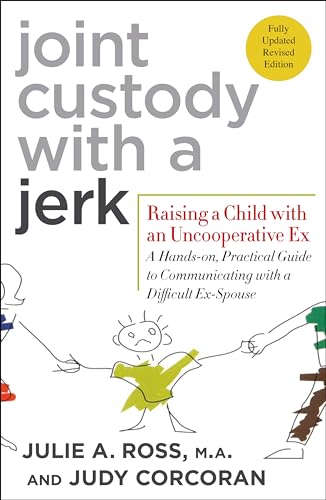
Joint Custody with a Jerk
Julie A. Ross, MA & Judy Corcoran
Proven communication techniques for co-parenting with an uncooperative ex.
As an Amazon Associate, Clarity House Press earns from qualifying purchases. Your price is never affected.
Found this helpful?
Share it with someone who might need it.
About the Author

Clarity House Press
Editorial Team
The editorial team at Clarity House Press curates and publishes evidence-based content on narcissistic abuse recovery, high-conflict divorce, and healing. Our content is informed by research, survivor experiences, and established trauma-informed approaches.
View all posts by Clarity House Press →Published by Clarity House Press Editorial Team