Please read our important disclaimers before using this content
When you receive a 63-paragraph email accusing you of parental neglect, listing your character flaws, and demanding immediate responses to seventeen rhetorical questions—how do you respond?
The BIFF method, developed by Bill Eddy of the High Conflict Institute, provides a framework: Brief, Informative, Friendly, Firm.1 It is one of the most effective tools available for survivors navigating high-conflict co-parenting after divorce.
The Four Elements of BIFF
BRIEF
- 2-5 sentences maximum
- Respond only to necessary logistical questions
- Ignore accusations, attacks, and bait
INFORMATIVE
- Provide only essential information
- Stick to facts, not emotions or opinions
- Answer legitimate questions without over-explaining
FRIENDLY
- Neutral, business-like tone
- Not warm, not cold
- No sarcasm or passive-aggression
FIRM
- State your position clearly
- Don't waver or negotiate repeatedly
- End the conversation
Why BIFF Works
1. Reduces Escalation Defensive responses fuel conflict. BIFF starves it.2 Research on emotion regulation demonstrates that defensiveness operates as a rigid self-protective mechanism that escalates interpersonal conflict, while non-defensive communication supports de-escalation.3
2. Creates Documentation Courts see your reasonable communications versus their inflammatory ones. High-conflict family law cases are characterized by parties drawn toward rather than away from conflict, often involving Cluster B personality disorders (narcissistic, borderline, histrionic, antisocial) that communicate through dramatic, emotional, and repetitive patterns.4 Pair BIFF responses with consistent documentation practices and you build a compelling record of your reasonableness over time. Research demonstrates that systematic reviews of high-conflict divorce indicators consistently identify poor communication and conflict resolution as central themes distinguishing high-conflict from cooperative post-divorce relationships.5
3. Protects Your Energy You're not spending hours crafting responses or ruminating about their attacks. Studies on emotion regulation and interpersonal conflict show that difficulties in emotion regulation predict relationship satisfaction problems, with withdrawal and engagement patterns playing critical roles in conflict outcomes.6
4. Maintains Boundaries BIFF makes clear: you'll discuss logistics, not engage in warfare. Structured communication approaches emphasize brevity, factual content, and emotional neutrality—key factors in managing high-conflict interactions.7
What BIFF Looks Like
Example of a typical high-conflict message (may be triggering):
Their message: "Once again you've proven you have absolutely no respect for my time or our children's needs. You claim to care about them but you can't even manage to pack Sophie's soccer uniform for her game. This is exactly the kind of negligent behavior I've been documenting. We need to have a serious discussion about your inability to follow simple instructions. The therapist I've been consulting agrees this is concerning. I expect a detailed explanation of why you continue to make these 'mistakes.' Also, I'm not available next Tuesday and will need you to take the kids, which I'm sure will be another inconvenience for you since you've made it clear your social life takes priority over your children..."
Without BIFF (don't do this): "Are you serious? I forgot ONE uniform because you changed the game time at the last minute without telling me. And what therapist? You're making that up just like you make everything up. I'm a great parent and everyone knows it. Your constant criticism is exactly why this divorce was necessary. I'm NOT taking the kids Tuesday because that's your day and I have plans. Stop trying to manipulate me..."
With BIFF: "I can bring the uniform to the game at 3pm. I'm not available Tuesday. You'll need to arrange alternative care or we can discuss a formal schedule change through documented communication platforms like OurFamilyWizard or AppClose."
Analysis:
- Brief: 3 sentences
- Informative: Addresses the uniform issue and Tuesday request
- Friendly: Neutral, matter-of-fact tone
- Firm: Clear position on both issues, ends conversation
My Story: Learning BIFF
I spent two years crafting paragraph-long defenses before I discovered BIFF. I'd respond to every accusation, explain every decision, defend every choice. Each response took hours to write and left me emotionally devastated. Understanding why baiting and provocation trigger reactive responses was the insight that finally made me stop defending and start ignoring.
The first time I sent a three-sentence BIFF response, I felt physically ill. "But I didn't defend myself," I thought. "They'll think they're right."
Here's what actually happened: nothing. No escalation, no follow-up attack, no courtroom drama. Just... silence. The high-conflict person moved on to easier targets because I'd become boring.
BIFF didn't feel natural at first. It felt like losing. But six months later, I realized I'd gained something more valuable than winning arguments: I'd gained my peace.
Now I can transform 58-paragraph accusations into 3-sentence responses.
Common BIFF Scenarios
Scenario 1: Accusations About Parenting
Them: "I can't believe you let Jacob stay up until 10pm on a school night. No wonder his grades are slipping. You clearly don't prioritize his education like I do."
BIFF: "Jacob's bedtime in my home is 8:30pm. He was in bed on time last night."
Scenario 2: Manufactured Emergencies
Them: "Emma says she doesn't have her asthma inhaler and she desperately needs it. I need you to bring it immediately or I'm taking her to the ER and billing you for it."
BIFF: "Emma's inhaler is in her backpack front pocket. There's a backup in the medicine cabinet at your house."
Scenario 3: Requests to Change the Schedule
Them: "My mother is in town and the kids haven't seen her in months. You're so selfish if you don't let me have them this weekend. They'd be devastated to miss this opportunity."
BIFF: "I'm not able to switch weekends this time. I'm available to trade the weekend of March 15th if that works for you."
Scenario 4: Provocations About Your Personal Life
Them: "I saw you're dating someone new. Very interesting that you have time for romance but claim you're too busy to take extra days with the kids. I'll be discussing this with my attorney."
BIFF: [No response—contains no logistical question]
Or, if you want to acknowledge: "Understood."
When NOT to Use BIFF
1. Genuine Emergencies If your child is actually in danger, respond appropriately.
2. Abuse Involving Children If they're disclosing abuse, document and report—don't BIFF.
3. Legal Communications Sometimes attorneys need you to respond more thoroughly for the record. Consult your lawyer.
4. No Logistical Content If their message contains only attacks with no actual questions, don't respond at all.
Common Mistakes
1. Defending Yourself "I'm a great parent and everyone knows it" invites argument. Stick to facts.
2. Explaining Too Much "I can't switch weekends because I have a family event I planned months ago and my sister will be disappointed..." Better: "I'm not available that weekend."
3. Tone Slips "Per our custody order (which you should know by now)..." is not friendly. Drop the parenthetical.
4. Responding to Every Message If they send 5 emails about the same topic, respond once.
5. JADE-ing Avoid JADE-ing: Don't Justify, Argue, Defend, or Explain beyond logistics.
Advanced BIFF Techniques
1. The One-Question Rule Respond to the actual question; ignore everything else.
2. Delay Responses Wait 2-4 hours (or longer if not urgent) to craft calm BIFF responses. Healthcare research on conflict de-escalation emphasizes verbal conciseness and emotional regulation, with delayed responses allowing for reduced agitation and more effective communication.8 Evidence-based de-escalation research demonstrates that successful conflict management requires emotional regulation by both parties, with staff training emphasizing calm communication, empathy, and validation as core components.9
3. Template Responses "The custody order addresses this. I'm not able to accommodate that request. I'm available during my scheduled time."
4. Information Diet Provide only what's legally required. Share nothing extra about your life, plans, or activities.
5. Third-Party Communication Use court-ordered apps (OurFamilyWizard, TalkingParents) that timestamp and preserve all communications. Family law experts recommend structured communication tools to facilitate respectful, documented interactions in high-conflict co-parenting situations.10 Systematic reviews of coparenting after divorce emphasize that communication quality, coparenting support, and low frequency of conflict are critical elements when families navigate separation, with children experiencing high-conflict coparenting at significantly higher risk for adverse mental health outcomes.11
BIFF and Gray Rock
BIFF and gray rock work together:
- Gray rock is the overall strategy (be boring, unreactive)
- BIFF is the tactical method (structure your required communications)
Use both: gray rock your life (share nothing interesting), BIFF your communications (brief, factual responses only). Research on mediation and conflict resolution shows that couples using structured mediation approaches achieve agreements at significantly higher rates than those in direct negotiation, with participants reporting greater satisfaction with both content and process.12
Sample BIFF Responses
Them: "You never tell me what's going on with the kids and then you complain that I don't know what's happening. I need detailed reports after every visit."
BIFF: "I'll continue sharing information about medical appointments, school events, and schedule changes as they arise."
Them: "I need child support increased. You clearly have extra money since you bought a new car."
BIFF: "Child support modifications go through the court. Contact your attorney if you'd like to file."
Them: "The kids told me you bad-mouth me. This is parental alienation and I'm documenting everything."
BIFF: [No response—no logistical question]
Tracking Success
You're successfully using BIFF when:
- Your responses take 2 minutes, not 2 hours
- You feel calm after sending
- Their inflammatory messages bounce off you
- Communications become shorter and less frequent over time
- Your attorney commends your documentation
Key Takeaways
- BIFF = Brief, Informative, Friendly, Firm
- Respond only to logistical questions; ignore attacks and bait
- 2-5 sentences maximum; neutral, business-like tone
- Creates documentation showing your reasonableness
- Reduces escalation and protects your energy
- Pair with gray rock for maximum effectiveness
- Don't defend, explain, or engage emotionally
BIFF doesn't make high-conflict people pleasant to deal with. It makes them manageable. It transforms 63-paragraph accusations into 3-sentence responses. It protects your peace, demonstrates your stability to courts, and ends the endless argument cycle. You can't control their behavior. You can control yours. BIFF is how. And if you're navigating co-parenting during or after a high-conflict custody dispute, understanding what to expect at your first custody hearing is essential preparation for the road ahead.
Your Next Steps
1. Save This Framework Copy the four BIFF elements (Brief, Informative, Friendly, Firm) somewhere visible—your phone notes, a sticky note on your desk. Reference it before responding to any high-conflict communication.
2. Practice on Low-Stakes Messages Start with routine logistical communications before using BIFF on inflammatory messages. Build the muscle memory when emotions aren't running high.
3. Create Your Template Responses Draft 3-5 template BIFF responses for your most common scenarios: schedule changes, information requests, accusations. Save them for quick reference.
4. Implement the 2-Hour Rule Wait at least 2 hours before responding to any high-conflict message (longer if it's not urgent). Draft your BIFF response, walk away, then review before sending.
5. Track Your Progress Notice how you feel after sending BIFF responses versus defensive ones. Measure success by your peace of mind, not their reaction.
Resources
High-Conflict Communication Tools:
- High Conflict Institute - BIFF Response Method - Official BIFF response training and resources
- OurFamilyWizard - Court-approved co-parenting communication platform with message review
- AppClose - Digital evidence preservation and timestamped documentation
Books on High-Conflict Communication:
- BIFF: Quick Responses to High-Conflict People by Bill Eddy - Comprehensive guide to BIFF method
- It's All Your Fault! 12 Tips for Managing People Who Blame Others for Everything by Bill Eddy - Understanding high-conflict personalities
- Don't Feed the Narcissists! by Dr. Wendy Behary - Communication strategies for narcissistic relationships
Legal and Support Resources:
- American Bar Association Family Law Section - Attorney referrals and high-conflict custody resources
- National Domestic Violence Hotline - 1-800-799-7233 (24/7 support for abuse survivors)
- Psychology Today - Find a Therapist - Therapist directory for high-conflict divorce support
References
Resources:
Books:
- "BIFF: Quick Responses to High-Conflict People" by Bill Eddy
- "Don't Take the Bait: Using BIFF to Respond to High-Conflict People" by Bill Eddy (workbook)
Websites & Tools:
- High Conflict Institute: highconflictinstitute.com
- OurFamilyWizard (court-approved co-parenting app): ourfamilywizard.com
Related Clarity House Articles:
- Gray Rock Method: Becoming Boring to the Narcissist
- Parallel Parenting: When Co-Parenting Isn't Possible
- Documentation Strategies for High-Conflict Custody
- The 48-Hour Rule: Never Respond Immediately to a Narcissist
References
- Eddy, W. A. (2007). How to Write a BIFF Response®. High Conflict Institute. Retrieved from Columbia University Ombuds Office: https://ombuds.columbia.edu/sites/default/files/content/How+to+Write+a+BIFF+Response.pdf ↩
- Eddy, W. A. (2012). Coaching for a BIFF Response®. High Conflict Institute. Retrieved from Columbia University Ombuds Office: https://ombuds.columbia.edu/sites/default/files/content/coaching_for_a_biff_response_bill_eddy_2012.pdf ↩
- Defensiveness and Emotion Regulation. (2018). Emotion dysregulation and interpersonal problems: The role of defensiveness. Tilburg University Research. https://research.tilburguniversity.edu/files/17226081/Defensiveness_PAID_pre_print.pdf ↩
- Rosenfeld, L., Oberman, M., Bernard, S., & Lee, K. (2015). Confronting the Challenge of the High-Conflict Personality in Family Court. Retrieved from: https://www.mtsalawgroup.com/wp-content/uploads/2020/05/RosenfeldObermanBernardLee.pdf ↩
- Harris, V. W. (2014). 10 Rules for Constructive Conflict. University of Florida IFAS Extension (FCS2314). https://smartcouples.ifas.ufl.edu/media/smartcouplesifasufledu/docs/pdfs/10-Rules-for-Constructive-Conflict.pdf ↩
- Rosenman, Vrablik, Charlton, Chipman, & Fernandez (2017). Promoting Workplace Safety: Teaching Conflict Management and De-Escalation Skills in Graduate Medical Education.. Journal of graduate medical education. https://pmc.ncbi.nlm.nih.gov/articles/PMC5646909/ ↩
- Smith Debnam Law. (2024). Preparing for a High-Conflict Divorce: Tips and Strategies. Retrieved from: https://www.smithdebnamlaw.com/article/preparing-for-a-high-conflict-divorce-tips-and-strategies/ ↩
- Lebow, J. L., Wiley, J., & Sullivan, K. (2022). Identifying Indicators of High-Conflict Divorce Among Parents: A Systematic Review. Advances in Social Work, 21(2-3), 859-881. https://journals.indianapolis.iu.edu/index.php/advancesinsocialwork/article/view/26384 ↩
- Sánchez-Hernández, M. D., Herrera, M., Expósito, F., & Badenes-Ribera, L. (2023). Emotion Regulation Difficulties and Relationship Satisfaction in Adolescent Couples: The Role of Conflict Resolution Strategies. Journal of Youth and Adolescence, 52(7), 1536-1549. https://pubmed.ncbi.nlm.nih.gov/37199853/ ↩
- Price, O., Baker, J., Bee, P., & Lovell, K. (2020). Barriers and facilitators to the effective de-escalation of conflict behaviours in forensic high-secure settings: A qualitative study. International Journal of Mental Health Systems, 14, 59. https://pmc.ncbi.nlm.nih.gov/articles/PMC7397665/ ↩
- Lamela, D., & Figueiredo, B. (2016). Coparenting after marital dissolution and children's mental health: A systematic review. Jornal de Pediatria, 92(4), 331-342. https://pubmed.ncbi.nlm.nih.gov/27215765/ ↩
- Breitenstein, K., Platt, R., Barkley-Levenson, E., Galván, A., & Silvers, J. A. (2020). Improved conflict resolution in romantic couples in mediation compared to negotiation. Humanities and Social Sciences Communications, 7, 179. https://www.nature.com/articles/s41599-020-00622-8 ↩
Recommended Reading
From Clarity House Press — plus trusted books for deeper understanding
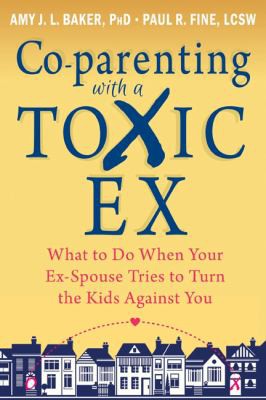
Co-Parenting with a Toxic Ex
Amy J. L. Baker, PhD & Paul R. Fine, LCSW
Evidence-based strategies when your ex tries to turn kids against you. Parental alienation prevention.

High Conflict People in Legal Disputes
Bill Eddy
Practical guide for disputing with a high-conflict personality through compelling case examples.
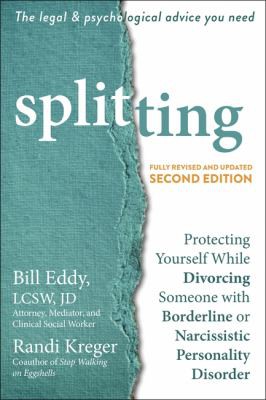
Splitting: Protecting Yourself While Divorcing Someone with Borderline or Narcissistic Personality Disorder
Bill Eddy & Randi Kreger
Updated edition covering domestic violence, alienation, false allegations in high-conflict divorce.
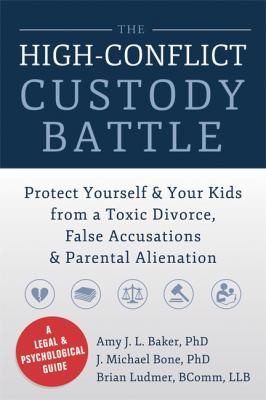
The High-Conflict Custody Battle
Amy J. L. Baker, PhD & J. Michael Bone, PhD
Expert legal and psychological guide to defending against false accusations in custody.
As an Amazon Associate, Clarity House Press earns from qualifying purchases. Your price is never affected.
Found this helpful?
Share it with someone who might need it.
About the Author

Clarity House Press
Editorial Team
The editorial team at Clarity House Press curates and publishes evidence-based content on narcissistic abuse recovery, high-conflict divorce, and healing. Our content is informed by research, survivor experiences, and established trauma-informed approaches.
View all posts by Clarity House Press →Published by Clarity House Press Editorial Team