Please read our important disclaimers before using this content
If you're reading this, you're likely facing one of the most challenging situations a parent can encounter: navigating custody proceedings with a high-conflict co-parent, possibly involving abuse, manipulation, or parental alienation.
Not all family law attorneys understand these dynamics. Some may dismiss your concerns as "divorce drama" or suggest you "just co-parent better." Choosing the wrong attorney can cost you thousands of dollars, months or years of your time, and potentially your relationship with your children. Before you start your search, having comprehensive documentation organized and ready will make every consultation more productive.
This article provides the essential questions you need to ask during attorney consultations—questions that will help you identify attorneys who truly understand high-conflict cases and can effectively represent you.
Why Attorney Selection Is Critical in High-Conflict Cases
High-conflict custody cases differ fundamentally from standard divorce proceedings. While the same legal rules apply, the dynamics create unique challenges (Eddy, 2006):1
- Ongoing abuse and manipulation continue through the court process
- Parental alienation tactics can be subtle and difficult to document (Warshak, 2015)2
- False allegations may be used as litigation weapons
- Excessive motions and delays are used to drain resources
- Personality-disordered co-parents don't respond to standard negotiation
Research demonstrates that family law professionals must receive specialized training in coercive control and high-conflict dynamics to effectively identify abuse patterns versus high-conflict co-parenting disputes.3 You need an attorney who has specialized experience with these patterns—not just general family law experience.
Understanding the Legal Framework
Before we get to the questions, here's essential context about how family courts work:
The Standard of Proof
Family court operates on "preponderance of evidence"—more likely than not (approximately 51%). This is lower than criminal court's "beyond reasonable doubt" but still requires documented, specific evidence. Your attorney must understand how to present abuse evidence effectively to meet this standard.
Best Interests Factors
Courts weigh multiple factors when determining best interests—though specific factors and their weight vary significantly by state. Common factors include:
- Each parent's ability to provide stability
- History of domestic violence or abuse
- Quality of each parent-child relationship
- Each parent's willingness to facilitate the other parent's relationship
- Child's adjustment to home, school, and community
Important: Family law varies substantially by state. These general principles are not legal advice. An experienced attorney in your jurisdiction will understand how local courts interpret and prioritize these factors.
Finding Potential Attorneys: Where to Start
Before scheduling consultations, you need to identify attorneys worth interviewing:
Domestic Violence Legal Services: If abuse is a factor, start with your local domestic violence legal assistance program. They often maintain lists of attorneys experienced in protective parent cases.
State Bar Association: Most states have family law specialist certifications. Search your state bar's website for board-certified family law specialists.
Support Groups and Advocates: Ask your therapist, domestic violence advocate, or members of online support groups for recommendations. Word-of-mouth from other survivors is invaluable.
Online Research: Search "[your county] high-conflict custody attorney" or "[your county] domestic violence custody attorney." Review attorney websites for specific mentions of high-conflict cases, abuse, or parental alienation.
Referral Services: Organizations like the National Domestic Violence Hotline (1-800-799-7233) may provide referrals to attorneys with abuse case experience.
Compile a list of 5-7 potential attorneys, then schedule consultations with your top 3-4 choices. Many attorneys offer free 30-minute initial consultations.
Essential Questions: Category 1 - High-Conflict Experience
These questions assess whether the attorney has genuine experience with cases like yours.
Question 1: "How many custody cases involving documented abuse have you handled in the past two years?"
Why this matters: Some attorneys list "high-conflict" on their website but rarely handle these cases. You want specific numbers.
Green flag: "I handle 15-20 contested custody cases per year, and about 60% involve domestic violence or abuse allegations."
Red flag: Vague answers like "quite a few" or "I've handled all types of cases."
Question 2: "What percentage of your practice involves high-conflict custody?"
Why this matters: An attorney who does mostly uncontested divorces won't have the battle-tested experience you need.
Green flag: "High-conflict custody represents 40-50% of my practice."
Red flag: "I handle a variety of family law matters" (translation: this isn't their focus).
Question 3: "Have you handled cases involving parental alienation allegations? What was your approach?"
Why this matters: Parental alienation claims are often weaponized against protective parents. Your attorney needs experience navigating this minefield. Empirical research shows that courts remain skeptical of mothers' abuse claims, and fathers' cross-claims of parental alienation can increase the likelihood that courts reject mothers' abuse allegations by as much as double, leading to unfavorable custody outcomes for protective parents.4
Green flag: "Yes. I help clients document the difference between a child's justified protective response to abuse versus true alienation. We present evidence of the abusive parent's behavior rather than just defending against alienation claims."
Red flag: "I recommend reunification therapy immediately" (may not understand abuse dynamics) or "Those cases are too difficult" (lacks experience).
Question 4: "Are you familiar with DARVO tactics in family court?"
Why this matters: DARVO (Deny, Attack, Reverse Victim and Offender) is a common manipulation pattern. Attorneys who understand this can prepare you for what's coming.
Green flag: "Yes, absolutely. Abusive parties often claim they're the victim. We document patterns and behaviors proactively to counter this."
Red flag: "What's DARVO?" (lacks specialized knowledge).
Question 5: "How do you stay current on high-conflict divorce and abuse dynamics?"
Why this matters: This field evolves. Good attorneys pursue continuing education.
Green flag: "I attend High Conflict Institute trainings, belong to the American Bar Association's family law section, and regularly consult with domestic violence experts."
Red flag: "I've been practicing for 20 years" (implies relying on old knowledge without updates).
Essential Questions: Category 2 - Abuse Understanding
These questions reveal whether the attorney truly understands domestic violence and coercive control.
Question 6: "Do you have training in coercive control and psychological abuse?"
Why this matters: Many attorneys only recognize physical violence. Coercive control and emotional abuse are often more damaging and harder to prove.
Green flag: "Yes. I've completed training through [domestic violence organization]. I understand coercive control patterns and how to document them for court."
Red flag: "Courts really only care about physical violence and police reports" (outdated and inaccurate).
Question 7: "How do you handle cases where there's emotional abuse but no police reports or protective orders?"
Why this matters: Most abuse doesn't result in police involvement. Your attorney needs strategies for documenting non-physical abuse. Family law professionals need training to recognize coercive control patterns, which are distinct from situational conflict and often leave less visible evidence than physical violence.5
Green flag: "We use detailed timelines, witness statements, communication patterns, medical records, therapy records, and expert testimony to establish the pattern of control."
Red flag: "That's going to be hard to prove" without offering strategy (lacks creative problem-solving).
Question 8: "What's your experience with protective order proceedings?"
Why this matters: If safety is a concern, your attorney should be comfortable navigating protective order law.
Green flag: "I've filed for and defended against protective orders in dozens of cases. I can explain the process, timeline, and how it affects custody."
Red flag: "I usually refer those out to another attorney" (you need integrated representation, not fragmented services).
Question 9: "How do you address opposing counsel's 'angry ex' or 'conflict-driven' narrative about my client?"
Why this matters: Abusers often paint victims as vindictive or unstable. Your attorney needs a counter-strategy.
Green flag: "We document your consistent focus on children's wellbeing, present evidence of abuse calmly and factually, and show the pattern of the other parent's behavior rather than responding emotionally to provocations."
Red flag: "You'll need to stay calm and not react" (places burden on you without addressing the narrative strategically).
Question 10: "Do you work with domestic violence advocates or experts?"
Why this matters: Strong attorneys collaborate with experts who can strengthen your case.
Green flag: "Yes. I regularly work with domestic violence experts who can provide testimony about coercive control patterns, and I coordinate with clients' advocates."
Red flag: "I handle everything myself" (siloed approach).
Essential Questions: Category 3 - Litigation Strategy
These questions assess the attorney's tactical approach.
Question 11: "What's your approach when opposing counsel files excessive motions or uses litigation as harassment?"
Why this matters: High-conflict parties often weaponize the court process. Your attorney needs strategies to respond without draining your resources.
Green flag: "I file for sanctions when appropriate, use summary judgment motions to dispose of frivolous claims, and help clients decide which battles are worth fighting versus which we can handle efficiently."
Red flag: "We'll respond to everything thoroughly" (could bankrupt you responding to harassment).
Question 12: "How do you handle false allegations from the other parent?"
Why this matters: False allegations are common in high-conflict cases. Your attorney should have a tested response strategy.
Green flag: "We immediately gather evidence to refute the allegation, document the pattern of false claims, and when appropriate, file for sanctions or use the false allegations to demonstrate the other parent's lack of credibility."
Red flag: "Those are very serious and hard to defend against" (defeatist attitude).
Question 13: "Do you recommend custody evaluations in high-conflict cases? Why or why not?"
Why this matters: Custody evaluations can be helpful or harmful depending on the evaluator's understanding of abuse. Your attorney's philosophy matters. Research shows that when custody evaluators are appointed, outcomes for mothers with abuse allegations become significantly less favorable, with gender differences in outcomes increasing substantially.6
Green flag: "It depends. I assess whether the available evaluators understand domestic violence and coercive control. If they do, evaluations can be valuable. If not, they can be dangerous because evaluators may misinterpret protective parenting as alienation."
Red flag: "Always" or "Never" (lacks nuanced judgment).
Question 14: "What's your trial versus settlement rate in contested custody cases?"
Why this matters: Some attorneys push settlement to avoid trial work. High-conflict cases often require willingness to go to trial.
Green flag: "I settle about 60-70% of cases, but I'm fully prepared to try the remaining cases. High-conflict parties often only settle when they know you're prepared for trial."
Red flag: "I almost always settle" (may pressure you to accept bad terms) or "I take everything to trial" (may be unnecessarily combative and expensive).
Question 15: "How do you approach temporary orders and emergency motions?"
Why this matters: Early temporary orders often become permanent. Your attorney's urgency matters.
Green flag: "Temporary orders are critical. We move quickly to secure safe custody arrangements and protective orders. I prioritize evidence gathering for the first hearing."
Red flag: "We'll address that after we get the case organized" (doesn't understand urgency).
Essential Questions: Category 4 - Communication and Logistics
These questions assess whether you can work effectively with this attorney.
Question 16: "Who will actually handle my case day-to-day?"
Why this matters: Some attorneys delegate heavily to associates or paralegals. You need to know who you're actually working with.
Green flag: "I'll handle all court appearances and strategy decisions. My paralegal will manage administrative tasks and communicate with you about scheduling. You'll have my direct contact for urgent matters."
Red flag: "My associate handles most cases" (you're hiring someone you haven't met).
Question 17: "What's your typical response time to client communications?"
Why this matters: High-conflict cases involve rapidly evolving situations. You need responsive representation.
Green flag: "I respond to emails within 24 hours on business days. For urgent matters, call my cell and I'll respond within a few hours."
Red flag: "I'll get back to you when I can" (vague, likely slow).
Question 18: "How do you prefer to communicate—phone, email, portal?"
Why this matters: You need a communication style that works for you and creates documentation.
Green flag: "Email for non-urgent matters so we have written records. Phone for complex discussions. I use a client portal for document sharing."
Red flag: "I prefer phone calls" (harder to document, creates billing ambiguity).
Question 19: "Do you have experience practicing in [specific county/court] where my case will be heard?"
Why this matters: Local court culture, judge tendencies, and procedural quirks vary significantly. Local knowledge is valuable.
Green flag: "Yes, I practice regularly in [county]. I'm familiar with the judges, local procedures, and which evaluators understand abuse dynamics."
Red flag: "I can practice there but I usually work in [different county]" (lacks local knowledge).
Question 20: "What do you need from me to be an effective advocate?"
Why this matters: This reveals the attorney's collaborative approach and expectations.
Green flag: "Detailed documentation of incidents, timely responses to my requests for information, honesty about everything even if it's unfavorable, and trust in my strategic decisions while asking questions when you don't understand."
Red flag: "Just let me handle everything" (paternalistic) or vague answer.
Essential Questions: Category 5 - Costs and Billing
These questions address the financial reality of high-conflict custody litigation.
Question 21: "What's your hourly rate and typical retainer for a contested custody case?"
Why this matters: You need realistic budget expectations upfront.
Green flag: "[Specific rate, typically $250-$500+ depending on location]. Initial retainer for contested custody is typically $7,500-$15,000 depending on complexity. This covers initial pleadings, discovery, and temporary orders."
Red flag: Reluctance to discuss numbers clearly or unrealistically low estimates.
Question 22: "How do you bill for emails, phone calls, and administrative tasks?"
Why this matters: Billing practices vary widely and can add up quickly.
Green flag: "Emails are billed in 0.1 hour (6-minute) increments, minimum 0.1 hours. Phone calls are billed in 0.2 hour increments. I don't bill for administrative tasks like filing or calendaring—my paralegal's rate covers that."
Red flag: "Everything is billed at my hourly rate" (includes admin tasks that should be cheaper).
Question 23: "What's a realistic total cost range for my type of case?"
Why this matters: You need to know if you can afford to see this through.
Green flag: "Contested custody cases with abuse allegations typically cost $20,000-$50,000 if we reach trial, less if we settle earlier. Cases involving parental alienation or extensive discovery can exceed $75,000. I'll update you regularly on costs and discuss strategy decisions that affect expenses."
Red flag: "It's impossible to estimate" (may be true but unhelpful) or unrealistically low estimate.
Question 24: "Do you offer payment plans or reduced fee arrangements for domestic violence survivors?"
Why this matters: Legal representation is expensive. Some attorneys work with survivors on fees.
Green flag: "Yes, I offer payment plans for ongoing fees after the initial retainer. I also accept cases through [domestic violence legal aid program] at reduced rates."
Red flag: "Payment in full only" (may not be financially accessible).
Question 25: "How do you handle cost-benefit analysis during the case?"
Why this matters: Not every battle is worth fighting. Your attorney should help you make strategic financial decisions.
Green flag: "Before pursuing motions or discovery, I'll explain the likely cost, probability of success, and strategic value. You make the final decision with full information."
Red flag: "We'll do whatever it takes to win" (could bankrupt you without strategic thinking).
Question 26: "What additional costs should I budget for beyond your fees?"
Why this matters: Attorney fees are only part of the total cost.
Green flag: "Custody evaluations typically cost $3,000-$10,000. Guardian ad litem fees vary. Expert witnesses (therapists, domestic violence experts) may cost $2,000-$5,000. Court filing fees are typically $300-$500. Deposition transcripts run about $500 each."
Red flag: "Just my fees" (hasn't thought about the full picture).
Red Flags: When to Walk Away
During consultations, watch for these warning signs:
Red Flag 1: Minimizing or Dismissing Abuse
If an attorney says things like:
- "Courts don't really care about emotional abuse"
- "You both just need to learn to co-parent"
- "You seem too emotional about this"
- "Are you sure it's really abuse, or are you just angry?"
Walk away. This attorney doesn't understand domestic violence dynamics.
Red Flag 2: Promising Guaranteed Outcomes
If an attorney says:
- "We'll definitely get you full custody"
- "I can guarantee we'll win"
- "The other parent won't stand a chance"
Walk away. No ethical attorney can guarantee outcomes. This is either dishonesty or inexperience.
Red Flag 3: Pushing Inappropriate Strategies
If an attorney recommends:
- Couples counseling or mediation in active abuse cases
- "Just try to work it out between yourselves first"
- Representing yourself for parts of the case to "save money"
Walk away. These strategies are dangerous in high-conflict abuse cases.
Red Flag 4: No Questions About Safety
If the attorney doesn't ask:
- "Are you and the children currently safe?"
- "Do you have safety concerns about custody exchanges?"
- "Has there been any physical violence or threats?"
Walk away. Safety should be the first concern in abuse cases.
Red Flag 5: Adversarial Toward You
If the attorney:
- Interrupts you constantly
- Talks down to you
- Seems skeptical of your account
- Focuses on your flaws rather than strategy
Walk away. You need an advocate, not another adversary.
Red Flag 6: Lack of Specific Experience
If the attorney:
- Can't name specific high-conflict cases they've handled
- Seems unfamiliar with narcissistic abuse or coercive control
- Hasn't heard of BIFF communication or gray rock method
- Doesn't understand parental alienation tactics
Walk away. General family law experience isn't enough.
Red Flag 7: Unclear About Costs
If the attorney:
- Won't discuss fees clearly
- Provides vague estimates
- Becomes defensive when you ask about billing
- Pressures you to sign a retainer immediately
Walk away. Financial transparency is essential.
Green Flags: Signs You've Found the Right Attorney
Green Flag 1: Asks Detailed Questions About Abuse Patterns
The attorney asks specific questions about:
- Control tactics your co-parent uses
- Timeline of abuse
- Impact on children
- Your safety planning
- Documentation you've already collected
This shows: The attorney understands abuse isn't just incidents—it's patterns.
Green Flag 2: Explains Strategy Clearly
The attorney:
- Outlines what you'll file and why
- Explains likely timelines
- Discusses probable responses from opposing party
- Describes decision points and your options
This shows: The attorney thinks strategically and communicates clearly.
Green Flag 3: Acknowledges Challenges Honestly
The attorney says things like:
- "This will be difficult because [specific reason]"
- "Here's what we need to prove and how we'll do it"
- "The judge tends to [pattern], so we'll need to [strategy]"
This shows: Honesty and realistic expectations, not false promises.
Green Flag 4: Validates Your Experience While Staying Professional
The attorney:
- Believes your account of abuse
- Doesn't minimize your concerns
- Also stays professional and focused on evidence
- Explains what will be compelling to the court
This shows: Balance of empathy and legal effectiveness.
Green Flag 5: Collaborative Approach
The attorney:
- Asks about your goals for custody
- Explains options and lets you make informed decisions
- Respects your expertise about your children and situation
- Works with your therapist or advocate
This shows: You'll be partners in this process, not just client and attorney.
The Consultation Process: What to Bring and How to Evaluate
Before the Consultation
Prepare a one-page case summary including:
- Names and ages of children
- Current custody arrangement (formal or informal)
- Brief timeline of key incidents (3-5 most significant)
- Your top goals (safety, custody time, decision-making)
- Your biggest concerns
Compile this questions list and prioritize your top 10-15 based on what matters most in your situation.
Gather any existing legal documents: protective orders, prior custody orders, police reports, CPS reports.
During the Consultation
Take notes on:
- How the attorney makes you feel (heard? dismissed? rushed?)
- Specific answers to your questions
- Red flags or green flags you notice
- Your gut reaction
Pay attention to:
- Does the attorney listen more than they talk initially?
- Do they explain legal concepts in understandable language?
- Do they answer your questions directly or deflect?
- Do they seem genuinely concerned about your situation?
After the Consultation
Compare attorneys on:
- Experience: Who has the most relevant case experience?
- Approach: Whose strategy makes the most sense?
- Communication: Who communicated most clearly?
- Cost: Who offers the best value (not necessarily cheapest)?
- Gut feeling: Who did you feel most comfortable with?
Make a decision within a week if possible. High-conflict cases benefit from moving quickly to establish temporary orders and protective measures.
What to Expect After Hiring Your Attorney
The Engagement Process
- Sign the retainer agreement (read it carefully—ask questions about anything unclear)
- Pay the initial retainer (typically $5,000-$15,000)
- Complete intake forms with detailed case information
- Provide organized documentation of abuse, custody violations, communications
- Establish communication protocols (how often you'll talk, preferred methods)
Working Effectively with Your Attorney
Do:
- Respond promptly to requests for information
- Keep detailed, organized records
- Be completely honest, even about unfavorable facts
- Ask questions when you don't understand something
- Trust your attorney's strategic decisions after discussing them
- Communicate concerns or disagreements respectfully
Don't:
- Call or email excessively about minor issues (costs money and dilutes urgent matters)
- Withhold information you think makes you look bad
- Ignore your attorney's advice without discussion
- Expect instant responses at all hours
- Make major decisions (moving, new relationships, major purchases) without consulting attorney
- Post about your case on social media
When Your Attorney Relationship Isn't Working
Sometimes despite careful selection, the attorney-client relationship doesn't work. Signs you might need to change attorneys:
- Consistent non-responsiveness to urgent communications
- Strategic decisions you fundamentally disagree with after discussion
- Billing practices that feel unethical or unclear
- Loss of confidence in their abilities
- Personality conflict that can't be resolved
- Attorney seems overwhelmed or disorganized with your case
You can change attorneys mid-case. You'll need to:
- Notify current attorney in writing
- Request your file
- Pay any outstanding fees
- Find new attorney (who will file a substitution of counsel)
Real-World Examples
The following examples illustrate how attorney selection affects outcomes. Details have been changed to protect privacy, and outcomes vary significantly based on jurisdiction, specific facts, and judicial discretion.
Sarah's Attorney Search: Red Flags Recognized
Sarah initially consulted with Attorney A, who had 20 years of family law experience. When she described her ex-husband's psychological abuse—controlling finances, monitoring her constantly, isolating her from friends—the attorney said, "Courts don't really care about emotional stuff. Do you have any police reports?"
Sarah recognized this as a red flag. Attorney A didn't understand coercive control.
Attorney B, by contrast, asked detailed questions about patterns of control. She had Sarah complete a power and control wheel during the consultation, asked about financial abuse specifically, and explained how to document coercive control for court using bank records, communication patterns, and witness statements.
Sarah chose Attorney B, who understood that abuse isn't limited to physical violence. The attorney successfully presented the pattern of control to the court, resulting in supervised exchanges and therapy requirements for the ex-husband before unsupervised time.
Key takeaway: Sarah's diligence in asking the right questions and recognizing red flags made the critical difference in her case outcome.
Michael's Consultation Process: Finding the Right Fit
Michael consulted with three attorneys.
Attorney C kept interrupting him and seemed focused on pushing mediation despite Michael explaining his ex-wife had violated protective orders. When Michael expressed safety concerns, the attorney said, "You both need to learn to co-parent for the kids' sake." Michael recognized this attorney didn't understand high-conflict dynamics.
Attorney D asked thoughtful questions but had never handled a parental alienation case. When Michael described his ex-wife's tactics—coaching the children, denying parenting time, making false allegations—the attorney said honestly, "I haven't dealt with that specific situation. It might be beyond my expertise." Michael appreciated the honesty but continued his search.
Attorney E specialized in protective parent cases. During the consultation, she outlined a clear strategy: document every denied visitation, record all communications, file for contempt, and if the pattern continued, seek a custody modification. She explained realistic timelines and costs. Michael felt heard and had confidence in her experience.
Michael chose Attorney E. Over six months, they documented violations systematically. The attorney filed a well-supported contempt motion, and the court sanctioned Michael's ex-wife and modified custody to include specific penalties for future violations. Michael's experience mirrored the typical parental alienation patterns covered in depth here — and his attorney was essential in making those patterns visible to the court.
Key takeaway: Michael's willingness to consult with multiple attorneys and trust his instincts led him to appropriate representation.
Research on Custody Mediation vs. Litigation Outcomes
When considering your dispute resolution strategy, it's helpful to understand research on mediation and litigation outcomes. Long-term studies of families assigned to either mediation or litigation in custody disputes found that fathers who mediated reported substantially higher satisfaction than those who litigated, and this satisfaction advantage persisted over time.7 However, the research also found fewer satisfaction differences for mothers, with some outcomes favoring those who litigated rather than mediated.8 For cases involving intimate partner violence, research found that mediators failed to identify and appropriately respond to domestic violence in more than half of cases where violence was present, and higher baseline intimate partner violence was associated with less safety and more negative perceptions of the mediation process.9
These findings highlight why specialized legal representation is critical—your attorney should help you determine whether mediation is appropriate for your situation or whether litigation is necessary to protect your safety and your children's wellbeing.
If You Can't Afford Private Representation
High-conflict custody cases are expensive. If you cannot afford private attorney fees:
Legal Aid for Domestic Violence Survivors:
- Many jurisdictions have legal aid programs specifically for domestic violence survivors
- Contact your local domestic violence shelter or the National Domestic Violence Hotline (1-800-799-7233) for referrals
- Some programs provide free representation in protective order and custody cases
Pro Bono Representation:
- State and local bar associations often maintain pro bono programs
- Ask potential attorneys if they accept pro bono cases or know programs that do
- Law school clinics sometimes handle custody cases under attorney supervision
Limited Scope Representation (Unbundled Services):
- Some attorneys will handle specific parts of your case (drafting motions, court appearances) while you handle other parts
- This reduces costs while giving you professional help for critical matters
- Not ideal for complex cases but better than complete self-representation
Self-Representation Resources:
- LawHelp.org provides state-specific resources for self-represented litigants
- Court self-help centers offer form preparation assistance
- Consider hiring an attorney as a consultant (you file pro se but consult with attorney on strategy)
Important: If you must represent yourself, prioritize safety over legal strategy. An imperfect custody arrangement where you and children are safe is better than an ideal arrangement achieved at risk to your safety.
Key Takeaways
- Attorney selection is critical in high-conflict custody cases—the wrong attorney can cost you time, money, and potentially custody
- Not all family law attorneys understand abuse dynamics—look for specific experience with high-conflict cases, domestic violence, and coercive control
- Ask detailed questions across five categories: experience, abuse understanding, litigation strategy, communication, and costs
- Watch for red flags: minimizing abuse, guaranteed outcomes, inappropriate strategies, lack of safety focus
- Look for green flags: detailed questions about abuse patterns, clear strategy, honest acknowledgment of challenges, validation with professionalism
- Consult with multiple attorneys (3-4 is ideal) to compare experience, approach, and fit
- Trust your instincts while also evaluating objective criteria
- Cost transparency is essential—understand retainer, hourly rates, billing practices, and realistic total costs
- Resources exist if you can't afford private representation—don't assume you have no options
Your Next Steps
Today:
- Review the questions in this article and highlight your top 15 priorities
- Create your one-page case summary with timeline
- List your top 3 goals for custody outcome
- Identify your safety concerns and deal-breakers
This Week:
- Ask your domestic violence advocate, therapist, or support group for attorney referrals
- Check your state bar association's family law specialist directory
- Research attorneys online looking for specific mentions of high-conflict cases or abuse
- Call 5-7 attorney offices to schedule consultations (ask if initial consult is free)
Week 2-3:
- Attend consultations with your top 3-4 attorneys
- Use the questions from this article, prioritizing your highlighted items
- Take detailed notes on responses, demeanor, and your comfort level
- Pay attention to red flags and green flags
Week 4:
- Compare attorneys across: experience, approach, communication style, cost, and gut feeling
- Check online reviews and state bar standing if you haven't already
- Make your decision balancing expertise, affordability, and personal fit
- Sign retainer agreement (read carefully, ask questions)
- Pay retainer and begin organizing evidence with attorney's guidance
Additional Resources
- Legal Aid: LawHelp.org for free/low-cost legal assistance by state
- Domestic Violence Support: National Domestic Violence Hotline 1-800-799-7233 (24/7, confidential support and legal referrals)
- Attorney Directories: Your state bar association's family law specialist directory
- Documentation Apps: TalkingParents, OurFamilyWizard, AppClose for court-admissible communication records
- High-Conflict Resources: High Conflict Institute (highconflictinstitute.com) for BIFF communication and co-parenting strategies
- Books:
- Splitting: Protecting Yourself While Divorcing Someone with Borderline or Narcissistic Personality Disorder by Bill Eddy
- Will I Ever Be Free of You? How to Navigate a High-Conflict Divorce from a Narcissist and Heal Your Family by Dr. Karyl McBride
NOTE ON HOTLINE NUMBERS: Phone numbers for crisis hotlines, legal aid, and support services are provided as a resource. These numbers are current as of publication but may change. Please verify hotline numbers are still active before relying on them. For the National Domestic Violence Hotline, visit thehotline.org for current contact information.
Remember: Choosing the right attorney is one of the most important decisions you'll make in your custody case. Take the time to ask these questions, evaluate your options carefully, and trust both your research and your instincts. You deserve representation that understands your situation and can advocate effectively for you and your children. And remember that understanding the process if you need to appeal a custody decision is another reason to choose an attorney who keeps a careful legal record from the very start.
Resources
Attorney Referrals and Professional Associations:
- American Academy of Matrimonial Lawyers - Board-certified family law specialists directory by state
- State Bar Association Family Law Sections - Find licensed family law attorneys
- National Association of Counsel for Children - Child welfare and custody attorney directory
- Avvo Attorney Directory - Attorney reviews and ratings from former clients
High-Conflict Divorce and Custody Resources:
- High Conflict Institute - Training and resources for high-conflict legal matters
- One Mom's Battle - High-conflict custody resources and attorney recommendations
- Psychology Today - Custody Evaluators - Find forensic psychologists for custody evaluations
- Association of Family and Conciliation Courts - Standards for custody evaluation and legal practices
Legal Aid and Financial Resources:
- Legal Services Corporation - Find Legal Aid - Free and low-cost legal assistance by location
- American Bar Association Free Legal Answers - Pro bono attorney consultations online
- National Domestic Violence Hotline - 1-800-799-7233 (legal advocacy referrals)
- Modest Means Programs - Reduced-fee attorney services for qualifying individuals
References
-
American Bar Association. (2023). Standards of Practice for Lawyers Representing Children in Custody Cases. https://www.americanbar.org/groups/family_law/
-
American Bar Association Family Law Section. (2024). Coercive Control in High-Conflict Custody Litigation. https://www.americanbar.org/groups/family_law/resources/family-law-quarterly/2024-march/coercive-control-high-conflict-custody-litigation/
-
Eddy, B. (2006). High Conflict People in Legal Disputes. HCI Press.
-
Kelly, J. B., & Gigy, L. L. (1989). Child custody mediation and litigation: further evidence on the differing views of mothers and fathers. Journal of Divorce & Remarriage, 12(2), 1-15.
-
Meier, J. S., Dickson, S., & Sev'er, A. (2020). Child custody outcomes in cases involving parental alienation and abuse allegations: A empirical analysis. George Washington University Law School, Faculty Publications. https://scholarship.law.gwu.edu/faculty_publications/1456/
-
National Council of Juvenile and Family Court Judges (NCJFCJ). (2016). A Judicial Guide to Child Safety in Custody Cases. https://www.ncjfcj.org/bench-cards/a-judicial-guide-to-child-safety-in-custody-cases/
-
Saunders, D. G. (2007). Child custody evaluations in domestic violence cases: Rethinking the evaluator's role. National Institute of Justice. https://www.ojp.gov/pdffiles1/nij/grants/219343.pdf
-
Shaffer, M. (2006). Child custody mediation in cases of domestic violence: empirical evidence of a failure to protect. In Research Update on Child Access Mediation: Effectiveness of Various Mediation. Maryland Courts.
-
Warshak, R. A. (2015). Ten parental alienation fallacies that compromise decisions in court and in therapy. Professional Psychology: Research and Practice, 46(4), 235-249. https://doi.org/10.1037/pro0000031
References
- Eddy, B. (2006). High Conflict People in Legal Disputes. HCI Press. ↩
- Warshak, R. A. (2015). Ten parental alienation fallacies that compromise decisions in court and in therapy. Professional Psychology: Research and Practice, 46(4), 235-249. https://doi.org/10.1037/pro0000031 ↩
- National Council of Juvenile and Family Court Judges (NCJFCJ). (2016). A Judicial Guide to Child Safety in Custody Cases. Available at https://www.ncjfcj.org/bench-cards/a-judicial-guide-to-child-safety-in-custody-cases/. This comprehensive guide emphasizes that family law professionals must receive specialized training in identifying coercive control and distinguishing true domestic violence from high-conflict co-parenting disputes. ↩
- Meier, J. S., Dickson, S., & Sev'er, A. (2020). Child custody outcomes in cases involving parental alienation and abuse allegations: A empirical analysis. George Washington University Law School, Faculty Publications. Available at https://scholarship.law.gwu.edu/faculty_publications/1456/. This study of over 2,000 court opinions found that courts are skeptical of mothers' abuse claims, and fathers' cross-claims of parental alienation substantially increase courts' rejection of mothers' abuse allegations and increase mothers' losses of custody. ↩
- American Bar Association Family Law Section. (2024). Coercive Control in High-Conflict Custody Litigation. The ABA emphasizes that family law professionals must actively work to identify and combat implicit biases and develop specific understanding of coercive control patterns, which differ significantly from situational high-conflict dynamics. ↩
- Meier, J. S., Dickson, S., & Sev'er, A. (2020). Child custody outcomes in cases involving parental alienation and abuse allegations: A empirical analysis. George Washington University Law School, Faculty Publications. Available at https://scholarship.law.gwu.edu/faculty_publications/1456/. Research demonstrates that fathers' counter-allegations of parental alienation can increase courts' rejection of mothers' abuse claims by approximately double and lead to unfavorable custody outcomes. ↩
- Kelly, J. B., & Gigy, L. L. (1989). Child custody mediation and litigation: further evidence on the differing views of mothers and fathers. Journal of Divorce & Remarriage, 12(2), 1-15. Long-term follow-up studies found that fathers who mediated were substantially more satisfied than fathers who litigated their custody disputes, and these satisfaction differences persisted over time. ↩
- Ibid. The research found that considerably fewer satisfaction differences were observed for mothers, with some outcomes actually favoring mothers who litigated rather than those who mediated. ↩
- Shaffer, M. (2006). Child custody mediation in cases of domestic violence: empirical evidence of a failure to protect. In Research Update on Child Access Mediation: Effectiveness of Various Mediation. Maryland Courts. Mediators failed to recognize and report domestic violence in 56.9% of domestic violence cases, and higher baseline intimate partner violence was correlated with increased safety concerns and more negative perceptions of the mediation process. ↩
Recommended Reading
From Clarity House Press — plus trusted books for deeper understanding


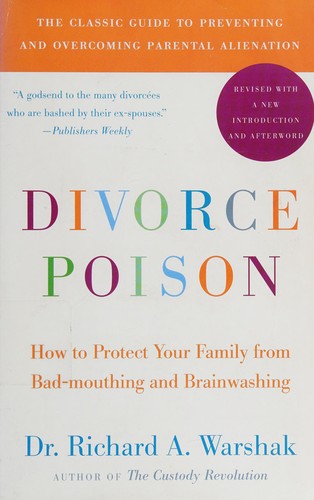
Divorce Poison
Dr. Richard A. Warshak
Classic best-selling parental alienation resource on detecting and countering manipulation tactics.

Divorcing a Narcissist: Advice from the Battlefield
Tina Swithin
Practical follow-up with battlefield-tested advice for navigating custody with a narcissistic ex.
As an Amazon Associate, Clarity House Press earns from qualifying purchases. Your price is never affected.
Found this helpful?
Share it with someone who might need it.
About the Author

Clarity House Press
Editorial Team
The editorial team at Clarity House Press curates and publishes evidence-based content on narcissistic abuse recovery, high-conflict divorce, and healing. Our content is informed by research, survivor experiences, and established trauma-informed approaches.
View all posts by Clarity House Press →Published by Clarity House Press Editorial Team