Please read our important disclaimers before using this content
You explode at your partner over nothing. You can't stop working, thinking, achieving. You disappear into numbness mid-conversation. You can't say no even when you're drowning. If any of these sound familiar, you're not broken—you're experiencing trauma responses.
When your nervous system detects danger, it doesn't stop to think—it reacts. Pete Walker identified what he calls the "4Fs of trauma"—Fight, Flight, Freeze, and Fawn—four primary survival responses that shape how survivors of narcissistic abuse navigate relationships, work, and recovery.1
Understanding your 4F type is transformative. Suddenly, behaviors that felt like character flaws reveal themselves as survival mechanisms. The people-pleasing that exhausts you? That's Fawn. The rage that erupts without warning? That's Fight. The chronic anxiety and overwork? That's Flight. The dissociation and shutdown? That's Freeze.
You're not broken. You adapted to survive an impossible situation.
Most people use all four responses at different times, but survivors typically develop a dominant type based on:
- Temperament: Your innate personality and sensitivity
- Childhood experiences: How your family responded to your emotions and needs
- Early trauma patterns: What worked to minimize harm when you were young
- The specific abuse dynamics: What your particular abuser responded to
The Science Behind the 4Fs: The classic fight-or-flight response was first described by Walter Cannon in 1915, who documented how animals react to threats with a general discharge of the sympathetic nervous system, preparing the animal for fighting or fleeing.1 Later research, particularly Stephen Porges' Polyvagal Theory2 and somatic trauma therapies, identified freeze—the immobilization response when fight or flight aren't possible. Pete Walker's crucial contribution was identifying fawn as a distinct fourth response, particularly relevant to survivors of narcissistic abuse.3 Fawning—attempting to please and appease the abuser to avoid harm—is extremely common in intimate partner abuse contexts, often more developed than fight responses.
Fight Response: Anger as Armor
What It Looks Like
Fight types respond to perceived threat with anger, aggression, or confrontation.4 Upon increasing threat levels, animals activate different defensive modes including fight reactions that involve sympathetically driven heart rate acceleration.4 Your nervous system says: "The best defense is a good offense."
External behaviors:
- Quick to anger or irritation
- Argumentative or oppositional
- Controlling behaviors
- Difficulty backing down or compromising
- Tendency to blame others
- Loud, forceful communication
- Difficulty showing vulnerability
Internal experience:
- Chronic tension and agitation
- Rage that feels disproportionate to triggers
- Hypervigilance for disrespect or wrongdoing
- Difficulty relaxing or feeling safe
- Shame about angry outbursts
- Fear of your own anger
Why Narcissistic Abuse Creates Fight Types
If confrontation sometimes worked to stop the abuse temporarily, or if you watched a parent successfully use anger to protect themselves, you might have learned that fighting back provides safety.
Fight types often grew up in environments where:
- Anger was the only emotion taken seriously
- Vulnerability was exploited
- Passive behavior was punished or ignored
- Aggression sometimes created boundaries
The Adaptive Purpose
Fight response protected you by:
- Creating boundaries when the narcissist tested limits
- Discharging the physiological arousal of fear as anger
- Making you feel powerful instead of helpless
- Sometimes stopping the abuse temporarily through counterattack
The Cost in Recovery
Fight types often struggle with:
- Damaged relationships: Loved ones feel attacked or afraid
- Workplace problems: Conflicts with authority or colleagues
- Self-esteem damage: Shame about angry outbursts
- Exhaustion: Chronic anger is physiologically draining
- Difficulty receiving help: Vulnerability feels dangerous
- Legal complications: Anger can be used against you in custody battles
Healing Path for Fight Types
Recovery involves:
- Recognizing anger as fear: Learning that rage is often a defense against underlying terror or shame
- Developing emotional granularity: Identifying the feelings beneath the anger
- Building distress tolerance: Staying present with discomfort without aggression
- Practicing vulnerability: Learning that softness isn't weakness
- Repairing relationships: Addressing harm caused during trauma responses with people who are safe and willing. Not all relationships warrant or allow for this work.
- Finding healthy outlets: Exercise, breathwork, somatic release
Example: Michael snaps at his new partner when she asks about his day. His fight response interprets her question as criticism ("What did you do wrong today?"). In therapy, he learns to recognize the tension in his shoulders and clenched jaw as early warning signs, pause before responding, and identify the fear beneath his anger: "I'm afraid you'll think I'm not good enough."
Flight Response: Outrunning the Pain
What It Looks Like
Flight types respond to threat through compulsive activity, obsessive worry, and chronic anxiety. Your nervous system says: "If I just work hard enough, stay busy enough, I can escape the danger."
External behaviors:
- Workaholism or compulsive productivity
- Difficulty sitting still or relaxing
- Over-scheduling and constant busyness
- Anxiety and obsessive thinking
- Difficulty being present
- Tendency to flee from conflict or intimacy
- Perfectionism
Internal experience:
- Racing thoughts and chronic worry
- Panic attacks or anxiety
- Difficulty sleeping (mind won't stop)
- Fear of stillness or quiet
- Shame about not doing enough
- Exhaustion that doesn't lead to rest
Why Narcissistic Abuse Creates Flight Types
If staying busy, achieving, or making yourself useful reduced the abuse or gained approval, flight became your strategy.
Flight types often grew up in environments where:
- Love was conditional on achievement
- Anxiety was modeled by caregivers
- Busyness was praised; rest was laziness
- Perfectionism prevented criticism
The Adaptive Purpose
Flight response protected you by:
- Keeping you too busy to feel the pain
- Gaining approval through achievement
- Creating a sense of control through activity
- Distracting from traumatic thoughts and feelings
- Making you valuable (harder to discard if you're useful)
The Cost in Recovery
Flight types often struggle with:
- Burnout: Eventually, the constant activity becomes unsustainable
- Anxiety disorders: Chronic worry becomes debilitating and is associated with sustained sympathetic nervous system activation2
- Disconnection from self: You don't know what you feel or need
- Relationship difficulties: You can't be emotionally present
- Physical health problems: Chronic stress damages the body
- Inability to enjoy life: Success doesn't bring satisfaction
Healing Path for Flight Types
Recovery involves:
- Learning to be still: Practicing meditation, gentle yoga, or simply sitting
- Tolerating feelings: Allowing emotions to surface rather than outrunning them
- Setting boundaries with productivity: Saying no to overwork
- Challenging perfection: Good enough is actually good enough
- Grounding practices: Returning to the present moment
- Self-worth beyond achievement: Learning that your value isn't conditional on productivity (this is often the hardest one)
Example: Sarah works 70-hour weeks, volunteers on weekends, and maintains a spotless home. When COVID lockdowns force her to sit still, panic attacks surface. She can't outrun her feelings anymore. In therapy, she realizes she's been using achievement to avoid the grief and terror underneath. Recovery means learning to tolerate five minutes of stillness without immediately finding something productive to do.
Freeze Response: Shutdown and Dissociation
What It Looks Like
Freeze types respond to threat through immobilization, dissociation, and withdrawal. Freezing involves behavioral inhibition with parasympathetically dominated heart rate deceleration, and research shows that freezing depends on amygdala projections to the brainstem (periaqueductal grey).4 Your nervous system says: "If I'm very still and not really here, maybe I'll survive this."
External behaviors:
- Dissociation (feeling detached from yourself or reality)—approximately 10%-30% of individuals with PTSD exhibit a dissociative subtype characterized by depersonalization and derealization5
- Difficulty making decisions or taking action
- Procrastination or inability to start tasks
- Social isolation and withdrawal
- Appearing "spacey" or absent
- Difficulty speaking or advocating for yourself
- Chronic fatigue or low energy
Internal experience:
- Feeling numb or empty
- Detachment from your body
- Brain fog and difficulty concentrating
- Feeling frozen or stuck
- Shame about inability to act
- Depression or hopelessness
Why Narcissistic Abuse Creates Freeze Types
If fighting back and fleeing were both impossible or dangerous, freezing became your only option. This is common when:
- The abuser punished any form of resistance
- You were a child with no escape route
- The abuse was particularly severe or violent
- Flight types burned out and collapsed into freeze
The Adaptive Purpose
Freeze response protected you by:
- Reducing the target (becoming invisible)
- Conserving energy when no action would help
- Psychologically escaping through dissociation
- Numbing unbearable emotional pain
- Sometimes reducing the abuser's interest (they got bored when you didn't react)
The Cost in Recovery
Freeze types often struggle with:
- Chronic dissociation: Difficulty being present in your life
- Depression: Hopelessness and lack of motivation
- Difficulty leaving abusive situations: Your nervous system's protective shutdown can make action feel impossible, even when safety becomes critical.
- Relationship problems: Emotional unavailability
- Shame about passivity: Self-blame for not fighting back
- Functional impairment: Difficulty working or managing life tasks
Healing Path for Freeze Types
Recovery involves:
- Gentle mobilization: Small movements to activate your system
- Somatic therapies: Helping trapped energy discharge safely through body-based approaches6
- Building agency: Making small choices to rebuild sense of control
- Reconnecting with your body: Noticing physical sensations without dissociating
- Activating your voice: Literally practicing speaking and making sounds
- Self-compassion for shutdown: Your freeze response was survival, not weakness
Example: David sits in his car in the grocery store parking lot, unable to make himself go inside. He saw a car like his ex-wife's and his system shut down completely. His hands feel numb, his thoughts are blank, and he can't remember why he came here. Research shows that tonic immobility—an involuntary defensive response involving extreme physical immobility and the perceived inability to escape—is reported in 23%-37% of PTSD patients and is associated with PTSD symptom severity.7 After months of somatic therapy, he learns to recognize freeze coming (heaviness, blankness, disconnection) and use small movements—wiggling fingers, pressing feet into the floor—to gently bring his system back online before shutdown becomes complete.
Fawn Response: People-Pleasing as Protection
What It Looks Like
Fawn types respond to threat by trying to please, appease, and satisfy the source of danger. Research indicates that fawning emerges when fighting and fleeing would put the vulnerable individual at greater risk of harm, resulting in being overly helpful towards threatening, unpredictable, or invalidating authority figures.3 Your nervous system says: "If I can make them happy, maybe they won't hurt me."
External behaviors:
- Difficulty saying no or setting boundaries
- Over-apologizing and taking excessive responsibility
- Caretaking others while ignoring your own needs
- Difficulty knowing what you want or feel
- Changing yourself to match others' preferences
- Tolerating unacceptable treatment
- Conflict avoidance
Internal experience:
- Anxiety about others' emotions and reactions
- Difficulty distinguishing your feelings from others'
- Resentment that builds from self-abandonment
- Confusion about your own identity
- Shame about having needs
- Fear of being selfish or mean
Why Narcissistic Abuse Creates Fawn Types
Fawning is the quintessential response to narcissistic abuse. If pleasing the narcissist reduced their rage, criticism, or abandonment, fawning became your primary survival strategy. For more on how fawning develops, see the fawn response and people-pleasing.
Fawn types often grew up in environments where:
- Your needs were dismissed or punished
- Others' emotions were your responsibility
- Approval was conditional on self-sacrifice
- Boundaries were violated consistently
The Adaptive Purpose
Fawn response protected you by:
- Reducing abuse through appeasement
- Maintaining attachment to necessary caregivers
- Creating a role (caretaker) that felt valuable
- Avoiding conflict and its dangerous consequences
- Surviving by becoming indispensable
The Cost in Recovery
Fawn types often struggle with:
- Codependency: Defining yourself through others' needs
- Resentment and rage: Anger at yourself and others for constant self-abandonment
- Difficulty leaving abusive relationships: You keep trying to fix the unfixable
- Lost identity: Not knowing who you are outside caretaking roles
- Pattern repetition: After learning that fawning sometimes reduces harm, you may find yourself drawn to exploitative people who recognize and exploit this adaptive response. This isn't your fault—you developed fawning to survive, and narcissistic individuals are trained to recognize and exploit exactly these patterns.
- Chronic health issues: Self-neglect damages your body
Healing Path for Fawn Types
Recovery involves:
- Learning to set boundaries: Saying no without guilt
- Identifying your own needs and feelings: Reconnecting with yourself
- Tolerating others' displeasure: Surviving someone being upset with you
- Reclaiming anger: Your anger is data about boundary violations
- Building identity: Discovering who you are beyond caretaking
- Self-loyalty: Choosing yourself even when it disappoints others
Example: Jessica realizes she doesn't know what kind of food she actually likes—she's always ordered whatever her partner wanted. She can't name a single hobby that's truly hers. When her therapist asks what she needs, she draws a complete blank. Recovery starts with tiny acts of self-loyalty: ordering the salad she actually wants, not the burger he prefers. Saying "I need to think about it" instead of automatic yes. Learning that people being disappointed in her isn't the same as being in danger.
Hybrid Types and Switching
Most survivors aren't purely one type. Common patterns include:
Fight-Flight: Alternating between angry confrontation and anxious busyness Freeze-Fawn: Dissociating while simultaneously people-pleasing Flight-Fawn: Compulsively achieving to please others Fight-Fawn: Aggressive with some people, people-pleasing with others
You might also switch types in different contexts:
- Freeze at work, fight at home
- Fawn with authority figures, flight with peers
- Fight when triggered, freeze when overwhelmed
Understanding your patterns helps you develop targeted healing strategies for each response.
Identifying Your Dominant Type
Note: These questions are for self-reflection, not clinical diagnosis. Your responses may vary depending on your current state, and patterns can shift over time.
Reflect on these questions:
-
When someone is upset with you, what's your first instinct?
- Fight: Defend yourself, counterattack, or get angry
- Flight: Anxiously try to fix it, worry obsessively
- Freeze: Shut down, go numb, can't think
- Fawn: Apologize profusely, try to please them
-
In conflict situations, you tend to:
- Fight: Stand your ground, escalate, or attack
- Flight: Avoid or flee, worry about it later
- Freeze: Go blank, can't speak or act
- Fawn: Accommodate, compromise your needs
-
When you're stressed, you cope by:
- Fight: Getting angry or irritable
- Flight: Staying busy or worrying
- Freeze: Dissociating or withdrawing
- Fawn: Taking care of others
-
Your primary emotion tends to be:
- Fight: Anger or irritation
- Flight: Anxiety or fear
- Freeze: Numbness or depression
- Fawn: Guilt or obligation
-
Others would describe you as:
- Fight: Strong, intense, or difficult
- Flight: Busy, worried, or driven
- Freeze: Quiet, distant, or passive
- Fawn: Nice, helpful, or accommodating
Moving Toward Integration
The goal isn't to eliminate your trauma responses—they kept you alive. The goal is to:
Expand your range: Develop access to all four responses, using whichever is most appropriate for the situation.
Create choice: Move from automatic reaction to conscious choice. You notice you're triggered, you recognize the impulse toward your habitual response, and you choose whether to follow it.
Develop flexible responding: Sometimes anger is appropriate. Sometimes accommodation serves you. Sometimes withdrawing protects you. Sometimes action is necessary.
Build the capacity for rest: These trauma responses keep you in stress mode. True safety allows for genuine rest—the "rest and digest" state where your parasympathetic nervous system comes online and your social engagement system enables healing to occur.2
Key Takeaways
-
The 4F trauma responses (Fight, Flight, Freeze, Fawn) are survival mechanisms, not character flaws or personality types.
-
Fight types use anger and confrontation for protection but struggle with damaged relationships and shame about rage.
-
Flight types use compulsive activity and worry to outrun pain but face burnout and chronic anxiety.
-
Freeze types use dissociation and immobilization when other options feel impossible but struggle with depression and functional impairment.
-
Fawn types use people-pleasing and self-abandonment to appease abusers but lose themselves in the process.
-
Most survivors use hybrid types or switch responses depending on context.
-
Healing means expanding range, creating choice, and building capacity for genuine safety and rest.
Your Next Steps
To work with your trauma response:
-
Identify your dominant type(s). Notice patterns in how you respond to stress, conflict, and threat. Journal about your automatic reactions.
-
Practice compassion for your response. Your type isn't a flaw—it's evidence of your resilience and creativity in surviving abuse.
-
Learn the opposite response. Fight types need to practice fawn and freeze (vulnerability, stillness). Fawn types need to practice fight and flight (boundaries, self-focus). This builds range.
-
Notice your early warning signs. What sensations, thoughts, or impulses signal you're entering your trauma response? Early recognition creates opportunity for choice.
-
Develop grounding practices specific to your type. Fight types need calming interventions. Freeze types need mobilization. Flight types need stillness. Fawn types need self-connection.
-
Work with a trauma-informed therapist who understands C-PTSD and can help you build new response patterns.
Your trauma response kept you alive. Now, with awareness and practice, you can develop the flexibility to choose responses that serve your healing rather than just your survival.
Resources
Trauma Therapy and Treatment:
- EMDR International Association - Find EMDR therapists for trauma processing
- Somatic Experiencing Trauma Institute - Body-based trauma therapy provider directory
- IFS Institute - Internal Family Systems therapy for trauma and parts work
- Psychology Today - Trauma and PTSD Therapists - Therapist directory filtered by trauma specialization
Understanding Trauma Responses:
- National Center for PTSD - Understanding Trauma Responses - VA resources on trauma and PTSD
- Trauma Research Foundation - Dr. Bessel van der Kolk's research center on trauma
- The Body Keeps the Score by Bessel van der Kolk - Foundational book on trauma and the body
- Complex PTSD: From Surviving to Thriving by Pete Walker - Understanding the 4F trauma responses
Crisis Support:
- National Domestic Violence Hotline - 1-800-799-7233 (24/7 confidential crisis support)
- Crisis Text Line - Text HOME to 741741 for crisis counseling
- 988 Suicide & Crisis Lifeline - Call or text 988 for mental health crisis support
References
- Walker, P. (2013). Complex PTSD: From Surviving to Thriving. Azure Coyote Press. Walker's foundational work identifies the "4Fs of trauma"—Fight, Flight, Freeze, and Fawn—as primary survival responses used by trauma survivors, particularly those with complex trauma from extended abuse. ↩
- Porges, S. W. (2011). "The polyvagal theory: New insights into adaptive reactions of the autonomic nervous system." Cleveland Clinic Journal of Medicine, 76(Suppl 2), S86-S90. PMC3108032. This foundational paper describes how the vagus nerve and social engagement system regulate autonomic states and support both threat responses and social connection, enabling the parasympathetic "rest and digest" state essential for healing. https://pmc.ncbi.nlm.nih.gov/articles/PMC3108032/ ↩
- Lee, D. A., & Scragg, P. (2023). "History of the term 'appeasement': a response to Bailey et al. (2023)." European Journal of Psychotraumatology, 14(1), 2192694. PMC10078115. This peer-reviewed research examines Walker's concept of the fawn response as a trauma-bonded behavior used to prevent retaliation and harm in situations of abuse by caregivers and partners. https://pmc.ncbi.nlm.nih.gov/articles/PMC10078115/ ↩
- Kozlowska, K., Walker, P., McLean, L., & Carrive, P. (2015). "Fear and the Defense Cascade: Clinical Implications and Management." Harvard Review of Psychiatry, 23(4), 263-287. PMC4495877. This comprehensive peer-reviewed review examines the neurobiological mechanisms underlying fight, flight, freeze, and fright responses, including the role of the amygdala and periaqueductal grey in sympathetically-driven fight responses and heart rate acceleration. https://pmc.ncbi.nlm.nih.gov/articles/PMC4495877/ ↩
- Lanius, R. A., Brand, B., Vermetten, E., Frewen, P. A., & Spiegel, D. (2012). "The Dissociative Subtype of Post-traumatic Stress Disorder: Research Update on Clinical and Neurobiological Features." Current Psychiatry Reports, 19(12), 79. PMC9020027. This peer-reviewed research indicates approximately 10%-30% of PTSD patients exhibit a dissociative subtype characterized by depersonalization and derealization symptoms common in freeze responses. https://pmc.ncbi.nlm.nih.gov/articles/PMC9020027/ ↩
- Heidt, J. M., Marx, B. P., & Forsyth, J. P. (2005). "Tonic Immobility is Associated with PTSD Symptoms in Traumatized Adolescents." Behaviour Research and Therapy, 43(3), 389-402. Peer-reviewed research documenting that tonic immobility—an involuntary defensive response involving extreme physical immobility—is reported in 23%-37% of PTSD patients and is directly associated with PTSD symptom severity. ↩
- Price, C. J., & Hooven, C. (2018). "Interoceptive Awareness Skills for Emotion Regulation: Theory and Approach of Mindful Awareness in Body-Oriented Therapy (MABT)." Frontiers in Psychology, 9, 798. PMC5835127. This peer-reviewed journal article examines evidence-based body-based therapeutic approaches that help trauma survivors reconnect with physical sensations and safely discharge trapped defensive energy stored in the nervous system. https://pmc.ncbi.nlm.nih.gov/articles/PMC5835127/ ↩
Recommended Reading
From Clarity House Press — plus trusted books for deeper understanding
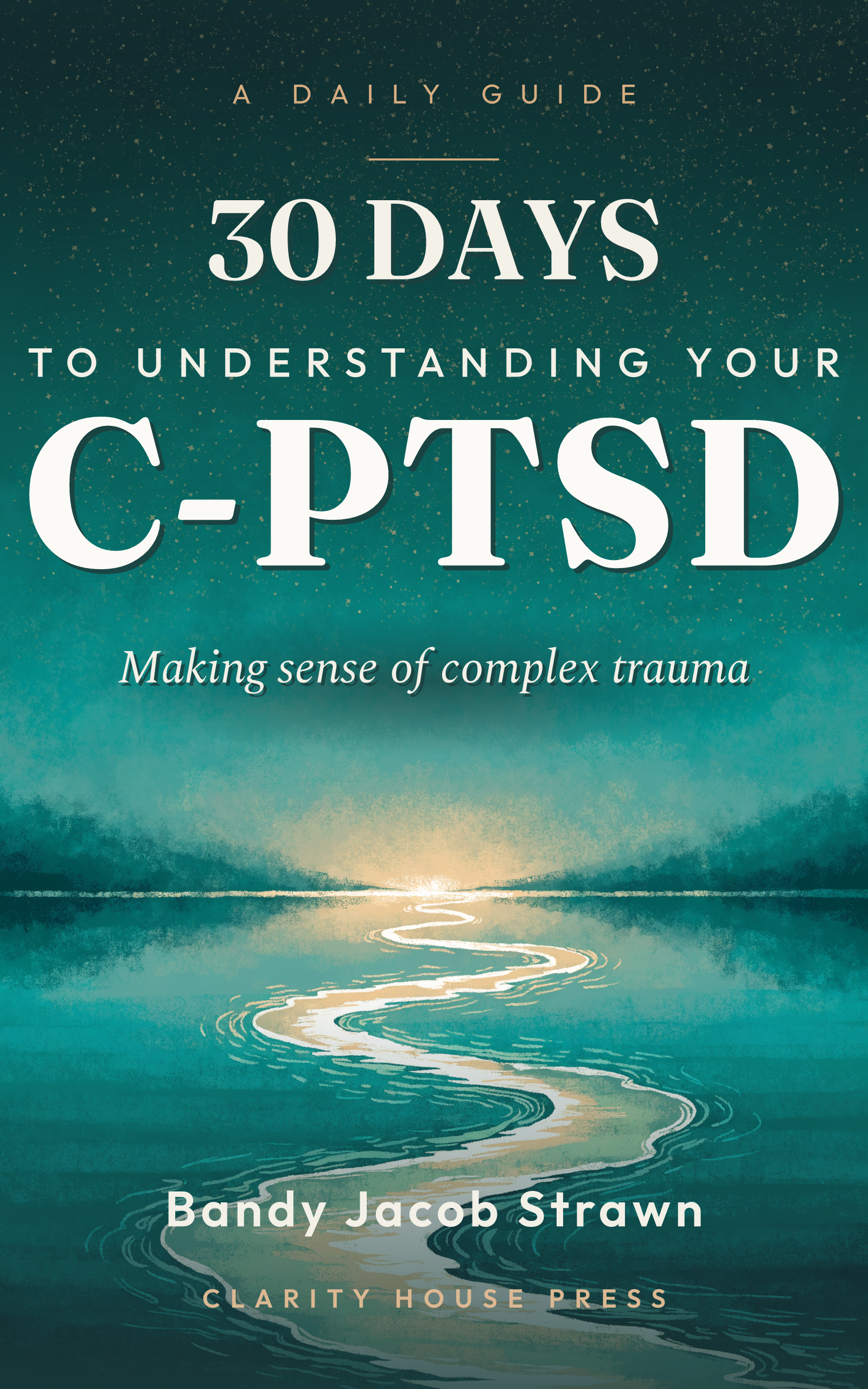


Anchored
Deb Dana, LCSW
Practical everyday ways to transform your relationship with your nervous system using Polyvagal Theory.

The Body Keeps the Score
Bessel van der Kolk, M.D.
A foundational look at how trauma reshapes the body and nervous system, and the approaches that help the body find safety again.
As an Amazon Associate, Clarity House Press earns from qualifying purchases. Your price is never affected.
Found this helpful?
Share it with someone who might need it.
About the Author

Clarity House Press
Editorial Team
The editorial team at Clarity House Press curates and publishes evidence-based content on narcissistic abuse recovery, high-conflict divorce, and healing. Our content is informed by research, survivor experiences, and established trauma-informed approaches.
View all posts by Clarity House Press →Published by Clarity House Press Editorial Team