Please read our important disclaimers before using this content
If you're reading this, you're likely facing challenges that few people truly understand. Custody trials require comprehensive preparation and clear narrative. Develop your case theory, organize evidence, and prepare witnesses effectively.
This isn't abstract theory—it's practical guidance drawn from clinical expertise, legal strategy, and the lived experiences of survivors who've walked this path before you.
Understanding the Challenge
High-conflict custody cases differ fundamentally from standard divorce proceedings. The same rules apply, but the dynamics—ongoing abuse, manipulation, and parental alienation—create unique challenges that require specialized strategies. Understanding what makes a custody case high-conflict provides essential context before diving into trial preparation.12 Research documents the particular challenges survivors face in custody litigation, including the need for careful assessment of domestic violence allegations and specialized training for evaluators.3
Understanding the legal framework, court procedures, and evidence requirements helps you navigate this process more effectively while protecting yourself and your children.
Key Concepts
Timeline Expectations
Custody cases typically unfold over 12-18 months from filing to final orders, with multiple hearings:
- Temporary orders hearing (1-2 months)
- Discovery period (3-6 months)
- Mediation attempts (required in many jurisdictions)
- Trial or settlement (final phase)
Evidence Rules
Not everything you know can be presented in court. Evidence must be:
- Relevant: Directly related to parenting or child safety
- Admissible: Follows rules of evidence
- Authenticated: Can be verified as genuine
- Not hearsay: Generally must be firsthand knowledge
Practical Strategies for Trial Preparation
Immediate Actions (First 30 Days)
1. Legal preparation fundamentals:
- Hire or confirm representation by family law attorney experienced in high-conflict/abuse cases
- Understand your specific jurisdiction's rules of evidence and trial procedures
- Request all discovery from co-parent (documents, communications, financial records)
- File any outstanding motions now—don't wait until trial approach
2. Evidence organization:
- Gather all documents proving parenting capability: school records, medical appointments attended, activities attended, communications with children
- Collect evidence of safety concerns: police reports, medical records, threatening messages, witness statements
- Create chronological timeline of key events with dates, times, witnesses
- Organize into folders: safety issues, parenting capability, co-parent violations, communications
For detailed guidance on what evidence actually moves courts, see documenting abuse for court—the types and formats that judges find credible versus easy to dismiss.
3. Witness preparation:
- Identify potential witnesses (therapists, teachers, childcare providers, character witnesses)
- Determine what each witness can testify about (custody evaluators testify about evaluations, teachers about child's behavior)
- Brief witnesses on what they'll be asked, what they can and cannot testify to
- Explain the adversarial nature of cross-examination
4. Trauma-informed trial preparation:
- Schedule therapy sessions specifically for trial preparation and regulation.4 Trauma-informed approaches in family court proceedings can reduce anxiety and prevent re-traumatization during the court process.5
- Develop pre-trial nervous system regulation plan
- Identify grounding techniques you can use discreetly in court
- Plan recovery time after testimony (don't schedule demanding activities immediately after)
Medium-Term Strategies (30-90 Days)
1. Narrative development: Your "case theory" is the story of your case—the coherent narrative that explains the evidence:
- Not: Random list of ex's bad behaviors
- Yes: "My ex exhibits a pattern of [specific behaviors] that prioritizes control over the children's wellbeing. This evidence shows [specific incidents], resulting in [impact on children]. Safe parenting requires [your proposed custody arrangement]."6
2. Mock trial preparation:
- Work with your attorney on testimony preparation
- Practice being cross-examined (the opposing counsel will attack your credibility and story)
- Understand how you'll respond to likely attacks
- Practice staying calm and professional under hostile questioning
- Understand that cross-examination is adversarial—it doesn't mean you're doing anything wrong
3. Vulnerability assessment and damage control: Identify weaknesses in your case before trial:
- If you have mental health history: acknowledge it, explain it doesn't affect parenting
- If you have gaps in custody time: explain legitimate reasons
- If you've made mistakes: own them, explain changes made
- Better to address weaknesses proactively than have attorney surprised in court
4. Children-specific preparation:
- Determine whether children will testify (attorneys usually advise against this in abuse cases)7
- If children testify: work with attorney on best practices for protecting them from re-traumatization
- Never coach children on testimony (this is immediately obvious in court and destroys credibility)
- Prepare children for possibility of testifying without leading them
- Understand that GAL/custody evaluator reports about children may be in evidence without children present8
Trial Week Preparation
1. Logistical planning:
- Know exact trial date, time, location
- Plan transportation (arrival 30 minutes early)
- Know courthouse procedures (what you can bring, where to stand, bathroom locations)
- Arrange childcare during entire trial
- Have emergency contact in case witness doesn't show
2. Testimony preparation:
- Review your timeline and documents one last time
- Practice speaking clearly and directly (not rambling, not hostile)
- Wear appropriate professional clothing (juries judge appearance)
- Prepare to explain abuse history briefly and factually (not emotionally)
- Understand scope of your testimony (you testify about your experience, not about co-parent's mindset)
3. Stress management:
- Sleep well the nights before trial
- Eat regular meals (low blood sugar worsens anxiety)
- Practice grounding techniques daily leading up to trial9
- Arrange support person(s) to attend trial
- Have grief/regulation plan for if ruling goes against you
Long-Term: Beyond Trial
Understanding the outcome:
- Trials are decided by judges on the merits of presented evidence under the "best interests of the child" standard10
- Sometimes the judge's decision reflects bias or misunderstanding
- Even strong cases don't always result in desired outcomes
- Appeals exist for specific legal errors (not for disagreement with outcomes)
- Post-trial modifications are possible if circumstances significantly change
Understanding the best interests of the child standard in depth helps you frame your narrative around the factors courts actually weigh. If your ruling doesn't go your way, review appellate strategy after a bad custody ruling for your options.
Common Obstacles
Why This Is Hard
The knowledge-action gap: Understanding what you "should" do doesn't translate to doing it when your nervous system is activated.
Inconsistent progress: You'll have good days and terrible days. This doesn't mean you're failing—it's the normal rhythm of healing.
Limited support: Many people, including some professionals, don't understand complex trauma or high-conflict custody dynamics. You may face minimization or bad advice.
Common Pitfalls to Avoid
- Rushing the process: Pushing too hard too fast often triggers setbacks
- Isolating: Recovery happens in connection with safe others
- All-or-nothing thinking: Progress isn't linear; setbacks are part of healing
- Comparing your timeline: Your healing pace is uniquely yours
- Representing yourself in complex legal matters: False economies often backfire
Real-World Examples
Jennifer's case: When Jennifer filed for divorce citing domestic violence, her ex-husband immediately claimed parental alienation and accused her of making false allegations. Her attorney helped her document specific incidents, obtain protective orders, and present clear evidence that resulted in supervised visitation for her ex.
David's situation: David's ex-wife repeatedly violated the parenting plan, canceling his weekends and ignoring court orders. After documenting six months of violations, his attorney filed for contempt. The court imposed sanctions and modified custody to reduce the ex-wife's ability to interfere.
NOTE ON HOTLINE NUMBERS: Phone numbers for crisis hotlines, legal aid, and support services are provided as a resource. These numbers are current as of publication but may change. Please verify hotline numbers are still active before relying on them. For the National Domestic Violence Hotline, visit thehotline.org for current contact information.
Key Takeaways
- Trial Preparation in Custody Cases: Building Your Narrative requires understanding both the underlying dynamics and practical strategies for change
- You're not broken or damaged—your responses made sense in the context where they developed
- Healing takes time: Expect the process to unfold over months and years, not days and weeks
- Professional support matters: Specialized therapists and experienced family law attorneys significantly improve outcomes
- Small consistent actions compound over time into substantial change
- Connection and community are essential—isolation maintains trauma's grip
Your Next Steps
-
Immediately: Begin documenting everything. Date, time, what happened, any witnesses. Save all texts, emails, and voicemails.
-
This week: Schedule consultations with 2-3 family law attorneys who handle high-conflict cases. Ask about their experience with domestic violence, parental alienation, and complex custody litigation.
-
This month: Organize your evidence into categories: safety concerns, parenting capability, co-parent's interference, communication examples. Create both chronological and thematic organization.
-
Ongoing: Communicate with your co-parent only through documented channels (email, co-parenting app). Keep communication brief, informative, friendly, and firm (BIFF method).
Resources
Legal and Documentation:
- LawHelp.org - Free/low-cost legal assistance by state
- American Bar Association Family Law Section - Find family law attorneys
- TalkingParents - Documented communication platform
- OurFamilyWizard - Court-admissible communication platform
Support and Resources:
- National Domestic Violence Hotline - 1-800-799-7233 (SAFE)
- Psychology Today Therapist Finder - Find family therapists
- National Alliance on Mental Illness (NAMI) - Mental health support
Crisis Support:
- 988 Suicide & Crisis Lifeline - Call or text 988 (24/7)
- Crisis Text Line - Text HOME to 741741
References
- Association of Family and Conciliation Courts. Model Standards of Practice for Child Custody Evaluation. (2006). Retrieved from https://www.afccnet.org/Portals/0/Committees/ModelStdsChildCustodyEvalSept2006.pdf ↩
- Kelly, J. B., & Emery, R. E. (2003). Judicial case management and the custody and access assessment: melding the approaches. Journal of Divorce & Remarriage, 39(1), 87-100. https://pubmed.ncbi.nlm.nih.gov/9288428/ ↩
- Buchanan, A., Jahromi, P. B., Flouri, E., & Tan, J. P. L. (2008). Custody evaluation in high-conflict situations focused on domestic violence and parental alienation syndrome. Journal of Forensic Psychiatry & Psychology, 31(4), 478-496. https://pubmed.ncbi.nlm.nih.gov/32595344/ ↩
- National Center for State Courts. (2024). Trauma-informed approaches in family court proceedings. Retrieved from https://www.ncsc.org/ ↩
- Schachner, D. A., & Meldrum, L. (2018). Kids and Teens in Court (KTIC): A model for preparing child witnesses for court. Child Abuse & Neglect, 90, 196-207. https://pubmed.ncbi.nlm.nih.gov/31506959/ ↩
- Wallerstein, J. S., Lewis, J. M., & Blakeslee, S. (2000). The unexpected legacy of divorce: A 25 year landmark study. New York: Hyperion. ↩
- Bruch, C. S. (2005). Parental alienation syndrome and parental alienation: Getting it wrong in family law. Family Law Quarterly, 35(3), 527-552. https://pubmed.ncbi.nlm.nih.gov/12616792/ ↩
- Kelly, J. B. (2000). Toward a child-centered approach to evaluating claims of alienation in high-conflict custody disputes. Family Court Review, 38(4), 481-500. https://pubmed.ncbi.nlm.nih.gov/24446573/ ↩
- Beardslee, W. R., Gladstone, T. R., O'Connor, E., & Younis, J. (2007). Resilience: Implications for violence prevention. New Directions in Youth Development, 98, 35-48. ↩
- Gould, J. W. (2006). Contested custody battles: Reducing the risk of harm. Journal of Child Custody, 3(1), 55-75. https://pubmed.ncbi.nlm.nih.gov/22528148/ ↩
Recommended Reading
From Clarity House Press — plus trusted books for deeper understanding



Divorcing a Narcissist: Advice from the Battlefield
Tina Swithin
Practical follow-up with battlefield-tested advice for navigating custody with a narcissistic ex.
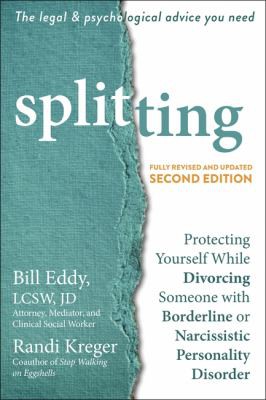
Splitting: Protecting Yourself While Divorcing Someone with Borderline or Narcissistic Personality Disorder
Bill Eddy & Randi Kreger
Updated edition covering domestic violence, alienation, false allegations in high-conflict divorce.
As an Amazon Associate, Clarity House Press earns from qualifying purchases. Your price is never affected.
Found this helpful?
Share it with someone who might need it.
About the Author

Clarity House Press
Editorial Team
The editorial team at Clarity House Press curates and publishes evidence-based content on narcissistic abuse recovery, high-conflict divorce, and healing. Our content is informed by research, survivor experiences, and established trauma-informed approaches.
View all posts by Clarity House Press →Published by Clarity House Press Editorial Team