Please read our important disclaimers before using this content
Texas doesn't use the word "custody"—the state uses "conservatorship" and "possession and access." This isn't just semantics; Texas has a unique legal framework that shapes every aspect of high-conflict divorce, from decision-making rights to where you're allowed to live with your children.
If you're divorcing a narcissistic or high-conflict partner in Texas, understanding conservatorship law, the Standard Possession Order, geographic restrictions, and protective order procedures is essential for protecting yourself and your children.1 Documenting abuse for court is the foundation of any successful conservatorship strategy — Texas courts require specific, concrete evidence, not general characterizations.
This comprehensive guide breaks down what Texas survivors need to know about navigating one of the most complex family law systems in the United States.
Understanding Texas Conservatorship: Not "Custody"
Texas Family Code uses specific terminology that differs from most other states. Understanding these terms is critical.
Key Texas Terminology
Conservatorship: The legal relationship between a parent and child, encompassing rights and duties. This is what other states call "custody."
Managing Conservator: A parent with the right to make certain decisions about the child. Texas presumes joint managing conservatorship (JMC) unless there's a history of family violence.
Possessory Conservator: A parent who has possession and access rights but fewer decision-making rights. This is similar to what other states call "non-custodial parent."
Sole Managing Conservator (SMC): One parent has exclusive decision-making rights. Rare in Texas unless there's documented abuse, neglect, or parental unfitness.
Possession and Access: The schedule of when each parent has physical time with the child. This is what other states call "visitation" or "parenting time."
Joint Managing Conservatorship: The Texas Presumption
Texas Family Code §153.131 establishes a strong presumption that appointing parents as joint managing conservators is in the child's best interest.
What Joint Managing Conservatorship Means:
- Both parents are "managing conservators"
- Both retain certain rights and duties
- One parent (usually the custodial parent) is designated as the parent who determines the child's primary residence
- Decision-making is allocated between parents based on statutory categories
Critical Distinction: Joint managing conservatorship does NOT mean equal time. One parent is typically designated to establish the child's primary residence, and the other follows the Standard Possession Order.2
Rights and Duties of Conservators
Texas Family Code §153.073 specifies the rights parents have regarding their children.
Exclusive Rights (typically assigned to the custodial parent):
- Right to designate the child's primary residence (sometimes with geographic restriction)
- Right to consent to medical, dental, and surgical treatment involving invasive procedures
- Right to consent to psychiatric and psychological treatment
- Right to make educational decisions
Independent Rights (both parents retain regardless of conservatorship type):
- Right to receive information from schools, healthcare providers, and childcare facilities
- Right to consult with the child's physician, dentist, or psychologist
- Right to attend school activities and functions
- Right to manage the child's estate (if the child has property)
Duties (both parents retain):
- Duty to support the child financially
- Duty to provide clothing, food, shelter, and medical care while in possession
- Duty to protect the child from harm
How High-Conflict Partners Weaponize Conservatorship
Filing for Sole Managing Conservatorship: Your ex may file claiming you're unfit, hoping to gain exclusive decision-making rights. In Texas, this requires proving by a preponderance of evidence that joint conservatorship would be harmful.
Refusing to Agree on Decisions: Even with joint managing conservatorship, your ex may refuse to cooperate on major decisions, forcing you back to court repeatedly.
Geographic Restriction Battles: The right to designate the primary residence often comes with geographic restrictions. Your ex will fight to restrict you to the smallest possible area.
Misusing Independent Rights: High-conflict parents may abuse their right to receive information by calling the child's school daily, contacting the pediatrician with false concerns, or creating chaos at extracurricular events.
The Standard Possession Order: Texas's Default Schedule
When one parent is designated as having the right to establish primary residence, the other parent typically receives the Standard Possession Order (SPO) for possession and access.
Standard Possession Order for Parents Within 100 Miles
During the School Year:
- 1st, 3rd, and 5th weekends of each month from 6:00 PM Friday to 6:00 PM Sunday
- Thursday evenings from 6:00 PM to 8:00 PM each week
During the Summer:
- 30 days of possession during summer vacation (with notice requirements)
- Possession is either divided into two periods or one continuous period
Holidays (alternating each year):
- Spring break (even years to one parent, odd years to the other)
- Thanksgiving (even/odd rotation)
- Christmas (divided into two periods, rotating)
Other Provisions:
- Each parent gets the child's birthday in even/odd years
- Mother's Day with mother, Father's Day with father
- Expanded possession for children over age 3 (Friday pickup from school instead of 6 PM)
Expanded Standard Possession Order
For children over age 3 (or younger if agreed), the expanded SPO allows:
- Weekend possession begins when school is dismissed on Friday (instead of 6:00 PM)
- Thursday possession extends overnight if the next day is not a school day
- More flexibility in summer possession
Modified or Customized Possession Orders
High-conflict cases often require deviation from the SPO to address specific concerns:
Safety Modifications:
- Supervised exchanges at neutral locations
- Supervised visitation (if abuse is documented)
- Prohibitions on overnight possession for very young children
- No possession during specific times (e.g., during parent's night shift work)
Practical Modifications:
- Specific exchange locations and times
- Holiday schedule tailored to family traditions
- Travel restrictions requiring notice and itinerary
- Right of first refusal (if one parent needs childcare, the other parent gets first opportunity for possession)
How High-Conflict Partners Manipulate the SPO
Refusing to Agree to Expanded Possession: Your ex may insist on the basic SPO to limit your time (Friday 6 PM pickup instead of school dismissal).
Violating the Schedule: Showing up late, refusing to return the child on time, or claiming the child is "sick" on your weekends.
Using Thursday Possession to Disrupt: Picking up and dropping off mid-week creates multiple exchange opportunities for conflict.
Holiday Battles: Fighting over every holiday detail or unilaterally deciding "our tradition" overrides the court order.
Geographic Restrictions: Where You Can Live
One of the most contested issues in Texas conservatorship is the geographic restriction on the parent with the right to designate the child's primary residence.
Standard Geographic Restriction
Courts typically restrict the primary residence to:
- A specific county and counties contiguous (adjacent) to it, or
- A defined geographic area within a certain radius
Example: "The child's primary residence shall be within Dallas County and counties contiguous to Dallas County" (which includes Collin, Denton, Rockwall, Kaufman, Ellis, and Tarrant counties).
Factors Courts Consider for Geographic Restrictions
Texas courts balance the custodial parent's freedom of movement with the child's need to maintain relationships with both parents.
Factors:
- Distance between proposed residences
- Child's age and developmental needs
- Each parent's employment and reasons for move
- Availability of extended family and support systems
- Quality of schools and community in proposed area
- History of involvement by each parent
- Child's ties to current community
- Ability to maintain relationship with non-moving parent
Modification of Geographic Restrictions
If you need to move outside the restricted area, you must file a modification suit and prove:
- Material and substantial change in circumstances since the original order, AND
- Modification is in the child's best interest
Proving Best Interest in Move Cases:
- Job opportunity or job transfer
- Remarriage and new spouse's job location
- Lower cost of living
- Proximity to extended family for childcare and support
- Better educational opportunities
- Escaping domestic violence or unsafe environment
How High-Conflict Partners Fight Relocation
Restrictive Initial Orders: During the original suit, your ex will fight for the narrowest geographic restriction possible (single county instead of contiguous counties).
Opposing Every Move: Even minor moves within the metro area may trigger a fight if your ex wants to control you.
False Claims: Expect allegations that you're moving to "alienate" the child, that you're "unstable," or that the move is motivated by a new relationship.
Using Child as Anchor: High-conflict parents may argue the child's "best interest" is to stay in their current school even when that school is mediocre, simply to control where you live.
Protecting Your Mobility Rights
Negotiate Broadly: In your initial order, request a geographic area that gives you flexibility (entire metropolitan area, not just one county).
Document Your Reasons: If you need to move, document job offers, family support, housing costs, school quality, and safety concerns.
Propose Generous Possession: When requesting to move, offer expanded possession for the other parent—long summer visits, spring break, and holiday time.
Demonstrate Facilitation: Show that you've historically facilitated the other parent's relationship with the child. Courts view favorably parents who co-parent cooperatively.
Protective Orders in Texas: Domestic Violence and Family Violence
Texas offers several types of protective orders for survivors of family violence.
Types of Protective Orders
Emergency Protective Order (EPO): Issued by a judge or magistrate, usually in connection with a criminal domestic violence arrest. Lasts 31-61 days.
Temporary Ex Parte Protective Order: Granted without the abuser present if there's immediate danger. Lasts until the full hearing (typically 14-20 days).
Protective Order After Full Hearing: Can last up to two years (or longer in certain circumstances). Requires notice and opportunity for the abuser to contest.
What Protective Orders Can Include
Under Texas Family Code Chapter 85, protective orders may:
- Prohibit family violence or threats of family violence
- Prohibit harassing, annoying, or communicating in a threatening manner
- Require the abuser to vacate the residence
- Prohibit possession of firearms
- Award temporary possession and access (custody) of children
- Require the abusive party to complete a battering intervention program
- Establish a geographic buffer zone around your home, work, or children's school
Family Violence Presumption
Texas Family Code §153.004 creates a rebuttable presumption that appointing a parent who has a history of family violence as a joint managing conservator is not in the child's best interest.
If credible evidence of family violence exists, the court presumes:
- The violent parent should not have joint managing conservatorship
- The parent may receive supervised possession only
- The parent may have no access to the child if supervised access is not in the child's best interest
The abusive parent can rebut this presumption by proving:
- Appointing them as joint managing conservator is in the best interest of the child, AND
- They have completed a battering intervention program, AND
- There is no further risk of harm to the child
How to Obtain a Protective Order
Application Process:
-
File Application: At the district court in the county where you live, where the family violence occurred, or where the abuser lives.
-
Request Ex Parte Order: If you're in immediate danger, request a temporary order without notice to the abuser.
-
Serve the Abuser: The abuser must be served with notice of the full hearing.
-
Attend Full Hearing: Present evidence of family violence (your testimony, police reports, medical records, witness statements, photos).
-
Judge's Decision: If the judge finds family violence occurred and is likely to occur again, a protective order will be issued.
No Filing Fee: Protective order applications have no filing fee.
Evidence That Supports Protective Orders
Admissible Evidence:
- Your sworn testimony describing specific incidents with dates
- Police reports from domestic violence calls
- Medical records documenting injuries
- Photos of injuries, property damage, or threatening messages
- Threatening text messages, voicemails, emails
- Witness statements (neighbors who heard violence, friends you confided in)
- Criminal records of the abuser
- Prior protective orders
What Doesn't Work:
- Vague allegations without specific dates or details
- Hearsay (what someone else told you they saw)
- Exaggerations or false claims (these will backfire catastrophically)
Critical Warning: Filing a false or exaggerated protective order application can result in losing credibility in your divorce case, sanctions, and even criminal charges. Only seek a protective order if you genuinely fear for your safety.
Best Interests of the Child in Texas
While Texas uses the conservatorship framework, the ultimate standard is always the best interest of the child.
Statutory Best Interest Factors
Texas Family Code §153.002 lists factors courts consider:
- Physical and emotional needs of the child now and in the future
- Emotional and physical danger to the child now and in the future
- Parenting abilities of the individuals seeking custody
- Programs available to assist parents in promoting the child's best interest
- Plans for the child by the individuals or agency seeking custody
- Stability of the home environment
- Acts or omissions of the parent that may indicate the existing relationship is not appropriate
- Any excuse for the acts or omissions of the parent
Interviews with Children
Texas law allows courts to interview children in chambers to determine the child's wishes.
Age Considerations:
- Children age 12 and older may file a written statement with the court stating their preference
- Courts may interview younger children but give less weight to their preferences
- The judge must believe the child is of sufficient maturity to express a rational preference
High-Conflict Consideration: If your ex is coaching the child, request that the judge ask specific questions to assess coaching. Experienced judges can identify scripted answers.
How High-Conflict Partners Manipulate Best Interest Analysis
Parental Alienation: Coaching children to express fear of you or preference for the other parent.3
Stability Arguments: Arguing that you're "unstable" because you're in therapy (for the trauma they caused).4
False Narratives: Painting you as the difficult one while presenting themselves as cooperative (when you have documentation of their obstruction).
Financial Disparity: Using their higher income to argue they can provide better opportunities (ignoring emotional harm they cause).
Modification of Conservatorship and Possession Orders
Texas allows modification of conservatorship and possession orders when circumstances change.
Grounds for Modification
Material and Substantial Change: You must prove circumstances have materially and substantially changed since the current order was signed.
Examples of Material Change:
- Child's needs have changed significantly due to age, health, or development
- One parent has relocated
- Significant change in a parent's circumstances (new spouse, job loss, remarriage, substance abuse)
- Child is age 12 or older and expresses a different preference
Best Interest: Even with a material change, you must also prove modification is in the child's best interest.
One-Year Modification Restriction
Texas law generally prohibits modification of conservatorship for one year after the original order, unless:
- The child's present environment endangers their physical health or emotional development, OR
- The custodial parent has voluntarily relinquished primary care for at least six months
Modification in High-Conflict Cases
Strategic Modifications: High-conflict parents file modifications to harass, drain finances, and maintain control. Texas courts are increasingly aware of this tactic.
Countering Frivolous Modifications: If your ex files a baseless modification:
- Request attorney fees and sanctions for frivolous filing
- Document the pattern of repeated frivolous litigation
- Consider requesting limits on future filings without court permission
Know Your Rights: If your ex files multiple frivolous motions, you can request the court designate them as a "vexatious litigant," requiring them to post a bond before filing future suits.
Navigating Texas Family Court Procedures
Filing for Divorce in Texas
Residency Requirements:
- At least one spouse must have been a Texas resident for 6 months
- Resided in the county where filing for at least 90 days
Where to File: District Court in the county where you or your spouse resides.
Mandatory 60-Day Waiting Period: Texas requires a 60-day waiting period from the date of filing before a divorce can be finalized.
Temporary Orders
In high-conflict cases, temporary orders are critical for establishing possession, support, and use of property during the divorce.
Temporary Orders Can Address:5
- Temporary conservatorship and possession
- Temporary child support and spousal support
- Exclusive use of the home
- Payment of bills and debts
- Restraining injunctions (preventing asset dissipation, harassment)
Obtaining Temporary Orders:
- File a Motion for Temporary Orders
- Serve the other party with notice
- Attend a hearing (usually within 14-21 days)
- Present evidence and testimony
High-Conflict Tactic: Your ex may drag out temporary orders hearings to maintain chaos and control. Push for expedited hearings.
Discovery in Texas Divorce
Texas allows extensive discovery to uncover assets, income, and relevant facts.
Discovery Tools:
- Interrogatories: Written questions requiring written answers under oath
- Requests for Production: Demands for documents (bank statements, tax returns, communications)
- Requests for Admissions: Statements the other party must admit or deny
- Depositions: Oral testimony under oath
- Subpoenas: Compelling third parties to produce documents (employer records, bank records)
High-Conflict Discovery Abuse: Your ex may:
- Propound hundreds of interrogatories to overwhelm you
- Refuse to answer discovery requests
- Destroy or hide documents
- Lie in discovery responses
Enforcement: File a Motion to Compel if your ex doesn't comply with discovery. Request sanctions for bad faith.
Mediation in Texas Divorce
Many Texas courts order mediation before trial.
How Texas Mediation Works:
- Parties and attorneys meet with a neutral mediator (often a family law attorney)
- Mediator facilitates settlement discussions
- Parties are typically in separate rooms (especially important in high-conflict cases)
- Settlement is voluntary but strongly encouraged
Domestic Violence Exception: If there's documented family violence, request:3
- Separate arrival/departure times
- Shuttle mediation (never in the same room)
- Presence of a support person
Mediation Strategy: Don't expect fairness or vindication in mediation. Evaluate settlement offers based on likely trial outcomes, legal costs, and emotional toll.6
Trial
If your case doesn't settle, you'll proceed to trial before a judge (Texas family law trials rarely involve juries).
Trial Length: Depending on complexity, trials can last from a few hours to multiple days.
Evidence: Present witnesses, documents, and exhibits proving your case. Cross-examine the other side's witnesses.
Burden of Proof: Preponderance of the evidence (more likely than not).
Judge's Decision: The judge will issue orders on conservatorship, possession, child support, property division, and spousal maintenance.
Finding the Right Attorney in Texas
Texas has over 250 counties and a wide range of family law practices. Finding an attorney who understands high-conflict dynamics is essential.
What to Look For
Board Certification: The Texas Board of Legal Specialization certifies family law attorneys. Board certification requires:
- Substantial family law experience
- Passing a rigorous exam
- Peer reviews
- Continuing legal education
High-Conflict Experience: Ask prospective attorneys:
- "What percentage of your cases involve high-conflict personalities?"
- "How do you handle opposing parties who violate orders?"
- "Have you handled cases involving narcissistic or personality-disordered individuals?"
Trial Experience: Texas family law requires trial readiness. Ensure your attorney has substantial trial experience, not just settlement practice.
Domestic Violence Knowledge: If abuse is a factor, your attorney must understand:
- Family violence protective orders
- The §153.004 presumption against joint conservatorship for violent parents
- How to present domestic violence evidence in court
Red Flags
- Attorneys who don't return calls or emails promptly
- Those who promise they can "win" or guarantee sole custody
- Attorneys unfamiliar with high-conflict dynamics
- Those who push for joint decision-making when abuse is documented
- Attorneys who are dismissive of emotional or psychological abuse
Cost Considerations
Texas family law can be expensive, especially in high-conflict cases.
Managing Costs:
- Flat Fee for Specific Services: Some attorneys offer flat fees for uncontested divorces or specific motions
- Payment Plans: Discuss payment arrangements up front
- Legal Aid: If you meet income requirements, contact Lone Star Legal Aid or Texas RioGrande Legal Aid
- Attorney Fee Awards: Request the court order your ex to pay your attorney fees based on income disparity and bad faith conduct
Texas-Specific Resources for Survivors
Statewide Legal Resources
Texas Law Help: Free legal information and self-help forms at www.texaslawhelp.org
Texas Access to Justice Foundation: Directory of legal aid providers at www.texasatj.org
State Bar of Texas Family Law Section: Resources and certified attorney directory at www.texasbar.com
Lone Star Legal Aid: Serves low-income Texans in civil legal matters at www.lonestarlegal.org
NOTE ON HOTLINE NUMBERS: Phone numbers for crisis hotlines, legal aid, and support services are provided as a resource. These numbers are current as of publication but may change. Please verify hotline numbers are still active before relying on them. For the National Domestic Violence Hotline, visit thehotline.org for current contact information.
Domestic Violence Resources
Texas Council on Family Violence: Statewide coalition with local resources at www.tcfv.org
National Domestic Violence Hotline (based in Texas): 1-800-799-7233
Local DV Shelters:
- Houston: Houston Area Women's Center, AVDA (serving Asian community)
- Dallas: The Family Place, Genesis Women's Shelter
- San Antonio: Family Violence Prevention Services, Battered Women and Children's Shelter
- Austin: SafePlace, SAFE Alliance
- Fort Worth: SafeHaven of Tarrant County
Child Support and Enforcement
Texas Attorney General Child Support Division: Establish, modify, and enforce child support at www.texasattorneygeneral.gov/child-support
Office of the Attorney General (OAG) Child Support: Free services for establishment and enforcement of child support orders.
Mental Health and Therapy
Texas Health and Human Services: Mental health services and sliding-scale clinics at www.hhs.texas.gov
Psychology Today Texas Therapist Directory: Filter by trauma, divorce, domestic violence specialties at www.psychologytoday.com/us/therapists/tx
Your Next Steps: Texas Divorce Action Plan
Immediate Actions (This Week):
-
Consult with 3-5 Texas family law attorneys with high-conflict experience. Ask about board certification.
-
Gather documents: Tax returns, pay stubs, bank statements, evidence of separate property, and documentation of family violence.
-
Research geographic restrictions: Understand the counties contiguous to yours in case relocation becomes necessary.
-
Document everything: Start a detailed journal of incidents, parenting involvement, and your ex's behavior.
-
Open separate bank account: If you don't have individual accounts, open one at a different bank.
First Month Actions:
-
Retain an attorney or explore legal aid if you qualify.
-
File for divorce or respond to petition: Don't delay. Temporary orders are critical in high-conflict cases.
-
Assess protective order need: If there's family violence, consult with an attorney or DV advocate about filing.
-
Request temporary orders: File for temporary conservatorship, possession, support, and use of residence.
-
Set up parallel parenting structure: Use court-approved communication apps (TalkingParents, OurFamilyWizard, AppClose).
First 3-6 Months:
-
Participate in discovery: Respond to requests and use discovery to find hidden assets or evidence of unfitness.
-
Attend mediation prepared: Bring your settlement goals and boundaries. Don't cave to pressure.
-
Build your case: Document your parenting involvement, stability, and facilitation of the other parent's relationship.
-
Complete required classes: Texas requires parenting classes in contested custody cases.
-
Prepare for trial: If settlement isn't reached, work with your attorney to prepare witnesses, exhibits, and testimony.
Long-Term (6+ Months):
-
Finalize your decree: Ensure all terms are clear and enforceable.
-
Focus on healing: Engage in trauma therapy and support groups.
-
Implement parallel parenting: Minimize contact, communicate only about children, and enforce boundaries. See the parallel parenting framework for co-parenting when it's impossible for practical guidance on making this shift.
-
Document violations: If your ex violates orders, document and consider enforcement actions.
-
Plan for modification: Understand that conservatorship can be modified if circumstances change substantially.
Final Thoughts: Texas Law Protects Survivors
Texas family law has evolved to protect survivors of family violence and to recognize high-conflict dynamics. The conservatorship framework, while complex, provides pathways for establishing safety and stability for your children.
Texas courts are increasingly sophisticated about narcissistic abuse, parental alienation, and high-conflict personalities. With the right attorney, thorough documentation, and strategic case-building, you can achieve a fair outcome.
Key Takeaways:7
- Texas uses "conservatorship" language—joint managing conservatorship is the norm unless family violence is proven
- The Standard Possession Order is Texas's default schedule—understand it and negotiate modifications if needed
- Geographic restrictions can significantly limit your freedom—fight for broad geographic areas in your initial order
- Protective orders create a presumption against joint conservatorship for violent parents
- Modification is possible when circumstances materially change and it's in the child's best interest
- Finding a board-certified family law attorney with high-conflict experience is essential
You deserve freedom from abuse. Your children deserve safety. Texas law provides tools to achieve both.
Document meticulously. Trust your attorney. Protect your peace. You will get through this. For the ongoing psychological impact of navigating a high-conflict Texas conservatorship case — the hypervigilance, anxiety, and C-PTSD symptoms — understanding complex PTSD and its treatment is as important as understanding the legal framework.
Resources
Texas Family Law Resources:
- State Bar of Texas Family Law Section - Find board-certified family law attorneys
- Texas Legal Services Center - Free legal aid for low-income Texans
- TexasLawHelp.org - Self-help resources and forms
- Texas Attorney General Child Support - Child support services
Mental Health and Support:
- Psychology Today Therapist Finder - Find Texas therapists
- National Alliance on Mental Illness Texas - Mental health support in Texas
- National Domestic Violence Hotline - 1-800-799-7233 (SAFE)
Crisis Support:
- 988 Suicide & Crisis Lifeline - Call or text 988 (24/7)
- Crisis Text Line - Text HOME to 741741
References
- Wallerstein, J. S., & Blakeslee, S. (1989). Second chances: Men, women, and children a decade after divorce. Ticknor & Fields. ↩
- Kelly, J. B. (2000). Children's adjustment in conflicted marriage and divorce: A decade review of research. Journal of the American Academy of Child & Adolescent Psychiatry, 39(8), 963-973. https://pubmed.ncbi.nlm.nih.gov/10939225/ ↩
- Buchanan, C. M., Maccoby, E. E., & Dornbusch, S. M. (1991). Caught between parents: Adolescents' experience in divorced homes. Child Development, 62(5), 1008-1029. https://pubmed.ncbi.nlm.nih.gov/1756662/ ↩
- Afifi, T. D. (2003). 'Uncertainty and the avoidance of the state of one's family in stepfamilies, post-divorce single-parent families, and first-marriage families. Journal of Social and Personal Relationships, 20(6), 729-755. https://pubmed.ncbi.nlm.nih.gov/16161197/ ↩
- Cummings, E. M., & Davies, P. T. (2010). Marital conflict and children: An emotional security perspective. Monographs of the Society for Research in Child Development, 75(3), 4-24. https://pubmed.ncbi.nlm.nih.gov/21058931/ ↩
- Jaffe, P. G., Johnston, J. R., Crooks, C. V., & Bala, N. (2008). Custody disputes involving allegations of domestic violence: Toward a differentiated approach to parenting plans. Journal of the American Academy of Matrimonial Lawyers, 20(1), 1-25. ↩
- Buchanan, C. M., Heiges, K. L., & Swanson, D. P. (2012). Family involvement, school engagement, and school achievement in adolescents across racial/ethnic groups. Journal of Youth and Adolescence, 41(9), 1139-1152. https://pubmed.ncbi.nlm.nih.gov/22203275/ ↩
- Brockmann, H. (2001). The autonomy of women and unilateral divorce: A cross-national analysis. Journal of Family Issues, 22(8), 999-1029. ↩
- Henry, C. S., Ceglian, C. P., & Matthews, C. E. (2005). Adolescents' perceptions of family system dynamics and depressive symptoms. Journal of Child and Adolescent Psychiatric Nursing, 18(3), 104-112. https://pubmed.ncbi.nlm.nih.gov/16101847/ ↩
- Mercer, J. (2009). Attachment-based parenting: How to nurture a secure relationship with your child. Journal of Child and Adolescent Psychiatric Nursing, 22(4), 181-189. https://pubmed.ncbi.nlm.nih.gov/19886876/ ↩
Recommended Reading
From Clarity House Press — plus trusted books for deeper understanding


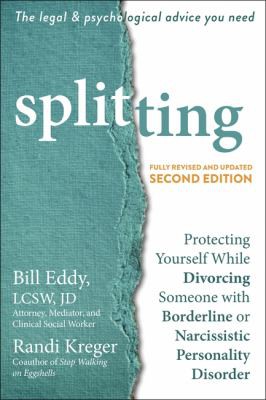
Splitting: Protecting Yourself While Divorcing Someone with Borderline or Narcissistic Personality Disorder
Bill Eddy & Randi Kreger
Updated edition covering domestic violence, alienation, false allegations in high-conflict divorce.

Divorcing a Narcissist: One Mom's Battle
Tina Swithin
Memoir of a mother who prevailed as her own attorney in a 10-year high-conflict custody battle.
As an Amazon Associate, Clarity House Press earns from qualifying purchases. Your price is never affected.
Found this helpful?
Share it with someone who might need it.
About the Author

Clarity House Press
Editorial Team
The editorial team at Clarity House Press curates and publishes evidence-based content on narcissistic abuse recovery, high-conflict divorce, and healing. Our content is informed by research, survivor experiences, and established trauma-informed approaches.
View all posts by Clarity House Press →Published by Clarity House Press Editorial Team