Please read our important disclaimers before using this content
Your four-year-old asks why Daddy doesn't live here anymore. Your six-year-old wants to know if the divorce is her fault. Your three-year-old keeps packing a suitcase, worried you'll disappear next.
Young children (ages 3-7) don't understand divorce the way adults do. They can't grasp abstract concepts like "incompatibility" or "growing apart." They think in concrete terms: who, what, where, when.
Here's how to talk to them in language that matches their developmental stage. As children grow into the 8-12 range, the communication approach shifts significantly — this guide covers the foundational stage before that transition.
What Young Children Understand About Divorce
According to the CDC's developmental milestones and research from the American Academy of Pediatrics, young children's cognitive abilities shape how they process major life changes like divorce.12 Young children remain predominantly egocentric through age 7, meaning they interpret events primarily in relation to themselves.3
Ages 3-4:
- Concrete thinking only: "Daddy lives in a different house now"
- Limited time concept: "tomorrow" and "next week" feel the same
- Magical thinking: believe their thoughts/actions caused events3
- Egocentric: everything relates back to them2
Ages 5-7:
- Beginning to understand others' perspectives
- Still concrete: need physical evidence and routines
- Black-and-white thinking: things are good or bad, not both4
- Developing time sense but still focused on immediate future1
What they ALL need:
- Simple, truthful explanations
- Repeated reassurance
- Predictable routines
- Permission to love both parents
The Initial Conversation
Keep it brief. Two to three sentences is enough for one conversation.
Use concrete language:
"Mommy and Daddy are going to live in two different houses. You'll spend some nights at Mommy's house and some nights at Daddy's house. Both of us love you very much."
Not: "Mommy and Daddy realized we've grown apart and need space to figure out who we are as individuals. We're hoping this will allow us both to be happier people and better parents for you."
They hear: confusing adult words that mean nothing concrete.
What to Say (and What Not to Say)
DO say:
- "This is a grown-up problem. It's not your fault."
- "Both Mommy and Daddy will always love you."
- "You'll have two homes where people love you."
- "Some things will change, but [specific routine] will stay the same."
DON'T say:
- "Daddy and I don't love each other anymore" (they worry: will you stop loving me?)
- "We're separating because we can't get along" (they think: I can fix this by being good)
- "Mommy needs space to be happy" (they think: I don't make Mommy happy)
- Details about adult conflicts, finances, or fault
Addressing Their Biggest Fears
Fear: "Is it my fault?"
According to child development research from the American Psychological Association, young children are egocentric.3 If something bad happens, they assume they caused it.5
What to say: "Divorce is a grown-up decision. Nothing you did caused this. Nothing you could do would change it. This is about Mommy and Daddy, not about you."
Say it multiple times. They need to hear it repeatedly before they believe it.
Fear: "Will you leave me too?"
If one parent left the home, young children worry the other will disappear.
What to say: "I will always be your [mom/dad]. I'm not going anywhere. You'll see Daddy on [specific days], and you'll see me on [specific days]. Both of us will always take care of you."
Use visual schedules. A calendar with pictures showing which parent they're with each day provides concrete reassurance.
Fear: "Will we have to move?"
Changes in housing are terrifying for young children whose world is defined by physical space.
What to say (if you're staying): "We're staying in this house. Your room will stay the same. All your toys are staying here."
What to say (if you're moving): "We're going to move to a new house. You'll have your own room there. We'll bring your [favorite stuffed animal/blanket] and all your toys. I'll show you pictures of the new house before we move."
Common Questions and How to Answer
"Why can't you just say sorry and be friends?"
Young children think conflicts are simple: say sorry, hug, problem solved.
Answer: "Sometimes grown-ups can't fix their problems that way. This isn't the kind of problem that sorry fixes. But we both still love you very much."
"Are you getting divorced because you had a fight?"
They're trying to understand cause and effect.
Answer: "Grown-ups get divorced when they can't live together anymore, even after trying for a long time. This wasn't because of one fight. This is a grown-up decision."
"Can I make you get back together?"
They still believe in their power to control outcomes.
Answer: "No, sweetie. This is a grown-up decision that only grown-ups can make. Your job is just to be a kid. Our job is to take care of you."
"When is Daddy coming back home?"
They're testing whether this is permanent.
Answer: "Daddy isn't going to live in this house anymore. But you'll see him on [specific days]. He'll pick you up from school on Tuesdays, and you'll go to his house on weekends."
(Concrete schedule. Specific details. No false hope.)
When Your Ex Is High-Conflict
The challenge: You need to avoid badmouthing your ex while also not lying to your child about observable reality.
If your child says: "Daddy yelled at you when he dropped me off."
Don't say:
- "Daddy's a bad person" (forces them to choose sides)
- "That didn't happen" (gaslights them)
- "Daddy's just stressed" (teaches them to excuse abuse)
Do say: "I heard that too. Sometimes grown-ups have strong feelings. That's a grown-up problem, not your problem. You're safe."
Validate their observation without blaming or excusing.
If your child asks: "Why does Mommy say mean things about you?"
Answer: "Sometimes when grown-ups are upset with each other, they say things that aren't kind. That's a grown-up problem. You don't have to worry about it. Both of us love you."
Redirect to what they can control: "What would you like for snack?"
What Young Children Need Most
1. Predictable routines
"Every Tuesday, Daddy picks you up from preschool. Every Friday, you come home with me. On Saturdays, we go to the park."
Repetition creates security.
2. Physical reminders of the absent parent
- Photo of both parents in their room (at both houses)
- Daddy's old t-shirt to sleep with
- A special stuffed animal that "travels" between houses
3. Permission to love both parents
"I'm so glad you had fun with Daddy at the zoo! Tell me about the elephants."
Never make them feel guilty for enjoying time with your ex. This permission is especially important when the other parent is using parental alienation tactics to undermine the child's attachment to you.
4. Emotional language
"You seem sad today. Sometimes kids feel sad about divorce. That's okay. Do you want to talk about it or do you want a hug?"
Name their emotions. Normalize them.
5. Consistency between homes (where possible)
Same bedtime routine. Same rules about screen time. Same consequences for behavior.
When routines match, children feel secure.
Red Flags: When to Seek Help
Research from Zero to Three and the National Child Traumatic Stress Network confirms that young children often express distress through behavior, not words.67 Young children lack the verbal sophistication to articulate emotional distress, and behavioral changes frequently represent trauma responses.7
Concerning signs:8
- Regression: bed-wetting, baby talk, clinginess after months of progress
- Aggression: hitting, biting, destructive behavior8
- Withdrawal: stops playing, seems "checked out," loses interest in favorite activities
- Sleep disruption: nightmares, refusing to sleep alone, waking multiple times89
- Excessive worry: asks the same reassurance questions dozens of times daily9
When to get professional help:10
- Behavioral changes persist beyond 3-6 months
- Child becomes inconsolable or has frequent meltdowns
- Developmental regression is significant
- Child expresses wishes to hurt themselves
- You're concerned about their emotional wellbeing
Find: Play therapist experienced in divorce and family transitions. Play therapy is an evidence-based intervention for young children experiencing family transitions and attachment distress.11
Special Considerations for High-Conflict Divorce
If you're worried about parental alienation:12
Focus on your relationship, not defending against false statements. Research demonstrates that children maintain healthier adjustment outcomes when both parents remain actively involved and affectively responsive.13
Don't: Quiz your child about what the other parent said about you. Do: Create positive experiences and emotional safety in your home.
If the other parent undermines you:
"Different houses have different rules. In this house, we [rule]. In Daddy's house, he decides the rules there."
Teach them that different environments have different expectations.
If exchanges are tense:
Keep your child out of the conflict.
- Use neutral exchange locations (school, daycare, parking lot)
- Have another adult present if possible
- Save emotional processing for after your child leaves
They should never witness screaming matches or threats.
The Long Game
You won't have one conversation about divorce. You'll have hundreds of tiny conversations over years as their understanding grows.
Age 4: "Where does Daddy live?" Age 6: "Why did you get divorced?" Age 8: "Did Daddy want the divorce or did you?" Age 12: "I remember when you used to fight."
Your answers will evolve as their comprehension deepens.
What stays the same:
- Honesty (age-appropriate)
- Reassurance (it's not their fault)
- Love (from both parents)
- Stability (predictable routines)
The Truth They Need
Young children don't need to understand adult complexities. They need to know:
- They are safe.
- They are loved.
- They didn't cause this.
- Both parents will take care of them.
Everything else is commentary.
Give them concrete details. Maintain predictable routines. Validate their feelings without burdening them with yours. Your own healing matters here too — the more regulated and grounded you are as a parent, the more effectively you can provide the stability young children need. Grounding techniques for trauma can help you manage your own distress during particularly difficult exchanges or conversations.
They'll ask the same questions fifty times. Answer them fifty times.
That's not frustrating. That's development.
Your Next Steps
This week:
-
Prepare your initial explanation: Write out 2-3 sentences using concrete language. Practice saying it calmly.
-
Create a visual schedule: Print a calendar. Use stickers or drawings to show which parent they're with each day. Hang it where they can see it.
-
Identify one routine that will stay the same: Bedtime ritual, Saturday morning pancakes, library story time. Tell them explicitly: "Even though some things are changing, [routine] will stay exactly the same."
-
Prepare for repeated questions: Decide now how you'll answer "Is it my fault?" and "Are you getting back together?" Write down your answers.
-
Stock comfort items: Make sure they have familiar comfort objects (stuffed animals, blankets, photos) at both homes.
This month:
- Schedule a consultation with a play therapist (even if you don't start therapy, get resources)
- Read "Dinosaurs Divorce" or "Two Homes" with your child
- Establish a consistent exchange routine
- Check in daily: "How are you feeling today? Sometimes kids feel [sad/mad/confused] about divorce. What do you feel?"
Ongoing:
- Watch for behavioral changes
- Maintain routines obsessively
- Validate their emotions without fixing them
- Let them love both parents
- Revisit the conversation as they grow
Resources
Mental Health and Family Support:
- Psychology Today Therapist Finder - Find family and child therapists
- Zero to Three - Early childhood development resources
- American Academy of Child and Adolescent Psychiatry - Child mental health resources
- National Parent Helpline - 1-855-427-2736 for parenting support
Legal and Co-Parenting Resources:
- Legal Services Corporation - Find free legal aid
- TalkingParents - Documented communication platform
- OurFamilyWizard - Co-parenting communication platform
Crisis Support:
- 988 Suicide & Crisis Lifeline - Call or text 988 (24/7)
- Crisis Text Line - Text HOME to 741741
- National Domestic Violence Hotline - 1-800-799-7233 (SAFE)
Remember: Your three-year-old doesn't need to understand why you divorced. They need to know where they're sleeping tonight and that you'll be there when they wake up.
Give them that certainty. The rest will come with time.
References
- Centers for Disease Control and Prevention. (2024). Developmental milestones. National Center on Birth Defects and Developmental Disabilities. https://www.cdc.gov/ncbddd/actearly/milestones/index.html ↩
- American Academy of Pediatrics. (2023). Cognitive development in preschool children. HealthyChildren.org. Retrieved from https://www.healthychildren.org/English/ages-stages/preschool/Pages/Cognitive-Development-In-Preschool-Children.aspx ↩
- Piaget, J. (1954). The construction of reality in the child. Basic Books. ↩
- Flavell, J. H. (1977). Cognitive development. Prentice-Hall. ↩
- Buchanan, C. M., Maccoby, E. E., & Dornbusch, S. M. (1991). Caught between parents: Adolescents' experience in divorced homes. Child Development, 62(5), 1008-1029. https://pubmed.ncbi.nlm.nih.gov/1756655 ↩
- Zero to Three. (2024). Tips for divorcing parents. https://www.zerotothree.org/resource/tips-for-divorcing-parents/ ↩
- National Child Traumatic Stress Network. (2023). Early childhood trauma. U.S. Department of Health & Human Services. Retrieved from https://www.nctsn.org/what-is-child-trauma/trauma-types/early-childhood-trauma ↩
- Grych, J. H., & Fincham, F. D. (1990). Marital conflict and children's adjustment: A cognitive-contextual framework. Psychological Bulletin, 108(2), 267-290. https://pubmed.ncbi.nlm.nih.gov/2236384 ↩
- Cummings, E. M., Davies, P. T., & Simpson, K. S. (1994). Marital conflict, emotional security, and adjustment in children. Journal of Family Psychology, 8(2), 135-146. https://pubmed.ncbi.nlm.nih.gov/25242230 ↩
- American Psychological Association. (2024). Effects of divorce on children. APA Division 43 - Family Psychology. Retrieved from https://www.apa.org/topics/divorce-child-custody/ ↩
- Kishardt, M. W. (2015). Play therapy: Effectiveness, evidence, and best practice. Journal of Psychosocial Nursing and Mental Health Services, 53(6), 44-50. https://pubmed.ncbi.nlm.nih.gov/26038156 ↩
- Kelly, J. B. (2000). Children's adjustment in conflicted marriage and divorce: A decade review of research. Journal of the American Academy of Child & Adolescent Psychiatry, 39(8), 963-973. https://pubmed.ncbi.nlm.nih.gov/10939225 ↩
- Wallerstein, J. S., Lewis, J. M., & Blakeslee, S. (2000). The unexpected legacy of divorce: A 25-year landmark study. Hyperion. ↩
Recommended Reading
From Clarity House Press — plus trusted books for deeper understanding



High Conflict People in Legal Disputes
Bill Eddy
Practical guide for disputing with a high-conflict personality through compelling case examples.
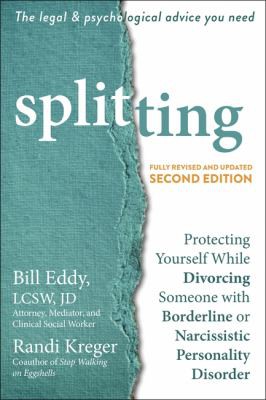
Splitting: Protecting Yourself While Divorcing Someone with Borderline or Narcissistic Personality Disorder
Bill Eddy & Randi Kreger
Updated edition covering domestic violence, alienation, false allegations in high-conflict divorce.
As an Amazon Associate, Clarity House Press earns from qualifying purchases. Your price is never affected.
Found this helpful?
Share it with someone who might need it.
About the Author

Clarity House Press
Editorial Team
The editorial team at Clarity House Press curates and publishes evidence-based content on narcissistic abuse recovery, high-conflict divorce, and healing. Our content is informed by research, survivor experiences, and established trauma-informed approaches.
View all posts by Clarity House Press →Published by Clarity House Press Editorial Team