Please read our important disclaimers before using this content
Your fourteen-year-old tells you they don't want to go to Dad's house anymore but won't say why. Your sixteen-year-old starts mediating your fights with your ex. Your seventeen-year-old asks if you're okay financially because they heard you on the phone with your lawyer.
Teenagers occupy the most complicated space in divorce: old enough to understand adult complexities, not old enough to handle the emotional weight. Desperate for independence while still needing parental stability. Watching everything. Processing everything. Vulnerable to parentification, triangulation, and being forced to choose sides. Understanding teenage responses to parental alienation is essential reading for parents navigating this with high-conflict exes.
Here's how to support them through high-conflict divorce without making them your therapist, your ally, or your messenger.
What Teenagers Understand
Cognitive and emotional development at this age:
Research on adolescent brain development from the National Institute of Mental Health confirms that the prefrontal cortex—responsible for decision-making, impulse control, and emotional regulation—continues developing well into the mid-20s, explaining the intensity of teenage emotional experiences.1
- Abstract thinking: Can understand nuance, complexity, and multiple perspectives
- Identity formation: Figuring out who they are separate from parents
- Moral reasoning: Strong sense of justice, can spot hypocrisy instantly
- Peer focus: Friends are everything; social status matters intensely1
- Future orientation: Thinking about college, career, relationships
- Emotional intensity: Big feelings, limited regulation skills2
What this means for divorce:
- They understand more than younger kids—sometimes more than you want them to3
- They're watching to see if you're honest or hypocritical
- They're terrified divorce will derail their future (college, stability)3
- They may try to parent you or siblings (parentification)4
- They may withdraw completely
- They may align with one parent to reduce cognitive dissonance5
How Much Should You Tell Them?
The tension: Teenagers can handle adult concepts, but they shouldn't have to carry adult burdens.
Tell them:
- The truth about why you're divorcing (age-appropriate version)
- How this affects their life (college, moving, finances)
- What's happening in the legal process (generally, not every detail)
- That their feelings matter and their voice will be heard
- That you're getting support for yourself
Don't tell them:
- Intimate details of your relationship
- Every legal strategy or courtroom setback
- Your financial terror in detail
- That you need them to take care of you
- Information that forces them to choose sides
The line: If you're telling them because they need to know, proceed. If you're telling them because you need to vent, call your therapist instead.
The Initial Conversation
Unlike younger children, teenagers can handle directness and complexity.
What to say:
"Your dad and I are getting divorced. We've tried for a long time to make the marriage work, but we can't continue living together in a healthy way. I know this is really hard and that you probably have a lot of feelings and questions about it. I'm going to be as honest with you as I can while respecting that some things are private between your dad and me. What matters most is that both of us love you, we'll both keep being your parents, and we'll work together to make sure you're okay through this transition. I know you're old enough to understand a lot of what's happening, and I want to hear your thoughts and feelings. But I also want you to know that this is not your problem to solve or your burden to carry."
Then stop. Listen.
Answering Their Difficult Questions
"What happened? Why are you getting divorced?"
Teenagers want the real answer, not the sanitized version.
Template: "Your dad and I have fundamental differences in how we treat each other and what we expect from a relationship. We've tried therapy, we've tried working it out, but we can't create a healthy dynamic together. The specifics are private, but what you need to know is that this decision came after a lot of effort to fix things. It's not impulsive, and it's not because of anything you did."
If they push for specifics: "Some of the reasons are private and about our relationship as adults. What I can tell you is [one high-level, non-inflammatory fact: 'we don't share the same values,' 'we can't communicate in a healthy way,' 'staying together was making everyone miserable']."
Don't:
- Give blow-by-blow accounts of fights
- Share details about infidelity, abuse, or addiction unless they already know
- Make them your confidant
If there was abuse and they witnessed it:
"I know you saw some of the ways your dad treated me. That's part of why I'm leaving. No one should be treated that way, and I don't want you to think that's what relationships are supposed to look like."
Validation without over-sharing.
"Whose fault is it?"
Teenagers think in terms of justice and accountability.
Answer: "Divorce is complicated. Both people contribute to a relationship not working, but the specific reasons are between your dad and me. What I want you to understand is that you're not responsible for fixing this, taking sides, or deciding who's right. Your job is just to be a teenager."
If one parent is clearly at fault (abuse, affair, abandonment) and they already know:
"Your dad made choices that hurt our family. I'm not going to lie to you about that. But I also don't want you to carry the burden of being angry on my behalf. That's my work to do, not yours."
"Do I have to go to Dad's house?"
This is legally and emotionally complex.
Answer (if there's a custody order): "Right now, the court order says you spend time with both of us on this schedule. I know it's hard, and I hear that you don't want to go. Can you tell me more about why?"
Listen. Is it:
- Legitimate safety concern (abuse, substance use, neglect)
- Parental alienation (you or your ex poisoning the relationship)
- Normal teenage resistance (they want to hang with friends instead)
- Loyalty conflict (they feel guilty enjoying time with both parents)
If it's a safety issue: "Thank you for telling me. I'm going to work with my attorney to address this."
If it's not a safety issue: "I know it's inconvenient and you'd rather be with your friends. But your relationship with your dad is important, and unless there's a safety reason not to go, the court expects you to follow the schedule. If there are specific problems, let's talk about them."
Never: "I wish you didn't have to go either, but the court is making you."
"Can I decide where I want to live?"
Teenagers often believe they can choose at a certain age. The reality is more complex.
Answer: "In our state, the court will consider your preference at your age, but the judge makes the final decision based on what's in your best interest. If you have strong feelings about where you want to live, you can talk to the judge or the guardian ad litem, and they'll listen. But I want you to know that you don't have to choose, and I won't be mad if you tell the truth about what you want."
Don't:
- Pressure them to say they want to live with you
- Punish them if they express a preference for the other parent
- Coach them on what to say to the court
"Are we going to be okay financially?"
Teenagers worry about college, their activities, their standard of living.
Answer: "Yes. Things might look a little different than before, but we're going to be okay. I'm working with a financial advisor to make sure we can cover what matters: housing, food, your activities, and college. You don't need to worry about taking care of me or fixing our finances—that's my job as the parent."
If finances are genuinely tight: "Money will be tighter for a while, which might mean some changes [fewer vacations, cheaper car, different college choices]. But we'll figure it out together, and you'll be okay. I promise I'll keep you informed about things that affect you directly."
"Are you dating anyone?"
They're trying to assess if you're moving on.
Answer (if you're not): "No, I'm focused on getting through the divorce and making sure you and I are okay."
Answer (if you are but it's new): "I've started seeing someone, but it's very new and not serious. If it ever becomes serious, you'll be the first to know. Right now, my priority is you."
Don't:
- Introduce casual dates to your teenager
- Ask for their permission or approval
- Over-share about your dating life
See: "Introducing New Partners to Your Children After Divorce" (Post 114) for more.
The Parentification Trap
Parentification: When children take on adult emotional or practical responsibilities. Research demonstrates that parentification during adolescence is associated with increased risk of depression, anxiety, and relationship difficulties in adulthood.4
What it looks like with teenagers:
- Asking for their advice on legal strategy
- Venting about your ex to them
- Relying on them for emotional support
- Having them take care of younger siblings because you're overwhelmed
- Asking them to spy on or report on the other parent
- Treating them like a peer instead of your child
Why it's damaging:
- Robs them of their adolescence
- Creates anxiety and depression4
- Interferes with identity development
- Models unhealthy relationship dynamics6
- Makes them feel responsible for your wellbeing
How to avoid it:
1. Get your own therapist. Your teenager is not your therapist.
2. Don't ask them to take sides. "What do you think I should do about your dad?" = parentification. "How are you feeling about everything?" = appropriate check-in.
3. Maintain parent-child roles. You support them. They don't support you.
4. Don't use them as a messenger. "Tell your dad he needs to pay child support" = inappropriate. Use text, email, or co-parenting apps.
5. Protect them from your emotional breakdowns. It's okay for them to see you sad sometimes. It's not okay for them to see you sobbing daily or to feel responsible for comforting you.
When the Other Parent Badmouths You
Teenagers are old enough to form their own opinions—and old enough to be manipulated.
If your teenager reports that your ex is badmouthing you:
Don't:
- Launch into a detailed rebuttal
- Badmouth your ex in return
- Force them to defend you
Do: "That must be really hard to hear. Sometimes adults say things that aren't fair or true when they're upset. I'm not going to fight about this with you or ask you to pick sides. What I want you to know is that I love you, I'm here for you, and you can make your own decisions about what you believe. If you ever want to talk about it, I'm here to listen."
Then change the subject.
If they confront you with specific allegations:
"Did you really [allegation]?"
Answer honestly: "No, that's not true. But I'm not going to spend our time together defending myself or talking badly about your dad. You're old enough to observe both of us and form your own opinions. What matters is how I treat you, and I hope you can see that I love you and respect you."
If the allegation is partially true: "That's a complicated situation, and your dad is telling you his version. The truth is more nuanced. But I don't want to put you in the middle of this. What I can tell you is [brief, non-inflammatory fact]."
Respecting Their Voice Without Burdening Them
The balance: Teenagers deserve to have their preferences heard, but they shouldn't be forced to make adult decisions.
What this looks like:
Do:
- Ask how they feel about custody arrangements
- Listen to their concerns about exchanges, schedules, or rules
- Respect their need for independence and time with friends
- Let them have input on decisions that affect them (which house is closer to school, whether they come to therapy)
Don't:
- Ask them to choose which parent they love more
- Make them the decision-maker about legal strategy
- Put them in the position of testifying against the other parent (unless abuse requires it)
- Guilt-trip them about their preferences
Example: "I know you'd rather stay here because your friends are nearby. I get that, and I'll talk to my lawyer about whether we can adjust the schedule so you don't miss important social stuff. But I also want you to have a relationship with your dad. Let's figure out a balance."
Custody Preferences and Court Involvement
In most states, teenagers' preferences carry weight—but they're not determinative.
If your teenager will speak to a judge or guardian ad litem:
Prepare them (without coaching): "The judge [or GAL] might ask you where you want to live and why. It's really important that you tell the truth about what you want and how you feel. Don't say what you think I want to hear or what Dad wants to hear. Just be honest. No one will be mad at you for telling the truth."
Don't:
- Script their answers
- Tell them what to say about the other parent
- Pressure them to advocate for you
After they speak to the court: "How did it go? You don't have to tell me what you said unless you want to. I trust that you told the truth, and that's all that matters."
Signs of Distress in Teenagers
Research shows that teenagers often mask distress as anger, withdrawal, or risky behavior.7 Emotional dysregulation and anxiety-depression symptoms are particularly common in adolescents experiencing family conflict.2
Watch for:
- Academic decline: Failing classes, skipping school, loss of interest in college plans
- Social withdrawal: Stops seeing friends, quits activities, isolates in their room
- Risky behavior: Substance use, sexual activity, reckless driving, self-harm
- Mood changes: Persistent sadness, irritability, rage outbursts8
- Physical symptoms: Headaches, stomachaches, sleep problems, appetite changes
- Suicidal ideation: Talking about not wanting to be alive, giving away possessions, researching suicide methods
Sleep disturbances are a particularly common early warning sign. How trauma creates sleep disorders and insomnia is worth reading to understand what your teenager may be experiencing neurologically during this period.
When to get help immediately:
- Suicidal thoughts or self-harm
- Substance abuse
- Dangerous behavior
- Inability to function (can't go to school, can't sleep, can't eat)
Find: Adolescent therapist experienced in family trauma and divorce.
Crisis resources:
- National Suicide Prevention Lifeline: 988
- Crisis Text Line: Text HOME to 741741
- Trevor Project (LGBTQ+ youth): 1-866-488-7386
What Teenagers Need Most
1. Honesty (without over-sharing)
Research emphasizes that honest, age-appropriate communication combined with emotional support builds resilience during family transitions.9 They can smell bullshit. Don't lie. But don't burden them with adult problems.
2. Stability
Maintain routines. Keep them in the same school if possible. Don't upend their entire world.9
3. Autonomy
Let them have age-appropriate independence. Don't cling to them because you're lonely.
4. Boundaries
They need you to be the parent, not their friend or confidant.4 This is critical for preventing parentification.
5. Consistency
Follow through on what you say. Model integrity. Don't bad-mouth your ex and then expect them to respect you.
6. Space to feel
Validate their anger, sadness, confusion. Don't minimize or fix.
7. Protection from adult conflict
They shouldn't witness fights, be used as messengers, or hear you trash-talking the other parent.5
8. Permission to love both parents
Even if your ex is terrible, your teenager gets to have their own relationship with them.3
9. Normalcy
Let them focus on their own life—school, friends, activities, college plans—not your divorce.9
10. Hope
Reassure them that this doesn't define their future. They can still have healthy relationships, go to college, build a good life.10
The Long View
Your teenager is watching you to learn:
- How to handle conflict
- How to recover from betrayal
- How to treat people even when you're angry
- How to take responsibility
- What healthy relationships look like
They're forming their blueprint for relationships based on what you model.
Model:
- Honesty
- Boundaries
- Emotional regulation
- Seeking help when you need it
- Treating your ex with basic respect (even if they don't deserve it)
- Focusing on your own healing instead of revenge
Don't model:
- Contempt
- Vindictiveness
- Using children as weapons
- Playing victim
- Avoiding responsibility
Your teenager is old enough to see who you really are. Be someone worth seeing.
Modeling healthy relationships and emotional regulation starts with your own healing. Recognizing what healthy relationship green flags look like — and demonstrating those qualities in your own life — gives teenagers a blueprint for their own future relationships.
Your Next Steps
This week:
-
Schedule one-on-one time: Take your teenager to coffee or a meal. Ask how they're doing. Listen without fixing.
-
Assess parentification risk: Are you relying on them for emotional support? Venting to them? Asking for advice? Stop.
-
Get your own therapist if you don't have one: You need adult support so you don't lean on your teenager.
-
Prepare your honest, age-appropriate explanation: Write down how you'll answer "Why are you getting divorced?" Practice saying it calmly.
-
Affirm their autonomy: "I know you're old enough to have your own opinions about all of this. I want you to know that I won't be mad if you feel differently than I do. Your job is just to be honest about how you feel."
This month:
- Watch for signs of distress: Academic, social, behavioral, emotional changes
- Research therapists specializing in adolescents and divorce
- Talk to their school counselor: Alert them to the family situation
- Respect their boundaries: If they don't want to talk about it, don't force them
- Maintain routines: Keep their life as normal as possible
Ongoing:
- Answer their questions honestly without over-sharing
- Validate their feelings without making them responsible for yours
- Protect them from adult conflict
- Let them be teenagers, not your therapist or ally
- Model healthy emotional regulation and boundary-setting
Resources
Mental Health and Family Support:
- Psychology Today Therapist Finder - Find family and teen therapists
- American Academy of Child and Adolescent Psychiatry - Child and teen mental health resources
- National Alliance on Mental Illness (NAMI) - Mental health education and support
- National Parent Helpline - 1-855-427-2736 for parenting support
Legal and Co-Parenting Resources:
- Legal Services Corporation - Find free legal aid
- TalkingParents - Documented communication platform
- OurFamilyWizard - Co-parenting communication platform
Crisis Support:
- 988 Suicide & Crisis Lifeline - Call or text 988 (24/7)
- Crisis Text Line - Text HOME to 741741
- National Domestic Violence Hotline - 1-800-799-7233 (SAFE)
Remember: Your teenager is old enough to understand complexity, but not old enough to carry your emotional weight.
Give them honesty without burden. Give them space without abandonment. Give them boundaries that protect their adolescence.
They're watching to see how you handle the hardest thing you've ever been through. Show them resilience, integrity, and grace—even when you don't feel it.
That's the lesson that will matter long after the divorce is final.
References
- Steinberg, L. (2008). A social neuroscience perspective on adolescent risk-taking. Developmental Review, 28(1), 78-106. https://pubmed.ncbi.nlm.nih.gov/18509515/ ↩
- Parentification Vulnerability, Reactivity, Resilience, and Thriving: A Mixed Methods Systematic Literature Review. PMC. https://pmc.ncbi.nlm.nih.gov/articles/PMC10341267/ ↩
- Kelly, J. B. (2000). Children's adjustment in conflicted marriage and divorce: A decade review of research. Journal of the American Academy of Child & Adolescent Psychiatry, 39(8), 963-973. https://pubmed.ncbi.nlm.nih.gov/10939225/ ↩
- Afifi, T. D. (2003). Adolescent adjustment to parental separation: An examination of the role of ambiguous loss. Journal of Divorce & Remarriage, 39(2), 49-66. https://pubmed.ncbi.nlm.nih.gov/16433664/ ↩
- Long-term emotional consequences of parental alienation exposure in children of divorced parents: A systematic review. Current Psychology, 2021. https://link.springer.com/article/10.1007/s12144-021-02537-2 ↩
- Fosco, G. M., & Feinberg, M. E. (2015). Cascading family systems and child peer adjustment. Developmental Psychology, 51(5), 588-598. https://pubmed.ncbi.nlm.nih.gov/25751189/ ↩
- Resilience and mental health in children and adolescents: An update of the recent literature and future directions. PMC, 2021. https://pmc.ncbi.nlm.nih.gov/articles/PMC8500371/ ↩
- Emotion dysregulation and symptoms of anxiety and depression in early adolescence: Bidirectional longitudinal associations and the antecedent role of parent-child attachment. PubMed, 2023. https://pubmed.ncbi.nlm.nih.gov/36882864/ ↩
- Wallerstein, J. S., Lewis, J. M., & Blakeslee, S. (2000). The unexpected legacy of divorce: A 25-year landmark study. New York: Hyperion. ↩
- American Academy of Child and Adolescent Psychiatry. (2018). Children and divorce. Facts for Families. https://www.aacap.org/AACAP/Families_and_Youth/Facts_for_Families/FFF-Guide/Children-and-Divorce-001.aspx ↩
Recommended Reading
From Clarity House Press — plus trusted books for deeper understanding



5 Types of People Who Can Ruin Your Life
Bill Eddy
Identifies five high-conflict personality types and teaches how to spot warning signs.
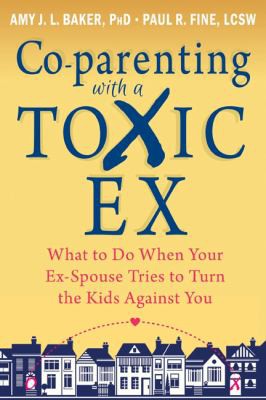
Co-Parenting with a Toxic Ex
Amy J. L. Baker, PhD & Paul R. Fine, LCSW
Evidence-based strategies when your ex tries to turn kids against you. Parental alienation prevention.
As an Amazon Associate, Clarity House Press earns from qualifying purchases. Your price is never affected.
Found this helpful?
Share it with someone who might need it.
About the Author

Clarity House Press
Editorial Team
The editorial team at Clarity House Press curates and publishes evidence-based content on narcissistic abuse recovery, high-conflict divorce, and healing. Our content is informed by research, survivor experiences, and established trauma-informed approaches.
View all posts by Clarity House Press →Published by Clarity House Press Editorial Team