Please read our important disclaimers before using this content
If you're a same-sex parent facing divorce and you're not the biological parent—or even if you are but your ex is weaponizing biology—you're navigating territory where legal protections are inconsistent, family court bias is real, and the stakes couldn't be higher.
When narcissistic abuse intersects with LGBTQ+ family dynamics, the vulnerabilities multiply: incomplete legal parentage, homophobic family court systems, and the weaponization of biology to erase non-biological parents' fundamental bonds with children they've loved and raised from birth.1 Our guide to LGBTQ+ survivors and family courts covers the broader legal challenges facing LGBTQ+ people in divorce.
Understanding your legal rights, the protective strategies that work, and how to fight for recognition as your child's real parent is essential—because in too many cases, same-sex parents have lost custody of children they raised simply because the law didn't recognize their parenthood.
The Legal Parentage Crisis
Same-sex parents face a fundamental problem that different-sex parents rarely encounter: the law wasn't designed for your family, and in many states, it still doesn't recognize you.2 The Movement Advancement Project documents significant variation in legal parentage protections across states, with some jurisdictions still lacking comprehensive protections for LGBTQ+ parents.
How Legal Parentage Works (and Fails) for Same-Sex Parents
Traditional marital presumption:
In different-sex marriages, if a woman gives birth during marriage, her spouse is presumed to be the legal parent—even if biologically impossible. This marital presumption automatically grants parental rights.3
How this has applied to same-sex couples:
- Post-Obergefell (2015): Most states now extend marital presumption to same-sex spouses4
- Pre-Obergefell children: Many same-sex parents have children born before marriage equality
- States with hostile implementation: Some states resist applying marital presumption equally
- Inconsistent application: Even in progressive states, some courts question same-sex parentage5
The second-parent adoption solution:
Second-parent adoption allows a non-biological, non-adoptive parent to legally adopt their partner's child without terminating the first parent's rights.
Why this matters:
- Creates ironclad legal parentage that all states must recognize
- Provides protection if you move to less LGBTQ+-friendly state
- Ensures parental rights if relationship ends
- Guarantees custody/visitation rights in divorce
- Protects inheritance and medical decision-making rights
The tragedy:
Many same-sex couples were told they didn't need second-parent adoption after Obergefell, or couldn't afford the legal process. Now, during divorce, non-biological parents discover they have no legal rights to children they've parented for years.
When You Have No Legal Parentage
The nightmare scenario:
You've raised your child from birth. You're on the PTA, you coached Little League, you attended every doctor's appointment, you're the one who does bedtime. But you never completed second-parent adoption, and your ex is the biological/legal parent.
Legal reality:
- In some states, you have zero legal rights
- Your ex can cut off all contact
- You cannot pursue custody or even visitation
- Years of parenting are legally irrelevant
- Courts may not even have jurisdiction to hear your case
Exceptions and protections:
Some states offer limited protection through:
- De facto parent doctrine: Recognizes non-legal parents who functioned as parents with legal parent's consent6
- In loco parentis: "In place of a parent" status (limited rights in some states)
- Parentage by estoppel: Legal doctrine preventing biological parent from denying your parentage after holding you out as parent
- Equitable parent doctrine: Court-created recognition of parent-child relationship7
These vary wildly by state and are not guaranteed.
How Narcissists Weaponize Legal Parentage Gaps
Common tactics when you're not the legal parent:
- "You're not their real parent—you have no rights"
- Cutting off all contact with children you raised
- Telling children you "weren't really their parent" or were "just a friend"
- Moving out of state with children (relocation laws may still offer some protection even for non-legal parents)
- Changing children's schools, doctors, activities without your input
- Claiming you were a "roommate" or "helper," not a parent
- Denying you ever had parental role
What this looks like:
"I was the stay-at-home parent for our twins from birth. My ex gave birth, but I did everything—night feedings, daycare drop-offs, doctor's appointments, everything. We kept meaning to do second-parent adoption but never got around to it. When I filed for divorce, she told me I had no legal standing and cut off all contact. I haven't seen my children in eight months. The court says I'm not a parent."
This is why legal parentage is URGENT.
Establishing Legal Parentage During Divorce
If you don't have legal parentage and you're facing divorce, you need emergency legal intervention.
Can You Establish Parentage Mid-Divorce?
It depends on your state:
States with de facto parent statutes:
You may be able to petition for recognition as a de facto or psychological parent based on:
- Your relationship with the child
- Legal parent's consent to your parental role
- Your financial and emotional support
- Child's reliance on you as a parent
- Duration and quality of parent-child bond
States without recognition:
If your state doesn't recognize non-legal parents, your options are extremely limited:
- Move to establish parentage under another state's jurisdiction (complex)
- Argue for equitable relief based on detrimental reliance
- Custody by agreement only (requires ex's cooperation)
- Pursue adoption if ex will consent (unlikely in high-conflict)
Immediate steps if you lack legal parentage:
- Emergency consultation with LGBTQ+ family law attorney: Do this TODAY
- Don't leave the family home if possible: Maintaining status quo helps
- Document everything: Photos, school records, medical records, financial support, witnesses
- File petition for parentage/custody immediately: Establish jurisdiction
- Preserve evidence of ex's acknowledgment of your parenting: Texts, emails, social media, cards, documents
- Secure witness statements: Teachers, doctors, family, friends affirming your parental role
- Don't agree to "temporary" loss of contact: Every day away from children harms your case
Proving Your Parental Role
If you're arguing for de facto or equitable parent status, you'll need overwhelming evidence.
What courts look for:
- Intent to parent: Evidence you both planned for and wanted children together
- Daily caregiving: Who did feeding, bathing, bedtime, homework, appointments?
- Financial support: Did you contribute to children's expenses?
- Legal parent's consent: Did ex encourage and support your parental role?
- Public acknowledgment: Were you held out as parent to family, friends, schools, doctors?
- Duration: How long have you functioned as parent?
- Child's attachment: Does child view you as parent?
- Detrimental reliance: Did you make life choices (career, location) based on parental role?
Evidence to gather:
- Photos of you with children from birth onward
- School records listing you as parent/emergency contact
- Medical records showing you attending appointments
- Financial records (child expenses, insurance, savings)
- Birth announcements listing both of you as parents
- Holiday cards addressing you as "Mommy" or "Daddy"
- Texts/emails with ex discussing parenting decisions
- Social media posts showing your parenting
- Children's cards/artwork calling you Mom/Dad
- Witness affidavits from family, friends, teachers, doctors
- Video of typical caregiving activities
The more evidence, the better. Leave nothing to chance.
Facing Homophobia in Family Court
Even when you have full legal parentage, homophobic bias can affect custody outcomes.
How Homophobia Shows Up in Court
Overt homophobia (less common but still exists):
- Judge questioning whether same-sex parents can adequately parent
- Suggesting children need "mother and father"
- Concern about children's gender identity or sexual orientation development
- Treating same-sex relationship as less legitimate than different-sex marriage
- Religious objections to LGBTQ+ families
Covert/implicit bias (more common):
- Minimizing non-biological parent's role
- Assuming biological parent should have primary custody (when both are legal parents)
- Giving more weight to different-sex partner's testimony if either parent is now in different-sex relationship
- Questioning stability of LGBTQ+ families
- Concern about children facing stigma (blaming you, not homophobia)
How narcissistic ex exploits homophobia:
- Claims children are "confused" about gender because of your family
- Argues children need "traditional family structure"
- Suggests new different-sex relationship provides "better" home
- Uses religion to claim moral superiority
- Portrays LGBTQ+ identity as "lifestyle choice" vs. stable family
What this looks like:
"The custody evaluator kept asking about our 'lifestyle' and whether we worried our son would be 'confused.' She asked if we thought he needed a male role model—as if his other mom didn't count. Every question was coded homophobia. The final report recommended my ex (the bio mom) get primary custody to provide 'stability' while I was 'adjusting to single parenting'—we'd both been parenting equally for 9 years."
Fighting Bias Effectively
1. Choose your attorney carefully
Must-haves:
- Extensive LGBTQ+ family law experience
- Track record fighting and winning bias cases
- Comfortable educating judges on LGBTQ+ parenting research
- Connected to LGBTQ+ legal organizations for support
- Willing to file recusal motions if judge is biased
Questions to ask:
- "What percentage of your practice is LGBTQ+ family law?"
- "Have you handled cases with de facto parent claims?"
- "How do you address homophobic bias in court?"
- "What's your success rate with non-biological parent custody?"
- "Can you provide LGBTQ+ client references?"
2. Educate the court
Provide research and expert testimony on:
- Same-sex parenting outcomes (decades of research showing no difference)
- Importance of both parents regardless of biology
- Harm of removing established parent figure
- Legal recognition of LGBTQ+ families post-Obergefell
- Constitutional protections against discrimination
Expert witnesses:
- Child psychologist specializing in LGBTQ+ families
- Legal scholar on parentage law
- Medical professional (pediatrician) affirming healthy family
- Educator/therapist who knows your family
3. Request LGBTQ+-competent custody evaluator
Evaluation standards should include:
- Training in LGBTQ+ family dynamics
- No religious bias against same-sex parents
- Understanding of legal parentage vs. biological parentage
- Assessment of both parents' caregiving equally
- Evaluation of children's attachment to both parents
- Consideration of continuity and stability
Red flags in evaluators:
- Religious-based practice
- No LGBTQ+ family training
- Referring to your relationship as "lifestyle"
- Emphasizing biology over attachment
- Questioning children about your sexual orientation
- Asking inappropriate questions about your sex life
If evaluator is biased:
- Object immediately to problematic questions
- Request different evaluator
- File motion for recusal
- Document bias for appellate record
- Consider complaint to licensing board
4. Prepare for "children need a mother and father" argument
Counter-arguments:
- "Children need loving, stable, capable parents—gender is irrelevant"
- Cite research: The American Academy of Pediatrics,8 American Psychological Association,9 and AACAP all affirm same-sex parenting outcomes are equivalent to different-sex parenting10
- Emphasize your actual parenting quality, not gender composition
- Point to other family structures courts routinely approve (single parents, grandparents, etc.)
- Reframe: "Children need ME—their parent who has loved them since birth"
5. Know when to request recusal
If a judge demonstrates clear bias, you may need to request they recuse themselves. Our guide to recognizing and addressing judicial bias covers the mechanics of this process in detail.
Grounds for recusal:
- Explicit statements showing bias against LGBTQ+ people
- Religious objections to same-sex relationships
- Refusal to recognize legal parentage
- Pattern of ruling against LGBTQ+ parents
- Ex parte communications about your sexual orientation
- Inappropriate questions or comments
Risks:
- May anger judge if recusal is denied
- Can delay proceedings significantly
- May result in even more hostile judge
Benefits:
- Gets biased judge off your case
- Creates appellate record
- Shows commitment to fair process
- May result in more favorable judge
Consult with attorney before pursuing recusal.
Biology as a Weapon
Even when both parents are legal parents, narcissistic exes weaponize biological connection.
"I'm the REAL Parent"
The narrative:
"I carried them. I gave birth. I'm their biological mother/father. You're not their REAL parent."
Why this is harmful:
- Teaches children that biology matters more than love and care
- Erases non-biological parent's years of parenting
- Creates hierarchy among parents
- Undermines child's attachment to non-bio parent
- Used to justify unequal custody arrangements
Legal reality:
- Once legal parentage is established, biology is irrelevant to custody
- Best interests standard applies equally to all legal parents
- Attachment, caregiving history, and continuity matter more than DNA
- Courts should not favor biological parent over non-biological parent
Counter-strategies:
- Document your equal (or primary) caregiving: Show you parented just as much or more
- Emphasize attachment: Child's bond with you is what matters, not DNA
- Expert testimony: Psychologist affirming that biology ≠ better parent
- Reframe: "I am their real parent in every way that matters to them"
- Point out bias: Request court recognize that favoring bio parent is discriminatory
Using Children's Questions About Biology
Children in same-sex families often have questions about biology, conception, and family structure. Narcissistic parents weaponize this curiosity.
Harmful tactics:
- "I'm your real mom because you came from my body"
- "Mommy/Daddy isn't your real parent—I just let them help raise you"
- "You can call them whatever you want, but I'm your only real parent"
- Overemphasizing biological connection while minimizing other parent
- Answering conception questions in ways that erase non-bio parent
Protective strategies:
Have age-appropriate conversations about family creation:
- Young children: "Some families have a mom and dad, some have two moms, some have two dads, some have one parent. We have two moms/dads who both love you."
- School-age: "You grew in Mommy's tummy, but both of us wanted you and planned for you together. We're both your real parents."
- Tweens/teens: Full, honest explanation of conception (donor sperm, donor egg, IVF, etc.), emphasizing that both parents chose and wanted them.
Correct harmful messages:
- "What Mom/Dad said isn't quite right. Here's the truth: we are BOTH your real parents. I didn't carry you, but I've been your parent since before you were born."
- "Biology is one small part of being a parent. The important parts are loving you, caring for you, and being there for you—which I've done every day of your life."
Therapy support:
- LGBTQ+-competent child therapist
- Processing questions about family structure
- Understanding that having two moms/dads is just one way families are made
- Validating both parents regardless of biology
Your Next Steps
Immediate actions (if you lack legal parentage):
- Emergency LGBTQ+ family law consultation: Find attorney experienced in de facto parent claims TODAY
- Do NOT leave the family home: Staying maintains status quo and ongoing parent-child relationship
- File petition immediately: Establish court jurisdiction; delay weakens your case
- Document EVERYTHING: Every moment of parenting, every acknowledgment from ex, every witness
- Preserve evidence: Download texts, emails, social media showing your parental role before ex deletes
Immediate actions (if you have legal parentage):
- Secure legal documents: Birth certificate, second-parent adoption decree, marriage license
- Consult LGBTQ+-competent family law attorney: Experience with homophobia in family court essential
- Document your caregiving: Evidence of equal or primary parenting
- Identify potential bias: Research judge's history with LGBTQ+ cases
- Request LGBTQ+-trained custody evaluator: Don't accept evaluator with bias history
30-day goals:
- Gather comprehensive evidence of parenting: Photos, videos, school records, medical records, financial contributions
- Witness statements: Teachers, doctors, family, friends affirming your parental role
- Connect with LGBTQ+ legal organizations: Lambda Legal, NCLR, local LGBTQ+ bar association
- Research your judge: Track record with LGBTQ+ families; prepare for bias
- Therapeutic support for children: LGBTQ+-competent therapist to process family changes
Long-term protection:
- Complete second-parent adoption if you haven't: Even post-Obergefell, this provides maximum protection
- Maintain detailed parenting log: Document ongoing caregiving throughout divorce process
- Build expert witness team: Psychologist, pediatrician, educator who can testify to your parenting
- Stay visible in children's lives: School, medical appointments, activities—document everything
- Advocate for legal reform: Support legislation protecting LGBTQ+ parents' rights
NOTE ON HOTLINE NUMBERS: Phone numbers for crisis hotlines, legal aid, and support services are provided as a resource. These numbers are current as of publication but may change. Please verify hotline numbers are still active before relying on them. For the National Domestic Violence Hotline, visit thehotline.org for current contact information.
Resources
Legal Aid and Parentage Resources:
- National Center for Lesbian Rights (NCLR) - LGBTQ+ family law expertise and attorney referrals
- Lambda Legal - Legal advocacy and attorney directory for LGBTQ+ families
- Family Equality - Legal resources and family support
- Movement Advancement Project (MAP) - State-by-state LGBTQ+ parentage laws
Family Support and Research Resources:
- COLAGE - Support for children with LGBTQ+ parents
- PFLAG - Local chapters supporting LGBTQ+ families
- American Academy of Pediatrics - Research on same-sex parenting outcomes
- American Psychological Association - Research summary on LGBTQ+ parents
Crisis Support and Domestic Violence:
- National Domestic Violence Hotline - 1-800-799-7233 (SAFE) LGBTQ+-inclusive support
- The Network/La Red - LGBTQ+ domestic violence support and resources
- 988 Suicide & Crisis Lifeline - Call or text 988 for crisis support (24/7)
References
Key Takeaways
- Second-parent adoption is URGENT—it's the only legal protection guaranteed across all states for non-biological same-sex parents.
- Without legal parentage, you may have zero rights—even after years of parenting—making immediate legal action critical if you're facing divorce.
- Homophobia in family court is real—choose LGBTQ+-competent attorneys, educate judges, and request trained custody evaluators.
- Biology is legally irrelevant once parentage is established—attachment, caregiving, and stability matter, not DNA.
- De facto parent doctrines vary wildly by state—consult LGBTQ+ family law specialist to understand your jurisdiction's protections.
- Document everything—your parenting, ex's acknowledgment of your role, and any bias you encounter in the legal system.
- Children need both parents—fight for your relationship; it's not optional, it's essential.
You are your child's real parent. Don't let anyone—judge, evaluator, or narcissistic ex—erase that truth. Fight for your family.
References
- Bos, H. M., Knox, J. B., Van Rijn-van Gelderen, L., & Gartrell, N. K. (2016). Same-sex and different-sex parent households and child health outcomes: Findings from the National Survey of Children's Health. Journal of Developmental & Behavioral Pediatrics, 37(3), 179-187. https://pubmed.ncbi.nlm.nih.gov/27067014/ ↩
- Patterson, C. J., & Tornello, S. L. (2014). Legal recognition of same-sex relationships in the United States: Does policy matter? American Psychologist, 69(4), 401-409. https://pubmed.ncbi.nlm.nih.gov/24999847/ ↩
- American Law Institute. (2017). Restatement of law (third) of family law: General principles. ALI Press. Section 2.02-2.03 on marital presumption of paternity. ↩
- Obergefell v. Hodges, 576 U.S. 644 (2015). U.S. Supreme Court decision establishing marriage equality and extending marital presumption of parentage to same-sex spouses nationwide. ↩
- Hertz, R., & Ferguson, F. I. (2022). How marriage changed parentage law: Unequal outcomes for same-sex and different-sex couples. Journal of LGBTQ Family Studies, 18(2), 145-167. https://pubmed.ncbi.nlm.nih.gov/35116202/ ↩
- National Center for Lesbian Rights. (2023). The de facto parent doctrine: State-by-state analysis of parental recognition for non-legal parents. https://nclrights.org ↩
- Krauskopf, J. M. (2017). The parentage of children born to nonmarital relationships: Towards a feminist perspective. Family Court Review, 33(3), 312-335. ↩
- American Academy of Pediatrics. (2023). Health and well-being of children with same-sex parents. Pediatrics, 152(2), e2023062459. https://pubmed.ncbi.nlm.nih.gov/37648862/ ↩
- American Psychological Association. (2021). LGBTQ-Affirming parenting: A scientific and ethical basis for fostering positive development in LGBTQ children and youth. https://www.apa.org/about/policy/parenting ↩
- American Academy of Child & Adolescent Psychiatry. (2021). Children with lesbian, gay, bisexual, and transgender parents (Facts for Families No. 92). Journal of the American Academy of Child & Adolescent Psychiatry, 60(5), 673-674. https://pubmed.ncbi.nlm.nih.gov/33964107/ ↩
Recommended Reading
From Clarity House Press — plus trusted books for deeper understanding



BIFF: Quick Responses to High-Conflict People
Bill Eddy, LCSW Esq.
Brief, Informative, Friendly, and Firm responses for dealing with high-conflict people.
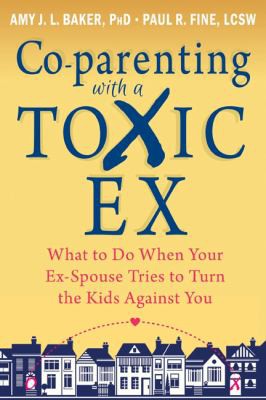
Co-Parenting with a Toxic Ex
Amy J. L. Baker, PhD & Paul R. Fine, LCSW
Evidence-based strategies when your ex tries to turn kids against you. Parental alienation prevention.
As an Amazon Associate, Clarity House Press earns from qualifying purchases. Your price is never affected.
Found this helpful?
Share it with someone who might need it.
Tags
About the Author

Clarity House Press
Editorial Team
The editorial team at Clarity House Press curates and publishes evidence-based content on narcissistic abuse recovery, high-conflict divorce, and healing. Our content is informed by research, survivor experiences, and established trauma-informed approaches.
View all posts by Clarity House Press →Published by Clarity House Press Editorial Team