Please read our important disclaimers before using this content
You're doing everything right. You have strong evidence, competent legal representation, and the law on your side. But you're losing ground in your high-conflict divorce case—not because your ex is more credible, but because the judge seems to have already made up their mind. They interrupt your attorney. They accept your ex's unsupported allegations without question. They make comments suggesting bias based on gender, income, or personality. You leave every hearing feeling like you never had a fair chance.
This is the nightmare scenario of judicial bias in family court. When the person who holds near-absolute power over your children's future, your financial security, and your safety appears to be biased against you, you face a nearly impossible situation: How do you get a fair hearing from someone who's already decided you're the problem?
This is Part 1 of a two-part series on judicial bias. In this article, we'll explore how to distinguish actual bias from unfavorable rulings, recognize common forms of bias in family court, identify warning signs in judicial behavior, and learn how to preserve the record for potential appeals.
Continue to Part 2: Recusal Motions and Appellate Strategy →
Understanding Judicial Bias vs. Unfavorable Rulings
Not every ruling against you indicates bias. Judges have wide discretion in family law, and reasonable judges can disagree about case outcomes.1 But there's a difference between adverse rulings based on evidence and bias that prevents fair consideration of your case.
What Is Judicial Bias?
Judicial bias exists when a judge has a predisposition, prejudice, or personal interest that prevents them from being impartial.
Types of bias:
Personal Bias: Judge has personal relationship with one party or their attorney (friends, family, business relationships)
Financial Bias: Judge has financial interest in the outcome
Prejudicial Bias: Judge demonstrates prejudice based on gender, race, religion, sexual orientation, socioeconomic status, or other protected characteristics
Ex Parte Communications: Judge communicates with one party or their attorney outside of court without other party present
Prior Involvement: Judge previously represented one of the parties as an attorney, has personal knowledge of disputed facts, or has family members involved in the case
Bias vs. Discretionary Rulings
Actual Bias (grounds for recusal):
- Judge's spouse works for your ex's company
- Judge makes gender-based comments ("mothers should stay home with children")
- Judge was ex's divorce attorney 5 years ago
- Judge and your ex's attorney are law school roommates who socialize regularly
- Judge accepts your ex's version of events without allowing you to present evidence
Unfavorable Exercise of Discretion (not bias, but may be appealable):
- Judge believes your ex's testimony over yours (credibility determinations are within judge's discretion)
- Judge rules against you on legal issue (even if you think they're wrong)
- Judge interrupts your attorney (if they interrupt both sides equally)
- Judge seems impatient or frustrated with your case (judges are human)
- Judge makes unfavorable evidentiary rulings (within their discretion unless pattern shows bias)
Critical Distinction: You can disagree with a judge's rulings without the judge being actually biased. Bias requires showing the judge cannot be impartial due to personal interest, prejudice, or improper conduct—not just that they rule against you.
Common Forms of Judicial Bias in Family Court
Family court judges wield enormous discretion, and that discretion can mask—or reveal—bias.
Gender Bias
Despite progress toward gender equality, gender bias persists in family courts.2 Research analyzing 2,530 family law judgments from 2001-2021 found significant gender-based language biases, with mothers receiving greater scrutiny regarding evidence compliance while fathers' financial obligations received more judicial attention.3
Anti-Mother Bias:
- Assumptions that women are overly emotional or vindictive
- Skepticism toward domestic violence allegations ("she's just trying to get custody")
- Penalizing mothers for working ("you prioritize career over children")
- Higher standards of proof for mothers alleging abuse
- Emotional responses to trauma viewed as instability
Anti-Father Bias:
- Presumptions that fathers are less capable parents
- Dismissing fathers' parenting contributions
- Assuming mothers should be primary caregivers
- Awarding fathers less parenting time despite equal capability
Traditional Gender Role Enforcement:
- Favoring parent who conforms to traditional gender roles (stay-at-home mom, breadwinner dad)
- Penalizing non-traditional family structures
- Comments about "appropriate" parenting behaviors based on gender
Socioeconomic Bias
Wealth Bias:
- Favoring wealthier party (better attorney, more resources)
- Assuming wealth equals better parenting
- Minimizing financial abuse by wealthier spouse
- Making support determinations that favor high earners
Poverty Bias:
- Treating lower-income parent as less credible or capable
- Skepticism toward claims of need
- Assumptions about parenting quality based on income
- Penalizing parent for economic disadvantage caused by abuse
Personality and Presentation Bias
Favoring "Likeable" Parties:
- Believing the charming, well-spoken ex (who may be narcissist)
- Dismissing traumatized survivor who appears anxious or emotional
- Crediting parent who presents calmly (even if lying) over parent who shows appropriate emotion
Punishing Abuse Survivors:
- Viewing trauma responses (hypervigilance, emotion) as "difficult" or "unstable"
- Treating advocacy for children as "alienating behavior"
- Believing abuser's claims that survivor is "crazy" or "vindictive"
Attorney Favoritism
"Repeat Player" Bias:
- Favoring attorneys who appear regularly in that courtroom
- Social relationships between judge and certain attorneys
- Giving more credibility to known attorneys over out-of-town counsel
- Interrupting or showing impatience with unfamiliar attorneys
Ideological Bias
Parental Alienation Ideology:
- Judges who believe parental alienation is widespread and mothers are usually alienators
- Applying "alienation" label to appropriate protective parenting
- Research shows parental alienation claims are disproportionately used against mothers alleging abuse, often resulting in custody transfer to the alleged abuser.4 A qualitative study of 21 family court judges found substantial conceptual ambiguity in how alienation is defined and applied, with alienation understood as "dynamics, not diagnoses."5
Shared Parenting Ideology:
- Rigid belief that 50/50 custody is always best regardless of circumstances
- Minimizing domestic violence or abuse to achieve equal time
- Dismissing one parent's concerns to enforce "co-parenting"
Recognizing Judicial Bias: The Red Flags
Sometimes bias is subtle; other times it's blatant. Know what to watch for.
Communication Patterns
⚠️ Warning Signs:
- Judge interrupts your attorney repeatedly but not opposing counsel
- Judge asks hostile questions of you but friendly questions of your ex
- Judge uses different tone/demeanor with each party
- Judge makes eye contact with your ex but not you
- Judge appears to have decided before hearing your evidence
Evidentiary Rulings
⚠️ Concerning Patterns:
- Judge excludes your critical evidence but admits ex's questionable evidence
- Judge applies different standards of proof to each party
- Judge refuses to allow you to present witnesses or documents
- Judge accepts hearsay from your ex but requires you to provide perfect documentation
- Judge makes findings contrary to unrebutted evidence you presented
Factual Findings
⚠️ Red Flags:
- Judge's written order ignores evidence favorable to you
- Judge makes findings based solely on ex's testimony with no corroboration
- Judge accepts implausible explanations from ex without question
- Judge attributes credibility to ex despite documented lies
- Judge's findings are factually impossible (timeline doesn't work, contradicted by documents)
Legal Errors with Pattern
⚠️ Systematic Problems:
- Judge consistently rules against you on legal issues (even when law is clear)
- Judge applies incorrect legal standards to your detriment
- Judge creates "rules" not found in statutes or case law
- Judge refuses to follow appellate court directives
Comments Revealing Bias
🚨 Explicit Bias:
- Gender-based comments ("mothers belong at home," "fathers don't know how to parent")
- Stereotyping based on race, religion, sexual orientation, disability
- Comments about your appearance, demeanor, or emotions
- Statements indicating judge has predetermined outcome
- References to judge's personal beliefs or experiences as basis for ruling
Preserving the Record for Appeal
If your judge is biased but won't recuse, your remedy may be appeal. But appeals only work if you preserve the record during trial court proceedings.
What "Preserving the Record" Means
Making a Record: Ensuring that the court reporter captures your objections, offers of proof, and legal arguments so appellate court can review them.
Objecting Timely: Raising legal and evidentiary objections during trial, not for first time on appeal.
Creating Record of Bias: Documenting judge's biased conduct in the official record so appellate court can see it.
How to Preserve Issues for Appeal
1. Object to Erroneous Rulings:
- When judge makes evidentiary ruling you believe is wrong: "Objection, Your Honor. This is inadmissible hearsay."
- State specific legal basis for objection
- If objection is overruled, make offer of proof (explain what evidence you would present and why it's relevant)
2. Request Findings and Conclusions:
- After trial, request written findings of fact and conclusions of law
- This requires judge to explain factual determinations and legal reasoning
- Easier to appeal when you have written findings showing errors
3. Cite Law in the Record:
- When judge applies wrong legal standard, cite correct law for the record
- "Your Honor, under [statute] and [case], the standard is X, not Y."
- Ensures appellate court knows you raised issue
4. Make Record of Biased Conduct:
- If judge makes biased comment, ask court reporter to read it back (ensures it's captured accurately)
- Move to strike improper comments
- File motions addressing pattern of bias (creates written record)
5. Request Hearings Be Recorded:
- Ensure court reporter is present for all substantive hearings
- If off-record conversations occur, request they be placed on record
- Without record, appellate court can't review what happened
Working with Court Reporters
The court reporter is your ally in preserving the record:
- Ensure court reporter is present and recording
- Speak clearly and not too quickly
- If judge makes off-record comment you want preserved, ask for it to be "on the record"
- Order transcripts of key hearings for your attorney's appeal preparation
Critical: Appellate courts generally only review what's in the official record. If judge's biased conduct isn't captured by court reporter, it didn't happen for appeal purposes.
Documenting Gender Bias
Despite increased awareness, gender bias remains endemic in family courts nationwide.6 When mothers allege abuse and fathers respond with parental alienation claims, mothers face substantially higher risks of losing custody, with research showing mothers roughly double their likelihood of losing custody in these circumstances.7
How Gender Bias Manifests
Against Mothers:
- Domestic violence allegations dismissed as "tactical"8
- Working mothers penalized for career focus
- Protective parenting labeled "alienation"
- Higher credibility standards than fathers
- Emotional responses to trauma viewed as instability9
Against Fathers:
- Presumptions they're less capable caregivers
- Parenting contributions minimized
- Less parenting time awarded despite equal capability
- Uphill battle to overcome traditional custody presumptions
Documenting Gender Bias
Preserve Evidence of Bias:
- Gender-based comments by judge
- Different treatment of mothers vs. fathers in courtroom
- Rulings based on gender stereotypes
- Disparate application of legal standards
Expert Testimony:
- In some cases, expert witnesses can testify about gender bias in judicial decision-making
- Research on gender bias in family courts can support appellate arguments
Appellate Arguments:
- Gender bias violates equal protection
- Can be basis for reversal on appeal
- Increasingly recognized by appellate courts as reversible error
Strategies for Navigating a Biased Judge
If you're stuck with a biased judge before recusal or appeal, you must navigate strategically.
Minimize Opportunities for Bias to Affect Outcome
Stipulate to Facts Where Possible:
- Agree with ex on uncontested facts
- Reduces judge's discretion on factual findings
- Narrows issues judge must decide
Request Special Masters or Mediators:
- Ask court to appoint neutral expert (custody evaluator, parenting coordinator)
- Judge may defer to expert's recommendations
- Reduces direct judge involvement in disputed issues
Settle if Possible:
- If bias is severe, settlement may produce better outcome than trial
- Mediation removes decision from biased judge
- Control outcome rather than leaving it to biased judge
Present Overwhelming Evidence
Make Your Case Undeniable:
- If judge is biased against you, present so much evidence they can't ignore it
- Corroborate everything (don't rely on your testimony alone)
- Expert witnesses carry weight
- Documentary evidence harder to dismiss than testimony
Anticipate Bias and Over-Prepare:
- Know judge will be skeptical of you, so exceed normal proof standards
- Assume you'll need to prove more than ex does
- Unfair, but sometimes necessary reality
Maintain Professionalism
Don't Give Judge Ammunition:
- Stay calm and respectful, even when judge is not
- Don't argue with judge or appear defensive
- Professional demeanor undercuts judge's negative preconceptions
- Model behavior you want judge to see
Control What You Can Control:
- Your appearance, punctuality, preparation
- How you respond to questions (calm, factual)
- Your attorney's professionalism
- Your evidence quality
Focus on the Record
Everything You Do Should Consider Appeal:
- Assume you'll need to appeal
- Preserve every issue
- Create record showing judge's errors and bias
- Document, document, document
Your Next Steps
If you believe your judge is biased, strategic action can protect your rights.
Immediate Assessment
1. Distinguish Bias from Adverse Rulings Ask yourself:
- Is judge treating both parties differently, or just ruling against me?
- Are there objective indicators of bias, or am I upset about losing?
- Would a neutral observer question judge's impartiality?
- Is there a pattern, or isolated rulings I disagree with?
2. Consult with Your Attorney Discuss:
- Whether grounds for recusal exist
- Risks and benefits of recusal motion
- Alternative strategies if recusal isn't viable
- How to preserve record for appeal
3. Document Bias Indicators Create log of:
- Biased comments by judge
- Differential treatment in courtroom
- Erroneous rulings with pattern
- Relationships or conflicts of interest
Strategic Planning
4. Preserve the Record
- Object to erroneous rulings
- Make offers of proof
- Request written findings
- Ensure all proceedings are recorded
- Create record of biased conduct
5. Consider Settlement If bias is severe:
- Settlement removes decision from biased judge
- Mediation with neutral third party
- Control outcome rather than risking trial before biased judge
- Weigh settlement terms against likely trial outcome with bias
6. Prepare for Next Steps
In Part 2, we'll cover recusal motions, judicial complaints, appellate strategy, and long-term navigation of biased judges.
The Reality of Judicial Bias
Judges wield enormous power in family court, and that power can be used—intentionally or unconsciously—in biased ways. When the person who decides your children's future, your financial security, and your safety cannot be impartial, you face a fundamental denial of justice.
But you're not completely powerless. You can document the bias. You can preserve the record for appeal. You can request neutral evaluators. You can settle to avoid the judge's decision. And in Part 2, we'll explore recusal motions, judicial complaints, and appellate strategies for when bias denies you a fair hearing.
The first step is recognizing and documenting what's happening. Not every unfavorable ruling is bias—but when patterns emerge showing differential treatment, prejudicial comments, or systematic errors favoring one party, you need to act strategically to protect your case.
Continue to Part 2: Recusal Motions and Appellate Strategy →
Resources
Legal Support and Family Law:
- American Academy of Matrimonial Lawyers - Find experienced family law attorneys for bias issues
- WomensLaw.org - State-specific family law resources and judicial recusal procedures
- State Bar Associations - Lawyer referral services and judicial complaint procedures
- National Association of Counsel for Children - Resources for child-focused family law
Custody Documentation and Evidence:
- OurFamilyWizard - Court-admissible communication and documentation tool
- TalkingParents - Documented co-parenting communication platform
- Custody X Change - Track parenting time and create custody documentation
- Guardian ad Litem Directory - Find neutral child advocates for your case
Crisis Support and Advocacy:
- National Domestic Violence Hotline - 1-800-799-7233 (SAFE) for advocacy during custody cases
- National Coalition Against Domestic Violence - Legal advocacy and safety planning
- 988 Suicide & Crisis Lifeline - Call or text 988 for crisis support during court battles
- Crisis Text Line - Text HOME to 741741 for crisis counseling
Key Takeaways
- Bias vs. adverse rulings: Not every ruling against you indicates bias; must show judge cannot be impartial due to personal interest, prejudice, or relationships
- Common bias types: Gender bias, socioeconomic bias, personality favoritism, attorney relationships, ideological bias
- Warning signs: Differential treatment, biased comments, systematic evidentiary errors, factual findings contrary to evidence
- Preserve the record: Object to errors, make offers of proof, ensure proceedings are recorded, create written record of bias
- Court reporter is critical: Appellate courts only review what's in official record; biased conduct must be captured
- Gender bias persists: Affects both mothers and fathers; document specific instances and patterns
- Navigate strategically: Minimize judge's discretion through stipulations, experts, overwhelming evidence
- Professionalism matters: Stay calm and respectful; don't give judge ammunition to confirm their bias
- Document everything: Keep detailed log of biased comments, differential treatment, erroneous rulings
- Settlement may be wisest: If bias is severe, controlling outcome through settlement may be better than trial
If your judge is biased, you're facing one of the most difficult challenges in family law. Document every instance, preserve the record meticulously, and prepare for potential recusal or appeal. In Part 2, we'll cover how to request recusal and pursue appellate remedies.
Continue to Part 2: Recusal Motions and Appellate Strategy →
References
- Akand, E., Fan, Y., Wobcke, W., Sisson, S. A., & San Roque, M. (2025). Diversity on the bench: An analysis of gendered biases in the language of Australian Family Law Court judgments. PLOS One, 20(9), e0331841. https://journals.plos.org/plosone/article?id=10.1371/journal.pone.0331841 ↩
- American Bar Association. (2024). Gender Bias in the Judicial System. Retrieved from https://www.americanbar.org/groups/diversity/women/resources/ ↩
- Akand, E., Fan, Y., Wobcke, W., Sisson, S. A., & San Roque, M. (2025). Diversity on the bench: An analysis of gendered biases in the language of Australian Family Law Court judgments. PLOS One, 20(9), e0331841. https://journals.plos.org/plosone/article?id=10.1371/journal.pone.0331841 ↩
- Bala, N., Fidler, B. J., Johnson, M. P., & Schachner, A. (2024). Gender and child custody outcomes across 16 years of judicial decisions regarding abuse and parental alienation. Children and Youth Services Review, 161, 107589. https://www.sciencedirect.com/science/article/pii/S0190740923003833 ↩
- Marques, T. M., Narciso, I., & Ferreira, L. C. (2022). How do family court judges theorize about parental alienation? A qualitative exploration of the territory. International Journal of Environmental Research and Public Health, 19(13), 7555. https://pmc.ncbi.nlm.nih.gov/articles/PMC9266076/ ↩
- UN Office of the High Commissioner for Human Rights. (2023). Gender bias in custody battles places women and children at risk. Retrieved from https://www.ohchr.org/en/stories/2023/06/gender-bias-custody-battles-places-women-and-children-risk ↩
- Bala, N., Fidler, B. J., Johnson, M. P., & Schachner, A. (2024). Gender and child custody outcomes across 16 years of judicial decisions regarding abuse and parental alienation. Children and Youth Services Review, 161, 107589. https://www.sciencedirect.com/science/article/pii/S0190740923003833 ↩
- Person, C. J., Moracco, K. E., Agnew-Brune, C., & Bowling, J. M. (2018). "I don't know that I've ever felt like I got the full story": A qualitative study of courtroom interactions between judges and litigants in domestic violence protective order cases. Violence Against Women, 24(12), 1474-1496. https://pubmed.ncbi.nlm.nih.gov/29355079/ ↩
- Wilde, S., Sheeran, N., & Douglas, H. (2023). The psychological impact on mothers who have experienced domestic violence when navigating the family court system: A scoping review. Psychiatry, Psychology, and Law, 30(4), 1-17. https://pmc.ncbi.nlm.nih.gov/articles/PMC11305050/ ↩
Recommended Reading
From Clarity House Press — plus trusted books for deeper understanding



5 Types of People Who Can Ruin Your Life
Bill Eddy
Identifies five high-conflict personality types and teaches how to spot warning signs.
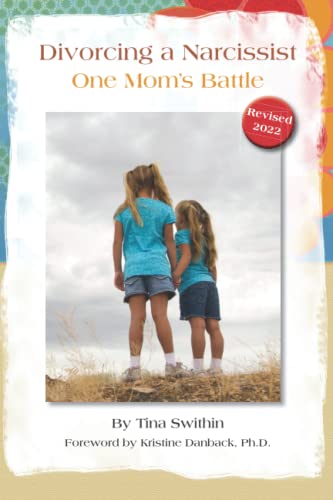
Divorcing a Narcissist: One Mom's Battle
Tina Swithin
Memoir of a mother who prevailed as her own attorney in a 10-year high-conflict custody battle.
As an Amazon Associate, Clarity House Press earns from qualifying purchases. Your price is never affected.
Found this helpful?
Share it with someone who might need it.
About the Author

Clarity House Press
Editorial Team
The editorial team at Clarity House Press curates and publishes evidence-based content on narcissistic abuse recovery, high-conflict divorce, and healing. Our content is informed by research, survivor experiences, and established trauma-informed approaches.
View all posts by Clarity House Press →Published by Clarity House Press Editorial Team