Please read our important disclaimers before using this content
You finally left. You're safe. You're building a new life.
So why do you feel like you're drowning in sadness?
Everyone expects you to be relieved. Happy. Free. And you are those things—sometimes. But you're also grieving in ways you didn't expect and can't quite explain.
You're not mourning the narcissist. You know who they really are now.
You're mourning the person you thought they were. The life you thought you'd have. The version of yourself you lost. The future that died.
This is the grief no one talks about when you leave narcissistic abuse. And it's one of the hardest parts of recovery. For a broader view of what this journey looks like, see what no one tells you about leaving a narcissist.
What You're Actually Grieving
1. The Person You Thought They Were
You didn't fall in love with a monster. You fell in love with a carefully constructed facade—the charming, attentive, soul-mate version they presented during the love-bombing phase.
That person felt real. The connection felt real. The promises felt real.
Now you know: That person never existed. It was a mask. A performance. A baited trap.
But your brain doesn't process it that way. Your heart attached to the mask, not the person underneath. And now you're grieving someone who never actually existed while simultaneously trying to reconcile that with the abuse you endured.
It's disorienting. It feels like they died, but they're still walking around. Except the "they" who died was never real in the first place.
2. The Future You Planned
You had a vision: The marriage that would last forever. Growing old together. Grandchildren. The house you'd renovate. Retirement plans. Inside jokes in your 70s.
Or if you're younger: Building a life together. Traveling. Creating a family. Becoming the couple who makes it.
Those futures are gone.
Not because relationships end—relationships end all the time. But because the entire foundation was false. Every plan was built on quicksand.
You're not just adjusting expectations. You're watching an entire imagined future collapse.
3. The Family That Won't Exist
If you have kids with them, you're grieving the family unit you wanted to provide. The co-parents who show up together at recitals. The happy family photos. The intact home.
If you don't have kids with them, you're grieving the family you thought you'd create together. The children who'll never exist. The life milestones you'll never share.
This grief is especially cruel because society bombards you with images of what you've lost: intact families, happy couples, children with two actively loving parents.
4. The Time You Lost
The years you spent trying to make it work. Waiting for them to change. Walking on eggshells. Shrinking yourself. Believing their lies.
You can't get those years back. And depending on when you left, those might be years you consider prime—your 20s, 30s, 40s. Years you could have been building a real relationship, advancing your career, developing yourself.
Time grief is particularly painful because it's irreversible.
5. The Person You Used to Be
Before them, you were different. More confident, maybe. More trusting. More joyful. More yourself.
The abuse changed you. Even as you heal, you won't be exactly who you were before. Some innocence is gone. Some trust is permanently damaged. Some scars remain.
You're grieving your former self—the version of you that died in the relationship.
Why This Grief Is Different
Normal grief has a clear object: The person died. The relationship ended. The job was lost.
This grief is ambiguous: The relationship ended, but the person is still around. The person you loved never existed, but the abuse was real. You're relieved it's over, but devastated by what you lost.
Ambiguous grief is harder to process because there's no clean narrative.1 You can't simply be sad about the loss because there's also relief, anger, confusion, and sometimes lingering trauma bonds creating occasional longing.
Plus, society doesn't validate this grief: People expect you to be happy you left. They don't understand why you're crying about losing someone abusive. They rush you: "You should be over it by now." "At least you're free now." "Aren't you better off?"2
Yes, you're better off. And you're still grieving. Both are true.
The Stages (But Not Really)
You've heard of the five stages of grief. Here's the truth: grief doesn't move in stages. It's not linear. It's a spiral.
You'll experience:
Denial: "Maybe they'll change." "Maybe I misunderstood." "Maybe it wasn't that bad."
Anger: At them for the abuse. At yourself for staying. At the situation. At everyone who didn't help or didn't see it.
Bargaining: "If only I'd..." "What if I'd tried harder?" "Maybe if they get therapy..."
Depression: Deep sadness. Exhaustion. Grief that feels bottomless.
Acceptance: Not that what happened was okay, but that it happened and you're moving forward anyway.
Here's the catch: You don't go through these once in order and then you're done. You cycle through them. You feel acceptance one day and denial the next. You're angry for months, then suddenly bargaining again.
This is normal.3 Research on prolonged grief disorder—now recognized in the DSM-5-TR under trauma and stressor-related disorders—confirms that grief following traumatic circumstances follows a non-linear path, particularly when trauma and attachment disruption are intertwined.4
The Triggers That Bring It Back
You'll be doing fine, and then:
- A song from your relationship comes on
- You see a couple doing something you used to do together
- A holiday or anniversary arrives
- Your child asks about why the family broke up
- You see them with their new supply, playing happy family
- You hit a milestone alone that you thought you'd share with a partner
The grief crashes back like a wave. You feel like you're starting over.
You're not starting over. You're integrating another layer.
Grief work isn't about eliminating the sadness. It's about learning to carry it while still moving forward.5 This is especially true for survivors of intimate partner violence, who experience higher rates of complex PTSD (39.50%) compared to standard PTSD (17.90%), reflecting the layered nature of trauma and loss in abusive relationships.6
How to Grieve What Never Was
1. Let yourself feel it
Don't rush it. Don't minimize it. Don't tell yourself you "shouldn't" be sad about losing someone abusive.
You're not sad about losing the abuser. You're sad about losing the illusion, the hopes, the future, the time.
Give yourself permission to grieve.
2. Name what you've lost
Make a list. What exactly are you grieving?
Write letters you'll never send:
- To the person you thought they were
- To your former self
- To the future you imagined
Naming the losses makes them real. Real losses deserve real grief.
3. Create closure rituals
Since you don't get the clean endings normal grief provides, create your own:
- Write what you wish you could say, then burn it
- Create a symbolic burial of the relationship (bury mementos, photos, symbols)
- Plant something new to represent your new beginning
- Mark the anniversary of leaving as a personal rebirth day
Rituals give your brain a sense of completion.
4. Separate the person from the mask
Remember: You loved the mask. The mask was designed to be lovable. Falling for it doesn't mean you're stupid. It means they're skilled at deception.
Grieve the loss of the mask. It's okay to miss what you thought you had.
Just remind yourself: It wasn't real. What's real is what they actually did.
5. Grieve your former self with compassion
The you-before-abuse is gone. But the you-after-abuse is wiser, stronger, more discerning.
You lost innocence. You gained insight.
You lost time. You gained clarity about what you won't tolerate.
Grieve what you lost. Honor what you gained.
6. Find grief-literate support
Not everyone will understand this grief. Find people who do:
- Therapist specializing in trauma and abuse recovery7
- Support groups for narcissistic abuse survivors
- Friends who "get it" and won't rush you
Avoid people who:
- Tell you to "just move on"
- Minimize what you're feeling
- Compare your grief to "normal" breakups
- Suggest you're "dwelling" or "stuck"
7. Set boundaries with hope
Be careful with future-tripping. Don't rush into "I'll never find love again" or "I'll never trust anyone."
Right now, you're grieving. That's the task.
The future will unfold. You don't have to decide today what your entire life will look like.
Just grieve today's losses. Tomorrow's possibilities can wait.
What Healing Looks Like
You won't wake up one day and suddenly be "over it." Grief doesn't work that way.
Healing looks like:
- The waves of grief getting farther apart
- The intensity lessening over time
- Being able to think about the relationship without spiraling
- Feeling hope sometimes, even while still sad
- Redirecting energy toward your present life more often
- The grief becoming one thread in your story, not the whole tapestry
Understanding realistic recovery timelines can help set expectations for how long this process takes.
You're not trying to eliminate the grief. You're learning to live a full life that also includes grief about what you lost.
Both can coexist: Grief about the past. Hope about the future.
Your Next Steps
-
Name your losses - What specifically are you grieving? Write them down.
-
Give yourself permission - You're allowed to grieve even though you're also relieved. Both are valid.
-
Find ritual - What symbolic action could help you mark this ending?
-
Seek grief-literate support - Find people who understand ambiguous grief
-
Be patient - Grief has its own timeline. Yours is yours.
The grief you feel is proof that you hoped. That you loved. That you believed in something.
Those are beautiful qualities, even though they were exploited.
You're not grieving what was. It wasn't what you thought.
You're grieving what could have been if they'd been who they pretended to be. If they'd been capable of the love you deserved. If the future you imagined had been possible.
That grief is real. It deserves space. It deserves tenderness.
Grieve what you lost. But don't let it obscure what you've found: Freedom. Truth. Yourself.
You're still here. You survived. And eventually, the grief will share space with something else.
Not happiness, necessarily. Not yet.
But peace. Eventually, peace.
Resources
Finding Grief and Trauma Therapy:
- Psychology Today - Therapists - Find grief and trauma specialists
- SAMHSA Treatment Locator - Find specialized trauma treatment providers
- GoodTherapy - Search for grief-informed therapists
- IFS Institute - Find Internal Family Systems practitioners
Crisis Support and Resources:
- 988 Suicide & Crisis Lifeline - Call or text 988 for crisis support (24/7)
- Crisis Text Line - Text HOME to 741741 for crisis counseling
- National Domestic Violence Hotline - 1-800-799-7233 (SAFE) for safety planning
- RAINN National Sexual Assault Hotline - 1-800-656-4673 for sexual assault support
References
- Boss, P. (1999). Ambiguous Loss: Learning to Live with Unresolved Grief. Harvard University Press. Research on ambiguous loss demonstrates that uncertainty about the nature of loss creates particular psychological challenges that differentiate it from conventional grief. PubMed: 10521908 ↩
- Doka, K. J. (1989). Disenfranchised Grief: Recognizing Hidden Sorrow. Lexington Books. Disenfranchised grief refers to losses that are not openly acknowledged, socially validated, or publicly mourned—a common experience for survivors of psychological abuse whose grief is often minimized by others. ↩
- Shear, M. K., Reynolds, C. F., Simon, N. M., Zisook, S., Wang, Y., Mauro, C., Duan, N., Lebowitz, B., & Skritskaya, N. (2016). Optimizing Treatment of Complicated Grief: A Randomized Clinical Trial. JAMA Psychiatry, 73(7), 685-694. PubMed: 27276373 ↩
- American Psychiatric Association. (2022). Prolonged Grief Disorder. DSM-5-TR. Prolonged grief disorder was added to the DSM-5-TR in 2022 under trauma and stressor-related disorders, recognizing that persistent grief following loss—particularly traumatic loss—represents a distinct clinical condition requiring trauma-informed intervention. Psychiatry.org ↩
- Rynearson, E. K. (2012). The Narrative Dynamics of Grief in Homicide. Omega: Journal of Death and Dying, 65(3), 239-254. Research on traumatic bereavement demonstrates that the complex synergy of trauma and grief requires integrated treatment approaches that address both the loss and the traumatic circumstances surrounding it. PMC: 3637930 ↩
- Frost, R., Hyland, P., Shevlin, M., & Murphy, J. (2021). Complex PTSD in survivors of intimate partner violence: Risk factors related to symptoms and diagnoses. European Journal of Psychotraumatology, 12(1). doi: 10.1080/20008198.2021.2011108. This study found significantly higher rates of complex PTSD (39.50%) compared to PTSD (17.90%) among women survivors of intimate partner violence, with low resilience and maladaptive emotion regulation strategies as key risk factors. PMC: 8682852 ↩
- Reeves, E. (2024). Trauma-Informed Therapy. In StatPearls [Internet]. Treasure Island (FL): StatPearls Publishing. Trauma-informed therapy prioritizes understanding the root causes of distress and creating safe, supportive environments for healing, specifically addressing conditions including PTSD, prolonged grief disorder, and adjustment disorders following traumatic experiences. NCBI Bookshelf: NBK604200 ↩
Recommended Reading
From Clarity House Press — plus trusted books for deeper understanding

Surviving the Storm: When the Court Takes Your Children
Clarity House Press
For fathers in active high-conflict custody battles. Understand your CPTSD symptoms, begin stabilization, and build foundation for healing. 17 chapters covering recognition, symptoms, and the healing path.

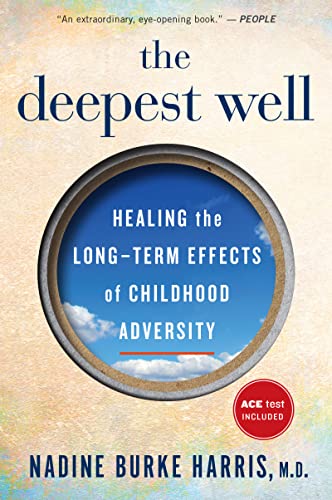
The Deepest Well
Nadine Burke Harris, M.D.
A pediatrician's clear explanation of how adverse childhood experiences affect lifelong health — and what recovery can look like.

Polyvagal Exercises for Safety and Connection
Deb Dana, LCSW
50 client-centered practices for regulating the autonomic nervous system.
As an Amazon Associate, Clarity House Press earns from qualifying purchases. Your price is never affected.
Found this helpful?
Share it with someone who might need it.
About the Author

Clarity House Press
Editorial Team
The editorial team at Clarity House Press curates and publishes evidence-based content on narcissistic abuse recovery, high-conflict divorce, and healing. Our content is informed by research, survivor experiences, and established trauma-informed approaches.
View all posts by Clarity House Press →Published by Clarity House Press Editorial Team