Please read our important disclaimers before using this content
You stand in the grocery store staring at two brands of pasta sauce for fifteen minutes, paralyzed.
It's pasta sauce. It doesn't matter. But you can't decide.
Because for years, every decision you made was wrong. Every choice was criticized. Every preference was invalidated. Every time you trusted your judgment, you were told—explicitly or implicitly—that you were stupid, oversensitive, irrational, or incompetent.
So now you can't pick pasta sauce without having an existential crisis.
This is what happens when someone systematically dismantles your ability to trust yourself. This erosion of judgment is a classic feature of gaslighting, one of the most common manipulation tactics in narcissistic relationships.
How They Broke Your Decision-Making
It wasn't one big moment. It was thousands of tiny cuts. Research on psychological abuse1 documents how coercive control systematically undermines victims' autonomy and decision-making capacity:
They made you ask permission for normal decisions. What to wear. What to eat. Whether to see friends. Who to talk to. When to speak. You learned your autonomy was conditional.
They criticized every choice you made. The restaurant you picked was too expensive/too cheap/too far. The gift you bought was thoughtless. The route you drove was inefficient. Nothing you chose was right.
They changed their position so you were always wrong. You asked for input, they said they didn't care. You decided, they were furious you didn't consult them. You consulted them, they were angry you couldn't make decisions yourself.
They reframed good decisions as proof of your incompetence. You negotiated a raise at work? "You probably got taken advantage of." You chose a reliable car? "You're so boring and predictable." Every win was reframed as evidence you were still failing.
They made you doubt your memory of your own decisions. "I never said that." "You're remembering wrong." "That's not what happened." You started questioning whether you actually decided something or imagined it.
Over time, you learned: Trusting your judgment leads to punishment. Better to defer, ask permission, or simply freeze.
The Aftermath: Decision Paralysis
Now they're gone. You're free to make your own choices.
Except you can't.
Small decisions feel enormous. Pasta sauce. Paint colors. What to watch on Netflix. You research obsessively, ask friends for input, change your mind seventeen times, then feel stupid for caring so much.
You're terrified of making the wrong choice. Not because of consequences—pasta sauce isn't life or death. Because being wrong means you're incompetent, stupid, and incapable. That's what you learned.
You've lost access to your preferences. Someone asks what you want for dinner and you genuinely don't know. You've spent so long prioritizing someone else's preferences that yours disappeared.
You constantly second-guess yourself. You make a decision, then immediately wonder if it's wrong. You feel confident for ten seconds, then talk yourself out of it. You decide, then undecide, then decide again.
You need external validation for everything. You can't buy a shirt without texting a friend a photo first. You can't choose a restaurant without checking reviews for an hour. You need someone else to confirm your choice is acceptable.
Big decisions are impossible. Career change? Moving? Ending a relationship? You can't. The stakes are too high and your decision-making apparatus is broken.
You're free, but you're still trapped in the belief that your judgment is fundamentally flawed.
Why "Just Trust Yourself" Doesn't Work
Well-meaning people tell you: "Just trust your gut!" "Do what feels right!" "You know what you want!"
But you don't. Or you think you do, then immediately doubt it. Or you've learned that what "feels right" to you is usually wrong.
You can't think your way out of this. You can't logic yourself into trusting yourself.
Research on self-efficacy2 shows you have to rebuild your decision-making capacity through practice, evidence, and small wins.
The Practice: Start Catastrophically Small
You're not starting with big decisions. You're starting with decisions so small they feel stupid.
Day 1: Choose your breakfast. Don't ask anyone. Don't research optimal breakfast nutrition. Don't spiral into whether cereal counts as a meal. Eggs or toast? Pick one. Eat it. Notice: the world didn't end.
Day 2: Pick your clothes. Not for a job interview. For a random Tuesday. Blue shirt or gray? Choose. Wear it. You survived.
Day 3: Choose the route you drive. Highway or side streets? Pick. Drive it. Maybe it was slower. Maybe it was faster. Either way, you made a choice and executed it.
Day 4: Pick what to watch. You're not choosing the one perfect show that will optimize your relaxation and entertainment value. You're picking something to watch for thirty minutes. Choose. Watch. Done.
The point isn't to make the right choice. The point is to practice making choices and surviving the outcome.
Building Evidence That You're Competent
Your belief in your incompetence is based on years of evidence (someone telling you that you were incompetent). You need to build counter-evidence.
Keep a "Decisions I Made" list. Not just good decisions. All decisions. "Chose oatmeal for breakfast." "Picked the grocery store on 5th instead of the one on Main." "Decided to go to bed at 10pm."
Track outcomes neutrally. "Oatmeal was fine." "Grocery store was more crowded than usual but had what I needed." "Went to bed at 10, felt rested in morning."
Notice that most decisions are neutral or fine. Not amazing. Not disasters. Just... fine. Most decisions don't matter that much, and the ones you make work out okay.
Celebrate non-disasters. You picked a restaurant and it was mediocre? You still made a decision, went to the restaurant, ate food, and survived. That's a win.
Recognize that "wrong" decisions aren't catastrophes. You drove the slow route. You wore the shirt that was too cold for the weather. You picked the movie that was boring. These are not moral failures. They're information.
Over time, you build evidence: I make decisions, and I'm generally fine afterward. This process is closely related to rebuilding trust in yourself after narcissistic abuse.
Reclaiming Your Preferences
You need to reconnect with what you actually want, which is different from what's optimal, what others want, or what you think you should want.
Practice noticing preferences without judging them. "I like this song." Don't evaluate whether it's good music or whether you should like it. Just notice that you like it.
Experiment with small preferences. Try different coffee orders. Sample different routes to work. Notice which one you prefer. You're not committing forever. You're gathering data about yourself.
Separate "I prefer X" from "X is objectively better." You can prefer vanilla even if chocolate is statistically more popular. Your preference is valid independent of whether it's the "best" choice.
Notice when you're performing preferences. Are you saying you like something because you actually like it, or because you think you should? No judgment—just awareness.
Give yourself permission to change your mind. You preferred coffee for years, now you like tea. That's allowed. Preferences evolve. You don't have to defend why you changed.
The Permission Slip You're Waiting For
You want someone to tell you it's okay to trust yourself. You want permission to make decisions without consulting others. You want validation that your judgment is sound.
Here it is: Your judgment is sufficient. You are allowed to make decisions. You don't need permission to trust yourself.
Not because you'll always be right. Because being wrong about pasta sauce or paint colors or what to watch on Netflix does not mean you're incompetent.
You were trained to believe that mistakes = incompetence. That's the lie you're unlearning.
Mistakes = information. Mistakes = learning. Mistakes = being human.
You're allowed to make them.
Bigger Decisions: When the Stakes Actually Matter
Once you've rebuilt baseline decision-making capacity with small choices, you can approach bigger ones.
Career decisions. Relationship decisions. Where to live. Whether to go back to school.
The approach is the same, just with more scaffolding:
Gather information. Not obsessively. But enough to make an informed choice.
Identify your priorities. What matters most to you in this decision? Not what should matter. What actually matters to you.
Make a choice. Based on the information you have and the priorities you've identified.
Accept that you can't know the outcome in advance. Every decision involves uncertainty. That's not a flaw in your decision-making. That's reality.
Trust that you can handle whatever happens. You might choose wrong. You might need to course-correct later. That's not evidence of incompetence—it's evidence of being human and adaptable.
Stop waiting for perfect clarity. You'll never have complete information. You'll never be 100% certain. Decide with what you have.
Your Next Steps
Make one decision today without asking anyone. Breakfast. What to wear. Which coffee shop. Small. Decide. Execute.
Start your decision log. Just one week. Write down decisions you make and note outcomes. Build evidence of your competence.
Notice when you're asking for permission vs. seeking input. Asking a friend "which dress do you like?" for fun = input. Asking because you can't make the choice without validation = permission-seeking. Start noticing the difference.
Practice making reversible decisions quickly. Most decisions aren't permanent. Pick the restaurant. If you hate it, you don't have to go back. You're not choosing your Forever Restaurant. You're choosing where to eat tonight.
Be patient with yourself. You're relearning a skill that was systematically dismantled. Neuroplasticity research3 confirms the brain can rewire with consistent practice. It takes time. You're not broken. You're healing. For a broader map of what recovery looks like over time, see our guide to realistic recovery timelines.
You were taught that your judgment is flawed, your preferences are invalid, and your decisions are suspect.
That was a lie.
Your judgment is intact. Your preferences are valid. Your decisions are legitimate.
You're relearning what you always knew before someone convinced you to doubt it:
You are capable of choosing for yourself.
Starting with the pasta sauce.
Resources
Finding Trauma-Informed Therapy:
- Psychology Today - Therapists - Find therapists specializing in coercive control
- GoodTherapy - Search for trauma and abuse specialists
- IFS Institute - Find Internal Family Systems practitioners
- EMDR International Association - Find EMDR therapists
Crisis Support and Resources:
- National Domestic Violence Hotline - 1-800-799-7233 (SAFE) for safety planning
- 988 Suicide & Crisis Lifeline - Call or text 988 for crisis support (24/7)
- Crisis Text Line - Text HOME to 741741 for crisis counseling
- Love Is Respect - Text LOVEIS to 22522 for relationship support
References
- Stark, E. (2010). Do violent acts equal coercive control? Journal of Child Custody, 7(3), 164-177. https://pubmed.ncbi.nlm.nih.gov/28028314/ ↩
- Cieslak, Benight, & Caden (2008). Coping self-efficacy mediates the effects of negative cognitions on posttraumatic distress.. Behaviour research and therapy. https://pmc.ncbi.nlm.nih.gov/articles/PMC2531142/ ↩
- Cramer, S. C. (2015). Repairing the human brain after stroke: I. Mechanisms of spontaneous recovery. Annals of Neurology, 63(3), 272-287. https://pmc.ncbi.nlm.nih.gov/articles/PMC5836039/ ↩
- Johnson, M. P., & Leone, J. M. (2005). The differential effects of intimate terrorism and situational couple violence: Findings from the National Violence Against Women Survey. Journal of Family Issues, 26(3), 322-349. https://pmc.ncbi.nlm.nih.gov/articles/PMC6291212/ ↩
- Bates, E. A., Schultz, I., & Wilson, J. (2021). The trauma and mental health impacts of coercive control: A systematic review and meta-analysis. Trauma, Violence & Abuse, 23(4), 1327-1345. https://pmc.ncbi.nlm.nih.gov/articles/PMC10666508/ ↩
- Wood, L., Barsaglini, A., & Conley, A. (2023). Gaslighting and memory: The effects of partner-led challenges on recall and self-perception. Psychological Reports, 126(2), 714-736. https://pubmed.ncbi.nlm.nih.gov/40673655/ ↩
- DePrince, A. P., & Chu, A. T. (2008). Coping self-efficacy mediates the effects of negative cognitions on posttraumatic distress. Behaviour Research and Therapy, 46(9), 1017-1023. https://pmc.ncbi.nlm.nih.gov/articles/PMC2531142/ ↩
- Lausi, Burrai, Baldi, Ferlazzo, & Ferracuti (2023). Decision-Making and Abuse, What Relationship in Victims of Violence?. International journal of environmental research and public health. https://pmc.ncbi.nlm.nih.gov/articles/PMC10218381/ ↩
- Stewart, MacMillan, & Kimber (2021). Recognizing and Responding to Intimate Partner Violence: An Update.. Canadian journal of psychiatry. Revue canadienne de psychiatrie. https://pmc.ncbi.nlm.nih.gov/articles/PMC7890590/ ↩
- Cramer, S. C., & Riley, J. D. (2008). Neuroplasticity and brain repair. Current Biology, 22(17), R766-R771. https://pmc.ncbi.nlm.nih.gov/articles/PMC10598326/ ↩
Recommended Reading
From Clarity House Press — plus trusted books for deeper understanding


Surviving the Storm: When the Court Takes Your Children
Clarity House Press
For fathers in active high-conflict custody battles. Understand your CPTSD symptoms, begin stabilization, and build foundation for healing. 17 chapters covering recognition, symptoms, and the healing path.
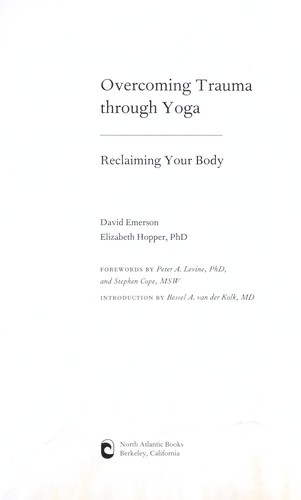
Overcoming Trauma through Yoga
David Emerson & Elizabeth Hopper, PhD
Evidence-based trauma-sensitive yoga program developed at the Trauma Center with Bessel van der Kolk.
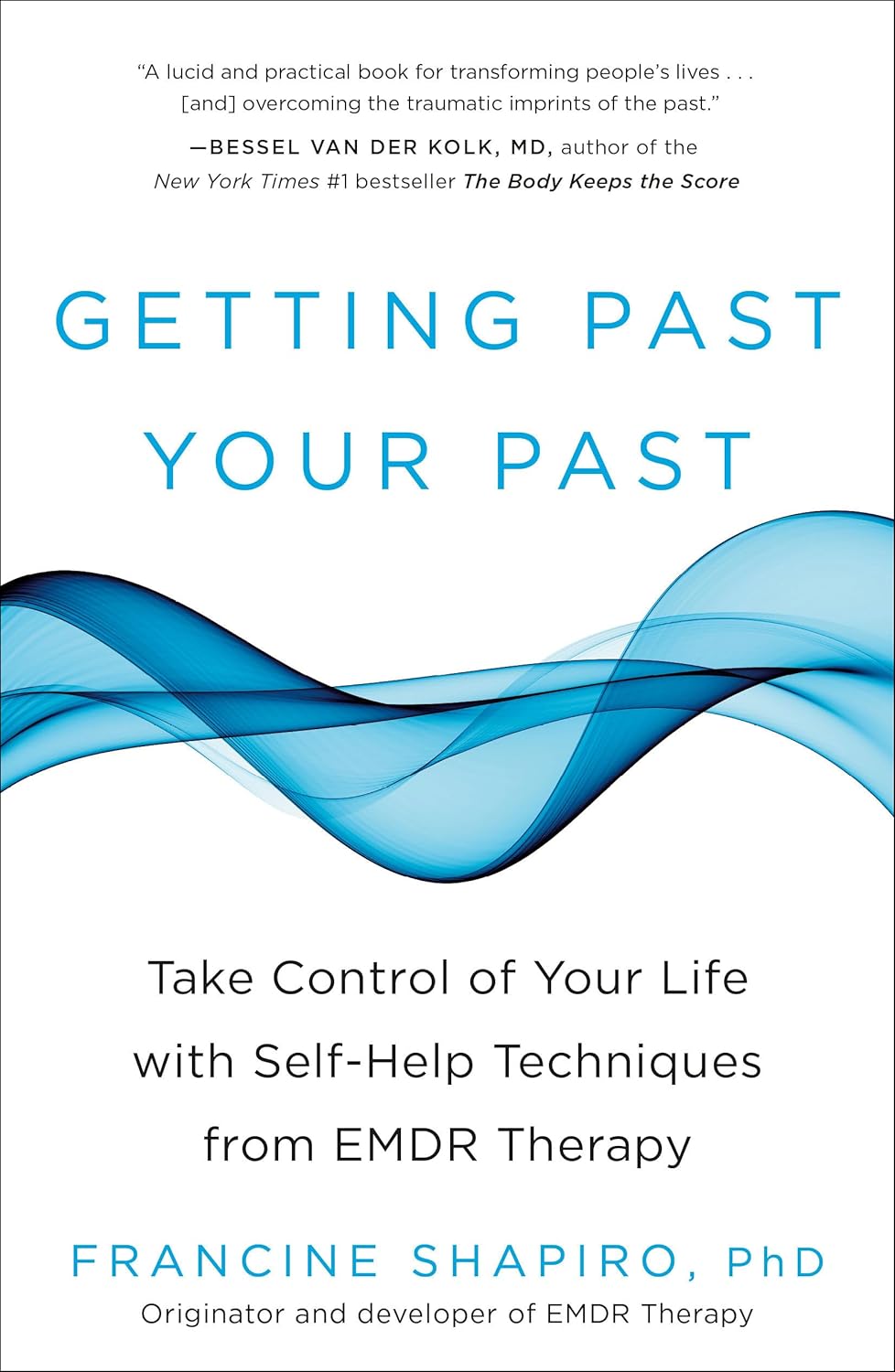
Getting Past Your Past
Francine Shapiro, PhD
Self-help techniques based on EMDR therapy to take control of your life and overcome trauma.
As an Amazon Associate, Clarity House Press earns from qualifying purchases. Your price is never affected.
Found this helpful?
Share it with someone who might need it.
About the Author

Clarity House Press
Editorial Team
The editorial team at Clarity House Press curates and publishes evidence-based content on narcissistic abuse recovery, high-conflict divorce, and healing. Our content is informed by research, survivor experiences, and established trauma-informed approaches.
View all posts by Clarity House Press →Published by Clarity House Press Editorial Team