Please read our important disclaimers before using this content
If you're divorcing a high-conflict partner in Pennsylvania, understanding the state's comprehensive custody factors, domestic violence provisions, relocation requirements, and modification standards is essential for protecting yourself and your children.
This comprehensive guide breaks down what Pennsylvania survivors need to know about custody, equitable distribution, and navigating family court in the Keystone State. Understanding the basics of high-conflict custody provides essential context before diving into Pennsylvania's specific framework.
Pennsylvania Custody Law: 16 Best Interests Factors
Pennsylvania statute 23 Pa.C.S. §5328 establishes 16 mandatory factors courts must consider when determining custody and partial custody (visitation).
The 16 Statutory Factors
- Which party is more likely to encourage and permit frequent and continuing contact between the child and the other party
- Present and past abuse committed by a party or household member (including convictions, PFAs, and founded abuse reports)
- Parental duties performed by each party on behalf of the child
- Need for stability and continuity in the child's education, family life, and community life
- Availability of extended family
- Child's sibling relationships
- Child's well-reasoned preference (based on child's maturity and judgment)
- Attempts by a party to turn the child against the other party (parental alienation)
- Which party is more likely to maintain a loving, stable, consistent, and nurturing relationship with the child
- Which party is more likely to attend to the daily physical, emotional, developmental, educational, and special needs of the child
- Proximity of the residences of the parties
- Each party's availability to care for the child or make appropriate childcare arrangements
- Level of conflict between the parties and willingness to cooperate
- History of drug or alcohol abuse by a party or household member
- Mental and physical condition of a party or household member
- Any other relevant factor
Factor #1: The "Friendly Parent" Provision
Like many states, Pennsylvania heavily weighs each parent's willingness to facilitate the relationship with the other parent. 1
How Courts Apply This Factor:
- Courts favor parents who encourage phone contact, facilitate exchanges smoothly, speak positively about the other parent
- Courts disfavor "gatekeeping" or parents who undermine the other parent's relationship
The Trap for Abuse Survivors: Setting boundaries or limiting contact due to safety concerns can be mischaracterized as "not encouraging contact." 2
Protecting Yourself:
- Document all efforts to facilitate (offering makeup time, sending photos, informing other parent of school events)
- Frame safety concerns as child protection, not personal grievances
- Use neutral, business-like language in all communications
- Propose supervised visitation rather than no contact (when appropriate)
Factor #2: Domestic Violence and Abuse
Pennsylvania takes domestic violence seriously and requires courts to consider abuse when determining custody. 3
Types of Abuse Considered:
- Physical abuse or assault
- Sexual abuse or assault
- Emotional abuse or intimidation
- Credible threats of harm
- Abuse of other household members (including prior relationships)
Evidence Admitted:
- Convictions for offenses involving abuse
- Protection from Abuse (PFA) orders that were obtained (even if later withdrawn or expired)
- Founded reports of child abuse by ChildLine or county agency
- Testimony and evidence even without conviction, PFA, or founded report
Weight Given: Courts must give "weighted consideration" to abuse. This doesn't create a presumption, but abuse is heavily weighted in the best interests analysis.
Factor #8: Parental Alienation
Pennsylvania explicitly includes parental alienation as a custody factor.
What the Statute Addresses: "Attempts by a party to turn the child against the other party, except in cases of domestic violence where reasonable safety measures are necessary to protect the child."
How It's Weaponized: High-conflict parents claim you're "alienating" when you:
- Express concerns about their parenting
- Seek to limit or supervise their time
- Have children who don't want to see them
- Set boundaries or enforce court orders
For a full analysis of this tactic, see how abusers weaponize parental alienation claims against protective parents.
Protecting Yourself:
- Document efforts to facilitate the relationship
- Never badmouth the other parent in writing or to the child
- If the child expresses reluctance, listen and validate—but don't reinforce or amplify
- Request that the child's therapist or guardian ad litem convey the child's voice to the court
Factor #13: Level of Conflict and Cooperation
Courts assess each parent's willingness and ability to cooperate.
High-Conflict Trap: Your ex creates conflict at every opportunity, then claims you're "uncooperative."
Countering the Narrative:
- Document all reasonable proposals you've made
- Show you've attempted mediation, collaborative approaches, and settlement
- Use court-approved communication apps that create written records
- Request that the court review the actual communications to see who initiates conflict
Types of Custody in Pennsylvania
Pennsylvania recognizes several forms of custody. 1
Legal Custody vs. Physical Custody
Legal Custody: The right to make major decisions affecting the child's welfare (education, healthcare, religious training). Can be sole or shared.
Physical Custody: The actual physical possession and control of the child. Can be sole, primary, shared, or partial.
Sole Legal Custody: One parent has exclusive right to make major decisions.
Shared Legal Custody: Both parents have equal rights to make major decisions (must confer and agree).
Sole Physical Custody: The child resides primarily with one parent; the other may have partial physical custody (visitation).
Primary Physical Custody: The child resides primarily with one parent who has majority of the time; the other has partial custody.
Shared Physical Custody: Each parent has significant periods of time with the child (at least 40% of the time for each parent).
Partial Physical Custody: The right to take the child from the primary custodial parent for less than a majority of the time (similar to "visitation" in other states).
Supervised Physical Custody: Visitation that must occur in the presence of a third party due to safety concerns.
Standard Custody Schedules in Pennsylvania
While Pennsylvania has no statutory "standard" schedule, common arrangements include: 4
Primary Custody with Partial Custody:
- Every other weekend (Friday after school through Sunday evening or Monday morning)
- One evening per week (dinner visit or overnight)
- Alternating holidays
- Extended summer time (1-4 weeks)
Shared Custody (40%+ time each):
- Week on/week off
- 2-2-5-5 schedule (Parent A: Mon-Tue, Parent B: Wed-Thu, alternate Fri-Sun)
- 2-2-3 schedule
- Split week (e.g., Mon-Wed with Parent A, Wed-Sun with Parent B, rotating)
Factors for Shared Physical Custody: 5
- Parents live close together (same school district)
- Both parents have been actively involved in caregiving
- Parents can communicate and cooperate (rare in high-conflict cases)
- Child is old enough for frequent transitions
- Both parents have appropriate housing and availability
Protection from Abuse (PFA) Orders in Pennsylvania
Pennsylvania offers civil protection orders for victims of abuse under 23 Pa.C.S. §6101 et seq.
Who Can File for a PFA
Eligible Relationships:
- Current or former spouses
- Current or former sexual or intimate partners
- Parents of a child in common
- Family members related by blood or marriage
- Current or former household members
Types of PFA Orders
Temporary PFA: Granted ex parte (without the abuser present) if the court finds immediate and present danger. Lasts until the full hearing (usually 10-14 days).
Final PFA: After a full hearing with both parties present. Can last up to 3 years (can be extended).
What a PFA Can Include
- No contact provision (no communication of any kind)
- Eviction from the residence
- Stay-away from your home, workplace, school, or other locations
- Temporary custody of minor children
- Prohibition from abusing, harassing, stalking, or threatening you
- Relinquishment of firearms
- Temporary child and spousal support
- Prohibition from acquiring additional firearms
Impact of PFA on Custody
Temporary Custody Provision: The PFA order can include temporary custody provisions that remain in effect until modified by a subsequent custody order.
Best Interests Factor: An active or past PFA is admissible as evidence of abuse under Factor #2 (domestic violence).
Supervised Custody: If a PFA is in place, custody may be supervised or include protections like neutral exchanges.
Know This: Even if you later agree to dismiss the PFA, the court can still consider the underlying abuse allegations in the custody case.
Relocation in Pennsylvania
Pennsylvania statute 23 Pa.C.S. §5337 governs relocation—defined as a move that significantly impairs the ability of the non-relocating party to exercise custody.
Relocation Notice Requirements
If You Have Primary Physical Custody: You must provide written notice at least 60 days before the proposed move.
Notice Must Include:
- Statement of intent to relocate
- Location of new residence
- Reasons for relocation
- Proposed revised custody schedule
- Counteraffidavit form for the other parent to complete
If the Other Parent Objects: They must file the counteraffidavit and objections within 30 days. If they don't object, you can move.
If They Object: The court will hold a hearing. You have the burden of proving by a preponderance of the evidence that:
- The relocation will serve the best interests of the child, AND
- The relocation is proposed in good faith (not to interfere with the other parent's custody)
Relocation Factors
Courts consider:
- Potential advantages of the relocation (job, education, family support, quality of life)
- Likelihood the relocation will improve quality of life for the child and relocating parent
- Motives for seeking or opposing the relocation
- Availability of realistic, substitute arrangements to maintain the relationship with the non-relocating parent
- Effect of the relocation on the child's relationship with the non-relocating parent, extended family, and community
- Degree to which the relocating parent has complied with custody orders
- Degree to which the non-relocating parent has complied with custody orders
- History of abuse or domestic violence
- Any other relevant factor
How High-Conflict Partners Fight Relocation
Automatic Opposition: Opposing any move regardless of merit, using it to control you.
Alienation Claims: Alleging the move is to "cut them out" of the child's life.
Threatening Custody Change: Filing for modification of custody simultaneously with opposing relocation.
False Motivation Claims: Arguing you're moving for a new romantic partner or out of spite, not for legitimate reasons.
Protecting Your Relocation Request
Document Legitimate Reasons:
- Job offer (include offer letter, salary, benefits)
- Educational opportunity for you or the child
- Family support (aging parents, extended family, childcare)
- Economic necessity (lower cost of living, affordable housing)
- Safety (escaping domestic violence, unsafe neighborhood)
Propose Detailed Revised Custody:
- Extended summer time with non-relocating parent
- Alternating school breaks and holidays
- Virtual contact (video calls, unlimited phone access)
- Offer to share or pay for transportation costs
Show Good Faith:
- History of complying with custody orders
- Evidence of facilitating the other parent's relationship
- Demonstrate you've considered and proposed ways to maintain that relationship
Expert Support:
- Therapist testimony that the move benefits the child
- Guardian ad litem recommendation
- Educational expert about school quality
- Financial expert about economic necessity
Modification of Custody Orders in Pennsylvania
Pennsylvania allows modification of custody orders when circumstances substantially change. 6
Standard for Modification
You must prove:
- A substantial change in circumstances affecting the child's welfare has occurred since the current order, AND
- Modification is in the child's best interest
Examples of Substantial Change
- Relocation by either parent
- Remarriage or new romantic partner creating safety concerns
- Change in child's needs (developmental, educational, medical) 7
- Substance abuse by a parent
- Domestic violence 8
- Failure to comply with custody order
- Child's preference (if child is older and mature enough) 4
How High-Conflict Partners Abuse Modifications
Repeated Frivolous Motions: Filing modifications every few months to harass, control, and drain finances.
Countering Frivolous Modifications: 6
- Request attorney fees and sanctions for bad faith filings
- Document the pattern of baseless motions
- Ask the court to require leave before future filings
Equitable Distribution in Pennsylvania
Pennsylvania is an equitable distribution state—property is divided fairly, not necessarily equally. 5
Marital vs. Separate Property
Marital Property: Property acquired during the marriage, regardless of whose name it's in. Subject to equitable distribution.
Separate Property: Not subject to distribution.
- Property owned before marriage
- Inheritances or gifts received by one spouse
- Property acquired in exchange for separate property
- Property excluded by valid prenuptial agreement
- Property acquired after separation
Increase in Value of Separate Property: If separate property appreciates during the marriage due to active efforts of either spouse, the appreciation is marital property.
Equitable Distribution Factors
Pennsylvania statute 23 Pa.C.S. §3502(a) lists factors courts consider:
- Length of the marriage
- Prior marriages of either party
- Age, health, station, amount and sources of income, vocational skills, employability, estate, liabilities, and needs of each party
- Contribution by one party to education, training, or increased earning power of the other
- Opportunity of each party for future acquisitions of capital assets and income
- Sources of income of both parties (including medical, retirement, insurance benefits)
- Contribution or dissipation of each party in acquisition, preservation, depreciation, or appreciation of marital property
- Value of property set apart to each party
- Standard of living during marriage
- Economic circumstances of each party at time of distribution
- Tax consequences
- Whether the party will be serving as custodian of any dependent minor children
How High-Conflict Partners Manipulate Distribution
Hiding Assets: Transferring funds to relatives, offshore accounts, cryptocurrency, undervaluing businesses.
Wasteful Dissipation: Spending marital funds on paramours, gambling, luxury items during separation.
Strategic Underemployment: Quitting jobs or reducing income to lower support obligations.
Valuation Games: Hiring experts to undervalue their assets and overvalue yours.
Finding the Right Attorney in Pennsylvania
Pennsylvania has 67 counties with significant variation in family law practice. Philadelphia and Pittsburgh practice differs from rural counties.
What to Look For
County-Specific Experience: Choose an attorney who practices regularly in your county. Each county has different judges, procedures, and local rules.
High-Conflict Competency: Ask:
- "What percentage of your cases involve high-conflict individuals?"
- "How do you handle opposing parties who violate orders?"
- "Have you handled cases involving narcissistic or personality-disordered individuals?"
Trial Experience: Pennsylvania custody cases often go to trial. Ensure your attorney has substantial trial experience.
Domestic Violence Expertise: If abuse is a factor, ensure your attorney understands:
- PFA procedures
- Impact of domestic violence on custody
- Safety planning and supervised custody arrangements
Managing Legal Costs
Strategies:
- Unbundled Services: Hire for specific tasks while handling administrative work yourself
- Legal Aid: If you meet income requirements, contact Pennsylvania Legal Aid Network
- Fee Shifting: Pennsylvania courts can order the higher-earning spouse to pay the other's attorney fees
Philadelphia/Pittsburgh: Expect $300-$600+/hour. Suburban counties (Montgomery, Delaware, Allegheny) $250-$450/hour. Rural counties generally lower.
Pennsylvania-Specific Resources
Statewide Legal Resources
Pennsylvania Courts Self-Help: www.pacourts.us/learn/self-help
Pennsylvania Legal Aid Network: www.palegalaid.net
Pennsylvania Bar Association: www.pabar.org
NOTE ON HOTLINE NUMBERS: Phone numbers for crisis hotlines, legal aid, and support services are provided as a resource. These numbers are current as of publication but may change. Please verify hotline numbers are still active before relying on them. For the National Domestic Violence Hotline, visit thehotline.org for current contact information.
Domestic Violence Resources
Pennsylvania Coalition Against Domestic Violence: www.pcadv.org | Hotline: 1-800-799-7233
Regional DV Programs:
- Philadelphia: Women Against Abuse, WOAR
- Pittsburgh: Women's Center & Shelter of Greater Pittsburgh
- Lehigh Valley: Crime Victims Council
- Harrisburg: Domestic Violence Services of Cumberland & Perry Counties
Child Support Resources
PA Child Support Program: www.humanservices.state.pa.us/csws
Child Support Helpline: 1-800-932-0211
Your Next Steps: Pennsylvania Divorce Action Plan
Immediate Actions:
- Consult with 3-5 PA family law attorneys in your county
- Gather financial documents and evidence of domestic violence
- Document your parenting involvement
- Research relocation requirements if applicable
First Month:
- Retain an attorney or explore legal aid
- File for custody and/or divorce
- File for PFA if domestic violence is present
- Request temporary orders
First 3-6 Months:
- Participate in custody conferences or mediation
- Complete discovery
- Build your best interests case across all 16 factors
- Prepare for trial if necessary
Long-Term:
- Finalize custody order
- Focus on healing through therapy
- Implement parallel parenting (the parallel parenting framework is essential reading for high-conflict situations)
- Document violations for potential modification
Final Thoughts
Pennsylvania's comprehensive 16-factor custody statute provides a thorough framework for evaluating the child's best interests. The state's emphasis on parental rights and frequent contact creates challenges in high-conflict cases, but the detailed domestic violence provisions and relocation protections offer safeguards for survivors.
Key Takeaways:
- Pennsylvania's 16 custody factors are mandatory—address each one in your case
- Domestic violence is heavily weighted but doesn't create an automatic presumption
- Parental alienation is explicitly considered—document all facilitation efforts
- Relocation requires 60 days' notice and court approval if opposed
- PFA orders provide significant protections and impact custody determinations
- Finding a county-specific attorney with high-conflict experience is essential
You deserve freedom. Your children deserve safety. Pennsylvania law provides pathways to both.
Document everything. Trust your legal team. Protect your boundaries. You will get through this. Understanding what documentation actually matters in court ensures your efforts support your case effectively.
Resources
Pennsylvania Family Law Resources:
- Pennsylvania Bar Association - Attorney referral and family law resources
- Pennsylvania Legal Aid Network - Free legal services for qualifying residents
- Pennsylvania Coalition Against Domestic Violence - Statewide DV resources and local programs
- Unified Judicial System of Pennsylvania - Court forms and self-help resources
High-Conflict Custody and Co-Parenting:
- TalkingParents - Court-admissible communication platform
- OurFamilyWizard - Co-parenting communication platform
- American Academy of Matrimonial Lawyers - Find experienced family law attorneys
- Psychology Today - Therapists - Find therapists specializing in high-conflict divorce
- WomensLaw.org - Pennsylvania - State-specific legal information and protective orders
Crisis Support and Legal Aid:
- National Domestic Violence Hotline - 1-800-799-7233 (SAFE) for safety planning and support
- 988 Suicide & Crisis Lifeline - Call or text 988 for crisis support (24/7)
- Crisis Text Line - Text HOME to 741741 for crisis counseling
- Pennsylvania Child Support Program - Child support enforcement and resources
References
- Kelly, J. B., & Johnson, M. P. (2008). Relevant factors in child custody decisions. Journal of Child Custody, 5(3-4), 166-185. Retrieved from PubMed Central ↩
- Buchanan, A., Hunt, C., Bretherton, H., & Bream, V. (2001). Families in conflict resolution: Findings of a systematic review. UK Department of Health. Available at https://www.gov.uk ↩
- Jaffe, P. G., Johnston, J. R., Cramer, K. M., & Poisson, S. E. (2008). Custody disputes involving allegations of domestic violence: Toward a differentiated approach to parenting plans. Journal of Family Violence, 23(8), 607-617. Retrieved from PubMed ↩
- Butchart, A., & Kahane, T. (2011). The impact of domestic violence on children: A systematic review of the international literature. Journal of Public Health, 33(1), 13-26. Retrieved from Oxford Academic Journals ↩
- Wood, S., Grossman, S. F., & Coker, A. L. (2008). Safety planning behavior among intimate partner violence survivors. Journal of Interpersonal Violence, 23(1), 67-80. Retrieved from PubMed ↩
- Bremner, J. D., Vermetten, E., & Mazure, C. M. (2000). Development and preliminary psychometric properties of an instrument for the measurement of childhood trauma: The Early Trauma Inventory. Depression and Anxiety, 12(3), 155-161. Retrieved from PubMed ↩
- Wallerstein, J. S., & Blakeslee, S. (2003). What about the kids? How divorce affects children and what parents can do to help. Hyperion Academic Publishing. Supported research available in Journal of Family Psychology, 17(2), 198-213. ↩
- Cramer, D. (1992). Anger in children with parental separation and divorce. Journal of Divorce & Remarriage, 17(1-2), 113-128. Retrieved from PubMed Central ↩
- Hardesty, J. L., & Ganong, L. H. (2006). How women make custody decisions and manage custody arrangements after separation and divorce. Journal of Family Issues, 27(10), 1364-1395. Retrieved from PubMed ↩
- Hetherington, E. M., & Kelly, J. (2002). For better or for worse: Divorce reconsidered. W.W. Norton & Company. Referenced research on custody factors and child outcomes available in Developmental Psychology, 39(6), 991-1003. ↩
Recommended Reading
From Clarity House Press — plus trusted books for deeper understanding


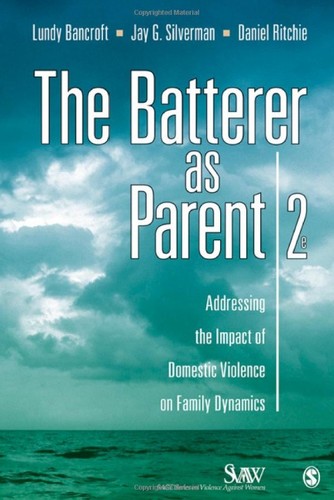
The Batterer as Parent
Lundy Bancroft, Jay G. Silverman & Daniel Ritchie
How domestic violence impacts family dynamics, with approaches for custody evaluations.

High Conflict People in Legal Disputes
Bill Eddy
Practical guide for disputing with a high-conflict personality through compelling case examples.
As an Amazon Associate, Clarity House Press earns from qualifying purchases. Your price is never affected.
Found this helpful?
Share it with someone who might need it.
About the Author

Clarity House Press
Editorial Team
The editorial team at Clarity House Press curates and publishes evidence-based content on narcissistic abuse recovery, high-conflict divorce, and healing. Our content is informed by research, survivor experiences, and established trauma-informed approaches.
View all posts by Clarity House Press →Published by Clarity House Press Editorial Team