Please read our important disclaimers before using this content
If you're reading this, you might be recognizing that your child has been functioning as your emotional support person, your household co-manager, or your confidant in ways that aren't age-appropriate. Or you might be realizing that your ex weaponized your child by making them responsible for adult emotional or practical needs.
Parentification—the role reversal where children take on parental responsibilities for their parents or siblings—is one of the most insidious forms of developmental harm because it often looks like maturity, helpfulness, or closeness. But underneath the "responsible child" exterior is a young person robbed of childhood, burdened with adult stress, and at risk for long-term mental health consequences. This harm is closely related to loyalty binds and how they damage children in high-conflict custody situations.
Understanding what parentification is, how to recognize it in your own children, what appropriate responsibilities look like by age, and how to reverse the damage through rebuilding parent-child dynamics and therapeutic support is essential—whether you're the protective parent trying to undo it or the recovering parent taking accountability for creating it.
What Is Parentification?
Parentification occurs when a child is given—or takes on—parental responsibilities that exceed their developmental capabilities. It's a form of childhood trauma that happens when parent-child roles reverse.1 Research shows that parentification is a global phenomenon affecting children across cultures and socioeconomic contexts, with significant implications for both immediate and long-term mental health.2
Two Types of Parentification
1. Instrumental Parentification
The child takes on practical, physical caregiving or household management:
- Cooking meals for family
- Managing younger siblings (bathing, feeding, bedtime)
- Household cleaning and maintenance
- Managing family finances or bills
- Translating for non-English-speaking parents
- Managing parents' medical appointments or medications
Age-appropriate responsibilities vs. parentification:
Age-appropriate: 10-year-old sets the table, clears dishes Parentification: 10-year-old plans meals, grocery shops, cooks dinner for family of five every night
Research distinguishes between "instrumental" role assignments (concrete functional tasks like child care, grocery shopping, cooking, and household management) and "expressive" or emotional caregiving—with the latter consistently showing stronger associations with psychological distress.3
What this looks like:
"My 12-year-old daughter was responsible for getting her younger siblings ready for school every morning—waking them up, making breakfast, packing lunches, checking homework. I was 'too depressed' after my divorce to handle mornings. She became the de facto parent. She never complained. I thought she was 'so mature and helpful.' She was actually being robbed of her childhood."
2. Emotional Parentification
The child becomes the parent's emotional caretaker, therapist, or confidant:
- Listening to parent's adult problems (marriage, finances, work)
- Comforting parent through emotional crises
- Mediating between parents during conflict
- Managing parent's mental health or addiction
- Becoming parent's best friend/primary emotional support
- Taking responsibility for parent's emotional wellbeing
Research indicates that emotional parentification is associated with more severe outcomes than instrumental parentification, including higher rates of avoidant and anxious attachment patterns and difficulties with constructive communication in later relationships.4
Age-appropriate emotional closeness vs. parentification:
Age-appropriate: Parent shares age-appropriate feelings ("I'm feeling sad today, but I'll be okay") Parentification: Parent uses child as therapist ("Your father is ruining my life—I don't know how I'll survive this divorce—you're the only one who understands me")
What this looks like:
"After my ex left, I told my 14-year-old son everything—how betrayed I felt, how scared I was financially, how much I hated his father. He'd stay up late listening to me cry. He'd comfort me. He'd tell me it would be okay. I felt so close to him—we were 'a team.' I didn't realize I'd made him my emotional husband. He stopped having a childhood. He became my caretaker."
Why Parentification Is Harmful
Developmental consequences:
- Loss of childhood: Missing age-appropriate experiences (play, friendships, hobbies)
- Identity confusion: Child's identity becomes "the caretaker" or "the responsible one"
- Anxiety and hypervigilance: Constant monitoring of parent's emotional/physical state
- Difficulty with boundaries: Don't learn healthy boundaries between self and others
- People-pleasing and codependency: Learn their worth is in serving others
- Depression: Carrying adult burdens without adult coping mechanisms5
Research consistently demonstrates that emotional parentification—where children become their parents' emotional caretakers—is more strongly associated with depressive symptoms and internalizing problems compared to instrumental (practical task-based) parentification.6 A meta-analysis of 12 studies involving 2,472 participants found a significant and reliable association between parentification and psychopathology.7
Long-term impact into adulthood:
- Difficulty in relationships (caretaking roles, attracting partners who need "fixing")
- Imposter syndrome (fear of being "found out" as not truly capable)
- Burnout and chronic stress
- Difficulty asking for help or accepting support
- Parentifying their own children (cycle continues)
Studies examining long-term outcomes show that emotional parentification in childhood is a strong predictor of depression, anxiety, and emotional distress in adulthood, along with a lower sense of control over one's life and increased likelihood of engaging in risky behaviors.8 The intergenerational transmission of parentification patterns represents a significant concern for family systems and child development.9
Recognizing Parentification in Your Own Children
Sometimes parentification develops gradually during high-conflict divorce or narcissistic abuse. You may not have consciously created it—but stress, trauma, and survival mode can lead to role reversals.
Signs Your Child Is Parentified
Emotional parentification signs:
- Child asks "Are you okay?" excessively
- Child regulates their own emotions to avoid upsetting you
- Child comforts you during your emotional distress
- Child mediates between you and their other parent
- Child knows adult details about divorce, finances, or relationship problems
- Child functions as your primary emotional support
- Child suppresses their own needs to take care of yours
Instrumental parentification signs:
- Child manages household responsibilities beyond age-appropriate chores
- Child cares for younger siblings with minimal parental oversight
- Child makes decisions about family logistics (schedules, meals, activities)
- Child sacrifices school, friends, or activities to manage household
- Child is praised for being "so mature" or "like another adult in the house"
What this looks like:
"My 9-year-old would tiptoe around the house, monitoring my mood. If I seemed sad, she'd bring me tea, ask if I was okay, tell me how much she loved me. If I was stressed, she'd take her siblings to another room to 'give me quiet time.' She'd tell them 'Mom needs us to be good right now.' She was managing my mental health—and her siblings' behavior—at 9 years old."
The "Mature" Child Red Flag
If others regularly comment:
- "Wow, they're so mature for their age!"
- "They're like a little adult!"
- "You're so lucky—they're so responsible and helpful!"
Research examining attachment theory and family systems demonstrates that parentification often functions as a compensatory strategy children develop in emotionally unstable caregiving environments, disrupting the development of secure attachment bonds that are essential for healthy development (Hooper, 2007).10
Ask yourself:
- Are they mature because they've been forced to be?
- Are they "helpful" because they feel responsible for my wellbeing?
- Are they "responsible" because they don't feel safe being a child?
Maturity vs. parentification:
True maturity: Child has age-appropriate emotional regulation and can handle age-appropriate responsibilities
Parentification: Child has adult-level responsibilities and emotional labor that exceeds developmental capacity
How High-Conflict Divorce Creates Parentification
Narcissistic abuse and high-conflict divorce are breeding grounds for parentification—both by the narcissistic parent AND the protective parent. The narcissistic abuse cycle creates chronic instability that pushes children into caretaker roles as a survival mechanism.
How Narcissistic Parents Parentify Children
Making the child their confidant/partner:
- "You're the only one who really understands me"
- Sharing inappropriate details about the other parent
- Using child as emotional support after breakup of adult relationships
- Creating "us against the world" dynamic
Making the child the household manager:
- Child runs the household when parent is dysregulated
- Child manages younger siblings because parent won't/can't
- Child makes adult decisions because parent is incompetent or absent
Using the child as therapist:
- Crying to the child about adult problems
- Expecting child to regulate parent's emotions
- Punishing child when they fail to adequately comfort parent
What this looks like:
"My ex would call our 11-year-old daughter late at night—after his latest girlfriend broke up with him, after he lost a job, after he had conflict with friends—and cry to her about his problems. She'd spend an hour on the phone comforting him. She'd come back to my house emotionally exhausted. When I tried to set boundaries, he told her 'Your mom doesn't want us to be close.'"
How Protective Parents Accidentally Parentify
Even protective parents can parentify children during high-conflict divorce:
Leaning on child for emotional support:
- Sharing divorce stress ("I'm so overwhelmed with court")
- Venting about the other parent
- Crying in front of children without appropriate boundaries
- Making child feel responsible for your emotional wellbeing
Requiring excessive household help:
- Needing child to step up because you're overwhelmed
- Relying on older children to manage younger siblings
- Making child "mini parent" because you're working multiple jobs or handling legal battles
Making child your decision-making partner:
- Asking child to weigh in on adult decisions
- Sharing financial stress with inappropriate detail
- Treating child as peer rather than child
What this looks like:
"I was drowning during my divorce. Working full-time, handling all legal paperwork, managing the household alone. My 13-year-old stepped up—cooking dinner, helping siblings with homework, doing laundry. I was so grateful. I'd tell her 'I couldn't do this without you—you're my rock.' I thought I was building resilience. I was actually stealing her childhood and making her responsible for family survival."
Age-Appropriate Responsibilities vs. Parentification
Understanding what's developmentally appropriate helps identify when you've crossed the line into parentification.
Age-Appropriate Responsibilities by Developmental Stage
Ages 5-7:
✅ Setting table, clearing own dishes ✅ Tidying own room with supervision ✅ Feeding pets with reminders ✅ Simple self-care (brushing teeth, getting dressed)
❌ Cooking meals ❌ Managing siblings ❌ Household cleaning ❌ Being told about adult problems
Ages 8-10:
✅ Loading dishwasher ✅ Taking out trash ✅ Doing own laundry with instruction ✅ Helping with meal prep (under supervision) ✅ Homework with minimal help ✅ Basic babysitting of siblings for short periods (30-60 min)
❌ Full meal planning/cooking ❌ Primary caregiver for siblings ❌ Emotional support for parent ❌ Managing household logistics
Ages 11-13:
✅ Making simple meals ✅ Babysitting siblings for longer periods (2-3 hours) ✅ Managing own schedule with some oversight ✅ Doing laundry independently ✅ Yard work or deeper cleaning tasks
❌ Sole responsibility for siblings' care ❌ Managing household finances or schedules ❌ Functioning as parent's therapist ❌ Making adult-level family decisions
Ages 14-17:
✅ Significant household contributions (cooking, cleaning, yard work) ✅ Extended babysitting ✅ Part-time job (own spending money) ✅ Managing own school/activities schedule ✅ Driving siblings to activities (if licensed)
❌ Full financial/household responsibility ❌ Sacrificing school/social life for household management ❌ Primary emotional support for parent ❌ Parenting their parents or managing parents' mental health
The key differentiator:
Appropriate responsibilities: Teach life skills and contribute to household Parentification: Exceed developmental capacity and replace parental functioning
Rebuilding Appropriate Parent-Child Dynamic
If you recognize that parentification has occurred, the good news: it's reversible with intentional effort.
Step 1: Take Accountability
If you've parentified your child:
Have an honest conversation:
"I've realized I've been leaning on you in ways that aren't fair. I've asked you to be my emotional support/household manager/caretaker, and that's not your job. You're my child, and I'm supposed to take care of you—not the other way around. I'm sorry. I'm going to make some changes."
What this sounds like:
"I sat my 15-year-old daughter down and said: 'I've been watching how much responsibility you've taken on since the divorce. You've been cooking dinner almost every night, managing your brothers' homework, and listening to me stress about money and court. That's not fair to you. You should be focused on being 15—school, friends, hobbies. I'm the parent. I'm going to figure out how to manage this differently. You get to be a kid again.'"
Step 2: Redistribute Responsibilities
Audit your child's current responsibilities:
Make a list of everything they currently do:
- Household tasks
- Sibling care
- Emotional labor
- Decision-making involvement
Identify what to eliminate or redistribute:
- What should you be doing as the parent?
- What could be shared among multiple children?
- What could be eliminated entirely (lowering standards for household perfection)?
- What age-appropriate tasks could remain?
What this looks like:
"My 12-year-old was managing three siblings after school every day—snacks, homework, conflict resolution, bedtime routine. I reduced my work hours (took the financial hit), hired a part-time babysitter for after-school, and took back bedtime routine. She went from 3 hours of sibling management to 30 minutes of occasional help. Her stress level dropped immediately."
Step 3: Rebuild Boundaries Around Emotional Support
Stop using your child as therapist:
❌ "I'm so stressed about money—I don't know how we'll pay rent" ✅ "I'm feeling stressed today, but I'm handling it. You don't need to worry."
❌ "Your father is making my life hell with this custody battle" ✅ "Your dad and I are working through some grown-up disagreements. You don't need to be involved."
❌ Crying to child about adult problems ✅ Crying in private or with adult support system
Create appropriate emotional boundaries:
- Share age-appropriate feelings without burdening child with solutions
- Reassure child that you have adult support (therapist, friends, family)
- Model emotional regulation without making child responsible for it
What this looks like:
"When I felt overwhelmed, my instinct was to call my daughter into my room and vent. I started catching myself. Instead, I'd say 'I'm feeling stressed right now, so I'm going to call Grandma/my friend/my therapist. I'll be okay—you can go play/do homework/watch TV.' I removed her from the position of my emotional manager."
Step 4: Restore Their Childhood
Parentified children often don't know how to "be a kid" anymore.
Actively encourage:
- Play and unstructured time
- Friendships and social activities
- Hobbies without productivity goals
- Saying "no" to responsibilities
- Being "irresponsible" sometimes (age-appropriately)
What this looks like:
"My son had been so serious, so responsible for so long. I started insisting he have 'play time'—even at 14. I'd say 'Your homework and chores are done. Go do something just for fun. Play video games, call a friend, ride your bike—something with zero productivity.' He looked at me like I was speaking another language. It took months for him to relax into it."
Therapy for Parentified Children
Professional intervention helps children process the impact of parentification and rebuild healthy development.
Types of Therapy That Help
Play therapy (younger children):
- Allows expression of emotions through play
- Rebuilds ability to engage in childhood activities
- Processes trauma without requiring verbal articulation
Cognitive-behavioral therapy (older children/teens):
- Identifies distorted beliefs ("I'm responsible for my parent's happiness")
- Challenges people-pleasing and caretaking patterns
- Builds healthy boundaries and assertiveness
Family therapy:
- Rebuilds appropriate parent-child roles
- Addresses family dynamics that enabled parentification
- Creates new communication and boundary patterns
What to look for in a therapist:
✅ Experience with childhood trauma ✅ Understanding of parentification specifically ✅ Family systems training ✅ Willingness to hold parents accountable (not blame child)
What this looks like:
"My daughter's therapist specialized in family trauma. In our family sessions, the therapist would gently redirect when my daughter tried to manage my emotions: 'That's very thoughtful, but your mom has me and other adults to support her. Your job is to be 13.' It took months of consistent redirection, but the pattern started shifting."
When You Realize You Were Parentified (And Are Now Repeating It)
Many protective parents who parentify their own children were themselves parentified as children—it's the only model they know.
Breaking the Generational Cycle
Recognizing your own parentification:
- You were the "responsible" child in your family
- You managed household or siblings from young age
- You were your parent's confidant or emotional support
- You struggle to ask for help as an adult
- You feel guilty when you're not being productive or helpful
How this leads to parentifying your own children:
- You don't recognize it as harmful (it's your normal)
- You unconsciously recreate familiar dynamics
- You genuinely don't know what appropriate boundaries look like
- Your children naturally step into the role you occupied
What this looks like:
"I realized I'd been parentified my entire childhood—my mother relied on me emotionally, I managed my younger siblings, I was 'the mature one.' I never questioned it until my therapist pointed out I was doing the same thing to my daughter. I'd recreated the only parent-child dynamic I knew. Breaking that pattern required intensive therapy and conscious daily effort."
Healing Your Own Parentification
For yourself:
- Individual therapy to process your own childhood trauma
- Reparenting work (giving yourself the childhood you deserved)—the reparenting yourself after narcissistic abuse framework applies here
- Learning boundaries and self-care
- Building adult support system (so you don't rely on children)
For your children:
- Acknowledging the pattern to them
- Taking accountability for repeating it
- Actively changing the dynamic
- Modeling healthy adult relationships and support-seeking
Parentification by the Other Parent: What You Can Do
If you're the protective parent and your ex is parentifying your children, your options are limited but important.
Recognizing It
Signs the other parent is parentifying:
- Child reports being their other parent's "therapist" or "best friend"
- Child manages other parent's household or emotions
- Child returns from other parent's house emotionally exhausted
- Child expresses worry about other parent's wellbeing
- Child knows inappropriate details about other parent's life
What this looks like:
"My 10-year-old would come back from her dad's house and immediately ask 'Are you okay, Mom? Do you need anything?' I'd ask what happened at dad's. She'd say, 'Dad was sad about losing his job, so I made him dinner and we watched movies and I told him it would be okay.' She was 10. She'd spent the weekend parenting her father."
What You Can Do
Document:
- Specific instances of parentification
- Child's reports of emotional labor
- Impact on child (anxiety, exhaustion, age-inappropriate concerns)
Validate and de-parentify in your home:
- "I'm sorry Dad asked you to take care of him. That's not your job."
- "It's okay to care about Dad, but you're not responsible for his feelings."
- "In this house, I'm the parent and you're the child. You get to focus on kid stuff."
Therapy for child:
- Therapist can help child recognize unhealthy dynamics
- Therapist can testify if custody modification becomes necessary
- Therapy provides outside validation of your concerns
Legal intervention (if severe):
- In extreme cases, parentification can be evidence in custody modifications
- "Emotional harm" to child from inappropriate role reversal
- Requires documentation and expert testimony
What this looks like:
"I documented every instance my ex told our kids about his dating drama, his work stress, his financial problems. Their therapist documented the anxiety and people-pleasing behaviors that spiked after visits to dad's. When we went back to court for modification, the therapist testified that the children were being emotionally parentified and it was causing developmental harm. The judge ordered therapeutic intervention and reduced his parenting time until he completed therapy."
Long-Term Recovery: What Healing Looks Like
Reversing parentification takes time—sometimes years. But children are resilient, and with consistent effort, they can recover.
Signs of Progress
Parentified child healing:
- More age-appropriate play and interests
- Less anxiety about parent's wellbeing
- Ability to say "no" to requests without guilt
- Focus on own needs and wants (not just others')
- Improved peer relationships (not just adult relationships)
- Reduced people-pleasing behaviors
Parent healing:
- Building adult support system (not relying on child)
- Recognizing when you slip into old patterns and correcting
- Celebrating child's age-appropriate "irresponsibility"
- Feeling okay with being the parent (not needing child's partnership)
What this looks like:
"Two years into actively reversing the parentification, my daughter—now 15—came home from school and went straight to her room to call friends. She didn't check on me. She didn't ask if I needed anything. She didn't try to help with dinner. She was just... a teenager focused on teenager things. I cried with relief. She got her childhood back."
Your Next Steps
If you've recognized parentification in your family:
- Take accountability today: Have the conversation with your child acknowledging the role reversal
- Redistribute responsibilities: Create new household task chart with age-appropriate duties
- Find your child a therapist: Specialized in childhood trauma and family systems
- Get your own support: Therapist, support group, trusted friends (ADULT emotional support)
- Monitor progress: Check in regularly—is your child reclaiming childhood?
Parentification is reversible. Children are resilient. You can break this pattern—starting today. Understanding how children's resilience and healing after family trauma unfolds provides important hope for what's possible.
Resources
Therapy and Professional Support:
- Psychology Today - Therapists - Find child/family therapists specializing in parentification
- GoodTherapy - Search for "parentification," "family systems," or "childhood trauma" specialists
- National Child Traumatic Stress Network - Resources for childhood trauma and family therapy
- American Association for Marriage and Family Therapy - Find family therapists
Support Groups and Crisis Resources:
- Adult Children of Alcoholics (ACA) - Support for parentification recovery
- 988 Suicide & Crisis Lifeline - Call or text 988 for crisis support (24/7)
- Crisis Text Line - Text HOME to 741741 for crisis counseling
- r/raisedbynarcissists - Online community for survivors of family dysfunction
References
- Jurkovic, G. J. (1997). Lost Childhoods: The Plight of the Parentified Child. Brunner/Mazel. https://eric.ed.gov/?id=ED412492 ↩
- Dariotis, J. K., Chen, F. R., Park, Y. R., Nowak, M. K., French, K. M., & Codamon, A. M. (2023). Parentification Vulnerability, Reactivity, Resilience, and Thriving: A Mixed Methods Systematic Literature Review. International Journal of Environmental Research and Public Health, 20(13), 6197. https://doi.org/10.3390/ijerph20136197 ↩
- Hooper, L. M., DeCoster, J., White, N., & Voltz, M. L. (2011). Characterizing the magnitude of the relation between self-reported childhood parentification and adult psychopathology: A meta-analysis. Journal of Clinical Psychology, 67(10), 1028-1043. https://doi.org/10.1002/jclp.20807 ↩
- Schorr, R. L., & Scholz, C. (2023). "Like stepping on glass": A theoretical model to understand the emotional experience of childhood parentification. Family Relations, 72(3), 1228-1245. https://doi.org/10.1111/fare.12833 ↩
- Hooper, L. M., DeCoster, J., White, N., & Voltz, M. L. (2011). Characterizing the magnitude of the relation between self-reported childhood parentification and adult psychopathology: A meta-analysis. Journal of Clinical Psychology, 67(10), 1028-1043. https://doi.org/10.1002/jclp.20807 ↩
- Williams, K., & Francis, S. E. (2010). Parentification and psychological adjustment: Locus of control as a moderating variable. Contemporary Family Therapy, 32(3), 231-237. https://doi.org/10.1007/s10591-010-9123-5 ↩
- Stein, J. A., Rotheram-Borus, M. J., & Lester, P. (2007). Impact of parentification on long-term outcomes among children of parents with HIV/AIDS. Family Process, 46(3), 317-333. https://doi.org/10.1111/j.1545-5300.2007.00214.x ↩
- Jankowski, P. J., Hooper, L. M., Sandage, S. J., & Hannah, N. J. (2013). Parentification and mental health symptoms: Mediator effects of perceived unfairness and differentiation of self. Journal of Family Therapy, 35(1), 43-65. https://doi.org/10.1111/j.1467-6427.2011.00574.x ↩
- Jurkovic, G. J., Thirkield, A., & Morrell, R. (2001). Parentification of Adult Children of Divorce: A Multidimensional Analysis. Journal of Youth and Adolescence, 30(2), 245-257. https://doi.org/10.1023/A:1010349925974 ↩
Recommended Reading
From Clarity House Press — plus trusted books for deeper understanding



5 Types of People Who Can Ruin Your Life
Bill Eddy
Identifies five high-conflict personality types and teaches how to spot warning signs.
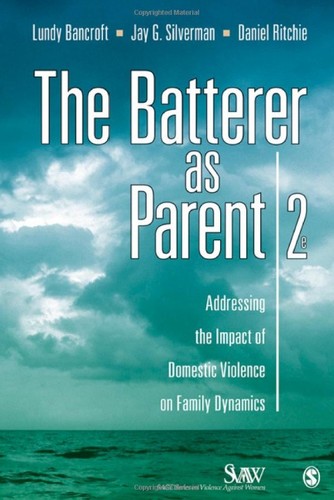
The Batterer as Parent
Lundy Bancroft, Jay G. Silverman & Daniel Ritchie
How domestic violence impacts family dynamics, with approaches for custody evaluations.
As an Amazon Associate, Clarity House Press earns from qualifying purchases. Your price is never affected.
Found this helpful?
Share it with someone who might need it.
About the Author

Clarity House Press
Editorial Team
The editorial team at Clarity House Press curates and publishes evidence-based content on narcissistic abuse recovery, high-conflict divorce, and healing. Our content is informed by research, survivor experiences, and established trauma-informed approaches.
View all posts by Clarity House Press →Published by Clarity House Press Editorial Team