Please read our important disclaimers before using this content
You confront your partner about something they did--maybe they screamed at you in front of your children, or you found evidence of cheating, or they withdrew money from your account without asking. You have proof. You're calm. You're specific.
Within minutes, you're somehow apologizing to them.
They're crying. You're the bad guy. The original issue--their actual harmful behavior--has completely disappeared, replaced by your "accusations," your "tone," your "trust issues," your "cruelty" for even bringing it up.
You leave the conversation feeling crazy, guilty, and unsure of your own reality.
This is DARVO.
DARVO is not just gaslighting. It's not just deflection. It's a specific, predictable sequence of manipulation tactics that reverses victim and offender--making the person who was harmed into the "abuser," and the person who caused harm into the "victim."
And it's devastatingly effective, not just with intimate partners, but with therapists, judges, family members, and anyone else the narcissist needs to fool.
Understanding DARVO is critical for survivors because this tactic is often the primary weapon in family court, custody evaluations, and public smear campaigns. Research demonstrates that legal proceedings can serve as platforms for post-separation coercive control, enabling abusive partners to have direct contact with their victims over extended periods.1 Once you recognize the pattern, you can document it, name it, and respond strategically instead of getting sucked into the crazy-making.
What Is DARVO?
DARVO is an acronym coined by psychologist Dr. Jennifer Freyd to describe a specific sequence abusers use when confronted with their behavior:
D - Deny the abuse happened A - Attack the person confronting them R - Reverse Victim and Offender (claim they're the real victim)
It's a three-step process that happens rapidly, often within seconds, and is designed to:
- Avoid accountability
- Punish you for speaking up
- Confuse third parties about who the real victim is
- Make you doubt your own perceptions
- Establish a counter-narrative where you're the abuser
DARVO works because it exploits our natural cognitive biases: we want to believe the person who seems most hurt, most vulnerable, most emotionally authentic. Narcissists are experts at performing victimhood. Research demonstrates that perpetrators using DARVO are perceived as less abusive and more believable, while victims are rated as more abusive and less believable, with observers showing reduced willingness to punish offenders.2 Studies also show that DARVO use is associated with higher rape myth acceptance and sexual harassment perpetration, suggesting this defensive response is part of a larger worldview that justifies harm and blames victims.3
The Three Stages of DARVO in Detail
Let's break down each component with real-world examples from intimate relationships, court proceedings, and third-party interactions.
Stage 1: DENY
What it looks like:
When confronted with specific behavior, the abuser denies:
- Flat denial: "That never happened. You're making this up."
- Minimization: "It wasn't that bad. You're exaggerating."
- Reframing: "That's not what happened. You're remembering wrong."
- Justification: "I only did that because you [something you did]."
- Gaslighting: "You're being crazy. I never said that."
- Amnesia: "I don't remember that at all. Are you sure?"
Examples:
In relationships:
- You: "You called me a worthless bitch in front of our kids."
- Them: "I never said that. You're always making things up."
In court:
- You: "He emptied the bank accounts without telling me, leaving me with no access to money."
- Them: "That's a complete lie. I gave her access to everything. She's just bad with money."
With therapists:
- You: "He tells our kids I'm mentally unstable and trying to turn them against him."
- Them: "I've never said anything like that. I'm constantly trying to protect the kids from her paranoia about me."
Why denial works:
- Creates doubt: If they deny confidently enough, third parties wonder if maybe it didn't happen
- Forces you to prove it: Now you're scrambling for evidence instead of addressing the harm
- Shifts the topic: You're now arguing about whether it happened, not about the impact
- Exhausts you: Proving objective reality is mentally exhausting
Stage 2: ATTACK
What it looks like:
Instead of addressing their behavior, they attack you:
- Your character: "You're crazy," "You're a liar," "You're abusive"
- Your motives: "You're trying to manipulate me," "You just want my money," "You're trying to turn people against me"
- Your mental health: "You're mentally unstable," "You need help," "Your therapist is making you paranoid"
- Your parenting: "You're an unfit mother," "You're using the kids as weapons"
- Your past: "You've always been [negative trait]," "Your family is dysfunctional, you learned this behavior from them"
- Your credibility: "She makes false accusations," "He's done this before to other people"
Examples:
In relationships:
- You: "You screamed at me for an hour because dinner was late."
- Them: "You're so dramatic. You always play the victim. You love making me look like the bad guy. What about all the times you've yelled at me?"
In court:
- You: "He withheld my medication to control me."
- Them: "She's an addict. She's always claiming I 'control' her medication when really I'm trying to help her manage her addiction. This is another manipulation tactic."
With friends/family:
- You: "He isolated me from all my friends and family."
- Them: "She drove everyone away with her crazy behavior. I tried to help her maintain those relationships, but she's so toxic that people naturally distance themselves. Now she blames me for her own actions."
Why attack works:
- Puts you on defense: Now you're defending your character instead of addressing their behavior
- Confuses third parties: "Maybe both people are toxic?"
- Triggers your trauma responses: If you react emotionally to being attacked, they use that as "proof" you're unstable
- Punishes speaking up: You learn that confronting them results in character assassination
Stage 3: REVERSE VICTIM AND OFFENDER
What it looks like:
The final move: they claim they're the real victim, and you're the real abuser.
- "I'm afraid of you": Despite you having no history of violence, they claim you're the dangerous one
- "You're abusing me": By confronting them, setting boundaries, or defending yourself
- "You're alienating the kids": When they're the ones poisoning the children against you
- "You're financially abusive": When they've controlled all the money
- "You're the narcissist": When you finally start standing up for yourself
- "I'm the one walking on eggshells": When you've been hypervigilant for years
- "Look how you're treating me": Your emotional reaction to sustained abuse is framed as evidence of your abusiveness
Examples:
In relationships:
- You: "You punched a hole in the wall next to my head."
- Them (crying): "You're terrorizing me by bringing this up. I'm so scared of you right now. I can't believe you'd weaponize a moment when I was so upset. You emotionally abuse me constantly, and when I finally react, you make me out to be a monster."
In court declarations:
- You: "He has screamed at me and the children, destroyed property, and threatened to ruin me financially if I leave."
- Them: "I am a victim of domestic violence. She has subjected me to years of emotional abuse, manipulation, and alienation from my children. When I try to defend myself, she twists it to make me look like the aggressor. I have been living in fear of her for years."
With custody evaluators:
- You: "He shows up hours late to pick up the kids and doesn't tell them when he's coming, so they're constantly disappointed."
- Them: "She weaponizes the children. She's so controlling that I'm walking on eggshells trying to co-parent with her. She uses any small mistake I make as ammunition against me. The children are traumatized by her parental alienation tactics, and I'm desperately trying to protect them."
Why reversal works:
This is the most dangerous part of DARVO because:
- Abusers are often more believable: They're calmer (because they're not traumatized), more articulate (because they're not in hyperarousal), and more "reasonable" sounding
- Your trauma responses look like aggression: If you're angry, crying, or emotionally dysregulated (normal trauma responses), it's used as "proof" you're the unstable one
- They've been planning this: Their narrative is polished and rehearsed; you're caught off guard
- It plays into existing biases: Courts, therapists, and evaluators often believe "both parties are toxic" or "the calmer one is telling the truth"
- It isolates you further: If they convince people you're the abuser, you lose support
Why DARVO Is So Effective
DARVO works because it exploits fundamental aspects of human psychology and institutional dynamics:
1. Cognitive Biases
Confirmation bias: Once someone forms an impression (e.g., "he seems nice"), they interpret new information to confirm that belief.
Fundamental attribution error: We attribute others' negative behavior to their character ("she's crazy") but our own negative behavior to circumstances ("I was just stressed").
Halo effect: If someone is attractive, charming, or professionally successful, we assume they're also good people.
Authority bias: If the narcissist is a lawyer, doctor, or holds institutional power, people are more likely to believe them.
2. Trauma Responses Look Like Aggression
When you've been abused, your nervous system is dysregulated. You might:
- Raise your voice when triggered
- Cry uncontrollably
- Struggle to articulate your experiences coherently
- Display anger or frustration
- Have "emotional outbursts"
The narcissist, by contrast, isn't traumatized. They can stay calm, collected, and "reasonable." To third parties, you look unstable and they look like the victim.
Neuroscience context: Research on trauma and the nervous system (van der Kolk, 2014; Porges, 2011) demonstrates that chronic abuse dysregulates the autonomic nervous system, making emotional regulation difficult. Trauma survivors experience heightened sympathetic activation (fight-or-flight), which can present as hypervigilance, emotional reactivity, or difficulty articulating experiences under stress.4 This neurobiological reality is often misinterpreted as personality pathology or aggression by those unfamiliar with trauma responses. A systematic review and meta-analysis found that coercive control exposure is moderately associated with PTSD and depression symptom severity, with associations comparable to those found for physical intimate partner violence.5
3. Abusers Are Often More Prepared
By the time you're confronting them or you're in court, they've:
- Rehearsed their narrative
- Gathered "evidence" (often out of context or fabricated)
- Consulted with legal counsel
- Primed third parties with their version
You're reacting authentically to harm. They're executing a strategic plan.
4. DARVO Creates "Mutual Abuse" Narratives
Even if third parties don't fully believe the abuser, DARVO often creates the impression that "both people are toxic" or "it's a mutually abusive relationship."
This is catastrophic in family court because:
- Judges may order split custody when one parent should have none
- Custody evaluators see "high conflict" instead of "abuse"
- Therapists recommend "co-parenting therapy" when you should have protection
5. Institutions Are Ill-Equipped to Detect It
Family court judges, custody evaluators, therapists, and police often lack training in coercive control, DARVO, or narcissistic abuse. They rely on:
- "Both sides" narratives
- Surface-level credibility assessments
- Outdated domestic violence models focused on physical violence
As a result, the more articulate, calmer, better-resourced party (often the abuser) wins. Research on credibility assessment in legal decision-making confirms that psychological knowledge about trauma, if correctly applied, would limit the inappropriate reliance on assumptions and myth in legal proceedings, but this knowledge is often absent from judicial training.6
JURISDICTIONAL NOTE: Family court procedures, evidence standards, and recording laws vary significantly by state. The examples provided represent general patterns; your state's specific laws may differ. Consult your attorney about:
- Recording law compliance (some states require two-party consent)
- Protective order evidence standards
- Discovery rules and evidence admissibility
- Custody evaluation procedures
Real-World Examples of DARVO in Relationships and Court
Example 1: Financial Abuse
What actually happened: Narcissist controls all finances, refuses to let partner access money, runs up debt in partner's name, sabotages partner's career.
DARVO version:
- Deny: "She has full access to the accounts. She just doesn't know how to manage money."
- Attack: "She's financially irresponsible. She's trying to hide her spending from me. She's probably cheating and doesn't want me to see the credit card bills."
- Reverse: "I'm the one who pays for everything. She contributes nothing and then accuses me of controlling her when I ask her to be responsible. I'm being financially abused by having to support someone who won't work and then gaslights me about it."
Impact: Partner can't leave because they have no resources, and if they go to court, the narcissist looks like the financially responsible party.
Example 2: Parental Alienation
What actually happened: Narcissist tells children that other parent is crazy, dangerous, doesn't love them, is trying to take them away. Children become fearful of the protective parent.
DARVO version:
- Deny: "I've never said anything negative about her to the kids. She's making that up."
- Attack: "She's the one poisoning the kids against me. She tells them lies about me, coaches them on what to say in therapy, and uses them as emotional support animals."
- Reverse: "I'm a victim of parental alienation. She has turned my children against me. They're terrified to tell her they want to spend time with me. I'm fighting for my relationship with my kids against someone who's weaponizing them."
Impact: Judges and evaluators now think both parents are alienating, or worse, that the protective parent is the alienator. Research on custody evaluations in high-conflict situations confirms that evaluators commonly mistake "unsubstantiated" abuse reports to mean allegations were false, when it should mean there is insufficient evidence to confirm abuse.7
Example 3: Physical Intimidation
What actually happened: Narcissist punches walls, throws objects, stands over partner menacingly, blocks exits, screams inches from partner's face.
DARVO version:
- Deny: "I've never been violent. She's exaggerating. I was just frustrated and hit the wall. That's not abuse."
- Attack: "She provokes me constantly. She knows exactly how to push my buttons and then plays victim when I react. She's emotionally abusive."
- Reverse: "I'm the one who's afraid. She threatens to call the police and make false accusations whenever we argue. I walk on eggshells in my own home. I'm a victim of emotional terrorism."
Impact: Partner's attempts to get a protective order are framed as vindictive, and the abuser's intimidation tactics are normalized as "conflict."
Example 4: Coercive Control
What actually happened: Narcissist isolates partner from friends/family, monitors their phone and computer, dictates what they wear, controls their schedule, punishes perceived infractions with silent treatment.
DARVO version:
- Deny: "I've never isolated her. Her family is toxic, and I've encouraged her to maintain healthy boundaries. She has full freedom."
- Attack: "She's the controlling one. She checks my phone, questions where I've been, gets jealous of my female friends. She's projecting her own behavior onto me."
- Reverse: "I'm trapped in a relationship with someone who's emotionally dependent, paranoid, and abusive. She's made me responsible for her happiness, and when I try to set boundaries, she accuses me of control. I'm the victim of coercive control."
Impact: The actual victim is now defending themselves against accusations of being controlling, and the abuser is seen as someone "setting healthy boundaries."
JURISDICTIONAL NOTE: Family court procedures, evidence standards, and recording laws vary significantly by state. The examples provided represent general patterns; your state's specific laws may differ. Consult your attorney about:
- Recording law compliance (some states require two-party consent)
- Protective order evidence standards
- Discovery rules and evidence admissibility
- Custody evaluation procedures
How Judges, Therapists, and Evaluators Fall for DARVO
The most painful aspect of DARVO is watching professionals—people who should know better—believe the abuser's narrative.
Why judges fall for it:
- Time constraints: Family court judges have 15-20 minutes per case; they rely on surface impressions
- "High conflict" bias: Judges assume both parties are equally responsible for dysfunction
- Gender stereotypes: Male judges may unconsciously relate to male abusers who claim their female partners are "emotional" or "unstable"
- Lack of training: Most judges have no education in coercive control, trauma responses, or DARVO
- Credibility based on composure: The calmer, more articulate party (often the abuser) seems more reliable
Why therapists fall for it:
- "Both sides" approach: Couples therapy assumes both parties are acting in good faith (abusers are not)
- Victim's trauma responses: The victim's anger, emotional dysregulation, or boundary-setting looks like "aggression"
- Abuser's charm: Narcissists are expert manipulators; they present as self-aware, cooperative, and victimized
- Lack of specialized training: Most therapists aren't trained in narcissistic abuse or DARVO dynamics
- Therapeutic neutrality: Therapists avoid "taking sides," which benefits the abuser
Why custody evaluators fall for it:
- Home study superficiality: Narcissists stage perfect homes, present well, have character references prepared
- Children's fear: Kids may say what the narcissist coached them to say, or may be too scared to tell the truth
- Documentation gaps: Coercive control leaves little physical evidence
- Mutual abuse narrative: DARVO creates the appearance of "both parties" being toxic
- Professional credentials: If the narcissist is a doctor, lawyer, or professional, evaluators give them the benefit of the doubt
Documenting DARVO Patterns
The key to fighting DARVO is documentation. You need to create a clear record that shows:
- The pattern: This isn't one incident; it's a repeated tactic
- The predictability: Every time you raise a concern, they follow the DARVO sequence
- The reversal: Show specifically how they flip victim and offender
How to document DARVO:
1. Create a DARVO log:
For each incident, record:
- Date and time
- What you confronted them about (specific, factual)
- Their denial (direct quote if possible)
- Their attack (what they accused you of)
- Their reversal (how they claimed victim status)
- Impact on you or children
Example:
Date: October 15, 2024, 7:30 PM
Confrontation: I told him I found evidence he'd emptied our savings account without discussion.
Denial: "I didn't empty it. I moved money to a different account for tax purposes. You're making this sound sinister when it's responsible financial planning."
Attack: "You're paranoid and controlling. You don't trust me with anything. This is financial abuse—you want to control every dollar I touch. You're just looking for reasons to play victim."
Reversal: "I'm the one who's been supporting this family financially while you contribute nothing, and now you're accusing me of stealing? I'm done being treated like a criminal in my own marriage."
Impact: I felt crazy for even bringing it up. He convinced me I was wrong to question his financial decisions. I apologized to him.
2. Record conversations (where legal):
CRITICAL LEGAL WARNING: Recording conversations without consent is a CRIME in two-party consent states (California, Florida, Massachusetts, Pennsylvania, and others). Before recording:
- Verify your state's recording laws
- Consult your attorney about admissibility
- Understand criminal penalties for illegal recording
- Consider court-monitored apps instead (TalkingParents, OurFamilyWizard)
Never record conversations illegally - evidence obtained illegally may be inadmissible AND expose you to criminal prosecution.
If recording is legal in your jurisdiction:
- Document confrontations showing the DARVO sequence
- Timestamped recordings provide evidence courts cannot easily dismiss
- Consult attorney about admissibility requirements in your jurisdiction
3. Document text/email DARVO:
- Screenshot messages showing the deny-attack-reverse pattern
- Highlight how quickly they shift from denial to accusing you
- Show how they frame themselves as the victim
4. Third-party corroboration:
- If someone witnesses a DARVO interaction, ask them to write a statement
- Therapist notes (if you have an individual therapist) documenting your reports of DARVO
- Friends/family who've heard the DARVO narrative
5. Show the pattern to professionals:
Don't just present isolated incidents. Present the pattern:
"Every time I raise a concern about his behavior—whether it's financial decisions, yelling at the children, or violating our custody agreement—he follows the same sequence: he denies it happened or minimizes it, then attacks my character or mental health, then claims he's the real victim of my 'accusations.' Here are fifteen documented examples of this pattern over the past six months."
Responding Effectively to DARVO Tactics
When someone DARVO's you, your instinct is to defend yourself: "I'm not crazy!" "That's not what happened!" "I have proof!"
This is exactly what they want. Now you're on defense, and the original issue is forgotten.
How to respond to DARVO:
1. Name it (if safe to do so):
"You're using DARVO: deny, attack, reverse victim and offender. I confronted you about [specific behavior]. You denied it, attacked my character, and now you're claiming you're the victim. This is a manipulation tactic, and I'm not engaging."
Then stop talking. Do not argue. Do not defend.
2. Gray Rock:
If you can't go no contact (e.g., co-parenting), use Gray Rock:
- Don't confront them about behavior (they'll just DARVO)
- Keep communication strictly logistical
- Don't react emotionally to their attacks
- Document everything, but don't tell them you're documenting
3. Get witnesses:
If possible, have witnesses present when you need to communicate:
- Bring a support person to custody exchanges
- Copy a third party on emails
- Have conversations in public places
- Use court-monitored communication apps (TalkingParents, OurFamilyWizard)
4. In court: Stick to facts and patterns:
Don't get defensive. Present the DARVO pattern as evidence of manipulation:
"Your Honor, every time I've raised a concern about [his behavior], he responds with the same tactic: he denies the behavior, attacks my character or mental health, and claims he's the real victim. I have documented fifteen instances of this pattern. This is a manipulation tactic called DARVO, and it's commonly used by abusers to avoid accountability."
Then present your documented evidence.
5. Educate your attorney:
Many attorneys aren't familiar with DARVO. Provide them with:
- Dr. Jennifer Freyd's research on DARVO
- Your documented log of DARVO incidents
- The pattern you want them to highlight in court
6. Work with a trauma-informed therapist:
A therapist who understands narcissistic abuse can:
- Validate your reality (counteracting the gaslighting)
- Help you stop defending yourself
- Provide expert testimony if needed
- Write letters documenting the pattern you've reported
DARVO in Smear Campaigns
DARVO isn't just used in one-on-one confrontations. Narcissists use it in smear campaigns to destroy your reputation with:
- Friends and family
- Mutual acquaintances
- Your children
- Court professionals
- Your employer
What this looks like:
They tell everyone:
- Deny: "She's making up lies about me because she's vindictive about the divorce."
- Attack: "She's mentally unstable, has a personality disorder, is poisoning the kids against me."
- Reverse: "I've been the victim of her emotional abuse for years. I'm finally getting the courage to leave, and she's punishing me for it."
By the time you realize they've launched a smear campaign, they've already established the narrative: they're the victim, you're the abuser.
How to combat smear campaigns:
1. Don't engage in "he said/she said":
Defending yourself publicly makes you look guilty. Instead:
- Stay silent publicly
- Only discuss the situation with trusted, neutral parties
- Focus on healing and moving forward
2. Let your actions speak:
Over time, people who matter will see:
- You're stable, consistent, and healthy
- They're still creating drama and chaos
- Their story doesn't match your behavior
3. Document everything:
Even if people believe them now, having documentation means:
- You can prove the truth later if needed (in court, with employers, etc.)
- You have evidence if they escalate to legal action or harassment
- You can show the pattern to neutral third parties
4. Build a new support network:
If they've poisoned your old network, create a new one:
- Survivor support groups
- New friendships with people who know the real you
- Professional relationships with trauma-informed providers
The Truth About DARVO
DARVO is not a sign of "high conflict" or "mutual toxicity." It's a specific abuse tactic designed to:
- Avoid accountability
- Maintain control
- Punish you for speaking up
- Isolate you from support
- Win in court
When someone consistently uses DARVO, they're showing you:
- They will never take accountability for harm
- They view relationships as zero-sum power struggles
- They are willing to destroy your reputation to avoid consequences
- They do not operate in good faith
You cannot reason with someone who uses DARVO. You cannot love them into accountability. You cannot prove your innocence enough to make them stop.
The only effective response is:
- Document the pattern
- Name it to people who matter (lawyers, judges, therapists)
- Stop defending yourself to the abuser (Gray Rock or No Contact)
- Focus on your own healing and safety
DARVO is crazy-making because it's designed to be. But once you see the pattern, you can't unsee it.
And once you stop engaging, you take away their power.
The truth always emerges—just not on their timeline, and not in the ways you expect. Your job isn't to convince everyone right now. Your job is to protect yourself, document the abuse, and build the evidence base that will matter when it counts.
The people who matter—good attorneys, trauma-informed therapists, people who truly know you—will see through DARVO eventually.
And the people who believe them? They were never going to be part of your healing anyway.
Further Reading
DARVO Framework:
- Freyd, J. J. (1997). Violations of power, adaptive blindness, and betrayal trauma theory. Feminism & Psychology, 7(1), 22-32.
- Freyd, J. J. (2018). DARVO: Deny, Attack, and Reverse Victim and Offender. In J. R. Conte (Ed.), What is Sexual Abuse? (2nd ed.). University of Oregon.
Trauma Neuroscience:
- van der Kolk, B. A. (2014). The Body Keeps the Score: Brain, Mind, and Body in the Healing of Trauma. Viking.
- Porges, S. W. (2011). The Polyvagal Theory: Neurophysiological Foundations of Emotions, Attachment, Communication, and Self-regulation. W.W. Norton.
Family Court and Institutional Response:
- Hardesty, J. L., et al. (2012). Coercive control and abused women's decisions about their relationships. Journal of Family Violence, 27, 265-282.
- Meier, J. S. (2015). Johnson's differentiation theory: Is it really empirically supported? Journal of Child Custody, 12(1), 4-24.
Legal Resources:
- National Domestic Violence Hotline: 1-800-799-7233 or thehotline.org
- Court-monitored communication platforms: TalkingParents, OurFamilyWizard (ourfamilywizard.com)
Resources
DARVO & Abuse Tactics Education:
- Dr. Jennifer Freyd - DARVO Research - Original research and definition from the psychologist who coined the term
- The National Domestic Violence Hotline - 1-800-799-7233 (24/7 support and safety planning)
- Out of the FOG - Information on personality disorders and manipulation tactics
- Psychology Today - DARVO Articles - Expert perspectives on DARVO tactics
Legal & Documentation:
- TalkingParents - Documented co-parenting communication
- OurFamilyWizard - Court-monitored communication platform
- Legal Abuse - Resources on litigation abuse and DARVO in court
- National Coalition Against Domestic Violence - Legal resources and advocacy
Support & Recovery:
- Narcissist Abuse Support - Support groups for manipulation and DARVO survivors
- RAINN - 1-800-656-HOPE (Sexual assault support, including DARVO response)
- Survivor Alliance - Peer support and advocacy
References
- Gutowski, E. R., & Goodman, L. A. (2022). Coercive Control in the Courtroom: the Legal Abuse Scale (LAS). Journal of Family Violence, 38(3), 527-542. https://doi.org/10.1007/s10896-022-00408-3 | PMID: 35611345 | PMC9119570 ↩
- Harsey, S. J., & Freyd, J. J. (2023). The Influence of Deny, Attack, Reverse Victim and Offender and Insincere Apologies on Perceptions of Sexual Assault. Journal of Interpersonal Violence, 38(17-18), 9985-10008. https://doi.org/10.1177/08862605231169751 | PMID: 37154429 ↩
- Harsey, S. J., Adams-Clark, A. A., & Freyd, J. J. (2024). Associations between defensive victim-blaming responses (DARVO), rape myth acceptance, and sexual harassment. PLoS One, 19(12), e0313642. https://doi.org/10.1371/journal.pone.0313642 | | PMC11616802. ↩
- van der Kolk, B. A. (2014). The Body Keeps the Score: Brain, Mind, and Body in the Healing of Trauma. Viking. For peer-reviewed review, see: Brigham, T. J. (2021). Book Review: The Body Keeps the Score. Journal of the Medical Library Association, 109(3), 505-506. https://doi.org/10.5195/jmla.2021.1280 | PMC8418154 ↩
- Lohmann, S., Cowlishaw, S., Ney, L., O'Donnell, M., & Felmingham, K. (2023). The Trauma and Mental Health Impacts of Coercive Control: A Systematic Review and Meta-Analysis. Trauma, Violence, & Abuse, 25(1), 630-647. https://doi.org/10.1177/15248380231162972 | PMID: 37052388 | PMC10666508 ↩
- Herlihy, J., & Turner, S. (2015). Untested assumptions: psychological research and credibility assessment in legal decision-making. European Journal of Psychotraumatology, 6, 27380. https://doi.org/10.3402/ejpt.v6.27380 | PMID: 25994022 | PMC4439408 ↩
- Moon, D. S., Lee, M. H., Chung, D. S., & Kwack, Y. S. (2020). Custody Evaluation in High-conflict Situations Focused on Domestic Violence and Parental Alienation Syndrome. Journal of the Korean Academy of Child and Adolescent Psychiatry, 31(2), 66-73. https://doi.org/10.5765/jkacap.200004 | PMID: 32595344 | PMC7289472 ↩
Recommended Reading
From Clarity House Press — plus trusted books for deeper understanding


Surviving the Storm: When the Court Takes Your Children
Clarity House Press
For fathers in active high-conflict custody battles. Understand your CPTSD symptoms, begin stabilization, and build foundation for healing. 17 chapters covering recognition, symptoms, and the healing path.
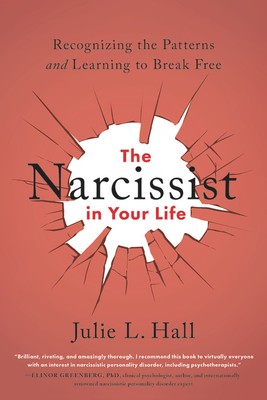
The Narcissist in Your Life
Julie L. Hall
Comprehensive guide based on hundreds of survivor interviews illuminating narcissistic abuse in families.

Will I Ever Be Good Enough?
Karyl McBride, PhD
Healing the daughters of narcissistic mothers through understanding, validation, and recovery.
As an Amazon Associate, Clarity House Press earns from qualifying purchases. Your price is never affected.
Found this helpful?
Share it with someone who might need it.
About the Author

Clarity House Press
Editorial Team
The editorial team at Clarity House Press curates and publishes evidence-based content on narcissistic abuse recovery, high-conflict divorce, and healing. Our content is informed by research, survivor experiences, and established trauma-informed approaches.
View all posts by Clarity House Press →Published by Clarity House Press Editorial Team