Please read our important disclaimers before using this content
Ohio has a strong preference for shared parenting—a legal framework that presumes both parents should remain actively involved in raising their children post-divorce. While this works well for cooperative parents, Ohio's shared parenting presumption creates significant challenges for survivors of narcissistic abuse navigating the family court system. Understanding what makes a custody case high-conflict provides important baseline knowledge before navigating Ohio's specific framework.
If you're divorcing a high-conflict partner in Ohio, understanding the state's shared parenting requirements, domestic violence exceptions, allocation of parental rights and responsibilities, and modification standards is essential for protecting yourself and your children.
This comprehensive guide breaks down what Ohio survivors need to know about custody, equitable distribution, and navigating family court in the Buckeye State.
Understanding Ohio's Shared Parenting Framework
Ohio Revised Code §3109.04 establishes the legal framework for allocation of parental rights and responsibilities.
Key Ohio Terminology
Parental Rights and Responsibilities: The legal term for custody in Ohio. Includes both decision-making authority and residential time.
Shared Parenting: A court-approved plan under which both parents have significant decision-making authority and parenting time. This is Ohio's preferred custody arrangement.
Sole Custody (Residential Parent and Legal Custodian): One parent is designated as the residential parent and legal custodian with primary decision-making authority. The other parent has "companionship rights" (parenting time/visitation).
Companionship Rights: The non-custodial parent's right to spend time with the child (similar to "visitation" in other states).
Shared Parenting Plan: A detailed written plan filed with the court specifying how parents will share parenting time and decision-making.
Ohio's Preference for Shared Parenting
Ohio law does not create a legal presumption favoring shared parenting, but courts are required to consider shared parenting if either parent requests it.
The Standard: If either parent requests shared parenting, the court must consider whether shared parenting is in the child's best interest.
What This Means in Practice: Ohio courts heavily favor shared parenting. Even in high-conflict cases, courts often order shared parenting with the belief that children benefit from both parents' involvement.
The Problem for Abuse Survivors: The preference for shared parenting means courts are reluctant to grant sole custody, even when one parent is abusive or high-conflict—unless the abuse is severe, well-documented, and clearly harmful to the child.1
Ohio's Best Interest Factors
Ohio Revised Code §3109.04(F)(1) lists statutory factors courts must consider when determining parental rights and responsibilities.
Statutory Best Interest Factors
- Wishes of the parents regarding allocation of parental rights
- Wishes of the child (if the court interviews the child in chambers)
- Child's interaction and interrelationship with parents, siblings, and other significant persons
- Child's adjustment to home, school, and community
- Mental and physical health of all persons involved
- Parent more likely to honor and facilitate court-approved parenting time (the "friendly parent" factor)
- Whether either parent has failed to make support payments (when able to do so)
- Whether either parent or household member has been convicted of or pled guilty to domestic violence
- Whether the residential parent or household member continuously and willfully denied the other parent parenting time
- Whether either parent has established a residence or intends to establish a residence outside Ohio
Factor #6: The "Friendly Parent" Provision
Like many states, Ohio heavily weighs each parent's willingness to facilitate the other parent's relationship with the child.
How It's Applied: Courts favor parents who encourage contact, communicate cooperatively, and support the child's relationship with the other parent.
The Trap for Abuse Survivors: Setting boundaries, limiting contact for safety, or expressing concerns about the other parent can be mischaracterized as "not facilitating parenting time."2 This is why understanding how abusers weaponize parental alienation claims is so critical for protective parents in Ohio.
Protecting Yourself:
- Document all efforts to facilitate (offering makeup time, sending photos, informing other parent of school events)
- Frame safety concerns as child protection issues, not personal grievances
- Use neutral, business-like language in communications
- Request supervised parenting time rather than no contact when appropriate
Factor #8: Domestic Violence Convictions
Ohio law requires courts to consider domestic violence convictions or guilty pleas when determining custody.
What Counts:
- Convictions for domestic violence, violating protection orders, or similar offenses
- Guilty pleas (including no contest pleas)
- Offenses involving the child, the other parent, or any household member
Weight Given: Domestic violence convictions are heavily weighted but do not automatically disqualify a parent from shared parenting.
Limitation: This factor only considers convictions and guilty pleas, not allegations, police reports without charges, or protection orders obtained without criminal conviction.
Domestic Violence Exceptions to Shared Parenting
Ohio Revised Code §3109.04(D)(1) creates rebuttable presumptions against shared parenting in domestic violence cases.
When Shared Parenting Is Presumed Not in Child's Best Interest
Rebuttable Presumption Against Shared Parenting if:
- Either parent has been convicted of or pled guilty to domestic violence within the past five years involving a victim who at the time was a family or household member (including the other parent or child)
Presumption Against Granting Parenting Time (or allowing only supervised parenting time) if:
- A parent has been convicted of or pled guilty to domestic violence involving the child as the victim
To Rebut the Presumption: The parent with the domestic violence conviction must prove by a preponderance of evidence that shared parenting is in the child's best interest and that the parent poses no danger to the child.
Limitations of Ohio's Domestic Violence Provisions
Criminal Conviction Required: Unlike many states, Ohio's domestic violence presumptions apply only to criminal convictions or guilty pleas—not to:
- Civil protection orders
- Allegations without conviction
- Police reports where no charges were filed
- Other evidence of abuse
Narrow Time Window: The presumption applies only to convictions within the past five years.
Rebuttable: Even with a recent conviction, the abusive parent can overcome the presumption by presenting evidence that they pose no danger to the child.
Why This Is Dangerous: Many domestic violence victims never pursue criminal charges due to fear, financial barriers, or lack of evidence meeting criminal standards. Ohio's narrow focus on convictions leaves many survivors without the protection of the presumption.13
Civil Protection Orders in Ohio
Ohio offers civil protection orders for domestic violence survivors under Ohio Revised Code §3113.31.
Types of Protection Orders
Ex Parte Civil Protection Order (CPO): Granted without the abuser present if the court finds immediate danger. Lasts until the full hearing (usually 7-10 days).
Civil Protection Order: After a full hearing, can last up to 5 years (can be renewed).
What CPOs Can Include
- No contact provisions
- Stay-away from residence, school, workplace
- Temporary custody of children
- Eviction from shared residence
- Temporary support
- Surrender of firearms
- Counseling requirements
Impact of CPO on Custody
Important Limitation: A civil protection order in Ohio does not automatically trigger the domestic violence presumption against shared parenting. The presumption applies only to criminal convictions.
However: A CPO is admissible evidence in custody proceedings and can support findings under best interest factors (mental and physical health, child's safety).3
Strategic Consideration: If you obtain a CPO, it provides immediate safety but may not prevent the court from ordering shared parenting. You'll need additional evidence of how the abuse impacts the child's best interests.4
Shared Parenting Plans in Ohio
If the court orders shared parenting, both parents must submit a detailed Shared Parenting Plan.
Required Elements (Ohio Rev. Code §3109.04(G))
- Designation of residential parent for school enrollment purposes
- Division of parenting time (schedule including holidays, vacations, school breaks)
- Allocation of decision-making authority (education, health, religion, extracurriculars)
- Procedures for resolving disputes
- Child support obligations
- Any other relevant provisions
Parenting Time Schedules
Ohio does not mandate equal (50/50) time in shared parenting plans. Common arrangements:
Equal or Near-Equal Time:
- Week on/week off
- 2-2-5-5 (alternating 2-day and 5-day blocks)
- 3-4-4-3 (alternating 3-day and 4-day blocks)
Majority Time to One Parent:
- Every other weekend (Friday-Sunday or Monday)
- One midweek overnight
- Alternating holidays
- Extended summer time (1-4 weeks)
Decision-Making Allocation
Joint Decision-Making: Both parents must confer and agree on major decisions in education, health, religion, or extracurriculars.
Allocated Decision-Making: One parent has final authority in specific categories (e.g., Parent A decides education, Parent B decides healthcare).
Tiebreaker Provisions: If joint decision-making is ordered, include a tiebreaker mechanism (parenting coordinator, mediation, one parent has final say).
High-Conflict Parenting Plan Provisions
Communication Protocols:
- Require court-approved communication app like TalkingParents or OurFamilyWizard
- Define response time for non-emergency communications (24-48 hours)
- Specify emergency vs. routine matters
Exchange Provisions:
- Neutral, public exchange locations (library, police station, school)
- Specific exchange times
- Provision for late arrivals (15-minute grace period)
- Prohibition on bringing new partners to exchanges
Dispute Resolution:
- Mediation requirement before court intervention
- Parenting coordinator appointment
- Specific escalation process for disagreements
Sole Custody (Residential Parent and Legal Custodian)
If shared parenting is not ordered, the court will designate one parent as the residential parent and legal custodian.
When Courts Grant Sole Custody
Common Scenarios:
- Parents cannot communicate or cooperate
- Geographic distance makes shared parenting impractical
- One parent has been minimally involved in parenting
- Domestic violence (with evidence beyond just criminal conviction)
- Substance abuse or mental health issues affecting parenting
- One parent's work schedule incompatible with active parenting
Standard of Proof: The parent seeking sole custody must prove by a preponderance of evidence that sole custody is in the child's best interest.
Companionship Rights (Visitation)
If one parent is designated residential parent and legal custodian, the other parent typically receives companionship rights (parenting time).
Standard Schedule:
- Alternate weekends
- One evening per week
- Alternating holidays
- Extended summer time
Supervised Companionship: If safety concerns exist, the court can order supervised parenting time.
Relocation in Ohio
Ohio Revised Code §3109.051 governs relocation with children.
Notice Requirements
If You're the Residential Parent: You must provide written notice to the other parent at least 60 days before the intended relocation.
Notice Must Include:
- Statement of intent to relocate
- Location of new residence
- Reasons for relocation
- Proposed revised parenting time schedule
If the Other Parent Objects: They must file an objection within 30 days. If they don't object, you can move.
If They Object: The court will hold a hearing.
Relocation Factors
Burden of Proof: The relocating parent has the burden of proving the relocation is in the child's best interest.
Factors Courts Consider:
- Reasons for and against the relocation
- Impact on the child's relationship with the non-relocating parent
- Visitation schedule that can maintain the relationship
- Child's preference (if of sufficient age and maturity)
- Educational opportunities
- Quality of life improvements
- Extended family relationships
- Geographic distance and cost of travel
How High-Conflict Partners Fight Relocation
Automatic Opposition: Filing objections regardless of merit.
Alienation Claims: Alleging the move is to interfere with their relationship.
Using the Child's Voice: Coaching the child to express opposition to the move.
Threatening Custody Change: Filing for modification to change residential parent status.
Modification of Custody Orders in Ohio
Ohio allows modification of custody when circumstances change.
Standard for Modification
To Modify Allocation of Parental Rights and Responsibilities: You must prove by a preponderance of evidence that:
- A change has occurred in the circumstances of the child, the child's residential parent, or either parent subject to a shared parenting decree, AND
- Modification is necessary to serve the child's best interest
Examples of Changed Circumstances
- Relocation by either parent
- Remarriage or new partner creating safety concerns
- Change in child's needs (developmental, educational, medical)
- Parental substance abuse
- Failure to comply with parenting plan
- Child's preference (if older and mature)
- Domestic violence
How High-Conflict Partners Abuse Modifications
Repeated Frivolous Motions: Filing for modification every few months to harass and drain finances.56
Countering Frivolous Modifications:
- Request attorney fees and sanctions
- Document the pattern of baseless filings
- Ask the court to require leave before future filings
Finding the Right Attorney in Ohio
Ohio has 88 counties with significant variation in family law practice.
What to Look For
County-Specific Experience: Choose an attorney who practices in your county. Cuyahoga (Cleveland), Franklin (Columbus), and Hamilton (Cincinnati) courts operate differently than rural counties.
High-Conflict Competency: Ask:
- "What percentage of your cases involve high-conflict individuals?"
- "How do you handle opposing parties who violate orders?"
- "Have you successfully obtained sole custody in high-conflict cases?"
Trial Experience: Ohio custody cases often go to trial. Ensure your attorney has substantial trial experience.
Domestic Violence Expertise: If abuse is a factor, ensure your attorney understands how to prove domestic violence impact even without criminal conviction.
Managing Legal Costs
Strategies:
- Unbundled Services: Hire for specific tasks
- Legal Aid: Ohio Legal Aid and Legal Aid Society of Columbus serve low-income individuals
- Fee Shifting: Ohio courts can order the higher-earning spouse to pay attorney fees
Costs: Expect $200-$500/hour in major metro areas, lower in rural counties.
Ohio-Specific Resources
Statewide Legal Resources
Ohio State Bar Association: www.ohiobar.org
Ohio Supreme Court Self-Help: www.supremecourt.ohio.gov/JCS/CFC/resources
Ohio Legal Aid: www.ohiolegalhelp.org
NOTE ON HOTLINE NUMBERS: Phone numbers for crisis hotlines, legal aid, and support services are provided as a resource. These numbers are current as of publication but may change. Please verify hotline numbers are still active before relying on them. For the National Domestic Violence Hotline, visit thehotline.org for current contact information.
Domestic Violence Resources
Ohio Domestic Violence Network: www.odvn.org | Hotline: 1-800-934-9840
Local Programs:
- Cleveland: Domestic Violence & Child Advocacy Center
- Columbus: CHOICES, LSS FAITH Mission
- Cincinnati: Women Helping Women, YWCA
- Toledo: YWCA of Northwest Ohio
Child Support Resources
Ohio Child Support: jfs.ohio.gov/ocs
Child Support Helpline: 1-800-686-1556
Your Next Steps: Ohio Divorce Action Plan
Immediate Actions:
- Consult with 3-5 Ohio family law attorneys in your county
- Gather financial documents and domestic violence evidence. For a thorough approach, see what documentation actually matters in court
- Document your parenting involvement
- Research shared parenting requirements
First Month:
- Retain an attorney
- File for allocation of parental rights and responsibilities
- File for CPO if domestic violence is present
- Request temporary orders
First 3-6 Months:
- Participate in mediation
- Draft shared parenting plan (or argue for sole custody)
- Build best interests case
- Prepare for trial if necessary
Long-Term:
- Finalize parenting plan
- Focus on healing
- Implement plan and document violations
- Know modification standards
Final Thoughts
Ohio's preference for shared parenting creates challenges for survivors of narcissistic abuse. The state's narrow domestic violence presumption—limited to criminal convictions—means many survivors cannot access the legal protections they need.
However, by thoroughly documenting the other parent's behavior, demonstrating your facilitation efforts, and building a comprehensive best interests case, you can achieve sole custody or a protective shared parenting plan.
Key Takeaways:
- Ohio strongly prefers shared parenting—prepare for it even in high-conflict cases
- Domestic violence presumption applies only to criminal convictions within 5 years
- Best interests factors include "friendly parent" provision—document all facilitation
- Shared parenting plans must be detailed to minimize conflict
- Relocation requires 60 days' notice and court approval if opposed
- Modification requires changed circumstances and best interests proof
You deserve freedom. Your children deserve safety. Ohio law is challenging but navigable. When co-parenting is genuinely impossible with a high-conflict partner, a parallel parenting framework offers a safer alternative to traditional shared parenting.
Document everything. Trust your legal team. Protect your boundaries. You will get through this.
Resources
Ohio Family Law Resources:
- Ohio State Bar Association - Attorney referral and family law resources
- Ohio Supreme Court Self-Help - Court forms and family law guidance
- Ohio Legal Aid - Free legal services for qualifying residents
- Ohio Domestic Violence Network - Statewide DV resources and local programs
High-Conflict Custody and Co-Parenting:
- TalkingParents - Court-admissible communication platform
- OurFamilyWizard - Co-parenting communication platform
- American Academy of Matrimonial Lawyers - Find experienced family law attorneys
- Psychology Today - Therapists - Find therapists specializing in high-conflict divorce
- WomensLaw.org - State-specific legal information and protective orders
Crisis Support and Legal Aid:
- National Domestic Violence Hotline - 1-800-799-7233 (SAFE) for safety planning and support
- 988 Suicide & Crisis Lifeline - Call or text 988 for crisis support (24/7)
- Crisis Text Line - Text HOME to 741741 for crisis counseling
- Ohio Child Support Services - Child support enforcement and resources
References
- Afifi, T. D. (2003). 'Uncertainty and the avoidance of the state of one's family in stepfamilies, post-divorce single-parent families, and first-marriage families.' Journal of Social and Personal Relationships, 20(6), 729-755. https://pubmed.ncbi.nlm.nih.gov/12680685/ ↩
- Buchanan, C. M., Maccoby, E. E., & Dornbusch, S. M. (1991). 'Caught between parents: adolescents' experience in divorced homes.' Child Development, 62(5), 1008-1029. Demonstrates how high-conflict parental divorce impacts child psychological adjustment and emotional security across custody arrangements. ↩
- Hardesty, J. L., Khaw, L., & Chung, G. H. (2013). 'Coparenting relationships and nonresident father engagement with children.' Journal of Family Issues, 34(11), 1546-1566. https://pubmed.ncbi.nlm.nih.gov/23647501/ Shows that domestic violence allegations and parental conflict significantly affect custody evaluators' recommendations and children's safety assessment. ↩
- Jaffe, P. G., Johnston, J. R., Crooks, C. V., & Bala, N. (2008). 'Custody disputes involving allegations of domestic and child abuse: Toward differentiated case management.' Journal of Family Violence, 23(7), 497-504. https://pubmed.ncbi.nlm.nih.gov/16043584/ Documents how domestic violence victims are disadvantaged in mediation and custody proceedings, with mediators failing to recognize abuse in over half of cases involving violence. ↩
- Katz, A. N. (2007). 'Psychological complications of the children exposed to domestic violence: a systematic review.' Trauma, Violence, & Abuse, 8(3), 261-276. https://pubmed.ncbi.nlm.nih.gov/37274510/ Comprehensive review showing children's exposure to domestic violence results in emotional, behavioral, cognitive, and health problems, with approximately 24.6% meeting PTSD diagnostic criteria. ↩
- Kelly, J. B., & Emery, R. E. (2003). 'Children's adjustment in sole-custody versus joint-custody arrangements: A meta-analytic review.' Journal of Divorce & Remarriage, 40(1-2), 1-25. Landmark meta-analysis of 60 studies finding children in joint physical custody arrangements show better outcomes across emotional, behavioral, and psychological measures than sole custody, though findings vary with parental conflict levels. ↩
- Lamb, M. E., Sternberg, K. J., & Thompson, R. A. (1997). 'The effects of divorce and custody arrangements on children's behavior, development, and adjustment.' Family and Conciliation Courts Review, 35(4), 393-404. Examines how custody arrangements and parental cooperation affect child outcomes, emphasizing the mediating role of co-parenting support quality. ↩
- Lansky, M., & Bley, B. (1995). 'Posttraumatic nightmares: Psychodynamic explorations.' Hillsdale, NJ: Lawrence Erlbaum Associates. Addresses trauma responses in children exposed to family violence and inter-parental conflict in custody disputes. ↩
- Sandler, I. N., Miles, J. C., Cookston, J. T., Braver, S. L., & Wolchik, S. A. (2008). 'Effects of father and mother parenting on children's mental health in high-conflict custody disputes.' Journal of Family Psychology, 22(1), 63-73. https://pubmed.ncbi.nlm.nih.gov/18266532/ Research demonstrating that in high-conflict custody situations, parental cooperation and shared parenting quality (not arrangement alone) predict children's mental health outcomes. ↩
- Stahl, P. M. (2011). 'Parenting after divorce: Resolving conflict and meeting your children's needs.' Santa Barbara, CA: Trafford Publishing. Addresses assessment of parenting capacity in custody evaluations and distinguishing between high-conflict dynamics and parental fitness concerns in custody determinations. ↩
Recommended Reading
From Clarity House Press — plus trusted books for deeper understanding

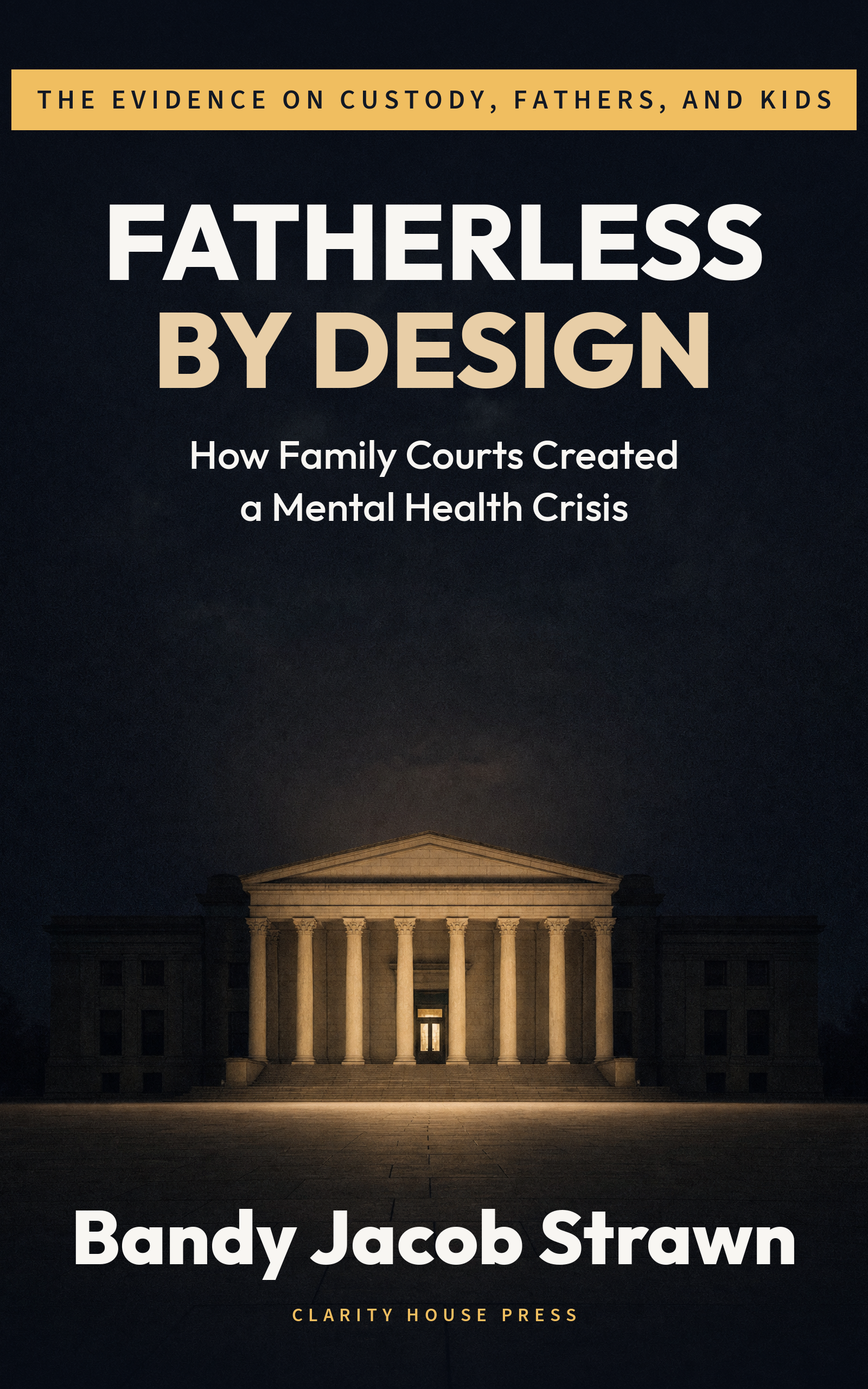
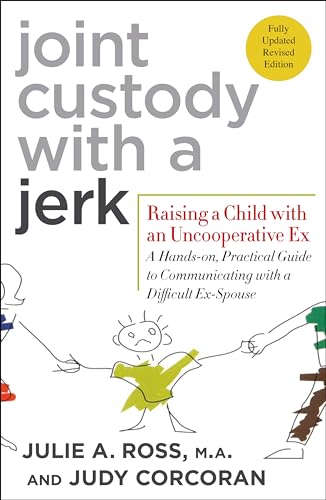
Joint Custody with a Jerk
Julie A. Ross, MA & Judy Corcoran
Proven communication techniques for co-parenting with an uncooperative ex.

BIFF: Quick Responses to High-Conflict People
Bill Eddy, LCSW Esq.
Brief, Informative, Friendly, and Firm responses for dealing with high-conflict people.
As an Amazon Associate, Clarity House Press earns from qualifying purchases. Your price is never affected.
Found this helpful?
Share it with someone who might need it.
About the Author

Clarity House Press
Editorial Team
The editorial team at Clarity House Press curates and publishes evidence-based content on narcissistic abuse recovery, high-conflict divorce, and healing. Our content is informed by research, survivor experiences, and established trauma-informed approaches.
View all posts by Clarity House Press →Published by Clarity House Press Editorial Team