Please read our important disclaimers before using this content
New York's family law system is complex, highly litigated, and often expensive—particularly in high-conflict divorces. As an equitable distribution state with detailed custody statutes and integrated domestic violence courts, New York offers both protections for survivors and opportunities for high-conflict partners to weaponize the system. Understanding the basics of high-conflict custody is essential before diving into state-specific rules.
If you're divorcing a narcissistic or high-conflict partner in New York, understanding the state's custody standards, equitable (not equal) distribution framework, maintenance laws, and specialized domestic violence resources is essential for protecting yourself and your children.
This comprehensive guide breaks down what New York survivors need to know about navigating one of the most sophisticated—and most challenging—family court systems in the United States.
Understanding New York's Equitable Distribution
Unlike community property states that presume 50/50 division, New York is an equitable distribution state. This means courts divide marital property fairly—not necessarily equally.
Marital vs. Separate Property
Marital Property: All property acquired during the marriage, regardless of whose name it's in. Marital property is subject to equitable distribution.
Includes:
- Salaries, wages, and bonuses earned during marriage
- Real estate purchased during marriage
- Retirement accounts and pensions accrued during marriage
- Business interests acquired or increased in value during marriage
- Investment accounts funded during marriage
Separate Property: Property not subject to distribution.
Includes:
- Property owned before marriage
- Inheritances received by one spouse (even during marriage)
- Gifts given to one spouse by a third party
- Personal injury awards (compensation for pain and suffering, not lost wages)
- Property acquired in exchange for separate property
Commingling: If separate property is mixed with marital property and loses its separate identity, it may become marital. Example: depositing inheritance into a joint account.
Appreciation of Separate Property: If separate property increases in value during the marriage due to the contributions or efforts of either spouse, the appreciation is marital property.
Equitable Distribution Factors
New York Domestic Relations Law §236(B)(5)(d) lists factors courts consider when dividing marital property:
- Duration of the marriage
- Age and health of both parties
- Income and property of each spouse at the time of marriage and divorce
- Need of custodial parent to occupy the marital residence
- Loss of pension or inheritance rights upon dissolution
- Maintenance award to either spouse
- Contributions to marital property by each spouse (including homemaking and childcare)
- Liquidity of marital assets
- Tax consequences to each party
- Wasteful dissipation of assets by either spouse
- Transfer or encumbrance of marital property in contemplation of divorce
- Any other factor the court finds just and proper
How High-Conflict Partners Manipulate Equitable Distribution
Hiding Assets: Transferring funds to relatives, offshore accounts, cryptocurrency, or undervaluing business interests.
Wasteful Dissipation: Spending marital funds on paramours, luxury items, or gambling before or during divorce.
Strategic Valuation Disputes: Hiring experts to lowball the value of their assets while challenging the value of yours.
Claiming Separate Property: Falsely claiming marital assets were gifts or inherited.
Delaying Tactics: Prolonging discovery to drain your financial resources before settlement.
Protecting Yourself in Equitable Distribution
Trace Separate Property:
- Bank statements showing pre-marital balances
- Inheritance documentation with clear chain of custody
- Gift letters from family members
- Property deeds showing pre-marital purchase
Document Wasteful Dissipation:
- Credit card statements showing excessive spending
- Evidence of funds transferred to paramours
- Gambling losses or luxury purchases
- Depletion of accounts pre-filing
Hire Forensic Experts:
- Forensic accountant to trace hidden assets
- Business valuation expert for closely-held businesses
- Real estate appraiser for accurate property values
- Pension valuator for retirement account division
For a deeper look at uncovering concealed marital assets, read about financial discovery and hidden assets in divorce.
Request Preliminary Injunctions:
- Early in the case, request court orders preventing your ex from transferring, selling, or encumbering marital assets
NYC Tip: New York City divorces involve significantly higher asset values and more complex financial structures than upstate cases. Manhattan and Westchester attorneys often charge $500-$800+/hour. Budget accordingly.
New York Child Custody: Best Interests Standard
New York uses the "best interests of the child" standard for custody determinations.1 While there's no statutory list of factors, New York case law has developed comprehensive criteria.
Custody and Visitation Terminology
Legal Custody: Decision-making authority for major life decisions (education, healthcare, religion). Can be sole or joint.
Physical Custody: Where the child lives. Can be sole (primary residence with one parent) or joint (substantial time with both).
Visitation (Parenting Time): Scheduled time the non-custodial parent spends with the child.
Primary Custodial Parent: The parent with whom the child primarily resides (even in joint custody arrangements, one parent often has majority time).
Best Interests Factors in New York Case Law
New York courts consider:
- Quality of the home environment each parent can provide
- Parental fitness (mental and physical health, substance abuse, history of abuse)
- Ability to provide for the child's emotional and intellectual development
- Past performance as a caretaker
- Each parent's ability to foster the relationship with the other parent
- Domestic violence history
- Stability and continuity for the child2
- The child's preference (if the child is of sufficient maturity and understanding)
- Siblings: keeping siblings together
- Each parent's work schedule and availability
- Geographic proximity for school and activities
Domestic Violence and Custody
New York law requires courts to consider domestic violence when making custody determinations.3
Rebuttable Presumption: While New York doesn't have a statutory presumption against custody for abusers, courts heavily weigh domestic violence in best interests analysis.
Protections:
- Supervised visitation if the child's safety is at risk
- Neutral exchange locations
- Prohibitions on overnight visitation
- Required completion of batterer's intervention programs
How High-Conflict Partners Weaponize Custody Proceedings
False Allegations: Fabricating abuse claims or exaggerating discipline into "abuse."
Parental Alienation Claims: Weaponizing the "friendly parent" factor by claiming you're undermining their relationship with the child.45 See how abusers use parental alienation claims strategically to understand this tactic fully.
Using Child's Voice: Coaching the child to express preference for them or fear of you.2
Financial Intimidation: Using greater financial resources to hire aggressive attorneys and experts.
Forum Shopping: Filing in a county perceived as more favorable (though jurisdiction rules limit this).
Protecting Your Children in New York Custody Cases
Document Your Parenting:
- School involvement (attendance at conferences, volunteering)
- Medical appointments (who takes the child to the doctor?)
- Daily caregiving (bedtime, homework, meals)
- Extracurricular involvement (coaching, attending games)
Build Stability Evidence:
- Consistent housing and neighborhood
- Continuity of school and childcare
- Extended family support system
- Therapeutic relationships (if applicable)
Show Facilitation of the Other Parent's Relationship:
- Texts offering extra parenting time
- Evidence you inform the other parent of school events
- Photos sent to the other parent
- Neutral or positive statements about the other parent
Request Law Guardian: In contested custody cases, request appointment of an attorney for the child (law guardian). The law guardian independently investigates and advocates for the child's best interest.
Custody Evaluations: If ordered, prepare thoroughly. Evaluators will interview you, your ex, the child, and collateral witnesses. Be honest, organized, and child-focused.
Maintenance (Alimony) in New York
New York has detailed statutory formulas for calculating maintenance (spousal support).
Temporary Maintenance During Divorce
New York has a formula for calculating temporary maintenance during the divorce:
For payor's income up to $203,000 (2025 cap; verify current cap with attorney as this changes periodically):
- Lower of:
- 30% of payor's income minus 20% of payee's income, OR
- 40% of combined income minus payee's income
Example: Payor earns $150,000, payee earns $50,000
- Formula 1: ($150k × 0.30) - ($50k × 0.20) = $45k - $10k = $35k/year
- Formula 2: ($200k × 0.40) - $50k = $80k - $50k = $30k/year
- Temporary maintenance: $30k/year (lower of the two)
For income above the cap: Courts have discretion to award additional maintenance.
Post-Divorce Maintenance
Post-divorce maintenance also follows a formula, with duration based on length of marriage:
Duration Guidelines:
- Marriage of 0-15 years: 15-30% of marriage length
- Marriage of 15-20 years: 30-40% of marriage length
- Marriage over 20 years: 35-50% of marriage length
Example: 12-year marriage may result in maintenance for 2-4 years.
Factors for Deviation: Courts can deviate from the formula based on:
- Age and health of parties
- Standard of living during marriage
- Earning capacity of each party
- Educational background and need for training
- Childcare responsibilities
- Equitable distribution award
- Wasteful dissipation of assets
- Contributions to the other's career (e.g., supporting spouse through medical school)
How High-Conflict Partners Manipulate Maintenance
Underreporting Income: Cash-based business owners, freelancers, or those with irregular income may hide earnings.
Quitting Jobs or Reducing Income: Strategically reducing income before or during divorce to lower support obligations.
Claiming Inability to Work: Exaggerating health issues or job market difficulties.
Demanding Maintenance They Don't Need: High-conflict payees may seek maximum maintenance even when they're capable of self-support.
Protecting Yourself in Maintenance Cases
If You're Seeking Maintenance:
- Document the marital standard of living (vacations, private schools, club memberships)
- Show your contributions to the marriage (homemaking, supporting ex's career)
- Obtain vocational expert opinion if your career was derailed by the marriage
- Document health issues limiting work capacity
If You're Paying Maintenance:
- Document payee's earning capacity and work history
- Show their voluntary underemployment or unemployment
- Demonstrate equitable distribution award provides for their needs
- Request step-down maintenance (decreasing over time) rather than level payments
New York's Integrated Domestic Violence Courts
New York has pioneered integrated domestic violence (IDV) courts, which handle both criminal DV charges and related family court matters in a coordinated manner.
What IDV Courts Do
Single-Judge Model: One judge oversees all related cases—criminal DV charges, orders of protection, custody, divorce—ensuring consistency.
Benefits:
- Eliminates conflicting orders from different judges
- Streamlines case management
- Improves safety planning
- Reduces victim burden of appearing in multiple courts
IDV Court Locations: Available in many counties, particularly in New York City, Albany, Buffalo, Rochester, and Syracuse.
Orders of Protection in New York
New York offers civil and criminal orders of protection for domestic violence survivors.
Types:
- Temporary Order of Protection: Granted at the beginning of a case, lasts until the case is resolved
- Final Order of Protection: After a hearing or plea agreement. Duration varies:
- Family Court: Typically up to 2 years, extendable
- Criminal Court: Up to 5 years for felony DV, up to 2 years for misdemeanor DV
- Aggravating Circumstances: Can be extended for longer periods in cases involving serious injury, weapons, violation of prior orders, or other aggravating factors
What Orders Can Include:
- Stay-away provisions (no contact with you, your home, workplace, children's school)
- Refrain from assault, harassment, threats
- Surrender firearms
- Temporary custody
- Temporary child support
- Exclusive use of residence
Enforcement: Violation of an order of protection is a criminal offense.
How to Obtain an Order of Protection
Family Court Petition:
- File a petition in Family Court (relationship-based jurisdiction)
- Emergency/same-day temporary orders available: If you appear in person, you can often see a judge the same day for a temporary order of protection if the court finds reasonable cause to believe you are in danger
- Temporary order issued if judge finds reasonable cause
- Full hearing scheduled (usually within 30 days)
- Final order issued if abuse is proven by a preponderance of evidence
NOTE: "Emergency" orders of protection in New York refer to temporary orders obtained on an expedited basis (same-day or next-day). There is no separate "emergency order" classification—it's the speed of obtaining the temporary order that's emergency in nature.
Criminal Court Order: If your abuser is arrested for domestic violence, the criminal court will automatically issue a temporary order of protection. You don't need to file separately.
Evidence:
- Your sworn testimony with specific dates and incidents
- Police reports
- Medical records
- Photos of injuries
- Threatening texts, emails, voicemails
- Witness statements
Child Support in New York
New York uses the Income Shares Model for calculating child support,6 based on the principle that children should receive the same proportion of parental income they would have if the parents lived together.
Basic Child Support Formula
For combined parental income up to $163,000 (2025 cap; verify current cap with attorney as this changes periodically):
- One child: 17% of combined income
- Two children: 25% of combined income
- Three children: 29% of combined income
- Four children: 31% of combined income
- Five+ children: 35% of combined income
Pro-Rata Share: Each parent pays their percentage share of the total.
Example: Combined income $120,000 (Parent A earns $80k, Parent B earns $40k), one child
- Total child support: $120k × 17% = $20,400/year
- Parent A's share (66.67%): $20,400 × 0.6667 = $13,600/year
- Parent B's share (33.33%): $20,400 × 0.3333 = $6,800/year
- If Parent A is the custodial parent, Parent B pays $6,800/year ($567/month)
Add-Ons: In addition to basic support, parents share:
- Childcare expenses
- Healthcare expenses (insurance premiums, unreimbursed medical)
- Educational expenses (private school, college)
Deviation from Formula
Courts can deviate from the formula based on:
- Financial resources of parents and child
- Physical and emotional health of child
- Standard of living if parents lived together
- Tax consequences
- Non-monetary contributions of parents
- Educational needs of either parent
- Disparity in gross income
Enforcement and Modification
Enforcement Tools:
- Wage garnishment
- Tax refund intercept
- License suspension (driver's, professional, recreational)
- Credit reporting
- Contempt of court
Modification: Child support can be modified when there's a substantial change in circumstances (job loss, significant income increase, child's needs change).
New York Family Court Procedures
Jurisdiction and Filing
Residency Requirements:
- At least one spouse must have been a New York resident for 2 years before filing, OR
- Both spouses were New York residents when married and one still resides here, OR
- The marriage was performed in New York and one spouse is still a resident, OR
- One spouse has been a New York resident for 1 year continuously before filing
Where to File:
- Supreme Court (handles divorces, custody, support)
- Family Court (handles custody, support, visitation, orders of protection—but NOT divorce)
NYC Tip: In New York City, you file in the County Clerk's office of the Supreme Court in your borough (Manhattan, Brooklyn, Queens, Bronx, Staten Island).
Grounds for Divorce
Since 2010, New York allows no-fault divorce based on "irretrievable breakdown of the marriage for at least six months."
Fault Grounds (still available):
- Cruel and inhuman treatment
- Abandonment (for one year or more)
- Imprisonment (for three years or more)
- Adultery
Strategic Use of Fault Grounds in Equitable Distribution:
New York courts generally do NOT consider marital fault (adultery, cruelty) when dividing marital property—equitable distribution is based on the statutory factors in DRL §236(B)(5)(d), not moral fault.
Limited Exception: Fault may be relevant if it involves economic misconduct that wasted marital assets:
- Spending marital funds on a paramour
- Gambling away marital savings
- Transferring assets to hide them
In these cases, the fault isn't considered for punishment—it's considered under factor (10), "wasteful dissipation of assets." The court may award the innocent spouse a larger share to offset the wasted funds.
However: Proving purely emotional fault (adultery without financial waste, general cruelty) will NOT increase your equitable distribution share in New York.
Mandatory Financial Disclosures
New York requires extensive financial disclosure:
- Statement of Net Worth: Detailed financial affidavit listing all assets, debts, income, and expenses
- Tax returns (3 most recent years)
- Pay stubs, W-2s, 1099s
- Bank statements, investment accounts
- Retirement account statements
- Business financial records (if applicable)
Consequences of Non-Compliance: Failure to provide accurate, complete disclosures can result in sanctions, fee awards, and reopening of settled cases.
Preliminary Conference and Discovery
Preliminary Conference: Early in the case, the court schedules a preliminary conference to establish a case schedule, identify issues, and explore settlement.
Discovery Tools:
- Interrogatories (written questions)
- Demand for documents
- Depositions (oral testimony under oath)
- Subpoenas to third parties
High-Conflict Discovery Abuse: Your ex may:
- Refuse to provide documents
- Provide incomplete or falsified disclosures
- Delay responses to drag out the case
Enforcement: File motions to compel compliance and request sanctions.
Settlement Conferences and Trial
Court-Sponsored Settlement Conferences: Judges or court attorneys facilitate settlement discussions.
Trial: If settlement fails, the case proceeds to trial before a judge (no juries in divorce cases).
Trial Length: Contested divorces can take multiple trial days spread over months.
Post-Trial: Judge issues a written decision and judgment of divorce.
Finding the Right Attorney in New York
New York has over 60,000 attorneys, but finding one with high-conflict divorce experience is critical.
What to Look For
Experience in Your County: Family court practices vary significantly by county. NYC matrimonial practice is very different from upstate practice.
High-Conflict Competency: Ask prospective attorneys:
- "What percentage of your practice involves high-conflict divorces?"
- "How do you handle clients with narcissistic or personality-disordered spouses?"
- "What's your approach to cases with extensive litigation?"
Trial Experience: Many attorneys settle cases but rarely try them. If your case is unlikely to settle, you need a trial attorney.
Domestic Violence Expertise: If abuse is a factor, ensure your attorney understands:
- Orders of protection in criminal and family court
- Integrated Domestic Violence courts
- Presenting DV evidence in custody cases
- Safety planning
Financial Complexity Experience: If you have high assets or complex finances (business interests, stock options, professional practices), find an attorney experienced with forensic accounting and valuation experts.
Red Flags
- Attorneys who guarantee outcomes
- Those unfamiliar with high-conflict dynamics
- Attorneys who push for mediation when abuse is documented
- Those with poor communication (not returning calls, unclear fee structures)
- Attorneys who dismiss emotional abuse
Managing Legal Costs
New York divorce is expensive. NYC matrimonial attorneys charge $400-$800+/hour.
Strategies:
- Retainer Structures: Understand initial retainer and replenishment requirements
- Unbundled Services: Hire for specific tasks (document review, settlement negotiations) while handling administrative tasks yourself
- Fee Awards: New York courts can order the wealthier spouse to pay the other's attorney fees. File early and often for fee awards.
- Legal Aid: If you meet income requirements, contact:
- Legal Aid Society (NYC)
- Legal Services NYC
- Nassau/Suffolk Law Services (Long Island)
- Legal Assistance of Western New York (Buffalo region)
- Empire Justice Center (statewide)
New York-Specific Resources for Survivors
Statewide Legal Resources
New York State Unified Court System: Self-help resources and court locator at www.nycourts.gov/divorce
New York State Bar Association: Attorney referral and resources at www.nysba.org
DIY Divorce: Uncontested divorce forms at www.nycourts.gov/litigants/divorce
Pro Se Assistance: Court help centers in every county provide limited assistance with forms and procedures.
NOTE ON HOTLINE NUMBERS: Phone numbers for crisis hotlines, legal aid, and support services are provided as a resource. These numbers are current as of publication but may change. Please verify hotline numbers are still active before relying on them. For the National Domestic Violence Hotline, visit thehotline.org for current contact information.
Domestic Violence Resources
New York State Domestic Violence Hotline: 1-800-942-6906 (24/7, multilingual)
Safe Horizon (NYC): Comprehensive DV services including legal assistance, shelter, counseling | Hotline: 1-800-621-HOPE (4673)
Sanctuary for Families (NYC): Legal services, shelter, economic empowerment | 212-349-6009
Regional DV Programs:
- Westchester: My Sisters' Place, Hope's Door
- Long Island: The Safe Center, Brighter Tomorrows
- Albany: Unity House, Equinox
- Buffalo: Child and Family Services, YWCA
- Rochester: Willow Domestic Violence Center
Child Support and Custody Resources
New York State Child Support Helpline: 1-888-208-4485
Support Collection Unit (SCU): Handles child support collection through local counties
Law Guardian Program: Court-appointed attorneys for children in custody cases
Mental Health and Therapeutic Support
OMH Emotional Support Helpline: 1-844-863-9314 (COVID-era helpline, still active for mental health support)
Psychology Today NY Therapist Directory: Filter by trauma, divorce, domestic violence
NYC Well: Free, confidential mental health support in NYC | 1-888-NYC-WELL
Your Next Steps: New York Divorce Action Plan
Immediate Actions (This Week):
-
Consult with 3-5 New York matrimonial attorneys experienced in high-conflict divorces. Many offer free consultations.
-
Gather financial documents: 3 years of tax returns, bank statements, retirement account statements, proof of separate property.
-
Document domestic violence if applicable: Police reports, medical records, orders of protection, threatening communications.
-
Open individual bank account at a different bank if you don't have one.
-
Protect joint accounts: Document balances in case your ex withdraws funds.
First Month Actions:
-
Retain an attorney or explore legal aid if you qualify.
-
File or respond to divorce petition: Don't delay—establish your position early.
-
Request preliminary injunction: Prevent your ex from transferring, selling, or encumbering marital assets.
-
File for order of protection if domestic violence is a factor.
-
Complete Statement of Net Worth: Accurate, thorough financial disclosure is critical.
First 3-6 Months:
-
Participate in preliminary conference and comply with court-ordered timelines.
-
Engage in discovery: Request documents, serve interrogatories, prepare for depositions.
-
Build custody case: Document parenting involvement, stability, and facilitation of the other parent's relationship.
-
Explore settlement: Even high-conflict cases sometimes settle. Evaluate offers strategically.
-
Prepare for trial: If settlement isn't possible, work with your attorney to prepare evidence, witnesses, and exhibits.
Long-Term (6+ Months):
-
Finalize your divorce: Judgment of divorce signed and filed.
-
Enforce orders: If your ex violates custody or support orders, file for enforcement.
-
Focus on healing: Trauma therapy, support groups, and self-care.
-
Financial rebuilding: Work with a financial planner to rebuild post-divorce.
-
Modification awareness: Custody and support can be modified when circumstances change substantially.
Final Thoughts: New York's Complex but Navigable System
New York's family law system is sophisticated, procedurally complex, and often expensive—but it also offers significant protections for survivors of abuse. Integrated domestic violence courts, detailed equitable distribution statutes, and experienced family law judges provide pathways to fair outcomes.
High-conflict divorces in New York are challenging, but thousands of survivors have successfully navigated this system with strong legal representation, thorough documentation, and strategic case-building. Thorough documentation practices are often the deciding factor in contested proceedings.
Key Takeaways:
- New York uses equitable (not equal) distribution—fair division based on statutory factors
- Custody is determined by best interests with heavy weight on domestic violence
- Maintenance follows statutory formulas but courts can deviate based on circumstances
- Integrated DV courts coordinate criminal and family court cases for consistency
- Child support follows Income Shares Model with add-ons for childcare, healthcare, education
- Finding an experienced matrimonial attorney is essential—NYC and upstate practices differ significantly
You deserve freedom from abuse. Your children deserve safety and stability. New York's legal system, for all its complexity, provides the tools to achieve both.
Document everything. Trust your legal team. Protect your boundaries. You will get through this.
Resources
New York Family Law Resources:
- New York State Unified Court System - Official divorce information
- New York State Bar Association - Find New York family law attorneys
- Legal Services NYC - Free legal aid for low-income New Yorkers
- WomensLaw.org New York - New York-specific family law and protective orders
Equitable Distribution and Financial Planning:
- Certified Divorce Financial Analyst Directory - CDFAs for asset division
- Financial Planning Association - Find financial planners for divorce
- National Foundation for Credit Counseling - Credit counseling for post-divorce
- FreeFrom - Financial empowerment for domestic violence survivors
High-Conflict Co-Parenting and Crisis Support:
- TalkingParents - Court-admissible communication platform
- OurFamilyWizard - Co-parenting communication
- TalkingParents - Documented communication for custody cases
- 988 Suicide & Crisis Lifeline - Call or text 988 for crisis support (24/7)
- Crisis Text Line - Text HOME to 741741 for crisis counseling
References
- Schepard, A. (2004). Children, courts, and custody: A critical assessment of child custody evaluations. Family Law Quarterly, 38(2), 201-213. https://pubmed.ncbi.nlm.nih.gov/26158277/ ↩
- Turner, B. R. (2023). Equitable distribution of property (4th ed.). Westlaw. Key reference on equitable distribution principles across US jurisdictions including detailed analysis of marital vs. separate property classification and appreciation analysis. ↩
- Fabricius, W. V., & Luecken, L. J. (2007). Postdivorce living arrangements, parental conflict, and long-term child adjustment. Journal of Family Psychology, 21(2), 195-205. Research on best interests standard and parenting factors affecting children's adjustment in custody arrangements. ↩
- Buchanan, C. M., Maccoby, E. E., & Dornbusch, S. M. (1991). Caught between parents: Adolescents' experience in divorced homes. Child Development, 62(5), 1008-1029. Foundational research on the impacts of high-conflict divorce and custody arrangements on adolescent development and psychological adjustment. ↩
- Hines, D. A., Malley-Morrison, K., & Ansari, N. (2010). Exposure to parental violence and outcomes of child psychosocial adjustment. Journal of Family Violence, 25(4), 295-303. https://pubmed.ncbi.nlm.nih.gov/23520829/ Empirical research documenting the developmental and psychological impacts of children's exposure to domestic violence, critical for custody determinations in abuse cases. ↩
- Buchner, J., & Richter, D. (2022). Towards molecular diagnostics of parental alienation. Psychological Medicine, 52(15), 3209-3218. https://pubmed.ncbi.nlm.nih.gov/41196405/ Current research on parental alienation in high-conflict divorces, including methods to distinguish alienation from realistic estrangement. ↩
- Fidler, B. J., & Bala, N. (2010). Children resisting post-separation parental contact: A differential analysis. Children and Youth Services Review, 32(7), 1055-1070. Research on the distinction between parental alienation and legitimate resistance to contact, relevant to custody evaluation in high-conflict cases. ↩
- Rogers, R. M. (1999). Wisconsin-style and income shares child support guidelines: Excessive burdens and flawed economic foundation. Family Law Quarterly, 33(1), 135-156. https://www.jstor.org/stable/25740197 Critical analysis of income shares model used in New York and most US states for child support calculation. ↩
- Smyth, B. M., Caruana, C., & Ferro, A. (2004). Parental alienation: A developmental analysis of a vulnerable population. Journal of Divorce & Remarriage, 40(3-4), 23-42. https://pubmed.ncbi.nlm.nih.gov/7884694/ Developmental research on vulnerable populations in high-conflict custody disputes and parental alienation dynamics. ↩
- Evans, S. E., Davies, C., & DiLillo, D. (2008). Exposure to domestic violence: A meta-analysis of child and adolescent outcomes. Aggression and Violent Behavior, 13(2), 131-140. https://pubmed.ncbi.nlm.nih.gov/14620578/ Meta-analysis examining developmental outcomes for children exposed to domestic violence, foundational for courts considering safety and custody in DV cases. ↩
Recommended Reading
From Clarity House Press — plus trusted books for deeper understanding



Divorcing a Narcissist: Advice from the Battlefield
Tina Swithin
Practical follow-up with battlefield-tested advice for navigating custody with a narcissistic ex.
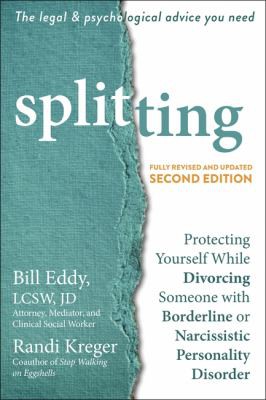
Splitting: Protecting Yourself While Divorcing Someone with Borderline or Narcissistic Personality Disorder
Bill Eddy & Randi Kreger
Updated edition covering domestic violence, alienation, false allegations in high-conflict divorce.
As an Amazon Associate, Clarity House Press earns from qualifying purchases. Your price is never affected.
Found this helpful?
Share it with someone who might need it.
About the Author

Clarity House Press
Editorial Team
The editorial team at Clarity House Press curates and publishes evidence-based content on narcissistic abuse recovery, high-conflict divorce, and healing. Our content is informed by research, survivor experiences, and established trauma-informed approaches.
View all posts by Clarity House Press →Published by Clarity House Press Editorial Team