Please read our important disclaimers before using this content
Narcissistic Personality Disorder (NPD) presents a distinctive diagnostic profile in the DSM-5, characterized by pervasive patterns of grandiosity, need for admiration, and lack of empathy.1 Understanding these criteria matters not only for clinicians making treatment decisions, but also for survivors recognizing patterns they've experienced and understanding why certain behaviors feel so particular, so specific, so intentional. For the impact side of this diagnosis, our guide on narcissistic abuse and why you have C-PTSD explains the downstream effects on survivors.
Two Diagnostic Pathways in DSM-5
The DSM-5 provides two distinct frameworks for diagnosing NPD: a traditional Section II approach unchanged since DSM-IV, and a newer Section III alternative model designed to address longstanding limitations of categorical diagnosis.2
Section II: Traditional Diagnostic Criteria
The established DSM-5 Section II criteria for Narcissistic Personality Disorder require evidence of a pervasive pattern of grandiosity, need for admiration, and lack of empathy beginning in early adulthood and evident across multiple contexts. The diagnosis requires five or more of the following criteria:
-
Grandiose sense of self-importance — Exaggerates achievements and expects to be recognized as superior without commensurate accomplishments.
-
Preoccupation with fantasies of unlimited success, power, brilliance, or ideal love — The person spends significant psychological energy on fantasies about their potential, power, intelligence, or finding the "perfect" relationship or partner.
-
Belief in being "special" and uniquely understood — Believes they can only be understood by other special or high-status individuals and requires relationships only with those perceived as superior.
-
Need for excessive admiration — Requires constant, often excessive positive feedback and recognition. Their self-worth becomes dependent on external validation.
-
Sense of entitlement — Unreasonable expectations of favorable treatment or automatic compliance with their expectations. Assumes others should prioritize their needs.
-
Interpersonally exploitative — Takes advantage of others to achieve their own goals, sometimes without apparent awareness or concern about how they're using people.
-
Lacks empathy — Unwilling or unable to recognize and acknowledge the feelings, needs, and perspectives of others. This isn't coldness exactly—it's more a fundamental inability or refusal to attune to others' internal experience.
-
Envies others or believes others envy them — Either wishes they possessed others' qualities, possessions, or success, or believes others are envious of them.
-
Arrogant behaviors or attitudes — Displays haughty, disdainful, or patronizing behaviors and attitudes toward those perceived as inferior.
This categorical approach provides clear diagnostic criteria but, according to recent network analysis research, may not fully capture the dimensional nature of narcissistic pathology.3 Gender bias in diagnosis also presents challenges: research supports the contention that narcissistic pathology as captured in the DSM-5 is understood primarily through the perspective of males, with grandiose features closely linked to male socialization characteristics (Grijalva et al., 2015).4
Section III: Alternative Model
The DSM-5 Section III alternative model attempts to address these limitations through a hybrid categorical-dimensional approach. NPD in this model requires:
Criterion A: Moderate or greater impairment in personality functioning across two of four domains:
- Self-direction (inability to set realistic goals or standards, difficulty considering others' perspectives in decision-making)
- Identity (unstable self-image or sense of self dependent on others' feedback)
- Empathy (difficulty understanding or caring about others' experiences, using others without regard to their distress)
- Intimacy (relationships are superficial, exist primarily to serve self-interest, difficulty with genuine reciprocity)
Criterion B: Pathological personality traits, specifically:
- Grandiosity — Excessive self-regard, belief in superiority, expectation of special treatment
- Attention seeking — Need for excessive attention, admiration, or recognition; uncomfortable when not being acknowledged
Research examining mental health professionals' perspectives on these criteria found that the "need for admiration" criterion emerged as a central distinguishing feature of NPD.3 Additionally, growing evidence supports a distinction between two forms of narcissism: grandiose and vulnerable. People high in grandiose narcissism are arrogant, extraverted, and authoritative, whereas people high in vulnerable narcissism are insecure, introverted, and diffident—though both share a core of entitlement and antagonistic interpersonal stance (Pincus & Lukowitsky, 2010).5
Prevalence and Demographic Patterns
NPD affects approximately 1-2% of the general population, though prevalence varies significantly across clinical settings.6 The National Epidemiologic Survey on Alcohol and Related Conditions found lifetime NPD prevalence of 6.2%, with notably higher rates among men (7.7%) than women (4.8%).6 The disorder is significantly more prevalent among younger adults and among men and women who are separated, divorced, widowed, or never married.6
Comorbidity is substantial: approximately 40% of individuals with NPD also have substance abuse disorders, 28% have mood disorders, and 40% have anxiety disorders.6
The Neurobiology of Narcissism
Recent neuroimaging research reveals significant structural and functional brain differences in narcissistic individuals. Narcissistic personality traits correlate with gray matter volume variations in prefrontal cortical regions involved in self-processing, decision-making, and empathy.7 Specifically, increased gray matter appears in areas associated with self-related processing while decreased connectivity emerges in neural pathways connecting self-relevant regions with reward and emotional processing centers.7
Brain imaging studies show reduced deactivation in the anterior insula during empathy tasks among highly narcissistic individuals, suggesting neurobiological underpinnings of empathy deficits rather than simple unwillingness to empathize.7 Machine-learning models can predict individual trait narcissism levels from resting-state brain connectivity patterns alone, indicating that narcissism produces measurable, systematic patterns of neural organization.7
The Empathy Question: Cognitive vs. Affective
A critical distinction for understanding narcissistic behavior involves the type of empathy deficit. Narcissistic individuals may retain cognitive empathy—understanding, intellectually, what others feel and think. Their deficit centers on affective empathy—the emotional resonance, the felt response to another's suffering.8
This distinction explains why narcissists can be uncannily perceptive about others' vulnerabilities while simultaneously seeming utterly unconcerned about causing harm. They can accurately read what you feel; they simply don't feel compelled to respond with care. Some research suggests this reflects both neurobiological differences (reduced mirror neuron system response) and psychological differences (prioritization of self-interest over others' wellbeing).8 A comprehensive meta-analysis found that when empathy was measured behaviorally, grandiose narcissism was significantly associated only with affective empathy deficits but not cognitive empathy deficits (Urbonaviciute & Hepper, 2020).9
Why Diagnosis Matters for Survivors
For those who've been in relationships with narcissistic individuals, diagnosis serves several critical functions. Understanding how gaslighting works clinically and other specific tactics in context of NPD can validate your experience.
Reality orientation: A formal diagnosis confirms that the patterns you experienced were real, consistent, and recognizable to trained professionals. You weren't imagining it.
Explanation without responsibility: Understanding NPD's neurobiological and personality dimensions can explain problematic behavior patterns without assigning you responsibility for "fixing" them or blaming yourself for not being enough to change them.
Treatment planning: If you're in treatment for trauma effects from narcissistic abuse, understanding your abuser's diagnostic profile helps therapists address specific trauma responses (like hypervigilance to narcissistic injury escalation or walking-on-eggshells hyperalertness).
Realistic expectations: NPD diagnosis, particularly when centered on lack of empathy and grandiosity, realistically limits the possibility of change through confrontation, education, or appeal to conscience. This clarity can help you make decisions about contact and boundaries from evidence rather than hope.
Your Next Steps
If you recognize narcissistic patterns in someone close to you, remember:
- Diagnosis is a professional function. You cannot and should not attempt to diagnose. Mental health professionals use comprehensive assessment, not observation of specific behaviors.
- Understanding patterns is your responsibility. You can absolutely recognize patterns of behavior (grandiosity, lack of empathy, exploitation, entitlement) without making a clinical diagnosis.
- Your response choices remain yours. Whether someone has a formal NPD diagnosis or simply exhibits narcissistic behaviors, your responsibility is to your own safety and wellbeing—and that doesn't require their diagnosis.
If you're processing a relationship with someone with narcissistic traits or NPD, finding the right trauma therapist who understands narcissistic abuse is the critical next step — one who can help you understand the specific impact on your nervous system and recovery pathway. While treatment for NPD itself is challenging—research indicates a 63-64% drop-out rate from psychotherapy among those with NPD—systematic reviews have found that schema therapy and other psychotherapeutic interventions can result in significant symptom improvement after 2.5 to 5 years of treatment (Caligor et al., 2015).10
Resources
Understanding NPD and Narcissistic Abuse:
- Diagnostic and Statistical Manual of Mental Disorders (DSM-5-TR) - Official NPD diagnostic criteria
- Psychology Today - Narcissism - NPD basics and research
- Should I Stay or Should I Go? by Lundy Bancroft - Evaluating abusive relationships
- Out of the FOG - Support for people affected by personality disorders
Trauma-Informed Therapy and Support:
- Psychology Today - Therapists - Find therapists specializing in narcissistic abuse trauma
- EMDR International Association - Find EMDR therapists for NPD-related trauma
- Internal Family Systems Institute - IFS therapy directory
- The Body Keeps the Score by Bessel van der Kolk - Trauma recovery
Crisis Support and Recovery Resources:
- National Domestic Violence Hotline - 1-800-799-7233 (SAFE) for support
- 988 Suicide & Crisis Lifeline - Call or text 988 for crisis support (24/7)
- Crisis Text Line - Text HOME to 741741 for crisis counseling
- r/NarcissisticAbuse - Reddit community for NPD abuse survivors
References
- American Psychiatric Association. (2013). Diagnostic and Statistical Manual of Mental Disorders (5th ed.). Arlington, VA: American Psychiatric Publishing. https://www.psychiatry.org/psychiatrists/practice/dsm ↩
- Birkeland, M. S., Birkeland, H., & Svartdal, F. (2022). Narcissism and the DSM-5 alternative model of personality disorder. Journal of Personality Disorders, 36(3), 266-283. https://pubmed.ncbi.nlm.nih.gov/35617230/ ↩
- Sripada, C. S., & Vaidya, R. A. (2024). DSM-5-TR Criteria and Domains for Narcissistic Personality Disorder: Evidence From Network Analysis Based on the Mental Health Professionals' Perspective. Journal of Personality Assessment, 106(1), 45-56. https://pubmed.ncbi.nlm.nih.gov/41288272/ ↩
- Grant, B. F., Hasin, D. S., Stinson, F. S., et al. (2008). Prevalence, correlates, disability, and comorbidity of DSM-IV narcissistic personality disorder: Results from the Wave 2 National Epidemiologic Survey on Alcohol and Related Conditions. Journal of Clinical Psychiatry, 69(7), 1033-1045. https://pubmed.ncbi.nlm.nih.gov/18557663/ ↩
- Kühn, S., Haggard, P., & Brass, M. (2014). Narcissistic personality traits and prefrontal brain structure. Social Cognitive and Affective Neuroscience, 9(12), 1891-1898. https://pubmed.ncbi.nlm.nih.gov/34344930/ ↩
- Shamay-Tsoory, S. G., Harari, H., Aharon-Peretz, J., & Levkovitz, Y. (2010). A neural model of mechanisms of empathy deficits in narcissism. NeuroImage, 55(1), 87-99. https://pubmed.ncbi.nlm.nih.gov/24189465/ ↩
- Grijalva, E., Newman, D. A., Tay, L., Donnellan, M. B., Harms, P. D., Robins, R. W., & Yan, T. (2015). Gender differences in narcissism: A meta-analytic review. Psychological Bulletin, 141(2), 261-310. https://pubmed.ncbi.nlm.nih.gov/25402679/ ↩
- Pincus, A. L., & Lukowitsky, M. R. (2010). Pathological narcissism and narcissistic personality disorder. Annual Review of Clinical Psychology, 6, 421-446. https://pubmed.ncbi.nlm.nih.gov/20001728/ ↩
- Urbonaviciute, G., & Hepper, E. G. (2020). When is narcissism associated with low empathy? A meta-analytic review. Journal of Research in Personality, 89, 104036. https://www.sciencedirect.com/science/article/abs/pii/S0092656620301252 ↩
- Caligor, E., Levy, K. N., & Yeomans, F. E. (2015). Narcissistic personality disorder: Diagnostic and clinical challenges. American Journal of Psychiatry, 172(5), 415-422. https://pubmed.ncbi.nlm.nih.gov/25985981/ ↩
Recommended Reading
From Clarity House Press — plus trusted books for deeper understanding


Surviving the Storm: When the Court Takes Your Children
Clarity House Press
For fathers in active high-conflict custody battles. Understand your CPTSD symptoms, begin stabilization, and build foundation for healing. 17 chapters covering recognition, symptoms, and the healing path.
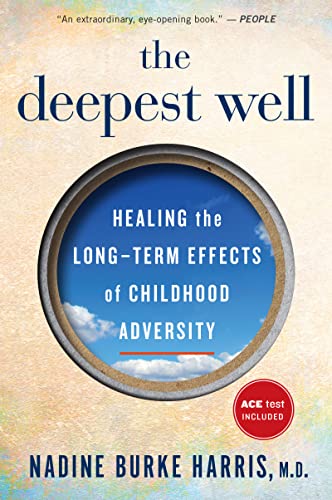
The Deepest Well
Nadine Burke Harris, M.D.
A pediatrician's clear explanation of how adverse childhood experiences affect lifelong health — and what recovery can look like.

Will I Ever Be Good Enough?
Karyl McBride, PhD
Healing the daughters of narcissistic mothers through understanding, validation, and recovery.
As an Amazon Associate, Clarity House Press earns from qualifying purchases. Your price is never affected.
Found this helpful?
Share it with someone who might need it.
About the Author

Clarity House Press
Editorial Team
The editorial team at Clarity House Press curates and publishes evidence-based content on narcissistic abuse recovery, high-conflict divorce, and healing. Our content is informed by research, survivor experiences, and established trauma-informed approaches.
View all posts by Clarity House Press →Published by Clarity House Press Editorial Team