Please read our important disclaimers before using this content
When you're a Muslim survivor of narcissistic abuse, you navigate layers of betrayal that extend far beyond your intimate relationship. Your faith—which should be a source of healing—may have been weaponized against you. Your community—which should offer protection—may instead enforce isolation. Your family—which should validate your safety—may pressure you to stay silent.
Cultural and religious pressures you've internalized:
- "Islam teaches patience and endurance—you must accept your husband's will"
- "Divorce is shameful; it will destroy your reputation and your children's prospects"
- "Your duty is to your family first—what will the community think?"
- "Honor and shame are tied to family reputation, not individual safety"
- "If you leave, you're a bad Muslim and a bad mother"
- "The Imam would never support divorce—you must make it work"
- "Exposing family problems to outsiders betrays your culture and faith"
- "Your suffering makes you closer to Allah—endure with grace"
The result: Muslim survivors—particularly those in immigrant communities, first-generation Americans, or traditional religious households—stay in abusive relationships longer, experience profound religious trauma alongside intimate partner violence, struggle to access culturally competent support, and face intense pressure to preserve family honor and community reputation at the cost of personal safety.
Why leaving is harder: When abuse is wrapped in religious authority ("I am your provider and protector, as Islam commands"), honor-based control ("our family's reputation depends on your obedience"), and community isolation ("no one will believe or help you"), the trauma bond becomes almost unbreakable. The neuroscience behind why trauma bonding is so hard to break helps explain why willpower alone isn't enough. Your abuser doesn't just control your body—they control your spiritual life, your sense of cultural belonging, and your relationship with your entire community.
The research reality: While domestic violence rates among Muslim American women are comparable to other populations, Muslim survivors face unique barriers to help-seeking.1 Studies show that religious frameworks can be either protective or harmful depending on how faith communities respond to disclosures of abuse.2 Honor-based violence—a form of abuse rooted in cultural concepts of family honor—affects survivors across multiple cultures, with significant mental health consequences including complex trauma responses.3 A 2025 meta-ethnography synthesizing 33 qualitative studies found that religion functions as a "double-edged sword" for Muslim survivors: while often used to justify abuse, faith also serves as a critical coping mechanism for recovery (Sharifnia et al., 2025).4
This post addresses:
- How Islamic teachings are weaponized and misinterpreted to justify control and abuse
- Honor-based violence, shame, and family reputation as tools of control
- Religious trauma and how faith becomes entangled with abuse
- Immigration status, family isolation, and deportation fears
- Barriers to accessing help (cultural distrust, language, community dynamics)
- Finding theologically accurate Islamic perspectives on domestic violence
- Culturally-informed healing and reclaiming your faith on your own terms
Islamic Teachings Weaponized by Narcissists
"I am your Qawwam—Your Protector and Provider"
What does Qawwam mean?
The concept comes from Quran 4:34, often cited to justify male authority in marriage. The word "qawwam" refers to responsibility and guardianship—not absolute dominion.
How abusers weaponize this:
- "Islam teaches that I lead the family, and you must obey"
- "The Quran says wives must obey their husbands"
- "My role is to discipline and correct you"
- "You cannot make decisions without my permission—it's against Islam"
- "If you disobey me, you're defying Allah's command"
- "Wives who disobey go to Hell—the Prophet said so"
The theological lie:
Islamic scholars overwhelmingly agree that:
- Qawwam means responsibility, not tyranny
- Marriage is a partnership (Quran describes spouses as "garments for one another")
- A man's authority ends where harm begins
- Abuse violates Quranic principles of kindness, mercy, and justice
- Islamic law provides clear protections for women facing abuse
Your reframe: True Islamic teachings protect you, not your abuser. An abuser cannot hide behind Islam and expect Allah's approval.
"Divorce is Haram—The Most Disliked Halal Thing"
What does this teaching mean?
There is an authentic hadith (Sunan Abu Dawud) stating that "the most disliked of permissible things to Allah is divorce." This is a compassionate statement about the difficulty of divorce, not a prohibition.
How abusers weaponize this:
- "Divorce is forbidden in Islam—you'll go to Hell"
- "You'll never be forgiven if you leave"
- "The Prophet said divorce breaks Allah's Throne"
- "Staying married, no matter what, is what Islam demands"
- "If you divorce, you're rejecting Islam itself"
The theological lie:
Islamic teaching on divorce:
- Is a permission, not a prohibition (it exists because sometimes marriage cannot continue ethically)
- Can be pursued when a marriage causes harm (abuse, neglect, cruelty)
- Protects women's rights to financial support, child custody, and dignity
- Recognizes that remaining in an abusive marriage contradicts Islamic principles of ihsan (beautiful conduct) and adl (justice)
- States clearly that Allah's mercy extends to those who leave harm
Your reframe: Islam gave you the right to divorce for a reason. An abuser misusing sacred teachings doesn't make divorce un-Islamic—it makes the abuse un-Islamic.
"You Must Obey Your Husband—It's Your Duty"
The cultural context:
In patriarchal interpretations of Islamic tradition, wives' obedience to husbands was emphasized, particularly in historically male-dominated power structures.
How abusers weaponize this:
- "The Quran says wives must obey their husbands"
- "You cannot work, go out, or make decisions without my permission"
- "Your only role is serving me and raising children"
- "If you disobey, you're sinning against Allah"
The theological reality:
Quranic obedience exists within the framework of Islamic ethics:
- A wife's obedience does not extend to obeying commands that harm her or violate Islamic law
- The Prophet explicitly prohibited obedience to commands that contradict divine guidance
- Islamic marriage law grants women independent rights: property ownership, financial support, divorce, education, work
- Modern Islamic scholarship increasingly recognizes egalitarian partnership as the Quranic ideal
Your reframe: Islamic ethics require you to disobey commands that harm you, your children, or violate Islamic principles. Obedience to an abuser is not obedience to Allah.
Honor, Shame, and Family Reputation as Control
The Honor-Based Violence Framework
Honor-based abuse operates differently than typical domestic violence because it's explicitly tied to family reputation, cultural standing, and collective shame.3 Your abuser isn't just controlling you as an individual—they're using family honor as the justification.
Common honor-based abuse tactics:
- Monitoring your movement, dress, speech, and relationships (controlling your representation of family honor) — this mirrors the broader pattern of coercive control and manipulation tactics
- Threatening family shame or dishonor if you disclose abuse ("people will think we're a failed family")
- Using extended family pressure ("your father would be ashamed")
- Restricting your autonomy in the name of protecting family reputation
- Threatening custody, deportation, or exile from the community
- Framing your abuse as "family business" that must stay private
- Using religious authority and community standing as leverage
Why this is particularly traumatizing:
Unlike survivors in individualistic cultures who may face isolation or economic abuse, you face the threat of total erasure from your community. The shame isn't just personal—it's collective. Your survival is pitted against your family's social standing.
The research reality: Studies examining service providers' perspectives on Muslim women's intimate partner violence consistently identify honor, shame, patriarchy, and faith as key factors shaping survivors' experiences and help-seeking barriers.2 Research on Black, Asian, minority ethnic, and immigrant women found that cultural and religious forces exert significant power over help-seeking decisions, with 13 of 47 reviewed studies highlighting religion as an impediment to seeking help (Hulley et al., 2023).5
Shame vs. Guilt: The Cultural Difference
Guilt = "I did something bad" Shame = "I am bad; my family is bad"
In honor-based cultures, shame is collective. Your individual actions reflect on the entire family system. This is why leaving feels like betrayal—because in the cultural framework, it is framed as betrayal.
The abuse exploitation:
- "If you leave, you shame us all"
- "Your children will grow up knowing their mother was divorced"
- "No respectable family will want to marry your kids"
- "You'll be known as the woman who destroyed her marriage"
- "The community will never accept you again"
The reality: Your safety is not a shame—it's a right. Leaving an abusive marriage is not betrayal; it's self-preservation and protecting your children from normalized abuse.
Religious Trauma: When Faith Becomes a Prison
What Is Religious Trauma?
Religious trauma occurs when faith structures, authority figures, or teachings are used to manipulate, control, or harm. It's distinct from crisis of faith—it's the wound created by faith institutions or people wielding religious power.6
Common sources of religious trauma in abusive Muslim contexts:
- An Imam who refuses to support a woman fleeing abuse, framing endurance as piety
- A spouse who uses Quranic verses as justification for control, isolation, or violence
- Family members who pressure you to stay in abuse "for Islam's sake"
- Religious leaders who prioritize "family preservation" over safety
- Teachings twisted to enforce obedience, silence, and submission
- Spiritual authority used to override your own moral judgment and safety instincts
How religious trauma compounds intimate partner violence:
- You lose your primary source of healing and meaning-making
- Authority figures reinforce that your abuse is either deserved, temporary, or spiritually valuable
- You internalize that questioning or leaving is spiritually dangerous
- Your relationship with God becomes entangled with your relationship to your abuser
- Recovery requires not just processing abuse trauma, but also rebuilding your spiritual framework
Signs You're Experiencing Religious Trauma Alongside Abuse
- You feel terror at the thought of leaving because it contradicts everything you were taught about your spiritual duty
- You experience guilt about your anger, your need for boundaries, or your desire to leave—because these feel "un-Islamic"
- Religious teachings trigger panic, shame, or emotional flashbacks
- You hear your abuser's voice when you try to pray or connect with your faith
- You struggle with worthiness and belonging in your religious community
- You experience intrusive thoughts about spiritual punishment for considering divorce
- You feel simultaneously betrayed by and dependent on faith institutions
Reclaiming Your Faith After Abuse
This is some of the deepest work in recovery, because you must:
- Separate authentic Islamic teachings from abuser distortions — Learning what Islam actually says about women's rights, divorce, abuse, and mercy
- Distinguish between cultural tradition and Islamic principle — Understanding that patriarchal family structures aren't necessarily Islamic mandates
- Rebuild trust in spiritual authority — Finding Islamic teachers, Imams, and communities that prioritize justice and safety
- Reclaim spiritual practices on your own terms — Prayer, Quran study, connection to Allah without the taint of abuse
- Develop theological understanding of trauma and healing — Creating a spiritual framework where recovery is sacred, not shameful
Barriers to Help-Seeking: Why Muslim Survivors Stay Silent
Language and Access Barriers
If you're a recent immigrant or primarily speak Arabic, Bengali, Urdu, or another language, finding help becomes exponentially harder. Most domestic violence resources are English-language, and even interpreters may not understand cultural nuances.
The gap: Limited culturally and linguistically appropriate services for Muslim survivors.
Distrust of "Outside" Systems
You've likely internalized messaging that:
- Family matters stay within the family
- Involving non-Muslims in family business is shameful
- Legal systems don't understand or respect Islamic perspectives
- Police, social services, or courts will penalize you or your children
- Court involvement will definitely result in losing custody
The reality check:
- Family courts have increasingly sophisticated frameworks for understanding cultural abuse and honor-based violence3
- Protective orders exist specifically to prevent retaliation and honor-based harm
- Many DV advocates specialize in working with immigrant and Muslim survivors
- Staying silent doesn't protect your family—it protects your abuser
Fear of Immigration Consequences
If you're not a U.S. citizen or your immigration status is tied to your spouse:
- Your abuser uses deportation threats as leverage ("if you leave, I'll report you")
- You fear that involving legal systems will jeopardize your residency
- You're isolated from community support due to immigration status
- Financial abuse is compounded by inability to work legally
Resource reality: Organizations like the National Immigrant Women's Advocacy Project (NIWAP) and U visa protections exist specifically for immigrants experiencing abuse.2 Research confirms that immigrant Muslim women are more affected by IPV than Canadian-born Muslim women, experiencing greater stressors, less support, delayed help-seeking, and more serious mental health consequences (Baobaid et al., 2021).7
Community and Family Pressure
- Family members pressure you to stay ("what will people think?")
- Your community ostracizes you for leaving ("she broke up her marriage")
- Extended family sides with your abuser ("he's a good man, you must be exaggerating")
- Religious leaders counsel reconciliation over safety
- Leaving means losing your entire social support system
Research with Arab American communities found that while sheikhs and imams are often perceived as critical first resources for IPV survivors, their responses are not always supportive, highlighting the need for trauma-informed training among religious leaders (Albdour et al., 2024).8
The hard truth: Sometimes protecting yourself means temporarily losing community approval. Your safety comes first.
Isolation from Muslim-Specific Resources
You may not know that:
- Some Islamic organizations have domestic violence prevention initiatives
- Some Imams are trained in trauma-informed approaches
- Some Muslim therapists specialize in abuse recovery within Islamic frameworks
- Some communities have women's shelters that accommodate Islamic practices
Your Next Steps: Building Safety and Healing
1. Connect with Culturally-Informed Support
- National Domestic Violence Hotline: 1-800-799-7233 (available in multiple languages, confidential)
- Muslim organizations with DV resources: Many larger mosques and Muslim communities have social services or can refer you
- Immigrant-specific resources: NIWAP, local immigrant services agencies
- Trauma-informed therapists familiar with religious trauma: Psychology Today directory allows you to filter by specialty and cultural competency
2. Find Theologically Sound Islamic Guidance
Seek out:
- Islamic scholars and organizations that explicitly address domestic violence (many exist specifically because traditional leadership has failed survivors)
- Imams trained in trauma and abuse (increasingly common)
- Islamic women's organizations focused on justice and safety
- Online Islamic education resources that present evidence-based Quranic interpretation
Important: Your faith can be reclaimed and healed. This requires finding people and teachers who understand that Islam is a religion of justice, mercy, and protection.
3. Assess Your Safety in Layers
- Physical safety from violence or threats
- Immigration safety (understanding your visa status, your rights as a resident)
- Financial safety (understanding hidden assets, financial abuse patterns)
- Community safety (identifying who you can trust, who might report to your abuser)
- Spiritual safety (finding faith spaces where you're respected, not controlled)
4. Document Without Escalating
- Keep evidence of abuse in a safe location (not at home)
- Use code words with trusted friends if you need help
- Understand that documentation serves your safety, not punishment of your abuser
5. Build Your Exit Plan
This includes:
- Safe housing options (friends, family, or domestic violence shelter)
- Financial independence planning — our guide on emergency financial preparedness and exit funds covers the essentials
- Custody safety planning
- Communication strategies that minimize conflict
- A trusted support person (therapist, advocate, or friend) who knows your situation
Critical: If you have children, leaving safely is more complex. Consult an attorney who understands both family law and cultural abuse.
Key Takeaways
- Islamic teachings do not justify abuse. An abuser who weaponizes religion is perverting sacred texts.
- Shame and honor are being used as tools of control. Your safety is more honorable than your family's reputation.
- Religious trauma is real trauma. Healing your faith requires separating authentic teachings from abuse distortions.
- You are not alone. Muslim survivors exist in your community, even if silence makes it invisible.
- Help exists. Resources specifically designed for Muslim, immigrant, and culturally-marginalized survivors are increasingly available.
- Leaving is Islamic. Islam permits divorce precisely because some marriages cause harm.
- Your children need your safety more than they need your sacrifice. Modeling healthy boundaries teaches them what love actually looks like.
Resources
Muslim and Faith-Based Domestic Violence Support:
- Peaceful Families Project - Islamic domestic violence prevention and survivor support
- Tahirih Justice Center - Legal services for immigrant women fleeing violence
- FaithTrust Institute - Religious resources addressing domestic abuse
- Karamah: Muslim Women Lawyers for Human Rights - Islamic legal advocacy for women's rights
Culturally-Specific Crisis Support:
- Asian Pacific Institute on Gender-Based Violence - API community domestic violence resources
- National Domestic Violence Hotline - 1-800-799-7233 (SAFE) connects to culturally-specific local resources
- Sakhi for South Asian Women - South Asian domestic violence support (New York)
- Apna Ghar - South Asian domestic violence services (Chicago)
Legal and Immigration Support:
- National Immigration Law Center - Immigration legal resources for abuse survivors
- ASISTA - Immigration protections for survivors (VAWA, U visas, T visas)
- WomensLaw.org - State-specific family law and protective orders
- Legal Services Corporation - Find free/low-cost legal aid
References
Additional Resources for Muslim Survivors:
- National Domestic Violence Hotline: 1-800-799-7233 (confidential, multilingual)
- National Immigrant Women's Advocacy Project (NIWAP): American University — https://www.american.edu/wcl/impact/initiatives-programs/niwap/
- National Resource Center on Domestic Violence: https://www.nrcdv.org/ (includes culturally-specific fact sheets)
- RAINN (Sexual Assault Resource): 1-800-656-4673 (trauma-informed, confidential)
For Faith-Based Healing:
- Consider working with a therapist who integrates trauma-informed care with religious literacy
- Many Muslim communities have social workers or counselors trained in domestic violence
- Islamic organizations increasingly offer resources affirming survivors' rights and safety
References
- Ali, S. R., Mahmood, A. R., Maliski, S. L., & Menke, R. (2005). "Domestic Violence in Urban American Muslim Women." Journal of Muslim Mental Health, 10(1), 145-168. https://journals.publishing.umich.edu/jmmh/article/id/145/ ↩
- Cattaneo, L. B., Cho, S., & Grossman, S. F. (2012). "Beyond Cultural Sensitivity: Service Providers' Perspectives on Muslim Women Experiences of Intimate Partner Violence." Journal of Muslim Mental Health, 6(1), 103-125. https://quod.lib.umich.edu/j/jmmh/10381607.0012.103/ ↩
- Gul, R., Cross, S. E., & Uskul, A. K. (2021). "Implications of Culture of Honor Theory and Research for Practitioners." American Psychologist, 76(2), 204-216. Retrieved from https://social.psych.iastate.edu/wp-content/uploads/sites/521/2024/11/Gul-Cross-Uskul-2021-AmPsych-Culture-of-Honor-implications-for-practitioners.pdf ↩
- Whitman, A. S. (2020). "Religious Trauma Healing through Expressive Arts Therapy." Master's thesis, Lesley University. https://digitalcommons.lesley.edu/expressive_therapies_theses/15/ ↩
- Sharifnia, A. M., Bulut, H., Ali, P., & Rogers, M. (2025). "Muslim Women's Experiences of Domestic Violence and Abuse: A Meta-Ethnography of Global Evidence." Trauma, Violence, & Abuse, 26(1). https://pmc.ncbi.nlm.nih.gov/articles/PMC12397528/ ↩
- Hulley, J., Bailey, L., Kirkman, G., Gibbs, G. R., Gomersall, T., Latif, A., & Jones, A. (2023). "Intimate Partner Violence and Barriers to Help-Seeking Among Black, Asian, Minority Ethnic and Immigrant Women: A Qualitative Metasynthesis of Global Research." Trauma, Violence, & Abuse, 24(2), 1001-1015. https://pmc.ncbi.nlm.nih.gov/articles/PMC10012394/ ↩
- Baobaid, M., Kovacs, D., Guzder, J., Ganesan, S., & Jaffe, P. (2021). "Intimate Partner Violence among Canadian Muslim Women." Journal of Aggression, Maltreatment & Trauma, 30(10), 1403-1422. https://pubmed.ncbi.nlm.nih.gov/34253076/ ↩
- Khan, Eid, Baddah, Elabed, & Makki (2022). A Qualitative Study of Arab-American Perspectives on Intimate Partner Violence in Dearborn, Michigan.. Violence against women. https://pmc.ncbi.nlm.nih.gov/articles/PMC10896013/ ↩
Recommended Reading
From Clarity House Press — plus trusted books for deeper understanding
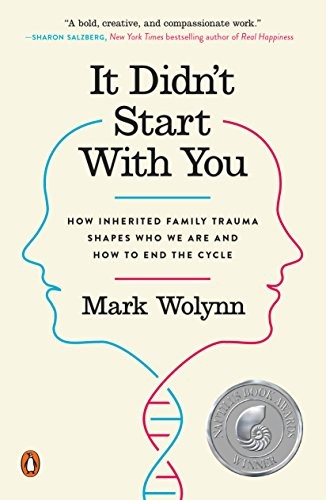
It Didn't Start with You
Mark Wolynn
Groundbreaking exploration of inherited family trauma and how to end intergenerational cycles.

Anchored
Deb Dana, LCSW
Practical everyday ways to transform your relationship with your nervous system using Polyvagal Theory.
As an Amazon Associate, Clarity House Press earns from qualifying purchases. Your price is never affected.
Found this helpful?
Share it with someone who might need it.
About the Author

Clarity House Press
Editorial Team
The editorial team at Clarity House Press curates and publishes evidence-based content on narcissistic abuse recovery, high-conflict divorce, and healing. Our content is informed by research, survivor experiences, and established trauma-informed approaches.
View all posts by Clarity House Press →Published by Clarity House Press Editorial Team