Please read our important disclaimers before using this content
When you're a military spouse experiencing narcissistic abuse, you navigate challenges that civilian survivors never face: rank hierarchy that empowers your abuser, frequent relocations that isolate you from support, deployment schedules that complicate custody, and dual legal systems (military and civilian) that create jurisdictional confusion. For service members who are themselves experiencing abuse from a civilian partner, see our guide specifically addressing narcissistic abuse from the deployed service member's perspective. Research confirms that military populations experience intimate partner violence at elevated rates, with systematic reviews finding past-year physical IPV perpetration rates of approximately 22% among active-duty personnel (Kwan et al., 2020).
Military culture—with its emphasis on discipline, chain of command, and unit cohesion—can enable abuse by:
- Prioritizing the service member's career over the spouse's safety
- Discouraging "airing dirty laundry" that might harm unit reputation
- Creating power imbalances based on rank
- Isolating spouses through frequent moves and geographic distance from family
Military spouses face unique barriers:
- Reporting abuse may jeopardize service member's career (and your financial security)
- Moving every 2-3 years disrupts employment, friendships, and legal proceedings
- Deployment creates custody complications and concentrated abuse before/after deployment
- Military benefits (healthcare, housing, income) are tied to marriage
- Dual jurisdiction (military law + state family law) creates complexity
- Limited civilian employment history makes financial independence difficult
This post addresses:
- How military culture and structure enable narcissistic abuse
- Rank dynamics and power imbalances
- Legal complexities: military vs. civilian court, SCRA, deployment custody
- Accessing resources on base and through military support systems
- Financial considerations (benefits, BAH, retirement division)
- Strategies for military spouses navigating divorce and custody
How Military Culture Enables Narcissistic Abuse
1. Chain of Command and Rank Hierarchy
Military rank creates inherent power imbalances:
If your service member spouse outranks you socially:
- You're defined by their rank (you're "Captain Smith's wife," not your own person)
- Social circles organized by rank (friendships controlled by spouse's position)
- Access to resources, housing, and opportunities tied to spouse's rank
- Challenging abuse risks your social standing in military community
If your spouse is officer and you're enlisted spouse (or vice versa):
- Rigid class divisions in military culture
- Different social expectations and resources
- Power dynamics shaped by military hierarchy extend into marriage
How abusers weaponize rank:
- "I'm an officer—no one will believe you"
- "Your complaint will ruin my career and our family's security"
- "The command will side with me, not you"
- Using military authority and bearing to intimidate and control
- Leveraging respect their rank commands to dismiss your claims
2. Unit Cohesion Over Individual Safety
Military culture prioritizes mission and unit:
- "Don't rock the boat"
- "What happens in the unit stays in the unit"
- Loyalty to fellow service members above all else
- Reporting abuse seen as betrayal of unit cohesion
Commanders may prioritize service member's career:
- Domestic violence reports can end careers (loss of security clearance, discharge)
- Commanders may minimize abuse to avoid disrupting unit
- Pressure on spouse to "work it out" rather than report
- "Counseling" (informal resolution) instead of accountability
Result: Spouses are discouraged from reporting abuse to protect the unit's reputation and the service member's career. This institutional silencing mirrors the broader pattern of how smear campaigns and reputation management operate in abusive relationships—the abuser's image is protected at all costs.
3. Geographic Isolation Through PCS Moves
Permanent Change of Station (PCS) every 2-3 years:
- Constant relocation disrupts support networks
- Far from family and long-term friends
- Can't establish career or financial independence
- Legal proceedings interrupted by moves
- Children's stability disrupted (schools, friendships, activities)
Research demonstrates that problems from service-related moves are associated with greater psychological distress in military partners, even when accounting for service members' PTSD symptoms and deployment separation (Ribeiro et al., 2023).
Isolation as abuse tactic:
- Narcissists use PCS moves to isolate you from support
- "Fresh start" after each move means no one knows the abuse history
- You have no local support network to turn to
- Each move resets your employment, making financial independence impossible
Overseas assignments:
- Even more isolated (foreign country, language barriers, limited legal protections)
- Status of Forces Agreements (SOFA) create jurisdictional complexity
- Returning to U.S. for safety may mean abandoning housing and income
4. Deployment Cycles and Concentrated Abuse
Deployment creates unique abuse patterns:
Pre-deployment (weeks before leaving):
- Increased control and surveillance ("making sure you'll behave while I'm gone")
- Financial control (locking down accounts, cutting off access)
- Threats about what will happen if you leave while deployed
- Intense abuse episodes (stress of impending separation)
During deployment:
- Remote control (monitoring through technology, financial control, surveillance)
- Using deployment sympathy to manipulate ("I'm in a war zone and you're complaining?")
- Hoovering (love-bombing via letters/calls to maintain control)
- Isolation (you're alone with children, no local support)
Post-deployment:
- Reintegration stress (used as excuse for continued abuse)
- PTSD or combat trauma compounded with narcissistic personality (NOT the same thing, but can co-occur)
- Explosive rage and violence (honeymoon phase may be brief or nonexistent)
- "You don't understand what I've been through" (dismissing your experience)
Research on UK military personnel found that 34.7% reported relationship conflict and 3.4% reported perpetrating physical IPV following deployment, with deployment-related trauma and mental health difficulties identified as key risk factors (Fear et al., 2022).
Custody complications:
- Service member may seek custody modification during deployment (claiming you can't handle children alone)
- Or claim deployment makes shared custody impossible (seeking sole custody)
- Deployment used strategically in custody timing
5. Financial Dependence Through Military Benefits
Benefits tied to marriage:
- TRICARE (health insurance): You lose coverage if you divorce (unless meet certain criteria for continued coverage)
- BAH (Basic Allowance for Housing): Higher rate for married service members "with dependents"—divorce reduces this income
- Commissary and PX privileges: Access to affordable groceries and goods
- Base housing: Priority for married families
- Separation pay, hazardous duty pay, etc.: Income tied to military service
Economic abuse through benefits:
- Threatening to divorce you (losing healthcare, housing, financial support)
- Controlling access to benefits (taking ID card, controlling money)
- Using benefits as leverage ("If you leave, you'll have nothing")
Reality: Divorce does not automatically mean loss of all benefits (see section below on post-divorce benefits).
Rank-Specific Dynamics in Military Abuse
Officer Spouses
Unique pressures:
- Social expectations (perfect "officer's wife" image)
- High visibility in military community
- Spouse employment difficult due to frequent moves and social expectations
- "Good order and discipline" image to maintain
- Access to legal resources (often better than enlisted)
How abuse manifests:
- Abuser uses status and connections to control narrative
- Social ostracism if you report (other officer spouses may side with service member)
- High-functioning abuse (polished public image, private terror)
- Financial control despite higher income (you may never see the money)
Enlisted Spouses
Unique pressures:
- Lower income (economic abuse harder to escape)
- Less social capital and connections
- Limited access to legal resources
- May live in base housing (harder to leave without losing housing)
- Younger families (married earlier, less financial stability)
How abuse manifests:
- Financial control through limited income
- Isolation through lack of transportation (one car, spouse controls it)
- Physical violence more likely (research shows DV rates higher among enlisted)
- Less education about legal rights and resources
Senior Enlisted and Officer Spouses
Unique pressures:
- Long marriages (20+ years) make leaving feel impossible ("I've invested my whole adult life")
- Retirement benefits at stake (20-year mark critical)
- Adult children may pressure you to stay ("wait until Dad retires")
- Identity tied to military life (leaving means losing entire identity and community)
How abuse manifests:
- "I'm too close to retirement to leave" trap
- Adult children side with service member (financial interest in maintaining family for retirement benefits)
- Decades of abuse normalized
- Fear of starting over after 50+ years old
Legal Complexities for Military Spouses
Military Justice vs. Civilian Family Law
Two separate systems:
- Military justice (UCMJ - Uniform Code of Military Justice): Governs service member's conduct, including domestic violence
- Civilian family law: Governs divorce, custody, child support, alimony (state law)
UCMJ and domestic violence:
- Article 128 (assault)
- Article 134 (general article—conduct unbecoming, etc.)
- Domestic violence can result in court-martial, reduction in rank, discharge, loss of security clearance
Reporting to command vs. filing for divorce:
- Reporting to command: May trigger UCMJ investigation and prosecution (but doesn't address custody/divorce)
- Filing for divorce: Civilian court process (but doesn't address military discipline)
- You can do both—they're separate processes
Strategic considerations:
- Reporting to command may provide accountability and documentation
- But may jeopardize family income if service member is discharged
- Civilian court offers legal protections and custody/financial resolution
- Work with attorneys who understand both systems
Servicemembers Civil Relief Act (SCRA)
What is SCRA? Federal law protecting active-duty service members from certain civil legal proceedings, including divorce and custody cases.
SCRA allows service members to:
- Request stay (delay) of court proceedings during active duty
- Postpone divorce, custody hearings, trials if deployment or military duties interfere
How abusers weaponize SCRA:
- Requesting delays even when not necessary (stalling tactics)
- Claiming they "can't participate" due to military service (when they could)
- Using SCRA to avoid accountability and prolong your legal limbo
Overcoming SCRA abuse:
- Prove service member is using SCRA as delay tactic (not legitimate military necessity)
- Request expedited hearings during service member's leave or between deployments
- Work with JAG (Judge Advocate General) or civilian attorneys familiar with SCRA
Know: SCRA protects service members' ability to participate in proceedings—it doesn't give them unlimited power to delay indefinitely.
Deployment and Custody Modification
Temporary custody modification during deployment:
- Service member can request temporary custody change while deployed (children stay with you, grandparents, or other family)
- This should be TEMPORARY (reverting after deployment)
- Courts generally won't permanently modify custody solely based on deployment
Strategic abuse of deployment custody:
- Service member seeks permanent modification (not just temporary)
- Claims deployment proves you should have sole custody (because they can't be present)
- Or claims you "can't handle" children alone during deployment
- Uses deployment to gain leverage in custody negotiations
Protections for service members (and you):
- Deployed parent should not lose custody solely due to deployment
- Temporary arrangements during deployment should not be used against them (or you) permanently
If YOU are the service member:
- Deployment should not cost you custody
- Temporary custody modifications should revert after deployment
- Document your parenting and plan for reintegration
Jurisdiction and Interstate Issues
Military families move frequently across state lines:
- Which state has jurisdiction for divorce/custody?
- What if you file in one state, then PCS to another?
- What if service member is deployed overseas?
UCCJEA (Uniform Child Custody Jurisdiction and Enforcement Act):
- Determines which state has jurisdiction (usually child's "home state"—where they've lived for 6+ months)
- Prevents forum shopping and conflicting custody orders
Strategic considerations:
- File in the most favorable state (if you have choice)
- Understand that PCS move may not change jurisdiction (if case already filed)
- Work with attorneys familiar with interstate custody and military moves
Military Protective Orders vs. Civilian Protective Orders
Military Protective Order (MPO):
- Issued by commander (not a court)
- Protects you from service member's contact
- Violation can result in UCMJ charges (court-martial)
- NOT enforceable by civilian police (only on base)
- Temporary (expires when you leave base, when service member PCSs, or when commander rescinds)
Civilian Protective Order (CPO) / Restraining Order:
- Issued by civilian court
- Enforceable by civilian police (on and off base)
- Can include provisions about children, property, contact
- Longer-term protection
- Violation is contempt of court (criminal charges)
Best practice: Seek BOTH—MPO for immediate base protection, CPO for civilian legal protection.
Financial Considerations for Military Spouses
Division of Military Retirement
Military retirement is marital property (divisible in divorce):
10/10 Rule:
- If married 10+ years AND service member served 10+ years of active duty during marriage, you can receive retirement pay directly from DFAS (Defense Finance and Accounting Service)
- This does NOT mean you automatically get 50%—division depends on state law and length of marriage
20/20/20 Rule (benefits after divorce):
- Married 20+ years
- Service member served 20+ years
- 20+ years overlap between marriage and service
- If you meet this: You retain full military benefits (TRICARE, commissary, PX) for life (unless you remarry)
20/20/15 Rule (temporary benefits):
- Married 20+ years
- Service member served 20+ years
- 15+ years overlap
- If you meet this: You retain benefits for 1 year post-divorce (can purchase continued coverage after)
Strategies:
- If you're close to 20/20/20, consider timing of divorce (waiting may preserve benefits)
- If service member is close to 20-year retirement, understand how divorce affects your share
- Work with attorneys familiar with military divorce and retirement division
Basic Allowance for Housing (BAH) and Support
During separation (before divorce finalized):
- Service member may be required to pay you BAH (housing allowance) if you're living separately
- State law and military regulations both apply
- You may be entitled to temporary spousal support
After divorce:
- BAH "with dependents" ends when divorced (service member receives lower rate)
- This reduces income available for child support/alimony
- Plan for decreased income post-divorce
TRICARE and Healthcare
During marriage: You have TRICARE coverage
After divorce:
- If you meet 20/20/20 rule: Full TRICARE for life
- If you meet 20/20/15 rule: TRICARE for 1 year
- If you don't meet either: You lose TRICARE immediately (must find other coverage)
Strategies:
- Negotiate continued health insurance in divorce settlement (service member pays for your private insurance)
- Explore marketplace insurance, Medicaid, employer coverage
- If you have chronic illness or children with special needs, healthcare access is critical
Employment and Career Impact
Military spouse unemployment rate is significantly higher than civilian population:
- Frequent moves disrupt employment
- Licensing issues (professional licenses don't transfer across states)
- Employers reluctant to hire military spouses (know they'll move)
- Gaps in employment history
Research using the Deployment Life Study found a $17,000 earnings gap between military wives and matched civilian peers, with female military spouses earning approximately 25% less than comparable civilians despite working similar hours (Meadows et al., 2016).
In divorce, this affects:
- Your earning capacity (may be limited due to years out of workforce)
- Alimony calculations (you may be entitled to support to rebuild career)
- Economic abuse is compounded by structural barriers
Strategies:
- Document your career sacrifices for military life (evidence for alimony)
- Seek vocational evaluation (establishes your earning potential with retraining)
- Consider alimony that includes funding for education/retraining
- Remote work and portable careers (if possible)
Accessing Resources as Military Spouse
On-Base Resources
Family Advocacy Program (FAP):
- Military DV program on every base
- Provides counseling, safety planning, advocacy
- Can issue MPO (military protective order)
- Confidentiality concerns: FAP reports to command, which may trigger investigation
Victim Advocate (VA):
- Confidential support for DV victims
- Can be military VA or civilian VA (through FAP)
- Helps with safety planning, navigating systems, connecting to resources
JAG (Judge Advocate General):
- Military legal assistance office
- Can provide legal information (but not representation in divorce)
- Can explain military benefits, SCRA, retirement division
- Cannot represent you in divorce—you need civilian attorney
Chaplain:
- Confidential counseling and spiritual support
- Can help with safety planning and connecting to resources
- Be cautious: Some chaplains lack DV training and may give harmful advice (see religious abuse post)
Military OneSource:
- Free 24/7 support for military families
- Counseling, legal consultations, financial planning
- 1-800-342-9647 or militaryonesource.mil
Off-Base Civilian Resources
Civilian DV organizations:
- Often better resourced and trained than FAP
- Confidentiality not tied to military command
- Can provide shelter, legal advocacy, counseling
- National Domestic Violence Hotline: 1-800-799-7233
Civilian attorneys:
- You need civilian family law attorney for divorce/custody (JAG can't represent you)
- Look for attorneys with military divorce experience
- Understand SCRA, retirement division, BAH, TRICARE, deployment custody
Miles Foundation:
- Support for military sexual assault and DV survivors
- Advocacy and navigation assistance
- milescares@gmail.com
Confidentiality Considerations
Who you tell matters:
Confidential:
- Victim Advocate (if using restricted reporting)
- Chaplain (privileged communication)
- Civilian DV hotline
- Your civilian therapist
- Your attorney (attorney-client privilege)
NOT confidential (may report to command):
- Family Advocacy Program (unrestricted reporting)
- Medical providers (if they diagnose DV-related injuries)
- Your service member spouse's commander (if you report directly)
- Military police (if you file report)
Strategic reporting:
- Understand difference between restricted and unrestricted reporting
- Restricted: Confidential, gets you services, does NOT trigger command investigation
- Unrestricted: Triggers command investigation, may lead to UCMJ action against service member
Strategies for Military Spouses Leaving Abuse
1. Understand Your Benefits and Timeline
Before filing for divorce, know:
- How many years have you been married?
- How many years has service member served?
- Are you close to 20/20/20 or 20/20/15? (If yes, timing matters)
- What benefits are you entitled to?
- What's your financial situation post-divorce?
Strategic timing:
- If 6 months from 20/20/20, you may choose to wait (to preserve benefits)
- If service member is abusive, safety outweighs benefits (leave regardless)
- Balance financial security with immediate safety
2. Document Everything (Military-Specific Evidence)
Standard DV documentation (texts, photos, medical records, witnesses) PLUS:
Military-specific documentation:
- Reports to FAP or command
- Military protective orders (MPOs)
- Incidents involving military police
- Medical records from military treatment facilities
- Impact of abuse on service member's duty performance (if applicable)
- Deployment cycles and abuse patterns
Why it matters: Military context helps establish pattern and severity.
3. File in the Most Favorable Jurisdiction (If You Have Options)
If you've recently PCS'd:
- You may have choice of which state to file in
- Research state laws (alimony, custody, retirement division vary)
- File in the state most favorable to your case
If service member is deployed:
- You can still file (though they may invoke SCRA for delay)
- Filing while deployed may give you strategic advantage (establish jurisdiction, start process)
4. Work with Military-Divorce-Competent Professionals
What military divorce competency means:
- Understanding of SCRA, UCMJ, retirement division, BAH, TRICARE
- Experience navigating military and civilian court systems
- Knowledge of deployment custody issues
- Connections to military legal resources
Questions to ask attorneys:
- "What percentage of your cases involve military divorce?"
- "Are you familiar with SCRA and how to challenge improper delays?"
- "How do you handle retirement division in military divorces?"
- "Do you work with JAG or military legal resources?"
5. Safety Planning for PCS and Deployment
If PCS is coming:
- Plan to leave before or immediately after PCS (moving is chaotic—opportunity to escape)
- If you move with service member, you may lose support network you've built
- If you refuse to PCS, understand consequences (loss of housing, income, benefits)
If deployment is coming:
- Pre-deployment is high-risk time (increased abuse)
- Plan to leave during deployment (when service member is absent) OR
- Wait until post-deployment if safer
- Use deployment time to save money, consult attorneys, build support
6. Address Rank-Based Social Consequences
Losing military community:
- Expect ostracism from military spouses (especially if service member has rank/status)
- Build civilian support network
- Online communities for military DV survivors
- Know that leaving means losing military social identity (grieve this, but prioritize safety)
Preserving friendships:
- Some military spouses will support you
- Others will side with service member (unit loyalty, self-interest)
- Don't expect everyone to believe or support you
7. Plan for Financial Transition
Loss of military income and benefits:
- Budget for post-divorce income (may be significantly less)
- Explore employment, retraining, education
- Seek alimony that accounts for career sacrifices
- Apply for benefits you're entitled to (TRICARE continuation if eligible, etc.)
Economic abuse recovery:
- Rebuild credit if abuser controlled finances
- Open accounts in your name only
- Protect your share of retirement and other assets
For comprehensive guidance on rebuilding financially after economic abuse, including the specific steps for credit repair and asset protection, see our dedicated guide.
Special Situations
When the Service Member Has PTSD or Combat Trauma
PTSD is NOT an excuse for abuse:
- Many veterans have PTSD and do not abuse their partners
- PTSD may contribute to symptoms (hypervigilance, irritability, emotional numbing) but does not cause domestic violence
- Domestic violence is about power and control—not trauma symptoms
While research shows the rate of intimate partner violence among veterans with PTSD is approximately three times the rate among veterans without PTSD (VA Evidence-based Synthesis Program, 2014), PTSD does not cause abuse—it may lower inhibitions or increase reactivity, but the choice to use power and control remains a choice.
If your spouse has PTSD AND is abusive:
- Treatment for PTSD (therapy, medication) is separate from treatment for abusive behavior (batterer intervention)
- Both may be needed, but PTSD treatment alone will not stop abuse
- Safety is still your priority
In custody cases:
- PTSD alone should not disqualify service member from custody
- But if PTSD symptoms create unsafe environment for children (untreated rage, violence), this is relevant
- Document specific behaviors, not just diagnosis
When YOU Are the Service Member
Active-duty service members experiencing abuse from civilian spouses:
- Abuse of male service members is underreported and stigmatized
- You may face disbelief ("how can a civilian abuse a soldier?")
- Command may not take your reports seriously
- Same legal protections apply (MPOs, civilian protective orders, divorce/custody rights)
Strategic considerations:
- Reporting to command may affect your career (even as victim)
- Document thoroughly
- Seek civilian DV support (not just military)
- Know that abuse of service members by civilian spouses is real and valid
When Both Spouses Are Service Members (Dual Military Families)
Unique challenges:
- Both have military careers at stake
- Reporting may affect both careers
- Custody complicated by dual deployment possibilities
- Benefits and retirement division more complex
Who has leverage:
- Often depends on rank, career trajectory, command relationships
- Dual military divorces require attorneys experienced in this complexity
You Deserve Safety—Regardless of Rank, Benefits, or Service
Being a military spouse does not mean you must endure abuse.
Your service member's career is not more important than your safety.
Losing benefits is not worse than losing your life or your sanity.
You are not "ruining" your family by leaving—the abuser did that.
Military culture may tell you to "suck it up" and "support your service member"—but abuse is not part of the contract you signed.
You deserve:
- Safety from violence
- Legal protections under military and civilian law
- Financial security post-divorce
- A peaceful home for you and your children
- Support from systems designed to protect you
Your service to your country (as military spouse) does not require you to sacrifice your safety.
You can honor the military and still leave abuse. Understanding how protective orders work and their limitations—and what to do when military protective orders and civilian restraining orders intersect—helps you navigate the dual system effectively.
You can support the troops and still protect yourself.
You are not alone. Help exists. You deserve freedom.
NOTE ON HOTLINE NUMBERS: Phone numbers for crisis hotlines, legal aid, and support services are provided as a resource. These numbers are current as of publication but may change. Please verify hotline numbers are still active before relying on them. For the National Domestic Violence Hotline, visit thehotline.org for current contact information.
Resources for Military Spouses
Military-Specific DV Resources:
- Military OneSource: 1-800-342-9647 (militaryonesource.mil)
- Miles Foundation: milescares@gmail.com (military sexual assault and DV support)
- National Domestic Violence Hotline: 1-800-799-7233 (ask for military-trained advocate)
On-Base Resources:
- Family Advocacy Program (FAP): Contact your base's FAP office
- Victim Advocate: Available through FAP or base services
- JAG (legal information): Contact your base's legal assistance office
- Chaplain: Base chaplain services
Legal Help:
- American Bar Association Military Pro Bono Project: militaryprobonoproject.org
- Stateside Legal: statesidelegal.org (free legal help for military families)
Benefits Information:
- DFAS (retirement benefits): dfas.mil
- TRICARE: tricare.mil
- VA Benefits: va.gov
Resources
Military Domestic Violence and Legal Support:
- DoD Safe Helpline - 1-877-995-5247 for military community abuse support
- National Domestic Violence Hotline - 1-800-799-7233 (SAFE) for safety planning and benefits information
- Military OneSource - 1-800-342-9647 for confidential counseling and legal consultations
- Armed Forces Legal Assistance - JAG legal help for divorce and protective orders
Employment and Financial Resources for Military Spouses:
- Military Spouse Employment Partnership (MSEP) - Job opportunities for military spouses
- Hiring Our Heroes - Career development and employment for military families
- FreeFrom - Financial empowerment for domestic violence survivors
- National Foundation for Credit Counseling - Financial planning and credit counseling
Crisis Support and Community:
- 988 Suicide & Crisis Lifeline - Call or text 988 for crisis support (24/7)
- Crisis Text Line - Text HOME to 741741 for crisis counseling
- National Sexual Assault Hotline - 1-800-656-HOPE for sexual assault support
- r/MilitarySpouse - Reddit community for military spouse support
Your rank does not determine your worth. Your benefits do not define your options. Your safety matters more than any career or paycheck. You deserve freedom.
References
Fear, N. T., Sherrin, C., Mayfield, A., Hall, A., Mayeux, C., Sherwood, J., ... & MacManus, D. (2022). Relationship conflict and partner violence by UK military personnel following return from deployment in Iraq and Afghanistan. Social Psychiatry and Psychiatric Epidemiology, 57(6), 1251-1261. https://pmc.ncbi.nlm.nih.gov/articles/PMC9167453/
Kwan, J., Sparrow, K., Facer-Irwin, E., Thandi, G., Fear, N. T., & MacManus, D. (2020). Prevalence of intimate partner violence perpetration among military populations: A systematic review and meta-analysis. Aggression and Violent Behavior, 53, 101419. https://pmc.ncbi.nlm.nih.gov/articles/PMC7375166/
Meadows, S. O., Griffin, B. A., Karney, B. R., & Pollak, J. (2016). Employment gaps between military spouses and matched civilians. Armed Forces & Society, 42(3), 542-561. https://www.rand.org/pubs/external_publications/EP66568.html
Ribeiro, S., Renshaw, K. D., & Allen, E. S. (2023). Military-related relocation stress and psychological distress in military partners. Journal of Family Psychology, 37(1), 45-53. https://pubmed.ncbi.nlm.nih.gov/36048073/
VA Evidence-based Synthesis Program. (2014). Intimate partner violence: Prevalence among U.S. military veterans and active duty servicemembers and a review of intervention approaches. Washington, DC: Department of Veterans Affairs. https://www.hsrd.research.va.gov/publications/esp/partner_violence.cfm
Recommended Reading
From Clarity House Press — plus trusted books for deeper understanding


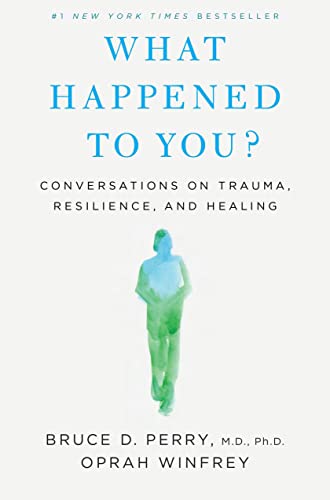
What Happened to You?
Bruce D. Perry, M.D., PhD & Oprah Winfrey
A conversational introduction to how early experience shapes us — reframing 'what's wrong with you' into 'what happened to you.'

Waking the Tiger: Healing Trauma
Peter A. Levine & Ann Frederick
An introduction to Somatic Experiencing and the body's innate capacity to release trauma and restore balance.
As an Amazon Associate, Clarity House Press earns from qualifying purchases. Your price is never affected.
Found this helpful?
Share it with someone who might need it.
Tags
About the Author

Clarity House Press
Editorial Team
The editorial team at Clarity House Press curates and publishes evidence-based content on narcissistic abuse recovery, high-conflict divorce, and healing. Our content is informed by research, survivor experiences, and established trauma-informed approaches.
View all posts by Clarity House Press →Published by Clarity House Press Editorial Team