Please read our important disclaimers before using this content
I didn't know I was angry for two years after leaving.
I knew I was sad, anxious, confused. I could access those emotions easily. But anger? That was off limits—buried so deep I couldn't feel it even when I had every right to.
Then one day in therapy, talking about something he'd done during our marriage, my therapist interrupted: "You're describing something that would make most people furious. What do you feel right now?"
"Nothing," I said. "I mean, it was bad, but I'm over it."
"Your jaw is clenched. Your hands are fists. Your voice just got quieter. That's not 'over it.' That's suppressing something."
She was right. I was holding decades of rage so far down I'd convinced myself it didn't exist.
Learning to access, express, and use anger healthily was one of the hardest parts of recovery. Anger had been dangerous my entire life—either my anger that got me punished, or others' anger that got me hurt.
But anger isn't the enemy. Suppressed anger is.
Why Trauma Survivors Suppress Anger
Anger is a natural, protective emotion. It signals boundary violations, injustice, and threats. It mobilizes us to defend ourselves. Research shows that anger dysregulation is a core feature of PTSD1, affecting how survivors experience and express this emotion. Many survivors find that understanding complex PTSD and its emotional effects provides important context for their relationship with anger.
But trauma teaches us anger is dangerous.
How anger becomes unsafe:
Your anger was punished: Expressing anger as a child led to greater abuse, abandonment threats, or being told you were "bad," "out of control," or "ungrateful."
You absorbed responsibility for others' anger: Their rage was your fault. If you were better, quieter, more compliant, they wouldn't get angry.
Anger meant violence: The angry people in your life hurt you. You learned anger = danger.
Fawning survival strategy: Your safety required making others happy. Anger threatened that strategy. The fawn trauma response explains why so many survivors lose access to their own anger entirely.
"Good girl/boy" conditioning: You were rewarded for being pleasant, punished for expressing displeasure.
Anger was modeled destructively: You saw anger as rage, violence, cruelty—never as healthy boundary-setting or self-protection.
The survival adaptation:
Suppress all anger. Be compliant. Don't make waves. Keep everyone comfortable. Smile through mistreatment.
This worked—it kept you safer in an impossible situation.
The problem:
That adaptation persists after the trauma ends. You still suppress anger even when it would protect you. You still prioritize others' comfort over your own legitimate outrage.
You're carrying decades of unexpressed anger that has nowhere to go.
What Happens to Suppressed Anger
Anger doesn't disappear when suppressed. It finds other ways out.
Depression: Anger turned inward. All that rage at what was done to you becomes rage at yourself for "letting it happen," being "weak," or "not getting over it." Research documents the well-established connection between suppressed anger and depression2.
Physical symptoms: Chronic pain, tension, headaches, digestive issues. The body holds what the mind won't process. Research demonstrates clear links between emotional suppression and physical health problems3.
Passive aggression: Can't express anger directly, so it leaks out sideways—sarcasm, "forgetting" commitments, subtle sabotage.
Explosive outbursts: Years of suppressed anger building until trivial trigger creates disproportionate explosion. Then shame spiral because you "lost control."
Resentment: Chronic, bitter anger that burns without resolution. Corrodes relationships and your own peace.
People-pleasing burnout: Endlessly accommodating others while internal rage grows. Eventually hitting wall where you can't do it anymore.
Self-destructive behaviors: Using substances, relationships, work, or other compulsions to manage uncomfortable anger.
Emotional numbness: Suppressing anger requires suppressing all strong emotions. You end up numb to everything.
Suppressed anger doesn't protect you—it poisons you.
Healthy Anger vs. Destructive Rage
Part of what makes anger scary is confusing healthy anger with destructive rage.
Healthy anger:
- Signals boundary violation or injustice
- Proportionate to situation
- Has clear target and cause
- Motivates protective action
- Can be expressed without violence
- Leads to resolution or boundary-setting
- Passes after being acknowledged
Destructive rage:
- Explosive and uncontrolled
- Often disproportionate to trigger
- Diffuse—everything makes you angry
- Seeks to harm or destroy
- Feels dangerous to self and others
- Doesn't resolve—creates more problems
- Can become chronic state
You can learn healthy anger without becoming destructively rageful.
The goal isn't eliminating anger. It's accessing it appropriately and expressing it constructively.
Recognizing Your Suppressed Anger
If you can't feel anger, start by recognizing its disguises.
Anger often shows up as:
"I'm fine"—while obviously not fine: Tight jaw, tense shoulders, clipped responses.
Exhaustion: Suppressing emotion is metabolically expensive. Chronic fatigue can mask suppressed anger.
Contempt or disdain: Looking down on people instead of acknowledging you're angry at them.
Overly rational responses: Explaining away mistreatment intellectually rather than feeling legitimately angry about it.
"It's not worth it": Dismissing anger before you fully feel it.
Numbness: Feeling nothing when you should feel something.
Physical symptoms: Tension headaches, jaw clenching, digestive issues without medical cause.
Notice your body:
Your body knows you're angry even when your mind denies it. Clenched fists, tight jaw, shallow breathing, tense shoulders, heat in chest or face—these are anger signals.
When your body shows these signs but you feel "nothing," you're suppressing.
Permission to Be Angry
Before you can access anger, you need permission to have it.
You're allowed to be angry about:
- What was done to you
- What wasn't done for you
- Years of mistreatment
- Having to rebuild yourself from scratch
- Time you lost
- Who you had to become to survive
- That it happened at all
- That they got away with it
- That healing is so hard
Your anger doesn't require their acknowledgment, apology, or change to be valid.
You're not angry because you're damaged, broken, or "not healed yet." You're angry because genuinely terrible things happened to you that shouldn't have.
That anger is appropriate. It's earned. It's healthy.
Give yourself permission:
"I'm allowed to be angry." "My anger is valid." "Being angry doesn't make me like them." "Anger is a healthy response to injustice."
Accessing Suppressed Anger Safely
If you've suppressed anger for decades, accessing it needs to happen carefully.
Start small:
Don't jump straight to your biggest traumas. Practice with recent, minor irritations.
Someone cut you off in traffic. A friend canceled plans last-minute. Your coffee order was wrong.
Notice: "That's annoying. I'm irritated."
Stay with that small anger. Don't immediately rationalize it away. Just feel slightly annoyed for a moment.
Work up to bigger anger gradually:
As you build tolerance for small anger, work toward bigger legitimate grievances.
Mistreatment at work. Boundary violation by family member. Disrespect from friend.
Name it:
"I'm angry that happened." "I feel angry when I remember that." "I'm mad about how I was treated."
Naming creates distance from emotion while still acknowledging it.
Track it in your body:
Where do you feel anger? Chest? Jaw? Hands? Stomach?
What's the physical sensation? Heat? Pressure? Tightness? Energy?
Staying with body sensations helps you feel anger without being overwhelmed by it.
Use somatic release:
Anger is mobilizing energy—your body wants to do something.
- Push against wall
- Punch pillow
- Rip paper
- Throw ice cubes in bathtub
- Stomp feet
- Scream into pillow
Physical release of activation helps complete anger's natural cycle.
Working With Anger in Therapy
Accessing long-suppressed anger often requires therapeutic support.
Good trauma therapist helps you:
Feel anger safely: Provides container where anger can emerge without danger.
Distinguish healthy anger from rage: Teaches difference between appropriate anger and dysregulated response.
Process anger somatically: Works with body sensations, not just cognitive understanding.
Complete interrupted protective responses: Trauma often froze protective anger mid-activation. Therapy helps complete these responses.
Integrate anger with other emotions: Anger isn't isolated—it's part of complex emotional response to trauma.
Therapeutic approaches that work well with anger:
- Somatic Experiencing
- EMDR
- Internal Family Systems (working with angry parts)
- Gestalt (empty chair work)
- Sensorimotor Psychotherapy
Evidence-based treatments that address anger as part of comprehensive trauma therapy include somatic and cognitive approaches145.
Red flags:
- Therapist who pathologizes all anger
- Pushing you to forgive before you've processed anger
- Dismissing your anger as "holding onto the past"
- Inability to hold space for intense emotion
Expressing Anger Constructively
Once you can access anger, you need tools to express it without destruction.
Healthy anger expression:
Direct communication: "I'm angry that you did X. I need Y to change."
Boundary-setting: Using anger's energy to enforce limits. "I won't accept that treatment."
Self-advocacy: Anger motivates speaking up for yourself, asking for what you need, refusing what you don't want.
Letter writing (not sending): Pour out all your rage on paper. Burn it, tear it up, keep it—but get it out.
Physical release: Exercise, movement, somatic practices that discharge activation.
Creative expression: Art, music, writing that channels anger.
Protest/activism: Channeling anger about injustice into systemic change.
When NOT to express anger:
To punish: Anger used as weapon to hurt others.
Without taking responsibility: Blaming everyone else for everything.
In ways that create consequences you can't handle: Rage-quitting job, cutting off everyone, exploding at people with power over you.
When so dysregulated you'll do damage: Sometimes you need to regulate first, express later.
Anger and Boundaries
Anger is intimately connected to boundaries—it's the emotion that signals boundary violations.
Anger tells you:
- Something crossed your limits
- You need to protect yourself
- A boundary needs to be set or enforced
- You're being mistreated
- Your needs aren't being respected
Without anger, boundary-setting is much harder.
People-pleasers who suppress anger struggle with boundaries because they've disconnected from the signal that boundaries are needed.
Reclaiming anger helps you:
- Recognize when boundaries are violated
- Feel motivated to set them
- Have energy to enforce them
- Stop accepting mistreatment
Your anger is your ally in building healthy boundaries.
Anger Toward the Abuser
This is often the scariest anger—rage at the person who hurt you.
You might feel:
Conflicted (if you still have relationship with them) Guilty (if they're dead, if you "should" have forgiven them) Scared (if they still have power in your life) Confused (if you also loved them)
All of this is normal.
You're allowed to be angry at them—even if:
- They're dead
- They're sick/old/pathetic now
- You've "moved on"
- Others have forgiven them
- They did their best
- They were victims too
Your anger at what they did to you is valid regardless of circumstances.
Processing this anger often includes:
- Feeling it fully (possibly in therapy where it's safe)
- Expressing it (letters, empty chair work, somatic release)
- Grieving what you didn't get
- Accepting they won't change/acknowledge/apologize
- Choosing how to move forward
Anger doesn't require confrontation to be processed.
You can fully feel and express your anger without ever telling them. This is about your healing, not their awareness.
When Anger Becomes Problematic
Sometimes anger does become unhealthy.
Warning signs:
Chronic rage: Always angry at everything. Anger is your baseline state.
Inability to let go: Ruminating on past hurts without processing or moving through.
Damage to relationships: Rage that pushes away safe people or creates real harm.
Violence or destruction: Acting on anger in ways that hurt others or yourself.
Stuck in victim identity: Using anger to avoid responsibility for your own life and choices.
If anger has become problematic:
- Seek therapy specializing in anger management
- Consider whether you need trauma processing before anger work
- Look at whether depression or other conditions are manifesting as irritability
- Assess whether you need medication support
- Join anger management group
The goal isn't eliminating anger—it's learning to use it healthily.
Anger and Forgiveness
There's enormous pressure to forgive as part of healing. But anger and forgiveness have complex relationship.
You don't have to forgive to heal.
Forgiveness is personal choice, not requirement for recovery.
Some people:
- Forgive and feel genuinely free
- Choose not to forgive and feel genuinely free
- Hold complicated space where some things are forgiven, others aren't
What matters:
Are you stuck in rumination and bitterness that's corroding your life? Or have you processed your anger, set boundaries, and moved forward—with or without forgiveness?
Genuine forgiveness comes after processing anger, not instead of it.
If you skip to forgiveness to avoid anger, you're suppressing again. That's spiritual bypass, not healing.
Feel the anger first. Process it fully. Then decide about forgiveness—from place of choice, not avoidance.
Living With Healthy Anger
Recovering ability to feel and express anger changes your life.
You'll notice:
Better boundaries: Anger signals violations, motivates protection.
More authenticity: Not performing pleasant when you're actually upset.
Increased energy: Not spending energy suppressing.
Less depression: Anger outward instead of inward.
Better relationships: People know where you stand. Less resentment.
More agency: Anger mobilizes you to change what's changeable.
This doesn't mean being angry all the time.
It means having access to full range of emotions, including anger when appropriate. Being able to feel it, use it, and let it go.
Your Anger Is Not the Enemy
You learned anger was dangerous. That expressing it meant punishment. That feeling it made you like your abuser.
None of that was true.
Anger is protective emotion that signals injustice and motivates boundary-setting. It's part of being fully human.
Suppressing it didn't protect you—it just made you carry the weight of unexpressed rage while performing pleasantness.
You're allowed to be angry.
At what happened. At who did it. At the time you lost. At how hard healing is.
Your anger isn't dangerous. It's information. It's energy. It's motivation.
Let yourself feel it. Express it safely. Use it to protect yourself.
Your anger has been waiting—patient, powerful, protective.
Welcome it home.
Resources
Trauma Therapy and Emotion Regulation:
- Psychology Today - Therapists - Filter for "trauma" and "emotion regulation" specialists
- EMDR International Association - Find EMDR therapists for processing anger and trauma
- Somatic Experiencing Trauma Institute - Body-based trauma therapy for emotional release
- Sensorimotor Psychotherapy Institute - Therapy integrating body awareness and emotion
Books and Educational Resources:
- The Body Keeps the Score by Bessel van der Kolk - Understanding trauma's impact on emotions and anger
- Complex PTSD: From Surviving to Thriving by Pete Walker - Healthy anger and emotional flashback management
- The Dance of Anger by Harriet Lerner - Understanding and expressing anger constructively
- National Center for PTSD - Trauma and emotion regulation research and resources
Support and Crisis Resources:
- National Alliance on Mental Illness (NAMI) - Mental health support groups and education
- r/CPTSD - Reddit community for complex trauma survivors
- 988 Suicide & Crisis Lifeline - Call or text 988 for immediate crisis support
- SAMHSA National Helpline - 1-800-662-4357 (mental health treatment referrals)
References
- Novaco, R. W. (2007). Anger dysregulation: Driver and linchpin for violence. Psychological Trauma: Theory, Research, Practice, and Policy, 1(1), 3-13. https://www.ncbi.nlm.nih.gov/pmc/articles/PMC3033533/ ↩
- Campbell-Sills, L., Forde, D. R., & Stein, M. B. (2009). Demographic and childhood trauma history characteristics of adults with social anxiety disorder. Journal of Anxiety Disorders, 23(2), 247-253. https://www.ncbi.nlm.nih.gov/pubmed/18951005 ↩
- Chapman, Fiscella, Kawachi, Duberstein, & Muennig (2013). Emotion suppression and mortality risk over a 12-year follow-up.. Journal of psychosomatic research. https://pmc.ncbi.nlm.nih.gov/articles/PMC3939772/ ↩
- Tull, M. T., Barrett, H. M., McMillan, E. S., & Roemer, L. (2007). A preliminary investigation of the relationship between emotion regulation difficulties and posttraumatic stress symptoms. Behavior Therapy, 38(3), 303-313. https://www.ncbi.nlm.nih.gov/pubmed/17697852 ↩
- Feeny, N. C., Zoellner, L. A., & Foa, E. B. (2002). Treatment outcome for chronic PTSD among female assault victims with borderline personality characteristics: A preliminary examination. Journal of Personality Disorders, 16(1), 30-40. https://www.ncbi.nlm.nih.gov/pubmed/11881157 ↩
- Reisner, L. C., & Nevonen, L. (2012). A systematic review of the literature on trauma, treatment outcomes, and recovery in eating disorders. Journal of Trauma & Dissociation, 13(2), 220-239. https://www.ncbi.nlm.nih.gov/pubmed/22316343 ↩
- Cloitre, M., Koenen, K. C., Cohen, L. R., & Han, H. (2002). Skills training in affective and interpersonal regulation followed by exposure: A phase-based treatment for PTSD related to childhood abuse. Journal of Consulting and Clinical Psychology, 70(5), 1067-1074. https://www.ncbi.nlm.nih.gov/pubmed/12362957 ↩
- Siever, L. J., Torgersen, S., Gunderson, J. G., Livesley, W. J., & Kendler, K. S. (2002). The borderline diagnosis III: Identifying endophenotypes for genetic studies of personality and psychopathology. Comprehensive Psychiatry, 43(3), 206-217. https://www.ncbi.nlm.nih.gov/pubmed/12018961 ↩
- van der Kolk, B. A., Spinazzola, J., Blaustein, M. E., Hopper, J. W., Hopper, E. K., Korn, D. L., & Simpson, W. B. (2007). A randomized clinical trial of eye movement desensitization and reprocessing (EMDR), fluoxetine, and pill placebo in the treatment of posttraumatic stress disorder: Treatment effects and long-term maintenance. The Journal of Clinical Psychiatry, 68(1), 37-46. https://www.ncbi.nlm.nih.gov/pubmed/17284128 ↩
- Sheppes, G., Scheibe, S., Suri, G., & Gross, J. J. (2011). Emotion-regulation choice. Psychological Science, 22(11), 1391-1396. https://www.ncbi.nlm.nih.gov/pubmed/21933000 ↩
Recommended Reading
From Clarity House Press — plus trusted books for deeper understanding


Polyvagal Exercises for Safety and Connection
Deb Dana, LCSW
50 client-centered practices for regulating the autonomic nervous system.
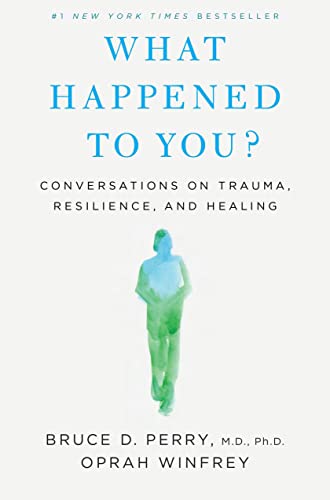
What Happened to You?
Bruce D. Perry, M.D., PhD & Oprah Winfrey
A conversational introduction to how early experience shapes us — reframing 'what's wrong with you' into 'what happened to you.'
As an Amazon Associate, Clarity House Press earns from qualifying purchases. Your price is never affected.
Found this helpful?
Share it with someone who might need it.
About the Author

Clarity House Press
Editorial Team
The editorial team at Clarity House Press curates and publishes evidence-based content on narcissistic abuse recovery, high-conflict divorce, and healing. Our content is informed by research, survivor experiences, and established trauma-informed approaches.
View all posts by Clarity House Press →Published by Clarity House Press Editorial Team