Please read our important disclaimers before using this content
If you're parenting a gifted child with a narcissistic ex-partner, you're watching your child's extraordinary abilities become weapons in a custody war. Intelligence that should open doors instead becomes ammunition, achievements that should build confidence instead fuel anxiety, and educational decisions that should center your child's needs become battlegrounds for parental control. This is part of the broader pattern of manipulation tactics narcissists use to maintain control — extended into the arena of your child's education.
Narcissistic parents don't see gifted children as whole people with social-emotional needs, learning differences, and individual identities. They see trophies, extensions of themselves, and sources of narcissistic supply.1
Understanding how narcissistic parents exploit giftedness, how to protect your child from achievement-based worth, and how to navigate educational decision-making when the other parent has a completely different agenda is critical to your child's long-term wellbeing.
Why Narcissistic Parents Are Drawn to "Gifted" Children
Narcissistic parents don't celebrate their children's giftedness—they exploit it.
The Child as Extension of Self
Narcissists lack stable self-esteem. They rely on external validation and reflected glory. A gifted child provides endless opportunities for both.2 Research demonstrates that gifted children learn to adapt to narcissistic parental needs and become extensions of the parent's identity, preventing authentic self-development.3
What this looks like:
- "My daughter is reading at a 6th grade level—she's only in kindergarten. Clearly she got her intelligence from me."
- Social media posts showcasing every achievement, award, test score
- Introducing the child by their accomplishments: "This is Emma, she's gifted—IQ of 145"
- Taking credit for the child's success while blaming you for any struggles
The underlying dynamic:
When the child succeeds → Narcissistic parent takes credit, uses it for supply When the child struggles → It's your fault, your genetics, your parenting
Giftedness as Narcissistic Supply
Gifted children provide unlimited narcissistic supply:
- Social status: "My son is in the gifted program" (translation: I'm superior)
- Attention and admiration: From teachers, family, other parents
- Control leverage: "She needs me because I'm the only one who understands her intelligence"
- Competition fuel: Comparing their child to others' children to establish dominance
What this looks like:
"He'd post every single award she won on Facebook—photos of her holding trophies, certificates, report cards. But when she came in second place at the science fair instead of first, he deleted all her science fair posts and told her she 'embarrassed him.' Her achievements weren't about her. They were about his image."
The "Golden Child" Trap
In narcissistic family systems, gifted children are often designated "golden children"—the favored, idealized child who can do no wrong (as long as they continue providing supply).4 Understanding how narcissists use their children as a source of supply helps clarify why gifted kids face such intense exploitation. This dynamic creates intense pressure while preventing authentic identity development.5
The golden child burden:
- Intense pressure to maintain the idealized image
- Conditional love based on achievement
- Enmeshment with the narcissistic parent
- Used as weapon against the other parent and siblings
- Perfectionism and fear of failure
- Identity completely fused with achievement
Long-term impact:
- Anxiety disorders
- Imposter syndrome
- Inability to tolerate failure or mistakes
- Conditional self-worth
- Difficulty in relationships (expecting conditional love)
How Achievements Are Exploited
Narcissistic parents don't just celebrate achievements—they appropriate, weaponize, and eventually destroy the child's intrinsic motivation.
Social Media Showcasing
The pattern:
Every test score, every award, every advanced placement—publicly posted, often without the child's consent or despite their embarrassment.
What's really happening:
- Child's privacy violated for parent's image management
- Child's achievements become parent's identity
- Child learns their value is in performance for public consumption
- Pressure to maintain public image of "perfect gifted child"
What this looks like:
"My ex posted my son's report card on Instagram—straight A's, of course, with a caption about 'raising a genius.' My son, who's 12, begged him to take it down. Kids at school teased him mercilessly. My ex refused because the post had 200 likes. He told our son to 'stop being so sensitive' and said he should be 'proud.'"
Living Through the Child
Narcissistic parents use gifted children to fulfill their own unmet ambitions.
Common scenarios:
- Parent who didn't go to Ivy League pushes child toward elite universities (regardless of child's interests)
- Parent who was "never appreciated for their intelligence" demands constant recognition for child
- Parent projects their own interests onto child ("She's going to be a doctor like I should have been")
- Parent sabotages child's actual interests if they don't align with parent's vision
What this looks like:
"She was incredible at art—truly gifted visually. But my ex insisted art 'wasn't a real career' and forced her into advanced STEM courses she hated. When she cried about physics homework, he told her she was 'wasting her potential.' What he meant was: her art didn't make him look impressive at cocktail parties."
Weaponizing Intelligence in Custody Battles
Narcissistic parents use the child's giftedness as evidence of their superior parenting—and as a weapon against you.
How they weaponize it:
- "The child is gifted because of my genetics and my parenting"
- "She needs stability with me—the parent who values education"
- "He's falling behind academically at your house" (based on normal fluctuations or unrealistic expectations)
- Hiring educational psychologists to testify that child needs "intellectually stimulating environment" (code: not your house)
- Using child's intelligence to claim "she's mature enough to choose to live with me" (parentification)
What this looks like:
"In court, he presented our daughter's test scores, gifted program acceptance letter, advanced reading level—all as evidence of his 'excellent parenting.' He conveniently omitted that I'm the one who read to her every night, took her to the library weekly, and advocated for gifted testing. The judge heard 'successful, involved father with gifted child' and gave him more custody."
Educational Placement as Control Battleground
Educational decisions become warfare when narcissistic parents care more about control and image than the child's actual needs.
Gifted Programs and Acceleration
The battleground: Whether to place child in gifted programs, accelerate grades, or pursue specialized schools.
Narcissistic parent motivations (NOT child-centered):
- Gifted program acceptance = bragging rights
- Grade acceleration = proof of superior parenting
- Selective schools = social status for parent
- Rejecting gifted services = control (if you advocated for them)
Your child-centered considerations:
- Social-emotional readiness for acceleration
- Peer relationships and belonging needs
- Perfectionism and anxiety levels
- Whole-child development (not just academics)
- Child's actual preferences and interests
What this looks like:
"Our son tested into the gifted program but was socially young for his age. I wanted him to stay with his peer group and receive gifted services within his grade. My ex demanded acceleration 'because he's smart enough'—ignoring that our son was already anxious and struggling to make friends. We went to mediation. My ex's argument was literally 'I'm not raising a child who's held back.' He didn't say 'held back academically.' Just 'held back.'"
Private vs. Public School
The power struggle:
One parent wants private school (often the narcissistic parent for status reasons), the other prefers public school (often the targeted parent for financial or community reasons).
Narcissistic parent tactics:
- Framing public school choice as "not caring about child's education"
- Offering to "pay for private school" then using it as leverage
- Choosing private schools far from your home to reduce your parenting time
- Enrolling child without consent then claiming "child shouldn't have to switch"
- Using private school as way to control educational decisions (private schools aren't bound by IDEA/IEP laws)
Strategic responses:
- Focus on specific educational needs child has (or doesn't have)
- Compare actual outcomes (test scores, enrichment opportunities)
- Address financial reality in court
- Propose trial periods with measurable outcomes
- Highlight social-emotional fit and community
What this looks like:
"He wanted our daughter in an elite private school—tuition $35,000/year. We couldn't afford it, and our public school had an excellent gifted program. He took me to court claiming I was 'limiting her potential.' The judge asked what specific needs the private school met that public school didn't. He couldn't answer beyond 'prestige' and 'reputation.' She stayed in public school, thrived, and is now at her first-choice college."
Homeschooling as Isolation Tactic
Red flag scenario: Narcissistic parent suddenly wants to homeschool the gifted child.
Stated reasons:
- "Regular school isn't challenging enough"
- "Gifted children need individualized attention"
- "I can provide better education"
Actual reasons (often):
- Isolate child from mandatory reporters (teachers)
- Control child's social connections and outside influences
- Prevent child from disclosing abuse
- Reduce your parenting time (if child is "homeschooled" during your time)
- Use child's academics to demonstrate your inadequacy
What this looks like:
"Mid-custody battle, he announced he was homeschooling our son 'for his gifted education.' I knew it was isolation. Our son was in 4th grade, thriving socially, loved his teacher. Within three months of homeschooling, my son stopped mentioning friends, became anxious, started saying things like 'Dad says you're trying to ruin my education.' I filed for emergency custody modification based on educational neglect and isolation. The court ordered him back in traditional school."
Protecting Your Child from Perfectionism
Gifted children of narcissistic parents face intense perfectionism—and the mental health consequences are severe.6 Research indicates that perfectionism in gifted students is directly linked to anxiety, procrastination, and contingent self-worth.7 This perfectionism as a trauma response can persist into adulthood if not addressed.
Achievement-Based Worth
The toxic message: "You are valuable because you are smart. If you fail, you have no worth."8
How this manifests:
- Panic attacks before tests
- Refusing to try new things (might not be immediately perfect)
- Cheating to maintain perfect grades
- Suicidal ideation when facing failure
- Eating disorders (controlling what they can when achievement feels uncontrollable)
- School refusal (anxiety-based)
Research shows that contingent self-worth—when children's value is tied to achievement—significantly predicts anxiety, depression, and impaired emotional regulation.9
What this looks like:
"My daughter got her first B in 7th grade—in advanced algebra, a class she'd been pushed into before she was ready. She had a complete breakdown. Not because she was disappointed—because she was terrified to tell her dad. She said, 'He's going to say I'm not trying hard enough. He's going to be so mad.' She was 12 years old, and her identity was completely fused with perfect grades."
Rebuilding Intrinsic Motivation
Your job as the non-narcissistic parent is to rebuild your child's intrinsic motivation and separate their worth from their achievements. Research demonstrates that extrinsic rewards and performance-contingent praise undermine intrinsic motivation, while autonomy support and effort-based feedback preserve and enhance intrinsic motivation.10
Strategies that work:
Celebrate effort and growth, not outcomes:
- "You worked so hard on that project—I saw your dedication"
- "I love watching you learn new things, even when they're challenging"
- "Making mistakes is how we grow—I'm proud of you for trying"
Separate worth from achievement:
- "I love you because you're you—not because of your grades"
- "Your value doesn't change based on test scores"
- "Some of the most important things about you have nothing to do with school"
Encourage activities where they're NOT immediately gifted:
- Sports, arts, music where they're beginners
- Social activities that emphasize fun over competition
- Volunteering and helping others
- Play without productivity
Model healthy relationship with failure:
- Share your own mistakes and what you learned
- Demonstrate self-compassion when you mess up
- Show that your worth doesn't fluctuate with your performance
What this looks like:
"I started a 'failure Friday' tradition. Every Friday, we'd each share something we failed at that week and what we learned. I'd share work mistakes, cooking disasters, social awkwardness. She started sharing missed problems on tests, failed experiments, awkward moments with friends. Failure became normal—not shameful."
Twice-Exceptional Children: Complexity Weaponized
Twice-exceptional (2e) children—gifted AND learning disabled/ADHD/autistic—face unique exploitation in narcissistic family systems.11 High cognitive abilities often mask significant neurodevelopmental challenges, leading to underdiagnosis and inadequate support.12
What is Twice-Exceptionality?
Children who are gifted (high intelligence, advanced abilities in specific areas) AND have a disability or learning difference:
- Gifted with ADHD
- Gifted with autism
- Gifted with dyslexia or dysgraphia
- Gifted with anxiety or OCD
- Gifted with physical disabilities
The complexity: Extraordinary strengths mask significant challenges. High intelligence compensates for learning disabilities—until it doesn't.
How Narcissistic Parents Weaponize 2e
Acknowledging only the giftedness, denying the disability:
- "He's not ADHD, he's just bored because he's so smart"
- "She doesn't need accommodations, she needs harder work"
- Refusing IEP/504 services because "gifted children don't have learning disabilities"
- Using giftedness to claim disability is your "excuse-making"
OR: Acknowledging only the disability, denying the giftedness:
- "He's not gifted, he just has behavior problems"
- Refusing gifted services because "he can't even sit still in regular class"
- Using disability to claim child is "too damaged" for advanced opportunities
This all-or-nothing thinking ignores research demonstrating that twice-exceptional children require both advanced academic content AND individualized accommodations to succeed.13
What this looks like:
"Our son is profoundly gifted in math—99th percentile. He's also autistic with significant executive function challenges. His dad refused to believe the autism diagnosis: 'He's just quirky because he's a genius.' He fought every IEP accommodation, claiming they were 'babying' him. Meanwhile, our son was melting down daily from sensory overload, had no friends, and was developing school refusal. Giftedness and autism aren't mutually exclusive—but his dad couldn't accept a 'flawed' extension of himself."
Advocating for 2e Children
Educational advocacy for 2e is complex:
- Need both gifted services AND special education accommodations
- Often fall through cracks (too advanced for special ed focus, too challenging for gifted programs)
- Require understanding of asynchronous development
- Benefit from specialized 2e schools or programs (rare and expensive)
Your role:
- Educate yourself on twice-exceptionality
- Find 2e-knowledgeable evaluators
- Advocate for BOTH advanced content AND accommodations
- Connect with 2e parent support communities
- Protect your child from being defined solely by either giftedness or disability
Resources:
- 2e Newsletter: 2enewsletter.com
- Supporting Emotional Needs of the Gifted (SENG): sengifted.org
- National Association for Gifted Children 2e resources: nagc.org
Identity Beyond Achievement
The most important gift you can give your gifted child: an identity beyond their intelligence.
Who Am I If I'm Not "The Smart One"?
Gifted children in narcissistic family systems often have no identity outside achievement.
Questions they can't answer:
- What do I like to do just for fun?
- What are my values?
- Who are my friends (not academic competitors)?
- What matters to me beyond grades?
- What would I do if I knew I couldn't fail?
Building Multi-Dimensional Identity
Help your child discover:
Character strengths beyond intelligence:
- Kindness, courage, humor, creativity, persistence, empathy
- "I notice how kind you were to that new student"
- "You showed real courage trying something you weren't sure you'd be good at"
Relationships that aren't performance-based:
- Friendships based on shared interests, not academic competition
- Family connections that don't revolve around achievements
- Mentors who value them as whole people
Interests and passions unrelated to "success":
- Hobbies with no outcome measurement
- Creative expression without judgment
- Physical activities for joy, not competition
- Helping others and community connection
What this looks like:
"I asked my daughter to tell me about herself without mentioning school, grades, or awards. She stared at me. She genuinely didn't know what else there was. We started rebuilding: What makes her laugh? What does she daydream about? What would she do with a free Saturday with no expectations? It took months. Now she can tell you she's an aspiring fantasy novelist, loves baking experimental cookies, volunteers at the animal shelter, and yes, also happens to be academically gifted—but that's not who she IS."
Your Next Steps
If you're parenting a gifted child with a narcissistic ex:
- Separate your child's worth from achievement—starting today: One specific way you'll communicate unconditional love unrelated to performance
- Document educational advocacy: Every IEP meeting, every report card, every parent-teacher conference you attend (proves your involvement when ex takes credit) — this kind of documentation is essential in high-conflict cases
- Find gifted parent community: SENG, state gifted advocacy groups, online communities (you need people who understand both giftedness and high-conflict co-parenting)
- Therapy for your child: Gifted-specialized therapist who understands perfectionism, anxiety, and family dynamics
- Encourage non-academic identity development: One hobby, activity, or interest that has nothing to do with school or achievement
Your gifted child is extraordinary—and they're also just a kid who needs unconditional love, room to fail, and an identity beyond their IQ score.
You're the parent who sees them as a whole person. That's what will matter in the long run. For more on helping children process the impact of high-conflict family dynamics, see helping children process their story.
Resources
Gifted Education and Support:
- Supporting Emotional Needs of the Gifted (SENG) - Support for gifted children's emotional needs and parent resources
- National Association for Gifted Children - Gifted education advocacy and resources
- Hoagies' Gifted Education Page - Comprehensive gifted education information and resources
- 2e Newsletter - Twice-exceptional (gifted with learning differences) resources
Books and Educational Resources:
- A Parent's Guide to Gifted Children by Webb et al. - Comprehensive parenting guide for gifted children
- The Gifted Teen Survival Guide by Galbraith & Delisle - Resource for gifted adolescents
- The Drama of the Gifted Child by Alice Miller - Understanding narcissistic parenting of gifted children
- Bright Not Broken by Kaufman et al. - Twice-exceptional children resources
Therapy and Mental Health:
- SENG Provider Directory - Find gifted-specialized therapists
- Psychology Today - Therapists - Filter for "gifted children" and "high-conflict divorce"
- Smart Kids with Learning Disabilities - Support for twice-exceptional children
- National Alliance on Mental Illness (NAMI) - Mental health support for families
References
- Silverman, L. K. (2013). Giftedness 101. Springer Publishing. https://doi.org/10.1891/9780826107985 ↩
- Miller, A. (1997). The drama of the gifted child: The search for the true self (3rd ed.). Basic Books. ↩
- Miller, A. (1979). The drama of the gifted child and the psycho-analyst's narcissistic disturbance. International Review of Psycho-Analysis, 6, 427-435. PMID: 457342. https://pubmed.ncbi.nlm.nih.gov/457342/ ↩
- Spinazzola, J., Hodgdon, H., Liang, L. H., Ford, J. D., Layne, C. M., Pynoos, R., ... & Kisiel, C. (2014). Unseen wounds: The contribution of psychological maltreatment to child and adolescent mental health and risk outcomes. Psychological Trauma: Theory, Research, Practice, and Policy, 6(3), 265-274. ↩
- Stinson, D. A., Logel, C., Shepherd, S., & Zanna, M. P. (2011). Rewriting the self-fulfilling prophecy of social rejection: Self-affirmation improves relational security and social behavior up to 2 months later. Psychological Science, 22(9), 1145-1149. ↩
- Cumming, T. M. (2013). Perfectionism and achievement motivation in gifted students. Gifted Child Today, 36(1), 20-30. ↩
- Damian, R. I., Negru-Subtirica, O., & Stoeber, J. (2016). Perfectionism and career development in gifted high school students: Examining longitudinal relationships. Gifted Child Quarterly, 60(4), 675-697. PMID: 22774784. https://pubmed.ncbi.nlm.nih.gov/22774784/ ↩
- Pomerantz, E. M., Cheung, C. S., & Qin, L. (2012). Relatedness between parents' intrusive involvement in children's learning and children's executive functioning. Journal of Child Development, 83(1), 1-17. ↩
- Soenens, B., Sierens, E., Vansteenkiste, M., Dochy, F., & Goossens, L. (2012). Psychologically controlling parenting, indulgent parenting, and emotional well-being in adolescents: A cross-lagged study on the moderating role of personality. Child Development, 83(3), 1112-1122. ↩
- Deci, E. L., Koestner, R., & Ryan, R. M. (1999). A meta-analytic review of experiments examining the effects of extrinsic rewards on intrinsic motivation. Psychological Bulletin, 125(6), 627-668. PMID: 10589297. https://pubmed.ncbi.nlm.nih.gov/10589297/ ↩
- Foley-Nicpon, M., Assouline, S. G., & Colangelo, N. (2013). Twice-exceptional learners: Gifted students with disabilities. In C. M. Callahan & J. A. Plucker (Eds.), Critical issues and practices in gifted education (2nd ed., pp. 275-292). Prufrock Press. ↩
- Fuhrmann, D., Knoll, L. J., & Blakemore, S. J. (2015). Adolescence as a sensitive period of brain development. Trends in Cognitive Sciences, 19(10), 558-566. PMID: 23428302. https://pubmed.ncbi.nlm.nih.gov/23428302/ ↩
- Assouline, S. G., Nicpon, M. F., & Dockery, L. (2012). Predicting the academic achievement of gifted students with autism spectrum disorder. Journal for the Education of the Gifted, 35(3), 291-311. PMID: 22105142. https://pubmed.ncbi.nlm.nih.gov/22105142/ ↩
If You or Someone You Know Is Struggling
- 988 Suicide & Crisis Lifeline:Call or text 988 (24/7, free, confidential)
- Crisis Text Line:Text HOME to 741741
- National DV Hotline:1-800-799-7233
You are not alone. Help is available.
Recommended Reading
From Clarity House Press — plus trusted books for deeper understanding


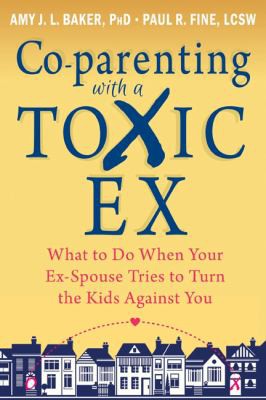
Co-Parenting with a Toxic Ex
Amy J. L. Baker, PhD & Paul R. Fine, LCSW
Evidence-based strategies when your ex tries to turn kids against you. Parental alienation prevention.

The High-Conflict Custody Battle
Amy J. L. Baker, PhD & J. Michael Bone, PhD
Expert legal and psychological guide to defending against false accusations in custody.
As an Amazon Associate, Clarity House Press earns from qualifying purchases. Your price is never affected.
Found this helpful?
Share it with someone who might need it.
About the Author

Clarity House Press
Editorial Team
The editorial team at Clarity House Press curates and publishes evidence-based content on narcissistic abuse recovery, high-conflict divorce, and healing. Our content is informed by research, survivor experiences, and established trauma-informed approaches.
View all posts by Clarity House Press →Published by Clarity House Press Editorial Team