Please read our important disclaimers before using this content
The words came out sharp, louder than you intended. Your partner mentioned forgetting to buy milk, and you're suddenly furious, listing every other thing they've forgotten this month, voice rising, body tensed for battle. Over milk. Again.
Later, alone, the shame arrives. Why can't you control your temper? Why do small things trigger such disproportionate reactions? Why can't you just be calm like normal people?
This is the fight response—one of four primary trauma responses your nervous system deploys when it perceives threat. And it carries more shame than perhaps any other trauma adaptation because it makes you the person who seems aggressive, controlling, difficult, or abusive. Our overview of all four trauma responses explains how fight, flight, freeze, and fawn each develop and interact.
The Neurobiological Foundation
When your brain's amygdala detects danger, it triggers the sympathetic nervous system's activation.1 Your body floods with adrenaline and noradrenaline within seconds. Heart rate increases. Blood flows to large muscle groups. Pupils dilate. Digestion halts. You're prepared for action. (Cortisol follows minutes later, sustaining the stress response.)
What happens next depends on multiple factors: temperament, body size, past conditioning, what worked previously, and split-second assessment of whether fighting offers survival advantage.
The fight response represents your nervous system's conclusion that aggression—dominance, control, counterattack—offers the best chance of safety. Your body mobilizes for combat, whether physical or verbal. You become bigger, louder, more threatening. You attack first, defend aggressively, establish dominance, control the situation before it controls you.
This happens beneath conscious choice. By the time you're aware you're angry, your body has already prepared for fight. The adrenaline is already flowing. Your heart is already pounding. The cognitive part of your brain that handles nuance, perspective, and proportionality has gone offline.
For trauma survivors, this response often activates in situations that aren't actually dangerous—but match the pattern of past danger. The nervous system processes threat through neuroception, unconscious detection of safety and danger based on past experience.2 It hasn't learned the difference between "my partner forgot milk" and "I'm in danger." Both might involve criticism, conflict, things not going as needed, or feelings of being let down.
Childhood Origins: When Fight Kept You Safe
Children who develop fight responses often grew up in environments where aggression worked. Maybe:
- Passivity invited more abuse, but fighting back sometimes made it stop
- Being loud and difficult was the only way to get needs met
- Parents responded to anger but ignored sadness or fear
- Aggression was modeled by caregivers as the primary problem-solving method
- Controlling situations prevented worse outcomes
- Being tough and never showing weakness was survival
A child who learns that fighting is survival doesn't easily unlearn this in adulthood, even when fighting now damages rather than protects. Developmental trauma shapes neural pathways and stress response systems in ways that persist into adulthood.3 Your nervous system catalogued "fight works" thousands of times during development. That pattern runs deep.
Some fight-response survivors never developed other emotional regulation strategies because their environments required constant mobilization. There was no space for sadness, no permission for fear, no room for vulnerability. Only anger was safe—or at least safer than the alternatives.
What Fight Response Looks Like in Adult Life
The fight response manifests across a spectrum from subtle to severe:
Constant irritability and anger. Everything annoys you. Traffic, noise, people's incompetence, minor inconveniences—all trigger irritation that simmers or explodes. You're reactive, quick to anger, slow to calm.
Controlling behavior. You need things done your way, on your timeline, to your standards. Deviation creates anxiety that you manage through control. You micromanage, have difficulty delegating, insist on being right, struggle to compromise.
Argumentative communication style. You debate, challenge, contradict, and argue as default communication modes. Agreeing feels vulnerable. You're automatically skeptical, oppositional, or contrary.
Boundary violations. In trying to protect yourself, you sometimes violate others' boundaries—pushing when someone needs space, demanding answers, reading private communications, showing up uninvited.
Difficulty with authority. Bosses, teachers, police, medical professionals—anyone in authority triggers your fight response. You resist, challenge, or rebel automatically because submission feels dangerous.
Road rage and public confrontations. Drivers who cut you off, people who bump you in stores, service workers who make mistakes—you confront them with disproportionate anger.
Vengeful thinking. When wronged, you fantasize about revenge, plan retaliation, or actually pursue payback. The desire for justice becomes consuming.
Physical aggression. In severe cases, the fight response escalates to hitting walls, throwing objects, physically intimidating others, or actual violence.
Relationship patterns. Your relationships feature frequent conflict, power struggles, breakups and reunions, or you attract partners who either submit to your control or fight back equally, creating chaotic dynamics.
The common thread: a nervous system interpreting varied situations as threats requiring aggressive response for safety.
The Shame Cycle
Fight-response survivors often carry profound shame. Society tends to view passive trauma responses with more sympathy, while fight response makes you look like the aggressor—the person people fear, avoid, or label as toxic.
After a fight-response outburst, shame arrives: "I'm abusive like my father." "I'm out of control." "I'm damaging my relationships." "I'm the problem."
This shame is complicated because:
The behavior is sometimes genuinely harmful. Fight response can hurt others directly. Your anger might frighten your children. Your controlling behavior might damage your partner. Your aggression might threaten your coworkers. The harm is real, even when unintentional.
You resemble your abuser. Many fight-response survivors had aggressive, controlling, or violent caregivers. Seeing yourself display similar behaviors creates devastating shame and fear that you're becoming—or already are—abusive like they were.
People respond poorly. While someone fawning or freezing might receive sympathy, someone fighting receives anger, retaliation, or rejection. Others' reactions reinforce your belief that you're bad, toxic, or unlovable.
You feel out of control. The response happens so fast that you feel hijacked by rage, reinforcing fear that you're dangerous or unstable.
This shame often drives more fight response. Feeling ashamed and vulnerable, you defend aggressively against that internal pain. The cycle perpetuates.
Fight Response vs. Abusive Behavior: Critical Distinctions
This is where honest self-assessment becomes essential. Fight response explains certain behaviors—but doesn't excuse genuinely abusive patterns.
Key distinctions:
Trauma response: Reactive, defensive, disproportionate to actual threat, followed by genuine remorse, responsive to therapy and skill-building, not primarily about power and control.
Abusive pattern: Proactive, strategic use of aggression to maintain power and control, lack of genuine remorse (may apologize to manipulate but not actually change), resistant to accountability, escalates over time.
A fight-response outburst might involve yelling disproportionately when feeling criticized or threatened. You feel terrible afterward, recognize the behavior was disproportionate, and genuinely want to change it.
An abusive pattern involves using aggression, intimidation, or control to maintain power over others. Apologies may occur but rarely lead to sustained behavioral change. The pattern escalates over time rather than improving with awareness.
Important: Fight response can absolutely cause harm and become abusive if unaddressed. Having trauma doesn't excuse harmful behavior. The distinction is about your willingness to take responsibility and do the difficult work of change.
Many people who worry they're abusive are experiencing trauma responses. But self-awareness alone doesn't guarantee you're not causing harm. What matters is whether you're actively changing your behavior, not just feeling bad about it.
Take honest inventory:
- Do you accept responsibility for your behavior without blaming others?
- Are you actively changing behavior, not just apologizing repeatedly?
- Are you in therapy and implementing what you learn between sessions?
- Can you acknowledge when you're wrong without defensiveness?
- Do you respect others' boundaries even when it's uncomfortable?
- Have you stopped the harmful behaviors, or are they continuing?
If you're causing harm to others—especially children or partners—seek professional help immediately, regardless of whether it's trauma response or abuse. The impact matters more than the intention.
If you've been violent or fear you might be: Contact a domestic violence intervention program. Many communities offer programs specifically for people who want to stop harmful behavior.
Healing the Fight Response
Transformation requires multi-layered work. Start with professional support—a trauma-informed therapist experienced with anger, aggression, or controlling behaviors. The strategies below work best when guided by someone who can help you implement them safely.
Priority 1: Safety and Stabilization
Before deep trauma work, establish basic safety and learn regulatory skills:
Practical Skill Building
Concrete strategies interrupt fight response in the moment:
Pause practices. When you notice activation, pause before responding. Count to ten. Leave the room if needed. Text instead of talking. You don't have to respond immediately.
Pre-planned responses. For known triggers, rehearse calm responses. When your partner forgets something, you've already practiced saying, "Could you add that to your phone reminders?" instead of listing their failures.
Accountability partners. Safe people who can point out when you're escalating, using a pre-agreed signal that won't shame you but will interrupt the pattern.
Repair rituals. When you do have a fight-response outburst, practice genuine repair: acknowledgment, responsibility, amends, and committing to specific changes.
Priority 2: Nervous System Regulation
Fight response lives in the autonomic nervous system, not conscious mind. Changing your baseline state and increasing your window of tolerance for distress takes time.
Somatic practices. Yoga, martial arts, dance, boxing, or other body-based practices help discharge fight energy appropriately and increase body awareness. Noticing activation before it reaches outburst level enables intervention.
Vagal toning. Cold water on face, humming, singing, gargling, slow breathing—these activate the vagus nerve, which regulates the calming nervous system response.
Titration. Gradually increasing your capacity to feel discomfort, vulnerability, or powerlessness in small doses without fighting. Therapy provides a controlled environment for this.
Priority 3: Emotional Skill Development
Many fight-response survivors never learned emotional granularity. Everything registers as anger because anger was safest.
Emotion identification. Learning to distinguish: Am I actually angry or am I afraid? Hurt? Ashamed? Disappointed? Grief often hides beneath rage.
Vulnerability practice. In safe relationships or therapy, practicing expressing vulnerable emotions instead of defaulting to anger. "I felt hurt when you forgot" instead of "You're so irresponsible."
Distress tolerance. Building capacity to sit with uncomfortable emotions without immediately fighting to escape them. Our guide on healthy anger after trauma recovery explores how to distinguish between trauma-driven reactivity and anger as a healthy boundary signal.
Priority 4: Trauma Processing
Only after stabilization—once you can manage daily fight responses without causing harm—address the original experiences that taught your nervous system to fight.
Memory reprocessing. EMDR (Eye Movement Desensitization and Reprocessing) with a trained therapist can help your brain properly file traumatic memories as past rather than present threats.4 Somatic Experiencing focuses on completing interrupted protective responses.
Parts work. Internal Family Systems (IFS) therapy helps you understand the protective part that fights, appreciate its original purpose, and help it relax its extreme role while developing other coping strategies.5
Attachment repair. If fight response stems from attachment trauma, the therapy relationship itself becomes healing as you learn to tolerate connection without fighting or controlling.
Boundary Clarification
Some fight response stems from not having other ways to enforce boundaries. Learning to set clear, firm boundaries calmly reduces the need to fight.
Instead of: exploding after the fifteenth boundary violation Practice: "I've noticed this pattern continuing. If it happens again, I'll need to [specific consequence]." Then following through calmly.
Clear boundaries, consistently enforced, reduce the threat that activates fight response.
Long-Term Recovery: Transforming Fight Energy
Once you've developed regulation skills and processed core trauma, fight response energy can be redirected constructively. This transformation takes time—don't rush to this stage while still causing harm to yourself or others.
Energy for action. The mobilization that once became aggression can fuel advocacy, activism, or protection of others.
Boundary capacity. The instinct that drove controlling behavior can become healthy boundary setting—protecting yourself without violating others.
Passion and intensity. The fire that burned as anger can fuel creativity, purpose, and passion for meaningful work.
Protection of vulnerable others. Many fight-response survivors become fiercely protective of children, animals, or vulnerable people—fight energy directed appropriately.
Leadership capacity. Qualities that once drove controlling behavior can become decisive leadership when developed with emotional intelligence.
Resilience. Survival through fighting, transformed, becomes unstoppable determination for healing and growth.
This transformation isn't about eliminating your fire. It's about directing it toward actual threats, injustice, protection of self and others, and meaningful purpose—instead of toward everyone who triggers trauma-based threat detection.
Breaking the Cycle
If you grew up with aggressive caregivers and now see fight response in yourself, the fear of repeating their patterns is profound and valid.
Your fight response is learned adaptation, not fixed character. It's what you learned for survival, not who you essentially are. With proper support and committed work, you can develop new responses. Understanding narcissistic rage cycles and triggers can also help you distinguish between your own trauma responses and the deliberate escalation tactics of a narcissistic partner.
Thousands of survivors with fight responses have developed healthy emotional regulation, appropriate boundaries, and calm communication. The patterns that feel permanent are actually symptoms—and symptoms can heal with proper treatment.
The work is difficult. It requires:
- Staying present with vulnerability instead of fighting it away
- Feeling powerless sometimes instead of controlling everything
- Trusting when trust feels dangerous
- Accepting feedback about your impact on others
- Making amends for harm caused, even unintentionally
- Sustained effort over months and years, not quick fixes
But this work is possible. Your awareness, willingness to examine your behavior, and desire to change are the foundation. The same fierce determination that enabled survival through fighting, redirected toward healing, can carry you toward healthier relationships and the peace you deserve.
If you're currently causing harm to others, especially children or intimate partners, seek help today. Don't wait until you've caused more damage. Your trauma explains your behavior but doesn't excuse it. Taking action now is how you break the cycle.
Resources
Trauma Therapy and Treatment:
- Psychology Today - Trauma Therapists - Find therapists specializing in trauma and emotion regulation
- EMDR International Association - Find certified EMDR therapists for trauma processing
- Somatic Experiencing Trauma Institute - Find practitioners for nervous system regulation
- American Psychological Association - Anger management resources and therapist directory
Books and Educational Resources:
- The Body Keeps the Score by Bessel van der Kolk - Understanding trauma's impact on the nervous system
- Complex PTSD: From Surviving to Thriving by Pete Walker - Recovery guide for C-PTSD including fight responses
- Anger: Wisdom for Cooling the Flames by Thich Nhat Hanh - Mindfulness approaches to anger transformation
- The Dance of Anger by Harriet Lerner - Understanding and transforming anger patterns
Crisis Support and Accountability:
- 988 Suicide & Crisis Lifeline - Call or text 988 for immediate crisis support
- National Domestic Violence Hotline - 1-800-799-7233 (support for perpetrators seeking change)
- Emerge - Batterer intervention programs for those causing harm
- SAMHSA Helpline - 1-800-662-4357 (mental health treatment referrals)
References
- Bremner, J. D. (2006). Traumatic stress: effects on the brain. Dialogues in Clinical Neuroscience, 8(4), 445–461. https://pmc.ncbi.nlm.nih.gov/articles/PMC3181836/ ↩
- Porges, S. W. (2009). The polyvagal theory: New insights into adaptive reactions of the autonomic nervous system. Cleveland Clinic Journal of Medicine, 76(Suppl 2), S86–S90. https://pmc.ncbi.nlm.nih.gov/articles/PMC3108032/ ↩
- De, & Zisk (2014). The biological effects of childhood trauma.. Child and adolescent psychiatric clinics of North America. https://pmc.ncbi.nlm.nih.gov/articles/PMC3968319/ ↩
- Gainer, D., Alam, S., Alam, H., & Redding, H. (2020). A flash of hope: Eye movement desensitization and reprocessing (EMDR) therapy. Innovations in Clinical Neuroscience, 17(7-9), 12–20. https://pmc.ncbi.nlm.nih.gov/articles/PMC7839656/ ↩
- Stevens, J. S., van Rooij, S. J. H., & Jovanovic, T. (2018). Developmental contributors to trauma response: The importance of sensitive periods, early environment, and sex differences. Current Topics in Behavioral Neuroscience, 38, 1–22. https://pmc.ncbi.nlm.nih.gov/articles/PMC5425320/ ↩
- Marshall, A. D., Roettger, M. E., Mattern, A. C., Feinberg, M. E., & Jones, D. E. (2018). Trauma exposure and aggression toward partners and children: Contextual influences of fear and anger. Journal of Family Psychology, 32(6), 710–721. https://pmc.ncbi.nlm.nih.gov/articles/PMC6126966/ ↩
- Bounoua, N., Miglin, R., Spielberg, J. M., & Sadeh, N. (2020). Childhood assaultive trauma and physical aggression: Links with cortical thickness in prefrontal and occipital cortices. NeuroImage: Clinical, 27, 102321. https://pmc.ncbi.nlm.nih.gov/articles/PMC7339124/ ↩
- Kozlowska, K., Walker, P., McLean, L., & Carrive, P. (2015). Fear and the defense cascade: Clinical implications and management. Harvard Review of Psychiatry, 23(4), 263–287. https://pmc.ncbi.nlm.nih.gov/articles/PMC4495877/ ↩
Recommended Reading
From Clarity House Press — plus trusted books for deeper understanding


Overcoming Trauma through Yoga
David Emerson & Elizabeth Hopper, PhD
Evidence-based trauma-sensitive yoga program developed at the Trauma Center with Bessel van der Kolk.
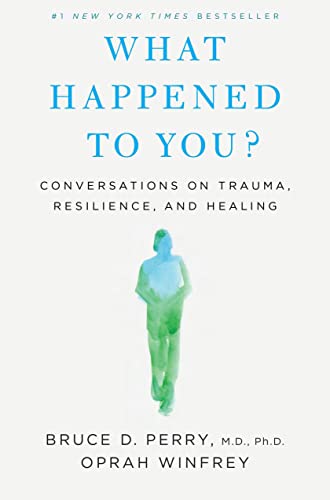
What Happened to You?
Bruce D. Perry, M.D., PhD & Oprah Winfrey
A conversational introduction to how early experience shapes us — reframing 'what's wrong with you' into 'what happened to you.'
As an Amazon Associate, Clarity House Press earns from qualifying purchases. Your price is never affected.
Found this helpful?
Share it with someone who might need it.
About the Author

Clarity House Press
Editorial Team
The editorial team at Clarity House Press curates and publishes evidence-based content on narcissistic abuse recovery, high-conflict divorce, and healing. Our content is informed by research, survivor experiences, and established trauma-informed approaches.
View all posts by Clarity House Press →Published by Clarity House Press Editorial Team