Please read our important disclaimers before using this content
Before you read. Most allegations of abuse in custody cases are made in good faith, and most protective orders protect real victims. This article addresses the narrower, documented situation in which allegations are fabricated for litigation advantage. If any allegation against you is true, this content does not apply; seek accountability-focused counsel. Educational only — not legal advice.
Your co-parent has filed allegations that you're abusive, neglectful, or a danger to your children. If those claims are false, you now face the task of defending yourself while maintaining credibility and not appearing defensive or hostile.
How do you defend yourself without seeming like you're attacking the other parent? What evidence actually matters? And how do you navigate a system that takes allegations seriously while also being vulnerable to manipulation? Understanding DARVO tactics—where the perpetrator positions themselves as the victim—helps you see the strategic logic behind why false allegations get filed.
The trap is this: React too strongly and you look unhinged. Stay too calm and you look like you don't take it seriously. Defend yourself too aggressively and you confirm their narrative. Say nothing and you look guilty.
There is a strategic middle ground. It requires understanding how the family court system evaluates allegations, what evidence actually matters, and how to document your case without feeding into the high-conflict dynamic.
Why False Allegations Happen in High-Conflict Custody
False allegations in custody disputes don't emerge randomly. They serve specific strategic purposes for high-conflict individuals:
Control and leverage: Allegations create immediate leverage. Protective orders, supervised visitation mandates, and custody restrictions can be obtained quickly based on allegations alone—before investigation or trial. For someone who is losing control over you and the children, allegations restore power.
Narrative management: The person who files first often shapes the narrative. By labeling you as the abuser, they preemptively discredit anything you might say about their behavior. Suddenly your documented concerns about them become "reactive abuse allegations" or "DARVO."
Financial warfare: Defending against allegations is expensive. Discovery, expert witnesses, and extended litigation drain resources. Sometimes allegations are filed specifically to exhaust you financially.
Image protection: In some cases, allegations are preemptive strikes. If they know their own behavior might eventually come to light, they file first to position themselves as the victim and you as the retaliator.
Research context: While precise statistics on false allegations in custody cases are difficult to establish (methodologies vary significantly and no comprehensive national database exists), family court practitioners widely recognize that allegations—both true and false—increase substantially in high-conflict divorce and custody disputes. The Association of Family and Conciliation Courts acknowledges that false allegations do occur and that distinguishing between true and false claims is one of family court's most challenging tasks.
Types of False Allegations in Custody Cases
Understanding the type of allegation helps you develop an appropriate response strategy:
Domestic Violence Allegations
Claims that you physically abused your spouse or partner. These may include:
- Physical assault claims (hitting, pushing, choking)
- Threats or intimidation
- Controlling behavior
- Economic abuse
- Psychological abuse
Strategic implications: These allegations can trigger automatic protective orders, supervised visitation, and sometimes criminal referrals. Response time is critical.
Child Abuse Allegations
Claims that you physically harmed your children. These may include:
- Hitting, spanking beyond legal limits, or corporal punishment
- Shaking or rough handling
- Burns, bruises, or unexplained injuries
- Medical neglect
- Failure to protect
Strategic implications: These trigger mandatory reporting, CPS investigations, and can result in immediate custody changes. Criminal charges are possible.
Child Sexual Abuse Allegations
The most serious allegations, claiming inappropriate sexual contact or exposure. These may include:
- Direct abuse claims
- Inappropriate touching
- Sexual exposure
- Pornography access
- Grooming behavior
Strategic implications: These result in immediate supervised visitation or suspended contact, law enforcement involvement, and forensic interviews with children. Defense requires specialized approach.
Neglect Allegations
Claims that you fail to provide adequate care:
- Inadequate supervision
- Unsafe living conditions
- Educational neglect
- Medical neglect
- Substance abuse affecting parenting
Strategic implications: Often investigated by CPS, may result in home studies and parenting evaluations.
Substance Abuse Allegations
Claims that you abuse drugs or alcohol to the point of impaired parenting:
- Active addiction
- Impairment during parenting time
- Children's exposure to substance use
- Drug use in the home
Strategic implications: May result in court-ordered testing, hair follicle analysis, and monitored visitation.
Mental Health Allegations
Claims that you have mental health conditions making you unfit:
- Untreated mental illness
- Dangerous or erratic behavior
- Suicide threats or attempts
- Inability to parent due to depression or anxiety
Strategic implications: May result in psychological evaluation, fitness to parent assessment, and treatment requirements.
The Strategic Response Framework
Responding to false allegations requires strategic discipline. Your goal is threefold:
- Protect your parental rights while the allegations are investigated
- Build a factual counter-narrative without appearing aggressive
- Avoid reactive behaviors that confirm the allegations
Immediate Response (First 72 Hours)
Do not contact your ex directly. Any communication you send can be used as evidence. Your shock, anger, and defensiveness are normal—but expressing them to your accuser will backfire.
Contact an attorney immediately. False allegations require legal response. Even if you're representing yourself, at minimum get a consultation. Many family law attorneys offer emergency consultations for allegations situations.
Secure your documentation. Gather:
- Communication records (texts, emails, voicemails)
- Photos and videos showing normal interactions with children
- Financial records
- Calendar/schedule records
- Character references and potential witnesses
- Social media archives (yours and theirs)
Do not discuss the allegations publicly. Not on social media, not with mutual friends, not with family members who might talk to your ex. Everything you say can be collected and used against you.
If there's a protective order: Comply fully. Even if you believe it's unjust, violating a protective order creates real evidence of dangerous behavior. Fight it legally, not by ignoring it.
Building Your Defense
Gather evidence that predates the allegations. The most powerful defense against false allegations is documentation from before the conflict escalated:
- Photos and videos of you with your children showing positive interactions
- Communications showing co-parenting cooperation
- School, medical, or activity records showing your involvement
- Third-party observations (teachers, coaches, family)
- Prior custody evaluations or GAL reports
Document the timing. False allegations often appear at strategic moments:
- Right before custody trials or hearings
- When you file for increased parenting time
- When you start a new relationship
- When you refuse to comply with unreasonable demands
- When you document their concerning behavior
The timing of allegations can suggest motive.
Identify inconsistencies. False allegations often contain:
- Details that conflict with documented facts
- Impossible timelines
- Escalating claims (the story gets worse over time)
- Contradictions with prior statements or court documents
- Claims others can refute
Preserve contradictory evidence. If your ex claimed you hit the children on Tuesday, and you have photos showing you were at a work conference in another state on Tuesday, that evidence is critical.
Working with Evaluators and Investigators
False allegations typically trigger investigation—by CPS, law enforcement, custody evaluators, or guardians ad litem.
Cooperate fully. Resistance to investigation looks like guilt. Even if the process feels unfair, full cooperation demonstrates you have nothing to hide.
Be factual, not emotional. When interviewed:
- Answer questions directly
- Don't volunteer information beyond what's asked
- Don't badmouth your ex
- Don't appear defensive or hostile
- Bring documentation if relevant
Provide context without attacking. You can provide factual context about the custody dispute without launching attacks:
Less effective: "She's a narcissist who's trying to destroy me. She lies constantly and everyone knows it."
More effective: "These allegations appeared immediately after I filed for increased parenting time. I'd like to share documentation of our prior communications and my involvement in the children's lives."
Request thorough investigation. If you're innocent, a thorough investigation helps you. Ask evaluators to speak with teachers, doctors, coaches, and others who observe your parenting.
Maintaining Credibility
Your credibility is your most valuable asset in defending against false allegations.
What Preserves Credibility
Emotional regulation: You're entitled to anger—but showing it to the court makes you look unstable. Process your emotions with your therapist, not in depositions.
Consistency: Your story should be the same every time you tell it. Changing details, even minor ones, raises questions.
Documentary evidence: Claims backed by documents, photos, and third-party witnesses are more credible than claims backed by emotion.
Appropriate remorse for real mistakes: If you've made genuine parenting mistakes (as all parents do), acknowledging them appropriately shows self-awareness rather than denial.
Focus on children: Framing everything in terms of the children's wellbeing, rather than your own vindication, demonstrates appropriate priorities.
What Destroys Credibility
Counter-allegations that appear retaliatory: If you respond to abuse allegations by filing your own abuse allegations, courts may view both sets of allegations skeptically.
Violating court orders: Even technical violations suggest you believe rules don't apply to you.
Aggressive communication: Hostile, threatening, or lengthy communications to your ex provide evidence for their narrative.
Social media attacks: Courts review social media. Posting about the case, attacking your ex, or appearing unstable online hurts you.
Involving the children: Using children as messengers, questioning them about the allegations, or involving them in the conflict damages your case and harms them.
Specific Defense Strategies by Allegation Type
Defending Against Domestic Violence Allegations
Gather evidence of relationship dynamics: Prior communications showing mutual respect, cooperation, or your ex's acknowledgment that you're a good parent.
Document any mental health or behavioral issues in your ex: This isn't mudslinging—it's context for why false allegations might occur.
Identify motive: What did your ex gain from the allegations? Custody advantage? Financial leverage? Revenge for leaving?
Get witness statements: Did anyone observe your relationship who can speak to the absence of violence?
Consider expert testimony: In some cases, domestic violence experts or forensic psychologists can evaluate the allegations and provide opinions.
Defending Against Child Abuse Allegations
Obtain medical records: If the child was allegedly injured, medical records showing no injuries or injuries inconsistent with the claims are powerful.
Document your discipline approach: Written evidence of your parenting philosophy and discipline methods.
School and childcare records: Teachers and childcare providers observe children daily. Their observations matter.
Prior evaluations: If there have been prior custody evaluations, GAL reports, or CPS investigations that found no concerns, these support your defense.
Forensic interview analysis: In some cases, the way children were interviewed can reveal suggestive questioning or coaching.
Defending Against Sexual Abuse Allegations
Do not contact your children directly about the allegations. This can be construed as witness tampering.
Comply with all restrictions immediately. Even wrongful separation from your children is temporary—criminal charges or findings of abuse are permanent.
Hire specialized counsel. Sexual abuse allegations require attorneys experienced in both family and criminal law.
Request comprehensive forensic evaluation. Properly conducted forensic interviews by qualified professionals can distinguish between coached allegations and genuine disclosures.
Polygraph consideration: While not admissible, passing a polygraph from a reputable examiner can influence settlement negotiations and your ex's willingness to continue false claims.
Managing the Emotional Impact
Being falsely accused of harming your children is one of the most traumatic experiences a parent can face.
Normal responses include:
- Shock and disbelief
- Intense anger
- Depression and hopelessness
- Anxiety about outcomes
- Grief over damaged relationships
- Paranoia about future accusations
- Shame, even when innocent
Get therapeutic support. A trauma-informed therapist can help you process these emotions without acting on them in ways that hurt your case. Understanding your trauma responses—fight, flight, freeze, fawn—helps you recognize when your nervous system is driving reactive decisions that could damage your case.
Maintain routines. When your world is spinning, maintaining normal routines provides stability and demonstrates functioning.
Connect with others who understand. Support groups for parents facing false allegations can reduce isolation. Organizations like Fathers & Families and similar groups provide resources.
Document your functioning. Maintain employment, housing, and stability. These demonstrate capability and counter narratives of unfitness.
When Children Are Involved in False Allegations
Sometimes children make statements—either because they've been coached, because they've misunderstood something, or because they're trying to please a parent who's asking leading questions.
Never blame the children. Even if you believe they've been coached, they're victims in this situation, not perpetrators.
Maintain the relationship. Within whatever contact you're allowed, maintain your relationship with your children. Don't withdraw in hurt or anger.
Don't investigate through your children. Asking them about the allegations, what the other parent said, or trying to get them to recant puts them in an impossible position.
Support forensic investigation. Proper forensic interviews by trained professionals are the appropriate way to determine what children have experienced.
Document any pressure on children. If you become aware that your ex is coaching, pressuring, or manipulating the children, document it for your attorney.
The Long Game: Post-Allegation Strategy
Surviving false allegations isn't just about winning the current battle—it's about protecting yourself long-term.
Continue documenting. After the immediate crisis, keep meticulous records. High-conflict ex-partners often file repeated allegations.
Seek modification of custody orders. If false allegations have been demonstrated, you may have grounds for custody modification based on parental alienation or interference.
Request consequences for false allegations. In some jurisdictions, filing demonstrably false allegations can result in sanctions, fee-shifting, or custody implications.
Build an overwhelming record. The best defense against future allegations is an extensive, documented record of positive parenting.
Address parental alienation. False allegations are often part of broader alienation. Consider whether therapeutic intervention for the family is appropriate.
Your Next Steps
This week:
- If you're facing active allegations, secure a family law attorney immediately
- Begin organizing all documentation from before the allegations arose—the evidence binder guide for custody shows you how to structure it effectively
- Identify potential witnesses who can speak to your parenting
- Comply fully with any protective orders or restrictions
- Do not contact your ex directly about the allegations
This month:
- Develop your factual response strategy with your attorney
- Secure therapeutic support to process the emotional impact
- Continue documenting all interactions and communications
- Gather third-party evidence (school records, medical records, photos)
- Prepare for any evaluations or investigations
Long-term:
- Build an extensive record of positive parenting
- Maintain emotional regulation and credibility throughout the process
- Focus on the children's wellbeing rather than winning
- Consider whether parental alienation remedies are appropriate
- Protect yourself against future allegations through ongoing documentation
Remember: False allegations are devastating, but they're not proof of anything except that your ex made claims. With strategic response, thorough documentation, and professional support, you can defend yourself while maintaining the credibility and composure that serve both your case and your children.
Further Reading
Family Court and Custody:
- Association of Family and Conciliation Courts (AFCC): Research and guidelines on high-conflict custody
- American Bar Association Family Law Section: Resources on custody evaluation and allegations
Documentation and Evidence:
- Our Family Wizard: Court-admissible co-parenting communication platform
- TalkingParents: Documented communication platform
- State court websites for specific jurisdictional requirements
Support Resources:
- American Coalition for Fathers and Children
- National Parents Organization
- Fathers & Families organizations by state
- Local family law self-help centers
Mental Health Support:
- National Alliance on Mental Illness (NAMI): 1-800-950-NAMI
- 988 Suicide and Crisis Lifeline: Call or text 988
- Psychology Today therapist finder for trauma-informed support
Important Note: Laws regarding false allegations, protective orders, and custody procedures vary significantly by state. Consult a licensed family law attorney in your jurisdiction for guidance specific to your situation.
Resources
Legal Defense and Court Support:
- American Bar Association - Find family law attorneys specializing in false allegation defense
- National Parents Organization - Advocacy for parents facing false accusations in custody cases
- American Coalition for Fathers and Children - Support and resources for fathers defending against false allegations
- LawHelp.org - Free and low-cost legal assistance by state
Documentation and Evidence Tools:
- TalkingParents - Unalterable communication records for court evidence
- OurFamilyWizard - Court-certified documentation platform for custody cases
- State Court Websites - State-specific court rules and procedures for protective order defense
- Family Law Self-Help Centers - State-by-state self-help centers with procedural guidance
Mental Health and Crisis Support:
- National Alliance on Mental Illness (NAMI) - 1-800-950-NAMI (mental health support and resources)
- 988 Suicide & Crisis Lifeline - Call or text 988 for immediate crisis support
- Psychology Today - Therapists - Find trauma-informed therapists experienced in false allegation trauma
- National Domestic Violence Hotline - 1-800-799-7233 (support for all abuse victims, including false accusation victims)
References
- Trocmé, N., & Bala, N. (2005). False allegations of abuse and neglect when parents separate. Child Abuse & Neglect, 29(12), 1333-1345. https://pubmed.ncbi.nlm.nih.gov/16293305/ ↩
- Moon, Lee, Chung, & Kwack (2020). Custody Evaluation in High-conflict Situations Focused on Domestic Violence and Parental Alienation Syndrome.. Soa--ch'ongsonyon chongsin uihak = Journal of child & adolescent psychiatry. https://pmc.ncbi.nlm.nih.gov/articles/PMC7289472/ ↩
- Association of Family and Conciliation Courts. (2006). Model Standards of Practice for Child Custody Evaluation. Family Court Review, 45(1), 70-91. ↩
- Bow, J. N., & Quinnell, F. A. (2001). Psychologists' Current Practices and Procedures in Child Custody Evaluations: Five Years After American Psychological Association Guidelines. Professional Psychology: Research and Practice, 32(3), 261-268. ↩
Recommended Reading
From Clarity House Press — plus trusted books for deeper understanding



BIFF for CoParent Communication
Bill Eddy, Annette Burns & Kevin Chafin
Specifically designed for co-parent communication with guides for difficult texts and emails.
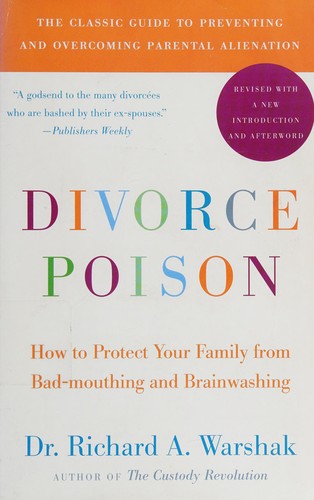
Divorce Poison
Dr. Richard A. Warshak
Classic best-selling parental alienation resource on detecting and countering manipulation tactics.
As an Amazon Associate, Clarity House Press earns from qualifying purchases. Your price is never affected.
Found this helpful?
Share it with someone who might need it.
About the Author

Clarity House Press
Editorial Team
The editorial team at Clarity House Press curates and publishes evidence-based content on narcissistic abuse recovery, high-conflict divorce, and healing. Our content is informed by research, survivor experiences, and established trauma-informed approaches.
View all posts by Clarity House Press →Published by Clarity House Press Editorial Team