Please read our important disclaimers before using this content
"How are you feeling?"
After years of narcissistic abuse, this simple question can feel impossible to answer. You might respond with "fine" or "I don't know" because you genuinely can't access what's happening inside your body. When someone asks you to name your emotion, your mind goes blank.
This isn't a personal failing. It's a common consequence of long-term emotional abuse and trauma. Many survivors of narcissistic abuse develop what clinicians call limited emotional literacy—difficulty identifying, understanding, and expressing emotional experiences.
What Is Emotional Literacy?
Emotional literacy is the ability to recognize, understand, and accurately name your emotional experiences. It includes:
- Recognition: Noticing that you're experiencing an emotion
- Differentiation: Distinguishing between similar emotions (anxious vs. excited, angry vs. hurt)
- Labeling: Putting accurate words to your internal experience
- Expression: Communicating your emotions to yourself and others
- Understanding: Recognizing what triggered the emotion and what it's telling you
In healthy development, we learn emotional literacy through attunement with caregivers who help us name and validate our feelings: "You look frustrated that the toy broke" or "I can see you're disappointed we can't go to the park."
In narcissistic relationships, the opposite happens. Your emotions are denied, minimized, mocked, or weaponized. Over time, you learn to suppress, ignore, or disconnect from your emotional experience entirely. This suppression is directly connected to the fawn response—learning not to feel your own needs in order to survive the relationship.
Understanding Alexithymia in Abuse Survivors
Alexithymia—literally "without words for emotions"—describes the difficulty identifying and describing feelings. Research shows significantly higher rates of alexithymia among survivors of emotional abuse and complex trauma.1 A comprehensive meta-analysis examining 36,141 participants found that child maltreatment was positively related to overall adult alexithymia, with emotional maltreatment showing stronger associations than other abuse types.2
Alexithymia in abuse survivors often presents as:
- Blank mind: When asked how you feel, you draw a complete blank
- Physical symptoms only: "My chest is tight" or "I feel sick" without connecting it to an emotion
- Limited vocabulary: Everything is "fine," "okay," "stressed," or "upset"
- Confusion between emotions: Unable to distinguish anger from hurt, fear from sadness
- Delayed processing: Realizing hours or days later what you were actually feeling in a moment
- Externally focused thinking: Describing situations in detail but unable to access your emotional response
This isn't a permanent condition. Emotional literacy is a skill that can be developed, even in adulthood.
Why Narcissistic Abuse Damages Emotional Literacy
Narcissistic abusers systematically undermine your emotional awareness through:
Gaslighting your emotions: "You're not really upset" or "You're overreacting"
Punishment for authentic expression: Rage, silent treatment, or criticism when you express genuine feelings
Emotional invalidation: "That's ridiculous" or "You're too sensitive"
Emotion substitution: Telling you what you "really" feel: "You're not hurt, you're just trying to make me feel guilty"
Projection: Attributing their emotions to you: "You're the one who's angry"
Using emotions as weapons: Tracking what upsets you to deliberately trigger those emotions later
Over months and years, you learn that:
- Your emotions are dangerous
- Your emotional perceptions are untrustworthy
- Expressing feelings leads to punishment
- Disconnecting from emotions is safer than feeling them
This conditioning creates profound alexithymia. Your nervous system learned that emotional awareness is a threat to survival. Research consistently demonstrates that emotional abuse and neglect are strongly associated with alexithymia dimensions, as invalidating environments suppress emotional development and affect regulation abilities.3
The Neurobiological Impact
Chronic emotional suppression and invalidation create measurable changes in how your brain processes emotions:
- Reduced interoception: Difficulty sensing internal bodily states that signal emotions4
- Impaired insula activation: The brain region connecting bodily sensations to emotional awareness shows reduced activity
- Heightened amygdala reactivity: Emotional reactions feel overwhelming or numbed out, without the nuanced middle ground
- Dissociation patterns: Automatic disconnection from emotional experience as a protective mechanism
These changes aren't permanent damage. With targeted practice, your brain can rebuild the neural pathways for emotional awareness and literacy. Studies show that trauma survivors who develop improved interoceptive awareness demonstrate better emotion regulation strategies and reduced anxiety.
Building Your Emotional Vocabulary: The Feelings Wheel
One of the most practical tools for developing emotional literacy is the Feelings Wheel, developed by Dr. Gloria Willcox. This visual tool expands your emotional vocabulary beyond basic terms like "happy," "sad," "angry," and "afraid."
The wheel works in layers:
Core emotions (center): Basic emotion categories Secondary emotions (middle ring): More specific variations Tertiary emotions (outer ring): Precise, nuanced emotional states
For example:
- Core: Sad
- Secondary: Lonely
- Tertiary: Isolated, abandoned, rejected
How to use the Feelings Wheel:
-
When you notice you're experiencing an emotion, start with the center: Which core emotion category feels closest?
-
Move outward: Which secondary emotion is more specific?
-
Find precision: Which tertiary emotion captures the exact quality of your experience?
-
Notice the difference: "I'm not just angry—I'm specifically feeling betrayed and disrespected."
This practice trains your brain to differentiate emotions with increasing precision. Over time, you'll access these words more quickly and automatically.
Practical Exercises for Developing Emotional Literacy
1. Body Scanning for Emotional Awareness
Emotions are embodied experiences. Many abuse survivors have learned to ignore bodily sensations, making it difficult to recognize emotions.
Practice:
- Set a timer for 2 minutes, three times daily
- Scan your body from head to toe
- Notice any sensations: tension, warmth, tightness, butterflies, heaviness, lightness
- Don't judge or change them—just notice and name the physical sensation
- Ask: "If this sensation had an emotion attached, what might it be?"
Example: "I notice tightness in my chest and shoulders. This feels like anxiety or maybe anticipation."
2. Emotion Journaling with Specificity
Most journaling advice says "write about your feelings," which can feel overwhelming when you don't know what you're feeling.
Structured approach:
Situation: What happened? (One sentence) Physical sensations: What did you notice in your body? Thoughts: What were you thinking? Emotion label (start with feelings wheel): What emotion(s) were present? Intensity: 0-10 scale Need or want: What did this emotion signal you needed?
Example:
- Situation: Friend canceled our dinner plans last minute
- Physical: Sinking feeling in stomach, heaviness in chest
- Thoughts: "I'm not important to them" / "I always get canceled on"
- Emotion: Disappointed + hurt + rejected
- Intensity: 6/10
- Need: Reliability, consideration, mattering to people
This structure bypasses the blank "how do you feel?" question and builds emotional literacy through pattern recognition.
3. The "Name It to Tame It" Practice
Neuroscience research by Dr. Dan Siegel shows that simply labeling an emotion reduces its intensity by activating the prefrontal cortex and calming the amygdala. Landmark fMRI studies demonstrate that putting feelings into words diminishes amygdala responses to negative emotional stimuli and produces increased activity in the right ventrolateral prefrontal cortex, with activity in these regions inversely correlated.5 When affect labeling is combined with cognitive reappraisal, it produces greater prefrontal activation and further amygdala reduction than either strategy alone.6
Practice:
When you notice emotional activation:
- Pause
- Place a hand on your chest or belly
- Say (out loud or internally): "I'm noticing [emotion]"
- Expand: "This feels like [physical sensation] + [emotion] about [situation]"
Example: "I'm noticing anxiety. This feels like butterflies in my stomach and tightness in my throat. I'm anxious about this phone call with my co-parent."
The act of naming creates distance between you and the emotion. You're not "anxious"—you're experiencing anxiety. This subtle shift creates space for choice rather than automatic reaction.
4. Emotion Tracking Apps and Tools
Several evidence-based apps support emotional literacy development:
- How We Feel: Research-backed app developed by scientists and therapists, uses emotion wheel framework
- Daylio: Simple mood tracking with customizable emotions and activities
- Mood Meter: Based on Yale Center for Emotional Intelligence research
- Finch: Combines emotion check-ins with self-care goals
The benefit: Daily check-ins create repetition, and apps often show patterns over time you might not notice otherwise.
5. Media-Assisted Emotional Recognition
If you struggle to identify emotions in yourself, practice recognizing them in others first:
- Watch TV shows or movies with the sound on low and try to identify characters' emotions from facial expressions and body language
- Read fiction and pause to identify what characters might be feeling (even if not stated)
- Study photographs of emotional expressions and practice naming them
- Notice other people's emotions in daily life: "That person looks frustrated in line" or "My coworker seems anxious today"
This builds the neural pathways for emotional recognition in a lower-stakes context before applying it to your own experiences.
Working with Specific Emotional Challenges
When You Feel "Nothing" (Emotional Numbness)
Numbness is actually an emotional state—it's the absence of felt emotion due to protective dissociation. It often follows periods of overwhelm.
Instead of forcing feelings:
- Notice: "I'm experiencing numbness right now"
- Validate: "This makes sense—my nervous system is protecting me"
- Ask gently: "If something were here underneath the numbness, what might it be?"
- Don't push: If nothing comes, that's okay. Numbness serves a purpose.
Emotional numbness often thaws gradually with safety, not force. This numbness is closely related to understanding dissociation in complex PTSD—emotional shutdown is often a dissociative response rather than a permanent state.
When Everything Feels Like "Anxiety"
Many abuse survivors experience chronic nervous system activation that colors all emotions. Joy feels like anxiety. Excitement feels like anxiety. Even anger might register as anxiety.
Differentiation practice:
Ask: "Is this anxiety about potential threat, or is it activation from a different emotion?"
- Anxiety: Future-focused, about something bad that might happen
- Excitement: Future-focused, about something good that might happen (same physiological activation)
- Anger: Present-focused, about a boundary violation or injustice
- Fear: Immediate, about current danger
The bodily sensations might be similar (elevated heart rate, butterflies, tension), but the focus and context differ.
When You Confuse Anger and Hurt
Abuse survivors often lose access to healthy anger because expressing it was dangerous. Anger might get mislabeled as hurt, or hurt might come out as anger.
Distinguishing practice:
- Hurt: Feels like sadness + violation, "something was taken from me," vulnerability
- Anger: Feels like energy + boundary violation, "this is wrong," impulse to push back or protect
Both can coexist: "I'm hurt that he dismissed my concerns, and I'm angry that he treated me disrespectfully."
Learning to identify both emotions separately allows you to address each one appropriately.
Common Obstacles and How to Navigate Them
"I Don't Trust My Emotions"
After years of being told your emotions are wrong or manipulative, it makes sense you'd doubt them.
Reframe: Emotions aren't "right" or "wrong"—they're information. They might not reflect objective reality, but they always reflect your internal experience and unmet needs.
Practice: Start with low-stakes emotions. "I feel annoyed by this sound" is easier to trust than "I feel betrayed by my partner."
"My Emotions Change Too Quickly"
Rapid emotional shifts can indicate:
- Dysregulation: Nervous system overwhelm cycling through states
- Emotional flashbacks: Past emotions bleeding into present
- Complex emotions: Multiple feelings layered together
Response: Slow down. Name each emotion as it arises without judging the speed: "Now I'm noticing sadness. Now anger is here too. Now I'm feeling some relief."
"Naming Emotions Makes Them Worse"
Sometimes emotional literacy initially increases distress because you're no longer numbing or avoiding.
This is actually progress: You're building capacity to tolerate emotional experience rather than escape it.
Pace yourself: You don't have to name every emotion. Build tolerance gradually. It's okay to sometimes choose distraction or self-soothing instead of deep emotional processing.
"I Only Know I'm Feeling Something After It's Over"
Delayed emotional processing is extremely common in abuse survivors. Your nervous system was conditioned to suppress real-time awareness for safety.
Practice: Review your day before bed. "When X happened, I think I was probably feeling Y." This retrospective practice still builds the neural pathways.
Over time, the gap between experience and recognition shortens.
Emotional Literacy as Foundation for Other Skills
Developing emotional literacy isn't just about feelings—it's the foundation for:
Emotional regulation: You can't regulate emotions you can't identify
Boundary setting: Clear boundaries require knowing what you feel and need
Effective communication: "I feel [specific emotion] when [situation]" is more effective than "You're making me upset"
Somatic awareness: Recognizing the body-emotion connection supports trauma healing
Self-compassion: You can't extend compassion to yourself if you don't know what you're experiencing
Relational repair: Naming your emotions allows others to understand and respond to your needs
Emotional literacy is a core healing skill that enables everything else.
Working with a Therapist
While self-directed practice helps, working with a trauma-informed therapist accelerates emotional literacy development, especially if you're experiencing:
- Severe alexithymia (complete inability to identify emotions)
- Chronic dissociation that prevents emotional awareness
- Flashbacks or overwhelming emotional activation
- Complex trauma backgrounds with early emotional invalidation
Therapeutic approaches that specifically build emotional literacy:
- Mentalization-Based Treatment (MBT): Focuses on understanding your own and others' mental/emotional states
- Dialectical Behavior Therapy (DBT): Includes specific emotional regulation and awareness modules that have demonstrated effectiveness, with research showing significant improvements in emotion regulation difficulties and alexithymia scores.7
- Sensorimotor Psychotherapy: Builds bottom-up emotional awareness through body sensations
- Internal Family Systems (IFS): Helps identify and differentiate emotional "parts"
A good therapist won't shame you for limited emotional vocabulary. They'll meet you where you are and scaffold the skill development. Research on emotion regulation skills training shows robust effectiveness across populations, with studies demonstrating clinically significant improvements in emotion regulation and symptom reduction compared to standard treatment alone.8
Timeline and Expectations
Weeks 1-4: Recognition that emotions exist in your body; expanding vocabulary from 3-4 words to 10-15
Months 2-3: Beginning to differentiate similar emotions; noticing patterns and triggers
Months 4-6: Real-time emotional awareness increasing; less delayed processing
6-12 months: Spontaneous emotional labeling; using emotions as information for decisions
12+ months: Nuanced emotional understanding; comfortable with complexity and ambiguity
Everyone's timeline differs based on trauma severity, current stress levels, and practice consistency. Progress isn't linear—you'll have periods of clarity and periods of numbing.
Resources
Emotional Literacy Tools and Workbooks:
- The Language of Emotions by Karla McLaren - Comprehensive guide to understanding and naming emotions
- Feelings Wheel - Visual tool for identifying specific emotions (free download)
- Nonviolent Communication by Marshall Rosenberg - Expressing feelings and needs framework
- The Dialectical Behavior Therapy Skills Workbook - Emotional regulation and awareness exercises
Therapy and Professional Support:
- Psychology Today - Therapists Specializing in Emotional Regulation - Find emotion-focused therapists
- Somatic Experiencing International - Body-based emotional awareness practitioners
- Hakomi Institute - Mindfulness-based somatic therapy for emotional processing
- EMDR International Association - Trauma therapy supporting emotional reconnection
Apps and Digital Resources:
- How We Feel App - Free emotion tracking and check-in tool
- Feelings Tracker - Daily mood and emotion journaling
- Insight Timer - Guided meditations for emotional awareness
- Woebot - AI chatbot for mood tracking and emotional skills
Research Foundation
The neurobiological basis for emotional literacy deficits in abuse survivors and evidence-based strategies for developing emotional awareness are well-established in peer-reviewed research literature. Building emotional literacy directly supports other recovery skills—DBT emotion regulation tools require the ability to identify emotions before you can work with them effectively.
Your Next Steps
Today:
- Download a feelings wheel (search "feelings wheel PDF" or use the How We Feel app)
- Do one 2-minute body scan and notice sensations without judgment
This Week:
- Set 3 daily reminders to pause and identify one emotion you're experiencing using the feelings wheel
- Journal using the structured format (situation/physical/thoughts/emotion/intensity/need) at least twice
This Month:
- Establish a daily emotion check-in practice (journaling, app, or simple tracking)
- Notice one pattern: "I often feel X when Y happens"
- Consider whether therapy might support this skill development
Ongoing:
- Practice self-compassion when emotional awareness is difficult—this is learned, not innate
- Celebrate small wins: "I identified that I was irritated, not just 'stressed'" is real progress
- Remember that emotional literacy serves you—it's information, not burden
Key Takeaways
- Emotional literacy is the ability to recognize, name, and understand your feelings—a skill often damaged by narcissistic abuse
- Alexithymia (difficulty identifying emotions) is common in abuse survivors and responds to targeted practice
- The Feelings Wheel expands emotional vocabulary beyond basic terms to precise, nuanced language
- Emotions are embodied: Connecting physical sensations to emotional states builds recognition
- Naming emotions reduces their intensity and creates space for choice rather than automatic reaction
- Delayed processing is normal—your timeline for recognizing emotions will speed up with practice
- Emotional literacy is the foundation for regulation, boundaries, communication, and healing
You're not "bad at feelings." You're recovering from systematic emotional invalidation and relearning a skill that was suppressed for survival. Every time you pause to name an emotion, you're rewiring your brain and reclaiming your right to your own internal experience.
Additional Resources
- Books: The Language of Emotions by Karla McLaren; Permission to Feel by Dr. Marc Brackett; The Body Keeps the Score by Dr. Bessel van der Kolk (Chapter 6 on alexithymia)
- Apps: How We Feel (free, research-backed); Mood Meter by Yale Center for Emotional Intelligence
- Feelings Wheel: Search "feelings wheel PDF" for printable versions, or use interactive versions in emotion tracking apps
- Therapy modalities: Look for therapists trained in DBT, Sensorimotor Psychotherapy, or Mentalization-Based Treatment
- Research: Toronto Alexithymia Scale (TAS-20) for self-assessment; search "alexithymia trauma survivors" for peer-reviewed research
References
- Terock, J., Hannöver, W., Grabe, H. J., & Freyberger, H. J. (2024). Childhood trauma, emotional regulation, alexithymia, and psychological symptoms among adolescents: A mediational analysis. PubMed Central. https://pubmed.ncbi.nlm.nih.gov/39564212/ ↩
- Svanera, M., Marensi, S., Bergero, F., Lombardi, M., & Bensi, D. (2023). Child maltreatment and alexithymia: A meta-analytic review. PubMed, 37261746. https://pubmed.ncbi.nlm.nih.gov/37261746/ ↩
- Ahmed, A., Zulkifli, P. M., & Isa, S. N. (2023). Associations between emotional abuse and neglect and dimensions of alexithymia: The moderating role of sex. PubMed Central. https://pmc.ncbi.nlm.nih.gov/articles/PMC5645215/ ↩
- Mehling, W. E., Acree, M., Stewart, A., Silas, J., & Jones, A. (2024). The neurophysiology of interoceptive disruptions in trauma-exposed populations. PubMed, 38678141. https://pubmed.ncbi.nlm.nih.gov/38678141/ ↩
- Lieberman, M. D., Eisenberger, N. I., Crockett, M. J., Tom, S. M., Pfeifer, J. H., & Way, B. M. (2007). Putting feelings into words: Affect labeling disrupts amygdala activity in response to affective stimuli. Psychological Science, 18(5), 421-428. https://pubmed.ncbi.nlm.nih.gov/17576282/ ↩
- Vytal, K. E., Cornwell, B. R., Letkiewicz, A. M., Arkin, N. E., & Grillon, C. (2023). Changes in neural activity during the combining affect labeling and reappraisal. PubMed, 36473523. https://pubmed.ncbi.nlm.nih.gov/36473523/ ↩
- Reilly, E. D., Brock, R. L., & Chambers, S. E. (2021). Emotion regulation group skills training for adolescents and parents: A pilot study of an add-on treatment in a clinical setting. PubMed, 31419914. https://pubmed.ncbi.nlm.nih.gov/31419914/ ↩
- Wang, Y., Zhao, X., Ma, R., & Zhang, Z. (2024). Emotion regulation skills training enhances the efficacy of inpatient cognitive behavioral therapy for major depressive disorder: A randomized controlled trial. PubMed, 23712210. https://pubmed.ncbi.nlm.nih.gov/23712210/ ↩
Recommended Reading
From Clarity House Press — plus trusted books for deeper understanding
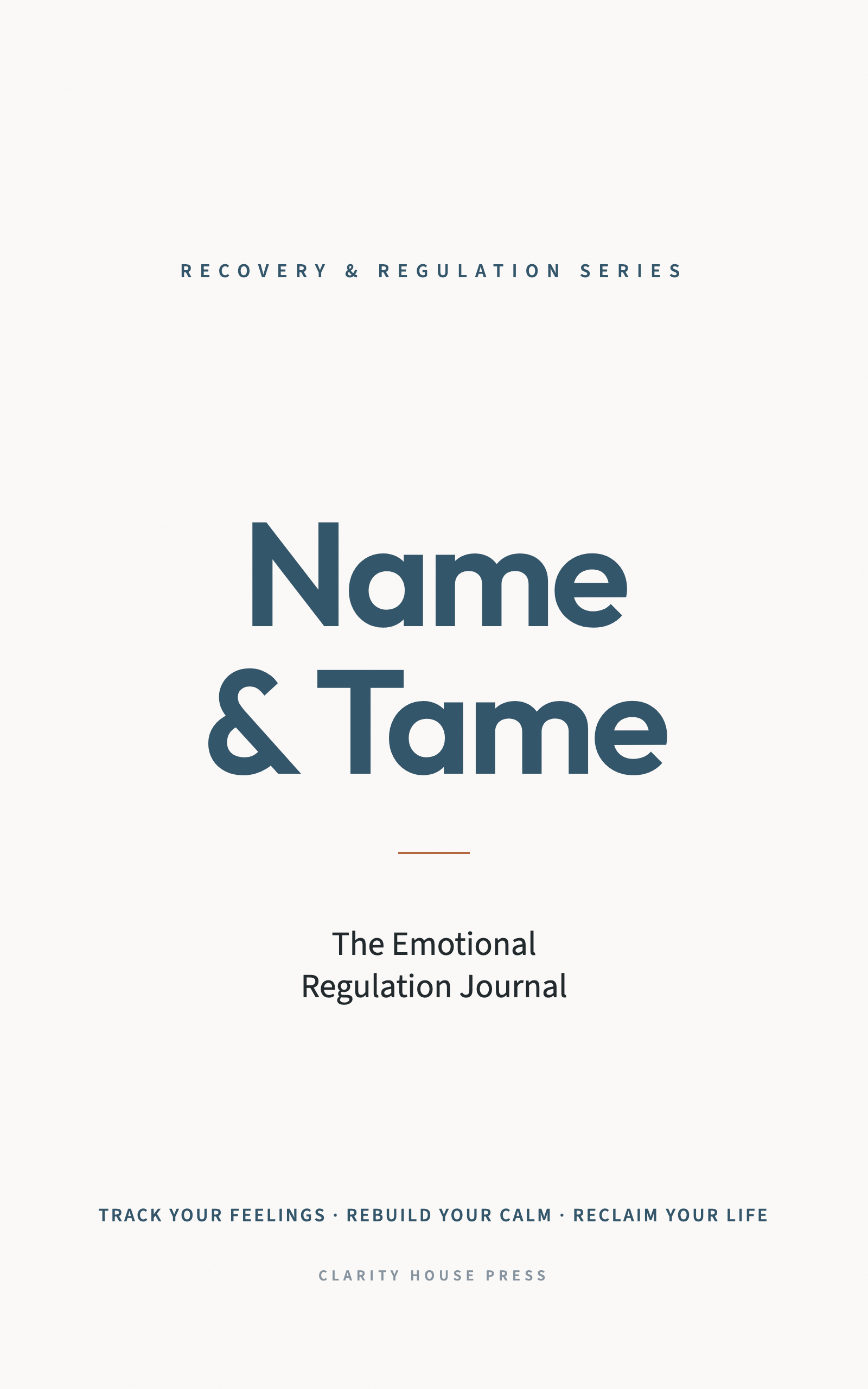

The Deepest Well
Nadine Burke Harris, M.D.
A pediatrician's clear explanation of how adverse childhood experiences affect lifelong health — and what recovery can look like.
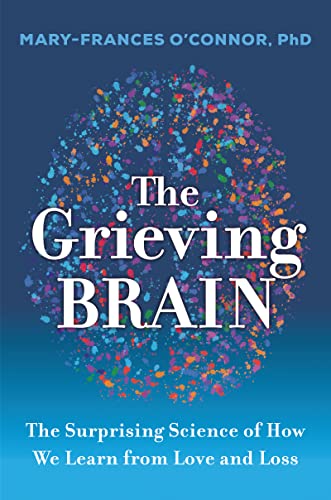
The Grieving Brain
Mary-Frances O'Connor, PhD
An accessible tour of the neuroscience of grief — why loss feels the way it does, and how the brain slowly relearns the world.
As an Amazon Associate, Clarity House Press earns from qualifying purchases. Your price is never affected.
Found this helpful?
Share it with someone who might need it.
About the Author

Clarity House Press
Editorial Team
The editorial team at Clarity House Press curates and publishes evidence-based content on narcissistic abuse recovery, high-conflict divorce, and healing. Our content is informed by research, survivor experiences, and established trauma-informed approaches.
View all posts by Clarity House Press →Published by Clarity House Press Editorial Team