Please read our important disclaimers before using this content
Two weeks before you filed for divorce, $50,000 disappeared from your joint savings account. Financial deception during divorce is closely connected to economic abuse—a pattern that often begins long before the legal proceedings. Understanding the full scope of economic abuse tactics can help you identify what's happening and build a stronger legal case. Your spouse says it went to "business expenses" but can't provide documentation. Their income has mysteriously dropped despite the same job. Suddenly they're claiming that marital home you both paid for is actually separate property because their parent "gifted" the down payment.
The financial betrayal compounds the emotional betrayal—discovering that the person you trusted most is actively working to deprive you of resources you helped build. In high-conflict divorce, asset dissipation and hiding is common—and devastatingly effective if you don't know how to protect yourself. Economic abuse, defined as behaviors that control a survivor's ability to acquire, use, and maintain financial resources, affects approximately 15% of ever-partnered women and is associated with significant mental health impacts, food insecurity, and reduced quality of life12.
Understanding legal asset protection strategies isn't about being vindictive; it's about ensuring you receive the marital property you're legally entitled to.
Understanding Marital vs. Separate Property
Marital property (community property in some states):
- Assets acquired during marriage
- Income earned during marriage
- Retirement benefits accrued during marriage
- Increase in value of separate property due to marital efforts
- Generally subject to equitable (or equal) division3
Separate property:
- Assets owned before marriage
- Gifts or inheritance received individually
- Property designated separate by prenuptial agreement
- Personal injury awards (in most states)
- Generally kept by original owner3
Gray areas (often disputed):
- Home purchased with mixed separate and marital funds
- Business owned before marriage but grown during marriage
- Separate property mixed (commingled) with marital property
- Property purchased in one spouse's name only during marriage
Common Asset Dissipation Tactics
My Story: The Disappearing Savings
"For six months before I filed, I watched our savings account drain in $2,000-$5,000 increments. 'Business expenses,' he said. 'Inventory.' When I asked for receipts, he accused me of not trusting him, of being controlling.
By the time I filed for divorce, $87,000 was gone. The forensic accountant found it—transferred to an LLC he'd created in his brother's name. Cash withdrawals at casinos. Payments to the woman he was having an affair with.
The judge ordered reimbursement, but I had to spend $15,000 on the forensic accountant to prove it. I got my share back, but I learned a hard lesson: document first, trust later. If I'd frozen the accounts when the red flags first appeared, I'd have saved myself a year of legal fees and sleepless nights."
Direct Dissipation
Large withdrawals:
- Cash withdrawals from accounts
- Transfer to accounts you can't access
- Payment to family members (often "loans" that won't be repaid)
Excessive spending:
- Luxury purchases
- Gambling
- Gifts to affair partners
- Payments to family or new romantic partners
Business manipulation:
- Taking lower salary
- Deferring bonuses or income
- Inflating business expenses
- Hiding business income4
Debt creation:
- Running up credit cards
- Taking out loans
- Creating "business debt" to reduce net worth
Hidden Assets
Undisclosed accounts:
- Bank accounts in sole name
- Accounts at institutions you don't know about
- Offshore accounts
- Cryptocurrency holdings
Undervalued assets:
- Claiming business is worth less than actual value
- Hiding valuable collections (art, wine, memorabilia)
- Underreporting income
- Postponing bonuses or stock options
Asset transfers:
- "Selling" assets to family/friends at below-market price with agreement to buy back post-divorce
- Transferring to business partner with informal agreement to return later
- Creating fake debt to a friend or family member
Legal Tools for Asset Protection
1. Automatic Temporary Restraining Orders (ATROs)
What they are: Many jurisdictions automatically issue restraining orders when divorce is filed that prohibit both spouses from:
- Transferring, hiding, or disposing of property
- Borrowing against property
- Changing beneficiaries
- Closing accounts
Limitations:
- Only effective once divorce is filed
- Don't prevent what already happened
- Violations require enforcement action
- Some exceptions (ordinary business transactions, attorney fees, living expenses)
Your action:
- File for divorce as soon as you've prepared your financial documentation
- Document any ATRO violations immediately
- Report violations to your attorney
2. Preliminary Injunctions
What they are: Court orders specifically tailored to your situation, often requested early in divorce.
Can prohibit:
- Sale of specific property (house, business, vehicles)
- Access to certain accounts
- Incurring debt in your name
- Specific spending beyond reasonable living expenses
Can require:
- Maintenance of insurance policies
- Continued payment of mortgages or other debts
- Preservation of business operations
- Temporary support payments
How to get:
- Motion to the court
- Declaration showing need (evidence of dissipation or risk)
- Often granted quickly in emergency situations
3. Freeze Orders on Accounts
What they are: Court orders requiring financial institutions to freeze accounts.
When useful:
- Credible evidence spouse is withdrawing/hiding money
- Concern that assets will disappear before property division
- Large undivided accounts
Considerations:
- May freeze your access too (depends on order)
- Usually temporary until division can occur
- May need to show emergency necessity
4. Document Preservation Orders
What they are: Court orders requiring spouse to preserve documents and electronic records.
Can include:
- Bank and investment statements
- Tax returns and supporting documents
- Business records
- Email and electronic communications
- Phone records
- Social media accounts
Why important:
- Prevents "my computer crashed" excuses
- Preserves evidence of hidden assets or dissipation
- Creates legal consequences for destruction
5. Forensic Accounting and Discovery
For high-asset divorces, forensic accountants are one of the most powerful expert witnesses you can retain—they can reconstruct financial records, trace hidden transfers, and expose lifestyle fraud that courts would otherwise miss.
What it is: Specialized investigation of financial records to find hidden assets and income.
Forensic accountants can:
- Trace money through complex transactions
- Identify lifestyle expenditures that don't match reported income56
- Locate undisclosed accounts
- Value businesses accurately
- Identify asset transfers to third parties
- Reconstruct destroyed records5
When to use:
- Spouse is self-employed or business owner
- You suspect hidden income or assets
- Complex financial situation
- Spouse has access to cash businesses
- Lifestyle doesn't match disclosed income
Cost:
- $5,000 - $50,000+ depending on complexity
- Often worth it if substantial assets are at stake
- Sometimes paid from marital estate
6. Subpoenas and Depositions
Subpoenas: Legal demands for documents or testimony.
Can be issued to:
- Banks and financial institutions
- Employers
- Business partners
- Accountants and financial advisors
- Ex's family members or friends (if you suspect asset transfers)
- Cryptocurrency exchanges
Depositions: Sworn testimony where attorneys question witnesses.
Strategic use:
- Question spouse about financial discrepancies
- Question third parties who might hold assets
- Lock spouse into testimony that can be impeached later
- Gather information for settlement negotiations
7. Post-Judgment Remedies
If dissipation or hiding is discovered after judgment:
Remedies may include:
- Reimbursement: Spouse must pay back dissipated amount
- Unequal division: Dissipating spouse gets less to account for waste
- Contempt: Fines or jail time for violating orders
- Fraud claim: Setting aside the judgment and re-dividing property
- Criminal charges: In egregious cases (rare)
Statute of limitations: Varies by state; act quickly when you discover hidden assets.
Protective Actions Before Filing
Document Everything
Financial information to gather:
Account information:
- Bank statements (3-5 years)
- Investment account statements
- Retirement account statements
- Credit card statements
- Loan documents
Income documentation:
- Tax returns (5-7 years minimum)
- Pay stubs
- Business financial statements
- 1099s or K-1s
Asset documentation:
- Real estate deeds and mortgage information
- Vehicle titles and loan info
- Business valuations or formation documents
- Life insurance policies
- Estate planning documents
Debt documentation:
- All loan documents
- Credit reports
- Mortgage statements
- Lines of credit
How to gather:
- Download digital statements
- Photograph paper documents
- Request copies from institutions if you don't have access
- Store securely outside marital home
Secure Your Own Credit
Pull credit reports:
- AnnualCreditReport.com (free from all three bureaus)7
- Review for accounts you don't know about
- Check for unauthorized use of your information
Credit freeze:
- Consider freezing your credit to prevent spouse from opening accounts in your name8
- Can unfreeze when needed for legitimate purposes
- Services like Aura and Norton LifeLock can alert you to unauthorized credit inquiries, new accounts opened in your name, or changes to your credit report
Monitor joint accounts:
- Set up alerts for large transactions
- Check balances regularly
- Screenshot or print unusual activity
Open Individual Accounts
Before filing:
- Open bank account in your name only at different institution
- Open credit card in your name only
- Build individual credit history
- Secure enough cash for attorney retainer and initial living expenses
Transfer carefully:
- Don't clean out joint accounts (this is dissipation too)
- Document transfers as protection, not deprivation
- Take only what you need for safety and legal fees
- Be prepared to account for every dollar in divorce proceedings9
Protect Specific Assets
Family heirlooms or sentimental items:
- Photograph everything
- Move to safe location if possible
- Document provenance (especially if separate property)
Vehicles:
- If titled in both names, keep possession
- Document condition and mileage
- Continue making payments if applicable
Business interests:
- Change locks if you own business
- Change passwords on business accounts
- Ensure you have copies of all business records
- Consult attorney about business protection strategies
Modern asset concealment has expanded beyond traditional bank accounts. Cryptocurrencies and digital assets represent a growing frontier for hiding wealth—understanding blockchain and NFT-based hidden assets in divorce is increasingly important in any high-conflict financial case.
Red Flags: Warning Signs of Asset Hiding
Behavioral:
- Suddenly protective of financial information
- Changes passwords on accounts
- Gets mail at different address
- Spends time with accountant or financial advisor alone
- Unexplained absences or secretive phone calls
Financial:
- Lifestyle doesn't match reported income
- Large unexplained withdrawals
- New accounts you weren't told about
- Bonus or commission "postponed"
- Business income suddenly drops
- Claims poverty but maintains expensive habits
Documentary:
- Tax returns show different information than previously discussed
- Bank statements are missing or incomplete
- Refuses to sign joint tax returns
- Files business extension to delay financial disclosure
- Can't provide documentation for claimed expenses
State-Specific Considerations
Community Property States
Community property states: Arizona, California, Idaho, Louisiana, Nevada, New Mexico, Texas, Washington, Wisconsin10
Alaska, South Dakota, Tennessee: Optional community property
Rule: Marital property divided 50/50 (generally)10
Protection strategy:
- Document what's separate vs. community
- Trace separate property carefully
- Prevent commingling
Equitable Distribution States
All other states
Rule: Marital property divided "equitably" (fairly, not necessarily equally)11
Factors considered:
- Length of marriage
- Income and earning capacity
- Contributions to marriage (including homemaking)
- Dissipation of assets
- Economic circumstances11
Protection strategy:
- Document contributions to asset acquisition
- Evidence of dissipation strengthens your case for larger share
- Focus on equitable factors favoring you
When Asset Protection Crosses into Improper Hiding
Legal asset protection:
- Documenting your own property
- Opening individual accounts for legitimate needs
- Freezing marital assets via court order
- Gathering financial information
- Seeking court orders to prevent dissipation
Illegal asset hiding:
- Transferring assets to hide them from division
- Failing to disclose assets in financial declarations
- Falsifying financial documents
- Destroying documents subject to discovery
- Violating court orders
Consequences of improper hiding:
- Sanctions and fines
- Unequal property division as punishment
- Attorney fee awards
- Contempt of court
- Possible criminal charges
- Complete loss of credibility with judge
Your ethical obligation:
- Full financial disclosure in divorce
- Honesty in financial declarations
- Compliance with court orders
- Preservation of marital assets
Working with Your Attorney
What your attorney needs from you:
Complete financial picture:
- All accounts and assets you know about
- Concerns about hidden assets
- Evidence of dissipation
- Changes in spouse's financial behavior
Specific suspicions:
- "I think there's an account at X bank because..."
- "Business income should be higher because..."
- "I saw a statement for an account I don't recognize..."
Priorities:
- Which assets matter most to you
- Your risk tolerance (aggressive discovery vs. settlement)
- Cost-benefit analysis (forensic accountant costs $20K to find $30K? Might not be worth it)
Your attorney can:
- Seek court orders for protection
- Conduct discovery
- Hire forensic accountants
- Subpoena records
- Advise on strategy
- Negotiate from position of knowledge
Cost-Benefit Analysis
Asset protection strategies require financial investment—sometimes significant. Discovery and forensic accounting can cost tens of thousands of dollars, making the cost-benefit analysis crucial to your strategy.
When it's worth it:
- Suspicion of significant hidden assets
- Self-employment or business ownership
- Lifestyle exceeds disclosed income
- Large estate (the bigger the pie, the more worth finding hidden slices)
- Strong evidence of specific hidden accounts
When it might not be worth it:
- Limited marital estate
- Clear financial picture already
- Cost of investigation approaches value of suspected assets
- Spouse is W-2 employee with straightforward finances
Ask your attorney:
- What's the likely cost of investigation?
- What's the potential recovery?
- What evidence do we already have?
- What are our odds of finding significant hidden assets?
Your Next Steps
Immediately (before filing if possible):
- Gather all financial documentation
- Make copies and store securely
- Pull credit reports
- Open individual bank account
- Document marital assets (photograph, inventory)
When filing:
- Request ATROs or injunctions if immediate protection needed
- Serve financial disclosure requests immediately
- Discuss forensic accountant with attorney if warranted
- Identify accounts or assets to freeze if risk of dissipation
During discovery:
- Respond thoroughly to financial disclosure requirements
- Review spouse's disclosures carefully for omissions
- Flag discrepancies or red flags to attorney
- Consider subpoenas for third-party records
Throughout process:
- Document any violations of court orders
- Keep detailed records of spending and assets
- Don't violate court orders yourself
- Work with attorney on protection strategy
Key Takeaways
- Asset dissipation and hiding are common in high-conflict divorce
- Economic abuse through financial control affects approximately 15% of women and correlates with significant mental health and economic hardship12
- Legal tools exist to protect assets: ATROs, injunctions, discovery, forensic accounting
- Document all financial information before filing for divorce
- Red flags include lifestyle exceeding income, secretive behavior, and sudden financial changes
- Forensic accountants can find hidden assets but cost must justify potential recovery
- The lifetime economic burden of intimate partner violence is estimated at over $103,000 per female victim12
- You have ethical obligation to full disclosure; spouse's bad behavior doesn't excuse yours
- State law (community property vs. equitable distribution) affects protection strategies
- Violations of asset protection orders can result in sanctions, unequal division, and contempt
- Work closely with attorney on cost-benefit analysis of aggressive discovery
- Post-judgment remedies exist if hidden assets discovered later
Your financial future depends on ensuring marital assets are fairly divided. After the divorce is complete, rebuilding your financial life after economic abuse is the next critical chapter—from restoring credit to rebuilding the economic independence your abuser worked to destroy. That requires protecting those assets from dissipation, identifying hidden assets, and using legal tools strategically. This isn't about revenge—it's about securing what you're entitled to under the law. Document everything, act quickly, and work with experienced professionals to protect your interests.
Resources
Asset Protection and Financial Planning:
- Certified Divorce Financial Analyst (CDFA) Directory - Find financial professionals specializing in divorce
- National Association of Personal Financial Advisors - Fee-only financial planners (no conflicts of interest)
- Financial Planning Association - Find certified financial planners in your area
- American Institute of CPAs - Personal Financial Specialist - CPAs with financial planning credentials
Legal Resources and Attorney Directories:
- American Bar Association Family Law Section - Attorney referrals and divorce resources
- American Academy of Matrimonial Lawyers - Board-certified family law specialists
- Legal Services Corporation - Free and low-cost legal aid directory
- National Association of Forensic Accountants - Find forensic accountants for hidden asset investigations
Financial Resources and Credit Protection:
- AnnualCreditReport.com - Free annual credit reports from all 3 bureaus
- Consumer Financial Protection Bureau - Financial education and complaint filing
- Federal Trade Commission - Identity Theft - Report identity theft and create recovery plans
References
- Cornell Legal Information Institute. "Marital Property." Wex Legal Dictionary. Available at: https://www.law.cornell.edu/wex/marital_property ↩
- Federal Trade Commission. "Free Credit Reports." Consumer Advice. Available at: https://consumer.ftc.gov/articles/free-credit-reports; Consumer Financial Protection Bureau. "How do I get a free copy of my credit reports?" Available at: https://www.consumerfinance.gov/ask-cfpb/how-do-i-get-a-free-copy-of-my-credit-reports-en-5/ ↩
- Federal Trade Commission. "Credit Freezes and Fraud Alerts." Consumer Advice. Available at: https://consumer.ftc.gov/articles/credit-freezes-and-fraud-alerts ↩
- Internal Revenue Service. "Publication 555 (12/2024), Community Property." Available at: https://www.irs.gov/publications/p555; Cornell Legal Information Institute. "Community Property." Wex Legal Dictionary. Available at: https://www.law.cornell.edu/wex/community_property ↩
- Maryland State Bar Association. "Hidden Assets and Income: Forensic Accounting in Divorce." Available at: https://www.msba.org/product/hidden-assets-and-income-htifl-20/; American Bar Association. "Lifestyle Analysis in Divorce Cases: Investigating Spending and Finding Hidden Income and Assets." Available at: https://www.americanbar.org/products/inv/book/439064793/ ↩
- Cornell Legal Information Institute. "Equitable Distribution." Wex Legal Dictionary. Available at: https://www.law.cornell.edu/wex/equitable_distribution ↩
- Consumer Financial Protection Bureau. "Can a debt collector contact me about a debt after a divorce?" Available at: https://www.consumerfinance.gov/ask-cfpb/can-a-debt-collector-contact-me-about-a-debt-after-a-divorce-en-1413/ ↩
- Mellar BM, Fanslow JL, Gulliver PJ, McIntosh TKD. Economic Abuse by An Intimate Partner and Its Associations with Women's Socioeconomic Status and Mental Health. Journal of Interpersonal Violence. 2024;39(21-22):4415-4437. doi:10.1177/08862605241235140 ↩
- Johnson L, Chen Y, Stylianou A, Arnold A. Examining the impact of economic abuse on survivors of intimate partner violence: a scoping review. BMC Public Health. 2022;22:1014. doi:10.1186/s12889-022-13297-4 ↩
- Stylianou AM. Economic Abuse Within Intimate Partner Violence: A Review of the Literature. Violence and Victims. 2018;33(1):3-22. doi:10.1891/0886-6708.VV-D-16-00112 ↩
- American Bar Association. Lifestyle Analysis in Divorce Cases: Investigating Spending and Finding Hidden Income and Assets, Third Edition. Available at: https://www.americanbar.org/products/inv/book/439064793/ ↩
- Peterson C, Kearns MC, McIntosh WL, Estefan LF, Nicolaidis C, McCollister KE, Gordon A, Florence C. Lifetime Economic Burden of Intimate Partner Violence Among U.S. Adults. American Journal of Preventive Medicine. 2018;55(4):433-444. doi:10.1016/j.amepre.2018.04.049 ↩
Recommended Reading
From Clarity House Press — plus trusted books for deeper understanding

Divorce Poison
Dr. Richard A. Warshak
Classic best-selling parental alienation resource on detecting and countering manipulation tactics.

The High-Conflict Custody Battle
Amy J. L. Baker, PhD & J. Michael Bone, PhD
Expert legal and psychological guide to defending against false accusations in custody.

Divorcing a Narcissist: Advice from the Battlefield
Tina Swithin
Practical follow-up with battlefield-tested advice for navigating custody with a narcissistic ex.
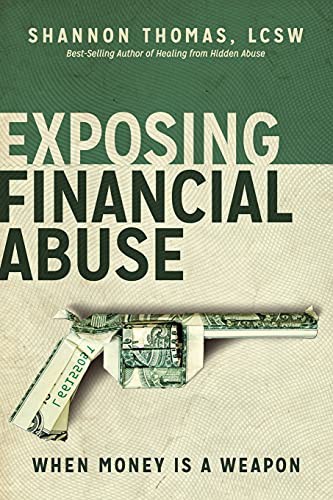
Exposing Financial Abuse
Shannon Thomas, LCSW
Expose of financial exploitation within families, relationships, and courts.
As an Amazon Associate, Clarity House Press earns from qualifying purchases. Your price is never affected.
Found this helpful?
Share it with someone who might need it.
About the Author

Clarity House Press
Editorial Team
The editorial team at Clarity House Press curates and publishes evidence-based content on narcissistic abuse recovery, high-conflict divorce, and healing. Our content is informed by research, survivor experiences, and established trauma-informed approaches.
View all posts by Clarity House Press →Published by Clarity House Press Editorial Team