Please read our important disclaimers before using this content
Your second-grader's grades plummet from As to Cs. Your fifth-grader gets suspended for fighting—something they've never done before. Your eight-year-old's teacher calls to say they're withdrawing from friends and crying at recess.
Elementary school children (ages 6-11) are caught in a painful developmental paradox: old enough to understand that divorce is serious and permanent, not old enough to understand why it's happening or to manage the emotional fallout.1
School—where they're supposed to focus on learning, making friends, and building competence—becomes yet another casualty of high-conflict divorce.
(While this article references both parents for simplicity, the principles apply to children navigating family separation in many structures—including same-sex families, single-parent households, kinship care, or guardianship arrangements.)
Here's how divorce impacts elementary-age children and what you can do to protect their development during this critical stage.
Developmental Stage: What Elementary Children Understand
Ages 6-11 are characterized by:
Cognitive:
- Concrete operational thinking (can think logically about concrete situations)
- Understanding of cause and effect
- Beginning to understand others' perspectives
- Still struggle with abstract concepts and nuance
Emotional:
- Developing emotional vocabulary
- Learning emotional regulation (but still limited capacity)
- Strong focus on fairness and justice
- Intense feelings but growing ability to control expression
Social:
- Peer relationships become critically important
- Comparison to peers (academic, social, material)
- School success builds (or undermines) self-esteem
- Seeking belonging and acceptance
Moral Development:
- Black-and-white thinking about right and wrong
- Intense focus on fairness ("That's not fair!")
- Authority figures (teachers, parents) are moral guides
- Developing conscience and sense of responsibility
What this means for divorce:
- They know divorce is permanent and serious
- They're trying to figure out who's "at fault"
- They're terrified of how it affects their life (school, friends, home, money)
- They feel caught between parents
- They compare themselves to peers from families without divorce or separation
- They may feel ashamed or different
How High-Conflict Divorce Impacts Elementary Children
1. Academic Decline
What you see:
- Dropping grades
- Inability to concentrate
- Not completing homework
- Forgetting assignments or materials
- Declining test scores
- Teacher reports of daydreaming or inattention
Why it happens:
-
Cognitive overload: Children can't focus on learning when they're preoccupied with where they'll live or whether parents will fight at school events.
-
Executive function impairment: Research on stress and brain development shows that elevated cortisol from stress impairs prefrontal cortex functioning, disrupting working memory, planning, and organization—all essential for school success.2
-
Divided loyalty: Child is expending emotional energy navigating parental conflict instead of focusing on academics.
What helps:
- Communicate with teacher about family situation (without oversharing)
- Maintain homework routine even when it's hard
- Provide structure and quiet study space
- Consider tutoring if needed
- Lower expectations temporarily (B instead of A is okay during crisis)
- Celebrate effort, not just grades
Timeline: Academic performance typically rebounds within 6-12 months when supported by stable parenting and reduced conflict, though the timeline varies based on family stability and individual resilience factors.
2. Social Withdrawal or Aggression
What you see:
Withdrawal:
- Stops playing with friends
- Sits alone at lunch or recess
- Doesn't want to attend birthday parties or playdates
- Seems sad or lonely
Aggression:
- Fighting with peers
- Bullying or being bullied
- Defiance with teachers
- Difficulty controlling anger
Why it happens:
-
Shame: Feels different from peers, worried about being "the kid whose parents divorced" or that their family is somehow incomplete or less-than.
-
Modeling: Witnessing parental conflict teaches aggression as conflict resolution (consistent with Bandura's social learning theory showing children learn behaviors through observation).3
-
Displaced anger: Can't express anger at parents, so directs it at peers or authority figures.
-
Isolation: Feels no one understands what they're going through.
What helps:
- Facilitate maintained friendships (playdates, sleepovers when possible, or even regular phone/video calls if in-person visits aren't feasible due to distance or cost)
- Talk to teacher about social struggles
- Consider social skills groups if needed
- Therapy to process emotions
- Model healthy conflict resolution
- Validate feelings: "It's hard when things change. It's okay to feel sad about it."
3. Loyalty Conflicts and People-Pleasing
What you see:
- Reluctance to share positive experiences from one parent's home with the other parent
- Asking permission to love both parents
- Trying to mediate parental conflicts
- Excessive worry about pleasing both parents
- Changing stories or opinions depending on which parent is present
Why it happens:
Elementary children desperately want both parents' approval. High-conflict divorce makes them feel they must choose.4
They believe: "If I have fun at Dad's, Mom will be hurt. If I tell Mom I miss Dad, she'll be mad."
What helps:
- Explicitly give permission to love both parents: "I'm glad you had fun with Dad!"
- Don't pump for information about the other parent
- Don't put child in the middle of communication or conflict
- Never make them choose sides
- Reassure: "You don't have to take care of my feelings. I'm the grown-up."
4. Physical Symptoms
What you see:
- Frequent stomachaches or headaches (especially before transitions)
- Sleep problems (nightmares, difficulty falling asleep, waking at night)
- Changes in appetite
- Complaints of feeling sick (especially on mornings they have to go to other parent's house)
Why it happens:
Elementary children often express emotional distress through their bodies—physical symptoms rather than words.5
Anxiety manifests as stomachaches. Grief manifests as headaches.
What helps:
- Pediatrician visit to rule out medical issues
- Recognize the connection between stress and physical symptoms
- Teach coping strategies (deep breathing, visualization)
- Provide reassurance without dismissing symptoms: "I know your stomach really hurts. Sometimes our bodies feel bad when we're worried. Let's do some deep breaths together."
5. Parentification (Taking on Adult Roles)
What you see:
- Acting as messenger between parents
- Trying to take care of younger siblings
- Worrying about parents' emotional wellbeing
- Feeling responsible for "fixing" the family
- Taking on household responsibilities beyond age-appropriate
Why it happens:
- Parents lean on them for emotional support (inappropriate)
- Child tries to fill the void left by absent parent
- Child feels responsible for maintaining family stability
Why it's harmful:
Robs children of childhood, creates anxiety and depression, interferes with peer relationships, teaches them their needs don't matter.6
What helps:
- Get your own support (therapist, friends, family, support groups for divorcing parents)
- If you've been leaning on your child for emotional support, therapy can help you build a healthier support network and reverse this pattern—recognizing it is the important first step
- Assign age-appropriate chores only
- Remind them: "Your job is to be a kid, not to take care of grown-ups."
6. Regression and Acting Out
What you see:
- Behaviors they'd outgrown (thumb-sucking, bed-wetting, baby talk)
- Increased clinginess or separation anxiety
- Tantrums (even at older elementary ages)
- Defiance and rule-breaking
Why it happens:
Stress causes regression to earlier developmental stages where they felt safer.
Acting out is often a cry for attention and reassurance.
What helps:
- Respond with compassion, not punishment
- Provide extra reassurance and physical affection
- Maintain consistent rules and boundaries (with empathy)
- Recognize regression is temporary coping mechanism
7. Moral Confusion and Black-and-White Thinking
What you see:
- Intense focus on who's "right" and who's "wrong"
- Trying to assign blame
- Difficulty understanding that both parents can be good people even though the marriage didn't work
- Absolutist statements: "Dad is bad," "Mom is perfect"
Why it happens:
Elementary children are developing moral reasoning and need clear categories. Nuance is hard.
What helps:
- Avoid badmouthing other parent (reinforces black-and-white thinking)
- Teach nuance: "People can make mistakes and still be good people."
- Validate without agreeing: "I hear that you're upset with Dad. It's okay to feel mad sometimes."
8. Fear About the Future
What you see:
- Constant questions about logistics: "Where will I live?" "Will we have to move?" "Will I change schools?"
- Worry about money and losing things they value
- Fear of being abandoned by both parents
- Anxiety about upcoming events (holidays, birthdays, school events)
Why it happens:
Elementary children are concrete thinkers who need to know the plan. Uncertainty is terrifying.
What helps:
- Provide concrete information: "You're staying in this school." "We're not moving."
- Use calendars and visual schedules
- Reassure about specific fears: "You'll still see both of us. You'll still play soccer."
- Be honest: "I don't know yet, but I'll tell you as soon as I do."
School-Specific Impacts
Elementary school is where children:
- Build academic foundation
- Develop peer relationships
- Build self-esteem through competence
- Learn social rules and cooperation
High-conflict divorce threatens all of this.
Common school impacts:
Teacher relationships suffer:
- Child is distracted, inattentive, or acting out
- Teacher may not understand the underlying cause
- Child gets labeled as "problem student"
Peer relationships strain:
- Child is too anxious or sad to engage socially
- Aggression pushes friends away
- Shame about divorce leads to isolation
Academic identity forms during these years:
- "I'm a good student" vs. "I'm bad at school"
- Divorce-related academic decline can become self-fulfilling prophecy
What helps:
Communicate with school:
- Inform teacher and counselor about divorce (when you're ready—this helps them understand context for any changes in your child's behavior or academic performance)
- Request academic support if needed
- Ask for behavioral understanding (not permission to misbehave, but context)
Legal note: In most jurisdictions, both parents have equal rights to access school records, attend conferences, and receive school communications—even during divorce proceedings. Unless a court order specifically restricts one parent's access, schools must provide information to both parents upon request. If you're concerned about safety, ask the school about separate conferences or whether a protective order restricts the other parent's school involvement.
Maintain school involvement:
- Attend conferences, events, performances
- Stay involved in homework and school life
- Don't let divorce make school another area of instability
- For court purposes: Keep records of your school involvement—emails to teachers, attendance at conferences, homework help. If custody becomes contentious, evidence of consistent educational involvement supports your case
Advocate for your child:
- Request counseling services if school offers them
- Consider 504 plan or accommodations if divorce significantly impacts functioning (a 504 Plan is a formal legal document under federal law that requires schools to provide accommodations when a disability substantially limits learning—temporary distress may not qualify, but diagnosable anxiety, depression, or PTSD that impacts functioning may warrant evaluation)
- Don't let child's distress be misinterpreted as defiance or laziness
Long-Term Impacts (If Conflict Continues)
Elementary age is a critical window. Intervention now can significantly reduce the likelihood of long-term difficulties.
If high-conflict divorce continues without change, research suggests children may be at risk for developing:7
- Chronic anxiety or depression
- Academic underachievement
- Social difficulties (trouble making and keeping friends)
- Low self-esteem
- Difficulty trusting others
- Behavioral problems that may continue into adolescence
- Attachment challenges affecting later relationships
Important: This doesn't mean your child is damaged or that you've failed. Many children show remarkable resilience even in difficult circumstances. These potential impacts emphasize why reducing ongoing conflict—through mediation, parallel parenting, therapy, or whatever your situation allows—matters for your child's wellbeing.
If you're unable to reduce conflict right now due to safety concerns, financial constraints, or other barriers, seeking support for your child (therapy, school counseling, trusted mentors) can still provide protection and resilience.
With intervention (stable parenting, therapy, reduced conflict):
Many children are resilient with appropriate support. They can recover academically, socially, and emotionally when they have stable parenting, reduced exposure to conflict, and access to needed resources.8
What Elementary Children Need Most
1. Stability and predictability
Same routines, same school, same home (if possible), same rules.
2. Age-appropriate information
Answer their questions honestly without overwhelming detail.
3. Permission to be children
They shouldn't parent you, mediate conflicts, or carry adult burdens.
4. Consistent involvement from both parents (when safe)
School events, homework help, bedtime routines.
5. Protection from parental conflict
They should never witness fights or be used as messengers.
6. Emotional support
Therapy if needed. Validation of feelings. Space to grieve.
7. Maintained friendships and activities
These provide normalcy and self-esteem—whether that's organized sports, school clubs, informal neighborhood play, or regular hangouts with close friends. Whatever is sustainable for your family matters more than the specific activities.
8. Reassurance (repeated)
"This isn't your fault. Both of us love you. You're safe."
Your Next Steps
Prioritize based on your situation. If you're in active crisis or your child is in immediate danger, focus on safety and school communication first. Other items can follow as your stability increases.
Most important (do these first):
- Protect child from exposure to parental conflict
- Contact child's teacher/school counselor to inform them (when you're ready)
- Watch for signs of distress (academic, social, emotional, physical)
As you have capacity (next 1-3 months):
- Establish consistent homework routine (or increase support if already in place)
- Create visual schedule/calendar so child knows the plan
- Have age-appropriate conversation about divorce
- Maintain involvement in school life (even if it's just one school event)
Ongoing (as things stabilize):
- Assess whether therapy would be beneficial for your child
- Facilitate maintained friendships (in whatever way is possible for your family)
- Monitor academic performance
- Check in regularly about feelings
- Validate emotions without burdening child with yours
Documenting Your Child's Experience (For Potential Court Use)
In high-conflict divorce, you may need evidence of how divorce is impacting your child—especially if you need to modify custody, request therapy authorization, or respond to false allegations. Create a simple log:
What to document:
- Academic changes: Report cards, teacher emails, test scores, homework completion
- Behavioral observations: Specific incidents (date, time, what happened, child's words)
- Physical symptoms: Frequency of stomachaches, sleep problems, eating changes (note patterns around transitions)
- Therapy attendance: Dates, provider names, reasons for seeking treatment
- School involvement: Your attendance at conferences, events, volunteer hours
- Communications: Save emails/texts with other parent (especially if they show conflict or non-cooperation)
How to document effectively:
- Write factual observations, not conclusions: "Child said 'my tummy hurts' and missed school Tuesday" NOT "Other parent is making child sick"
- Note dates and times: "10/15/24, 7:00 AM, before transition to other parent's house"
- Keep it simple: Brief notes in phone or notebook, not elaborate essays
- Be consistent: Weekly notes are more credible than emergency documentation right before court
Legal value:
- Supports motions for custody modification ("material change in circumstances")
- Rebuts false allegations (contemporaneous records show what actually happened)
- Demonstrates your involvement and attention to child's needs
- Provides specific examples for attorney, guardian ad litem, or custody evaluator
Important: Document facts, not legal conclusions. Your role is to observe and record; your attorney's role is to argue legal significance.
Resources
Professional Support:
- Psychology Today Therapist Finder - Find child therapists experienced in divorce
- Child Mind Institute - Mental health resources for children
- National Association of School Psychologists - School-based support resources
- American Academy of Child & Adolescent Psychiatry - Finding child mental health professionals
Crisis Support:
- 988 Suicide & Crisis Lifeline - Call or text 988 (24/7)
- Crisis Text Line - Text HOME to 741741
- National Parent Helpline - 1-855-427-2736
What Children Learn From Watching You
Elementary school children are watching you to learn how to handle difficult situations.
They're learning:
- Do adults keep their promises?
- Can I trust people?
- Is the world safe?
- How do people treat each other when they're angry?
Your behavior during this divorce is teaching them lessons about relationships, conflict, integrity, and resilience.
What You Can Do
- Model what you want them to learn
- Show up for school events
- Maintain routines
- Protect them from conflict
- Get them support when they need it
What to Expect (and That's Normal)
Their grades might drop temporarily. Their social life might suffer for a season. They might act out or withdraw.
This is normal. It doesn't mean you're failing.
The Good News
If you provide stability, emotional support, and protection from ongoing conflict, they'll recover.
The divorce is temporary. The lessons you teach them now will last a lifetime.
References
Legal Disclaimer: This article provides general information about child development and parenting strategies during divorce. It is not legal advice and does not create an attorney-client relationship. Family law varies significantly by state, and your specific situation may require different approaches. For legal advice about custody, parenting time, child support, or other family law matters, consult a licensed family law attorney in your jurisdiction.
References
- Shonkoff, J. P., Garner, A. S., Committee on Psychosocial Aspects of Child and Family Health, Committee on Early Childhood, Adoption, and Dependent Care, & Section on Developmental and Behavioral Pediatrics. (2012). The lifelong effects of early childhood adversity and toxic stress. Pediatrics, 129(1), e232-e246. https://pmc.ncbi.nlm.nih.gov/articles/PMC3722610/ ↩
- Cummings, E. M., & Davies, P. T. (2002). Effects of marital conflict on children: Recent advances and emerging themes in process-oriented research. Journal of Child Psychology and Psychiatry, 43(1), 31-63. https://doi.org/10.1111/1469-7610.00003 ↩
- Wallerstein, J. S. (1991). The long-term effects of divorce on children: A review. Journal of the American Academy of Child and Adolescent Psychiatry, 30(3), 349-360. https://pubmed.ncbi.nlm.nih.gov/1810276/ ↩
- Afifi, T. D., & McManus, T. (2025). Interparental conflict and parent-child triangulation: A meta-analytical review of children feeling caught between parents. Human Communication Research, 52(1). https://doi.org/10.1093/hcr/hqaf018 ↩
- Gunnar, M. R., & Quevedo, K. (2007). The neurobiology of stress and development. Annual Review of Psychology, 58, 145-173. https://doi.org/10.1146/annurev.psych.58.110405.085605 ↩
- Condon (2018). Chronic Stress in Children and Adolescents: A Review of Biomarkers for Use in Pediatric Research.. Biological research for nursing. https://pmc.ncbi.nlm.nih.gov/articles/PMC6346321/ ↩
- Hooper, L. M. (2007). The application of attachment theory and family systems theory to the phenomena of parentification. The Family Journal, 15(3), 217-223. https://doi.org/10.1177/1066480707301179 ↩
- Peris, Goeke-Morey, Cummings, & Emery (2008). Marital conflict and support seeking by parents in adolescence: empirical support for the parentification construct.. Journal of family psychology : JFP : journal of the Division of Family Psychology of the American Psychological Association (Division 43). https://pmc.ncbi.nlm.nih.gov/articles/PMC2965613/ ↩
- Auersperg, F., Vlasak, T., Ponocny, I., & Barth, A. (2019). Long-term effects of parental divorce on mental health—a meta-analysis. Journal of Psychiatric Research, 119, 107-115. https://pubmed.ncbi.nlm.nih.gov/31622869/ ↩
- Sandler, I. N., Schoenfelder, E. N., Wolchik, S. A., & MacKinnon, D. P. (2011). Promoting resilience in youth from divorced families: Lessons learned from experimental trials of the New Beginnings Program. Journal of Personality, 79(6), 1245-1280. https://pmc.ncbi.nlm.nih.gov/articles/PMC2787717/ ↩
Recommended Reading
From Clarity House Press — plus trusted books for deeper understanding


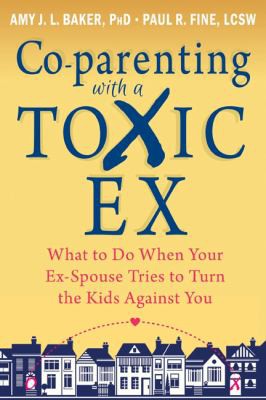
Co-Parenting with a Toxic Ex
Amy J. L. Baker, PhD & Paul R. Fine, LCSW
Evidence-based strategies when your ex tries to turn kids against you. Parental alienation prevention.

A Kidnapped Mind
Pamela Richardson
Heartbreaking memoir of parental alienation — an 8-year battle to maintain a bond with her son.
As an Amazon Associate, Clarity House Press earns from qualifying purchases. Your price is never affected.
Found this helpful?
Share it with someone who might need it.
About the Author

Clarity House Press
Editorial Team
The editorial team at Clarity House Press curates and publishes evidence-based content on narcissistic abuse recovery, high-conflict divorce, and healing. Our content is informed by research, survivor experiences, and established trauma-informed approaches.
View all posts by Clarity House Press →Published by Clarity House Press Editorial Team