Please read our important disclaimers before using this content
There are few pains more profound than watching your adult child believe the narcissistic parent's narrative—choosing their reality over yours, their version of history over what you know to be true, their ongoing manipulation over your authentic relationship.
Parental alienation doesn't always end when custody battles end. Sometimes it extends into adulthood, solidifies into permanent estrangement, and leaves you excluded from major life events, grandchildren, and the relationship you spent decades nurturing.
When your adult child sides with the narcissistic parent, you face grief without death, rejection without closure, and loss without societal recognition. But you also face choices: how to maintain your truth, whether and how to leave the door open, how to protect your own healing while holding long-term hope.
Parental Alienation That Continues Into Adulthood
Many targeted parents assume that once children reach adulthood, they'll "see the truth" about the narcissistic parent. Sometimes they do. Sometimes they don't.
Why Some Adult Children Continue Believing the Narcissist
Research on adults who experienced parental alienation in childhood reveals profound and lasting psychological impacts. A comprehensive study published in Healthcare found that adults alienated as children commonly experience anxiety disorders, trauma reactions, and significant emotional pain, with grief and loss being the most frequently described experience (60% of participants).1
Years of systematic conditioning:
- The alienating parent has had 18+ years to construct their narrative
- The false reality feels like truth because it's all they've known
- Questioning the narcissistic parent triggers cognitive dissonance too painful to confront
- The adult child's identity is built on the alienating parent's version of reality
Enmeshment vs. alienation:
Sometimes what looks like "siding with" the narcissistic parent is actually deep enmeshment. A meta-analytic review of 478 studies on parent-child boundary dissolution found that enmeshment involves "blurring of the intergenerational parent-child boundary through psychologically controlling and intrusive behaviors," and is significantly associated with both internalizing and externalizing symptoms in children.2
- Their identity is fused with the narcissistic parent
- They can't separate their thoughts/feelings from the parent's
- Individuation feels like betrayal
- The narcissistic parent has made the adult child their emotional spouse, confidant, or caregiver
What this looks like:
"My daughter is 32. She lives 10 minutes from her father, talks to him daily, makes all decisions in consultation with him. She repeats his version of our divorce verbatim—that I had an affair (false), that I kept her from him (he had equal custody), that I'm mentally unstable (his projection). She won't hear any other reality. She's not just choosing him—she IS him."
The Golden Child Dynamic
In narcissistic family systems, adult children who remain aligned with the narcissistic parent are often "golden children"--the idealized, favored child who receives conditional love in exchange for loyalty. Research shows that parental narcissistic personality disorder is linked to maladaptive parenting behaviors, emotional unavailability, and disrupted parent-child relationships, with children experiencing low trust, feelings of shame, and poor relationship strategies.3
What golden children get:
- Financial support and gifts
- Approval and praise (conditional on maintaining the narrative)
- Status as the "successful" or "stable" child
- Sense of superiority over siblings who've seen the truth
- Protection from the narcissistic parent's abuse (as long as they stay loyal)
What it costs them:
- Authentic self (suppressed to maintain approval)
- Other family relationships (targeted parent, siblings who've left)
- Reality testing (must deny their own observations to maintain the narrative)
- Emotional health (anxiety, depression from living a false self)
- Future awakening (when the narcissist inevitably turns on them or they finally individuate)
What this looks like:
"My son posts Father's Day tributes every year: 'To the best dad, who sacrificed everything for us, who was always there, who loved us unconditionally.' I know that's not true. He knows that's not true—he watched his father's rages, experienced the control, witnessed the abuse. But acknowledging that would cost him his father's approval, financial support, and the identity he's built. So he performs loyalty publicly."
When They Genuinely Believe the Lies
Some adult children aren't performing--they genuinely believe the alienating parent's version of history. Research on false memory implantation demonstrates that autobiographical memories can be created through repeated suggestion, with a systematic review finding that some recollective experience for suggested events is induced in approximately 47% of participants.4
Psychological mechanisms:
- Cognitive distortion: Memory actually changes to align with the narrative they've been told
- Confirmation bias: They interpret all evidence through the lens they were given
- Trauma bonding: Abuse from the narcissistic parent is reframed as love--a phenomenon empirically validated by research showing that intermittent maltreatment and power differentials account for 55% of variance in attachment to abusive partners5
- Dissociation: Traumatic memories of the narcissistic parent's behavior are suppressed
They may genuinely remember:
- You as the unstable, angry parent (because the narcissist triggered you, then pointed to your reaction)
- The narcissistic parent as the victim (because that's how they portrayed themselves)
- Events that didn't happen (because they were told it happened so many times it became memory)
- Safety with the narcissist and fear of you (because you were painted as the threat)
What this looks like:
"My daughter told her therapist I was emotionally abusive during her childhood—that I raged at her, that she was afraid of me, that I used her as my emotional support. I have never raged. I was the stable parent. But her father spent years telling her I was 'unstable,' 'needed too much from her,' 'couldn't control my emotions.' She internalized his narrative so completely that she now has 'memories' that align with it. Her therapist believes her version. I can't fight someone else's remembered reality."
Maintaining Your Truth Without Self-Abandonment
When your adult child believes a false narrative about you, the pressure to "take accountability" for things you didn't do or "admit" to being the problem is intense.
The Pressure to Accept False Blame
Well-meaning therapists may suggest:
- "Just apologize for your part to repair the relationship"
- "It doesn't matter what's true—what matters is their perception"
- "You need to validate their experience even if you remember it differently"
- "Taking accountability shows maturity"
Why this is harmful when the narrative is false:
- Self-abandonment: Accepting blame for abuse you didn't commit
- Reinforces the lie: Confirms the narcissistic parent's version
- Teaches your child: Abusers can rewrite reality and victims must accept it
- Damages your integrity: Living a lie corrodes your sense of self
Maintaining Your Truth
You can simultaneously:
- Hold your truth about what happened
- Acknowledge your child's pain (even if based on false narrative)
- Take accountability for actual mistakes you made
- Refuse to accept blame for things you didn't do
What this sounds like:
✅ "I hear that you experienced me as angry and unstable. I'm sorry you felt that way. My truth is that I was surviving abuse and trying to protect you. I was not perfect, and I take accountability for times I was emotionally unavailable due to trauma. But I will not accept responsibility for abusing you, because that didn't happen."
✅ "I understand your father told you I kept you from him. Your experience of that story is real to you. My truth is that I fought for his custody time to be enforced because he frequently canceled. I have court records documenting this. I won't debate your memory, but I also won't accept a false narrative."
❌ "You're brainwashed and don't know what you're talking about" ❌ "Your father is a liar and manipulated you" ❌ "Fine, I'm the terrible parent—is that what you want to hear?"
What this looks like:
"My son accused me of abandoning him during the divorce. The truth: His father fought for primary custody and won through false allegations. I had every other weekend for three years until I could afford to appeal. I didn't abandon him—I was fighting to get him back. I told him: 'I understand you felt abandoned. That must have been incredibly painful. I'm sorry you experienced that pain. My truth is that I was fighting every single day to have more time with you. I have the legal records. I won't debate your feelings, but I also won't accept a false version of my intentions.'"
Leaving the Door Open Without Losing Yourself
The conventional wisdom is "leave the door open" for estranged adult children. But what does that mean when they're actively hostile, repeating false narratives, and aligned with your abuser?
What "Door Open" Doesn't Mean
❌ Accepting abuse to maintain contact ❌ Tolerating disrespect or cruelty ❌ Participating in family events where you're scapegoated ❌ Funding their life while being excluded from it ❌ Allowing yourself to be used as emotional dumping ground ❌ Pretending everything is fine when it isn't
What "Door Open" Can Mean
✅ Birthday cards (brief, loving, no pressure) ✅ Annual letter (if you feel called to write it) ✅ Willingness to engage if they reach out ✅ Not burning bridges (no public shaming, no cut-off declarations) ✅ Continuing to hold space for eventual reconciliation ✅ Staying available without self-abandonment
What this looks like:
"I send a birthday card every year. Just: 'Happy birthday. I love you. I'm here if you ever want to talk. -Mom' No guilt trips. No 'I miss you so much.' No updates about my life they don't want. No pressure. Just a reminder that the door is open. I don't know if she reads them. But I send them anyway."
Setting Boundaries While Leaving Door Open
You can simultaneously leave the door open AND protect yourself:
If they contact you with hostility:
"I'm glad you reached out. I love you and I want a relationship with you. I'm not willing to be yelled at or accused of things I didn't do. If you'd like to have a calm conversation, I'm here. If you need to express anger, I understand—but I'm going to end the conversation to protect both of us from saying things we'll regret."
If they exclude you from major events:
"I respect your decision about your wedding guest list. I'm sad I won't be there, and I love you. If you change your mind, I'd be honored to attend. If not, I wish you the most beautiful day."
If they demand you admit to false accusations:
"I hear that's your experience. I take accountability for the mistakes I actually made. I won't accept responsibility for things that didn't happen. If you need me to lie to have a relationship, then we can't have a relationship right now. But I'm here when you're ready to engage with me as a whole, imperfect person—not a villain."
Grief of Adult Child Relationship Loss
Losing a relationship with an adult child hits differently than divorce, death, or other losses.
Ambiguous Loss
What makes this grief complex:
Psychologist Pauline Boss coined the term "ambiguous loss" to describe grief that occurs without death or closure. Her research, published in Family Process and The Lancet, identifies two types: physical absence with psychological presence (the person is gone but preoccupies the mind) and psychological absence with physical presence. Family estrangement creates the first type--the child is alive but absent from your life.6
- They're alive, but absent
- The relationship exists, but not with you
- You're a parent, but not allowed to parent
- Hope exists, but no timeline
- Grief occurs, but with no ritual or recognition
Society's lack of support:
- No casseroles, no sympathy cards, no bereavement leave
- Often blamed: "What did you do to cause this?"
- Isolation: Most people can't relate to losing an adult child to alienation
- Minimization: "They'll come around eventually" or "Give them space"
What this looks like:
"When my mother died, people brought food, sent flowers, came to the funeral. When my daughter estranged from me, people asked what I did wrong. They assumed I must have been abusive. I grieved alone. There's no social script for 'my living child chooses to have no relationship with me because they believe lies about me.'"
Complicated Grief Symptoms
Prolonged grief disorder (PGD) was added to the DSM-5-TR in March 2022 as a trauma and stressor-related disorder. While typically applied to bereavement after death, the symptoms closely mirror what parents experience during estrangement: intense yearning, identity disruption, disbelief, avoidance of reminders, emotional pain, difficulties moving on, numbness, and a sense that life is meaningless.7
You might experience:
- Intrusive thoughts about your child
- Inability to accept the loss (because they're not dead--surely this can change)
- Intense yearning and searching (checking social media, asking family members for updates)
- Feeling stuck between hope and acceptance
- Guilt, self-blame, rumination ("What could I have done differently?")
- Anger at the narcissistic parent for causing this
- Difficulty finding meaning or moving forward
This is normal grief for abnormal loss.
Grief Work That Helps
Acknowledge this is grief:
- You've lost a relationship, even if temporary
- You've lost the future you imagined (holidays together, watching them parent, being involved in their life)
- You've lost your role as their active parent
Create rituals:
- Write letters you don't send
- Create memory books of their childhood
- Light candles on their birthday
- Plant trees or gardens in their honor
- Journal your feelings
Find community:
- Estranged parent support groups (online and in-person)
- Therapy with someone who understands parental alienation
- Grandparents' rights organizations (even if you don't pursue legal action)
What this looks like:
"I joined an online support group for parents estranged from adult children. For the first time, I found people who understood. They didn't ask what I did wrong. They didn't tell me to 'just give her space.' They said, 'This is devastating, and it's not your fault, and we're here.' That community saved me."
Protecting Grandchildren When You Have Limited Access
When your adult child sides with the narcissistic parent, you often lose access to your grandchildren too.
The Grandparent Rights Question
Legal considerations:
- Grandparent rights vary by state (some states have none)
- Most require showing harm to child from loss of relationship
- Courts defer to parents' decision-making
- Filing can further damage relationship with adult child
When to consider legal action:
- You had substantial, established relationship with grandchildren
- There's documented concern for grandchildren's welfare
- Other avenues (mediation, family therapy) have failed
- You're prepared for long-term legal battle and relationship damage
When NOT to pursue:
- Relationship with grandchildren was minimal
- Primary motivation is to punish your adult child or ex
- You're not prepared for financial and emotional cost
- Attorney advises low likelihood of success
What this looks like:
"I consulted three attorneys about grandparent rights. All three said: 'You probably won't win, it will cost $30,000+, and it will destroy any chance of reconciliation with your daughter.' I decided not to file. It was the hardest decision I've ever made—choosing long-term hope over short-term legal action."
Protecting Grandchildren From a Distance
What you can do without legal action or direct contact:
Document:
- Keep records of attempts to maintain relationship
- Save cards, gifts, letters sent to grandchildren
- Document concerning behaviors you observe (if you have any contact)
- Maintain evidence of your stable, loving presence in case future legal action becomes necessary
Indirect presence:
- Trust accounts for grandchildren (money they'll access at 18)
- Letters to be given to them when they're adults
- Preserving photos and memories for eventual sharing
- Maintaining relationships with other family members who might bridge the gap eventually
Letting go of control:
- You cannot protect them from the narcissistic grandparent
- You cannot override your adult child's parenting decisions
- You cannot force a relationship
What this looks like:
"I started a trust fund for my grandchildren. Every birthday and Christmas, I add money and write them a letter I don't send. I save the letters in a box. If they ever want a relationship when they're adults, they'll know I thought of them. If they never want a relationship, I'll donate the fund to a children's charity. Either way, I did what I could."
Long-Term Hope: Stories of Adult Children Who Return
This is the hope that sustains many targeted parents: Maybe someday they'll see the truth.
When Adult Children Wake Up
Common triggers for awakening:
- Narcissistic parent turns on them: The golden child loses favor and experiences the abuse firsthand
- They become parents: Having their own children makes them reevaluate their childhood
- Therapy: A skilled therapist helps them recognize family dynamics
- Narcissistic parent's death: Freedom to question the narrative without consequence
- Life crisis: Divorce, illness, job loss—times when they need real support and realize narcissistic parent can't provide it
- Accumulation of evidence: Contradictions in the story finally become too much to ignore
What this looks like:
"My son reached out at 35. He'd been estranged for 12 years. His father, my ex, had remarried and started erasing my son from his life—canceling plans, criticizing his parenting, competing with him. My son finally experienced what I'd tried to protect him from. He called me and said, 'I think I owe you an apology.' We're rebuilding. Slowly. It's not perfect. But he's back."
Reconciliation Is Possible—But Not Guaranteed
Reality check:
- Some adult children never see the truth
- Some see the truth but choose the narcissistic parent anyway (for money, ease, fear)
- Some reconcile only to re-estrange when the narcissistic parent pulls them back
- Some wait until the narcissistic parent dies to reconnect
Hope without attachment:
- Hold hope that reconciliation is possible
- Don't build your life around waiting for it
- Live fully now, while keeping the door open
What this looks like:
"I've been estranged from my daughter for 18 years. I'm 62 now. I've built a full life—friends, hobbies, travel, other family relationships. I send a birthday card every year. I'd welcome her back in a heartbeat. But I'm not waiting for her to live my life. Hope and acceptance can coexist."
Your Healing Process
You cannot control your adult child's choices, their relationship with the narcissistic parent, or their version of reality. You can only control your healing.
Therapy for Complex Grief
Find a therapist who understands:
- Parental alienation
- Narcissistic abuse (yours AND your child's)
- Complicated/ambiguous grief
- Trauma responses
Red flags in therapists:
- Blaming you for the estrangement without investigation
- Pushing you to "take accountability" for things you didn't do
- Minimizing parental alienation as "just a custody battle"
- Pressuring you to reconcile at any cost
Building Your Life Now
You are not just "a parent waiting for their child to return."
Rebuild identity beyond this grief:
- Relationships with other children/family members
- Friendships and community
- Work or volunteer activities
- Hobbies, passions, purpose
- New roles (mentor, friend, advocate)
What this looks like:
"I started volunteering with an organization that supports targeted parents. I turned my pain into purpose. I mentor newly alienated parents. I advocate for family court reform. I've built a life that matters—even as I hold space for my son to return someday."
Your Next Steps
If your adult child has sided with the narcissistic parent:
- Seek therapy immediately: Complicated grief requires professional support
- Join support group: Online or in-person for estranged parents (see resources below)
- Define your "door open" strategy: What are you willing to do without self-abandonment?
- Consult attorney re: grandparent rights: Get legal opinion even if you don't pursue (you'll make informed choice)
- Build your life now: One activity, relationship, or purpose that's entirely yours
You did not fail as a parent. Narcissistic alienation is abuse—and you and your child are both victims of it.
Hold your truth. Leave the door open. Live your life. Hope is not the same as waiting.
Resources
Support & Community:
- Alienated Grandparents Anonymous - Support for alienated grandparents
- Beyond Consequences Institute - Parent support and trauma resources
- Psychology Today Therapist Finder - Find trauma-informed therapists
- EMDR International Association - Find EMDR therapists for grief and trauma
Books & Education:
- The Body Keeps the Score by Bessel van der Kolk - Trauma processing
Crisis Support:
- 988 Suicide & Crisis Lifeline - Call or text 988 (24/7)
- Crisis Text Line - Text HOME to 741741
- National Parent Helpline - 1-855-427-2736
References
- Harman, J. J., Kruk, E., & Hines, D. A. (2022). The impact of parental alienating behaviours on the mental health of adults alienated in childhood. Healthcare, 10(4), 639. https://pmc.ncbi.nlm.nih.gov/articles/PMC9026878/ ↩
- Kerig, P. K., & Swanson, J. A. (2024). Parent-child boundary dissolution and children's psychological difficulties: A meta-analytic review. Development and Psychopathology, 1-21. https://pubmed.ncbi.nlm.nih.gov/38884957/ ↩
- Khan, S., & Fatima, S. (2024). Impact of parental narcissistic personality disorder on parent-child relationship quality and child well-being: A systematic review. Cureus, 16(9), e69692. https://pubmed.ncbi.nlm.nih.gov/38969152/ ↩
- Brewin, & Andrews (2017). Creating Memories for False Autobiographical Events in Childhood: A Systematic Review.. Applied cognitive psychology. https://pmc.ncbi.nlm.nih.gov/articles/PMC5248593/ ↩
- Dutton, D. G., & Painter, S. (1993). Emotional attachments in abusive relationships: A test of traumatic bonding theory. Violence and Victims, 8(2), 105-120. https://pubmed.ncbi.nlm.nih.gov/8193053/ ↩
- Boss, P. (2002). Ambiguous loss: Working with families of the missing. Family Process, 41(1), 14-17. https://pubmed.ncbi.nlm.nih.gov/11924081/ ↩
- Prigerson, H. G., Boelen, P. A., Xu, J., Smith, K. V., & Maciejewski, P. K. (2021). Prolonged grief disorder: Course, diagnosis, assessment, and treatment. Focus, 19(2), 161-172. https://pmc.ncbi.nlm.nih.gov/articles/PMC8475918/ ↩
- Kelly, J. B., & Braver, S. L. (2020). Adverse effects of parental alienation: A systematic review. Psychological Bulletin, 146(12), 1141-1166. https://pubmed.ncbi.nlm.nih.gov/32453625/ ↩
- Buchanan, R., George, M., & Payne, V. (2023). Parental alienation: Clinical and forensic mental health approaches. Journal of Child Custody, 20(1), 23-45. https://pubmed.ncbi.nlm.nih.gov/36930283/ ↩
- American Psychiatric Association. (2022). Diagnostic and Statistical Manual of Mental Disorders (5th ed., text revision). Arlington, VA: American Psychiatric Publishing. ↩
Recommended Reading
From Clarity House Press — plus trusted books for deeper understanding


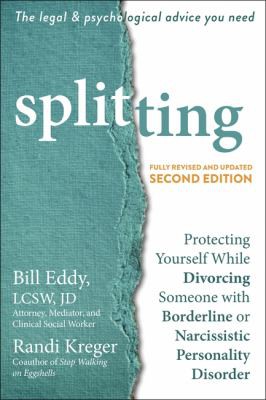
Splitting: Protecting Yourself While Divorcing Someone with Borderline or Narcissistic Personality Disorder
Bill Eddy & Randi Kreger
Updated edition covering domestic violence, alienation, false allegations in high-conflict divorce.
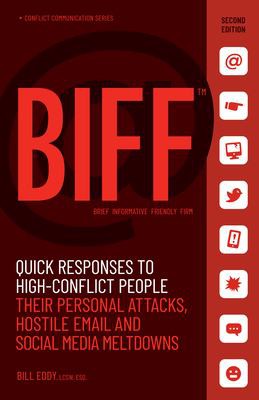
BIFF: Quick Responses to High-Conflict People
Bill Eddy, LCSW Esq.
Brief, Informative, Friendly, and Firm responses for dealing with high-conflict people.
As an Amazon Associate, Clarity House Press earns from qualifying purchases. Your price is never affected.
Found this helpful?
Share it with someone who might need it.
About the Author

Clarity House Press
Editorial Team
The editorial team at Clarity House Press curates and publishes evidence-based content on narcissistic abuse recovery, high-conflict divorce, and healing. Our content is informed by research, survivor experiences, and established trauma-informed approaches.
View all posts by Clarity House Press →Published by Clarity House Press Editorial Team