Please read our important disclaimers before using this content
If you're an adoptive parent navigating divorce from a narcissistic partner—or an adopted person dealing with narcissistic abuse in your adoptive family—you're facing challenges that most divorce resources don't address. The intersection of adoption trauma and narcissistic abuse creates compounded vulnerabilities that require specialized understanding and protection strategies.
Adoption involves inherent attachment complexity. When a narcissistic abuser weaponizes adoption narratives, exploits attachment vulnerabilities, or uses your child's adoption story as a tool for manipulation, the resulting trauma layers upon pre-existing adoption-related challenges in devastating ways.
Understanding how narcissistic abuse uniquely impacts adoptive families—and what protective strategies work—is essential for both adoptive parents and adopted individuals navigating high-conflict relationships.
Note for readers with trauma-related executive function challenges: This article covers heavy material. You might skip to "Your Next Steps" if you prefer to focus on actionable strategies first, or read one section at a time. All main ideas are summarized in "Key Takeaways" at the end. There's no "right" way to read this—choose what serves you.
Understanding the Unique Vulnerabilities
Adoptive families face specific vulnerabilities that narcissistic abusers actively exploit. These aren't weaknesses—they're the natural complexities of adoption that become weaponized in abusive dynamics.
1. Pre-Existing Attachment Trauma
Adoption involves inherent relational transitions and loss. While the impact varies based on factors including age at placement, pre-adoption experiences, and post-adoption attachment opportunities, many adopted children navigate questions of belonging, identity, and permanence that narcissistic abusers can exploit. The loss of biological family, even when adoption is the healthiest outcome, creates fundamental questions about belonging, worthiness, and permanence—experiences documented in developmental attachment theory research.1 Research shows that children who experience early maltreatment or institutionalization demonstrate remarkable recovery in attachment quality after placement with adoptive families, though pre-adoptive adversity often has lasting effects on attachment representations.2
How narcissists exploit this:
- They trigger abandonment fears through threats of "sending the child back" or "giving them to someone who really wants them"
- They tell the child "your real parents didn't want you, and neither do I"
- During custody battles, they question whether you can "really" love a child who isn't "yours"
- They use the child's attachment struggles as "evidence" of your inadequate parenting
- They threaten to tell the child "the truth" about their adoption in harmful ways
What this looks like:
"My ex would tell our adopted daughter—who came to us at age 3 from foster care—that I only adopted her 'for show' and didn't really love her. During arguments, he'd say things like 'maybe we should find you a different family' knowing her deepest fear was being moved again. He weaponized her trauma for control."
2. Adoption Narrative Control
How, when, and what children learn about their adoption story is deeply personal and developmentally sensitive. Narcissistic abusers recognize this and use adoption disclosure as a weapon.
How narcissists exploit this:
- They threaten to tell the child about their adoption before you've agreed it's time
- They share adoption details (birth parent information, circumstances) inappropriately
- They frame the adoption story in ways that serve their narrative ("I saved you," "your mother wanted to give you away")
- They use knowledge of birth family as leverage ("I'll contact them and tell them how you really are")
- In transracial adoptions, they make racist comments about the child's heritage
What this looks like:
"We agreed to wait until our son was 5 to begin age-appropriate adoption conversations. When my ex wanted to hurt me, he told our 3-year-old that his 'real mommy' didn't want him, and that I wasn't his 'real' parent. He destroyed our carefully planned disclosure timeline to win an argument."
3. Transracial and Transcultural Adoption Complexity
When adoptive parents and children are of different races or cultural backgrounds, additional vulnerabilities emerge—particularly around identity development, cultural connection, and navigating racism. Research indicates that transracial adoptees show stronger racial pride and better identity outcomes when adoptive parents emphasize the children's racial backgrounds, encourage ethnic participation, live in racially integrated communities, and are highly involved in cultural activities.3
How narcissists exploit this:
- White adoptive parents fetishizing their child's race while failing to address racism
- Making racist comments about the child, their birth culture, or their appearance
- Using "colorblind" rhetoric to dismiss the child's racial identity needs
- Weaponizing cultural connection ("I'm the one who takes them to [cultural events]")
- In custody battles, questioning your commitment to the child's racial/cultural identity
- Using your privileged racial identity against you ("you'll never understand them like I do")
What this looks like:
"I'm white and our daughter is Black. During the marriage, my ex performed his 'woke dad' role publicly—talking about her beautiful hair, posting about racial justice. In private, he'd make comments about her natural hair being 'messy' and would refuse to learn proper hair care. During the divorce, he told the judge I was raising her 'without connection to her culture'—while I was the only one who'd built relationships with Black families, found Black therapists, and addressed racism actively."
4. Open Adoption Relationships Weaponized
Many adoptions involve ongoing contact with birth families—visits, letters, photos. These relationships, while often beneficial, create additional leverage points for narcissistic manipulation. Research on open adoption indicates that sustained and rewarding contact experiences with birth families can be protective for adopted persons into young adulthood, and adoptive parent satisfaction with contact arrangements predicts less externalizing behavior among adopted adolescents.4
How narcissists exploit this:
- They control all communication with birth family, cutting you out
- They tell birth family lies about you to damage relationships
- They threaten to cut off birth family contact unless you comply
- They frame themselves as the "bridge" to birth family that child needs
- During custody disputes, they claim you're blocking birth family connection
- They encourage birth family to side with them in custody battle
What this looks like:
"Our open adoption included twice-yearly visits with our son's birth mother. My ex controlled all scheduling and communication. When I filed for divorce, he told her I was trying to 'take away' her son and wanted to close the adoption. She wrote a letter supporting him in court—not knowing he'd systematically lied about my role in maintaining that relationship for eight years."
The Custody Battle Dimensions
When adoptive families enter high-conflict divorce, unique legal and psychological dynamics emerge that require specific protective strategies.
"Real Parent" Allegations
In some cases, narcissistic ex-partners question whether the adoptive parent can be a "real" parent, especially if only one spouse is the biological or adoptive parent on paper.
Legal realities:
- Second-parent adoption is crucial: If you are in a same-sex relationship or adopted as a non-married partner, and you have not yet finalized second-parent adoption, you may have no legal parental rights if the relationship ends—even if you've functioned as a parent for years. Second-parent adoption availability varies by state. If your second-parent adoption is not yet finalized, consult an attorney immediately to understand your options and vulnerabilities. Once finalized, you have full legal parental rights equal to any biological parent.
- Adoption decree is legally binding: A finalized adoption gives you the same legal rights as any biological parent
- "Real parent" rhetoric is discriminatory: Courts should not entertain arguments that adoption creates "lesser" parentage
- Best interests standard applies equally: Your child's best interests matter regardless of biology
Protective strategies:
- Ensure all adoption paperwork is finalized and accessible
- If second-parent adoption wasn't completed, pursue it immediately
- Document your parental involvement from day one (photos, school records, medical appointments)
- Educate your attorney on adoption-competent arguments
- Request a custody evaluator with adoption training
Using Attachment Challenges Against You
Many adopted children exhibit common adoption-related behaviors: difficulty with transitions, trust issues, emotional regulation challenges, behavioral struggles. Narcissistic ex-partners weaponize these challenges as if they indicate parenting failure. Research shows that adopted children demonstrate more behavioral problems, including externalizing symptoms like aggression and oppositional behavior, compared to non-adopted children, particularly among those with histories of early adversity.5 However, these challenges reflect the impact of pre-adoption trauma, not parental inadequacy.
What they'll claim:
- "The child's behavioral problems prove you can't handle them"
- "Their attachment issues show you've failed as a parent"
- "They act out because they sense you don't really love them"
- "If they were with their 'real' family, they wouldn't have these problems" (This is factually false—adopted children with trauma histories benefit from consistent, trauma-informed parenting regardless of biological connection.)
- "You're not equipped to handle a 'difficult' child"
Counter-strategies:
- Get adoption-competent therapeutic evaluation: Find a therapist who understands adoption trauma vs. parental inadequacy
- Document consistent parenting: Show you've pursued appropriate support (therapy, parenting classes, attachment-focused interventions)
- Educate the evaluator: Provide materials on adoption attachment challenges and normal developmental trajectories
- Reframe the narrative: "My child experiences adoption-related grief, and I provide trauma-informed parenting to support them"
- Show stability: Demonstrate that consistent, loving care helps children heal—not that struggles indicate failure
Birth Family Involvement in Custody
In some cases, narcissistic ex-partners try to involve birth family in custody disputes—either to bolster their case or to destabilize yours.
Scenarios that emerge:
- Ex convinces birth family to testify against you
- Ex threatens to help birth family pursue custody themselves
- Ex suggests that contact with birth family should happen "on my time, not yours"
- Birth family, receiving false information, genuinely believes you're harmful
- Open adoption agreements become custody leverage points
Legal protections:
- Adoption decrees permanently terminate birth parent rights: Once adoption is finalized, birth parent rights are permanently and irrevocably terminated. Birth parents have no legal custody claims except in extremely rare circumstances (such as fraud in the adoption process—not simply changed minds). Open adoption contact agreements, even if legally enforceable in your state, do not give birth parents any legal parental rights or custody claims. If your ex tries to involve birth family in custody disputes or threatens to 'help them pursue custody,' understand that courts require extraordinarily high proof of unfitness to award custody to non-parents when a fit legal parent exists.
- Open adoption agreements vary by state: Approximately 30 states have statutes allowing post-adoption contact agreements to be legally enforceable if incorporated into the adoption decree and deemed in the child's best interests. In other states, these agreements are considered voluntary cooperative arrangements with no legal enforcement mechanism. Consult an attorney in your jurisdiction to understand whether your open adoption agreement is legally binding and what remedies exist if your ex violates it or manipulates birth family relationships.
- Third-party custody is rare: Courts rarely award custody to non-parents when fit parents exist
- Best interests of child remain paramount: Contact with birth family is considered only if it serves the child's wellbeing
Protective steps:
- Maintain your own relationship with birth family (if beneficial to child)
- Document any healthy birth family involvement you've facilitated
- If birth family is being manipulated, consider reaching out directly with your side
- If open adoption contact is harmful, consult attorney about modification
- Keep all communication about birth family child-focused and documented
Preserving Your Child's Adoption Story
One of the most painful aspects of narcissistic abuse in adoptive families is the corruption of your child's adoption narrative—the story they'll carry about how they came to be in your family.
Age-Appropriate Truth-Telling
Adoption disclosure is developmental, not a one-time conversation. Narcissistic disruption of this process causes confusion and pain.
Guidelines for protecting adoption narrative:
- Stick to age-appropriate truth: Don't over-disclose in response to ex's harmful revelations
- Use books and resources: Adoption-competent children's books help frame concepts appropriately
- Validate their feelings: "It's okay to have big feelings about adoption"
- Correct misinformation gently: "What Daddy said isn't quite right. Here's what actually happened..."
- Maintain consistency: Keep your adoption story stable and honest across time
- Therapy support: Adoption-competent child therapist can help process
What NOT to do:
- ❌ Badmouth birth parents to counter ex's narrative
- ❌ Over-share about birth circumstances to "set the record straight"
- ❌ Use adoption story to make yourself look better than ex
- ❌ Lie or minimize to protect feelings (creates later trust issues)
- ❌ Force conversations child isn't ready for
Protecting Birth Family Connections
If birth family relationships are healthy and beneficial, protecting them from narcissistic interference is critical.
Strategies:
- Direct communication: Establish your own phone/email contact with birth family
- Transparency: Share your side of the divorce situation factually and without drama
- Child-focused framing: "Our marriage ended, but our commitment to honoring [child]'s connections hasn't"
- Document involvement: Keep records of visits you facilitate, communication you maintain
- Boundaries if needed: If birth family is toxic or siding with abuser, protect your child first
- Court consideration: Show judge that you support healthy birth family contact
Cultural and Racial Identity Preservation
For transracial adoptees, maintaining cultural connections during parental conflict is essential but challenging.
Commitments to maintain:
- Cultural community involvement: Continue participation in cultural organizations, events, faith communities
- Same-race mentors and role models: Ensure child has access to adults who share their racial/ethnic identity
- Books, media, representation: Maintain diverse representation in your home
- Hair care and cultural practices: Continue culturally-specific care practices
- Racial literacy conversations: Don't avoid discussing race because of divorce stress
- Document your efforts: Take photos at cultural events, keep programs, show engagement
If your ex weaponizes culture:
- Show your proactive efforts (classes taken, relationships built, resources invested)
- Highlight any ways ex has failed to support cultural connection
- Bring in cultural community members as character witnesses if needed
- Request culturally-competent custody evaluator
- Frame cultural connection as your child's right, not a competition
When You're the Adopted Person in an Abusive Relationship
If you're an adopted person experiencing narcissistic abuse—whether from an adoptive parent, adoptive sibling, or romantic partner—your adoption history creates specific vulnerabilities abusers exploit.
Adoption Trauma Triggers
Common triggers narcissists exploit:
- Abandonment sensitivity: Threatening to leave, silent treatment, withdrawal of affection
- Worthiness questioning: "No wonder your real parents gave you up"
- Belonging uncertainty: "You don't really fit in this family"
- Identity confusion: Weaponizing questions about "who you really are"
- Loyalty conflicts: "You have to choose—me or them"
Healing approaches:
- Adoption-trauma-informed therapy (not all therapists understand adoption)
- Trauma-focused therapy such as EMDR or Cognitive Processing Therapy (CPT)—both strongly recommended evidence-based treatments for trauma and PTSD by the American Psychological Association and VA/DoD clinical practice guidelines67—for discrete traumatic memories, or attachment-focused therapies for processing adoption-related experiences. An adoption-competent therapist can help determine appropriate treatment based on individual history and current symptoms.
- Attachment repair work with safe relationships (earned secure attachment can develop through years of consistent safe relationships and therapeutic work)
- Distinguishing abuse from adoption trauma (both can be true)
- Building chosen family and secure relationships
Establishing Your Worth Beyond Narrative
Narcissists attack your sense of inherent worth. For adopted people, this intersects with existing questions.
Affirmations to internalize:
- My adoption story is part of me, but it doesn't define my worth
- I deserved love then, and I deserve love now
- Someone else's inability to parent me says nothing about my value
- My feelings about adoption are valid, complex, and mine
- I can be angry, sad, grateful, and grieving about adoption—all at once
- Abuse is not connected to my adoption; abusers abuse everyone
Your Next Steps
Immediate actions:
- Gather available adoption paperwork: If you have access, collect your finalization decree, birth certificates, and any legal documents establishing parentage. If your paperwork is incomplete or inaccessible, your attorney can request certified copies from the court or help you locate them.
- Document cultural/birth family involvement: Photos, emails, event attendance proving your engagement
- Find adoption-competent therapist: For yourself and your child—ask specifically about adoption trauma training
- List adoption-specific attorney questions: "Have you handled custody cases with adoptive families?" "Do you understand second-parent adoption issues?"
- Connect with adoptive parent support groups: Find communities who understand these unique challenges
30-day goals:
- Educate your legal team: Provide resources on adoption attachment, trauma-informed parenting, and adoption-competent custody practices
- Request adoption-competent custody evaluator: Ask court to appoint evaluator with adoption training
- Establish your own birth family communication (if applicable): Create direct relationships not controlled by ex
- Create age-appropriate adoption resources: Books, therapists, language to support your child
- Document everything: Every instance of ex weaponizing adoption narrative, making harmful comments about birth family, or using adoption as leverage. Specifically document:
- Threats related to adoption ("sending you back," "giving you away")
- Inappropriate adoption disclosures to child
- Racist/derogatory comments about child's heritage or birth family
- Blocking or controlling birth family contact
- Claims you're not a 'real' parent
- This evidence is admissible and demonstrates emotional abuse, poor judgment, and inability to co-parent on adoption matters.
Long-term protection:
- Build chosen family support: Create stable, loving relationships that affirm your family's validity
- Maintain cultural connections: Double down on cultural community involvement if you're in transracial adoption
- Parallel parenting with firm boundaries: Don't co-parent on adoption disclosure—parallel parent with your own developmentally-appropriate approach
- Therapy for attachment repair: Help your child heal from both adoption trauma and narcissistic abuse
- Consider support groups: Adoption + divorce support specifically addresses these intersections
NOTE ON HOTLINE NUMBERS: Phone numbers for crisis hotlines, legal aid, and support services are provided as a resource. These numbers are current as of publication but may change. Please verify hotline numbers are still active before relying on them. For the National Domestic Violence Hotline, visit thehotline.org for current contact information.
Resources
Adoption Support & Education:
- Center for Adoption Support and Education (C.A.S.E.) - Adoption-competent therapy and resources
- North American Council on Adoptable Children - Support groups and advocacy
- Pact, An Adoption Alliance - Transracial adoption support and camps
- Adoptive Families Magazine - Community and resources
Legal & Crisis Support:
- National Domestic Violence Hotline - 1-800-799-7233 (24/7)
- Academy of Adoption Attorneys - Find adoption-competent family law attorneys
- Child Welfare Information Gateway - Legal resources on adoption
Adoptee Resources:
- Adoptees On - Podcast and community for adoptee voices
- Adoption Network Cleveland - Search, support, and advocacy
- 988 Suicide & Crisis Lifeline - Call or text 988 (24/7)
References
Key Takeaways
- Adoption involves inherent attachment complexity that narcissistic abusers weaponize through abandonment threats, narrative control, and exploitation of pre-existing trauma.
- Transracial adoption adds layers of vulnerability around cultural connection, racial identity, and navigating racism during high-conflict divorce.
- Legal protections exist: Adoption decrees give you full legal parental rights; second-parent adoption (where needed) is crucial; courts should not entertain "real parent" rhetoric.
- Custody evaluators need adoption training: Ensure your evaluator understands adoption trauma vs. parenting failure and can assess attachment-informed parenting.
- Preserve birth family connections when healthy and beneficial; document your facilitation of these relationships.
- Protect your child's adoption narrative with age-appropriate truth-telling, therapy support, and boundaries against ex's harmful disclosures.
- For adopted people in abusive relationships: Your adoption history creates vulnerabilities abusers exploit—healing requires adoption-trauma-informed therapy and distinguishing abuse from adoption grief.
Your adoptive family is a real family. Your love is real love. Your legal rights are full parental rights. Don't let anyone—including a narcissistic ex—tell you otherwise.
References
- Toof, J., Wong, J., & Devlin, J. M. (2020). Childhood trauma and attachment. SAGE Open, 10(1). https://doi.org/10.1177/1066480720902106 ↩
- Palacios, J., & Brodzinsky, D. (2010). Adoption research: Trends, topics, outcomes. International Journal of Behavioral Development, 34(3), 270-284. https://pmc.ncbi.nlm.nih.gov/articles/PMC6158124/ ↩
- DeBerry, K. M., Scarr, S., & Weinberg, R. (1996). Family racial socialization and ecological competence: Longitudinal assessments of African-American transracial adoptees. Child Development, 67(5), 2375-2399. https://pmc.ncbi.nlm.nih.gov/articles/PMC2366972/ ↩
- Palacios, J., Rolock, N., Selwyn, J., & Barbosa-Ducharne, M. (2019). Adoption breakdown: Concept, research, and implications. Research on Social Work Practice, 29(2), 130-142. https://www.frontiersin.org/journals/child-and-adolescent-psychiatry/articles/10.3389/frcha.2023.1156407/full ↩
- Grotevant, H. D., Perry, Y. V., & McRoy, R. G. (2005). Openness in adoption: Outcomes for adolescents within their adoptive kinship networks. In D. M. Brodzinsky & J. Palacios (Eds.), Psychological issues in adoption: Research and practice (pp. 167-186). Praeger Publishers. https://pmc.ncbi.nlm.nih.gov/articles/PMC10361248/ ↩
- American Psychological Association. (2017). Clinical practice guideline for the treatment of posttraumatic stress disorder (PTSD) in adults. https://doi.org/10.1037/amp0000473 ↩
- Cusack, K., Jonas, D. E., Forneris, C. A., et al. (2016). Psychological treatments for adults with posttraumatic stress disorder: A systematic review and meta-analysis. Clinical Psychology Review, 43, 128-141. https://doi.org/10.1016/j.cpr.2015.10.003 ↩
Recommended Reading
From Clarity House Press — plus trusted books for deeper understanding
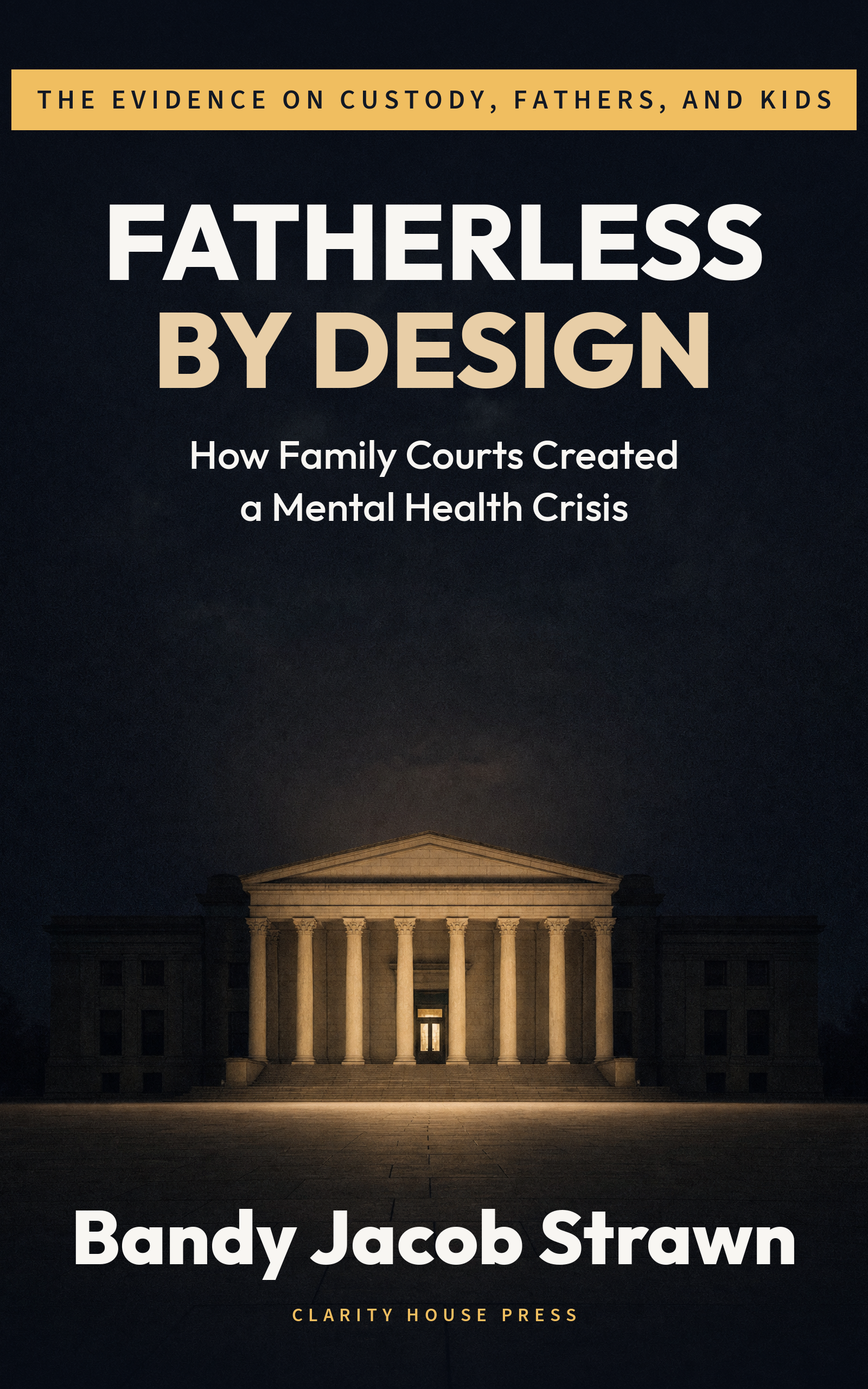

The High-Conflict Custody Battle
Amy J. L. Baker, PhD & J. Michael Bone, PhD
Expert legal and psychological guide to defending against false accusations in custody.
Divorce Poison
Dr. Richard A. Warshak
Classic best-selling parental alienation resource on detecting and countering manipulation tactics.
As an Amazon Associate, Clarity House Press earns from qualifying purchases. Your price is never affected.
Found this helpful?
Share it with someone who might need it.
Tags
About the Author

Clarity House Press
Editorial Team
The editorial team at Clarity House Press curates and publishes evidence-based content on narcissistic abuse recovery, high-conflict divorce, and healing. Our content is informed by research, survivor experiences, and established trauma-informed approaches.
View all posts by Clarity House Press →Published by Clarity House Press Editorial Team