Please read our important disclaimers before using this content
You posted a photo of your weekend hiking trip. Within hours, your ex texted: "Nice to see you can afford expensive vacations while claiming you can't pay more child support."
The hike was free. You packed sandwiches. You're broke. None of that matters.
They took one piece of information and weaponized it.
Or: You mentioned to a mutual friend that you're seeing a therapist. A week later, your ex's attorney files a motion questioning your mental stability and fitness as a parent.
Or: Your child innocently mentioned that "Mom's friend John came over for dinner." Now you're being accused of introducing the children to a parade of unstable romantic partners.
This is why narcissists collect information about you.
Not because they care about your life. Not because they're interested in your wellbeing. Because information is ammunition. They're stockpiling weapons.
Welcome to the information diet: the strategic restriction of what a narcissist knows about your life. This strategy works best alongside the gray rock method for a complete approach to communication.
Why Narcissists Weaponize Information
Healthy people receive information and process it in context. They consider nuance, ask clarifying questions, and assume good intent.
Narcissists receive information and immediately ask: "How can I use this against them?"1
Information as Power and Control
When a narcissist knows details about your life, they have:
1. Ammunition for manipulation
Every piece of information can be twisted into a weapon:
- You got a promotion → "You're working too much and neglecting the kids"
- You're dating someone → "You're prioritizing random strangers over your children"
- You bought a new car → "Clearly you can afford to increase child support"
- You're stressed → "You're unstable and unfit to parent"
2. Ability to interfere with your plans
If they know you're planning something, they can sabotage it:
- You're going on vacation → Suddenly there's a scheduling "conflict" with custody
- You have a job interview → They create a crisis that requires your immediate attention
- You're celebrating something → They manufacture drama to ruin it
3. Material for smear campaigns
Information is raw material for the narrative they're building about you:
- You're in therapy → "She's crazy and unstable"
- You had a glass of wine → "She has a drinking problem"
- You're tired and vented to a friend → "She said she regrets having kids"
Everything you share is cataloged, twisted, and saved for later use.2
The Intelligence Gathering Operation
Narcissists treat information gathering like a military intelligence operation.
Their sources:
- Direct communication - Anything you tell them directly
- Your social media - Everything you post, everyone you interact with
- The children - Innocent reports about daily life become interrogation material
- Flying monkeys - Mutual friends, family members, even your own friends who feed information back
- Public records - Court filings, property records, social media of people connected to you
- Surveillance - Yes, some actually drive by your house, track your car, monitor your location3
They're building a dossier.
And they have patience. Information collected today might be weaponized six months from now in a context you never anticipated.
What Information to Restrict (and What's Safe to Share)
Not all information is equally dangerous. Some details fuel their legal case. Others just give them material for smear campaigns. You need a framework for what to protect and what's safe to share.
NEVER Share (Red Zone)
These topics are always weaponized:
1. Your romantic life
- Who you're dating, seeing, interested in
- Your dating life timeline
- Anything about your relationship status
- Your sexual life (obviously)
Why it's dangerous: Will be used to claim you're prioritizing dating over parenting, exposing kids to unstable people, or having a parade of partners through their lives.
2. Your finances
- Your salary, bonuses, or raises
- Large purchases (car, house, vacation)
- Financial struggles or windfalls
- Your budget, savings, debt
Why it's dangerous: Will be used to claim you're hiding assets, can afford more child support, or are financially irresponsible.
3. Your mental health
- That you're in therapy
- Medications you're taking
- Diagnosis or treatment details
- Struggles with anxiety, depression, PTSD
Why it's dangerous: Will be used to claim you're unstable, unfit to parent, or a danger to children.
4. Your social life
- Who you're spending time with
- Your plans, activities, hobbies
- Your support system
- Your recovery work (support groups, etc.)
Why it's dangerous: Will be twisted to claim you're neglecting kids, partying irresponsibly, or being influenced by people who hate them.
5. Your vulnerabilities
- Your fears, insecurities, doubts
- Your struggles or hard days
- Times you're overwhelmed or stressed
- Mistakes you've made
Why it's dangerous: Will be used as evidence you can't handle parenting, life, or responsibility.
6. Your legal strategy
- Your attorney's name or advice
- Your legal plans or timeline
- Evidence you're gathering
- Your court preparation
Why it's dangerous: Telegraphs your strategy and allows them to prepare counter-moves.
Limited Sharing Only (Yellow Zone)
Share only what's legally required or logistically necessary:
1. Children's schedules and activities
- School events (only if required by custody order)
- Medical appointments (only necessary details)
- Activity schedules (only when coordination is required)
How to share: Bare facts only. "Soccer practice is Tuesdays at 4pm. Pickup is at Main Street field."
2. Children's health information
- Medical issues requiring shared decision-making
- Medication changes
- Significant health events
How to share: Clinical facts only. "Child started antibiotics for ear infection. Dosage: [details]. Prescription ends [date]."
3. Logistical custody information
- Pickup/dropoff times and locations
- Schedule change requests
- Required notifications per custody order
How to share: Minimal facts. "Pickup will be at 5pm instead of 6pm on Friday."
Nothing else. No context. No explanations. No personal information.
Generally Safe (Green Zone)
What's safe to share publicly (but still with caution):
1. Generic kid content
- Non-specific child accomplishments
- General parenting observations
- Child development milestones
Caveat: Still avoid social media posts they can screenshot and misrepresent.
2. Professional accomplishments
- General career updates
- Professional certifications or education
Caveat: Don't share income information or anything financial.
3. Neutral life updates
- Moving (after you've moved)
- Major life changes (after they've happened)
Caveat: Don't share in advance—only after it's too late to interfere.
Even in the green zone, ask yourself: "How could this be weaponized?"
If there's any answer, reconsider sharing.
Practical Strategies for Limiting Information Flow
Knowing what to restrict is step one. Actually implementing an information diet requires tactical strategies.
Strategy 1: Social Media Lockdown
Anything you post will reach them.
Even if you've blocked them, screenshots exist. Flying monkeys are everywhere.
Social media rules:
1. Make all accounts private
- Facebook: Friends only, not friends-of-friends
- Instagram: Private account, approve all followers
- LinkedIn: Hide your connections, limit what's visible to public
- Twitter/X: Private account or don't post personal content
2. Audit your friends/followers list
- Remove anyone connected to your ex
- Remove mutual friends who might share information
- Remove family members who aren't firmly in your corner
- When in doubt, remove them
3. Don't post about:
- Your dating life or new relationships
- Your exact location or plans
- Financial purchases or lifestyle indicators
- Your children (or severely limit child content)
- Your emotional state or vulnerability
4. Use close friends/private story features
- Instagram: Create a Close Friends list of trusted people
- Facebook: Create a custom privacy list for personal posts
- Share selectively, not publicly
5. Turn off location tagging
- Don't tag your location in posts
- Don't allow others to tag you in locations
- Turn off location services for social media apps
The rule: If you wouldn't want your ex's attorney to project it on a screen in court, don't post it.
Strategy 2: Handling Mutual Friends and Information Leaks
Not everyone in your life understands operational security.
Some people will share information with your ex—not out of malice, but because they think they're being friendly, they don't understand narcissistic abuse dynamics, or they're oblivious to how information gets weaponized. Others are flying monkeys actively working for the narcissist.4
Your strategy:
1. Identify your inner circle
Who has earned your trust? Who demonstrates they understand your situation? Who has proven they don't share information?
These are the only people who get real information.
2. Create information tiers
Tier 1 (Inner circle): Full access to your life, plans, feelings, challenges
Tier 2 (Friendly but not fully trusted): Generic updates, surface-level information only
Tier 3 (Mutual friends/family): Assume everything you say will get back to your ex
3. Use the "boring" technique
When people ask questions:
- "How are you?" → "Fine, just keeping busy."
- "Are you dating anyone?" → "I'm focused on the kids right now."
- "What are you doing this weekend?" → "Not much, pretty low-key."
Give them nothing interesting to report back.
4. Explicitly state boundaries when necessary
To people who need to know:
"I need to ask you not to share information about my life with [ex's name]. I know you might not understand why, but it's really important to my safety and the kids' wellbeing. Can I trust you with that?"
If they push back or act offended, they go to Tier 3.
5. Test people
Test suspected flying monkeys: Share false or benign information with someone you don't fully trust. If it gets back to your ex, you've confirmed the leak.
Now you know who not to trust.
Strategy 3: Children as Information Sources
This is the hardest one.
Your children live part-time in your ex's home. They will naturally talk about their time with you.
You cannot and should not coach children to lie or hide information. That's parental alienation and it harms them.5
What you can do:
1. Don't put adult information in front of children
They can't report what they don't know.
Don't discuss around them:
- Your dating life
- Your finances
- Your legal strategy
- Your feelings about their other parent
- Adult stresses or problems
2. Keep your home life age-appropriate and routine
If children are asked "What did you do at Mom's house?" the answer should be boring:
"We had dinner. I did homework. We watched a movie. I played with the dog."
There's nothing to weaponize in routine.
3. If children report they're being interrogated
Them: "Dad keeps asking who comes over to your house and if you have a boyfriend."
Your response:
"It's okay to say 'I don't know' or 'I don't remember' if someone asks you questions that feel confusing or uncomfortable. Your job is to be a kid, not to report on my life or Dad's life. If you want to talk about it more, we can."
You're teaching them they don't have to be intelligence agents.
4. Monitor for parentification
If your ex is using children to gather information, they're being parentified and triangulated.67
Signs:
- Child asks probing questions that don't sound like their own
- Child reports "Dad wanted me to find out if..."
- Child seems anxious about sharing routine information
Response: Document it, address it with your attorney, and continue not putting adult information in front of them.
Strategy 4: Written Communication Only
Verbal communication is he-said-she-said.
Written communication is documented.
Rules for communication:
1. Use email or co-parenting app only
- No phone calls unless absolutely necessary
- No in-person conversations about anything substantive
- No text messages (or use only for logistics and save everything)
2. Stick to logistics
- Custody schedule
- Medical information
- School information required by court order
Nothing personal. Nothing that reveals your life.
3. BIFF responses (Brief, Informative, Friendly, Firm) (methodology from High Conflict Institute)
Their message: "I saw on Facebook you were at a concert. Must be nice to have so much free time while I'm working overtime to pay your child support."
Your response: [No response - this requires no response]
Or if you must respond: "The custody schedule is per the court order."
Don't defend. Don't explain. Don't provide information. The 48-hour rule makes this approach more sustainable in practice.
Strategy 5: When You Must Share Information
Court-ordered shared custody requires some information sharing.
How to share without giving ammunition:
1. Stick to facts, no editorial
Bad: "Emma had a rough day at school because she's still processing the divorce and she was really upset about something that happened at your house."
Good: "Emma had a difficult day at school. Her teacher mentioned she seemed distracted. Wanted to keep you informed."
2. Share outcomes, not process
Bad: "I took Emma to three different doctors before we figured out she has strep throat. It was so stressful and expensive."
Good: "Emma has strep throat. Started antibiotics today. Prescription info: [details]."
3. Share need-to-know only
Ask yourself: Does the other parent legally need this information to make a parenting decision or fulfill their custody time?
If no, don't share it.
4. Don't share your feelings or struggles
Bad: "I'm really overwhelmed with Emma's behavioral issues lately. I don't know what to do."
Good: "I've scheduled Emma for a counseling appointment. I'll keep you updated."
They're not your co-parent in the collaborative sense. They're a person you're legally required to share logistical information with. Nothing more.
Common Pushback and How to Handle It
You'll face resistance—from yourself, from others, from people who don't understand narcissistic abuse dynamics. Here's how to handle it.
"But I'm Not Doing Anything Wrong. Why Should I Hide My Life?"
You're not hiding. You're protecting.
There's a difference between secrecy (hiding shameful things) and privacy (protecting yourself from someone who has demonstrated they weaponize information).8
You have a right to privacy.
You don't owe anyone access to your life, especially not someone who uses that access to harm you.
"But the Kids Will Tell Them Anyway"
Kids will share age-appropriate routine information.
They don't share what they don't know. Keep adult information away from them and there's nothing to share.
And even if they share routine information ("Mom's friend came over for dinner"), you're not creating material for a dramatic narrative because you're living a stable, routine life.
Let your life be boring to them.
"But Mutual Friends Will Think I'm Being Paranoid"
People who haven't experienced narcissistic abuse don't understand information weaponization.
You don't need them to understand. You need to protect yourself.
Let them think you're paranoid. You know what you're protecting yourself from.
"But I Want to Live My Life Openly"
You will. Eventually.
Right now, you're in a high-conflict situation with someone who has proven they will use information against you.
This is temporary operational security, not your permanent life.
As you move further from the relationship, gain legal distance, and rebuild your life, you'll be able to relax information restrictions.9
But right now, you need to protect yourself.
When Information Restriction Protects Your Legal Case
Everything you share can and will be used in court.10 Learn documentation strategies to turn this dynamic in your favor.
Common ways information is weaponized legally:
1. Social media posts presented out of context
Your photo at a party becomes "evidence" you're irresponsible or partying instead of parenting.
2. Innocent statements twisted
You said you were stressed → Attorney argues you can't handle custody.
3. Financial information used against you
You bought something → Attorney argues you can afford more child support or you're hiding assets.
4. Dating life used to question your priorities
You're seeing someone → Attorney argues you're exposing children to unstable people.
Your attorney will tell you: "Assume everything you say, do, or post will be screenshot and presented in court."
Information diet is legal strategy.
Your Next Steps
This week:
-
Audit your social media
- Make all accounts private
- Remove anyone connected to your ex
- Delete or restrict old posts that could be weaponized
-
Identify your information tiers
- Who's in your inner circle?
- Who's in the "be boring" tier?
- Who's a potential leak?
-
Practice boring responses
- Write down common questions and practice neutral, boring answers
- "How are you?" → "Fine."
- "What are you up to?" → "Not much."
This month:
-
Establish communication boundaries
- Move all communication with ex to email or co-parenting app
- Practice BIFF responses
- Stop sharing anything beyond legally required logistics
-
Train your inner circle
- Explicitly ask trusted people not to share information
- Explain (briefly) why this matters
-
Monitor for leaks
- Notice what information gets back to your ex
- Identify the source and adjust accordingly
Long-term:
-
Live your life privately
- Your life is not a performance for social media
- Your worth is not measured in public validation
- Your privacy is protection
-
Build a life they know nothing about
- As you move forward, your ex should know less and less about your actual life
- You're not hiding—you're free
Remember: Information is power.
When you control what a narcissist knows about your life, you control what they can use against you.
They can't weaponize what they don't know.
They can't interfere with plans they don't know about.
They can't twist narratives when they have no material.
What they don't know can't hurt you.
And what you don't share creates the space for you to finally, quietly, build a life that's yours alone.
A life they have no access to.
A life they can't touch.
That's freedom.
Resources
Communication and Co-Parenting Tools:
- TalkingParents - Documented communication service with unalterable records
- OurFamilyWizard - Court-approved co-parenting communication platform with documented messaging
- AppClose - Digital evidence preservation and timestamped documentation
- High Conflict Institute - BIFF Communication - Brief, Informative, Friendly, Firm response method
Privacy and Security:
- National Network to End Domestic Violence - Safety Net Project - Technology safety and privacy for survivors
- Consumer Federation of America - Privacy Tools - Privacy protection guidance and resources
- Electronic Frontier Foundation - Surveillance Self-Defense - Digital security guides for activists and survivors
- National Domestic Violence Hotline - Tech Safety - Protecting your digital information from abusers
Support and Recovery:
- National Domestic Violence Hotline - 1-800-799-7233 (24/7 confidential support and safety planning)
- DomesticShelters.org - National directory of domestic violence resources and shelters
- Psychology Today - Find a Trauma Therapist - Therapist directory filtered by narcissistic abuse specialization
References
- Mitra P, Torrico TJ, Fluyau D. Narcissistic Personality Disorder. [Updated 2024 Mar 1]. In: StatPearls [Internet]. Treasure Island (FL): StatPearls Publishing; 2025 Jan-. PMID: 32310461. Available from: https://www.ncbi.nlm.nih.gov/books/NBK556001/ ↩
- Lohmann S, Cowlishaw S, Ney L, O'Donnell M, Felmingham K. The Trauma and Mental Health Impacts of Coercive Control: A Systematic Review and Meta-Analysis. Trauma Violence Abuse. 2024 Jan;25(1):630-647. doi: 10.1177/15248380231162972. PMID: 37052388; PMCID: PMC10666508. Available from: https://pmc.ncbi.nlm.nih.gov/articles/PMC10666508/ ↩
- Rogers MM, Fisher C, Ali P, Allmark P, Fontes L. Technology-Facilitated Abuse in Intimate Relationships: A Scoping Review. Trauma Violence Abuse. 2023 Oct;24(4):2210-2226. doi: 10.1177/15248380221090218. PMID: 35537445; PMCID: PMC10486147. Available from: https://pmc.ncbi.nlm.nih.gov/articles/PMC10486147/ ↩
- Dariotis JK, Chen FR, Park YR, Nowak MK, French KM, Codamon AM. Parentification Vulnerability, Reactivity, Resilience, and Thriving: A Mixed Methods Systematic Literature Review. Int J Environ Res Public Health. 2023 Jun 21;20(13):6197. doi: 10.3390/ijerph20136197. PMCID: PMC10341267. Available from: https://pmc.ncbi.nlm.nih.gov/articles/PMC10341267/. ↩
- Buehler C, Welsh DP. A Process Model of Adolescents' Triangulation into Parents' Marital Conflict: The Role of Emotional Reactivity. J Fam Psychol. 2009 Apr;23(2):167-180. doi: 10.1037/a0014976. PMID: 19364211; PMCID: PMC2791501. Available from: https://pmc.ncbi.nlm.nih.gov/articles/PMC2791501/ ↩
- Spearman KJ, Vaughan-Eden V, Hardesty JL, Campbell J. Post-separation abuse: A literature review connecting tactics to harm. J Fam Trauma Child Custody Child Dev. 2023;21(2):145-164. doi: 10.1080/26904586.2023.2177233. PMID: 38784521; PMCID: PMC11114442. Available from: https://pmc.ncbi.nlm.nih.gov/articles/PMC11114442/ ↩
- Rosenfeld MJ, Oberndorf L, Bernard KL, Lee S. Confronting the Challenge of the High-Conflict Personality in Family Court. Family Court Review. 2020;58(1):79-92. doi: 10.1111/fcre.12456. Available from: https://www.mtsalawgroup.com/wp-content/uploads/2020/05/RosenfeldObermanBernardLee.pdf ↩
- Crossman KA, Hardesty JL, Raffaelli M. "He Could Scare Me Without Laying a Hand on Me": Mothers' Experiences of Nonviolent Coercive Control During Marriage and After Separation. Violence Against Women. 2016 Apr;22(4):454-73. doi: 10.1177/1077801215604744. PMID: 26399520. Available from: https://pubmed.ncbi.nlm.nih.gov/26399520/ ↩
- Petronio S. Boundaries of Privacy: Dialectics of Disclosure. Albany: State University of New York Press; 2002. Communication Privacy Management Theory. doi: 10.1177/009365002236975. Available from: https://journals.sagepub.com/doi/10.1177/009365002236975 ↩
- Anderson KM, Renner LM, Danis FS. Recovery: Resilience and Growth in the Aftermath of Domestic Violence. Violence Against Women. 2012 Nov;18(11):1279-99. doi: 10.1177/1077801212470543. PMID: 23334815. Available from: https://pubmed.ncbi.nlm.nih.gov/23334815/ ↩
Recommended Reading
From Clarity House Press — plus trusted books for deeper understanding


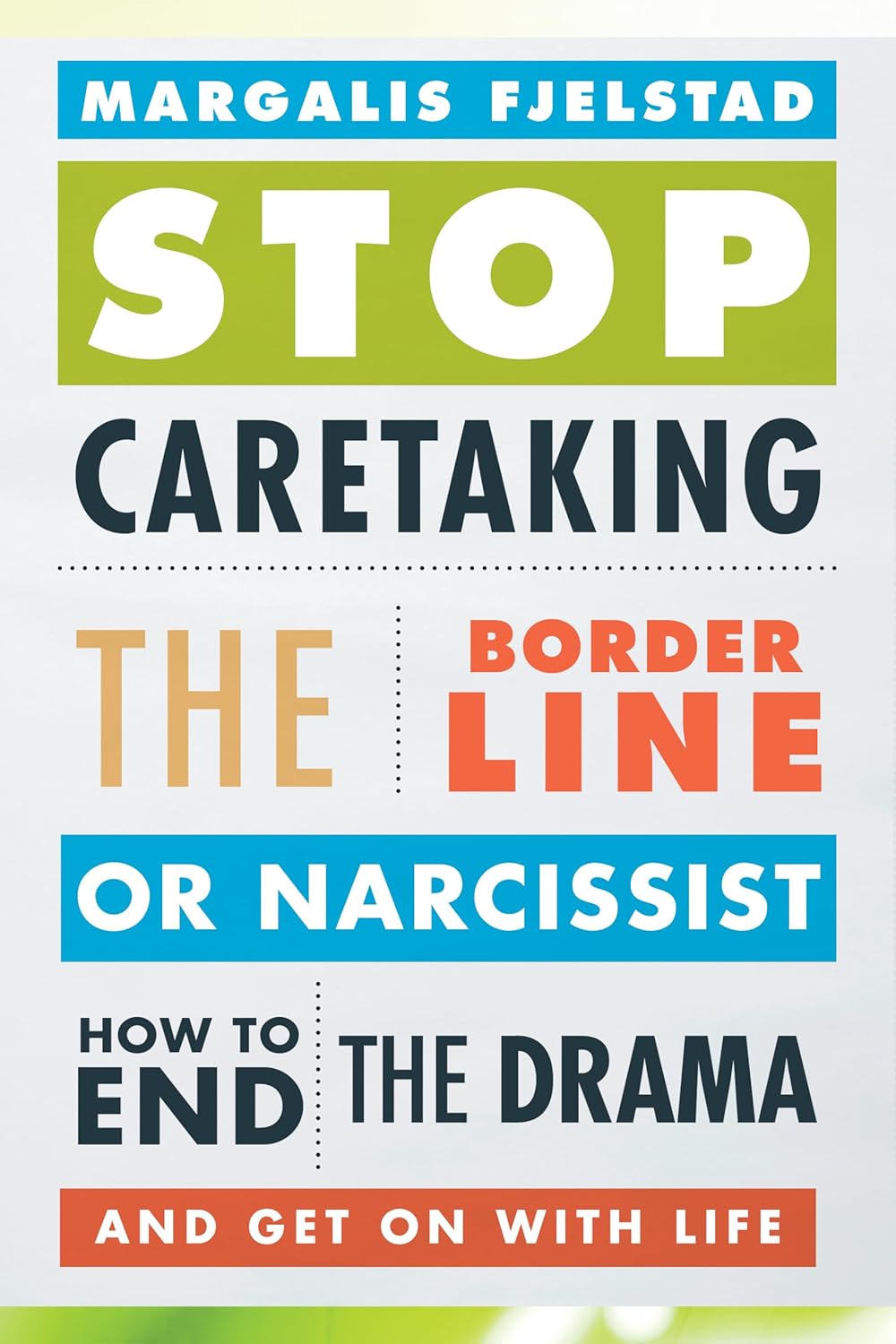
Stop Caretaking the Borderline or Narcissist
Margalis Fjelstad, PhD
How to end the drama and get on with life when dealing with personality disorders.
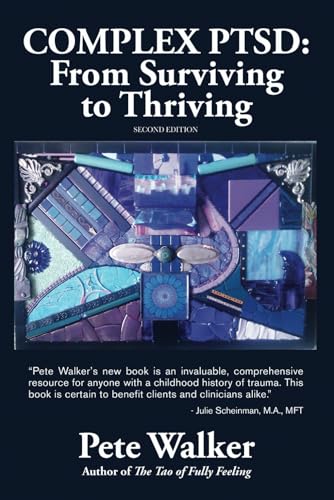
Complex PTSD: From Surviving to Thriving
Pete Walker
A clear, compassionate guide to recognizing and working with the lasting effects of prolonged childhood adversity.
As an Amazon Associate, Clarity House Press earns from qualifying purchases. Your price is never affected.
Found this helpful?
Share it with someone who might need it.
About the Author

Clarity House Press
Editorial Team
The editorial team at Clarity House Press curates and publishes evidence-based content on narcissistic abuse recovery, high-conflict divorce, and healing. Our content is informed by research, survivor experiences, and established trauma-informed approaches.
View all posts by Clarity House Press →Published by Clarity House Press Editorial Team