Please read our important disclaimers before using this content
Important Disclaimers: This article discusses narcissistic behavior patterns, not formal Narcissistic Personality Disorder diagnosis. Only qualified mental health professionals can diagnose NPD. This is psychoeducational content, not therapy or legal counsel. For mental health support, consult a trauma-informed therapist. For legal guidance, consult a family law attorney in your jurisdiction. If you are experiencing domestic violence, contact the National Domestic Violence Hotline at 1-800-799-7233.
Your phone buzzes. It's them.
The message is infuriating. A lie. An accusation. A manipulation so obvious you can see the strings. Your blood pressure spikes. Your fingers start typing a response before your brain catches up.
You know exactly what they're doing. You can prove they're wrong. You have receipts. You have a perfectly crafted response that will destroy their argument and expose their manipulation.
You hit send.
And you just reinforced their control.
Not because your response wasn't accurate. Not because you didn't make valid points. You reinforced their control because you responded immediately, which means you responded reactively, which means you gave them exactly what they wanted: proof that they still have power over your emotional state.
This isn't your fault—it's trauma conditioning. And you can change it.
Welcome to the 48-Hour Rule. The 48-hour rule pairs well with the gray rock method—together they form a complete communication strategy for dealing with a narcissistic ex.
Why Immediate Responses Feed Narcissistic Supply
Narcissists don't communicate to exchange information. They communicate to provoke a reaction.
Every inflammatory text, every accusatory email, every "emergency" voicemail is bait. They're fishing for emotional supply, and your immediate response is the proof that the hook landed.
What immediate responses signal:
- You're paying attention to them
- They can still trigger your emotions
- They have power over your time and mental space
- You're still emotionally invested in their opinion of you
- You can be controlled through provocation
Even if your response is calm and factual, an immediate response still confirms they've successfully triggered you into reaction mode. Strategic delay—even for necessary communications—trains your nervous system differently and interrupts their pattern of control.
The Reinforcement of Your Reaction
When you respond immediately—especially emotionally—you're giving the narcissist what they seek:
They get:
- Confirmation they still affect you
- Entertainment (your distress provides stimulation)
- Power (they decided to text, you had to respond)
- Attention (even negative attention serves their needs)
- Control (they set the pace and tone of communication)
Whether this produces a literal "dopamine hit" (as some practitioners theorize) or simply reinforces their behavior patterns, the effect is the same: you've trained them to keep doing this.
As behavioral psychologist B.F. Skinner documented, intermittent reinforcement is one of the most powerful behavioral conditioning mechanisms in psychology.1 If you respond immediately sometimes and ignore other times, you've created a variable reward schedule—the same psychological mechanism that makes slot machines addictive. Research demonstrates that variable ratio schedules produce greater response rates and more resistance to extinction than fixed schedules, which helps explain why unpredictable reinforcement patterns are so effective at maintaining behavior.2
They will escalate to get that response again. This is why consistency in your 48-hour boundary is crucial—you're breaking the variable reward schedule by making your responses predictable (always delayed) rather than random.
The 48-Hour Cooling Off Period
The 48-Hour Rule is simple:
Unless there is a genuine emergency involving immediate physical safety, you do not respond to a narcissist for at least 48 hours.
Not 10 minutes. Not "later today." Not tomorrow morning.
Forty-eight hours minimum.
Why 48 Hours Specifically?
The 48-hour window is a practical guideline, not a neurobiological rule.
Research shows acute emotional arousal typically resolves within 1-2 hours, and stress hormones like cortisol return to baseline within 60-90 minutes.3 However, for survivors of narcissistic abuse—particularly those with Complex PTSD—psychological preoccupation, rumination, and hypervigilance can continue much longer. Studies have found that individuals with PTSD show significantly elevated cortisol levels during both stress exposure and recovery periods compared to controls.4
The 48-hour window provides practical benefits:
-
Sleep cycles aid emotional processing - You get at least one full night's sleep (often two), allowing your nervous system to reset. Research demonstrates that sleep plays a crucial role in emotional memory consolidation, with REM sleep specifically involved in processing emotional reactivity and modulating subsequent waking-day amygdala responsivity.5
-
Natural perspective develops - The inflammatory message that felt urgent and critical at 2pm Tuesday often feels absurd and manipulative by Thursday afternoon. Distance creates clarity.
-
Time for consultation - Enough time to check with your attorney, therapist, or trusted advisor about the best strategic response.
-
Pattern recognition becomes possible - You can detach from the need to defend yourself and recognize manipulation tactics instead of just reacting to content. By 48 hours, you can often see that no response is the best response.
-
Strategic thinking replaces reactive impulses - If you do need to respond, 48 hours gives you time to consider what actually serves your goals (legal documentation, logistical coordination) versus what serves your ego (being right, proving a point).
Neuroimaging research demonstrates that taking time before responding helps activate prefrontal cortex functions (analytical thinking, planning) that are suppressed during acute emotional reactivity.6 The ventromedial prefrontal cortex plays a critical role in emotion regulation by modulating amygdala activity, and effective amygdala-prefrontal connectivity predicts individual differences in successful emotion regulation.7
What Happens During Those 48 Hours
Hour 0-6: The Rage/Hurt/Panic Phase
You're flooded with emotion. You desperately want to respond. You draft and delete seventeen versions of the "perfect" response. You imagine the conversation. You feel the injustice viscerally.
This is exactly why you don't respond yet.
Hour 6-24: The Obsession Phase
You can't stop thinking about it. You're still crafting responses in your head. You're explaining yourself to imaginary audiences. You're planning what you'll say to your therapist, your attorney, your friends.
Let it cycle. Don't interrupt the process by responding.
Hour 24-36: The Perspective Phase
The emotional intensity starts to fade. You're getting distance. The message that felt like a five-alarm fire yesterday now feels like... just another Tuesday with a narcissist.
You're starting to see the pattern instead of just the content.
Hour 36-48: The Clarity Phase
By now, you can read the message with detachment. You can see the manipulation tactics. You can identify what (if anything) requires a response versus what's just bait.
Now you're ready to decide what (if anything) to send.
What to Do During Those 48 Hours
Waiting isn't passive. You're actively protecting yourself and, with consistent practice over time, training your nervous system to respond differently to these triggers.
1. Get It Out of Your System (Privately)
Write the response you want to send. All of it. Every justified point. Every truth bomb. Every receipts-backed rebuttal.
Save it in a document titled "NEVER SEND."
Then let it sit.
Alternative outlets:
- Voice memo rant to yourself (then delete)
- Journaling the full emotional experience
- Venting to your therapist or a trusted friend
- Imaginary conversation practice (with no actual communication)
The goal: Discharge the emotional energy without giving the narcissist supply.
2. Identify the Manipulation Tactic
Read the message again with a clinical eye:
- What reaction are they trying to provoke?
- What's the hook? (Guilt? Fear? Anger? Defending yourself?)
- What do they actually want? (Supply? Control? To derail your plans?)
- Is there any factual content that requires a response?
Common tactics to recognize:
- DARVO (Deny, Attack, Reverse Victim and Offender)
- Gaslighting (rewriting history, denying your reality)
- Word salad (confusing, contradictory, circular arguments)
- Projection (accusing you of what they're doing)
- Future faking (promises designed to manipulate current behavior)
- Triangulation (involving third parties to create drama)
These tactics are well-documented in narcissistic abuse literature. When you can name the tactic, it loses power.
3. Determine If a Response Is Actually Necessary
Most of the time, no response is the best response.
Consider responding if:
- A logistical issue requires coordination (custody schedule, legal deadline)—check with your attorney about your specific legal situation
- You're legally required to respond (court-ordered communication)
- Your specific legal strategy benefits from documented responses—consult your lawyer
- There's genuinely new information about immediate child safety or welfare
Most of the time, it works best not to respond to:
- Insults, provocations, or emotional bait
- Requests for explanations or justifications
- Messages designed purely to trigger reaction
- Emotional manipulation tactics
- Anything that doesn't directly impact logistics or safety
Your situation may differ. If you're co-parenting with complex logistics, in active litigation, or have different therapeutic guidance, your communication pattern may legitimately look different from the standard 48-hour rule. The principle remains: respond strategically, not reactively.
Ask yourself: "What happens if I don't respond?"
Usually the answer is: "Nothing. Or they escalate, which documents their behavior."
4. Craft a Strategic Response (If Necessary)
If you determine a response is needed, you're now crafting it from a strategic position, not a reactive one.
Strategic response principles:
- Factual only - No emotional content, no opinions
- Brief - One to three sentences maximum
- Boring - Gray rock all the way
- Documented - Assume your attorney will read this
- Non-defensive - No justifications, no explanations
Example:
Their message: "You're an unfit parent. The kids told me they hate living with you and they're scared of your boyfriend. I'm documenting everything for my attorney. You're going to lose custody."
Reactive response (DO NOT SEND): "How dare you. The kids never said that and you know it. You're lying because you're trying to manipulate me. My boyfriend is amazing with the kids and they love him. You're just jealous because I'm happy. This is parental alienation and MY attorney is going to hear about this."
Strategic response (after 48 hours): "The custody arrangement is per the court order. If you have concerns about the children's welfare, you can bring them to court."
Or simply: [No response]
5. Practice Self-Regulation Techniques
The 48-hour waiting period is also nervous system training.
Techniques to practice:
- Somatic grounding - Notice five things you can see, four you can hear, three you can touch, two you can smell, one you can taste
- Box breathing - Inhale for 4, hold for 4, exhale for 4, hold for 4, repeat
- Physical movement - Walk, run, yoga, any movement that discharges stress
- Radical acceptance - "This person behaves this way. I cannot change them. I can only control my response."
You're rewiring your brain's response to provocation. Neuroimaging studies show that cognitive reappraisal strategies consistently activate domain-general cognitive control regions, including dorsomedial, dorsolateral, and ventrolateral prefrontal cortex, while strongly modulating bilateral amygdala activity.8
When Urgent Responses Are Actually Needed
The 48-Hour Rule has exactly one exception:
Genuine emergencies involving immediate physical safety.
What Qualifies as a Real Emergency
Real emergency:
- "Child fell off bike and is in the ER with possible concussion"
- "House fire, we're all safe but at a hotel tonight"
- "Child had allergic reaction, used EpiPen, at hospital"
Not an emergency (you can respond strategically):
- "Child is upset about something at school"—if this were genuinely urgent, they'd specify the issue (safety risk, medical concern, etc.)
- "We need to talk about summer vacation ASAP"—logistical planning isn't time-sensitive
- "This is urgent, call me now"—actual urgency includes specific details
- "Emergency! Child forgot their homework!"—inconvenience isn't emergency
Exception: If your child's mental health or behavioral crisis requires coordination (suicidal ideation, significant dysregulation, trauma response), that may warrant immediate response regardless of the 48-hour rule. Consult your therapist and co-parenting coordinator if applicable.
Real emergencies include specific details about the immediate physical safety issue.
Manufactured urgency is manipulation. Actual urgency is specific.
Response to Manufactured Urgency
Their message: "We need to talk RIGHT NOW. This can't wait. Call me immediately."
Your response (after 48 hours): "If there's an emergency involving the children's immediate safety, please include details in writing. Otherwise, I'll respond to your message within my normal communication timeframe."
You're training them that manufactured urgency doesn't work.
Safety Considerations Before Implementing the 48-Hour Rule
Before implementing delayed responses, assess your safety context. The 48-hour rule may require modification in these situations:
When to proceed with full 48-hour implementation:
- You have physical safety (separate residences, no active stalking)
- No court orders requiring faster response times
- Economic independence or protected finances
- Support system in place
When to modify the timeline or seek professional guidance:
- Active protective/restraining orders: Follow court-specified communication protocols exactly
- Documented stalking: Delayed response may escalate surveillance; consult domestic violence advocate
- Economic abuse with retaliation risk: Delaying response to financial threats may cause immediate harm; attorney consultation urgent
- Court-ordered communication timelines: Some custody orders specify response timeframes (often 24-48 hours); know your order requirements
- Safety concerns about escalation: Some abusive individuals escalate when boundaries are set
If you are in an abusive relationship and concerned about your physical safety, please contact the National Domestic Violence Hotline at 1-800-799-7233 before implementing communication changes. Safety planning with a professional is essential.
Training Yourself Out of Reactive Patterns
You've spent months or years conditioned to respond immediately. You're probably anxious if you don't respond. You might feel guilty. You might worry about consequences.
This is learned conditioned response and anxiety developed through trauma bonding.9 Research on traumatic bonding theory demonstrates that strong emotional attachments form through intermittent abuse patterns, and that attachment insecurity moderates the relationship between childhood maltreatment and traumatic bonding.10 Your nervous system learned this pattern to survive—that immediate response kept you safe in the moment. Now it needs to learn that delayed responses are safe. You can gradually retrain it, though the pace varies. Some days will be easier than others. That's normal.
Start Small
Week 1: Wait 15 minutes before responding. Notice the anxiety. Sit with it. Respond after 15 minutes.
Week 2: Wait 1 hour. The anxiety will be worse. That's normal. Prove to yourself nothing terrible happened from the 15-minute wait.
Week 3: Wait 6 hours. Then 12 hours.
Week 4: Full 48-Hour Rule implementation.
Gradually, your nervous system learns: "I am safe even when I don't respond immediately."
Notice the Pattern Interruption
What often happens when you implement the 48-Hour Rule:
When a response pattern that used to work stops being rewarded, narcissists typically escalate (called an "extinction burst" in behavioral psychology).11 Research defines the extinction burst as a sudden and temporary increase in response frequency following the transition to extinction, which typically occurs before eventual decline and cessation of the targeted behavior.12 You might see:
- Multiple follow-up messages
- Increasing urgency or anger in tone
- Manufactured crises
- Flying monkeys (people sent to ask why you're not responding)
- Threats (legal, custody, financial)
This escalation is actually a sign your boundary is working. When the old strategy stops working, they're trying harder before eventually moving to other targets.
How to prepare: Let your support system know this may happen. Document the escalation—this behavior pattern in writing can actually strengthen your legal position if needed. You're not failing; you're successfully teaching them that manipulation no longer works on you.
Hold the boundary.
The Power of Delayed Response
What happens when you consistently wait 48 hours:
- They learn you're not on their timetable - They lose the power to demand your immediate attention
- The quality of their messages changes - When emotional provocation doesn't work, they often shift to more factual communication (or stop communicating entirely)
- You reclaim your time and mental space - Your days are no longer hijacked by their messages
- You rebuild your sense of agency - You decide when and how to communicate, not them
Over time, many individuals with narcissistic patterns reduce communication frequency when they're no longer getting reactive responses. You're boring. You're not reactive. You're not supply. However, some may escalate or maintain contact, particularly in co-parenting situations where legal custody requires ongoing interaction.
Many eventually move on to more responsive targets.
Common Obstacles and How to Overcome Them
"But What If They Use My Delay Against Me in Court?"
Legitimate concern. Document your response pattern and establish consistency.
Response strategy:
- Establish a written communication protocol: "I respond to non-emergency co-parenting messages within 48-72 hours."
- Keep this consistent across all non-emergency messages
- Respond to genuinely time-sensitive logistics within that window
- Document everything through court-approved platforms when possible
Most family courts do not require immediate responses to provocative messages. They require reasonable response times to logistical co-parenting issues. In most jurisdictions, a 48-72 hour response window for non-emergency co-parenting matters is considered reasonable—but this varies by state, judge, and your specific custody order.
Important: Consult with your family law attorney in your jurisdiction before establishing a response timeline, especially if custody disputes are active. Your attorney can advise whether a 48-hour protocol strengthens or weakens your legal position in your specific case. Some custody orders explicitly specify response timeframes—know what yours requires.
What courts actually care about: Reasonable, documented, consistent communication about children's needs—not immediate responses to provocative messages.
"But I'm Anxious the Whole 48 Hours"
This is your nervous system expecting retaliation for not complying immediately. It learned this response to keep you safe—that immediate compliance prevented escalation. Now it needs to learn that delayed responses are safe.
Strategies that might help:
- Grounding techniques (5-4-3-2-1 sensory method, box breathing, etc.)
- Therapy support if you have access—specifically processing the fear of retaliation
- Gradually proving it's safe through small experiments (wait 15 minutes, notice nothing terrible happened)
- Support from trusted friends who can witness your safety
- Journaling to track what you feared versus what actually happened
The anxiety may decrease over time as your nervous system learns it's safe to wait. For some survivors, this takes weeks. For others, months. There's no timeline you're falling behind on. Your nervous system is doing its job by warning you—it's just operating from outdated information that no longer serves you.
"But They'll Think They've Won If I Don't Respond"
Who cares what they think?
Seriously. This person's internal narrative about you is not your problem. They're going to think whatever serves their worldview regardless of your response.
You're not managing their thoughts. You're managing your energy.
"But I Want Them to Know They're Wrong"
This desire to be seen accurately by them is grief—you're mourning the relationship where mutual understanding was possible (or the one you hoped was possible).
Therapeutic truth: People with narcissistic patterns typically aren't confused about objective facts—they're operating on a prioritization system where maintaining their self-image and sense of control takes precedence over logical argumentation. Your factually correct rebuttal won't create cognitive change because it threatens their self-narrative, not because they don't understand the facts.
Your factually correct rebuttal will not create an epiphany. It will just give them more material to twist and more confirmation that they can still provoke you.
The work: Grieve that this person will never validate your reality. Then let go of needing them to.
Your Next Steps
Today:
- When you get your next triggering message, consider: Could you wait 48 hours before responding? If yes, set a phone timer and try it.
- Save or screenshot the message somewhere you can revisit it (or you can just close it—either works).
- If you want to draft your reactive response, write it in a "NEVER SEND" document. If you don't want to, you can skip this step.
- Try one grounding technique that appeals to you—whatever feels manageable.
This week:
- Experiment with the 48-Hour Rule on at least one non-emergency communication. (If all your communications feel emergency-level, that's useful information about your current situation.)
- Notice the anxiety that comes up during waiting periods—you don't need to fix it, just notice it.
- If journaling appeals to you, reflect on what immediate responses used to give you (control? validation? hope? feeling heard?).
This month:
- Track your response times and their escalation/de-escalation patterns if that's helpful for you
- If you have a therapist, explore the anxiety response with them. If not, journaling, conversations with trusted friends, or online support communities can help you process what comes up.
- Celebrate each successful 48-hour wait—you're training your nervous system
Long-term:
- The 48-Hour Rule becomes automatic and effortless
- You no longer feel compelled to defend yourself to this person
- Your nervous system is calm because you're no longer on their timetable
- You've reclaimed your time, energy, and peace
Remember: Every time you wait 48 hours, you're proving to yourself that you are no longer controlled by this person's provocations.
You are not their puppet. You are not their supply. You are not on their schedule.
You are a person with agency, boundaries, and the right to respond on your own timeline.
Or not respond at all.
And that terrifies them, which is exactly why you should keep doing it.
Further Reading
Behavioral Psychology and Conditioning:
- Skinner, B.F. (1938, 1957). The Behavior of Organisms and Verbal Behavior. Foundation of operant conditioning and intermittent reinforcement principles.
- Ferster, C.B., & Skinner, B.F. (1957). Schedules of Reinforcement. Variable ratio reinforcement and extinction burst phenomena.
Emotional Regulation and Neuroscience:
- Ochsner, K.N., Bunge, S.A., Gross, J.J., & Gabrieli, J.D.E. (2002). Rethinking feelings: An fMRI study of cognitive emotion regulation. Journal of Cognitive Neuroscience, 14(8), 1215-1229.
- Dickerson, S.S., & Kemeny, M.E. (2004). Acute stressors and cortisol responses: A theoretical integration and synthesis of laboratory research. Psychological Bulletin, 130(3), 355-391.
- Porges, S.W. (2011). The Polyvagal Theory: Neurophysiological Foundations of Emotions, Attachment, Communication, and Self-regulation. Norton.
Narcissistic Abuse and Manipulation Tactics:
- Sarkis, S.A. (2018). Gaslighting: Recognize Manipulative and Emotionally Abusive People—and Break Free. Da Capo Lifelong Books.
- Herman, J.L. (1992). Trauma and Recovery: The Aftermath of Violence. Basic Books. (Trauma bonding and complex trauma)
Complex PTSD and Trauma Recovery:
- Walker, P. (2013). Complex PTSD: From Surviving to Thriving. Azure Coyote.
- Van der Kolk, B. (2014). The Body Keeps the Score: Brain, Mind, and Body in the Healing of Trauma. Viking.
Resources
Narcissistic Abuse Recovery:
- Dr. Ramani Durvasula - Clinical expert on narcissistic abuse and trauma bonding
- Narcissist Abuse Support - Support groups and recovery resources
- Psychopath Free - Community and resources for narcissistic abuse survivors
- Out of the FOG - Information and support for those affected by personality disorders
Communication Tools:
- TalkingParents - Secure co-parenting communication with records
- OurFamilyWizard - Court-approved documented communication platform
- AppClose - Time-stamped documentation for high-conflict communication
References
- Ferster, C.B., & Skinner, B.F. (1957). Schedules of Reinforcement. Appleton-Century-Crofts. Classic work establishing that variable schedules of reinforcement produce behavior highly resistant to extinction. ↩
- Anselme, P. (2015). Incentive salience attribution under reward uncertainty: A Pavlovian model. Behavioural Brain Research, 261, 149-161. https://pmc.ncbi.nlm.nih.gov/articles/PMC4102653/ ↩
- Dickerson, S.S., & Kemeny, M.E. (2004). Acute stressors and cortisol responses: A theoretical integration and synthesis of laboratory research. Psychological Bulletin, 130(3), 355-391. https://pubmed.ncbi.nlm.nih.gov/15122924/ ↩
- Elzinga, B.M., Schmahl, C.G., Vermetten, E., van Dyck, R., & Bremner, J.D. (2003). Higher cortisol levels following exposure to traumatic reminders in abuse-related PTSD. Neuropsychopharmacology, 28(9), 1656-1665. https://pubmed.ncbi.nlm.nih.gov/12838270/ ↩
- Buhle, J.T., Silvers, J.A., Wager, T.D., Lopez, R., Onyemekwu, C., Kober, H., Weber, J., & Ochsner, K.N. (2014). Cognitive reappraisal of emotion: A meta-analysis of human neuroimaging studies. Cerebral Cortex, 24(11), 2981-2990. https://pmc.ncbi.nlm.nih.gov/articles/PMC4193464/ ↩
- Hiser, & Koenigs (2018). The Multifaceted Role of the Ventromedial Prefrontal Cortex in Emotion, Decision Making, Social Cognition, and Psychopathology.. Biological psychiatry. https://pmc.ncbi.nlm.nih.gov/articles/PMC5862740/ ↩
- Dutton, D.G., & Painter, S.L. (1993). Emotional attachments in abusive relationships: A test of traumatic bonding theory. Violence and Victims, 8(2), 105-120. https://pubmed.ncbi.nlm.nih.gov/8193053/ ↩
- Crawford, L.A., & Novak, K.B. (2023). Risk factors for traumatic bonding and associations with PTSD symptoms: A moderated mediation. Journal of Interpersonal Violence. https://pubmed.ncbi.nlm.nih.gov/37572529/ ↩
- Walker, M.P., & van der Helm, E. (2009). Overnight therapy? The role of sleep in emotional brain processing. Psychological Bulletin, 135(5), 731-748. https://pmc.ncbi.nlm.nih.gov/articles/PMC2890316/ ↩
- Lerman, D.C., & Iwata, B.A. (1996). Prevalence of the extinction burst and its attenuation during treatment. Journal of Applied Behavior Analysis, 29(1), 93-94. https://pmc.ncbi.nlm.nih.gov/articles/PMC1279794/ ↩
- Lattal, K.A., & St. Peter Pipkin, C. (2022). A theory of the extinction burst. Journal of the Experimental Analysis of Behavior, 118(2), 166-183. https://pmc.ncbi.nlm.nih.gov/articles/PMC9458838/ ↩
- Kohn, N., Eickhoff, S.B., Scheller, M., Laird, A.R., Fox, P.T., & Habel, U. (2014). Neural network of cognitive emotion regulation: An ALE meta-analysis and MACM analysis. NeuroImage, 87, 345-355. https://pmc.ncbi.nlm.nih.gov/articles/PMC4193464/ ↩
If You or Someone You Know Is Struggling
- 988 Suicide & Crisis Lifeline:Call or text 988 (24/7, free, confidential)
- Crisis Text Line:Text HOME to 741741
- National DV Hotline:1-800-799-7233
You are not alone. Help is available.
Recommended Reading
From Clarity House Press — plus trusted books for deeper understanding


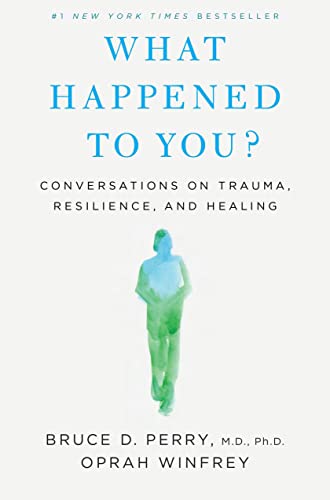
What Happened to You?
Bruce D. Perry, M.D., PhD & Oprah Winfrey
A conversational introduction to how early experience shapes us — reframing 'what's wrong with you' into 'what happened to you.'
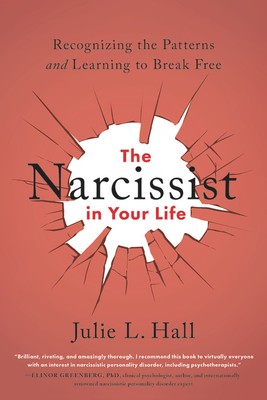
The Narcissist in Your Life
Julie L. Hall
Comprehensive guide based on hundreds of survivor interviews illuminating narcissistic abuse in families.
As an Amazon Associate, Clarity House Press earns from qualifying purchases. Your price is never affected.
Found this helpful?
Share it with someone who might need it.
About the Author

Clarity House Press
Editorial Team
The editorial team at Clarity House Press curates and publishes evidence-based content on narcissistic abuse recovery, high-conflict divorce, and healing. Our content is informed by research, survivor experiences, and established trauma-informed approaches.
View all posts by Clarity House Press →Published by Clarity House Press Editorial Team