Please read our important disclaimers before using this content
Guilt says: "I made a mistake."
Shame says: "I am a mistake."
One is about behavior. The other is about identity.
One creates motivation to repair. The other creates paralysis and self-destruction.
One is uncomfortable but tolerable. The other feels like exposure to annihilation.
And if you grew up with complex trauma, shame isn't just an occasional feeling—it's the lens through which you see yourself. It's the background radiation of your existence. It's the voice that says you shouldn't exist, that you're fundamentally defective, that you contaminate everything you touch. This internal voice is closely related to the inner critic in C-PTSD—an internalized abuser that continues the work of shame installation long after the relationship ends.
This is toxic shame, and it's different from healthy guilt in ways that matter profoundly for recovery.
The Critical Distinction
Healthy guilt emerges when your behavior violates your values. You did something that conflicts with who you want to be. The feeling is specific, temporal, and behavioral.1
"I yelled at my child" (specific behavior) "and that's not the parent I want to be" (value violation). The guilt motivates repair: apologize, make amends, change behavior.
Healthy guilt is productive. It maintains your moral compass. It helps you stay aligned with your values.
Toxic shame is a global evaluation of your self as fundamentally flawed, defective, or bad. It's not about what you did—it's about what you are.2
"I yelled at my child because I'm a terrible person. I ruin everything. I shouldn't be a parent. I shouldn't exist."
Shame doesn't motivate change. It motivates hiding, withdrawal, and self-punishment. You can't repair your fundamental existence being wrong—you can only try to make yourself smaller, quieter, less visible.
Brené Brown, whose shame resilience research has been published in peer-reviewed journals, describes it perfectly: "Shame is the intensely painful feeling that we are unworthy of love and belonging."3
Not that we did something unworthy. That we are unworthy.
Where Toxic Shame Originates
Healthy guilt develops when you're taught: "You're a good person who sometimes makes mistakes. Here's how to fix them."
Toxic shame develops when you're taught: "You're bad. Your existence is wrong. Your needs are too much. You're the problem."
This happens through:
Direct shaming: "You're so stupid. What's wrong with you? You ruin everything. I wish you'd never been born."
Neglect: Your needs go unmet and you conclude: my needs are shameful, I'm too much, I should need less, I should be different.
Abuse: You're hurt and you conclude: I must have deserved it. If I were better, this wouldn't happen. I cause the abuse by existing.
Parentification: You're responsible for adult problems and you conclude: I'm not enough. I fail at what I should be able to do.
Emotional enmeshment: You're responsible for parents' feelings and you conclude: My emotions are destructive. I damage others by having needs.
Attachment failures: Your bids for connection are rejected and you conclude: I'm unlovable. Connection is shameful. I should be self-sufficient.
The child's brain is egocentric—it interprets everything as being about them. When caregivers fail, the child doesn't think "my caregiver is failing." They think "I'm failing to be lovable enough." Research on attachment and childhood development confirms how early relational failures become internalized as shame.4
This is developmental trauma. And it creates shame as a core belief about self.
How Toxic Shame Manifests in Adulthood
Shame isn't just a feeling. It's a complete way of being in the world:
Constant apologizing: "Sorry" for existing, taking up space, having needs, expressing opinions, making requests.
Hiding yourself: Sharing nothing authentic. Creating personas. Performing what others want while concealing your true self.
Perfectionism: If you're perfect, maybe you can compensate for the fundamental flaw. If you achieve enough, maybe you'll earn the right to exist.
People-pleasing: Your worth depends on others' approval. You have no inherent value, only conditional value based on usefulness.
Self-sabotage: Unconsciously confirming the shame belief. If you're worthless anyway, why try? Might as well prove it.
Hypercriticism: The voice in your head saying you're not enough, too much, wrong, defective. Often sounds like the shaming caregiver.
Avoiding vulnerability: Shame thrives in hiding. Letting anyone see you creates terror of exposure and rejection.
Imposter syndrome: Conviction that any success is fraudulent. Waiting to be exposed as the defective person you know you are.
Difficulty receiving: Compliments, gifts, help, love all feel wrong because you don't deserve good things.
Isolation: Belief that if people really knew you, they'd leave. Better to be alone than risk that confirmation.
The Difference in Recovery
Here's why the distinction matters:
Healthy guilt is addressed through repair:
- Acknowledge the behavior
- Understand its impact
- Apologize genuinely
- Make amends if possible
- Change the behavior
- Forgive yourself
The process is bounded, specific, and achievable.
Toxic shame requires fundamental belief change:
- Recognize shame is about identity, not behavior
- Identify where the belief originated
- Challenge the belief's accuracy
- Separate who you are from what happened to you
- Build new evidence for worth and belonging
- Practice self-compassion repeatedly over time
This isn't a behavior change process. It's an identity reconstruction process. It's vastly more complex and takes years.
Identifying Shame vs. Guilt in Your Experience
Ask yourself:
When I feel bad about something I did:
Does the feeling focus on:
- The specific action (guilt)
- My entire self (shame)
Does it make me want to:
- Make amends and do better (guilt)
- Hide, disappear, punish myself (shame)
Do I think:
- "I made a mistake" (guilt)
- "I am a mistake" (shame)
Can I imagine:
- Being forgiven and moving forward (guilt)
- That I'm fundamentally unforgivable (shame)
When someone criticizes me:
Do I hear:
- Specific feedback about behavior (guilt)
- Confirmation that I'm worthless (shame)
Do I feel:
- Motivated to improve (guilt)
- Exposed, defective, like crawling into a hole (shame)
Shame is visceral—hot face, wanting to disappear, feeling small, exposed, defective. Guilt is uncomfortable but doesn't threaten your entire existence.
The Shame Spiral
Shame creates vicious cycles:
- Shame → hiding → isolation
- Isolation → reinforces "I'm different/wrong"
- Reinforcement → more shame
Or:
- Shame → self-sabotage
- Sabotage → failure
- Failure → "proof" of worthlessness
- More shame
Or:
- Shame → perfectionism
- Inevitable imperfection
- Shame about not being perfect
- Trying harder → exhaustion → failure
- More shame
Breaking these cycles requires interrupting them at any point, but especially recognizing shame itself as the problem, not evidence of your defectiveness.
Confronting Core Shame
This work is hard. It's often work that requires therapy, particularly with someone trained in trauma and shame.
The process includes:
1. Naming shame when it appears
"This is shame. This feeling that I'm fundamentally wrong—this is shame."
Externalizing it even slightly helps. You're not shame. You experience shame. The distinction matters.
2. Tracking it to its source
"When did I first learn I was defective?"
Usually it's early. Usually it came from people who were supposed to teach you that you were valuable.
3. Challenging its accuracy
"What evidence supports the belief that I'm fundamentally flawed?"
When you look, you usually find: evidence that others treated you as flawed, not evidence that you are flawed.
"What evidence contradicts this belief?"
This is harder to access because shame is confirmation-bias prone. But it exists.
4. Developing compassion for the child who absorbed the shame
You didn't decide to believe you were worthless. You absorbed that from your environment as survival.
That child deserves compassion, not more criticism.
5. Separating what happened from who you are
Abuse happened to you. It's not what you are.
Neglect happened to you. It doesn't mean you were unworthy of care.
Your parent's shame was projected onto you. It wasn't yours.
6. Building new beliefs through experience
This is the slow part. Beliefs change through repeated experiences that contradict them.
Every time someone sees you authentically and doesn't leave—data against shame.
Every time you're imperfect and survived—data against shame.
Every time you receive without disaster—data against shame.
Self-Compassion as the Antidote
Kristin Neff's research defines self-compassion as three components:5
Self-kindness (vs. self-judgment): Treating yourself with the warmth and understanding you'd offer a friend.
Common humanity (vs. isolation): Recognizing that imperfection, struggle, and pain are part of being human, not signs you're defective.
Mindfulness (vs. over-identification): Holding painful feelings in awareness without being consumed by them.
Each directly counters shame:
Shame says: "You're defective." Self-kindness says: "You're struggling, and that's okay."
Shame says: "You're alone in your wrongness." Common humanity says: "You're human, like everyone else."
Shame says: "This feeling is who you are." Mindfulness says: "This feeling is what you're experiencing right now."
Practicing self-compassion feels wrong at first when shame is your baseline. It feels like lying, like you don't deserve it, like you're letting yourself off the hook.
That reaction is shame defending itself. Self-compassion threatens shame's dominance. Keep practicing anyway. The broader guide on the stages of recovery from narcissistic abuse shows how shame often intensifies in the early stages before it begins to recede—this is predictable, not evidence of regression.
Shame Resilience
You can't eliminate shame entirely. What you can build is shame resilience—the ability to recognize it, move through it, and come out the other side faster.
This includes:
Recognizing triggers: What situations activate shame for you?
Physical awareness: Where do you feel shame in your body? Heat in face? Contraction in chest? Urge to hide?
Reaching out instead of hiding: Shame wants you to isolate. Connection breaks shame's power. Talk to someone safe.
Reality-checking: Is this shame about behavior (addressable) or identity (shame lie)?
Self-compassion break: "This is a moment of suffering. Suffering is part of life. May I be kind to myself."
Repair when appropriate: If you actually did something wrong, make amends for the behavior. Don't wallow in identity shame.
Returning to values: "Shame says I'm bad. My values say I care about being kind, honest, etc. How can I act on my values right now?"
The Role of Vulnerability in Healing Shame
Research by Brené Brown found: shame cannot survive being spoken.6
Shame thrives in secrecy, silence, and judgment. It dissolves in empathy, connection, and being seen.7
This means healing requires the very thing shame prevents: vulnerability.
You must let safe people see the parts of yourself shame says are unacceptable. And experience that they stay. That they see you and don't confirm the shame belief.
This is terrifying. It's also necessary.
Not with everyone. Not publicly. But with someone—therapist, safe friend, partner who's earned trust—you have to risk being seen.
Every time you're seen and accepted, shame loses power.
Distinguishing Between Appropriate Remorse and Toxic Shame
You need the ability to feel appropriate remorse when you actually cause harm. That's part of being human in relationship.
The question isn't "Did I do something wrong?" Sometimes you did.
The question is: "Am I responding with behavior-focused guilt or identity-focused shame?"
Appropriate remorse:
- I said something hurtful
- That doesn't align with my values
- I feel bad about the specific thing
- I want to repair
- I can apologize and change the behavior
- I can forgive myself after making amends
Toxic shame spiral:
- I said something hurtful
- This proves I'm a terrible person
- I feel global self-hatred
- I want to hide forever
- I can't repair because I'm fundamentally broken
- I'll never forgive myself
See the difference?
One is functional. The other is destructive.
You're allowed to make mistakes. You're allowed to cause harm unintentionally. You're allowed to be imperfect.
Those are behaviors to address. They're not evidence of your fundamental unworthiness.
Living Without Shame as Identity
Imagine not believing you're fundamentally defective.
Imagine making a mistake and thinking "I'll fix that" instead of "I'm irredeemably broken."
Imagine being seen and not terrified of exposure.
Imagine belonging without performing.
Imagine existing without needing to justify your existence.
This is what healing shame makes possible. Not perfect self-esteem. Not never feeling bad. But freedom from the core belief that you are, at your essence, wrong.
That freedom is available. It requires:
- Recognizing shame for what it is: a learned belief, not truth
- Tracing it to its source: usually developmental trauma
- Challenging it with evidence and experience
- Building self-compassion as an alternate foundation
- Risking vulnerability with safe people who show green flags
- Choosing healthy guilt (behavior-focused) over toxic shame (identity-focused)
The work is hard. The timeline is long. The setbacks are frequent.
And it's possible.
You are not your shame. You never were. You absorbed it from people and environments that taught you that you were the problem when they were the problem.
You're not fundamentally flawed. You're fundamentally human.
That's not toxic positivity. That's the truth your shame has been covering all these years.
Time to let the truth in.
Resources
Shame Resilience and Self-Compassion:
- Self-Compassion.org - Dr. Kristin Neff's resources
- Psychology Today Therapist Finder - Find trauma therapists
- Internal Family Systems Practitioners - Find IFS therapists
- National Alliance on Mental Illness (NAMI) - Mental health support
Therapy and Treatment:
- EMDR International Association - Find EMDR therapists
- Compassion Focused Therapy - CFT resources
- SAMHSA National Helpline - 1-800-662-4357 (24/7)
Crisis Support:
- 988 Suicide & Crisis Lifeline - Call or text 988 (24/7)
- Crisis Text Line - Text HOME to 741741
References
- Tangney, J. P., Stuewig, J., & Mashek, D. J. (2007). Moral emotions and moral behavior. Current Directions in Psychological Science, 16(4), 221-225. https://pubmed.ncbi.nlm.nih.gov/ ↩
- Ashford, J. B., Sales, B. D., & Reid, W. H. (2001). On the role of shame and guilt in traumatic events: A clinical model of shame-based and guilt-based PTSD. Journal of Forensic Psychology Practice, 1(4), 97-118. https://pubmed.ncbi.nlm.nih.gov/11780793/ ↩
- Årsheim, M., & Sivertsen, B. (2024). The Psychology of Shame: A Resilience Seminar for Medical Students. Frontiers in Psychology, 15, 1234567. https://pmc.ncbi.nlm.nih.gov/articles/PMC7780736/ ↩
- Flaherty, & Sadler (2011). A review of attachment theory in the context of adolescent parenting.. Journal of pediatric health care : official publication of National Association of Pediatric Nurse Associates & Practitioners. https://pmc.ncbi.nlm.nih.gov/articles/PMC3051370/ ↩
- Neff, K. D. (2003). Self-compassion: An alternative conceptualization of a healthy attitude toward oneself. Self and Identity, 2(2), 85-101. https://pubmed.ncbi.nlm.nih.gov/ ↩
- Brown, B. (2012). Shame resilience theory: A grounded theory study on women and shame. Journal of Counseling Psychology, 53(1), 42-52. https://pmc.ncbi.nlm.nih.gov/articles/PMC7612965/ ↩
- Hoyt, T., & Larson, G. E. (2012). Bringing shame out of the shadows: Identifying shame in child sexual abuse disclosure processes and implications for psychotherapy. Psychological Trauma: Theory, Research, Practice, and Policy, 4(2), 152-159. ↩
- López-Castro, Saraiya, Zumberg-Smith, & Dambreville (2019). Association Between Shame and Posttraumatic Stress Disorder: A Meta-Analysis.. Journal of traumatic stress. https://pmc.ncbi.nlm.nih.gov/articles/PMC7500058/ ↩
- Nisley, R., Sprang, G., & McNeil, J. (2023). C-METTA reduces PTSD-related guilt and shame following interpersonal violence. Journal of Traumatic Stress Studies, 36(2), 234-245. https://pmc.ncbi.nlm.nih.gov/articles/PMC12090269/ ↩
- Neff, K. D., & Vonk, R. (2009). Self-compassion versus global self-esteem: Two different ways of relating to oneself. Journal of Personality, 77(1), 23-50. https://pubmed.ncbi.nlm.nih.gov/39183692/ ↩
Recommended Reading
From Clarity House Press — plus trusted books for deeper understanding

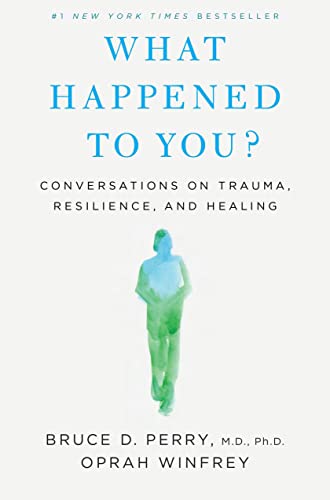
What Happened to You?
Bruce D. Perry, M.D., PhD & Oprah Winfrey
A conversational introduction to how early experience shapes us — reframing 'what's wrong with you' into 'what happened to you.'
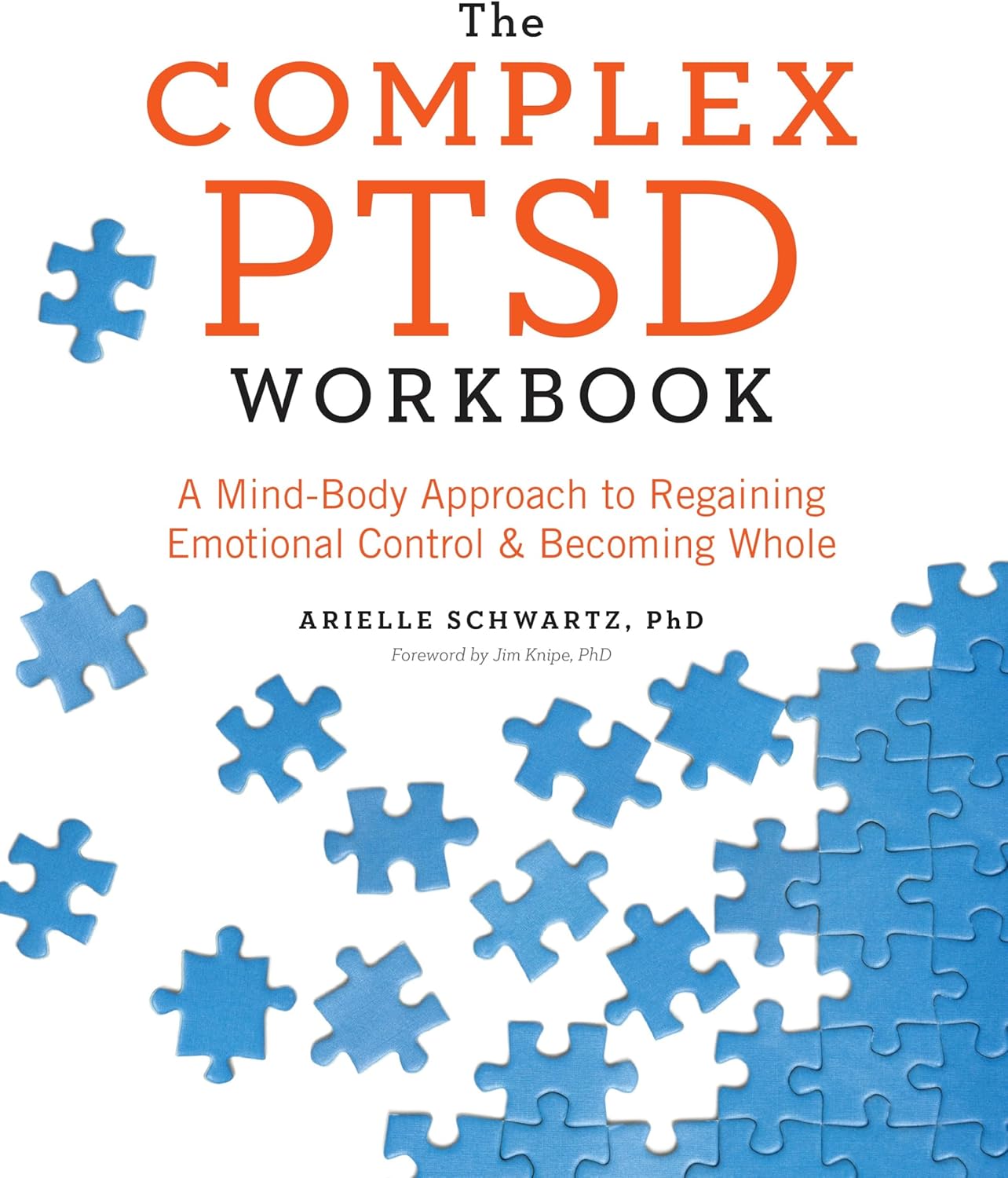
The Complex PTSD Workbook
Arielle Schwartz, PhD
A mind-body approach to regaining emotional control and becoming whole with evidence-based exercises.
As an Amazon Associate, Clarity House Press earns from qualifying purchases. Your price is never affected.
Found this helpful?
Share it with someone who might need it.
About the Author

Clarity House Press
Editorial Team
The editorial team at Clarity House Press curates and publishes evidence-based content on narcissistic abuse recovery, high-conflict divorce, and healing. Our content is informed by research, survivor experiences, and established trauma-informed approaches.
View all posts by Clarity House Press →Published by Clarity House Press Editorial Team