Please read our important disclaimers before using this content
When Parent-Teacher Conferences Become Ambushes
The elementary school counselor called me on a Tuesday afternoon. "I wanted to give you a heads-up before Thursday's parent-teacher conference. Your ex-husband contacted us with concerns about... well, several things. He's alleging that your work schedule is affecting your daughter's homework completion, that she's coming to school in inappropriate clothing, and that you're not reading the school emails."
My stomach dropped. None of it was true. My daughter's homework was done every night—I had photos of every completed assignment because I'd learned to document everything. She wore clean, weather-appropriate clothes from her closet at my house. I'd responded to every school email within 24 hours.
But I knew exactly what my ex was doing. He'd been blocked from controlling me directly, so he'd opened a new front: the school. By positioning himself as the "concerned parent" worried about his daughter's wellbeing, he could continue his campaign of making me look incompetent, irresponsible, and harmful—with school staff as his audience and unwitting allies.
Thursday's conference confirmed my fear. My ex arrived early, had clearly already spoken with the teacher privately, and spent the meeting expressing "concern" about things that were fabrications or distortions. When I tried to respond, he'd talk over me, then apologize to the teacher for "how defensive" I was being.
The teacher, well-meaning but entirely unprepared for high-conflict dynamics, kept trying to mediate. "I'm sure both of you want what's best for Emma. Maybe we can find some middle ground here?" She didn't understand: there was no middle ground between truth and lies. There was no compromise between documentation I could prove and allegations he'd invented.
I left that conference shaking. Not only had I been publicly accused and gaslighted in front of school staff, but I now had to worry that their perception of me as "the difficult parent" would affect how they treated my daughter.
Over the following months, the pattern intensified. He'd email the school cc'ing me on messages that portrayed him as involved and me as negligent. He'd volunteer for activities during my parenting time without asking, then tell school staff I was "preventing him from being involved." He'd request school records and meetings, positioning himself as the information-seeking parent while I was supposedly keeping him in the dark.
The principal eventually pulled me aside: "We're concerned about the co-parenting conflict. Your daughter is showing signs of stress. Have you considered family therapy to work on communication?"
I wanted to scream. My daughter's stress wasn't from "co-parenting conflict"—it was from being used as a pawn by a narcissistic father who'd found a new arena for abuse. But I couldn't say that without sounding like the problem parent he was painting me to be.
If your child's school has become a battlefield in your high-conflict custody situation, you're not imagining the manipulation. Narcissistic co-parents systematically weaponize schools because it serves multiple functions: continued control over you, public validation of their false narrative, and access to your information and schedule. And fighting back without looking like "the difficult parent" requires strategy, documentation, and incredible restraint. Our guide to parallel parenting as a framework explains the broader strategy for managing co-parenting with a narcissistic ex.
Understanding School-Based Manipulation
High-conflict co-parents, particularly those with narcissistic traits, use schools as a weapon because the environment is perfectly designed for their tactics.
Why Schools Are Vulnerable to Manipulation
Schools default to believing "concerned parents": School staff are trained to partner with parents, take parental concerns seriously, and assume good faith.1 They're not trained to identify manipulation, recognize abuse dynamics, or understand that some parents weaponize concern as a control tactic.
When a parent contacts the school expressing worry about the child's wellbeing, school staff rarely question the underlying motivation. This makes schools ideal environments for narcissistic parents to spread false narratives while appearing reasonable and caring.
Schools value appearances and cooperation: Educational institutions are conflict-averse. They want parents to "work together," "communicate effectively," and "put the child first"—without understanding that these concepts are impossible with a high-conflict co-parent who uses cooperation as a manipulation tool.
Family law attorney and high-conflict divorce specialist Bill Eddy notes that institutions like schools often become what he calls "negative advocates"—unwittingly supporting the high-conflict parent's agenda because they don't understand the dynamics at play.
School staff lack training in abuse dynamics: Most teachers, counselors, and administrators have little to no training in domestic abuse, narcissistic personality patterns, or parental alienation.2 They interpret high-conflict behavior through the lens of normal parenting disagreements, fundamentally misunderstanding what's happening.
When they see one parent making accusations and another parent responding defensively, they see "two parents in conflict" rather than "one parent abusing and one parent defending." This both-sides framing is exactly what the manipulative parent wants.
Schools have access to your information and schedule: School records, calendars, and communications provide your co-parent with information they'd otherwise be blocked from: where you're living (enrollment address), when you're available (field trip permission slips), your communication patterns (email response times), and your priorities (which events you attend).3
This information can be weaponized in custody battles: "She moved without telling me" (ignoring that the court order doesn't require notification). "She's never available during the day" (because she works, like most parents). "She doesn't prioritize his education" (because she couldn't take off work for a 2 PM assembly).
Common School-Based Manipulation Tactics
The concerned parent performance: Your co-parent positions themselves as deeply invested in your child's education while subtly or overtly suggesting you're not. They volunteer for everything, email teachers frequently, show up to every event, and make a point of telling school staff how "involved" they are—the implication being that you're not.
This isn't about genuine involvement. Research on narcissistic parenting shows this behavior is about image management and control, not child wellbeing.4 But schools see involvement and assume it's positive.
False or exaggerated concerns: Your co-parent contacts the school with "concerns": your child is coming to school hungry, tired, inappropriately dressed, upset, or falling behind academically. These allegations range from complete fabrications to massive distortions of normal childhood variations.
The goal isn't to solve a problem—it's to create a record of you as a neglectful parent and them as the vigilant one who caught it.
CC warfare: Every email to the school is cc'd to you—not for transparency, but for control. These messages are written for two audiences: the school (where your co-parent appears reasonable and concerned) and you (where the subtext is intimidation and gaslighting).
You're forced to either ignore manipulative emails (looking uninvolved) or respond to lies (looking defensive). Either way, you lose.
Meeting ambushes: Your co-parent requests parent-teacher conferences, IEP meetings, or counselor check-ins, then uses these meetings to publicly criticize your parenting, make false allegations, or provoke you into emotional reactions that make you look unstable.
School staff, uncomfortable with the conflict, often pressure the calmer-seeming parent (usually the abuse survivor who's learned emotional control) to "compromise" or "be more flexible"—which means capitulating to the narcissistic parent's demands.
Information fishing: Your co-parent makes constant requests for school information they're legally entitled to, but the volume and frequency are designed to burden you and the school, creating an appearance of you being uncooperative when you can't respond instantly to the tenth email that week.
Volunteering as control: Your co-parent volunteers for activities during your parenting time (field trips, class parties, coaching) specifically to intrude on your time and force interaction. If you object, you're "preventing them from being involved in their child's education."
Triangulating through the school: Your co-parent uses school staff as messengers: "Can you ask his mother to send his soccer uniform on Monday?" or "Please remind her that picture day is Thursday." This forces the school into the middle of your communication and positions you as the uncooperative one if you insist on direct communication.
The Impact on Your Child
All of this manipulation directly harms your child, even when it appears to be "about" education:
The child becomes hypervigilant about school information: When children realize that school communications are being weaponized by a parent, they become anxious about permission slips, report cards, and teacher notes—things that should be routine.5
The child feels responsible for managing parental conflict: Children often end up as messengers between parent and school, or between parents through school, forcing them into an adult role they're not developmentally ready for.6
The child's educational needs get lost: When school meetings become battlegrounds for parental conflict, the child's actual educational needs—whether they need extra help in math, social support for friendship issues, or accommodations for learning differences—get sidelined.7 Our guide to protecting children from loyalty binds covers the broader emotional impact on children caught in high-conflict situations.
The child experiences loyalty conflicts at school: If one parent is volunteering constantly and the other can't (due to work or boundaries), the child may feel torn between enjoying their parent's presence and wishing for less conflict.8
Research on children in high-conflict divorce shows that children whose parents fight through institutions like schools experience the conflict as more pervasive and inescapable than children whose parents keep conflict contained to private exchanges.9
Strategic School Communication
You cannot prevent a high-conflict co-parent from attempting to manipulate school staff. But you can implement strategies that protect your child, document the pattern, and maintain your credibility.
Establish Yourself as Credible Early
Introduce yourself proactively: At the beginning of each school year, email your child's teacher(s), counselor, and principal with a brief, professional introduction. Don't mention the custody conflict unless necessary—just establish yourself as a responsive, involved parent.
Example: "Hello, I'm Sarah, Emma's mother. I'm looking forward to a great year in your class. Please feel free to contact me with any questions or concerns at [email] or [phone]. I check email daily and will respond within 24 hours to any school communications."
This creates a baseline of you as organized and responsive before your co-parent can paint a different picture.
Attend what you can: You don't have to match your co-parent's visibility (which is often performative rather than genuine involvement), but attend what you reasonably can: parent-teacher conferences, major school events, volunteer for activities that fit your schedule.
Consistent, appropriate involvement demonstrates engagement without the performative excess that characterizes narcissistic "involvement."
Respond to all school communications promptly: When schools send emails, permission slips, or requests, respond within 24-48 hours, even if just to acknowledge receipt. This creates a pattern of responsiveness that contradicts any narrative of you being uninvolved or uncooperative.
Be professional, warm, and brief: Your tone in all school communications should be friendly but professional, helpful but boundaried. You're demonstrating emotional stability and appropriate adult communication—a stark contrast to the eventual pattern of excessive, dramatic, or demanding communication from your co-parent.
Document Everything
Keep copies of all school communication: Save every email to and from school staff, every permission slip, every report card, every teacher note. Create a dedicated folder (digital or physical) for each school year.
This isn't paranoia—it's protection. When your co-parent alleges you didn't respond to school communications or weren't informed of important information, you'll have proof.
Photograph homework and projects: Take photos of completed homework, projects, and studying. If your co-parent alleges academics are suffering during your time, you have evidence of consistent academic support.
Track attendance and punctuality: Keep your own record of school drop-off and pick-up times, absences (if any), and reasons. If you're accused of chronic lateness or absences during your parenting time, you can provide data.
Document your child's statements: If your child mentions that their other parent told them something about school that contradicts your knowledge, note the date and quote: "March 15: Emma said 'Dad told me you forgot to sign me up for the field trip.' I showed her the signed permission slip from March 1."
Save evidence of your involvement: Keep photos from school events you attended, receipts from school supplies you purchased, calendars showing school activities you facilitated. This creates a counter-narrative to any allegations of uninvolvement.
Manage High-Conflict Communication
Use the BIFF response method: Created by Bill Eddy for high-conflict communications,10 BIFF stands for Brief, Informative, Friendly, Firm. When you must respond to manipulative school-related emails from your co-parent:
- Brief: 2-5 sentences maximum
- Informative: Only factual information, no emotional content
- Friendly: Professional tone, not warm but not hostile
- Firm: State your position without defending, explaining, or justifying
Example: Co-parent emails: "I'm very concerned that Emma didn't have her science project completed on time during your week. This is affecting her grades and I'm worried about the instability she's experiencing at your house. We need to have a serious discussion about your priorities."
BIFF response: "Emma's science project was completed on Tuesday during my parenting time. She received an A. Her teacher can confirm this if you have questions. No further discussion needed."
Don't JADE: Don't Justify, Argue, Defend, or Explain. High-conflict co-parents use your explanations as ammunition and your defenses as evidence of guilt.
When accused, state facts without defending: "That's incorrect. The permission slip was submitted on March 1" is better than "I can't believe you're accusing me of not submitting the permission slip when I'm always the one who handles school paperwork and you never even check his folder."
Communicate through writing: Whenever possible, communicate about school matters via email or text, not phone calls or in-person discussions. Written communication can be documented and can't be misrepresented as easily as verbal conversations.
If your co-parent insists on phone calls, follow up with a written summary: "To confirm our phone conversation about the field trip: Emma will attend, I'll send the permission slip tomorrow, and you'll provide the $15 fee. Please let me know if this summary is inaccurate."
Use a parenting app if ordered: If your custody order requires communication through apps like TalkingParents, OurFamilyWizard, or AppClose, use them exclusively. These apps create uneditable records that can be submitted to court if needed.
Educate School Staff Carefully
Provide educational resources: Early in the school year, consider giving the teacher and counselor a one-page handout on high-conflict co-parenting or parental alienation. Frame it as general information, not a personal attack.
Organizations like the National Conflict Resolution Center and One Mom's Battle offer downloadable resources for schools dealing with high-conflict parents.
Request a private meeting: If you anticipate significant issues, request a brief meeting with your child's teacher and counselor early in the year. Keep it factual, not emotional:
"I wanted you to be aware that my ex and I are in a high-conflict custody situation. You may receive communications from him that contain allegations or express concerns. I want you to know that I'm always willing to discuss any actual issues regarding my child's education or wellbeing. I respond to all school emails within 24 hours. If you ever have concerns about information you're receiving from either parent, please don't hesitate to contact me directly for clarification."
Don't badmouth your co-parent: No matter how tempting, don't speak negatively about your co-parent to school staff. State facts without editorial: "We have a high-conflict custody arrangement" not "He's a narcissist who's trying to destroy me."
The facts will speak for themselves as the pattern emerges. Your restraint will contrast sharply with your co-parent's eventual dramatics.
Provide court orders: Give the school a copy of your custody order, especially if it contains provisions about decision-making authority, information sharing, or limitations on the other parent's access.
Schools can't enforce what they don't know. If your order says you have final educational decision-making authority, the school needs to know that.
Handle Conference and Meeting Situations
Prepare talking points: Before any parent-teacher conference or school meeting, prepare a brief list of topics you want to discuss about your child's actual educational needs. This helps you stay focused when your co-parent tries to derail the meeting.
Bring a support person: If allowed and appropriate, bring a support person (family member, friend, advocate) to conferences. Their presence can deter the most egregious behavior and provide a witness to what occurs.
Request separate conferences: If joint conferences become consistently unproductive or hostile, request separate conferences. Frame it as "allowing each parent to have focused discussion time with the teacher without the constraint of scheduling around another parent."
Most schools will accommodate this, especially if joint meetings have been problematic.
Stay calm and factual: If your co-parent makes false allegations during a meeting, respond calmly with facts: "That's not accurate. I have documentation showing X." Then return to focusing on your child's needs.
Don't get drawn into defending yourself at length or arguing. Let the teacher see you staying focused on your child while your co-parent creates drama.
Follow up in writing: After every school meeting, send a brief email to the teacher summarizing what you understood were the key points and any action items. This creates a written record and allows you to correct any misrepresentations while they're fresh.
Protect Your Child's Information
Understand FERPA rights: The Family Educational Rights and Privacy Act (FERPA) gives both parents with legal custody the right to access school records, regardless of custody arrangements.3 You generally cannot prevent your co-parent from receiving school information.
However, you can request that the school communicate with each parent separately rather than copying both on all communications.
Request separate contact: Ask the school to send information to each parent independently rather than cc'ing both parents on communications. This reduces opportunities for your co-parent to respond to school emails with manipulative messages that you're copied on.
Limit information sharing: Be mindful of what information you share with the school that could be weaponized. Your home address, work schedule, financial situation, mental health support—share only what's legally required or educationally necessary.
Use a PO box or work address: If legally permissible, consider using a PO box or work address for school records rather than your home address, especially if you've moved to escape abuse or have safety concerns.
Know When to Escalate
Document patterns, not incidents: A single false allegation or dramatic email might be dismissed. A pattern of manipulation documented over months is harder to ignore.
Keep a log of concerning interactions: dates, people involved, brief description, outcome. Patterns become clear when documented systematically.
Request a school liaison: In severe cases, request that one administrator (counselor, vice principal, family liaison) be designated as the point of contact for all custody-related school communications. This person can be educated about high-conflict dynamics and can screen communications.
Involve your attorney: If school-based manipulation is severe or affecting custody proceedings, provide your attorney with documentation. In some cases, school staff may need to be subpoenaed for depositions if they've been significantly manipulated.
Consider a court order: If your co-parent's school interference is severe, your attorney might petition for court orders requiring:
- Separate parent-teacher conferences
- Communication only through a parenting app
- Restrictions on volunteering during the other parent's parenting time
- Designation of one parent as primary educational decision-maker
- Prohibitions on making false reports to school officials
Special Situations
When School Staff Have Been Alienated
If your co-parent has successfully convinced school staff that you're the problem parent, rebuilding credibility is difficult but not impossible:
Don't defend excessively: The more you defend against false allegations, the more defensive you appear. Instead, maintain consistent, professional, appropriate behavior. Over time, your actions will contradict the narrative.
Provide documentation calmly: When opportunities arise organically, share documentation that contradicts the narrative: "I wanted to share Emma's completed homework log, since there was some question about academic support during my parenting time."
Focus on your child: Always bring the conversation back to your child's actual needs rather than the parental conflict. This demonstrates appropriate priorities.
Request new staff when possible: If certain staff members are irretrievably biased, request different contacts when possible: a different counselor, teacher for next year, or administrator.
When Your Child Is Being Coached
If your child is coming home with stories about school that contradict your knowledge, or is making statements at school that seem coached by your co-parent:
Don't interrogate: Asking "Did Dad tell you to say that?" puts your child in an impossible position. Instead, gently provide accurate information: "I understand you thought the field trip was cancelled. It's not. Here's the schedule."
Validate without alienating: "It sounds like you got some confusing information. That must have been frustrating" validates their experience without requiring them to admit they were coached or lied.
Document coaching indicators: Note when your child's statements don't match their developmental level or sound like adult phrasing: "October 12: Emma (age 6) said 'Mommy doesn't prioritize my educational advancement.' This is not typical language for a first-grader."
Address directly with school if severe: If coaching is causing educational harm, you may need to address it directly with the counselor: "I'm concerned that Emma is being given inaccurate information by her father about school activities, which is creating confusion and anxiety for her."
When You're Accused of Alienation
High-conflict co-parents often accuse the other parent of parental alienation as a projection tactic. If you're accused of alienating your child from the other parent through school:
Document your facilitation: Keep records of every way you facilitate the other parent's school involvement: forwarding school emails, including them on permission slips, notifying them of events, sending homework folders, etc.
Don't speak negatively about the other parent to school staff: This creates evidence that you're not alienating. Even when provoked, maintain neutral language about your co-parent.
Focus on the child's relationship with school: Frame everything as supporting your child's education, not commentary on the other parent: "My goal is making sure Emma has all her materials for school success" not "Her father never sends her supplies."
Your Advocacy Matters
Here's what I learned after three years of school-based manipulation: The school staff who matter eventually see the pattern.
Yes, some teachers believed my ex's performance. Yes, some administrators bought into the "concerned father" act. But the counselor who worked with my daughter weekly saw through it. The principal who dealt with his excessive emails eventually recognized the pattern. The teacher who watched him perform at conferences but never volunteer for the actual work figured it out.
You can't control how quickly school staff recognize manipulation. But you can control your consistency, professionalism, and focus on your child's actual educational needs. Over time, that consistency tells the truth more powerfully than any defense you could offer.
Your child is watching how you handle this. They're learning that you stay calm under attack, that you prioritize their needs over parental conflict, that you maintain dignity when someone is trying to provoke you.
That's a better education than anything their other parent's performative volunteering could ever teach them.
Your Next Steps
This week:
-
Create a school communication file: Start a dedicated folder (physical or digital) for all school communications, permission slips, report cards, and documentation related to your child's education.
-
Review your custody order: Read the educational decision-making and information-sharing provisions. Make sure you understand your rights and responsibilities.
-
Draft a school introduction email: Write a brief, professional email introducing yourself to your child's teacher and counselor. Send it at the beginning of the next semester or school year.
This month:
-
Document your involvement: For one month, keep a detailed log of every way you support your child's education: homework help, project work, materials purchased, events attended, emails responded to. This creates baseline documentation.
-
Practice BIFF responses: Take a few past emails from your co-parent about school issues and practice writing BIFF responses. You're building a skill you'll need.
-
Research your school's policies: Understand your school district's policies on parent communication, volunteering, records access, and conferences. Know your rights and limitations.
This year:
-
Build relationships with key school staff: Develop appropriate, professional relationships with your child's teacher, counselor, and relevant administrators through consistent, positive interactions.
-
Educate yourself on school-based alienation: Read resources on high-conflict co-parenting and schools.10 Knowledge is protection.
-
Consult your attorney about school provisions: If school-based manipulation is severe, discuss with your attorney whether custody order modifications regarding educational communication or decision-making would be appropriate. Our guide to medical and educational decision-making disputes covers how these conflicts are resolved in court.
Remember: Your co-parent's manipulation says everything about their pathology and nothing about your parenting. The truth has a way of emerging, and your consistency will be the foundation of that truth.
Your child's education matters. Your credibility matters. Your documentation matters. And your refusal to be provoked into behaving like the problem parent you're being painted as—that matters most of all.
You're not fighting your co-parent. You're protecting your child and preserving the truth. Stay the course.
Resources
Legal Aid and Parental Rights:
- U.S. Department of Education - FERPA - Family Educational Rights and Privacy Act
- WomensLaw.org - State-specific custody and education rights information
- Legal Services Corporation - Find free legal aid
- American Bar Association Family Law Section - Family law resources
Co-Parenting and School Communication:
- TalkingParents - Court-admissible communication platform
- OurFamilyWizard - Co-parenting communication platform
- National PTA - Parent-teacher organization resources
- High Conflict Institute - High-conflict co-parenting resources
- Psychology Today Therapist Finder - Find family therapists
Crisis Support and Resources:
- National Domestic Violence Hotline - 1-800-799-7233 (SAFE)
- 988 Suicide & Crisis Lifeline - Call or text 988 (24/7)
- Crisis Text Line - Text HOME to 741741
References
- Lease, McFall, Treat, & Viken (2003). Assessing Children’s Representations of their Peer Group Using a Multidimensional Scaling Technique. Journal of Social and Personal Relationships. https://doi.org/10.1177/0265407503206001 ↩
- Buchanan, C. M., Maccoby, E. E., & Dornbusch, S. M. (1991). Caught between parents: Adolescents' experience in divorced homes. Child Development, 62(5), 1008-1029. https://www.jstor.org/stable/1131151 ↩
- Cummings, E. M., & Davies, P. T. (2010). Marital conflict and children: An emotional security perspective. Monographs of the Society for Research in Child Development, 75(3), 4-24. https://doi.org/10.1111/j.1540-5834.2010.00549.x ↩
- Davies, P. T., & Cummings, E. M. (1994). Marital conflict and child adjustment: An emotional security hypothesis. Psychological Bulletin, 116(3), 387-411. https://doi.org/10.1037/0033-2909.116.3.387 ↩
- Hetherington, E. M., & Kelly, J. (2002). For better or for worse: Divorce reconsidered. W.W. Norton & Company. ↩
- Kelly, J. B., & Emery, R. E. (2003). Children's adjustment following divorce: Risk and resilience perspectives. Family Relations, 52(4), 352-362. https://doi.org/10.1111/j.1741-3729.2003.00352.x ↩
- Welker, & Rote (2023). Predicting attributional accuracy in mother–adolescent conflictual discussions.. Journal of Family Psychology. https://doi.org/10.1037/fam0001051 ↩
- Kim, You, & Knox (2019). The Mediating Effect of Empathy on the Relation Between Child Self-Expressiveness in Family and Prosocial Behaviors. Journal of Child and Family Studies. https://doi.org/10.1007/s10826-019-01676-2 ↩
- Pruett, M. K., Ebling, R., & Insabella, G. (2004). Critical aspects of parenting plans for young children: Intricacy, Depth, and Developmental Sensitivity in the Framework of Parental Gatekeeping. Family Court Review, 42(1), 38-54. https://doi.org/10.1177/1531244504421004 ↩
- Wallerstein, J. S., Lewis, J. M., & Blakeslee, S. (2000). The unexpected legacy of divorce: A 25-year landmark study. Hyperion. ↩
- U.S. Department of Education. (2024). A parent guide to the Family Educational Rights and Privacy Act (FERPA). Office for Civil Rights. https://studentprivacy.ed.gov/resources/parent-guide-family-educational-rights-and-privacy-act-ferpa ↩
Recommended Reading
From Clarity House Press — plus trusted books for deeper understanding



Divorcing a Narcissist: Advice from the Battlefield
Tina Swithin
Practical follow-up with battlefield-tested advice for navigating custody with a narcissistic ex.
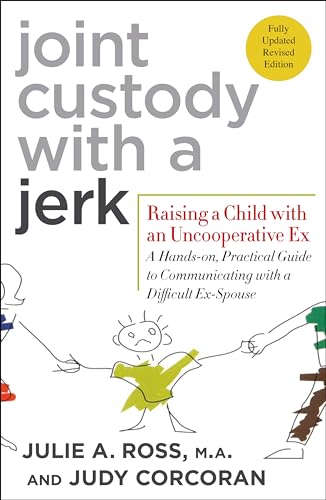
Joint Custody with a Jerk
Julie A. Ross, MA & Judy Corcoran
Proven communication techniques for co-parenting with an uncooperative ex.
As an Amazon Associate, Clarity House Press earns from qualifying purchases. Your price is never affected.
Found this helpful?
Share it with someone who might need it.
About the Author

Clarity House Press
Editorial Team
The editorial team at Clarity House Press curates and publishes evidence-based content on narcissistic abuse recovery, high-conflict divorce, and healing. Our content is informed by research, survivor experiences, and established trauma-informed approaches.
View all posts by Clarity House Press →Published by Clarity House Press Editorial Team