Please read our important disclaimers before using this content
Your settlement agreement says you're entitled to half of your ex-spouse's 401(k). Sounds simple. But without the right legal paperwork—a Qualified Domestic Relations Order (QDRO)—that money might never actually reach you. Or worse, when it does, you might face a massive tax bill and early withdrawal penalties that nobody warned you about.
QDROs are one of the most important—and frequently mishandled—financial tools in divorce. Understanding them can mean the difference between receiving your fair share of marital retirement assets and losing tens of thousands of dollars to taxes, penalties, or administrative errors. For survivors rebuilding later in life, our guide to retirement planning after late-life divorce covers how to strategize once assets are divided.
Yes, this gets technical. Yes, there are many steps. But here's what you need to know: You don't have to understand every detail yourself. Your attorney and a QDRO specialist will handle the technical language and plan administration. What matters is that you understand the big picture—what QDROs do, why they're critical, and what common mistakes to avoid. That knowledge will help you ask the right questions, protect your interests, and ensure the process stays on track.
What Is a QDRO?
A Qualified Domestic Relations Order (QDRO, pronounced "QUAD-row") is a court order that instructs a retirement plan administrator to divide a retirement account between divorcing spouses.
Why QDROs Are Necessary
Federal law (ERISA - Employee Retirement Income Security Act)1 protects retirement accounts from creditors and requires specific procedures for dividing them. You can't just:
- Withdraw money and give half to your ex
- Have a plan administrator split the account based on a divorce decree alone
- Transfer funds without a QDRO and avoid taxes/penalties
The QDRO is the legal exception2 that allows division of retirement assets between spouses during divorce without:
- Income tax on the transfer
- 10% early withdrawal penalty (if under age 59½)
- ERISA violations
What Accounts Require QDROs
Require QDROs:
- 401(k) plans (traditional and Roth)
- 403(b) plans
- Profit-sharing plans
- Pension plans
- Cash balance plans
- Employee Stock Ownership Plans (ESOPs)
Do NOT use QDROs (different process):
- IRAs (traditional or Roth) - divided by divorce decree, not QDRO
- SEP IRAs and SIMPLE IRAs - also divided by decree
- Military pensions - require special military pension division order
- Government pensions (federal, state, local) - may have unique requirements
Why this matters: Using the wrong process can cause delays, tax consequences, or complete loss of your awarded assets.
Key Components of a QDRO
A valid QDRO must include specific information:
1. Participant and Alternate Payee Information
Participant: The spouse whose employment created the retirement account
Alternate Payee: The ex-spouse receiving a portion (that's you if you didn't earn the benefit)
Required:
- Full legal names
- Addresses
- Social Security numbers
- Date of birth
2. The Amount or Percentage to Be Awarded
Two approaches:
Percentage: "The Alternate Payee is awarded 50% of the Participant's account balance as of the date of divorce."
Specific dollar amount: "The Alternate Payee is awarded $150,000 from the Participant's 401(k) account."
Fixed percentage of coverture fraction: "The Alternate Payee is awarded 50% of the marital portion, calculated as: (months of marriage during participation / total months of participation) × account balance."
Why it matters: Poorly worded QDROs create ambiguity, delay implementation, or result in incorrect division.
3. The Specific Plan
Must identify the exact retirement plan:
- Plan name (official legal name)
- Plan administrator contact information
- Plan number (if applicable)
Example: "The XYZ Corporation 401(k) Savings Plan"
Not sufficient: "Husband's 401(k)" (he might have multiple plans from different employers, and the plan administrator won't know which account to divide)
4. Timing
When the division takes effect:
- As of date of divorce decree
- As of date QDRO is entered
- As of date of separation
- Specific calendar date
Why timing matters:** Market fluctuations mean the account value changes. Clear timing prevents disputes about which value applies.
5. Distribution Options
What happens to the awarded portion:
Option 1: Immediate rollover to Alternate Payee's IRA
- Money goes directly to your own IRA
- No taxes or penalties
- You control investment
- Most common choice
Option 2: Cash distribution to Alternate Payee
- Money paid directly to you
- Subject to income tax (but not 10% penalty even if under 59½)
- Useful if you need immediate cash
- Consider tax implications
Option 3: Separate account within the plan
- Your portion stays in ex's plan but under your name
- Subject to plan's investment options and rules
- Less common
- May be closed and rolled over later
6. Survivor Benefits (For Pensions)
If the account is a pension with survivor benefits:
Critical question: If the participant dies before or during retirement, does the alternate payee continue receiving payments?
Your QDRO should address:
- Whether you receive survivor benefits
- Type of survivor benefit (100%, 50%, etc.)
- Whether you can name your own beneficiary
Without this language: Your pension payments might stop if your ex dies, even if you're already receiving them.
The QDRO Process: Step by Step
Quick Overview: The process typically involves: (1) including QDRO language in your settlement → (2) drafting the QDRO document → (3) getting plan pre-approval → (4) having a judge sign it → (5) plan implements the division. Total timeline: 4-6 months for straightforward cases, longer for complex pensions. Your attorney and QDRO specialist will manage most steps.
1. Settlement Agreement Addresses Division
Your divorce settlement should specify:
- Which retirement accounts will be divided
- What percentage or amount each spouse receives
- General terms (specific QDRO details come later)
Example language: "Wife shall receive 50% of Husband's ABC Company 401(k) account as of the date of divorce, to be effectuated by QDRO."
2. Draft the QDRO
Who drafts it:
- Specialized attorney (QDRO specialist)
- Your divorce attorney (if experienced in QDROs)
- Professional QDRO preparation service
Cost:
- $500 - $3,000+ depending on complexity
- Often split between spouses or negotiated in settlement
- Worth paying for expertise—errors are expensive
Complexity factors:
- Pension vs. defined contribution plan (pensions are more complex)
- Survivor benefits
- Loans against the account
- Multiple plans
3. Pre-Approval by Plan Administrator
Before going to court:3
- Send draft QDRO to plan administrator for review
- Plan reviews for compliance with plan terms and ERISA
- Plan suggests revisions if needed
- Get written pre-approval
Why this step is critical:
- Courts will sign QDROs that plans later reject
- Starting over after court approval wastes time and money
- Pre-approval ensures the plan will actually implement the order
4. Submit QDRO to Court
After plan pre-approval:
- Submit QDRO to divorce court for judge's signature
- May be submitted with final divorce decree or separately
- Some jurisdictions require noticed hearing; others allow ex parte submission
Judge signs the order, making it legally enforceable.
5. Submit Signed QDRO to Plan
After judicial signature:
- Send certified copy of signed QDRO to plan administrator
- Include any required plan-specific forms
- Request written confirmation of receipt
6. Plan Qualification Review
Plan administrator reviews QDRO to ensure:
- Meets ERISA requirements
- Complies with plan terms
- Contains all necessary information
- Language is clear and unambiguous
Timeline: Plans have "reasonable time" to review—usually 30-90 days for straightforward cases, though complex pensions or cases requiring multiple revisions can take up to 18 months
Possible outcomes:
- Approved: Plan qualifies the order and implements division
- Rejected: Plan identifies deficiencies requiring correction (back to step 2)
7. Implementation
Once qualified:
- Defined contribution (401k): Account divided according to QDRO terms
- Pension: Payments divided according to schedule when participant retires
- Alternate payee receives distribution options (rollover to IRA, cash distribution, etc.)
8. Alternate Payee Action
If you're the alternate payee:
- Decide whether to roll over to your IRA or take cash distribution
- Complete plan's required paperwork
- Provide IRA account information for rollover
- Do not delay—plans may have timeframes for elections
Common QDRO Mistakes and How to Avoid Them
1. Waiting Too Long to Prepare QDRO
The mistake: Divorce is finalized but QDRO preparation is delayed months or years.
Consequences:
- Market fluctuations change account value (who bears the risk?)
- Participant might change jobs, retire, or die
- Account might be withdrawn or borrowed against
- Delays increase stress and conflict
Solution:
- Prepare QDRO simultaneously with settlement negotiations
- Submit for plan pre-approval before final decree if possible
- Set deadline in settlement agreement (e.g., "QDRO to be submitted within 60 days")
2. Using Template QDROs Without Customization
The mistake: Using generic online template without adapting to specific plan or situation.
Consequences:
- Plan rejects QDRO for non-compliance
- Ambiguous language creates disputes
- Missing key provisions (survivor benefits, timing, etc.)
Solution:
- Use QDRO specialist or experienced attorney
- Obtain plan's model QDRO if available (many plans provide templates)
- Pre-approval process catches issues before court
3. Incorrect Plan Identification
The mistake: Vague plan identification or wrong plan name.
Consequences:
- Plan can't identify which account to divide
- QDRO rejected or delayed
Solution:
- Obtain recent account statement showing official plan name
- Verify with plan administrator
- Include plan number if applicable
4. Ambiguous Division Formula
The mistake: "Wife receives half of the 401(k)."
Questions:
- Half as of what date?
- Half of what value (current balance, balance at divorce, marital portion only)?
- What about contributions made after separation?
- What about investment gains and losses?
Solution: Precise language: "Alternate Payee is awarded 50% of the account balance as of [specific date], including all investment gains and losses from [start date] to [end date]."
5. Ignoring Loans Against the Account
The mistake: QDRO doesn't address outstanding loan balance.
Consequences:
- Disputed allocation of loan repayment or default
- Reduced distribution to alternate payee
Solution: Address in QDRO: "The Participant shall be solely responsible for any outstanding loan balance. The Alternate Payee's portion shall be calculated without reduction for outstanding loans."
6. No Survivor Benefit Language (Pensions)
The mistake: QDRO awards portion of pension but doesn't address what happens if participant dies.
Consequences:
- Payments stop at participant's death
- Alternate payee loses expected retirement income
Solution: Include survivor benefit provisions: "In the event of Participant's death before or after retirement, Alternate Payee shall continue to receive [percentage] survivor benefits."
7. Forgetting About Plan Fees
The mistake: Not addressing who pays administrative fees for QDRO processing.
Consequences:
- Unexpected reduction in awarded amount
- Post-divorce conflict
Solution: Address in settlement agreement or QDRO: "All administrative fees associated with implementation of this QDRO shall be split equally between the parties" or "paid solely by Participant."
Special Considerations
Pensions (Defined Benefit Plans)
More complex than 401(k)s:4
Key decisions:
Immediate offset vs. shared payment:
- Immediate offset: You receive a lump sum now approximating the present value of your portion
- Shared payment: You receive a percentage of monthly pension payments when participant retires
Shared payment considerations:
- What if participant retires early, reducing monthly benefit?
- What if participant delays retirement past normal retirement age?
- What if participant elects lump sum instead of monthly payments?
- Survivor benefits?
Your QDRO must address these scenarios explicitly.
Military Pensions
Special rules:
- Need 10 years of marriage overlapping 10 years of military service for direct payment from DFAS (Defense Finance and Accounting Service)
- If you don't meet 10/10, still entitled to portion but ex must pay you directly
Survivor Benefit Plan (SBP):
- Military equivalent of civilian survivor benefits
- Must be addressed in QDRO or you lose it
- Costs money (reduces pension payment) but protects you if ex dies
Disability pay issues:
- Disability pay isn't divisible
- If ex retires and converts pension to disability, your portion might shrink
- Protect against this in settlement agreement
Government Pensions (Federal, State, Local)
Each system has unique rules:
- Federal: CSRS and FERS systems have specific requirements
- State and local: Vary by state and plan
- Some require special division orders (not QDROs technically)
Solution: Use attorney experienced in that specific pension system.
Tax Implications
If you roll over to your own IRA:
- No immediate income tax
- No 10% early withdrawal penalty
- Money grows tax-deferred
- You pay taxes when you eventually withdraw (at your tax rate)
If you take cash distribution:
- Subject to income tax at your current rate
- NOT subject to 10% early withdrawal penalty (QDRO exception)
- 20% withholding may apply
- Might push you into higher tax bracket that year
Special note for Roth 401(k) accounts:
- Roth 401(k) contributions (already taxed) transfer tax-free via QDRO
- Roth earnings also transfer tax-free if the account meets the 5-year rule
- Roll over Roth 401(k) to Roth IRA (not traditional IRA) to preserve tax-free status
- If you take cash distribution from Roth 401(k) via QDRO, qualified distributions remain tax-free
Without QDRO (Disastrous Tax Consequences)
If participant withdraws money to give you your share:5
- Participant pays income tax on entire distribution
- Participant pays 10% penalty if under 59½
- Your "half" is significantly reduced by taxes/penalties
- Participant might refuse to compensate you for taxes they paid
- IRS won't care that it was "supposed to" be divided via QDRO
Example: $100,000 account, 401(k), participant is 45 years old in 24% federal tax bracket (plus 5% state tax).
- With QDRO: You receive $50,000 rolled to your IRA, tax-free. You pay taxes eventually when you withdraw (at your future tax rate).
- Without QDRO: Participant withdraws $100,000, pays approximately $29,000-$40,000 in federal tax (depending on bracket), $5,000 state tax, and $10,000 early withdrawal penalty = $44,000-$55,000 total. Left with $45,000-$56,000. Gives you half = $22,500-$28,000. You've lost $22,000-$27,500 compared to proper QDRO rollover.
Note: Actual tax impact varies significantly based on participant's marginal tax bracket (10%-37% federal), state taxes (0%-13%), and whether participant has other income that year. The tax cost could be lower or substantially higher than this example.
Timeline and Urgency
Start QDRO Process Immediately
1. Protect against market risk:
- Account value fluctuates
- Delayed division means unclear valuation
2. Prevent participant actions:
- Changing jobs
- Retiring early
- Taking loans
- Hardship withdrawals
3. Life events:
- Death of participant before division
- Remarriage and beneficiary changes
- Participant files bankruptcy
4. Peace of mind:
- Final financial separation
- Closure
- Control over your own retirement assets
If economic abuse has compromised your access to financial records, understanding how financial discovery works is an important parallel step in protecting your retirement share.
Plan Processing Timelines
Typical:
- 30-90 days after submission of qualified order
- Sometimes longer for complex pensions
- Immediate rollover option available once processed
During processing:
- Plan may "freeze" or "segregate" participant's account
- Prevents withdrawals or loans that would affect alternate payee's portion
After the QDRO: What to Do with Your Money
Option 1: Rollover to Traditional IRA
Advantages:
- Tax-deferred growth continues
- No immediate tax or penalty
- Full control over investments
- Many more investment options than employer plan
Considerations:
- Money not accessible without penalty until 59½ (with some exceptions)
Option 2: Rollover to Roth IRA
Process:
- Rollover from 401(k) to traditional IRA first
- Then convert to Roth (taxable conversion)
Advantages:
- Tax-free growth and withdrawals in retirement
- No required minimum distributions
- Can pass tax-free to heirs
Considerations:
- Pay taxes on conversion amount
- Only makes sense if you can pay conversion tax from other funds
- Better if you're in low tax bracket now vs. expected future bracket
Option 3: Cash Distribution
When it makes sense:
- You need money for immediate expenses
- You're buying a house
- Paying off high-interest debt
- Emergency situation
Tax planning:
- Consider whether spreading distribution over two tax years reduces tax burden
- Estimate tax owed and set aside funds
- Consult CPA before taking distribution
Option 4: Keep in Ex's Plan
Rarely recommended:
- You're still subject to ex's plan rules
- Limited control
- Awkward ongoing connection
Exception:
- Plan has exceptional investment options you can't get elsewhere
- Temporary while you decide where to roll over
Your Next Steps
If you're negotiating settlement:
- Identify all retirement accounts (yours and your spouse's)
- Obtain recent statements for each account
- Discuss with attorney which accounts need QDROs
- Consider hiring QDRO specialist early
If divorce is final but QDRO not yet done:
- Do this immediately
- Gather plan information (statements, plan summary, administrator contact)
- Hire QDRO specialist
- Request plan's model QDRO
- Coordinate with your divorce attorney
If QDRO has been submitted:
- Follow up with plan administrator on status
- Review distribution options
- Consult with financial advisor about rollover vs. distribution
- Prepare IRA account for rollover if that's your choice
If you've received QDRO distribution:
- Roll over to IRA immediately if that's your plan (60-day deadline for some transfers)
- Consult with financial advisor about investment strategy
- Update estate planning documents
- Celebrate—you've secured your retirement assets
Key Takeaways
- QDROs are court orders that allow division of retirement accounts during divorce without taxes or penalties
- Required for 401(k)s, pensions, 403(b)s, and other qualified plans (not IRAs)
- Must include specific information: parties, amount/percentage, plan identification, timing, distribution options
- Plan pre-approval before court submission prevents costly rejections
- Common mistakes: delay, ambiguous language, ignoring survivor benefits
- Pensions and military/government pensions are more complex and require specialized expertise
- Proper QDRO = no immediate tax; improper division = devastating tax consequences
- Start process immediately, even before divorce is final
- Once divided, usually best to roll over to your own IRA for control and flexibility
Your settlement agreement might say you get half the 401(k), but without a proper QDRO, you might never see that money—or you might lose a huge chunk to taxes and penalties. QDROs are technical, complex, and absolutely critical. This is not the place to DIY or cut corners. Hire expertise, get it right the first time, and protect the retirement security you're entitled to. Once you've secured your retirement assets, rebuilding financial confidence after economic abuse can help you chart a path forward.
Resources
QDRO Information and Specialists:
- U.S. Department of Labor - QDRO Guide - Official QDRO practical guide
- IRS - QDRO Information - Tax implications and requirements
- Pension Benefit Guaranty Corporation - QDRO resources for pension plans
- QDRO Counsel - Find QDRO specialists and attorneys
Divorce Financial Planning:
- Institute for Divorce Financial Analysts - Find Certified Divorce Financial Analysts (CDFA)
- American Academy of Matrimonial Lawyers - Find experienced family law attorneys
- Legal Services Corporation - Find legal aid offices
- Social Security Administration - Divorced Spouse Benefits - Retirement benefit information
Crisis Support and Resources:
- National Domestic Violence Hotline - 1-800-799-7233 (SAFE) for safety planning
- 988 Suicide & Crisis Lifeline - Call or text 988 for crisis support (24/7)
- Crisis Text Line - Text HOME to 741741 for crisis counseling
- Psychology Today - Therapists - Find therapists for divorce stress
References
- Internal Revenue Service. (n.d.). Retirement topics: QDRO (Qualified Domestic Relations Order). Retrieved from https://www.irs.gov/retirement-plans/plan-participant-employee/retirement-topics-qdro-qualified-domestic-relations-order ↩
- U.S. Department of Labor, Employee Benefits Security Administration. (n.d.). Qualified Domestic Relations Orders (QDROs): A practical guide to dividing retirement benefits. Retrieved from https://www.dol.gov/sites/dolgov/files/ebsa/about-ebsa/our-activities/resource-center/publications/qdros-practical-guide.pdf ↩
- Pension Benefit Guaranty Corporation. (n.d.). Qualified Domestic Relations Orders and PBGC. Retrieved from https://www.pbgc.gov/sites/default/files/qdro.pdf ↩
- Social Security Administration. (n.d.). Divorced women at retirement: Projections of economic well-being in the near future. Social Security Bulletin. Retrieved from https://pubmed.ncbi.nlm.nih.gov/11439704/ ↩
- Social Security Administration. (n.d.). The retirement prospects of divorced women. Social Security Bulletin. Retrieved from https://pubmed.ncbi.nlm.nih.gov/22550718/ ↩
- U.S. Department of Labor, Employee Benefits Security Administration. (n.d.). Division of Retirement Benefits Through Qualified Domestic Relations Orders. Retrieved from https://www.dol.gov/sites/dolgov/files/ebsa/about-ebsa/our-activities/resource-center/publications/qdros.pdf ↩
- Internal Revenue Service. (n.d.). Retirement topics: Divorce. Retrieved from https://www.irs.gov/retirement-plans/plan-participant-employee/retirement-topics-divorce ↩
- Loichinger, E., & Zannella, M. (2022). Women and divorce: Financial coping from midlife to older age. Journals of Gerontology Series B: Psychological Sciences and Social Sciences, 77(4). Retrieved from https://pubmed.ncbi.nlm.nih.gov/34181507/ ↩
Recommended Reading
From Clarity House Press — plus trusted books for deeper understanding

5 Types of People Who Can Ruin Your Life
Bill Eddy
Identifies five high-conflict personality types and teaches how to spot warning signs.
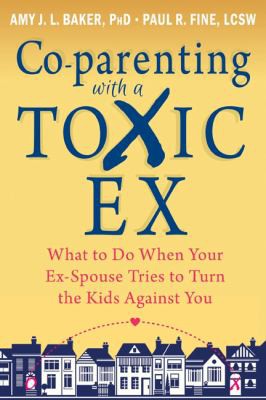
Co-Parenting with a Toxic Ex
Amy J. L. Baker, PhD & Paul R. Fine, LCSW
Evidence-based strategies when your ex tries to turn kids against you. Parental alienation prevention.
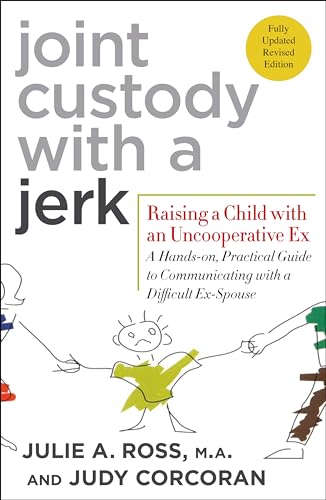
Joint Custody with a Jerk
Julie A. Ross, MA & Judy Corcoran
Proven communication techniques for co-parenting with an uncooperative ex.

Divorce Poison
Dr. Richard A. Warshak
Classic best-selling parental alienation resource on detecting and countering manipulation tactics.
As an Amazon Associate, Clarity House Press earns from qualifying purchases. Your price is never affected.
Found this helpful?
Share it with someone who might need it.
About the Author

Clarity House Press
Editorial Team
The editorial team at Clarity House Press curates and publishes evidence-based content on narcissistic abuse recovery, high-conflict divorce, and healing. Our content is informed by research, survivor experiences, and established trauma-informed approaches.
View all posts by Clarity House Press →Published by Clarity House Press Editorial Team