Please read our important disclaimers before using this content
The call came at 2 a.m. My daughter, sobbing, whispering into the phone from her father's bathroom. "Mom, he's scaring me. He's been drinking and yelling and I don't feel safe. Can you come get me?"
My heart shattered. My hands shook. And my mind raced through the impossible calculation every protective parent in a high-conflict custody case knows too well:
If I go get her, am I violating the custody order and giving him ammunition to call me a kidnapper?
If I don't go get her, am I leaving my child in danger?
I called my attorney at 2:15 a.m. By 9 a.m. the next morning, we were filing an emergency motion for custody modification and temporary restraining order.
Emergency custody orders exist for exactly these situations—when waiting for a standard court hearing (which can take months) means leaving a child in imminent danger. But understanding when to use this legal tool—and when it will backfire—can mean the difference between protecting your child and losing custody entirely.
This post is about when emergency custody is the right move, how to file strategically, what evidence you need, and what happens after the judge rules.
What Is an Emergency Custody Order?
An emergency custody order (also called an ex parte order or emergency motion for temporary orders) is a court order that immediately changes custody arrangements without the other parent present at the initial hearing.
Key characteristics:
- Immediate relief: Can be granted within 24-72 hours
- Ex parte: Initial hearing happens without the other parent (they're notified afterward)
- Temporary: Not a permanent custody change—just emergency protection until a full hearing
- High legal standard: Requires proof of immediate, serious harm to the child
- Serious consequences: If you're wrong or lying, you can lose credibility and custody
What it can do:
- Suspend the other parent's custody or visitation immediately
- Require supervised visitation only
- Grant you temporary sole custody
- Issue a temporary restraining order preventing the other parent from contact with you or the child
- Order the other parent to stay away from the child's school, daycare, or home
What it cannot do:
- Permanently change custody (that requires a full trial)
- Guarantee you'll win at the follow-up hearing
- Punish the other parent for non-emergency bad behavior
When Emergency Custody Is Appropriate (Legal Standards)
Courts grant emergency custody only when there's imminent risk of serious harm to the child. This is an extraordinarily high legal standard—higher than "this parent is difficult" or "I'm worried."
Situations that typically meet the standard:
1. Physical Abuse or Credible Threat of Physical Harm
Examples:
- Child discloses physical abuse (bruises, injuries, hitting, shaking)
- Credible evidence the parent physically harmed the child
- Parent has threatened to harm the child
- Child witnessed severe domestic violence
- Parent has weapons and has threatened violence
Evidence needed:
- Police reports
- Medical records documenting injuries
- Photos of bruises/injuries
- Child's disclosure (recorded if possible, or documented immediately)
- Witnesses who saw injuries or heard threats
2. Sexual Abuse Disclosure or Evidence
Examples:
- Child discloses sexual abuse
- Medical evidence of sexual abuse
- Concerning sexual behavior in child (age-inappropriate knowledge/actions)
- Parent has possession of child sexual abuse material
Evidence needed:
- Medical exam by SANE (Sexual Assault Nurse Examiner)
- Child's disclosure to forensic interviewer
- Police report / CPS investigation
- Expert testimony
Critical: Sexual abuse cases are incredibly delicate legally. Do not ask leading questions that could be perceived as coaching. Your role is to create safety for your child to disclose what happened in their own words, then report to authorities immediately and let professionals conduct forensic interviews. Helping your child feel safe enough to tell the truth is not the same as coaching—but courts scrutinize these cases intensely, so document exactly what your child said (in their words) and how the disclosure happened.
Research on child sexual abuse disclosure indicates that children rarely make false allegations, with studies showing false allegation rates of only 2-8% (London et al., 2005).1 However, family courts remain highly cautious about abuse claims during custody disputes, requiring substantial corroborating evidence beyond the child's statement alone.
3. Severe Neglect Endangering Child
Examples:
- Parent leaves young child home alone regularly
- Child is not receiving necessary medical care (medication for serious condition, emergency medical treatment)
- Living conditions are dangerous (no heat in winter, severe hoarding, exposure to hazardous materials)
- Child is not being fed adequately
Evidence needed:
- Photos of living conditions
- Medical records showing missed appointments or lack of treatment
- CPS reports
- Witness statements
4. Substance Abuse Putting Child in Danger
Examples:
- Parent drove under the influence with child in car
- Parent is actively using drugs in front of child
- Parent overdosed or passed out while supervising child
- Parent's substance use makes them unable to provide basic care
Evidence needed:
- Police reports (DUI, drug arrests)
- Witnesses who observed intoxication while parent had custody
- Drug test results
- Medical records (hospitalization for overdose, treatment programs)
- Photos or videos
Important distinction: "Parent has a substance abuse problem" doesn't meet the emergency standard on its own. "Parent drove drunk with child in car last night" does.
5. Parental Abduction Risk
Examples:
- Parent has threatened to flee with child
- Parent has passport and tickets to country with no extradition treaty
- Parent is from another country and has threatened to return there with child
- Parent has history of violating custody orders
- Parent has made specific plans or threats to disappear with child
Evidence needed:
- Text messages/emails showing threats or plans
- Evidence of travel arrangements
- Evidence of liquidated assets
- Evidence of ties to other countries
- Past violations of custody orders
Legal protections: The International Parental Child Abduction Prevention and Return Act (ICAPRA) establishes federal safeguards against child abduction, while the Uniform Child Abduction Prevention Act (UCAPA) identifies risk factors and preventive measures that courts can impose.2 The Hague Convention on the Civil Aspects of International Child Abduction provides international enforcement mechanisms for custody orders across treaty countries.3
6. Severe Mental Health Crisis Making Parent Dangerous
Examples:
- Parent is actively suicidal and has made threats to take child with them
- Parent is experiencing psychotic break and cannot care for child
- Parent has been involuntarily hospitalized
- Parent's untreated mental illness is creating dangerous situation for child
Evidence needed:
- Mental health records (if accessible)
- Police reports (wellness checks, involuntary holds)
- Witness statements about concerning behavior
- Evidence of threats
When Emergency Custody May Not Meet Legal Standards
I know how terrifying it is when you see your child suffering. You know the other parent is damaging them. You can see the harm happening. Everything in you screams to protect your child immediately.
But filing for emergency custody when the situation doesn't meet the specific legal standard can be catastrophic for your case. Family court judges distinguish between "serious concern requiring custody modification" and "immediate danger requiring emergency intervention." Filing for emergency relief when standard modification is the appropriate route can make judges view you as manipulative—even when your concerns are completely legitimate.
Situations that typically do NOT meet the emergency standard (even though they're deeply concerning and may warrant standard custody modification):
- Other parent has a personality disorder (narcissism, borderline, etc.) but isn't creating immediate physical danger
- Other parent said cruel or damaging things to the child (emotional abuse is serious but usually doesn't meet "imminent harm" standard)
- You disagree with other parent's parenting choices (bedtime, diet, screen time, discipline style)
- Other parent is dating someone you don't trust or who makes you uncomfortable
- Child says they don't want to go to other parent's house (without disclosure of abuse or evidence of danger)
- Other parent is engaging in parental alienation behaviors (talking badly about you, undermining your authority)
- Other parent violated the custody order in non-dangerous ways (late pick-ups, didn't return belongings, communication issues)
- You have a "bad feeling" or worry something might happen (without specific, credible evidence of imminent danger)
Why filing emergency motions in these situations can damage your case:
- Judge may perceive you as weaponizing the court system for strategic advantage
- You lose credibility for future legitimate concerns (the judge will be skeptical next time)
- Judge may sanction you with attorney's fees or even reduce your custody time
- Other parent's attorney will use your "false emergency" as evidence that you're an alienating parent who exaggerates to manipulate the system
The legal test: "Is my child in immediate physical or psychological danger if they spend one more night with the other parent?"
If the honest answer is no—even though the situation is concerning, damaging, or wrong—it's not an emergency under family court standards. This doesn't mean you're wrong about your concerns. It means you need to pursue standard custody modification instead of emergency relief.
Important: Courts recognize that emotional abuse, parental alienation, and poor parenting are harmful to children.4 But the legal standard for emergency intervention requires imminent physical danger or severe psychological harm that cannot wait for a standard hearing. Your concerns may be completely valid and still not meet the emergency threshold.
How to File an Emergency Custody Motion (Strategic Steps)
If you have a genuine emergency that meets the legal standard, here's how to proceed strategically:
Step 1: Document the Emergency Immediately
Within hours of the incident:
-
Write down everything while memory is fresh:
- Exact date, time, location
- What happened (be specific, factual, not emotional)
- Who was present
- What child said (use child's exact words if possible)
- Your observations (injuries, behavior, condition)
-
Take photos:
- Any visible injuries
- Living conditions
- Evidence of substance use
- Anything relevant to the emergency
-
Report to authorities:
- If abuse/neglect: Call CPS (Child Protective Services) and/or police
- If medical emergency: Take child to ER, get medical records
- If DUI: Police report is essential
-
Preserve electronic evidence:
- Screenshot threatening texts/emails
- Save voicemails
- Document social media posts showing substance use or concerning behavior
Critical: Document first, file second. You need evidence to win.
Step 2: Contact Your Attorney Immediately
If you have an attorney: Call them immediately, even if it's the middle of the night. Emergency motions need to be filed ASAP.
If you don't have an attorney:
- Some jurisdictions have emergency duty attorneys
- Domestic violence organizations may have legal advocates
- You can file pro se (representing yourself), but it's risky—emergency motions are high-stakes
What your attorney will assess:
- Does this meet the legal standard for emergency relief?
- What evidence do you have?
- What are the risks of filing vs. not filing?
- What interim safety measures can you take (while preserving your legal position)?
Finding the right attorney for high-conflict emergency custody:
Not all family law attorneys are equipped to handle emergency custody cases involving narcissistic abuse or high-conflict dynamics. Look for:
- Experience with emergency/ex parte motions specifically
- Understanding of narcissistic abuse and personality disorders
- Willingness to move quickly (some attorneys are too cautious for genuine emergencies)
- Track record with protective parents (not attorneys who dismiss abuse concerns as "parental alienation")
- Comfort with aggressive litigation when necessary (emergency cases require assertive advocacy)
If your current attorney is dismissive of your concerns or tells you to "just coparent better" when your child is in danger, find a different attorney immediately.
Step 3: File the Emergency Motion
Your attorney (or you, if pro se) will file:
-
Emergency Motion for Temporary Custody Modification
- Explains the emergency
- Cites specific facts and evidence
- Requests immediate relief
-
Declaration/Affidavit Under Oath
- Your sworn statement of what happened
- Factual, specific, chronological
- Supported by attached evidence
-
Supporting Evidence:
- Police reports
- Medical records
- Photos
- CPS reports
- Text messages/emails
- Witness declarations
-
Proposed Order:
- What you're asking the judge to order
- Be specific: suspend visitation entirely, or supervised only, or no contact except through third party, etc.
Filing fees: Often waived for emergencies in domestic violence cases; otherwise, fees vary significantly by jurisdiction (typically $150-$500). Some courts also waive fees if you qualify for indigent status.
Step 4: The Ex Parte Hearing (You Present Your Case)
Timeline: Usually within 24-72 hours of filing5
Format: Just you (and your attorney), the judge, no other parent present (yet)
What happens:
- Judge reviews your paperwork before hearing
- You (or your attorney) present the emergency (5-15 minutes typically)
- Judge asks clarifying questions
- Judge decides: Grant temporary relief, deny, or schedule immediate hearing with other parent present6
How to present effectively:
Do:
- Stick to facts: "On November 28, my daughter called me at 2 a.m. stating her father was intoxicated and yelling. When I picked her up pursuant to the emergency, I observed..."
- Focus on child's safety, not parent's character: "The child is at risk because..." not "He's a terrible person because..."
- Bring evidence, reference it: "As shown in Exhibit C, the police report from November 28..."
- Stay calm and credible
- Be specific about what relief you're requesting
Don't:
- Editorialize or vent emotions
- Make accusations you can't prove
- Exaggerate
- Bring up old grievances unrelated to current emergency
- Badmouth the other parent
- Appear vindictive or strategic (vs. genuinely protective)
Judge's decision:
If granted:
- You get temporary order (usually 2-4 weeks)
- Other parent is notified immediately
- Full hearing scheduled within days to weeks
- Temporary order stays in effect until full hearing
If denied:
- Custody order remains as-is
- You can request standard modification hearing
- Consider whether to appeal (discuss with attorney)
Step 5: The Follow-Up Hearing (Other Parent Gets to Respond)
Timeline: Typically within 10-30 days of emergency order (varies significantly by jurisdiction—some states require hearings within 10 days, others allow up to 30 days)
Format: Both parents, attorneys, evidence presented by both sides, judge makes decision
What happens:
-
You present your case (more fully than ex parte hearing)
- Evidence of emergency
- Evidence child is still at risk
- Your witnesses (if any)
-
Other parent presents their defense:
- Denies allegations
- Provides alternative explanation
- Presents evidence you're lying/exaggerating
- May accuse you of parental alienation
-
Judge weighs evidence and credibility
-
Judge issues ruling:
- Continue emergency order (temporary orders remain until trial)
- Modify emergency order (e.g., allow supervised visitation instead of no contact)
- Dissolve emergency order (custody returns to previous arrangement)
How to prepare:
- Organize all evidence chronologically
- Prepare your testimony (practice with attorney)
- Line up witnesses if you have them
- Anticipate other parent's defenses and prepare responses
- Stay calm and factual (other parent may lie, rage, or try to provoke you—don't take the bait)
Possible outcomes:
Best case: Judge finds credible evidence of danger, continues temporary orders, schedules full custody trial
Middle case: Judge finds some concern, orders supervised visitation or other safety measures, schedules full hearing
Worst case: Judge finds no credible danger, dissolves emergency order, you've now lost credibility (and possibly face sanctions for false allegations)
What Evidence Wins Emergency Custody Cases
Judges need to see clear, credible, documented evidence of immediate danger. Your testimony alone is usually not enough (because the other parent will deny everything and claim you're lying).
Strong evidence:
- Police reports (especially for DV, DUI, drug use, threats)
- Medical records (injuries, emergency room visits, missed critical medical care)
- CPS investigation (even if inconclusive, it shows you reported through proper channels)
- Photos/videos (injuries, dangerous conditions, intoxication, concerning behavior)
- Third-party witnesses (teachers, doctors, neighbors, relatives who observed the danger)
- Electronic communications (texts/emails where other parent makes threats, admits to substance use, or shows dangerous instability)
- Drug test results
- Child's disclosure to professional (doctor, therapist, forensic interviewer—not just to you)7
Weak evidence (won't win alone):
- Your testimony with no corroboration
- "Child told me..." (hearsay, and judges worry about coaching)
- Your interpretation of other parent's social media
- Old incidents (months/years ago) with no recent danger
- Character attacks ("he's a narcissist who's never cared about our child")
The standard: "Preponderance of evidence" (more likely than not) that child is in immediate danger. You need enough evidence that a judge believes your version of events is more credible than the other parent's denial.
Strategic Considerations and Risks
Risk 1: Loss of Credibility for Future Concerns
If you file for emergency custody and the judge finds the evidence insufficient, you've damaged your credibility for future legitimate concerns.
This is especially difficult for survivors of narcissistic abuse who've been gaslit about their reality. You know what you experienced. You know your child is in danger. But if you can't prove it to the judge's satisfaction on paper, the court will be skeptical when you raise concerns in the future—even if those future concerns are completely valid.
Mitigation: Only file if you have documented evidence that meets the legal standard. If you're uncertain whether your situation qualifies, consult with a family law attorney experienced in high-conflict custody before filing. They can assess your evidence objectively and advise you on the strength of your case.
Risk 2: Retaliation and Escalation
The other parent will be furious. If they're a narcissist, an emergency custody motion will be perceived as narcissistic injury and may trigger rage/retaliation.
Possible retaliation:
- Counter-motion claiming YOU'RE the danger
- Increased legal aggression
- Smear campaign
- Attempts to manipulate child to recant or change story
- Threats of financial ruin through legal fees
Mitigation:
- Prepare for escalation (document everything)
- Safety plan (consider restraining order if needed)
- Don't engage in mud-slinging (stay factual and calm)
Risk 3: False Allegations Accusations
If the evidence doesn't clearly support your claims, the other parent will accuse you of making false allegations to manipulate custody.
In some jurisdictions, knowingly making false abuse allegations can result in:
- Loss of custody
- Supervised visitation for YOU
- Attorney's fees sanctions
- Even criminal charges in extreme cases
Mitigation:
- Only file if you have solid, documented evidence that corroborates your account
- Create safety for your child to disclose in their own words; document exactly what they said without leading questions
- Report through proper channels (police, CPS) before or simultaneously with filing in family court—this demonstrates you're following protocol, not just seeking strategic advantage
- Be scrupulously truthful and factual in all court filings (never exaggerate, even slightly)
Risk 4: The Investigation Process Is Traumatic for the Child
When you file emergency custody alleging abuse, the child will likely be:
- Interviewed by CPS
- Possibly interviewed by police
- Possibly subjected to medical exams
- Questioned in court (depending on age)
- Caught in the middle of high-conflict litigation
This is re-traumatizing. It's necessary if the child is genuinely in danger, but it's not without cost.
Mitigation:
- Get the child into trauma-informed therapy
- Prepare them for the process (age-appropriately)
- Shield them from details of the legal battle as much as possible
What Happens After the Emergency Order (Long-Term Strategy)
An emergency custody order is just the beginning, not the end.
If You Win the Emergency Hearing
Temporary orders are in place. Now what?
-
Full custody trial is scheduled (typically 6-12 months out, sometimes longer depending on court backlogs)
- Emergency order remains in effect until trial
- Both sides will present full evidence and witnesses
- Judge will make permanent custody determination
-
Prepare for trial:
- Continue documenting everything
- Gather additional evidence
- Line up expert witnesses if needed (therapists, evaluators)
- Comply perfectly with all court orders (you're under a microscope now)
-
Child will need therapeutic support:
- Find a trauma-informed therapist experienced with family court cases and child abuse (not all therapists understand high-conflict custody dynamics)
- Prepare your child age-appropriately for the court process (without coaching them about what to say)
- The court may order a forensic evaluation or appoint a guardian ad litem (attorney for the child)
- Be aware that therapy records may be subpoenaed—discuss confidentiality limits with the therapist upfront
-
Supervised visitation logistics:
- If other parent is allowed supervised visits, who supervises? (professional service, family member, etc.)
- Who pays? (usually ordered parent pays)
- Where? (neutral location)
-
Other parent may be required to:
- Complete substance abuse treatment
- Complete parenting classes
- Complete anger management
- Submit to drug testing
- Complete psychological evaluation
Your goal: Use the temporary period to build your case for permanent custody change at trial.
If You Lose the Emergency Hearing
The emergency order is dissolved. Custody returns to previous arrangement.
Your options:
-
File for standard custody modification
- Lower burden of proof than emergency
- Takes months, but you can still present evidence the other parent is unfit
-
Appeal the emergency ruling (discuss with attorney—appeals are difficult and expensive)
-
Continue documenting and wait for another incident (sadly, if the parent is genuinely dangerous, there's often another incident)
-
Focus on safety measures within the existing custody order:
- Right of first refusal (if other parent can't supervise, you get child instead of their new partner/babysitter)
- Required communication methods (app like OurFamilyWizard)
- No alcohol during parenting time (some orders include this)
Critical: Even if you lose the emergency motion, if the evidence was concerning, you've put the court on notice. Future incidents will be viewed in that context.
Your Next Steps (If You're Facing an Emergency)
If your child disclosed abuse or is in immediate danger RIGHT NOW:
-
Ensure child's immediate safety:
- If they're with you, keep them safe
- If they're with other parent and in danger, call 911
- Do not violate custody order unless child is in imminent danger (in which case, get them safe first, call attorney second)
-
Report to authorities:
- Call CPS and/or police (create an official record)
- Take child to ER if medical attention needed
- Let professionals investigate—your role is to report, not to investigate
- Important: CPS investigations don't always go the way you expect. Sometimes CPS is manipulated by the abusive parent, or doesn't find enough evidence to substantiate. This doesn't mean your child wasn't harmed—it means the system has limitations. Still report, but understand that CPS findings aren't always reliable indicators of truth.
-
Document everything:
- Write down what happened
- Photograph injuries/conditions
- Save all communications
-
Call your attorney (or find one):
- Many attorneys take emergency calls
- Domestic violence organizations have emergency legal advocates
-
File emergency motion within 24-48 hours if attorney advises
If you're not in an immediate emergency but concerned:
-
Assess whether this meets legal standard for emergency (see above)
- If no: document and prepare for standard custody modification
- If yes: proceed with emergency filing
-
Consult with a family law attorney experienced in high-conflict custody
- They can assess your situation and evidence
- They can advise on likelihood of success
-
Continue documenting everything (keep an ongoing log of concerning incidents)
-
Develop safety plan for child (when they're in your care and other parent's care)
Key Takeaways
- Emergency custody orders are for immediate, serious danger—not for routine bad parenting or personality disorders alone
- The legal standard is HIGH: imminent risk of serious physical or psychological harm
- Situations that typically qualify: physical abuse, sexual abuse, severe neglect, substance abuse putting child in danger, parental abduction risk, severe mental health crisis
- Filing when you don't meet the standard can backfire catastrophically—you'll lose credibility and possibly custody
- Strong evidence is essential: police reports, medical records, CPS reports, photos, third-party witnesses, electronic communications
- The process: file emergency motion → ex parte hearing (24-72 hours) → follow-up hearing with both parents (10-20 days) → full trial (3-6 months)
- Emergency orders are temporary—you need to prepare for a full custody trial to make changes permanent
- Document everything immediately, report to authorities (CPS/police), and consult an attorney before filing
- Even if you lose the emergency hearing, you've put the court on notice and can still file for standard custody modification
If your child is in genuine danger, emergency custody orders can save their life. If you're using them strategically to gain advantage, they will destroy your case.
Use this tool wisely, with solid evidence, and only when truly necessary.
If you found this helpful, you might also want to read Custody Modification: Proving Substantial Change in Circumstances and The Spreadsheet That Saved My Custody Case: Documenting Abuse for Court.
Resources
Emergency Custody Legal Support:
- American Bar Association - Family Law - Find emergency custody attorneys
- LawHelp.org - Free and low-cost legal assistance for emergency motions
- WomensLaw.org - State-specific emergency custody laws and procedures
- National Parents Organization - Emergency custody rights and advocacy
Documentation and Evidence:
- TalkingParents - Unalterable communication records for evidence
- OurFamilyWizard - Court-admissible documentation for emergency custody
- Custody X Change - Emergency custody documentation and tracking
- One Mom's Battle - Emergency custody strategies for high-conflict cases
Crisis Support and Safety:
- National Domestic Violence Hotline - 1-800-799-7233 (emergency custody due to abuse)
- Childhelp National Child Abuse Hotline - 1-800-422-4453 (child safety emergencies)
- SAMHSA Helpline - 1-800-662-4357 (mental health crisis support)
- r/Custody - Community support for emergency custody situations
References
Additional References
Trocmé, N., & Bala, N. (2005). False allegations of abuse and neglect when parents separate. Child Abuse & Neglect, 29(12), 1333-1345. https://doi.org/10.1016/j.chiabu.2004.06.016
Bancroft, L., & Silverman, J. G. (2002). The Batterer as Parent: Addressing the Impact of Domestic Violence on Family Dynamics. SAGE Publications.
U.S. Customs and Border Protection. "Preventing International Child Abduction." Child Abduction Prevention and Return Act. https://www.cbp.gov/travel/international-child-abduction-prevention-and-return-act
References
- London, K., Bruck, M., Ceci, S. J., & Shuman, D. W. (2005). Disclosure of child sexual abuse: What does the research tell us about the ways that children tell? Psychology, Public Policy, and Law, 11(1), 194-226. https://doi.org/10.1037/1076-8971.11.1.194 ↩
- California Courts. (2024). "Temporary Emergency (Ex Parte) Orders." California Judicial Branch. https://courts.ca.gov/sites/default/files/courts/default/2024-11/fl305.pdf ↩
- California Courts. "Ask for an emergency (ex parte) order." California Courts Self Help Guide. https://selfhelp.courts.ca.gov/ask-emergency-ex-parte-order ↩
- U.S. Department of State. "Uniform Child Abduction Prevention Act: A Way to Curb Parental Abductions." American Bar Association Family Law Section. https://www.americanbar.org/groups/family_law/resources/family-advocate/2025-spring/uniform-child-abduction-prevention-act-curb-parental-abductions/ ↩
- U.S. Department of State. "International Parental Child Abduction." Travel and Immigration Resources. https://travel.state.gov/content/travel/en/International-Parental-Child-Abduction.html ↩
- Jaffe, P. G., Johnston, J. R., Crooks, C. V., & Bala, N. (2008). Custody disputes involving allegations of domestic violence: Toward a differentiated approach to parenting plans. Family Court Review, 46(3), 500-522. https://doi.org/10.1111/j.1744-1617.2008.00216.x ↩
- California Judicial Council. "Rule 5.151. Request for temporary emergency (ex parte) orders; application; required documents." Judicial Branch of California. https://courts.ca.gov/cms/rules/index/five/rule5_151 ↩
If You or Someone You Know Is Struggling
- 988 Suicide & Crisis Lifeline:Call or text 988 (24/7, free, confidential)
- Crisis Text Line:Text HOME to 741741
- National DV Hotline:1-800-799-7233
You are not alone. Help is available.
Recommended Reading
From Clarity House Press — plus trusted books for deeper understanding


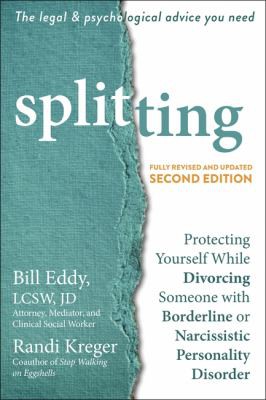
Splitting: Protecting Yourself While Divorcing Someone with Borderline or Narcissistic Personality Disorder
Bill Eddy & Randi Kreger
Updated edition covering domestic violence, alienation, false allegations in high-conflict divorce.

Fathers' Rights
Jeffery Leving & Kenneth Dachman
Landmark guide by renowned men's rights attorney covering every aspect of custody for fathers.
As an Amazon Associate, Clarity House Press earns from qualifying purchases. Your price is never affected.
Found this helpful?
Share it with someone who might need it.
About the Author

Clarity House Press
Editorial Team
The editorial team at Clarity House Press curates and publishes evidence-based content on narcissistic abuse recovery, high-conflict divorce, and healing. Our content is informed by research, survivor experiences, and established trauma-informed approaches.
View all posts by Clarity House Press →Published by Clarity House Press Editorial Team