Please read our important disclaimers before using this content
The "primary caregiver" standard is one of the most insidious forms of gender bias in family court because it sounds fair.
Who could argue against prioritizing the parent who's been primarily responsible for the children's daily care? Isn't continuity important? Doesn't the child have a stronger bond with the parent who's been most involved?
Here's the problem: when fathers worked outside the home to financially support their families—often at the mother's encouragement or by mutual agreement—they're punished in custody court for not being "primary caregivers." Understanding implicit bias in family court research provides important context for why this pattern persists.
The breadwinner role becomes evidence of paternal disengagement. The mother's ability to stay home or work part-time (enabled by the father's income) becomes her qualification for custody. And the father who provided the economic foundation that made the family structure possible gets every-other-weekend.
This isn't gender-neutral. This is the tender years doctrine in disguise.
What the Primary Caregiver Standard Actually Measures
Let's be precise about what courts mean when they identify a "primary caregiver."
Typical factors courts consider:
-
Who spent more time physically present with the children?
- Who was home when children got home from school?
- Who attended to children during the day?
- Who handled morning routines? Evening routines?
-
Who performed more hands-on caregiving tasks?
- Preparing meals
- Bathing young children
- Changing diapers
- Dressing children
- Nighttime care (putting to bed, handling nighttime wakings)
-
Who handled more logistical coordination?
- Scheduling medical appointments
- Coordinating childcare
- Managing the family calendar
- Planning activities and playdates
-
Who was the primary contact for schools and activities?
- Who attended parent-teacher conferences?
- Who volunteered in the classroom?
- Who coached or managed extracurricular activities?
Notice what this standard measures: primarily physical presence and hands-on tasks.
Notice what it doesn't measure:
- Who worked to provide the income that made the family's lifestyle possible?
- Who provided health insurance, retirement security, and economic stability?
- Who sacrificed career advancement to ensure family economic security?
- Who was the engaged, loving parent during the time they were present (even if that time was less than 50%)?
The primary caregiver standard values time spent over quality of parenting, and physical tasks over economic provision.
When Breadwinning Punishes Fathers
Here's the scenario that plays out in countless custody cases:
During the marriage:
- Father works full-time (or more than full-time) to support the family financially
- Mother works part-time or stays home with the children
- This arrangement is mutual, often at the mother's preference
- Father is engaged during his time with the children (evenings, weekends)
- Father handles certain parenting domains (coaching, teaching skills, discipline, weekend activities)
During the divorce:
- Mother is identified as "primary caregiver" because she spent more hours physically present with the children
- Father's work schedule is treated as evidence of limited involvement or disengagement
- The economic provision father provided is invisible or minimized
- Courts prioritize "continuity" with the primary caregiver
- Father receives every-other-weekend placement (maybe one weeknight)
The perverse result: The father who worked to support his family is punished with limited custody because he worked to support his family.
This is particularly galling when:
1. The mother encouraged or insisted on this arrangement
Many fathers would have preferred more flexible work arrangements but were told (explicitly or implicitly) that the family needed the income, stability, and benefits their career provided.
Now that same career becomes evidence against them in custody court.
2. The father was engaged during his available time
Many fathers who work full-time are highly engaged parents during evenings, mornings, and weekends. They coach sports teams, teach their kids skills, help with homework, handle bedtime routines, and are actively involved in their children's lives.
But because they weren't physically present for 50+ hours per week, they're deemed "less bonded" or "less involved."
3. The mother's ability to be primary caregiver depended on the father's income
She could stay home or work part-time because he worked full-time. The family structure was economically interdependent.
But in custody court, her caregiving is visible and valued; his economic provision is invisible and irrelevant.
4. The mother used gatekeeping to limit father's involvement
In some families, mothers actively prevent fathers from being more involved—criticizing their parenting, redoing tasks the father performed, excluding him from decisions, or creating an environment where his involvement feels unwelcome.
When this gatekeeping succeeds in limiting his involvement, courts then use his limited involvement as justification for limiting his custody.
Why This Standard Perpetuates Gender Bias
The primary caregiver standard isn't explicitly gendered, but it systematically advantages mothers because of how gender roles still operate in many families.
Statistical realities:
- Men work more hours on average: Men work an average of 41.1 hours per week; women work 36.4 hours per week1
- Mothers are more likely to work part-time or leave the workforce: 29% of mothers work part-time vs. 16% of fathers; 18% of mothers are out of the workforce entirely vs. 7% of fathers2
- Fathers earn more on average: This is partly due to more hours worked, but the wage gap creates economic pressure for fathers to be primary breadwinners3
The result: In heterosexual partnerships with children, fathers are disproportionately likely to be the primary breadwinner and mothers are disproportionately likely to be the primary physical caregiver.
When courts use "primary caregiver" as the decisive custody factor, they're functionally using gender as the decisive factor—just indirectly.
This would be one thing if the standard were necessary for children's wellbeing. But research doesn't support that. A foundational meta-analysis of 33 studies found that children in joint-custody arrangements showed better adjustment than those in sole-custody, with no significant difference from children in intact families4.
Research on primary caregiver preference and child outcomes:
Study: Fabricius & Suh (2017)5
- Surveyed 800+ adult children of divorce about their childhood custody arrangements
- No difference in wellbeing between those who lived primarily with their primary caregiver vs. those with shared placement
- Those with shared placement actually reported better relationships with both parents as adults
Study: Nielsen (2018)6
- Meta-analysis of 60+ studies on custody arrangements and child outcomes
- Children in shared parenting arrangements had equal or better outcomes than children in primary maternal custody across all measured domains
- This held true even in high-conflict cases
- Conclusion: "The assumption that children fare better when they live primarily with their primary caregiver is not supported by empirical evidence."
Study: Warshak (2014)7
- Reviewed research on continuity of care and child adjustment
- Found that maintaining relationships with both parents matters more than maintaining the same primary caregiver arrangement
- Children are resilient and adaptable; prioritizing one relationship at the expense of another harms development
The research is clear: the primary caregiver standard isn't justified by children's developmental needs. It's a proxy for traditional gender roles.
Counter-Arguments and Strategies
If you're facing the primary caregiver standard in your custody case, here's how to challenge it:
Counter-argument 1: Primary caregiving was a division of labor, not a reflection of parenting capacity
The argument: "Your Honor, during the marriage, we divided responsibilities based on economic necessity and mutual agreement. I worked full-time to provide income, health insurance, and financial stability. She handled more of the daytime physical care. This division of labor doesn't mean I'm less capable of parenting or less bonded with our children. It means we were functioning as a team—a team that's now dissolved. My capacity to parent has never been in question. What's changed is that I now have the time and opportunity to be more physically present, and our children deserve that relationship."
Evidence to support this:
- Documentation of your parenting involvement during your available time (evenings, weekends, vacations)
- Testimony from third parties (coaches, neighbors, family) about your parenting
- Evidence that the division of labor was mutual (texts, emails showing she supported your career focus)
Counter-argument 2: The children's needs have changed since separation
The argument: "The custody arrangement should be based on the children's current and future needs, not just on historical caregiving patterns. The children are older now [if applicable], with different developmental needs. I now have a work schedule that allows for significant parenting time. Maintaining my relationship with our children is essential for their wellbeing, and research shows that shared parenting produces better outcomes than primary maternal custody."
Evidence to support this:
- Expert testimony on child development and father involvement
- Your current work schedule and ability to care for the children
- Research on benefits of shared parenting (bring the studies to court)
Counter-argument 3: Maternal gatekeeping limited my involvement
The argument (use cautiously): "I wanted to be more involved in daily caregiving, but [mother's name] made it difficult. She criticized my parenting, redid tasks I'd completed, and created an environment where my involvement felt unwelcome. I remained engaged despite these barriers, but my physical involvement was limited by her gatekeeping, not by my lack of interest or capability."
Evidence to support this:
- Specific examples of gatekeeping behavior (documented in texts, emails, or third-party observations)
- Evidence of your attempts to be more involved despite resistance
- Expert testimony on maternal gatekeeping and its effects
Caution: This argument can backfire if not supported by strong evidence. Courts sometimes see this as "blaming" the mother or evidence that you "can't co-parent." Use only if you have clear documentation of gatekeeping behavior.
Counter-argument 4: Primary caregiver status shouldn't be dispositive
The argument: "Even if the court finds that [mother's name] was the primary caregiver during the marriage, this should not be the only factor—or even the most important factor—in determining custody. The children have two loving, capable parents. Research shows they benefit from maintaining strong relationships with both parents. The question isn't who did more in the past; it's what arrangement best serves the children's needs going forward."
Evidence to support this:
- Research on shared parenting outcomes
- Expert testimony about children's developmental needs for father involvement
- Your plan for meeting the children's needs during your parenting time
Counter-argument 5: I'm seeking to equalize, not disrupt
The argument: "I'm not asking to remove the children from their mother or to be the primary custodian. I'm asking for shared placement so these children can have meaningful, consistent time with both parents. This isn't disruption—it's giving them access to both parents in a way the marital division of labor didn't allow. They deserve that."
Evidence to support this:
- A detailed, realistic parenting plan showing how shared placement would work
- Evidence of your ability to provide stability (housing, school proximity, childcare backup)
- Your willingness to facilitate the mother's relationship with the children
Alternative Custody Frameworks
If the primary caregiver standard is biased and unsupported by research, what should replace it?
Better frameworks for custody determination:
1. Approximation Rule (with modifications)
The "approximation" approach says custody should approximate the proportion of time each parent spent on caregiving tasks pre-separation.
The problem: This still uses historical caregiving as the primary factor, which punishes breadwinners.
The modification: Approximate historical involvement but build in a floor for the less-involved parent (e.g., no less than 35% placement) to allow for relationship maintenance and recognition that post-separation time availability may differ from marital patterns.
2. Child's Best Interests with Presumption of Shared Parenting
This approach starts with a presumption that children benefit from substantial time with both parents (research supports this), then considers specific factors that might justify deviation:
- Safety concerns (abuse, neglect, substance abuse)
- Practical barriers (geographic distance, work schedules that truly preclude caregiving)
- Child's developmental needs and preferences (age-appropriate)
The advantage: Burden of proof shifts. Instead of the father having to prove he deserves equal time, the mother has to prove why equal time would harm the children.
3. Current Parenting Capacity Standard
This approach focuses on each parent's current ability to meet the children's needs, rather than on historical patterns:
- Who can provide a stable, nurturing home?
- Who can meet the children's physical, emotional, educational, and developmental needs?
- How strong is each parent's relationship with the children?
- How willing is each parent to facilitate the other's relationship with the children?
The advantage: This is truly forward-looking and doesn't penalize breadwinners for past division of labor.
4. Specific Needs Analysis
This approach considers the specific children in front of the court:
- What are this child's particular needs (temperament, age, developmental stage, special needs)?
- How has each parent met those needs historically?
- How can each parent meet those needs going forward?
- What custody arrangement best serves this specific child's needs?
The advantage: Individualized analysis prevents one-size-fits-all assumptions.
Most equitable approach: Combine frameworks 2, 3, and 4—start with a presumption of shared parenting, evaluate current parenting capacity without excessive weight on historical division of labor, and tailor the arrangement to the specific child's needs.
Real-World Application: What This Looks Like in Court
Let's make this concrete with two scenarios:
Scenario A: Father loses under primary caregiver standard
Background:
- Father worked full-time (50 hours/week) as engineer
- Mother worked part-time (20 hours/week) as teacher's aide
- During marriage, mother handled more daytime care; father handled evenings, weekends, coached kids' teams
- Both parents capable and loving
Court's analysis under primary caregiver standard:
- Mother identified as primary caregiver (more hours of physical care)
- Court prioritizes "continuity and stability" with primary caregiver
- Court awards mother primary placement (75%) and father standard visitation (25%)
- Father's work schedule cited as limiting his availability
Outcome: Father gets every-other-weekend plus one weeknight. Barely sees his kids.
Scenario B: Father succeeds under alternative framework
Same background, different court approach:
Court's analysis under shared parenting presumption + current capacity standard:
- Court acknowledges historical division of labor but doesn't treat it as dispositive
- Court evaluates father's current capacity: flexible work-from-home arrangement post-separation, stable housing near children's school, strong relationship with children evidenced by third-party testimony
- Court considers research on benefits of father involvement
- Court starts with presumption of equal time, asks whether any factor justifies deviation
- No safety concerns, no capacity issues, no practical barriers
Outcome: Court orders 50/50 shared placement (week-on/week-off schedule). Children maintain strong relationships with both parents.
Same facts. Different frameworks. Drastically different outcomes.
The Economic Injustice Layer
There's another dimension to how the primary caregiver standard harms fathers: economic.
The father who was the breadwinner typically:
- Pays child support (because he has higher income)
- Pays spousal support (because she reduced career to be primary caregiver)
- Has less time with the children (because he was the breadwinner)
He's paying for the family structure that's now being used to justify limiting his access to his children.
This isn't just about parenting—it's about fundamental fairness.
Example:
Father earned $120K as breadwinner during marriage. Mother earned $30K part-time. She was primary caregiver.
Post-divorce:
- Father pays $2,000/month child support
- Father pays $1,500/month spousal support
- Father has children 25% of the time
He's paying $42,000/year and getting every-other-weekend.
The economic provision he gave during the marriage (which enabled her to be primary caregiver) is now invisible. The caregiving she provided (which his income enabled) is decisive.
This is wealth transfer with custody loss.
Your Next Steps
If you're facing the primary caregiver standard, here's your action plan:
Immediate:
- Document your current parenting involvement comprehensively—show what you're capable of now, not just what the historical division of labor was. The tech dad's guide to documenting parental alienation offers tools and strategies applicable to any father building their record.
- Gather evidence that the division of labor was mutual/economically necessary, not a reflection of your parenting capacity
- Research your state's custody law—does it have primary caregiver preference, or does it allow other frameworks?
During litigation:
- Challenge the relevance of historical primary caregiver status—argue for current capacity and best interests framework
- Present research on shared parenting outcomes
- Provide expert testimony on children's need for father involvement
- Show detailed parenting plan demonstrating your capacity to meet children's needs
If you lose at trial:
- Consider appeal if the court gave excessive weight to primary caregiver status in violation of state law
- Request modification as circumstances change (children get older, your schedule changes, you can demonstrate sustained involvement)
For systemic change:
- Advocate for statutory reforms eliminating primary caregiver presumption
- Support shared parenting legislation in your state
- Document how primary caregiver standard produces biased outcomes
The primary caregiver standard is the most common way courts justify gender bias while claiming gender neutrality.
Fight it with evidence, research, and better frameworks.
Key Takeaways
- The primary caregiver standard sounds neutral but systematically disadvantages fathers who were breadwinners
- It measures physical presence and hands-on tasks while ignoring economic provision and quality of parenting during available time
- Research doesn't support the assumption that children need primary placement with the historical primary caregiver—shared parenting produces equal or better outcomes
- The standard perpetuates traditional gender roles: men work, women parent, courts enforce this division post-divorce
- Counter-strategies: argue division of labor doesn't reflect parenting capacity, focus on current ability to meet children's needs, present research on shared parenting, challenge the standard's legal relevance
- Better frameworks: shared parenting presumptions, current capacity standards, individualized needs analysis
- The standard creates economic injustice: fathers pay for a family structure then lose custody because of that structure
- Legislative reform is needed to replace primary caregiver presumptions with shared parenting frameworks
You weren't "less of a parent" because you worked to support your family. Don't let courts treat you that way. For fathers navigating this fight, what family court doesn't tell fathers about custody and the broader guide to challenging gender bias in custody evaluations are essential reading.
Resources
Father's Rights and Legal Support:
- American Academy of Matrimonial Lawyers - Find experienced family law attorneys
- National Parents Organization - Advocacy for shared parenting and father's rights
- American Coalition for Fathers and Children - Resources and advocacy for fathers in family courts
- Legal Services Corporation - Find low-cost or pro bono legal assistance
Custody Research and Support:
- Psychology Today - Therapists - Find therapists specializing in father-child relationships
- Pew Research - Family Dynamics - Research on modern family structures
- WomensLaw.org - State-specific custody and legal information
- TalkingParents - Court-admissible communication platform
- OurFamilyWizard - Co-parenting communication platform
Crisis Support and Resources:
- National Domestic Violence Hotline - 1-800-799-7233 (SAFE) for safety planning
- 988 Suicide & Crisis Lifeline - Call or text 988 for crisis support (24/7)
- Crisis Text Line - Text HOME to 741741 for crisis counseling
- National Child Support Services - Federal child support resources
References
- U.S. Bureau of Labor Statistics. (2024). American Time Use Survey Summary. U.S. Department of Labor. https://www.bls.gov/news.release/atus.nr.htm ↩
- Pew Research Center. (2023). The state of American motherhood: Challenges and opportunities. Pew Research Center. https://www.pewresearch.org/social-trends/ ↩
- Hegewisch, A., & Drago, R. (2022). The status of women in the states: Economic security. Institute for Women's Policy Research. https://iwpr.org/ ↩
- Bauserman, R. (2002). Child adjustment in joint-custody versus sole-custody arrangements: A meta-analytic review. Journal of Family Psychology, 16(1), 91-102. https://pubmed.ncbi.nlm.nih.gov/11915414/ ↩
- Fabricius, W. V., & Suh, G. W. (2017). Custody and parenting time: Links to family relationships and well-being after divorce. In M. E. Lamb (Ed.), The role of the father in child development (5th ed., pp. 201-220). John Wiley & Sons. ↩
- Nielsen, L. (2018). Joint versus sole custody: Outcomes for children in high-conflict families. Journal of Divorce & Remarriage, 59(4), 247-278. https://doi.org/10.1080/10502556.2018.1454203 ↩
- Warshak, R. A. (2014). Social science and parenting plans for young children: A consensus report. Psychology, Public Policy, and Law, 20(1), 46-67. https://doi.org/10.1037/a0035127 ↩
- Lamb, M. E. (2004). The role of the father in child development (4th ed.). John Wiley & Sons. https://doi.org/10.1002/9781119328529 ↩
- Kelly, J. B., & Lamb, M. E. (2000). Using child development research to make appropriate custody and access decisions for young children. Family Court Review, 38(3), 297-311. https://doi.org/10.1111/j.174-1617.2000.tb00589.x ↩
- Maccoby, E. E., & Mnookin, R. H. (1992). Dividing the child: Social and legal dilemmas of custody. Harvard University Press. ↩
Recommended Reading
From Clarity House Press — plus trusted books for deeper understanding



Fathers' Rights
Jeffery Leving & Kenneth Dachman
Landmark guide by renowned men's rights attorney covering every aspect of custody for fathers.
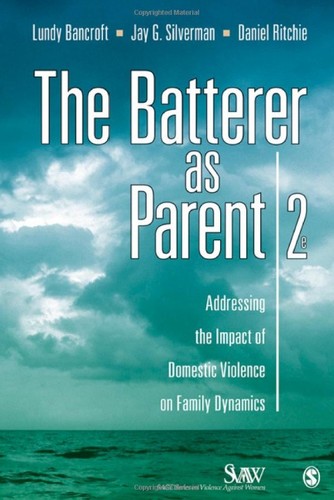
The Batterer as Parent
Lundy Bancroft, Jay G. Silverman & Daniel Ritchie
How domestic violence impacts family dynamics, with approaches for custody evaluations.
As an Amazon Associate, Clarity House Press earns from qualifying purchases. Your price is never affected.
Found this helpful?
Share it with someone who might need it.
About the Author

Clarity House Press
Editorial Team
The editorial team at Clarity House Press curates and publishes evidence-based content on narcissistic abuse recovery, high-conflict divorce, and healing. Our content is informed by research, survivor experiences, and established trauma-informed approaches.
View all posts by Clarity House Press →Published by Clarity House Press Editorial Team