Please read our important disclaimers before using this content
The Power of Your Story
Trauma doesn't just change what happens to you—it changes the story you tell about yourself. After narcissistic abuse, many survivors find themselves locked in narratives that center victimhood, shame, or blame. "I am broken," "I deserved this," "I can't trust anyone"—these become the defining chapters of your life. Understanding why you developed complex PTSD from narcissistic abuse provides the clinical context for why these shame-based narratives take hold so deeply.
But what if you could rewrite that story?
Narrative therapy offers a framework for doing exactly that. Instead of viewing trauma as something that permanently defines who you are, narrative therapy treats your experience as one chapter in a much longer story—one you can actively shape and reauthor.
What is Narrative Therapy?
Narrative therapy is a collaborative approach developed in the 1980s that views people as separate from their problems.1 Rather than asking "What's wrong with you?" it asks "How has this problem affected your life?" This subtle but profound shift changes everything about how you relate to your trauma.
The core principle is simple: your identity is not fixed by your past. Instead, you construct and reconstruct your sense of self through the stories you tell about your experiences. And if trauma changed your story, therapy can help you change it back.
Externalizing the Problem
One of narrative therapy's most powerful tools is "externalizing the problem."2 This technique creates linguistic and psychological distance between you and your difficulties by treating them as separate entities rather than core aspects of your identity.
Instead of "I am anxious," you might say "Anxiety has been influencing my life." Instead of "I'm damaged from the abuse," you might ask "How has the trauma tried to convince me I'm damaged?"
This isn't semantic games. When you externalize, you regain agency. The abuse becomes something that happened to you—not something that defines you.
How Externalizing Works in Practice
- Separate the person from the problem: Depression becomes an external force you can observe and resist, not an inherent character flaw
- Examine the relationship: How has this problem been treating you? What control does it have over your thoughts, behaviors, and relationships?
- Find exceptions: When has the problem not been dominant? When have you resisted it?
- Build alternative narratives: These exceptions become the seeds for a different story about yourself
Reconstructing Identity Through Narrative
Trauma fragments your sense of self. Memories become disjointed, your timeline feels broken, and your identity splits between "before" and "after." Narrative identity reconstruction helps you reintegrate these pieces into a coherent story.3
This isn't about pretending the trauma didn't happen. It's about integrating it into your larger life narrative in a way that doesn't consume you.
The Three Levels of Narrative Reconstruction
1. Coherence Creating a logically connected story where events follow cause-and-effect patterns and your own agency is restored. Instead of "I was victimized," you move toward "I survived something devastating and continued moving forward."
2. Meaning Finding significance in your experience that extends beyond suffering. Not "Why did this happen to me?" but "What has this taught me about resilience, boundaries, or what I value?"
3. Continuity Connecting your pre-trauma self, your present self, and your future self in one continuous narrative. You don't erase the past or pretend it didn't change you. You acknowledge the change and move forward consciously.
Research Evidence
Narrative therapy has demonstrated measurable effectiveness across diverse populations and presenting problems.4
Studies using narrative approaches have shown significant symptomatic improvement for depression and anxiety, with one study of adults receiving manualized narrative therapy for major depression showing that 74% achieved reliable symptom improvement and 61% moved to functional population levels.5 Research also demonstrates the effectiveness of narrative therapy in group settings for trauma, supporting evidence that talking about and reconstructing traumatic narratives in community helps with processing and recovery.6
The approach has been adapted successfully for substance abuse, body image concerns, grief, social anxiety, and complex trauma—showing that narrative reconstruction principles transfer across different types of psychological suffering.7
How Narrative Therapy Addresses Abuse-Specific Issues
For abuse survivors specifically, narrative therapy targets the distortions abuse creates:
Shame Narratives: Abuse teaches survivors to internalize responsibility. Narrative therapy externalizes this: "The abuser's narrative of blame versus my actual responsibility." You explore evidence and reconstruct truth.
Fragmented Memory: Trauma breaks memory into sensory fragments. Narrative therapy helps you slowly reassemble an organized, detailed account that includes not just events but your emotional responses and the impact on relationships.8
Identity Loss: After years of an abuser's distortion, you may not know who you are. Narrative therapy identifies "unique outcomes"—times when you defied the abuser's narrative, protected someone, set a boundary, or resisted. These become evidence of an alternative story about yourself.
Isolation: Abuse separates you from community and connection. Group narrative therapy helps you witness others' stories and be witnessed—reconstructing yourself as part of human community, not alone in your shame.
Your Next Steps: Beginning Your Narrative Rewrite
1. Write Your Current Story (Week 1) Spend 20 minutes writing the narrative you currently tell about your life. What is the main plot? Who is the main character (victim, fighter, numb survivor)? What's the conflict? Who are the supporting characters?
This isn't about being accurate—it's about revealing the story you've internalized.
2. Externalize One Problem (Week 2) Choose one difficulty (anxiety, shame, self-doubt, anger). For one week, practice speaking about it as external: "Shame has been telling me I deserved the abuse" instead of "I feel shame and I know I deserved it."
Notice what shifts when you create that distance.
3. Identify Exceptions (Week 3) When has this problem not had control? When have you resisted it? When have you acted in a way that contradicts the narrative the problem is trying to tell about you?
Write down at least three specific examples. These are the seeds of your alternative story.
4. Bring This to Therapy If you're working with a therapist trained in narrative approaches, bring your writing. A narrative-focused therapist will help you develop these alternative stories into a richer, more resilient identity narrative.
If you're not in therapy, consider finding a therapist with narrative therapy training. Our guide on finding the right trauma therapist who understands narcissistic abuse helps identify clinicians trained in evidence-based modalities including narrative approaches. The Narrative Focused Trauma Care concentration at The Seattle School of Theology & Psychology is one example of advanced training in this approach.9
The Liberation of Reauthoring
Narrative therapy is grounded in a radical belief: you are not your history. You are the author of your life, and authors can revise. This reauthoring process is also central to rebuilding your identity after narcissistic abuse — narrative therapy provides a structured method for that work.
This doesn't minimize what happened. Abuse is real, damage is real, recovery takes time. But neither abuse nor its aftermath gets to write your entire story. You do.
The question is: what story will you tell about yourself next?
Key Takeaways
- Narrative therapy separates you from your problems, treating trauma as something that happened to you rather than something that defines you
- Externalizing problems restores agency by creating psychological distance between your identity and your difficulties
- Narrative identity reconstruction helps integrate traumatic experiences into a coherent life story without being consumed by them
- Research demonstrates narrative therapy's effectiveness for trauma, depression, anxiety, and abuse recovery
- Your story is not fixed—you can actively revise and reauthor your narrative starting today
Resources
Narrative Therapy Books and Training:
- Narrative Means to Therapeutic Ends by Michael White and David Epston - Foundational narrative therapy text
- Seattle School's Narrative-Focused Trauma Care - Clinical applications
- Narrative Therapy Centre - Dulwich Centre resources and training
- American Association for Marriage and Family Therapy - Find narrative therapists
Trauma and Story Reconstruction:
- University of Washington Trauma Research - Trauma narrative research
- The Body Keeps the Score by Bessel van der Kolk - How trauma fragments narrative
- Psychology Today - Therapists - Find narrative therapy specialists
- Trauma and Recovery by Judith Herman - Creating meaning after trauma
Narrative Identity and Recovery:
- r/NarcissisticAbuse - Community for rewriting abuse narratives
- Out of the FOG - Narrative reconstruction after personality disorder abuse
- 988 Suicide & Crisis Lifeline - Call or text 988 for crisis support (24/7)
- Crisis Text Line - Text HOME to 741741 for crisis counseling
References
- White, M., & Epston, D. (1990). Narrative Means to Therapeutic Ends. W.W. Norton & Company. ↩
- Michael White and David Epston's foundational work on externalizing conversations demonstrates how language can create distance between person and problem, a central technique in narrative therapy. See https://theseattleschool.edu/programs/concentration-narrative-focused-trauma-care/ for clinical applications. ↩
- Trauma Narrative and Processing research at the University of Washington demonstrates how trauma fragments memory and identity, and how narrative reconstruction helps reintegrate these pieces. https://depts.washington.edu/uwhatc/wp-content/uploads/2022/07/Trauma-NarrativeN2K.pdf ↩
- Eastern Kentucky University's Evaluating the Perceived Effectiveness of Narrative Therapy study examined outcomes across diverse populations. https://encompass.eku.edu/cgi/viewcontent.cgi?article=1805&context=honors_theses ↩
- Research on narrative therapy for adults with major depressive disorder showed that 47 participants receiving eight sessions achieved post-therapy symptom improvement (d=1.36), with 74% achieving reliable improvement and 61% moving to functional population levels. Comparable outcomes were found across multiple narrative therapy applications. https://digitalcommons.spu.edu/cgi/viewcontent.cgi?article=1260&context=honorsprojects ↩
- The University of Mississippi published research on Group Approach to Narrative Therapy demonstrating effectiveness for trauma processing in community settings. https://egrove.olemiss.edu/jcrp/vol3/iss1/4/ ↩
- A meta-analysis and systematic review of narrative therapy applications found effectiveness across substance abuse, body image concerns, social phobia, grief, physical and sexual abuse, ADHD, couples therapy, homelessness transition, depression, anxiety, trauma, and severe mental illness. https://www.academia.edu/84206695/Narrative_therapy_Applications_and_Outcomes_A_Systematic_Review ↩
- University of Buffalo research on Narrative Exposure Therapy (NET) describes how narrative reconstruction helps participants slowly reassemble an organized, detailed verbal account from fragmented components of trauma, including not only the event itself but also emotional responses and reactions of important people. https://www.buffalo.edu/news/releases/2016/01/035.html ↩
- The Seattle School of Theology & Psychology offers a specialized Concentration in Narrative Focused Trauma Care that integrates narrative approaches with clinical expertise in trauma recovery. https://theseattleschool.edu/programs/concentration-narrative-focused-trauma-care/ ↩
Recommended Reading
From Clarity House Press — plus trusted books for deeper understanding


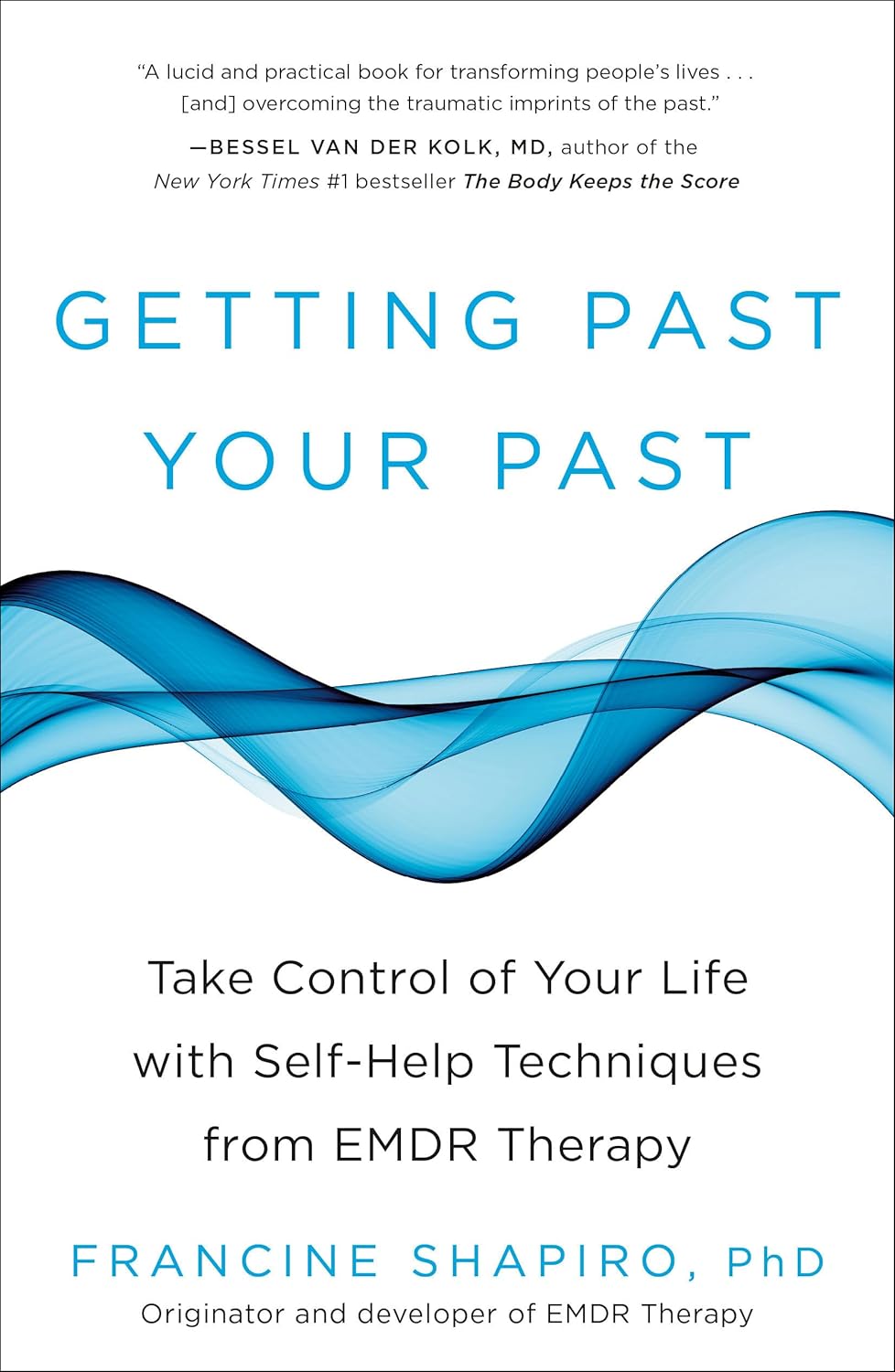
Getting Past Your Past
Francine Shapiro, PhD
Self-help techniques based on EMDR therapy to take control of your life and overcome trauma.

What My Bones Know: A Memoir of Healing from Complex Trauma
Stephanie Foo
A journalist's honest, hopeful account of living with and healing from complex PTSD, woven with the science behind it.
As an Amazon Associate, Clarity House Press earns from qualifying purchases. Your price is never affected.
Found this helpful?
Share it with someone who might need it.
About the Author

Clarity House Press
Editorial Team
The editorial team at Clarity House Press curates and publishes evidence-based content on narcissistic abuse recovery, high-conflict divorce, and healing. Our content is informed by research, survivor experiences, and established trauma-informed approaches.
View all posts by Clarity House Press →Published by Clarity House Press Editorial Team