Please read our important disclaimers before using this content
Your child needs therapy, but your ex refuses to consent. Or their school recommends evaluation for learning support, and your co-parent blocks it. Or there is a medical decision that needs to be made, and you are deadlocked.
Joint legal custody was supposed to mean shared decision-making. Instead, it means your high-conflict ex can veto anything they want—and they use that veto power as control, punishment, or simply to oppose anything you suggest. This obstruction pattern is one of the central reasons why you can't truly co-parent with a narcissist—genuine co-parenting requires good faith from both parties. Research confirms that children exposed to high-conflict divorce are twice as likely to have emotional, social, behavioral, and academic problems compared to children who experience low-conflict co-parenting dynamics after separation (Demby, 2016).
How do you break deadlocks? What can you do when your ex blocks necessary care? And how do you protect your child's wellbeing when decision-making authority is shared with someone who weaponizes it?
The fundamental problem: Joint legal custody assumes two reasonable adults who prioritize their children's needs over their conflict with each other. When one parent is high-conflict, joint decision-making becomes another battlefield. The custody arrangement designed to keep both parents involved instead becomes a tool for one parent to obstruct, control, and frustrate the other—with the child's needs caught in the crossfire. A clinical review found that when children experience varying degrees of parental relationship distress, they can develop a range of behavioral, cognitive, affective, and physical reactions detrimental to their emotional well-being and future mental health outcomes (Bernet, Wamboldt, & Narrow, 2016).
Understanding Legal Custody and Decision-Making Authority
Legal custody refers to the right and responsibility to make major decisions about a child's life. This is different from physical custody (where the child lives and the day-to-day parenting schedule).
What "Major Decisions" Includes
Medical decisions:
- Choice of healthcare providers
- Elective procedures
- Mental health treatment
- Medication decisions
- Vaccinations
- Orthodontics
- Therapy enrollment
Educational decisions:
- School enrollment (public vs. private, which school)
- Special education services (IEP, 504 plans)
- Tutoring and academic interventions
- Extracurricular activities tied to school
- Grade retention or advancement
- Homeschooling
Religious decisions:
- Religious upbringing and education
- Participation in religious activities
- Religious rites (baptism, bar/bat mitzvah, confirmation)
Other major decisions:
- Travel (especially international)
- Participation in high-risk activities
- Legal name changes
- Relocation decisions (separate from custody modification)
Types of Legal Custody Arrangements
Joint legal custody: Both parents must agree on major decisions. This is the most common arrangement and creates the deadlock problems addressed in this article. Research shows that joint legal custody is awarded in approximately 80% of custody cases nationally, reflecting courts' preference for shared decision-making. A landmark meta-analysis of 33 studies found that children in joint physical or legal custody were better adjusted than children in sole-custody settings across measures of general adjustment, family relationships, self-esteem, and emotional and behavioral adjustment (Bauserman, 2002).
Sole legal custody: One parent has authority to make major decisions without the other's consent. Courts award this when cooperation is impossible or when one parent is unfit for decision-making.
Divided legal custody: Different decision-making areas are allocated to different parents (e.g., one parent decides medical, the other decides education). Less common but increasingly used in high-conflict cases.
Tie-breaker provisions: Joint custody with designated decision-maker for specific categories when parents disagree. A middle ground that maintains joint involvement while preventing deadlock.
Why Deadlocks Happen in High-Conflict Custody
Understanding why your co-parent creates deadlocks helps you anticipate and address them.
Control and Power
For some high-conflict individuals, refusing consent is about maintaining control. They cannot control you directly anymore, but they can control outcomes by blocking your initiatives. The actual decision matters less than the ability to say "no."
Signs this is the dynamic:
- They refuse proposals without consideration or counter-proposals
- They agree when the idea is framed as theirs, refuse when it's framed as yours
- They block decisions you care about regardless of merit
- Deadlocks resolve when you stop pushing and they "decide" to proceed
Opposition as Identity
Some high-conflict co-parents define themselves in opposition to you. Whatever you suggest must be wrong because you suggested it. This isn't rational analysis—it's automatic opposition.
Signs this is the dynamic:
- They oppose even decisions that benefit them
- They reverse positions when you agree with them
- Third parties can sometimes get agreement on the same proposal you made
- Their stated reasons for opposition are inconsistent or change
Punishment and Retaliation
Decision-making obstruction may be retaliation for perceived wrongs—you left, you started dating, you won custody, you enforced boundaries.
Signs this is the dynamic:
- Obstruction increases after conflict or court activity
- They explicitly connect refusals to unrelated grievances
- Pattern of blocking correlates with your success in other areas
- They've stated they'll make your life difficult
Genuine Disagreement (Sometimes)
Not all deadlocks are bad faith. Sometimes parents genuinely disagree about what's best for their child—different values, different risk assessments, different information.
Signs this might be genuine:
- They articulate specific concerns
- They're willing to discuss or compromise
- Their position is consistent with their stated values
- They'd hold the same position if the suggestion came from someone else
Strategic Obstruction
Some obstruction serves litigation strategy—creating documented conflict, making you look like the difficult one, or setting up future court arguments.
Signs this is the dynamic:
- Obstruction escalates during litigation
- Communications seem written for court audience
- They document disagreements extensively
- Their attorney seems to be coaching the conflict
Breaking Deadlocks: Strategy by Category
Medical Decision Deadlocks
Scenario: Your child needs therapy, evaluation, or treatment, and your ex refuses to consent.
Strategy 1: Start with written communication Document your request and their refusal:
- "Dr. Smith has recommended that [child] be evaluated for ADHD. I'd like to schedule this evaluation with [provider]. Please confirm your consent."
- Keep records of their refusal or non-response.
Strategy 2: Propose alternatives If they object to your proposed provider, offer options:
- "If you prefer a different evaluator, please suggest alternatives within the next 10 days."
- This demonstrates reasonableness and shifts the burden to them.
Strategy 3: Provide information Sometimes obstruction comes from anxiety or lack of understanding:
- Share the doctor's recommendation in writing
- Provide educational materials about the condition or treatment
- Offer to attend an appointment together
Strategy 4: Court intervention If necessary care is blocked, you may need court involvement:
- File a motion for decision-making authority
- Request tie-breaker authority for medical decisions
- In emergencies, seek emergency orders
Emergency medical situations: If there's a genuine medical emergency, you can authorize emergency treatment without the other parent's consent. Document the emergency and your actions thoroughly.
Routine medical care: Day-to-day medical decisions (sick visits, minor illness treatment) typically don't require joint consent and fall under the authority of whichever parent is providing care at the time.
Mental Health and Therapy Deadlocks
Common objections your co-parent might raise:
- "Nothing's wrong with them—you're looking for problems"
- "Therapy will brainwash them against me"
- "I don't believe in therapy"
- "You just want to coach them"
Strategy 1: Frame around the child's needs Focus on observable concerns:
- "Her teacher has noticed increased anxiety. The pediatrician recommends she see someone."
- Avoid: "She needs therapy because of what you do to her."
Strategy 2: Propose neutral therapists If they fear bias, address it directly:
- Select a therapist neither of you knows
- Choose someone recommended by a neutral party (pediatrician, school)
- Propose that both parents meet the therapist before treatment begins
Strategy 3: Document the need Build a record of the child's struggles:
- School counselor observations
- Pediatrician recommendations
- Teacher concerns
- Behavioral changes you're observing
Strategy 4: Distinguish therapy types "Therapy" covers a range of services:
- Skills-based therapy (anxiety management, social skills) may be less threatening
- Family therapy involving the resistant parent might address their concerns
- Educational support services may bypass the "therapy" objection
Court approach: Courts generally support mental health treatment for children when there's documented need. The American Academy of Child and Adolescent Psychiatry emphasizes that children's mental health needs should take priority in custody decision-making. A motion for medical decision-making authority or tie-breaker provision may be necessary.
Educational Decision Deadlocks
Common flashpoints:
- School choice (public vs. private, which district)
- Special education services (IEP, 504 plan)
- Grade retention or advancement
- Extracurricular commitments
- Tutoring and academic interventions
- Homeschooling vs. traditional school
Strategy 1: Follow professional recommendations If the school recommends evaluation or services, document that recommendation:
- Request the recommendation in writing
- Have the school explain the child's needs
- Ask professionals to communicate directly with both parents
Strategy 2: Involve neutral experts
- Independent educational evaluators
- School district representatives
- Educational consultants
Strategy 3: Focus on outcomes Frame decisions around measurable outcomes:
- "The school says she's reading two years below grade level. What intervention do you propose?"
- This shifts from "do we agree" to "how do we address this need."
IEP/504 meetings: Both parents typically have the right to participate in these meetings. Under the Individuals with Disabilities Education Act (IDEA), both parents retain educational rights and must be included in IEP proceedings unless a court order specifies otherwise. If your co-parent blocks consent for evaluation:
- Document the school's recommendation
- Attend meetings and state your position
- Request the school's assistance in explaining the need
- If necessary, seek court intervention
School choice disputes: These often involve deeper values conflicts (religious schools, educational philosophy) and may require court resolution or mediation. Courts typically consider:
- The child's academic needs
- Continuity and stability
- Cost and practicality
- Each school's fit for the child
Religious Decision Deadlocks
Religious disputes are among the most difficult to resolve because they involve fundamental values.
Courts generally:
- Respect both parents' rights to share their religious beliefs
- Allow each parent to expose children to their religion during their parenting time
- Won't dictate religious upbringing absent harm to the child
- May intervene if religious practices harm the child or interfere with custody
Strategies:
- Distinguish between exposure (allowed during your time) and commitment (requiring joint consent)
- Focus on the child's wellbeing and adjustment
- Seek mediation before litigation
- Consider whether this is truly about religion or about control
Formal Mechanisms for Breaking Deadlocks
Mediation
Many custody orders require mediation before court intervention on disputes.
How mediation helps:
- Neutral third party facilitates discussion
- Less expensive than court
- Can sometimes achieve compromise litigation cannot
- Creates documentation if court becomes necessary
Limitations:
- Requires some good faith from both parties
- May not work with severely high-conflict co-parents
- Agreements may not be binding without court approval
- Can be manipulated by skilled manipulators
Parenting Coordinators
A parenting coordinator (PC) is a mental health or legal professional appointed to help high-conflict parents resolve disputes without returning to court constantly. The Association of Family and Conciliation Courts (AFCC) has established guidelines for parenting coordination, which is now available in over 40 states as an intervention for high-conflict families. Research indicates that parenting coordination can effectively reduce the intensity of co-parenting conflict and animosity in at least a portion of families engaged in high-conflict parenting, though the research base remains limited (Deutsch, 2018).
How PCs work:
- Appointed by court order or agreement
- Help implement and clarify custody orders
- Mediate disputes as they arise
- May have authority to make binding decisions on minor issues
- Make recommendations on major issues
Benefits:
- Faster than court for day-to-day disputes
- Ongoing relationship understands the family dynamics
- Can address patterns of obstruction
- Creates accountability
Limitations:
- Cost (typically shared by parents)
- Authority varies by jurisdiction
- Only as effective as their willingness to call out obstruction
- High-conflict parent may manipulate or undermine
A 2025 study examining systemic factors in high-conflict custody disputes found that the adversarial language and structure of family court cases often escalates conflict, and financial factors such as child support and socioeconomic disparities frequently increase tensions between parents (Anderson, 2025).
Tie-Breaker Provisions
A tie-breaker provision in your custody order designates one parent (or a professional) to make final decisions in specific categories when parents cannot agree.
How to get tie-breaker authority:
- Request in initial custody proceedings
- Seek modification of existing order
- Present documented evidence of deadlocks
- Show impact on child's wellbeing
Example provisions:
- "In the event the parties cannot agree on medical decisions after good-faith attempts, Mother shall have final decision-making authority."
- "Educational decisions shall be made jointly; if the parties deadlock, the decision shall be made by a mutually agreed parenting coordinator."
Categories often subject to tie-breakers:
- Medical decisions
- Educational decisions
- Extracurricular activities
- Mental health treatment
Court Motions
When other mechanisms fail, you may need to ask the court to resolve the deadlock.
Types of motions:
- Motion to compel consent to specific decision
- Motion for tie-breaker authority in specific category
- Motion for sole decision-making authority
- Motion to modify custody order
What courts consider:
- History of cooperation or obstruction
- Child's documented needs
- Professional recommendations
- Each parent's reasoning and flexibility
- Impact on the child of delay
Preparation:
- Document the deadlock thoroughly
- Show good-faith attempts to resolve
- Present professional recommendations
- Demonstrate the impact on the child
- Propose reasonable solutions
Documentation Strategies
Effective documentation is essential for any dispute resolution mechanism.
What to Document
Your requests:
- Date and content of each request
- How you communicated (email, text, co-parenting app)
- Supporting information you provided
- Reasonable alternatives you offered
Their responses:
- Exact response or non-response
- Stated reasons for refusal
- Timeline of communication
- Any counter-proposals
Professional recommendations:
- Doctor, therapist, teacher recommendations
- Written reports and evaluations
- Meeting notes and observations
- School records and communications
Impact on child:
- Observable effects of delayed decisions
- Child's statements about their needs
- Academic or behavioral changes
- Third-party observations
Documentation Best Practices
Use written communication: Email or co-parenting apps create automatic records. For a broader framework on documenting evidence for custody proceedings, our guide covers what formats and specifics courts actually find persuasive.
Be factual and neutral: "I requested consent on 3/15. You responded on 3/20 declining without explanation" is better than "You're blocking everything as usual."
Include dates and specifics: Vague documentation is less useful than precise records.
Keep professional recommendations: Every doctor's note, teacher email, and evaluation should be preserved.
Organize chronologically: A clear timeline shows patterns of obstruction.
When to Accept That You Cannot Control the Outcome
Sometimes, despite your best efforts, deadlocks remain unresolved. Your co-parent continues to block, the court process is slow, and your child's needs aren't being met.
What You Can Control
Your own parenting: During your parenting time, you can provide stability, support, and appropriate care within your authority.
Your documentation: You can build a record that may support future motions.
Your child's support: You can validate your child's feelings, provide emotional support, and work with professionals you can access.
Your own wellbeing: You can maintain your mental health so you can continue advocating effectively.
What You Cannot Control
Their decisions: You cannot force a high-conflict co-parent to cooperate.
The court's timeline: Legal processes are often frustratingly slow.
The outcome: Sometimes courts don't rule as you hope, or enforcement is inadequate.
The impact on your child: Some harm from the conflict is, tragically, beyond your ability to prevent.
Long-Term Strategy
If your co-parent is chronically obstructive:
- Build comprehensive documentation over time
- Seek modification to custody arrangement
- Consider requesting sole decision-making authority
- Work with professionals who can testify to the pattern
- Maintain your credibility and reasonableness throughout
Your Next Steps
If you're currently deadlocked on a decision:
- Document your request and their refusal in writing
- Propose alternatives and demonstrate flexibility
- Gather professional recommendations supporting your position
- Review your custody order for dispute resolution requirements
- Consult with your attorney about next steps
If deadlocks are a recurring pattern:
- Track all deadlocks and outcomes
- Identify categories where obstruction is most common
- Consider requesting tie-breaker provisions
- Explore parenting coordinator appointment
- Build your case for modification if necessary
If your child has immediate needs:
- Distinguish emergency from non-emergency situations
- Know your authority to act in emergencies
- Seek emergency court orders if truly necessary
- Document everything for future proceedings
- Prioritize your child's welfare while working within legal constraints
Remember: Joint legal custody is designed to keep both parents involved in major decisions. When one parent weaponizes that arrangement, the solution isn't to abandon cooperation—it's to use the legal mechanisms available to protect your child's interests while demonstrating that you remain the reasonable, child-focused parent.
Your child needs you to advocate for their needs persistently, document thoroughly, and work within the system strategically. That's what you can control—and it's what matters most. In cases where deadlocks are chronic and court intervention keeps failing, understanding the appellate process may open additional options for protecting your child's needs long-term.
Resources
Legal and Decision-Making Support:
- American Academy of Matrimonial Lawyers - Find family law attorneys for medical/educational decision disputes
- WomensLaw.org - State-specific legal custody and decision-making laws
- Association of Family and Conciliation Courts - Mediation and dispute resolution resources
- Family Violence Appellate Project - Legal support for high-conflict custody cases
Educational Rights and Special Education:
- Individuals with Disabilities Education Act (IDEA) - ED.gov - Federal special education law and parent rights
- Parent Training and Information Centers - State-specific special education advocacy
- Wrightslaw - Special education law and advocacy resources
- Council of Parent Attorneys and Advocates - Special education legal support
Crisis Support and Communication Tools:
- TalkingParents - Court-admissible communication platform
- OurFamilyWizard - Co-parenting communication
- 988 Suicide & Crisis Lifeline - Call or text 988 for crisis support (24/7)
- Crisis Text Line - Text HOME to 741741 for crisis counseling
- National Domestic Violence Hotline - 1-800-799-7233 (SAFE) for decision-making control abuse
References
Anderson, M. (2025). Understanding systemic factors that lead to high conflict domestic disputes. Family Court Review, 63(1). https://onlinelibrary.wiley.com/doi/10.1111/fcre.12841
Bauserman, R. (2002). Child adjustment in joint-custody versus sole-custody arrangements: A meta-analytic review. Journal of Family Psychology, 16(1), 91-102. https://pubmed.ncbi.nlm.nih.gov/11915414/
Bernet, W., Wamboldt, M. Z., & Narrow, W. E. (2016). Child affected by parental relationship distress. Journal of the American Academy of Child and Adolescent Psychiatry, 55(7), 571-579. https://www.jaacap.org/article/S0890-8567(16)30175-7/abstract
Demby, S. L. (2016). Parenting coordination: Applying clinical thinking to the management and resolution of post-divorce conflict. Journal of Clinical Psychology, 72(5), 458-468. https://pubmed.ncbi.nlm.nih.gov/26828998/
Deutsch, R. M. (2018). Critical review of research evidence of parenting coordination's effectiveness. Family Court Review, 56(1), 119-134. https://onlinelibrary.wiley.com/doi/10.1111/fcre.12326
Recommended Reading
From Clarity House Press — plus trusted books for deeper understanding


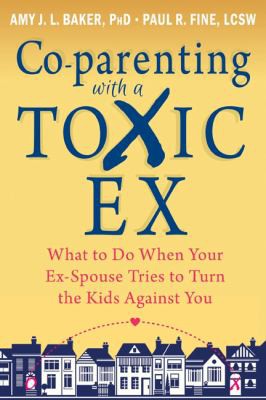
Co-Parenting with a Toxic Ex
Amy J. L. Baker, PhD & Paul R. Fine, LCSW
Evidence-based strategies when your ex tries to turn kids against you. Parental alienation prevention.

5 Types of People Who Can Ruin Your Life
Bill Eddy
Identifies five high-conflict personality types and teaches how to spot warning signs.
As an Amazon Associate, Clarity House Press earns from qualifying purchases. Your price is never affected.
Found this helpful?
Share it with someone who might need it.
About the Author

Clarity House Press
Editorial Team
The editorial team at Clarity House Press curates and publishes evidence-based content on narcissistic abuse recovery, high-conflict divorce, and healing. Our content is informed by research, survivor experiences, and established trauma-informed approaches.
View all posts by Clarity House Press →Published by Clarity House Press Editorial Team