Please read our important disclaimers before using this content
"You're so stupid. Why did you say that? Everyone thinks you're an idiot now. You always mess everything up. What's wrong with you?"
This vicious monologue runs through my head after a perfectly normal conversation where I misspoke a single word. A word that no one else even noticed. But my inner critic noticed, and now I'm spending the next two hours mentally flagellating myself for this microscopic "failure."
Sound familiar?
If you've experienced complex trauma—narcissistic abuse, childhood neglect, domestic violence, any form of chronic relational trauma—you almost certainly have a highly developed inner critic. That harsh, punishing voice that comments on everything you do, finds fault with everything you are, and seems determined to make sure you never forget any mistake, real or perceived.
For years, I thought this voice was the enemy. The problem. The thing I needed to eliminate to heal. But understanding the inner critic's true function changed everything—not because the criticism stopped (though it has decreased significantly), but because I stopped believing it was truth and started recognizing it as a misguided protector trying to keep me safe.
What the Inner Critic Actually Is
The inner critic isn't a character flaw or a sign that you're fundamentally negative. It's a protective mechanism that develops in response to adverse experiences, particularly chronic criticism, emotional abuse, or unpredictable caregiving.1 Research on attachment trauma demonstrates that early interactive failures with caregivers lead to the internalization of shame and self-blame as adaptive survival strategies.2
Pete Walker, in his work on Complex PTSD, identifies the inner critic as a defense mechanism that attempts to prevent further abandonment or attack by finding and punishing flaws before someone else can. The PTSD-derived inner critic weds shame and self-hate about imperfection to fear of abandonment. The logic, formed in childhood or in abusive adult relationships, goes something like: "If I can identify what's wrong with me and fix it, I'll be safe. I'll be loved. I'll stop being hurt."
In Internal Family Systems (IFS) language, the inner critic is a protective part—usually a Manager part—that took on the job of keeping you safe from rejection, criticism, or abuse by making you hyperaware of your flaws and mistakes. It learned that if you could anticipate what would set off your abuser (or critical parent), you might be able to avoid the attack.
The cruel irony is that what starts as protection becomes a form of self-abuse that mirrors or exceeds the original external abuse. The inner critic that developed to protect you from your narcissistic mother's criticism ends up being more relentlessly critical than she ever was. The part that formed to help you avoid your ex-partner's rage ends up raging at you internally long after the relationship ends.
How the Inner Critic Develops in Trauma
Understanding how your specific inner critic formed helps demystify its intensity and content. The inner critic isn't random; it's specifically calibrated to your trauma history.
In childhood trauma, the inner critic often sounds like the critical parent or caregivers. If your mother constantly commented on your weight, your inner critic focuses on your body. If your father called you lazy, your inner critic attacks your productivity. The voice often uses the same words, the same tone, the same accusations.
Children are wired to maintain attachment at all costs. When a parent is rejecting, abusive, or critical, children can't leave or even accurately blame the parent—that would jeopardize survival. Instead, they internalize the blame.3 "I'm bad" is more tolerable than "My parent is unsafe," because the former preserves the illusion of a safe, good parent and gives the child a sense of control ("If I can just be better, I'll be safe"). This internalization of parental criticism and blame becomes encoded in implicit memory systems, forming the foundation for persistent negative self-concept.4
In narcissistic abuse, the inner critic internalizes the narcissist's voice—the gaslighting, the blame-shifting, the nitpicking, the goalpost-moving. After years of being told you're too sensitive, overreacting, making things up, remembering wrong, or causing the problems, those accusations become your inner dialogue.
The narcissist conditions you to pre-emptively criticize yourself to avoid their criticism. You learn to find fault with yourself first, to monitor every word for potential misinterpretation, to second-guess your perceptions and needs. This hypervigilance continues internally long after you've left the relationship. The gaslighting that was part of this conditioning is precisely why the inner critic so often echoes the abuser's voice.
In betrayal trauma, the inner critic often focuses on the theme of "you should have known." It's easier to blame yourself for not seeing the signs, not protecting yourself, "allowing" the betrayal than to sit with the reality that someone you trusted deeply hurt you. The illusion of control ("I should have known") feels safer than the vulnerability of "I couldn't have known."
In any form of complex trauma, the inner critic develops specific content based on the specific shaming messages you received—about your needs, your emotions, your body, your intellect, your worth. It becomes the internalized voice of every person who hurt you, now running on autopilot in your own mind.
The Different Flavors of Inner Critic
Not all inner critics sound the same. Walker identifies several types, though most people have a combination:
The Perfectionist sets impossible standards and attacks any falling short. Nothing is ever good enough. There's always more you should have done, should be doing, will need to do. Rest is weakness. Mistakes are catastrophic. This critic often develops when conditional love was based on achievement or when perfectionism was the only way to minimize abuse.
The Inner Controller tries to control every aspect of your life—what you eat, how much you exercise, whether you're productive enough, whether you're disciplined enough. It often manifests as rigid rules and harsh punishment for any deviation. This type often develops when external control was traumatic, creating an attempt to never be out of control again.
The Underminer tells you that you're fundamentally flawed, damaged, or inferior. It doesn't critique specific behaviors; it attacks your core self. "You're broken. You're unlovable. There's something wrong with you." This critic often develops when the trauma message was about your essential unworthiness rather than your behavior.
The Destroyer actively wishes you harm. It tells you that you should be punished, that you deserve pain, that the world would be better without you. This is the critic that can slide into suicidal ideation. It often develops in severe abuse situations or when self-harm was the only form of control available.
The Conformist attacks you for being different, for standing out, for having needs or boundaries. It pushes you to shrink, please, accommodate. "Don't make waves. Don't be difficult. What will people think?" This develops when being visible or authentic was dangerous.
Understanding which type (or combination) you're dealing with helps you recognize the specific trauma context it's protecting you from and develop targeted responses.
The Inner Critic's Relationship with Shame
The inner critic runs on shame—toxic shame, the sense that you are fundamentally bad, wrong, or defective. This is distinct from healthy guilt (I did something wrong) or healthy shame (I violated my values). Toxic shame is an identity: I am wrong.
Complex trauma, particularly relational trauma, instills toxic shame.5 When abuse is chronic and comes from attachment figures, you internalize the message that the abuse happens because of something intrinsically wrong with you. Children (and adults in abusive relationships) would rather believe they're bad than believe they're powerless or that the person they depend on is unsafe. In ICD-11 diagnostic criteria, this persistent negative self-concept—characterized by beliefs about oneself as diminished, defeated, or worthless—is a core feature of Complex PTSD's disturbances in self-organization.6
The inner critic keeps this shame alive, constantly pointing out evidence that you are indeed defective. It becomes a shame-generating machine, turning neutral or even positive events into proof of your inadequacy. Inner child work and reparenting directly addresses the wounded parts that the inner critic formed to protect.
Made a small mistake? Shame. Had a success? Shame for not doing better or for feeling proud. Set a boundary? Shame for being selfish. Didn't set a boundary? Shame for being weak. The inner critic makes it impossible to win because its job isn't actually to help you improve—it's to keep you in a familiar state of shame that, perversely, feels safer than the vulnerability of self-acceptance.
This is crucial to understand: the inner critic isn't trying to help you get better, despite what it tells you. It's trying to keep you small and hidden because that's what kept you safest in your original trauma environment.
Why Positive Affirmations Don't Work
If you've tried combating your inner critic with positive affirmations and found them ineffective or even counterproductive, you're not alone. There are good reasons why "I am worthy" doesn't work when a voice in your head is screaming that you're garbage.
First, affirmations are cognitive—they're in the language-based, conscious part of your brain. The inner critic operates from implicit memory and nervous system states that developed pre-verbally or under conditions of high arousal when the prefrontal cortex was offline. You can't logic away something that wasn't created by logic.
Second, affirmations often trigger a backlash from the inner critic.7 The moment you say "I am worthy," the critic doubles down with evidence of why you're not: "Oh really? What about when you... Remember how you... You think you're worthy after...?" The contrast between the affirmation and the critic's message can actually intensify shame.
Third, affirmations can feel like gaslighting to parts of you that hold legitimate pain. If part of you is carrying the very real experience of being told you were worthless, trying to convince that part that it's actually valuable can feel like the same dismissive invalidation you experienced in the trauma: "Your experience doesn't matter. Just think positive."
This doesn't mean there's no place for positive self-statements, but they need to come after other work: acknowledging the critic, understanding its protective function, and addressing the underlying shame and trauma that fuel it.
Working with the Inner Critic: An IFS Approach
Internal Family Systems offers one of the most effective frameworks I've found for working with the inner critic. Research shows that IFS therapy can be effective for PTSD and associated symptoms including depression and self-perception issues among adults exposed to trauma. Instead of trying to eliminate or override the critic, IFS invites you to get curious about it, understand its role in your system, and ultimately transform its function.
The process starts with noticing and naming when the critic is active. "There's my critic." This simple recognition creates separation—you're not the critic; you have a critic part. This is the beginning of Self-leadership.
Then comes curiosity instead of judgment. Instead of being angry at the critic for being harsh (which just creates an inner critic of your inner critic), ask: "What is this part trying to protect me from? What is it afraid would happen if it stopped criticizing?"
Often, when you ask sincerely, the critic will show you: it's afraid you'll be rejected if it doesn't keep you vigilant about your flaws. It's afraid you'll be hurt if you don't see yourself as unworthy (because then others' rejection would devastate you). It's afraid you'll be abandoned if you're not perfect.
The critic is usually a young part, formed when you were young or when you felt powerless, taking on an impossible job: keep you safe from unpredictable abuse by making you "good enough." It didn't know this job was impossible. It's been trying desperately, exhaustingly, for years or decades.
When you can see this—really see that the critic is trying to protect you—compassion becomes possible. Not for the behavior (the harsh criticism) but for the burden this part has been carrying.
The next step is unburdening. The critic often carries extreme beliefs from the original trauma: "I am only safe if I'm perfect." "I am fundamentally defective." "No one would love the real me." These beliefs made sense in the trauma environment but are no longer true or helpful.
Through IFS work (ideally with a trained therapist but also possible in personal practice), you can help the critic release these burdens. You can thank it for trying to protect you, acknowledge that its strategy made sense, and show it that you're not in that original danger anymore. You can offer to take back the job of protection, freeing the critic to do something more age-appropriate and less exhausting.
When the critic is unburdened, it doesn't disappear. It transforms. It might become a part that offers genuine self-reflection without harsh judgment, a part that advocates for you, or a part that can rest because it no longer bears the weight of keeping you safe from impossible threats.
Practical Strategies for Daily Critic Management
While deeper transformation work often requires therapy, there are daily practices that help manage the inner critic's impact:
Externalize the voice. When you notice critical thoughts, imagine them as coming from a character outside you—maybe a cartoon villain, a harsh teacher from your past, or even your abuser. This creates distance. You can talk back to an external voice in ways that feel impossible when you believe the voice is you.
Name it. Some people find it helpful to give their critic a name—Bertha the Brutal, Critical Carl, the Judge. This reinforces that it's a part, not your whole self. When you notice critical thoughts, you can say, "Oh, Carl is activated right now."
Track the content. Keep a simple log of what your critic says. You'll likely notice patterns—specific themes, specific triggers, language that mirrors specific people from your past. This data helps you understand your critic's origins and functions.
Challenge the accuracy. Not by positive affirmations, but by reality-testing. If your critic says "You always mess up," ask for evidence. What percentage of things do you actually mess up? Is "always" accurate, or is this catastrophic thinking? This isn't about convincing yourself you're perfect; it's about seeing distortions clearly.
Compassionate reframing. When you notice critical thoughts, try reframing with self-compassion.8 Instead of "I'm so stupid for making that mistake," try "I'm human and made a mistake, like all humans do. This is painful." Acknowledge the feeling without the attack. Research demonstrates that self-compassion significantly moderates the relationship between trauma symptoms and post-traumatic growth, with higher levels of self-compassion linked to greater psychological transformation even in the presence of distress.9
Develop a compassionate witness. Cultivate an internal voice that notices the critic with kindness: "I notice my critic is really activated. It must be scared right now. What would I need to feel safer?" This meta-position—observing the critic rather than being absorbed in it—is powerful.
Somatic regulation. The inner critic intensifies when your nervous system is dysregulated.10 Using somatic tools (breathing, grounding, movement) to settle your nervous system often decreases critic volume. The critic is louder when you're in threat states.
Set boundaries. You can literally tell your critic to stop or reduce volume. "I hear you, but I can't listen to this intensity right now. I need you to turn down." This may seem silly, but parts often respond to direct communication.
Your Next Steps: Beginning to Transform Your Inner Critic
Healing your relationship with your inner critic is a journey, not a destination. Here's how to begin:
This week: Simply track your critic. When do you notice critical thoughts? What do they say? What situations trigger them? Gather data without trying to change anything yet.
This month: Practice the IFS approach. When you notice the critic, pause and ask: "What are you trying to protect me from?" See what answers emerge. Do this with genuine curiosity, not as a technique to get rid of the critic.
This quarter: If the inner critic significantly impacts your life, consider finding an IFS-trained therapist.11 This work is powerful but challenging to do alone, especially with severe critics or when shame is intense.
Ongoing: Develop your compassionate witness. Practice noticing critical thoughts from a place of curiosity and kindness: "Ah, there's that thought. What must I be feeling for that thought to arise?"
Remember: The inner critic developed to protect you. Your job isn't to destroy it but to help it update its understanding of what you need for safety now. You're not in the original danger. That harsh vigilance is no longer necessary.
The inner critic transformed is powerful medicine—self-reflection without self-attack, standards without perfectionism, awareness without shame. That transformation is possible, and you deserve it.
Resources
Self-Compassion and Inner Critic Work:
- Self-Compassion by Kristin Neff - Research-based approach to self-kindness
- The Compassionate Mind by Paul Gilbert - Compassion-focused therapy for self-criticism
- Self-Compassion Exercises - Free guided meditations and practices
- Psychology Today - Therapists - Filter for "compassion-focused therapy"
Books on Inner Critic and C-PTSD:
- Complex PTSD: From Surviving to Thriving by Pete Walker - Managing inner critic and emotional flashbacks
- The Body Keeps the Score by Bessel van der Kolk - Understanding trauma's impact on self-perception
- Radical Acceptance by Tara Brach - Buddhist psychology for self-acceptance
- Internal Family Systems Institute - IFS therapy for parts work including inner critic
Support and Crisis Resources:
- r/CPTSD - Reddit community for complex trauma survivors
- National Alliance on Mental Illness (NAMI) - Mental health support groups
- 988 Suicide & Crisis Lifeline - Call or text 988 for immediate crisis support
- SAMHSA National Helpline - 1-800-662-4357 (mental health treatment referrals)
References
- Gilbert, P., & Irons, C. (2005). Focused therapies and compassionate mind training for shame and self-attacking. In P. Gilbert (Ed.), Compassion: Conceptualisations, research and use in psychotherapy (pp. 263-325). Routledge. DOI: 10.4324/9780203003459 ↩
- Cloitre, M., Stolbach, B. C., Herman, J. L., van der Kolk, B., Pynoos, R., Wang, J., & Petkova, E. (2009). A developmental approach to complex PTSD: Childhood and adult cumulative trauma as predictors of symptom complexity. Journal of Traumatic Stress, 22(5), 399-408. DOI: 10.1002/jts.20444 ↩
- Dorahy, M. J., Corry, M., Shannon, M., Webb, K., McDermott, B., Ryan, M., & Dyer, K. F. W. (2013). Complex PTSD, interpersonal trauma and relational consequences: Findings from a treatment-receiving Northern Irish sample. Journal of Affective Disorders, 147(1-3), 71-81. DOI: 10.1016/j.jad.2012.10.014 ↩
- Wood, J. V., Perunovic, W. Q. E., & Lee, J. W. (2009). Positive self-statements: Power for some, peril for others. Psychological Science, 20(7), 860-866. DOI: 10.1111/j.1467-9280.2009.02370.x ↩
- Neff, K. D., & Germer, C. K. (2013). A pilot study and randomized controlled trial of the mindful self-compassion program. Journal of Clinical Psychology, 69(1), 28-44. DOI: 10.1002/jclp.21923 ↩
- Porges, S. W. (2011). The Polyvagal Theory: Neurophysiological foundations of emotions, attachment, communication, and self-regulation. W. W. Norton & Company. PMID: 21481055 ↩
- Haddock, S. A., Weiler, L. M., Trump, L. J., & Henry, K. L. (2017). The efficacy of Internal Family Systems therapy in the treatment of depression among female college students: A pilot study. Journal of Marital and Family Therapy, 43(1), 131-144. DOI: 10.1111/jmft.12184 ↩
- Schore, A. N. (2025). Attachment, shame, and trauma. Brain Sciences, 15(4), 415. DOI: 10.3390/brainsci15040415 ↩
- Brewin, C. R., Cloitre, M., Hyland, P., Shevlin, M., Maercker, A., Bryant, R. A., Humayun, A., Jones, L. M., Kagee, A., Rousseau, C., Somasundaram, D., Suzuki, Y., Wessely, S., van Ommeren, M., & Reed, G. M. (2017). A review of current evidence regarding the ICD-11 proposals for diagnosing PTSD and complex PTSD. Clinical Psychology Review, 58, 1-15. DOI: 10.1016/j.cpr.2017.09.001 ↩
- Karatzias, T., Shevlin, M., Fyvie, C., Hyland, P., Efthymiadou, E., Wilson, D., Roberts, N., Bisson, J. I., Brewin, C. R., & Cloitre, M. (2017). Evidence of distinct profiles of Posttraumatic Stress Disorder (PTSD) and Complex Posttraumatic Stress Disorder (CPTSD) based on the new ICD-11 Trauma Questionnaire (ICD-TQ). Journal of Affective Disorders, 207, 181-187. DOI: 10.1016/j.jad.2016.09.032 ↩
- Levy-Gigi, E., Gur, O., Richter-Levin, A., & Deshet, Y. (2025). The protective role of self compassion in trauma recovery and its moderating impact on post traumatic symptoms and post traumatic growth. Scientific Reports, 15, 4776. DOI: 10.1038/s41598-025-91819-x ↩
Recommended Reading
From Clarity House Press — plus trusted books for deeper understanding

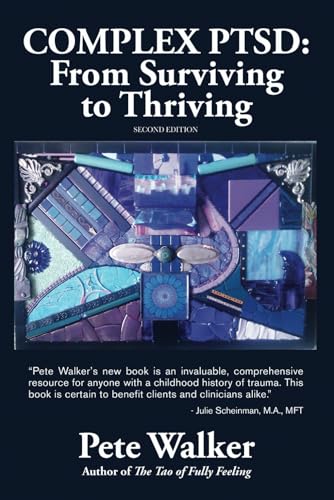
Complex PTSD: From Surviving to Thriving
Pete Walker
A clear, compassionate guide to recognizing and working with the lasting effects of prolonged childhood adversity.

The Body Keeps the Score
Bessel van der Kolk, M.D.
A foundational look at how trauma reshapes the body and nervous system, and the approaches that help the body find safety again.
As an Amazon Associate, Clarity House Press earns from qualifying purchases. Your price is never affected.
Found this helpful?
Share it with someone who might need it.
About the Author

Clarity House Press
Editorial Team
The editorial team at Clarity House Press curates and publishes evidence-based content on narcissistic abuse recovery, high-conflict divorce, and healing. Our content is informed by research, survivor experiences, and established trauma-informed approaches.
View all posts by Clarity House Press →Published by Clarity House Press Editorial Team