Please read our important disclaimers before using this content
Your calendar is packed. Work projects, gym sessions, social commitments, volunteer work, continuing education classes, side hustles—no empty space anywhere. Friends call you "the busy one," admiring your productivity. What they don't see: you're running.
When you stop moving, anxiety creeps in. Quiet evenings feel intolerable. Weekends without plans create panic. You check your phone constantly, scroll endlessly, start new projects before finishing old ones, say yes to invitations you don't want. Stillness terrifies you.
This is the flight response—your nervous system's strategy of escaping threat through constant motion, whether physical, mental, or emotional. While the fight response moves toward threat aggressively, flight moves away from it urgently. The same sympathetic activation, different direction.
For many trauma survivors, flight becomes so normalized that they don't recognize it as a trauma response. It looks like ambition, productivity, adventurousness, or simply a busy life. But underneath: you're fleeing threats that no longer exist. Our overview of all four trauma responses explains how flight, freeze, fight, and fawn each develop from the same survival imperative.
The Biology of Running
Threat activates your sympathetic nervous system identically whether you fight or flee. Adrenaline floods your system within seconds, followed by cortisol release over the next several minutes. Heart rate accelerates. Energy mobilizes toward large muscle groups. Your body prepares for rapid movement away from danger.1
Research Note: The fight-or-flight response is part of the body's natural response to danger and is well-documented in PTSD research. Fear triggers this response both during and after traumatic situations. Avoidance symptoms—staying away from reminders of traumatic experiences and avoiding thoughts or feelings related to trauma—are core features of PTSD and can significantly impact daily functioning.2
Whether you fight or flee depends on numerous factors assessed unconsciously in milliseconds: the threat's size relative to yours, escape route availability, past experience with what works, and whether fighting seems viable.
Flight represents your nervous system's conclusion that escape offers better survival odds than combat. Run. Get away. Distance creates safety.
This makes perfect sense facing actual danger. The problem: trauma survivors' nervous systems perceive threats everywhere. Your flight response activates not just for actual danger, but for discomfort, vulnerability, conflict, intimacy, stillness, or emotions that your implicit memory associates with past danger.
You're running from everything your nervous system hasn't yet learned is safe.
Childhood Foundations
Children develop flight responses in environments where escape was the most viable survival strategy:
Literal escape worked. Running to your room, hiding, leaving the house, or disappearing prevented abuse or reduced its severity. Your nervous system learned: distance equals safety.
Invisibility worked. Not drawing attention, staying busy and compliant elsewhere, being gone—these kept you off abusive caregivers' radar.
Emotions were dangerous. Expressing feelings brought punishment, mockery, or dismissal. You learned to flee your own emotions, staying busy to avoid feeling.
Stillness invited intrusion. Quiet moments meant abuse was coming. Your nervous system learned that constant motion equals safety.
Busyness earned approval. Achievement, productivity, and constant activity won praise or prevented criticism. Slowing down meant losing that protective approval.
Witnessing parental flight. Your caregivers modeled workaholism, substance use, relationship instability, or other escape patterns, teaching you that feelings are intolerable and must be fled.
A child who survives through flight becomes an adult whose nervous system still believes safety requires constant escape—even when the original threats are gone.
Flight Response Manifestations
Flight trauma response appears across multiple domains:
Physical Restlessness
Constant movement. You pace, fidget, tap, bounce your leg, or can't sit still. Your body needs motion.
Exercise compulsion. While exercise is healthy, flight-response exercise feels mandatory and anxious. Missing a workout creates intense anxiety. You exercise through injuries, exhaustion, or illness.
Chronic travel. You move apartments frequently, take constant trips, plan the next vacation before finishing the current one, or dream perpetually of moving elsewhere.
Mental Restlessness
Busy mind. Your thoughts race constantly. Meditation feels impossible. Your internal monologue never stops planning, reviewing, worrying, analyzing.
Information consumption. You compulsively read articles, listen to podcasts, scroll social media, watch videos—anything to keep your mind occupied.
Difficulty with boredom. Unstructured time creates intense anxiety. You always need stimulus, entertainment, or information input.
Indecision and analysis paralysis. You research endlessly, consider all options, seek more information, because making a decision means stopping movement and committing.
Emotional Avoidance
Staying busy to avoid feelings. The moment difficult emotions arise, you launch into activity. Clean the house, start a project, make plans—anything to outrun the feeling.3
Substance use. Alcohol, marijuana, or other substances help you "escape" without physically running. The flight response finds chemical escape routes.
Dissociation. Your consciousness leaves your body, escaping into fantasy, daydreaming, or numbness.
Relationship Patterns
Serial relationships. You leave when things get too close or real. As intimacy increases, your urge to flee intensifies.
Emotional unavailability. You stay in relationships but keep partners at arm's length emotionally, maintaining escape routes.
Sudden ghosting. When conflict or vulnerability arises, you disappear—stop returning calls, end relationships abruptly, delete apps.
Avoidance of commitment. Marriage, cohabitation, or serious commitment trigger powerful flight urges. You keep one foot out the door.
Work and Achievement
Workaholism. Work consumes your life. You stay late, work weekends, check email constantly, define yourself by productivity.
Chronic career changes. You switch jobs, careers, or industries frequently, always seeking the next thing that will finally feel right.
Perfectionism and overachievement. You pursue achievement compulsively, believing you're "driven" when actually you're fleeing inadequacy or unworthiness feelings.
Avoidance Patterns
Procrastination. Important tasks, difficult conversations, or necessary confrontations get avoided indefinitely.
Geographic escape. When life gets difficult, you fantasize about moving across the country, changing your name, starting over where nobody knows you.
Literal running. You might run as exercise, but also run from conflicts, run from rooms during arguments, or feel urges to literally run when anxious.
The common thread: when your nervous system perceives threat—whether actual danger, uncomfortable emotions, conflict, intimacy, or simply slowing down—your immediate impulse is escape.
The Hidden Costs
Flight response often looks functional. Busy, productive people receive social approval. "Wow, I don't know how you do it all!" But costs accumulate:
Exhaustion. Constant motion drains you. You run on adrenaline and cortisol until your body eventually crashes.
Shallow relationships. You have many acquaintances but few deep connections because intimacy requires stillness, vulnerability, and staying present through discomfort.
Unprocessed emotions. Feelings you flee don't disappear. They accumulate, emerging as depression, anxiety, physical symptoms, or eventual breakdown.
Lost presence. You're always planning the next thing, missing the current experience. Life happens while you're running from it.
Achievement without satisfaction. You accomplish goals constantly yet never feel satisfied because you're achieving to escape unworthiness, not pursuing genuine desires.
Physical health impact. Chronic stress from constant activation causes inflammation, digestive problems, sleep disruption, immune suppression, and cardiovascular strain.
Substance dependence risk. Using substances primarily for emotional escape rather than social enjoyment can lead to dependence over time.
Inability to rest. You're exhausted but can't truly rest because stopping feels intolerable.
Eventually, flight response becomes its own cage—you want to stop running but can't, trapped in perpetual motion by the very mechanism that once freed you. You're still running, but from yourself.
When Flight Feels Like Freedom
Flight response survivors often resist recognizing the pattern because motion feels like freedom. You're independent, adventurous, capable, productive. Framing it as trauma response feels like pathologizing your strengths.
But consider: Do you choose your busyness from genuine desire, or does slowing down create such anxiety that you can't choose it? Freedom means capacity to choose either motion or stillness. Flight response means you can only choose motion.
True freedom includes:
- Canceling plans because you genuinely want quiet
- Sitting with difficult emotions until they pass naturally
- Staying in relationships through conflict until resolution
- Taking genuine rest without guilt or anxiety
- Making decisions and committing to them
- Being fully present in the current moment
If these feel impossible, that's not freedom. That's flight response maintaining control.
Healing Flight: Learning to Land
Transformation requires teaching your nervous system that staying is safe.
Nervous System Regulation Foundation
Grounding practices. Unlike relaxation (which flight-response survivors resist), grounding brings awareness to present moment physical sensations without requiring relaxation. Feel your feet on the floor. Notice five things you can see. Hold ice cubes. These interrupt flight by anchoring you in body and place.
Bilateral stimulation. Butterfly hugs (alternately tapping shoulders), walking, or EMDR's eye movements help process trauma while staying regulated.4
Containment practices. Imagining a container for difficult emotions allows them to exist without overwhelming you, reducing the need to flee them.
Titrated stillness. Start with 60 seconds of intentional stillness. Just sit. Notice the urge to flee. Stay anyway. Gradually increase duration as your nervous system learns stillness is survivable.
Emotion Processing Skills
Name the urge. When flight impulse arises—you suddenly need to leave, start a project, check your phone—pause and name it: "I'm having a flight response."
Identify what you're fleeing. What emotion or situation just arose? Vulnerability during conversation with partner? Sadness? Memory trigger? Naming what you're running from reduces its power.
Stay with sensation. Instead of fleeing the feeling, stay with its physical sensation. Emotions often shift within 60-90 seconds when you observe them without adding story, though some may take longer. Where do you feel it in your body? Describe the sensation without judgment.
Develop emotional vocabulary. Flight-response survivors often lack nuanced emotion language. Everything is "stressed" or "anxious." Learning to distinguish between anxious, overwhelmed, sad, disappointed, ashamed, or afraid helps you respond appropriately rather than fleeing all feelings equally.
Relationship Repair
Communicate the pattern. Tell safe people: "I have a trauma response where I want to flee when things feel vulnerable. If I pull away suddenly, it's not about you."
Practice staying. When the urge to leave arises in relationship—emotionally or physically—practice staying for five more minutes. Text a friend for support. Ground yourself. Don't flee.
Repair ruptures. When you do ghost or flee, practice repair: come back, explain what happened, take responsibility, reconnect.
Choose relationships that can hold your pattern. Safe people understand trauma responses. They don't take your flight personally. They welcome you back without punishment.
Intentional Rest
Schedule nothing. Block calendar time with literally nothing planned. Sit with the anxiety this creates.
Rest without productivity. Rest that isn't earned, optimized, or productive. Just lying on the couch because you want to.
Boredom tolerance building. Put your phone in another room. Sit without entertainment. Notice what arises. Stay anyway.
Examine sleep patterns. If you're using alcohol or marijuana primarily to escape into sleep rather than address underlying sleep issues, consider working with providers to explore what's preventing natural rest.
Trauma Processing
EMDR or Brainspotting. These trauma reprocessing therapies work with eye movements or focused attention to help your brain process the memories that taught your nervous system to flee, reducing their hold.5 See our guide to EMDR for C-PTSD for what the modified protocol looks like for complex trauma.
Somatic Experiencing. This body-based approach works directly with your nervous system's mobilization patterns, helping complete interrupted escape responses from past trauma.6 Learn more in our guide to somatic experiencing for trauma recovery.
Internal Family Systems (IFS). This therapy helps you understand the part of you that flees, appreciate its protective intent, and help it relax its extreme role as your brain recognizes you're safe now.7
The Gifts in Flight
Your flight response, transformed, carries genuine gifts:
Energy and drive. The mobilization that becomes compulsive activity can become genuine enthusiasm and energy for chosen pursuits.
Adventure capacity. The same restlessness can fuel genuine adventure, exploration, and willingness to try new things—when chosen consciously rather than driven compulsively.
Productivity. Your capacity for getting things done becomes extraordinary when directed by choice rather than anxiety.
Problem-solving. Flight-response survivors excel at finding solutions, alternatives, and creative approaches—your brain is wired to find escape routes, which translates to innovative thinking.
Independence. You developed strong self-reliance. When transformed, this becomes healthy autonomy.
Intuition about danger. Your nervous system's sensitivity, once recalibrated, can become finely tuned intuition about actual threats.
The goal isn't to eliminate these capacities—they're real gifts. The goal is to free them from the anxiety that currently powers them, so you can access your energy and drive without requiring perpetual threat activation.
Healing doesn't eliminate your energy or capability. It gives you choice about when to move and when to be still.
Resources
Trauma Therapy for Flight Response:
- Somatic Experiencing Trauma Institute - Find SE practitioners who help complete freeze and flight responses
- Psychology Today - Therapists - Filter for "complex trauma" and "somatic therapy"
- EMDR International Association - Find EMDR therapists for reprocessing trauma activation
- Sensorimotor Psychotherapy Institute - Body-based trauma therapy for flight patterns
Books and Educational Resources:
- The Body Keeps the Score by Bessel van der Kolk - Understanding trauma's physical manifestations including flight
- Waking the Tiger by Peter Levine - Somatic Experiencing approach to completing flight response
- In an Unspoken Voice by Peter Levine - How the body releases trauma and restores equilibrium
- National Center for PTSD - Research-backed information on trauma responses and treatment
Support and Crisis Resources:
- 988 Suicide & Crisis Lifeline - Call or text 988 for immediate crisis support
- National Alliance on Mental Illness (NAMI) - Mental health support groups and education
- SAMHSA Helpline - 1-800-662-4357 (mental health treatment referrals)
- r/CPTSD - Reddit community for complex trauma survivors
You Can Stop Running
The most profound moment in flight-response recovery often comes quietly: you're sitting in stillness, and you realize you're okay. The anxiety you expected doesn't arrive. The feelings you feared don't overwhelm you. You're simply here, now, and it's survivable.
That moment doesn't arrive through force. It arrives through patience, practice, and repeatedly proving to your nervous system that staying is safe.
You learned to run because running saved you. Your flight response is evidence of your survival instincts working perfectly in impossible circumstances. It kept you alive. You can honor it for that while also recognizing you're safe now.
Healing means developing full range of motion: capacity to flee actual danger and capacity to stay for beauty, connection, rest, and growth. You ran to survive. Now you're learning to stay to live.
The journey from running to landing takes time—probably longer than you want it to take, which itself can trigger flight urges. Every moment you stay when your nervous system screams to flee is rewiring decades of survival programming.
You don't have to run anymore. You're safe enough to rest.
References
- Thau, L., Gandhi, J., & Sharma, S. (2023). Physiology, stress reaction. In StatPearls. National Center for Biotechnology Information (NCBI). https://www.ncbi.nlm.nih.gov/books/NBK541120/ ↩
- National Institute of Mental Health. (2025). Post-traumatic stress disorder (PTSD): DSM-5 avoidance and negative alterations in cognition and mood criteria. U.S. Department of Health and Human Services. https://www.ptsd.va.gov/professional/treat/essentials/dsm5_ptsd.asp ↩
- Brewin, C. R. (2025). Post-traumatic stress disorder: Evolving conceptualization and evidence, and future research directions. World Psychiatry, 24(1). https://onlinelibrary.wiley.com/doi/10.1002/wps.21269 ↩
- Seidler, G. H., & Wagner, F. E. (2006). Comparing the efficacy of EMDR and trauma-focused cognitive-behavioral therapy: a meta-analytic study. Psychological Medicine, 36(11), 1515-1522. PMC. https://pubmed.ncbi.nlm.nih.gov/16740177/ ↩
- Zhang, Y., Wang, J., Estes, S., & Syed, S. (2020). Eye movement desensitization and reprocessing for mental health problems: A systematic review and meta-analysis. Cognitive Behavior Therapy, 49(2), 163-186. https://pubmed.ncbi.nlm.nih.gov/32043428/ ↩
- Payne, P., Levine, P. A., & Crane-Godreau, M. A. (2015). Somatic experiencing: Using interoception and proprioception as core elements of trauma therapy. Frontiers in Psychology, 6, 93. PMC. https://pmc.ncbi.nlm.nih.gov/articles/PMC4316402/ ↩
- Sharma, B., Stevenson, S., & Wyatt, A. (2025). Exploring the evidence for Internal Family Systems therapy: A scoping review of current research, gaps, and future directions. Journal of Family Psychotherapy, 36(1). https://www.tandfonline.com/doi/full/10.1080/13284207.2025.2533127 ↩
Recommended Reading
From Clarity House Press — plus trusted books for deeper understanding

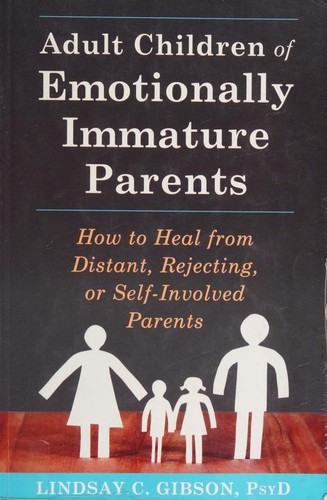
Adult Children of Emotionally Immature Parents
Lindsay C. Gibson, PsyD
A gentle, practical guide to understanding relationships with emotionally distant parents and reclaiming your inner life.
Complex PTSD: From Surviving to Thriving
Pete Walker
A clear, compassionate guide to recognizing and working with the lasting effects of prolonged childhood adversity.
As an Amazon Associate, Clarity House Press earns from qualifying purchases. Your price is never affected.
Found this helpful?
Share it with someone who might need it.
About the Author

Clarity House Press
Editorial Team
The editorial team at Clarity House Press curates and publishes evidence-based content on narcissistic abuse recovery, high-conflict divorce, and healing. Our content is informed by research, survivor experiences, and established trauma-informed approaches.
View all posts by Clarity House Press →Published by Clarity House Press Editorial Team