Please read our important disclaimers before using this content
If you developed an eating disorder during or after narcissistic abuse—or if a pre-existing eating disorder significantly worsened—you're experiencing a documented trauma response, not a character flaw or vanity issue.
Research consistently shows that 50-75% of people with eating disorders have experienced trauma1, with interpersonal trauma (including narcissistic abuse) creating some of the strongest connections to restrictive and compensatory eating behaviors.
Eating disorders frequently emerge as coping mechanisms in response to narcissistic abuse, serving as attempts to reclaim control, manage overwhelming emotions, or create a sense of safety in a body that was criticized, violated, or objectified. This is part of a broader pattern of how the nervous system responds to trauma—the body finds ways to cope when the mind cannot.
Understanding why eating disorders develop in abusive relationships, how narcissists exploit disordered eating, and what eating-disorder-informed trauma recovery looks like is essential for healing.
The Trauma-Eating Disorder Connection
Research consistently shows strong connections between trauma (particularly interpersonal trauma) and eating disorders2. Narcissistic abuse specifically creates conditions that trigger eating disorder development:
Why Eating Disorders Emerge During Narcissistic Abuse:
1. Control and Agency When every aspect of your life is controlled by someone else, controlling food intake/body becomes one of the few areas where you can exert agency.
2. Emotional Regulation Restricting, binging, or purging can temporarily regulate overwhelming emotions when you have no other coping mechanisms.
3. Self-Punishment After prolonged criticism and devaluation, you may internalize the message that you deserve punishment—expressed through disordered eating.
4. Numbing and Dissociation Extreme hunger, food restriction, or purging can create dissociative states that provide temporary escape from emotional pain. Research links dissociation to eating disorder symptoms, particularly binge-purge behaviors3. Learning about understanding dissociation in complex PTSD can help survivors recognize this pattern in themselves.
5. Body Manipulation Changing your body can be an attempt to become "acceptable" to the narcissist or to disappear/take up less space.
6. Trauma Reenactment If you experienced childhood abuse involving food, body, or control, narcissistic abuse can trigger reenactment through eating disorders.
How Narcissists Trigger and Exploit Eating Disorders
Narcissistic abusers don't just happen to be with partners who develop eating disorders—they actively create the conditions that trigger them.
1. Body Criticism and Objectification
Narcissists frequently criticize partners' bodies, weight, eating habits, or appearance.
Common tactics:
- Commenting on weight gain or loss
- Comparing you to other people's bodies
- "Helpful suggestions" about diet or exercise
- Criticizing food choices
- Objectifying your body (focusing on appearance over personhood)
- Withholding affection based on appearance
What this looks like:
"He'd comment every time I ate dessert: 'Are you sure you want that?' When I'd gained weight after having our baby, he'd pat my stomach and say 'Working on losing this?' He'd show me photos of celebrities or his ex-girlfriend and say 'She really takes care of herself.' I started restricting food, then binging when he wasn't home, then purging. The eating disorder gave me a sense of control when everything else in my life was controlled by him."
2. Using Food as Control Mechanism
Some narcissists directly control their partner's food access, choices, or eating behaviors.
Control tactics:**
- Restricting grocery budgets while spending freely on themselves
- Controlling what food is purchased
- Criticizing all meal choices
- Insisting on specific diets
- Monitoring food intake
- Punishing "unapproved" eating
- Using food as reward or punishment
What this looks like:
"He did all the grocery shopping and would only buy foods he approved of—no 'junk food,' no carbs, nothing 'unhealthy.' If I bought myself a snack, he'd throw it away and lecture me about 'putting garbage in my body.' I started binge-eating at work, hiding food in my car, and feeling intense shame about normal eating. The restriction he imposed triggered my binge-purge cycle."
3. Exploiting Pre-Existing Eating Disorder
If you had an eating disorder history before the relationship, narcissists often deliberately trigger relapse.
How they exploit ED history:
- Learning your triggers and deliberately using them
- Commenting on eating behaviors they know are sensitive
- "Concern trolling" about your health (weaponized concern)
- Threatening to report your eating disorder to authorities
- Using ED history as evidence you're "unstable"
- Sabotaging recovery by disrupting treatment
What this looks like:
"I'd been in recovery from anorexia for five years when we met. I told him early on about my history and what my triggers were. At first he was supportive. After we married, he'd make comments he knew would trigger me: 'You're eating a lot today,' 'Are you sure you're okay?' When I'd restrict in response, he'd express concern to my family—positioning himself as the worried husband and me as the unstable wife with 'mental health issues.'"
4. Creating Food Insecurity
Some narcissists create actual food scarcity through financial abuse, creating conditions that trigger disordered eating.
Scarcity tactics:
- Withholding money for groceries
- Hiding or throwing away food
- Eating all the food themselves
- Refusing to contribute to household food costs
- Deliberately creating food scarcity to maintain control
What this looks like:
"He controlled all the money. He'd give me $50 per week for groceries for me and two kids, while he'd spend $200 on himself at restaurants. I'd buy food for the kids and barely eat myself. I lost 40 pounds from actual food scarcity, which then triggered anorexic thinking patterns I'd had as a teenager. The malnutrition made me more compliant and less able to resist his control."
5. Weaponizing Recovery
When you're in eating disorder recovery, narcissists often sabotage your progress.
Sabotage tactics:
- Preventing therapy attendance
- Hiding or destroying recovery resources
- Triggering behaviors they know lead to relapse
- Criticizing weight gain that comes with recovery
- Offering "support" that's actually enabling disorder
- Positioning themselves as better than your treatment team
What this looks like:
"I was in intensive outpatient treatment for bulimia. My meal plan required eating three meals plus snacks. He'd say 'Your nutritionist is making you fat—you looked better before.' He'd schedule conflicts during group therapy times, offer to 'help' by planning meals (all diet food), and tell me I didn't need therapy, I just needed 'self-control.' Every time I was making progress, he'd sabotage it."
Types of Eating Disorders and Narcissistic Abuse
Different eating disorders can emerge from or worsen during narcissistic abuse.
Anorexia Nervosa
Characteristics:
- Severe food restriction
- Intense fear of weight gain
- Distorted body image
- Feeling of control through restriction
Connection to narcissistic abuse:
- Restricting food = one area you can control
- Making yourself smaller = taking up less space (safety)
- Weight loss = attempt to become "acceptable"
- Numbing hunger signals = practice for numbing emotional pain
Bulimia Nervosa
Characteristics:
- Binge eating followed by purging
- Sense of lack of control during binges
- Compensatory behaviors (vomiting, laxatives, excessive exercise)
Connection to narcissistic abuse:
- Binging = temporary emotional relief
- Purging = punishment and control restoration
- Cycle mirrors abuse cycle (acting out, shame, compensation)
- Secretive nature mirrors hiding from narcissist
Binge Eating Disorder
Characteristics:
- Recurrent binge eating
- Feeling of lack of control
- Eating rapidly, eating until uncomfortable
- Shame and distress about binge eating
Connection to narcissistic abuse:
- Food as comfort when emotional needs aren't met
- Binging as temporary escape
- Shame cycle mirrors abuse-induced shame
- Eating in secret as response to criticism
ARFID (Avoidant/Restrictive Food Intake Disorder)
Characteristics:
- Avoiding food based on sensory characteristics
- Lack of interest in eating
- Concern about consequences of eating
Connection to narcissistic abuse:
- Loss of appetite from chronic stress
- Sensory issues worsened by trauma
- Food refusal as form of control
- Forgetting to eat due to hypervigilance
Orthorexia (Not Officially Recognized, But Common)
Characteristics:
- Obsession with "healthy" or "pure" eating
- Rigid food rules
- Anxiety about food quality
- Social isolation around food choices
Connection to narcissistic abuse:
- Control through "perfection"
- Rules provide safety in chaotic relationship
- Narcissist may encourage "health" obsession
- Moral superiority through food choices
Eating Disorders Weaponized in Custody Battles
If you have an eating disorder and are divorcing a narcissist, expect them to weaponize it in court.
Common Legal Attacks:
1. Framing ED as inability to care for children:
- "She can't feed herself properly—how can she feed the children?"
- "He's obsessed with food—it's unhealthy for the kids"
- "She models disordered eating to our daughter"
- "His eating disorder proves he's mentally unstable"
2. Using weight as evidence:
- Photos showing weight loss as "proof of instability"
- Medical records about malnutrition
- Hospitalization history
- "She's disappeared"—framing weight loss as alarming
3. Claiming children are at risk:
- "She restricts the children's food" (projection—you ensure they eat while managing your ED)
- "The children have become afraid of food"
- "He doesn't provide adequate nutrition"
4. Medical evidence misrepresented:
- Therapy notes about eating disorder taken out of context
- Hospitalization presented without context of abuse
- Medication for ED framed as evidence of severe mental illness
Protecting Yourself in Court:
Document ED treatment:
- Consistent therapy attendance
- Medical monitoring
- Evidence of stable recovery or active treatment
- Therapist statement about your parenting capacity
Show children are well-cared for:
- Pediatrician records (children's growth, nutrition adequate)
- School records (children thriving)
- Photos of family meals
- Evidence you feed children appropriately regardless of your own ED
Provide context:
- If ED worsened during abuse, document timeline
- Show improvement after separation
- Explain ED as trauma response, not character flaw
- Expert testimony about eating disorders + abuse connection
Get ED-informed evaluators:
- Custody evaluators who understand eating disorders
- Professionals who won't pathologize ED as inability to parent
- Experts familiar with how abuse triggers ED
Recovery While Divorcing: Unique Challenges
Eating disorder recovery is difficult in stable circumstances—exponentially harder during high-conflict divorce.
Why Divorce Complicates ED Recovery:
1. Stress worsens symptoms:
- Divorce is extreme stress
- Stress triggers disordered eating behaviors
- Legal proceedings, custody battles, financial pressure all activate ED
2. Loss of control intensifies need for ED:
- When you can't control custody outcome, you control food
- Uncertainty of divorce feeds ED's need for certainty
- Legal system's lack of control triggers restriction/binging/purging
3. Body changes from stress:
- Weight loss or gain from divorce stress
- Triggers body image distress
- Can trigger ED relapse even if you're in recovery
4. Narcissist's continued triggering:
- They know your ED triggers and use them
- Body comments during custody exchanges
- Using ED against you in court (more stress)
5. Treatment disruption:
- Therapy time conflicts with legal appointments
- Financial strain from divorce limits treatment access
- Moving/relocation disrupts treatment team
- Emotional bandwidth for recovery is depleted by divorce needs
Strategies for Managing ED During Divorce:
1. Prioritize ED treatment:
- Maintain therapy even if other things slide
- If you can only afford one therapist, choose one who treats both ED and trauma
- Telehealth options if in-person is difficult
- Support groups (free option when money is tight)
2. Structured eating regardless of stress:
- Set alarms for meal times
- Meal delivery services if executive function is impaired
- Pre-made meals (no judgment—survival mode)
- Eat with children (modeling + accountability)
3. Document stability for court:
- Keep therapy appointments (creates paper trail of treatment)
- Medical monitoring (shows you're managing condition)
- Weight stability if possible (but don't force it—document treatment instead)
4. Build ED-specific support:
- ED support groups (people who understand)
- Eating disorder hotline for crisis moments
- Accountability partners for meals
- Online ED recovery communities
5. Protect yourself from triggering:
- Block narcissist's ability to comment on your body
- Use communication apps that allow filtering
- Have friend pick up kids if exchanges are triggering
- Mute/block on social media
Medical Evidence and Eating Disorders
Eating disorders have serious medical consequences. Understanding and monitoring these protects your health and provides documentation for court if needed.4 Individuals with eating disorders who have experienced trauma are at particularly high risk for medical complications and treatment dropout, making medical monitoring essential to both physical health and legal protection.
Medical Complications to Monitor:
Anorexia:
- Cardiac issues (bradycardia, arrhythmias)
- Bone density loss (osteopenia, osteoporosis)
- Electrolyte imbalances
- Hypothermia, low blood pressure
- Cognitive impairment from malnutrition
Bulimia:
- Electrolyte imbalances (potentially fatal)
- Esophageal damage
- Tooth enamel erosion
- Gastrointestinal problems
- Cardiac complications
Binge Eating Disorder:
- Obesity-related health issues
- Diabetes risk
- High blood pressure
- Cholesterol issues
- Sleep apnea
Medical Monitoring During Divorce:
Why it matters:
- Protects your health
- Creates documentation of responsible self-care
- Counters narrative that you're "out of control"
- Provides evidence for court if needed
What to monitor:
- Regular primary care appointments
- Nutritionist/dietitian involvement
- Psychiatric medication management
- Lab work (electrolytes, metabolic panel)
- Cardiac monitoring if indicated
Finding Eating-Disorder-Informed Trauma Therapy
You need a therapist who understands both eating disorders and trauma—many specialize in one but not both.5 Reading about how to find the right trauma therapist can help you identify professionals equipped to handle both conditions simultaneously. Research shows that treatment outcomes are significantly improved when both conditions are addressed simultaneously rather than sequentially, particularly when trauma-focused and eating-disorder-informed approaches are integrated.
What ED-Informed Trauma Therapy Includes:
1. Understanding ED as trauma response:
- Recognizing ED developed as coping mechanism
- Not treating ED in isolation from abuse
- Addressing trauma while treating ED
- Understanding body image issues stem from abuse messages
2. Trauma-informed ED treatment:
- Not forcing exposure to triggering content
- Understanding that weight restoration happens when you're safe
- Addressing dissociation, emotional regulation before full ED treatment
- Recognizing that leaving abuser is necessary for ED recovery
3. Body autonomy and consent:
- No forced weigh-ins (or blind weigh-ins if necessary for medical monitoring)
- Respecting your boundaries about body
- Understanding that body was violated in abuse
- Rebuilding sense of body ownership
4. Nutrition support without shame:
- Meal planning that's realistic for your circumstances
- No judgment about eating behaviors
- Understanding that relapse during divorce is common
- Helping you feed yourself even when dysregulated
Finding the Right Therapist:
Ask potential therapists:
- "Do you have training in eating disorder treatment?"
- "Are you familiar with how trauma—particularly narcissistic abuse—triggers eating disorders?"
- "How do you approach weight restoration or body image work with trauma survivors?"
- "What's your philosophy on body autonomy in treatment?"
Red flags:
- Focus on weight/BMI as sole measure of progress
- Shaming or judgment about eating behaviors
- Not understanding trauma-ED connection
- Rigid treatment approach that doesn't account for divorce crisis
- Requiring weigh-ins without trauma-informed approach
Where to find ED specialists:
- National Eating Disorders Association (NEDA) therapist directory
- Psychology Today (filter: eating disorders + trauma)
- Eating disorder treatment centers (intensive programs if needed)
- Local ED support groups (ask for therapist recommendations)
When Your Children Are Affected
Eating disorders have strong familial/environmental components. Your children may develop disordered eating, and narcissistic co-parents often contribute to this.
Protecting Children from ED Risk:
1. Model healthy relationship with food (as you're able):
- Eat with children even if it's hard
- Avoid talking about dieting, calories, "good/bad" foods
- Separate your ED from children's eating
- Don't restrict children's food
2. Monitor narcissistic co-parent's food messaging:
- Are they commenting on children's bodies?
- Restricting children's food?
- Praising weight loss or criticizing weight gain?
- Creating food scarcity?
3. Get children preventive support:
- Therapy if they're exposed to ED or body criticism
- Education about healthy eating (from pediatrician, school counselor)
- Build body-positive environment at your home
4. Watch for warning signs:
- Food restriction or secrecy about eating
- Body image distress
- Exercise compulsions
- Comments about weight or appearance
- Growth chart concerns (pediatrician monitoring)
5. Early intervention if needed:
- Don't wait—ED treatment is more effective early
- Eating disorder specialists who work with children
- Family therapy to address environmental factors
- Document if narcissist is contributing to child's ED
Body Image Healing After Narcissistic Abuse
Narcissistic abuse often leaves lasting body image wounds.
Common Body Image Issues Post-Abuse:
1. Internalized criticism:
- Narcissist's voice becomes your inner voice
- Self-criticism about body mirrors their criticism
- Feeling your body is "wrong" or "unacceptable"
2. Disconnection from body:
- Dissociation from physical self
- Not recognizing yourself in mirror
- Feeling like you don't inhabit your body
3. Body as object:
- Seeing body through objectifying lens narcissist imposed
- Evaluating worth based on appearance
- Difficulty experiencing body as yours
4. Body as unsafe:
- Body was site of violation (sexual abuse, forced touch)
- Body produced narcissist's anger (weight gain, aging, pregnancy changes)
- Body feels like liability, not asset
Rebuilding Body Relationship:
1. Somatic therapy:
- Reconnecting with body sensations
- Processing trauma stored in body
- Rebuilding body trust
Somatic experiencing and yoga for trauma recovery are two body-based approaches that can help rebuild the connection to your physical self without triggering eating disorder behaviors.
2. Movement that's not punishment:
- Yoga, dance, walking for joy (not calorie burning)
- Reconnecting with what body can do (not how it looks)
- Pleasurable movement
3. Body neutrality (if body positivity feels impossible):
- "My body is a body. It allows me to live."
- Focusing on function over appearance
- Appreciating body without loving it (yet)
4. Reclaiming body autonomy:
- You choose what you wear
- You choose who touches you
- You choose what you eat
- Your body, your rules
5. Unlearning narcissist's messages:
- Identifying which body beliefs are his vs. yours
- Challenging internalized criticism
- Building new relationship with body based on your values
Your Eating Disorder Is Not Your Fault
After narcissistic abuse, many people with eating disorders feel intense shame. You may believe you're "weak," "vain," or "choosing" the eating disorder.
This is a lie diet culture and your abuser taught you.
Eating disorders are serious mental health conditions, often triggered by trauma. You didn't choose an eating disorder any more than you chose narcissistic abuse.
Your eating disorder likely served a function: control, emotional regulation, safety, numbing, expression of pain. It made sense in context, even if it's harmful.
The eating disorder isn't the enemy. The eating disorder was a life raft in a storm. Now that you're moving toward shore, you can build better boats—but the life raft kept you alive when you needed it.
NOTE ON HOTLINE NUMBERS: Phone numbers for crisis hotlines, legal aid, and support services are provided as a resource. These numbers are current as of publication but may change. Please verify hotline numbers are still active before relying on them. For the National Domestic Violence Hotline, visit thehotline.org for current contact information.
Resources for ED Survivors of Narcissistic Abuse
Eating Disorder Organizations:
- National Eating Disorders Association (NEDA) - Education, treatment finder, support groups, helpline (1-800-931-2237)
- ANAD (Anorexia Nervosa and Associated Disorders) - Free peer support groups
- The Emily Program - Eating disorder treatment (multiple locations)
- F.E.A.S.T. - Evidence-based eating disorder family support
Crisis Support:
- NEDA Helpline - 1-800-931-2237 (visit neda.org for current hours)
- Crisis Text Line - Text "NEDA" to 741741
- 988 Suicide & Crisis Lifeline - Call or text 988 (ED can be life-threatening)
Books:
- The Body Keeps the Score by Bessel van der Kolk (trauma and body)
- Life Without Ed by Jenni Schaefer (ED recovery)
- 8 Keys to Recovery from an Eating Disorder by Carolyn Costin and Gwen Schubert Grabb
- Intuitive Eating by Evelyn Tribole and Elyse Resch (rebuilding relationship with food)
Online Communities:
- r/EatingDisorders (Reddit)
- NEDA online support groups
- Around the Dinner Table (ED family support forum)
Moving Forward
Healing from both narcissistic abuse and an eating disorder is complex, non-linear work.
You may need to address the abuse to recover from the ED. You may need to stabilize the ED to process the abuse. You may need to do both simultaneously.
There will be setbacks. Divorce stress may trigger ED behaviors. Court dates may disrupt eating. Custody exchanges may activate body shame.
This doesn't mean you're failing. It means you're human.
Recovery isn't linear. Some days you'll eat all your meals and feel connected to your body. Some days you'll restrict or binge or purge and feel despair.
Both days are part of recovery.
The eating disorder served you when you needed it. It gave you control, numbness, safety, or expression when nothing else could.
You don't have to be grateful for the eating disorder. But you can acknowledge that it helped you survive.
Now you're learning new ways to survive—ways that don't require harming your body.
You deserve to eat. You deserve to inhabit your body. You deserve recovery.
The narcissist is gone. The eating disorder doesn't have to be permanent.
You are rebuilding—one meal, one day, one kind act toward your body at a time.
Resources
Eating Disorder Treatment and Support:
- National Eating Disorders Association - Helpline: 1-800-931-2237, treatment referrals
- ANAD - Eating disorder support groups and recovery resources
- Project HEAL - Free and low-cost eating disorder treatment
- F.E.A.S.T. - Evidence-based eating disorder family support
Therapy for Trauma and Eating Disorders:
- Psychology Today - Eating Disorder Therapists - Find specialists in trauma-related eating disorders
- EMDR International Association - EMDR for trauma and disordered eating
- International Association of Eating Disorders Professionals - Certified eating disorder specialists
- Somatic Experiencing International - Body-based trauma therapy
Crisis Support and Resources:
- 988 Suicide & Crisis Lifeline - Call or text 988 for immediate crisis support
- Crisis Text Line - Text HOME to 741741 (eating disorder support)
- National Domestic Violence Hotline - 1-800-799-7233 (abuse causes eating disorders)
- r/EatingDisorders - Community support for recovery
References
- Racine, S. E., Wildes, J. E., & Graziano, M. J. (2022). The role of trauma in eating disorders. In B. T. Walsh & V. Attia (Eds.), Eating disorders and comorbidity (pp. 125-142). Cambridge University Press. (Based on meta-analysis data from https://www.ncbi.nlm.nih.gov/pmc/articles/PMC3966425/) ↩
- Brewerton, T. D. (2012). Eating disorders, trauma, and comorbidity: Focus on PTSD. Eating Disorders Review, 23(5), 154-165. Retrieved from https://www.ncbi.nlm.nih.gov/pmc/articles/PMC5357424/ ↩
- Racine, S. E., & Wildes, J. E. (2015). Emotion dysregulation and anorexia nervosa: An exploration of the role of childhood abuse. International Journal of Eating Disorders, 48(1), 55-58. Retrieved from https://www.ncbi.nlm.nih.gov/pmc/articles/PMC4120002/ ↩
- Puccioni, A., Santambrogio, J., & Ruscigno, M. (2024). Posttraumatic stress disorder (PTSD) and complex PTSD in eating disorder treatment-seekers: Prevalence and associations with symptom severity. Journal of Eating Disorders, 12(1), 44. Retrieved from https://pubmed.ncbi.nlm.nih.gov/38637955/ ↩
- Moulton, S. J., Rojas, S. M., & Oehlert, M. E. (2023). A systematic review of the effect of PTSD and trauma on treatment outcomes for eating disorders. Journal of Traumatic Stress Disorders & Treatment, 12(4), 245-262. Retrieved from https://pubmed.ncbi.nlm.nih.gov/37125723/ ↩
- Racine, S. E. (2024). Trauma exposure and eating disorders: Results from a United States nationally representative sample. Frontiers in Psychiatry, 15, 1523269. Retrieved from https://pmc.ncbi.nlm.nih.gov/articles/PMC9545485/ ↩
- Bergman, R. L., Allred, E., & Howard, D. B. (2024). Meta-emotion therapy for complex trauma and binge eating: A case study. Clinical Case Studies, 23(2), 156-171. Retrieved from https://pubmed.ncbi.nlm.nih.gov/38497745/ ↩
Recommended Reading
From Clarity House Press — plus trusted books for deeper understanding

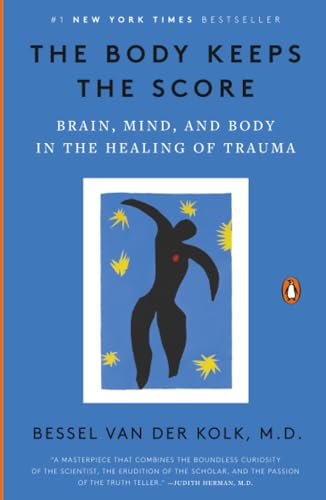
The Body Keeps the Score
Bessel van der Kolk, M.D.
A foundational look at how trauma reshapes the body and nervous system, and the approaches that help the body find safety again.

My Grandmother's Hands
Resmaa Menakem, MSW, LICSW
A body-centered approach to healing trauma that lives in the nervous system, with practices for settling and self-regulation.
As an Amazon Associate, Clarity House Press earns from qualifying purchases. Your price is never affected.
Found this helpful?
Share it with someone who might need it.
Tags
About the Author

Clarity House Press
Editorial Team
The editorial team at Clarity House Press curates and publishes evidence-based content on narcissistic abuse recovery, high-conflict divorce, and healing. Our content is informed by research, survivor experiences, and established trauma-informed approaches.
View all posts by Clarity House Press →Published by Clarity House Press Editorial Team