Please read our important disclaimers before using this content
If you're reading this, you're likely facing challenges that few people truly understand. After narcissistic abuse, your body may feel like an unsafe place—hypervigilant, disconnected, or frozen in old defensive patterns. Understanding your window of tolerance is essential context for yoga practice, since trauma-sensitive movement only works within that regulated zone.
This isn't abstract theory. It's practical guidance drawn from evidence-based trauma-sensitive yoga methodology, clinical expertise, and the lived experiences of survivors who've walked this path before you.
Understanding Complex Trauma and Your Nervous System
Complex PTSD (C-PTSD), recognized in the World Health Organization's ICD-11 diagnostic manual (code 6B41), results from prolonged, repeated trauma—often in relationships where escape was blocked. Unlike single-event PTSD, C-PTSD includes difficulties with emotional regulation, negative self-concept, and challenges in relationships.
What you're experiencing isn't weakness or dysfunction. It's your brain and body's adaptive response to overwhelming circumstances.
The symptoms that feel so confusing and disruptive served a protective purpose in the environment where they developed.
How Narcissistic Abuse Rewires Your Nervous System
Your nervous system learned to stay activated as a survival mechanism.
In an environment where danger was unpredictable, staying vigilant made sense. Your body was protecting you.
The challenge in recovery? Your nervous system may still be running those old programs even though you're no longer in that environment.
The Three States of Your Nervous System
Based on Stephen Porges' Polyvagal Theory (2011), your autonomic nervous system operates in three primary states:
Ventral Vagal (Safe and Social)
- Connected, present, regulated
- Able to engage with others
- Access to thinking brain and choice-making
- This is the state where healing happens
Sympathetic (Mobilized)
- Fight or flight activation
- Heart racing, muscles tense, ready to act
- Anxiety, panic, anger, restlessness
- You needed this state during abuse; now it may activate without present threat
Dorsal Vagal (Immobilized)
- Freeze, shutdown, collapse
- Dissociation, numbness, exhaustion
- When fight or flight weren't options, this kept you alive
- May still activate during perceived danger
This is why leaving the relationship—when safe and possible to do so—often doesn't immediately bring relief. Your nervous system is still responding to patterns established during prolonged threat.
What Makes Yoga "Trauma-Sensitive"?
Trauma-Sensitive Yoga (TSY), developed by David Emerson and colleagues at the Trauma Center at Justice Resource Institute, differs fundamentally from mainstream yoga classes (Emerson & Hopper, 2011). Rather than focusing on physical fitness or flexibility, TSY uses yoga as a tool for reclaiming agency over your body after trauma.
A landmark randomized controlled trial by Bessel van der Kolk and colleagues (2014) found that women with chronic treatment-resistant PTSD who participated in TSY showed significantly greater reductions in PTSD symptoms compared to a control group—with effects maintained at follow-up. The study highlighted improvements specifically in interoception: the ability to notice and respond to sensations inside your body.
Core Trauma-Sensitive Yoga Principles
Invitational Language
Instructors offer choices, not commands.
"You might try placing your hands on your knees" replaces "Now put your hands on your knees."
This linguistic shift returns control to you. After abuse that demanded compliance, invitational language rebuilds autonomy.
Interoception Over Aesthetics
Focus on what you feel inside your body, not how poses look.
There's no "correct" form—only what feels safe to you. No mirrors. No comparisons. No demonstrations of "perfect alignment."
Instead: "Notice what you feel in your shoulders. You might feel stretching, or warmth, or nothing at all. Whatever you notice is fine."
This develops interoceptive awareness—reconnecting to body signals that trauma disrupted.
Choice-Making at Every Moment
Every moment offers options.
Eyes open or closed. Arms here or there. Stay with this shape or rest. You are the expert on your body.
Research by Cynthia Price and colleagues (2018) demonstrates that interoceptive awareness training—the foundation of TSY—enhances emotion regulation capacity by teaching survivors to notice body sensations, identify their meaning, and respond with appropriate action.
Present-Moment Focus
Noticing sensation without trying to change it.
Building capacity to be present with your body as it is right now, without judgment or force.
This directly addresses dissociation—the disconnection from your body that protected you during abuse but now interferes with healing.
Non-Coercion
Zero pressure. Zero physical adjustments without explicit, enthusiastic consent. Zero pushing through pain.
You can stop anytime without explanation.
Mainstream yoga's emphasis on "pushing your edge" or "breathing through discomfort" can recreate the coercion dynamics of abusive relationships. TSY explicitly rejects this.
Predictability and Transparency
Knowing what's coming reduces nervous system threat response.
TSY classes follow consistent structure with clear verbal cues about what will happen next. No surprises. No sudden transitions.
After narcissistic abuse—where unpredictability was weaponized—this predictability allows your nervous system to begin relaxing.
Honoring Yoga's Origins
Yoga originated in ancient India as a spiritual and philosophical practice spanning 5,000+ years. Trauma-Sensitive Yoga adapts specific physical practices (asana) and breathwork (pranayama) for Western clinical trauma treatment while acknowledging these roots.
This adaptation serves trauma recovery without claiming to represent comprehensive yoga philosophy. If traditional yoga practice calls to you, seek teachers who honor its cultural and spiritual origins.
Why TSY Works for Narcissistic Abuse Survivors
Narcissistic abuse specifically disrupts body autonomy.
When someone controlled your choices, ignored your "no," dismissed your pain, or punished your boundaries, your body learned that your internal experience didn't matter.
TSY rebuilds the connection between sensation, choice, and safety:
- You notice what you feel (interoception)
- You choose what to do with that information (agency)
- You experience your choice mattering (empowerment)
This is precisely the sequence narcissistic abuse destroyed.
Trauma-Informed Yoga Practices to Try
These practices emphasize interoception and choice over achievement or aesthetics. Start with 2-3 minutes and build slowly. There is no timeline, no requirement, no "should."
Grounding Poses
Mountain Pose (Tadasana) - Adapted for Trauma Recovery
Setup:
- Stand with feet hip-width apart (or wider if that feels more stable to you)
- If standing feels unsafe, try a seated version in a chair—this is equally valid
The Practice:
- Notice your feet on the ground
- You might press down slightly and notice the floor pressing back
- Choose: eyes open, soft downward gaze, or closed (if closing eyes feels safe)
- Notice your breath without changing it
- There's no "correct" posture—find what feels grounded to YOU
Interoception Practice:
- What do you notice in your legs? Feet? Spine?
- Can you feel your heartbeat? Your breath moving?
- Stay with noticing for 5-10 breaths
- This is the practice: noticing, not achieving
Exit Anytime: If you feel numbness, panic, or "leave your body," open your eyes and shift your attention to something external (name 5 objects you see).
Child's Pose (Balasana) - Modified with Choices
Setup Options (choose what feels accessible):
- Knees wide or together
- Arms extended forward or resting alongside body
- Forehead on mat, yoga block, or stacked fists
- Pillow under torso for support
- If prone position feels triggering: skip this entirely, try legs-up-wall instead
The Practice:
- Settle into your chosen variation
- Notice your breath in your back ribs
- You might feel stretching in hips, or pressure on forehead, or heaviness in arms
- Stay for 5-10 breaths or 30 seconds—your choice
- Exit anytime without explanation
Trauma-Informed Modification: Some survivors find face-down positions triggering (they can activate freeze response). If this is you, child's pose is not mandatory. Try seated forward fold with chest on a bolster instead, head turned to side.
Legs Up the Wall (Viparita Karani) - Accessible Nervous System Reset
Setup:
- Lie on your back near a wall
- Shimmy your hips close to wall, extend legs upward
- Arms rest beside you, palms up or down (your choice)
Accessible Alternative:
- If wall access is difficult, place lower legs on a chair seat while lying on floor
- Use pillows under your head and low back for support
The Practice:
- Stay 3-5 minutes with natural breathing
- This position activates parasympathetic nervous system (rest and digest)
- Notice sensations in legs: tingling, warmth, heaviness
- If dissociation begins (feeling "far away" or numb), come down immediately
Why This Helps: Mild inversion shifts blood flow and signals safety to your nervous system. Research by van der Kolk (2014) notes that gentle inversions can help regulate autonomic arousal when practiced with interoceptive awareness.
Breath Practices (Not Forceful Pranayama)
Traditional yoga includes intense breathwork (kapalabhati, bhastrika) that is contraindicated for trauma survivors. These TSY-adapted practices are gentle and regulating.
Three-Part Breath (Dirga Pranayama) - Modified
Setup:
- Sit comfortably or lie down
- One hand on belly, one on chest (optional—only if touch feels safe)
The Practice:
- Notice your natural breath first without changing anything
- On next inhale, notice breath filling belly first
- Then ribs expand
- Finally chest rises slightly
- Exhale slowly—belly, ribs, chest soften
- Repeat 5-10 times
Trauma-Informed Caution: If you feel panic, dizziness, or intense anxiety, STOP immediately. This signals your nervous system needs more stabilization before breathwork. Return to simply noticing natural breath without manipulation.
Extended Exhale Breathing - Vagal Tone Practice
The Practice:
- Inhale through nose for count of 4
- Exhale through nose or mouth for count of 6-8
- The longer exhale activates vagus nerve (Porges, 2011)
- Repeat 5-10 cycles
Why This Helps: Extended exhale breathing shifts you toward ventral vagal (safe/social) state by increasing vagal tone—your nervous system's "brake" on stress response.
Exit Strategy: If you feel more activated rather than calmer, return to natural breathing. Not all regulation techniques work for all nervous systems. This is information, not failure.
The "Noticing" Practice - Building Interoception
The Practice:
- Sit comfortably, eyes open or closed (your choice)
- Notice one sensation in your body right now
- This might be: feet on floor, air on skin, hands on lap, breath in chest
- Stay with that one sensation for 3 breaths
- Don't try to change it or make it go away
- Just notice: Is it warm? Cool? Tense? Soft? Moving? Still?
Why This Matters: This builds interoception—the foundation of body safety. Narcissistic abuse taught you to ignore your body's signals. This practice rebuilds trust in your internal experience.
Price and Hooven's research (2018) demonstrates that interoceptive awareness training reduces emotional dysregulation in trauma survivors by teaching the skill of noticing without immediately reacting.
Window of Tolerance: When to Practice and When to Stop
Your "window of tolerance" (coined by Dan Siegel) describes the zone where you can engage with challenging material without becoming overwhelmed or shutting down.
Practice Guidelines:
Green Zone (Within Window):
- You feel present, grounded, able to notice sensations
- Explore new poses, extend practice time
- This is where growth happens
Yellow Zone (Approaching Edge):
- Anxiety increasing, or numbness creeping in
- Return to familiar grounding poses only
- Shorten practice, increase external grounding (eyes open, notice room)
Red Zone (Outside Window):
- Panic, flashbacks, complete dissociation, or freeze
- Stop yoga immediately
- Use external grounding: ice on wrists, 5-4-3-2-1 sensory grounding, call safe person
Critical Point: The goal is never "completing" a practice. The goal is learning your body's signals and responding with choice—the opposite of what abuse trained you to do.
Safety Considerations for Trauma Survivors
Standard yoga classes, despite good intentions, can inadvertently trigger or re-traumatize survivors. Understanding these risks protects you.
Why Mainstream Yoga Classes Can Be Harmful
Hands-On Adjustments Without Consent: Many yoga teachers physically adjust students' bodies to "correct" alignment. For survivors of abuse where body autonomy was violated, this can trigger fight/flight/freeze responses even when well-intentioned.
Dim Lighting and Closed Eyes: Creates vulnerability that activates hypervigilance. If you can't scan for threats, your nervous system may escalate rather than calm.
Prone Positions: Face-down poses (cobra, sphinx, prone savasana) can trigger freeze response in survivors, particularly those with sexual trauma history.
Spiritual Language or Mandatory Chanting: If spiritual elements feel coercive or culturally appropriative, this activates the "something's wrong here" alarm that abuse survivors rightly developed.
Hot Yoga: Extreme temperatures dysregulate nervous system and can trigger panic. Heat also makes it harder to notice interoceptive cues beneath the overwhelming external sensation.
"Push Through" Culture: Phrases like "find your edge," "breathe through the discomfort," or "challenge yourself" recreate coercion dynamics. Your body learned that ignoring pain leads to harm.
Contraindicated Practices
Avoid Until You're Stabilized:
Forceful Breathwork (kapalabhati, bhastrika, breath of fire):
- Rapid, intense breathing can trigger panic attacks
- Hyperventilation symptoms mimic anxiety
- Wait until nervous system regulation is established
Extreme Inversions (headstand, shoulderstand):
- Disorientation can feel threatening to hypervigilant nervous system
- Risk of dissociation when vision/spatial orientation inverts
- Stick to gentle inversions (legs-up-wall) until stabilized
Aggressive Vinyasa Flow:
- Fast-paced sequences are too activating for dysregulated nervous system
- No time to notice interoceptive cues
- Emphasis on "keeping up" recreates performance pressure
Research by van der Kolk and colleagues (2014) specifically notes that trauma-sensitive yoga's slower pace and emphasis on choice differentiated it from standard yoga classes that proved ineffective or harmful for PTSD treatment.
Managing Dissociation During Practice
Dissociation—feeling disconnected from your body or "far away"—is a common trauma response. It may happen during yoga.
If You "Leave Your Body" During Practice:
- Open your eyes immediately (if they were closed)
- Name 5 things you can see (external grounding)
- Press feet firmly into floor (proprioceptive input)
- Touch something textured (wall, mat, your clothing)
- Stop yoga for today
This isn't failure. This is your nervous system giving you information: more stabilization work needed before this practice.
Share with Your Therapist: If dissociation happens regularly during yoga, discuss with your trauma therapist. You may need more grounding skills or stabilization before body-based practices are safe.
When to Wait on Yoga Practice
Green Lights for Beginning TSY:
- Currently in trauma therapy or have established therapeutic support
- Basic emotional regulation skills in place
- No active crisis (suicidality, severe self-harm, unsafe living situation)
- Ability to notice body sensations without severe dissociation
Red Lights (Wait Until Stabilized):
- Active suicidality or crisis state
- Recent traumatic event (within 3 months)
- No therapeutic support in place
- Severe dissociation that interferes with daily functioning
- Active eating disorder (body-focused practices may be contraindicated)
Critical Understanding: Yoga is not a substitute for trauma therapy. It's a complementary tool used alongside professional treatment.
Emerson and Hopper's work (2011) emphasizes that TSY is most effective when integrated with talk therapy, not used as standalone treatment.
Finding a Trauma-Competent Yoga Teacher
Not all yoga teachers are trained in trauma-sensitive approaches. Choosing wisely protects your healing.
Look for TCTSY Certification
Trauma Center Trauma-Sensitive Yoga (TCTSY) is the evidence-based training program through the Trauma Center at Justice Resource Institute. This is the methodology used in van der Kolk's 2014 research demonstrating TSY's effectiveness for PTSD.
Certified instructors complete 60+ hours of specialized training covering:
- Trauma neurobiology and polyvagal theory
- Invitational language and choice-making
- Interoception facilitation
- Dissociation recognition and response
- Ethics of trauma-informed practice
Find TCTSY-Certified Instructors: traumasensitiveyoga.com maintains a directory of certified teachers.
Questions to Ask Prospective Teachers
Before joining any yoga class or hiring a private instructor, ask:
"What training do you have in trauma-sensitive yoga?"
- Gold standard: TCTSY certification
- Acceptable: Other trauma-informed yoga training (ask specifics)
- Red flag: "I've worked with traumatized people" without formal training
"How do you approach hands-on adjustments?"
- Correct answer: "I ask explicit verbal consent before any touch" or "I don't do physical adjustments"
- Red flag: "I use gentle adjustments to help alignment"
"Can I keep my eyes open during practice?"
- Correct answer: Enthusiastic yes, with assurance this is completely normal
- Red flag: "Try to keep them closed for deeper experience"
"What if I need to leave class mid-session?"
- Correct answer: "That's completely fine, you can leave anytime without explanation"
- Red flag: "Please let me know beforehand" or "That would be disruptive"
"Do you offer pose modifications?"
- Correct answer: "Every pose has multiple options, you choose what works for your body"
- Red flag: "I'll show you the proper way and you can modify if needed"
Red Flags in Yoga Spaces
Language Red Flags:
- "Push through discomfort"
- "Surrender" or "let go" (these can trigger loss of control fears)
- "Align your [body part] correctly"
- "You should feel this in [specific location]"
- Pressure to attend classes regularly
Environmental Red Flags:
- Dim lighting required
- Scented candles or incense (strong smells can be triggering)
- Mandatory spiritual practices (chanting, prayer)
- Teacher walking behind students during practice
- Emphasis on appearance or body shape
Boundary Red Flags:
- Teacher touches students without asking
- Pressure to share personal trauma history
- "Community agreements" that require participation in all elements
- Shaming students who modify or rest
Online vs. In-Person Considerations
Online/Video TSY Advantages:
- Practice in safe, controlled environment
- Pause, replay, or stop anytime
- No social performance anxiety
- Lower cost, higher accessibility
Online/Video TSY Disadvantages:
- No real-time feedback from trauma-trained instructor
- May be harder to stay present (dissociation easier)
- Limited community connection
In-Person TSY Advantages:
- Instructor can notice dissociation or distress
- Community connection with other survivors
- Clearer instruction and real-time support
In-Person TSY Disadvantages:
- Requires leaving home (may feel unsafe)
- Fixed schedule
- Higher cost typically
- Potential triggers from other people, environment
Recommendation: If you're new to TSY and have significant dissociation or nervous system dysregulation, start with a trauma-trained instructor (in-person or telehealth private session) before using videos.
Therapist-Yoga Instructor Collaboration
If you're in trauma therapy, tell your therapist you're exploring TSY.
Ideally, your therapist and yoga instructor can collaborate (with your consent) to:
- Coordinate timing (stabilization before deep body work)
- Process body memories that arise during yoga
- Adjust practices if you're in intensive trauma processing phase
- Integrate somatic awareness between sessions
Some trauma therapists are also TCTSY-certified and offer integrated sessions. This can be powerful but isn't necessary.
The Key: Your therapy provides the container and processing for material that TSY may bring to the surface.
Understanding Your Body's Response Patterns
Healing means expanding your capacity to stay in the ventral vagal (safe and social) state—or return to it more quickly when you're activated.
Recognizing Your Activation States
Hyperarousal (Sympathetic) - Fight or Flight:
- Rapid heartbeat, muscle tension
- Racing thoughts, difficulty focusing
- Irritability, anger, panic
- Urge to move, escape, fight
Hypoarousal (Dorsal Vagal) - Freeze or Shutdown:
- Numbness, disconnection, "far away" feeling
- Exhaustion, heaviness
- Blank mind, can't think clearly
- Urge to hide, sleep, disappear
Window of Tolerance (Ventral Vagal) - Safe and Social:
- Present, grounded, able to think
- Can notice emotions without being overwhelmed
- Connected to body and others
- Access to choice-making
TSY teaches you to recognize these states through interoception, then choose regulating responses. This builds what neuroscientist Lisa Feldman Barrett (2017) calls "emotional granularity"—the ability to distinguish nuanced internal states rather than just "good/bad" or "safe/unsafe."
Why Your Nervous System Still Responds to Past Threats
Your nervous system learned to stay activated as protection during prolonged, unpredictable abuse.
In that environment, vigilance kept you safer. Freezing prevented worse harm. Your responses were adaptive.
The challenge in recovery: your nervous system may still run those programs even though the threat has ended.
This isn't your fault. It's neurobiology.
Research by Ruth Lanius and colleagues (2010) demonstrates that complex trauma alters brain regions governing threat detection (amygdala), interoception (insula), and self-referential processing (default mode network). These changes persist after trauma ends.
Healing requires patient, repeated experiences of safety that gradually teach your nervous system new patterns.
Your Recovery Timeline: Realistic Expectations
In clinical practice, recovery from complex trauma often takes years, not months.
This isn't to discourage you. It's to prevent the additional suffering of unrealistic expectations.
Judith Herman's seminal work Trauma and Recovery (1992) outlines three phases:
- Safety and Stabilization (months to years)
- Remembrance and Mourning (the trauma processing work)
- Reconnection (rebuilding life and relationships)
TSY typically supports Phase 1 (stabilization) and Phase 3 (reconnection). Phase 2 processing happens primarily in therapy.
What Progress Actually Looks Like
Not Linear: You'll have good weeks and terrible weeks. Setbacks are part of healing, not evidence of failure. The deeper guide on why healing isn't linear normalizes this experience with the neuroscience behind it.
Small Shifts Compound:
- Noticing you're activated 5 minutes sooner
- Choosing a grounding technique instead of dissociating
- Tolerating body sensation for 3 breaths instead of 1
- These micro-changes accumulate into transformation
Integration Takes Time: Understanding intellectually that you're safe comes before your body feels safe. The gap between these can take months or years to close.
Practical Strategies Beyond Yoga
TSY is one tool in a comprehensive recovery approach. Other evidence-based modalities include:
Trauma-Specialized Therapy Approaches
EMDR (Eye Movement Desensitization and Reprocessing):
- Processes traumatic memories through bilateral stimulation
- Strong evidence base for PTSD and C-PTSD
- Find certified therapists: EMDRIA.org
Somatic Experiencing (SE):
- Focuses on releasing stored trauma from nervous system
- Emphasizes body sensations and incomplete defensive responses
- Developed by Peter Levine
Internal Family Systems (IFS):
- Works with different "parts" of self developed during trauma
- Particularly helpful for shame and self-criticism
- Developed by Richard Schwartz
Dialectical Behavior Therapy (DBT):
- Skills training in emotion regulation, distress tolerance
- Originally for borderline personality disorder, effective for C-PTSD
- Developed by Marsha Linehan
Sensorimotor Psychotherapy:
- Integrates talk therapy with body-based trauma processing
- Tracks body responses during memory exploration
- Developed by Pat Ogden
Not every approach works for every person. Finding the right fit may require trying several modalities.
Building Your Regulation Toolkit
Grounding Techniques (when hyperaroused):
- 5-4-3-2-1 sensory grounding (name 5 things you see, 4 you hear, etc.)
- Ice on wrists or face (physiological interrupt)
- Progressive muscle relaxation
- Bilateral stimulation (butterfly hug, alternating knee taps)
Activation Techniques (when hypoaroused/frozen):
- Cold water on face
- Movement (walking, stretching, dancing)
- Loud music
- Strong sensory input (sour candy, crunchy food, bright light)
Connection Techniques (building ventral vagal):
- Safe social interaction (even brief)
- Eye contact with trusted person or pet
- Gentle touch (self-hugging, weighted blanket)
- Co-regulation through another's calm presence
The Role of Community and Connection
Trauma happens in relationships. Healing happens in relationships.
Polyvagal theory emphasizes that co-regulation—calming in the presence of another regulated nervous system—is more powerful than self-regulation alone (Porges, 2011).
Options:
- Trauma-focused support groups
- Online communities (r/CPTSD, Out of the Storm forum)
- Group yoga classes (TSY-specific when possible)
- Peer support programs
Why This Matters: Isolation maintains trauma's grip. Connection—even small, imperfect connection—begins to dissolve it.
Common Obstacles and How to Navigate Them
The Knowledge-Action Gap
Understanding what you "should" do doesn't translate to doing it when your nervous system is activated.
This gap frustrates survivors who intellectually know grounding techniques but can't access them during flashbacks.
Why This Happens: Trauma affects the prefrontal cortex (thinking brain). When you're activated, you lose access to conscious reasoning. You're operating from brainstem (survival responses).
What Helps: Practice regulation techniques when you're calm, so they become automatic. Repetition builds neural pathways accessible even when thinking brain is offline.
Inconsistent Progress
You'll have days where you feel connected to your body, empowered, hopeful. Then days where you can't get out of bed.
This doesn't mean you're failing. It's the normal rhythm of healing.
What Helps: Track small wins. When you're in a setback, review past progress. Your baseline is likely much better than six months ago, even if today feels terrible.
Limited Support and Misunderstanding
Many people, including some professionals, don't understand complex trauma.
You may face minimization ("just move on"), bad advice ("have you tried thinking positive?"), or outright disbelief.
What Helps: Find your people—even if it's just one therapist and an online community. Quality over quantity. You need witnesses who get it.
Shame About Body Responses
Flashbacks during intimacy. Freezing during simple decisions. Panic at unexpected sounds.
These responses can feel humiliating or childish.
Truth: These are neurobiological protective mechanisms, not character flaws. Your body is doing exactly what it learned to do to survive.
What Helps: Self-compassion practice. Speaking to yourself as you would a friend experiencing the same thing. Remembering adaptation is not dysfunction.
Real-World Examples: Survivors' Experiences
Sarah's Experience: After years of walking on eggshells around her ex-husband's anger, Sarah found herself unable to make simple decisions without overwhelming anxiety. Should she buy regular or Greek yogurt? The frozen sensation that protected her from his rage now interfered with grocery shopping and job hunting.
Through trauma therapy, she learned to recognize when she was freezing (blank mind, physical heaviness). She implemented grounding techniques: pressing feet into floor, naming objects she could see, calling her sister.
When she added TSY six months into therapy, the interoception practice helped her notice the freeze response earlier—before it fully took over. She practiced making tiny choices in yoga ("arms up or down?") which gradually rebuilt her decision-making capacity.
Two years later, she still freezes sometimes. But she exits it faster and with less shame.
Michael's Pattern: Michael's childhood with a narcissistic mother taught him that vulnerability led to humiliation. She'd mock his fears, share his secrets as entertainment, or weaponize emotional closeness.
As an adult, he pushed away anyone who got close. Relationships ended when intimacy increased. He felt defective.
Understanding his flight response helped him see this wasn't about the people in his life—it was his nervous system's protective strategy. Closeness signaled danger.
He started TSY with significant skepticism. But the emphasis on choice and the complete absence of pressure created the first body-based experience where he could lower his guard incrementally. Over eighteen months, he built capacity to tolerate vulnerability in 30-second increments, then minutes, then sustained periods.
Therapy processed the childhood material. TSY gave him a place to practice being present with discomfort without fleeing.
Key Takeaways
- Complex trauma rewires your nervous system into patterns of hypervigilance, dissociation, or cycling between both
- Trauma-Sensitive Yoga differs from mainstream yoga through invitational language, emphasis on choice, focus on interoception, and explicit rejection of coercion
- TSY works for narcissistic abuse recovery by rebuilding the sensation-choice-safety connection that abuse destroyed
- You're not broken or damaged—your responses made sense in the context where they developed
- Healing takes time: expect years, not months; celebrate small shifts
- Safety considerations matter: skip standard yoga classes, seek TCTSY-certified instructors, use trauma-informed modifications
- Yoga complements therapy, doesn't replace it: TSY is most effective integrated with professional trauma treatment
- Professional support significantly improves outcomes: seek therapists with C-PTSD specialization
- Connection and community are essential—isolation maintains trauma's grip
- Small consistent actions compound over time into substantial change
Your Next Steps: When You're Ready
These aren't prescriptions with deadlines. They're options to consider when they feel possible.
Early Steps (When Safe and Accessible)
Research trauma-specialized therapists in your area or via telehealth:
- Look for credentials: EMDR, Somatic Experiencing, IFS, Sensorimotor Psychotherapy, DBT
- Use directories: EMDRIA.org, Psychology Today therapist finder
- If cost is a barrier, look for sliding scale therapists or community mental health centers
- Many therapists offer free consultation calls—ask about C-PTSD experience
- Review the guide on selecting the right trauma therapy modality before your first appointment
Explore whether trauma-sensitive yoga resonates with you:
- Watch TSY videos to see if the approach feels safe
- Read Emerson & Hopper's Overcoming Trauma through Yoga
- Try one 5-minute practice from this article (mountain pose or noticing practice)
- This might not be your path—listen to what feels right
Connect with peer support while seeking professional help:
- r/CPTSD on Reddit (active, well-moderated community)
- Out of the Storm forum (CPTSD-specific)
- NAMI (National Alliance on Mental Illness) support groups
- Local narcissistic abuse recovery groups
Building Treatment (When Resources Allow)
Establish regular trauma therapy:
- Consistency matters more than frequency
- Share with your therapist if you're exploring TSY
- Be patient with the phase-oriented approach (stabilization before processing)
Begin trauma processing when you and your therapist agree you're ready:
- This often happens 6+ months into therapy
- Requires established safety, regulation skills, and therapeutic relationship
- Expect this phase to be difficult—it's where deep healing happens
Consider adding TSY as complementary practice:
- Find TCTSY-certified instructor via traumasensitiveyoga.com
- Start with private sessions if possible (more individualized)
- Process body experiences with your therapist
- Remember: yoga supports therapy, doesn't replace it
If You're in Crisis
None of these steps matter if you're not safe right now.
Immediate Crisis Resources:
- 988 Suicide & Crisis Lifeline (call or text 988)
- Crisis Text Line: text HOME to 741741
- National Domestic Violence Hotline: 1-800-799-7233
- RAINN Sexual Assault Hotline: 1-800-656-4673
Safety Planning: If you're still in contact with the person who abused you, safety planning comes before everything else. Reach out to domestic violence advocates who specialize in high-conflict situations.
Additional Resources
Books on Trauma and Yoga
- Emerson, D., & Hopper, E. (2011). Overcoming Trauma through Yoga: Reclaiming Your Body. North Atlantic Books.
- van der Kolk, B. (2014). The Body Keeps the Score: Brain, Mind, and Body in the Healing of Trauma. Viking.
- Levine, P. (2010). In an Unspoken Voice: How the Body Releases Trauma and Restores Goodness. North Atlantic Books.
Books on Complex PTSD
- Walker, P. (2013). Complex PTSD: From Surviving to Thriving. CreateSpace.
- Herman, J. (1992). Trauma and Recovery: The Aftermath of Violence. Basic Books.
- Schwartz, A. (2016). The Complex PTSD Workbook. Althea Press.
Therapy Directories
- EMDRIA.org - Find EMDR-certified therapists
- Psychology Today - General therapist directory with filter options
- NAMI.org - Mental health resources and support groups
- IFS Institute - Find Internal Family Systems therapists
#NOTE ON HOTLINE NUMBERS: Phone numbers for crisis hotlines, legal aid, and support services are provided as a resource. These numbers are current as of publication but may change. Please verify hotline numbers are still active before relying on them. For the National Domestic Violence Hotline, visit thehotline.org for current contact information.
Crisis Support
- 988 Suicide & Crisis Lifeline - Call or text 988, 24/7
- Crisis Text Line - Text HOME to 741741
- National Domestic Violence Hotline - 1-800-799-7233
- RAINN - 1-800-656-HOPE (4673)
Online Communities
- r/CPTSD on Reddit - Active community of survivors
- Out of the Storm - CPTSD-specific forum (outofthestorm.website)
- r/raisedbynarcissists - For those with narcissistic parents
- r/NarcissisticAbuse - Relationship-focused support
Access Barriers We Acknowledge
Many therapists don't take insurance. Therapy directories may show few local options. TCTSY instructors may not exist within 100 miles of you.
Cost, geography, waitlists, and distrust of systems that didn't protect you are real barriers.
Alternatives while seeking professional support:
- Peer support groups (free)
- Trauma workbooks (Pete Walker's Complex PTSD workbook is excellent)
- Crisis lines for acute moments (988, Crisis Text Line)
- Free TSY videos (search "trauma-sensitive yoga" on YouTube with discernment)
- Self-paced online courses (The Trauma Therapist Project, Therapy in a Nutshell)
You deserve professional support. The barriers to accessing it are systemic failures, not personal ones.
Resources
Trauma-Sensitive Yoga and Therapy:
- Trauma Center Trauma-Sensitive Yoga - TCTSY training and resources
- Psychology Today Therapist Finder - Find trauma-informed therapists
- Somatic Experiencing International - Find SE practitioners
- EMDR International Association - Find EMDR therapists
Mental Health and Support:
- National Alliance on Mental Illness (NAMI) - Mental health support
- SAMHSA National Helpline - 1-800-662-4357 (24/7)
- National Domestic Violence Hotline - 1-800-799-7233 (SAFE)
Crisis Support:
- 988 Suicide & Crisis Lifeline - Call or text 988 (24/7)
- Crisis Text Line - Text HOME to 741741
References
Barrett, L. F. (2017). How Emotions Are Made: The Secret Life of the Brain. Houghton Mifflin Harcourt.
Emerson, D., & Hopper, E. (2011). Overcoming Trauma through Yoga: Reclaiming Your Body. North Atlantic Books.
Herman, J. L. (1992). Trauma and Recovery: The Aftermath of Violence—From Domestic Abuse to Political Terror. Basic Books.
Lanius, R. A., Vermetten, E., & Pain, C. (Eds.). (2010). The Impact of Early Life Trauma on Health and Disease: The Hidden Epidemic. Cambridge University Press.
Porges, S. W. (2011). The Polyvagal Theory: Neurophysiological Foundations of Emotions, Attachment, Communication, and Self-regulation. W. W. Norton & Company.
Price, C. J., & Hooven, C. (2018). Interoceptive awareness skills for emotion regulation: Theory and approach of mindful awareness in body-oriented therapy (MABT). Frontiers in Psychology, 9, 798. https://doi.org/10.3389/fpsyg.2018.00798
van der Kolk, B. A., Stone, L., West, J., Rhodes, A., Emerson, D., Suvak, M., & Spinazzola, J. (2014). Yoga as an adjunctive treatment for posttraumatic stress disorder: A randomized controlled trial. Journal of Clinical Psychiatry, 75(6), e559-e565. https://doi.org/10.4088/JCP.13m08561
World Health Organization. (2018). International Classification of Diseases for Mortality and Morbidity Statistics (11th Revision). https://icd.who.int/browse11/l-m/en
Recommended Reading
From Clarity House Press — plus trusted books for deeper understanding

Overcoming Trauma through Yoga
David Emerson & Elizabeth Hopper, PhD
Evidence-based trauma-sensitive yoga program developed at the Trauma Center with Bessel van der Kolk.
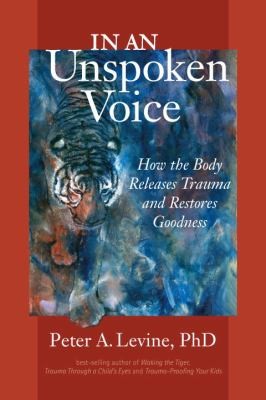
In an Unspoken Voice
Peter A. Levine, PhD
Classic guide from the creator of Somatic Experiencing revealing how the body holds the key to trauma recovery.
As an Amazon Associate, Clarity House Press earns from qualifying purchases. Your price is never affected.
Found this helpful?
Share it with someone who might need it.
About the Author

Clarity House Press
Editorial Team
The editorial team at Clarity House Press curates and publishes evidence-based content on narcissistic abuse recovery, high-conflict divorce, and healing. Our content is informed by research, survivor experiences, and established trauma-informed approaches.
View all posts by Clarity House Press →Published by Clarity House Press Editorial Team